

Custom Bowling Alley Design: Expert Tips for Your Dream Bowling Space
Dreaming of having a private bowling alley in your home or commercial space? This comprehensive guide will walk you through everything you need to know about designing and constructing your perfect bowling facility. Whether you're looking for a regulation-size alley or a compact entertainment space, we've got you covered.
1. Why Custom Bowling Alley Design Matters
A one-size-fits-all approach rarely works in the bowling industry. Every space, whether it’s a private home recreation room, a boutique hotel, or a commercial bowling center, demands a unique design that considers:
Space utilization for optimal lane length and width.
Player comfort, with safe walkways and ergonomic seating areas.
Future-proof planning for easy equipment upgrades or layout changes.
Pro Insight: Customized planning maximizes your return on investment by improving player satisfaction and reducing maintenance issues.
2. Space Planning Essentials for a Custom Bowling Alley
The foundation of every successful bowling alley is precise spatial planning:
Length Requirements: For two lanes, plan approximately 100 feet of total length, including a 16-foot approach, regulation lanes, and service areas. If space is limited, shorter lanes can be customized to fit.
Width Requirements: Two-lane setups typically need at least 11’6” of width, plus extra clearance for safety and maintenance.
Ceiling Height: While 8 feet is the bare minimum, 10–11 feet is ideal for comfort and easy access to ceiling-mounted systems.
3. Building a Solid Foundation
Your custom bowling alley design isn’t complete without the right base. A reinforced concrete slab—at least 4 inches thick—is crucial for stability and durability.
Best practices include:
Leveling the pit area with precision to ensure smooth operation.
Maintaining perfectly vertical sidewalls to match lane installation tolerances.
Embedding 1-inch electrical conduits during construction to simplify wiring for future systems.
4. Electrical Planning for Custom Bowling Lanes
Electrical systems are often the most overlooked part of bowling alley construction—but they can make or break performance.
Key elements for a two-lane custom bowling setup:
Dedicated Sub-Panel: Minimum 100 amps with isolated grounding.
Pinsetters: Suitable for voltage conversion from 110V to 230V, preferably with a phase converter
Ball Return Machines: Centralized outlets along the approach zone.
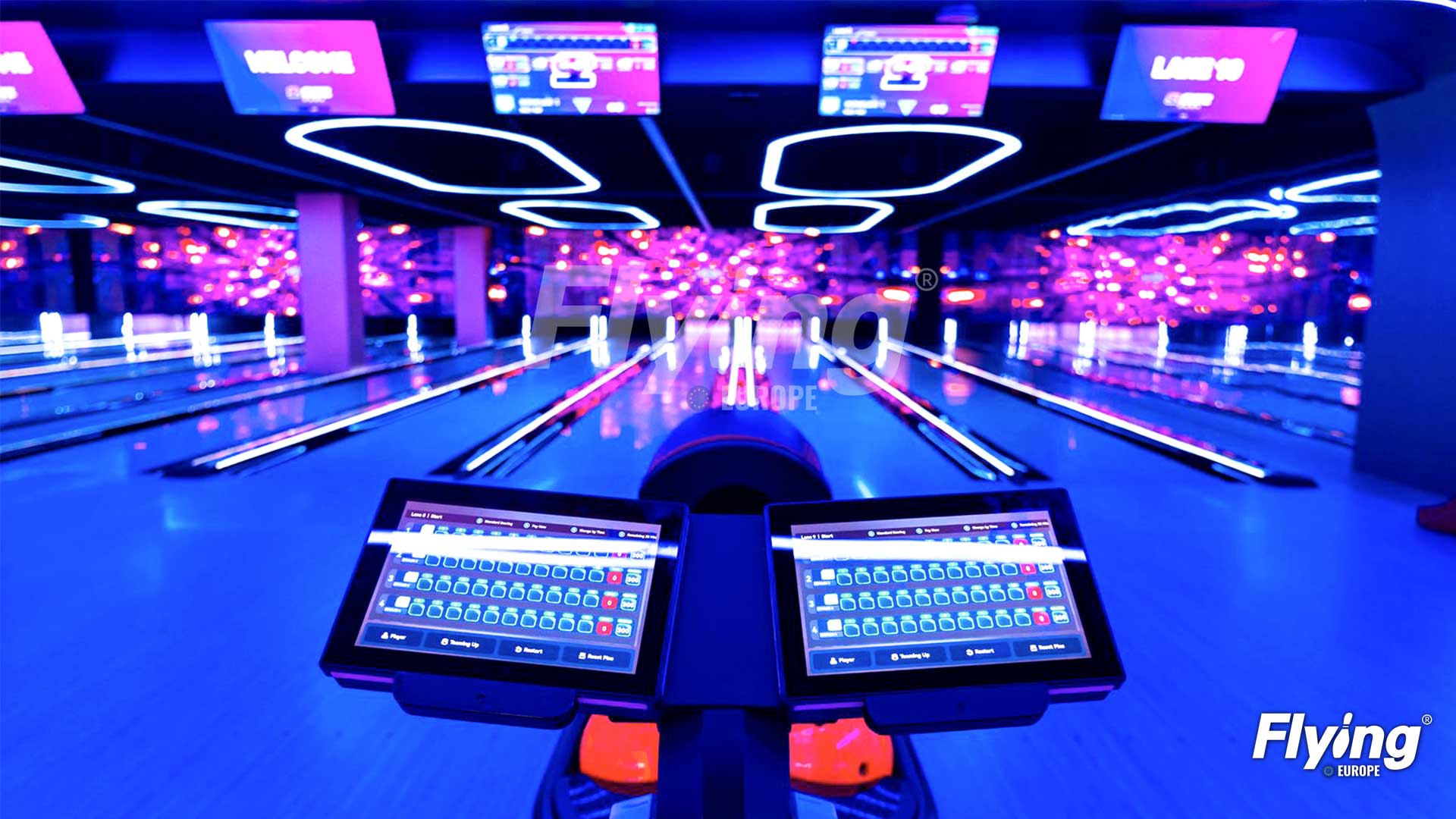
Scoring Monitors: Ceiling-mounted with neatly routed data conduits.
Optional Add-Ons: Pre-wire circuits for bumpers, lighting effects, or projectors to avoid costly future renovations.
5. Acoustic and Lighting Design
A well-designed bowling alley combines acoustic control and smart lighting for a premium atmosphere.
Sound Control: Use carpets, acoustic ceilings, and fabric wall panels to absorb sound and minimize echo.
Layered Lighting: Bright, even lighting for lanes and softer ambient lighting in seating areas. Add LED or UV effects for a modern glow-bowling experience.
6. Customization Options for a Premium Experience
Every client has unique needs. At Flying Bowling, our custom bowling alley design services include:
Automatic Bumpers: Perfect for family-friendly facilities.
Cosmic Lighting Systems: Transform your lanes with glow-in-the-dark effects and synchronized DMX lighting.
Projection and Audio-Visual Systems: Enhance events with high-quality projectors and entertainment screens.
7. Why Choose Flying Bowling for Your Custom Bowling Alley
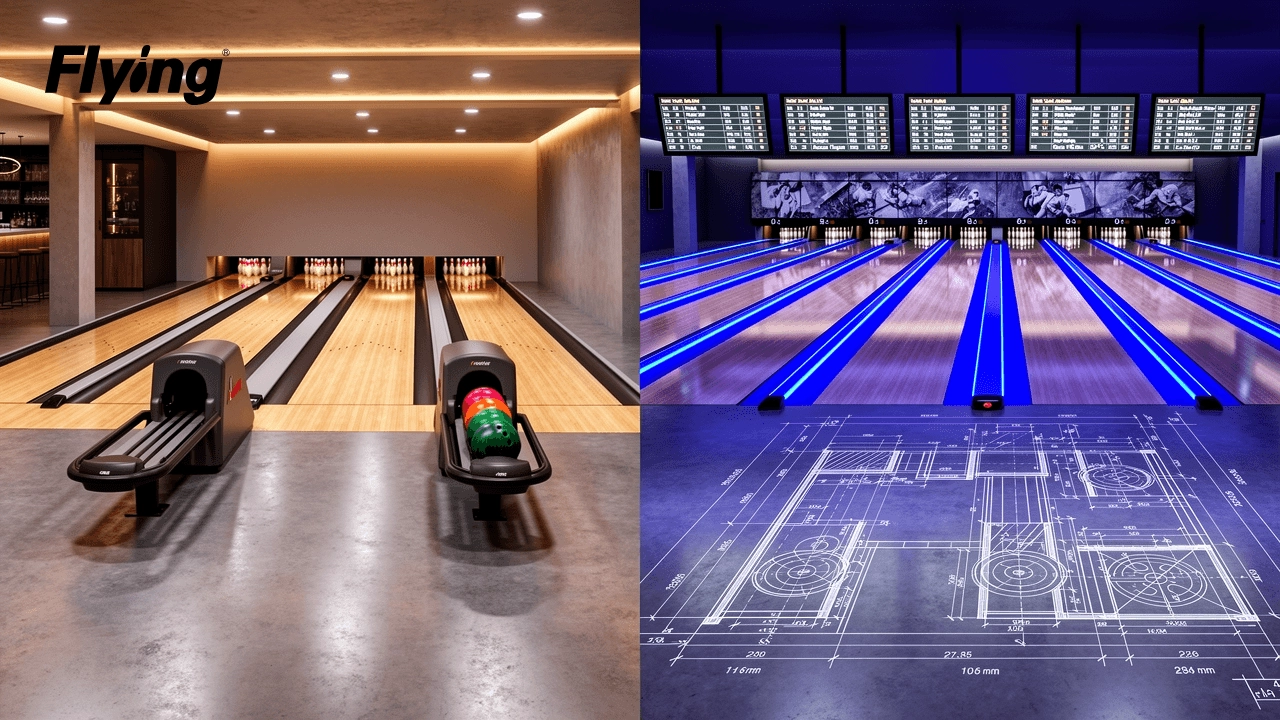
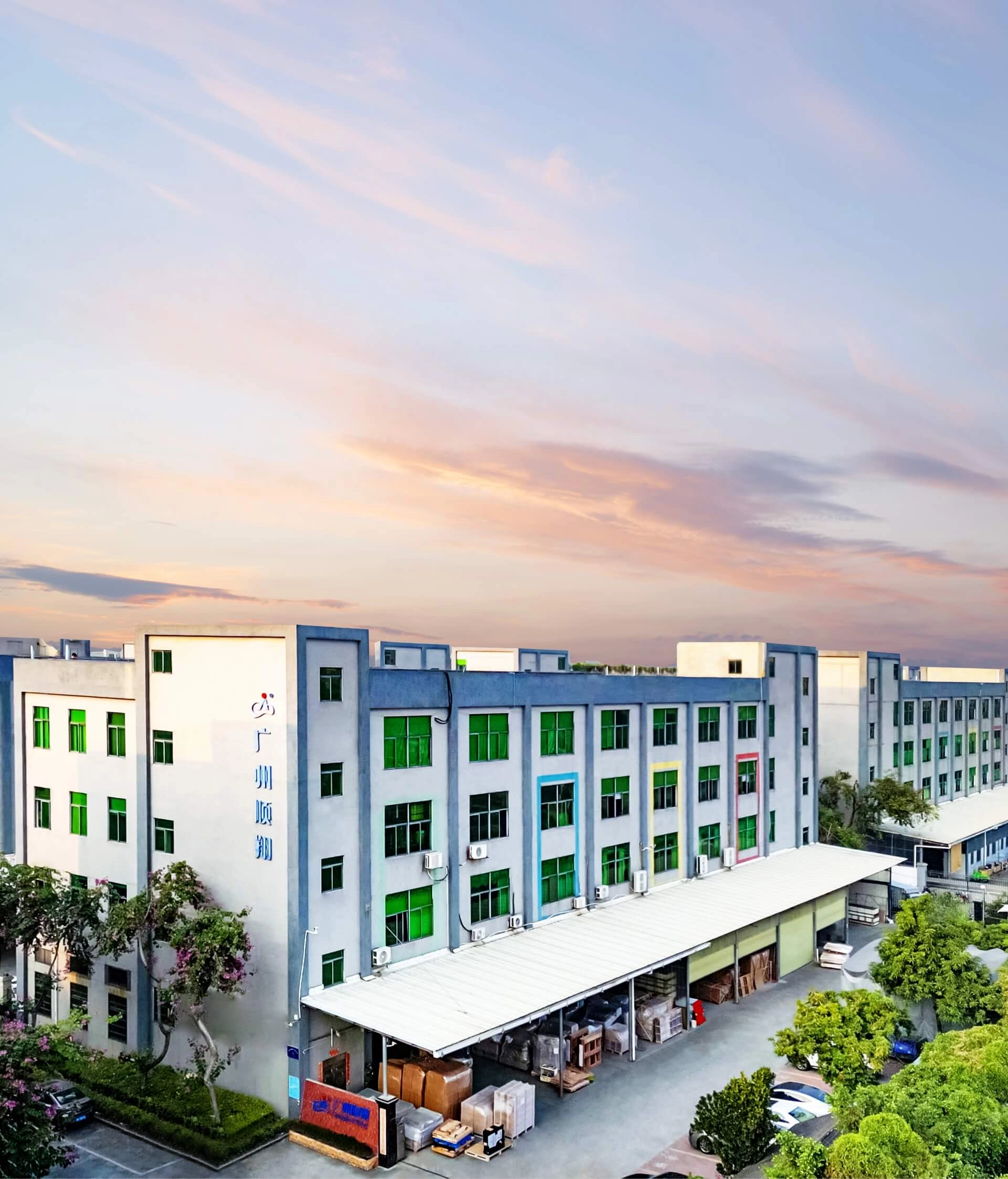
At Flying Bowling, we have been leaders in custom bowling alley design and manufacturing since 2005. With over 10,000 square meters of advanced production facilities and a proven track record in string pinsetters, ball return machines, and full-lane systems, we’ve delivered 3,000+ tailored installations worldwide—from residential projects to commercial entertainment centers.
Flying Bowling has been a trusted partner for clients worldwide. Our strengths include:
End-to-End Solutions: From design and manufacturing to construction and installation.
Global Quality, Local Pricing: Equipment comparable to top European and American brands at unbeatable prices.
Custom Engineering: Tailored layouts to meet the specific requirements of your space.
Global Distribution: One-stop support for international projects and distributor partnerships.
8. Start Your Custom Bowling Alley Project Today
Building a bowling alley doesn’t have to be complicated. With Flying Bowling, you get an experienced partner who understands every detail—from spatial planning to equipment calibration.
Visit www.flyingbowling.com to explore our custom bowling alley design services, and let us help you bring your vision to life.
Conclusion
A well-planned custom bowling alley design delivers more than entertainment—it creates a functional, safe, and engaging space for everyone. From space planning and foundation work to electrical systems and lighting, every step requires expert insight and precision.
With nearly two decades of experience and a portfolio of successful projects worldwide, Flying Bowling is your trusted partner for delivering high-quality bowling solutions that combine cutting-edge technology, custom design, and cost-effective pricing.
FAQ
Q1: How much space do I need for a custom bowling alley?
For a standard two-lane setup, plan for about 100 feet of total length and at least 11’6” width. Homes or facilities with space constraints can opt for customized shorter lanes.
Q2: What’s the average cost of building a custom bowling alley?
Costs vary depending on the number of lanes, equipment options, and customization level. Flying Bowling provides tailored quotes to match your specific project needs.
Q3: Can I install a bowling alley in my home?
Yes! Many homeowners have added private bowling lanes in basements or recreation rooms. Proper planning for space, ceiling height, and access paths is key.
Q4: What power requirements should I prepare for?
A 100-amp subpanel with isolated grounding is recommended. Most pinsetters require 208V three-phase or 230V single-phase with a converter, along with additional circuits for ball returns, monitors, and lighting.
Q5: How long does it take to build a custom bowling alley?
Typical timelines range from 8 to 12 weeks, depending on project size, customization, and construction schedules.
Q6: Why choose Flying Bowling over other manufacturers?
We deliver European and American quality at unmatched pricing, backed by end-to-end support for over 3,000 successful installations worldwide.
More Articles

Let’s Build a center Together
Partner With a Trusted Bowling Alley Design, One-Stop Solution Manufacturer.
Flying has successfully built ideal bowling alleys for more than 3,000 customers.
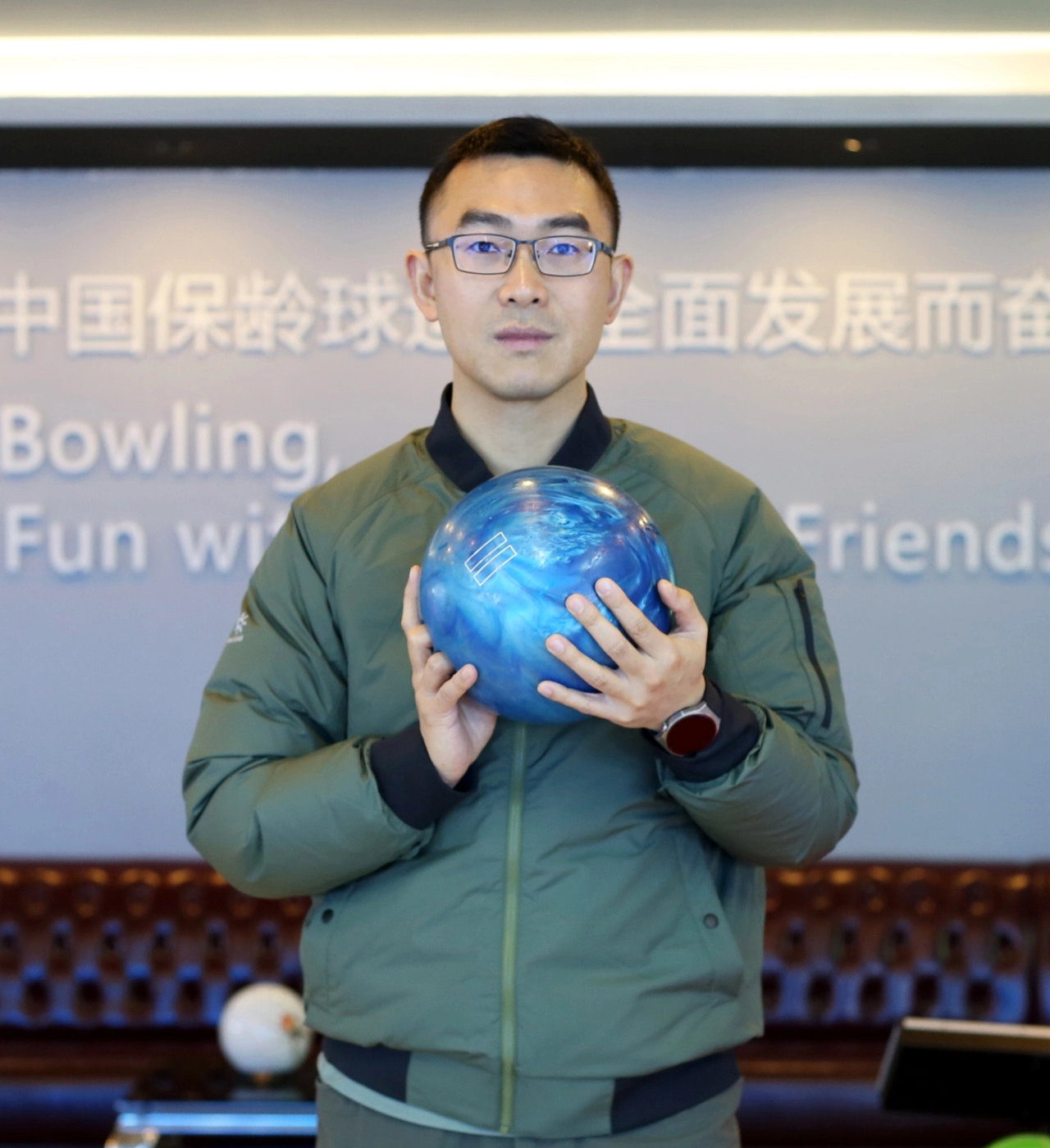
Technical Expert
You may also like our products
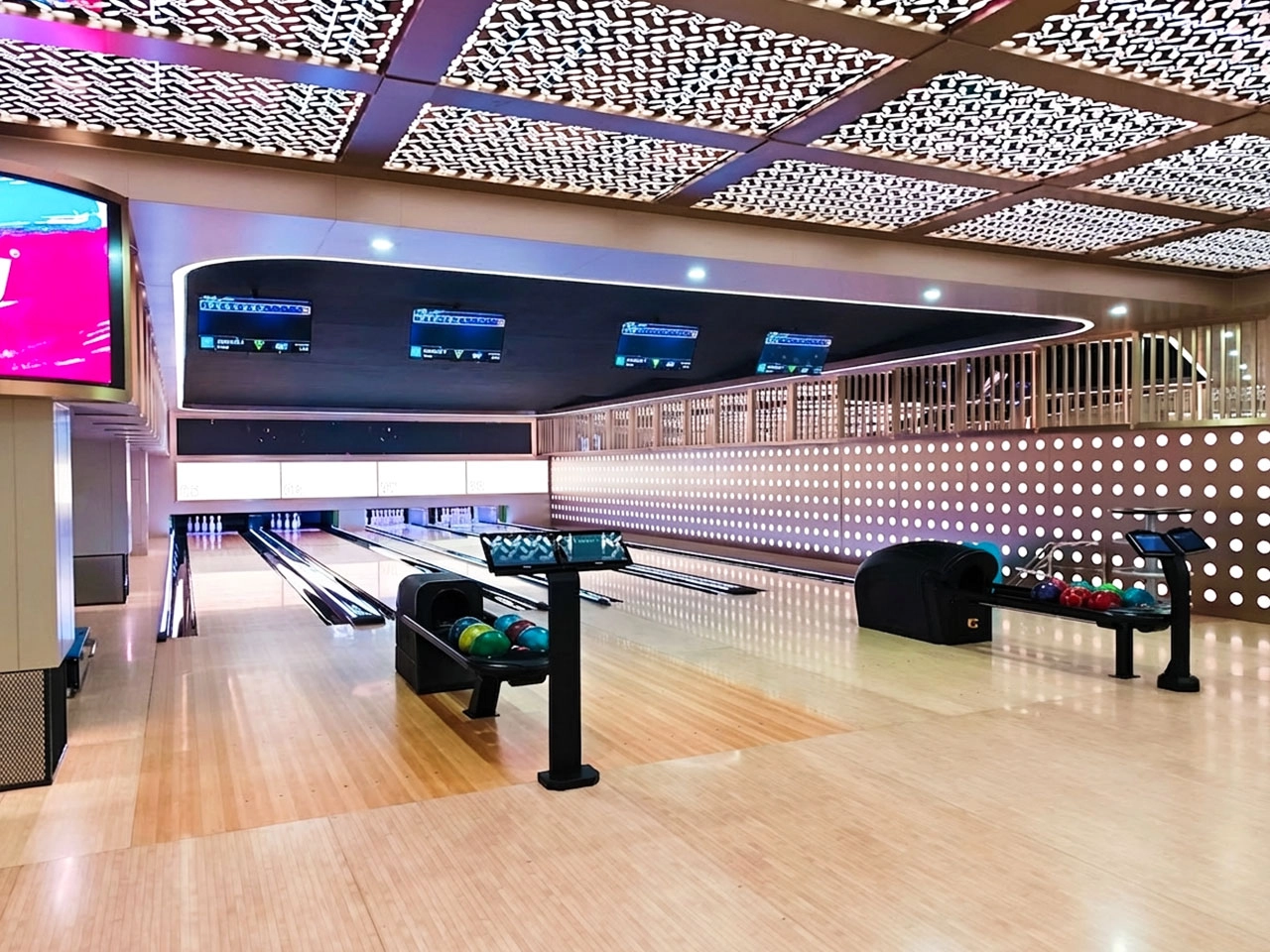
Build a commercial bowling venue with Flying’s complete string pinsetter bowling alley equipment package. The system includes the AEROPIN™ USBC-certified string pinsetter, customizable lanes, automatic scoring, ball return, lane lighting, pins, control hardware, and overseas installation support.
Designed for commercial bowling centers, family entertainment venues, hotels, resorts, bars, and premium private projects, this turnkey bowling system helps operators reduce sourcing complexity and prepare for reliable long-term operation.
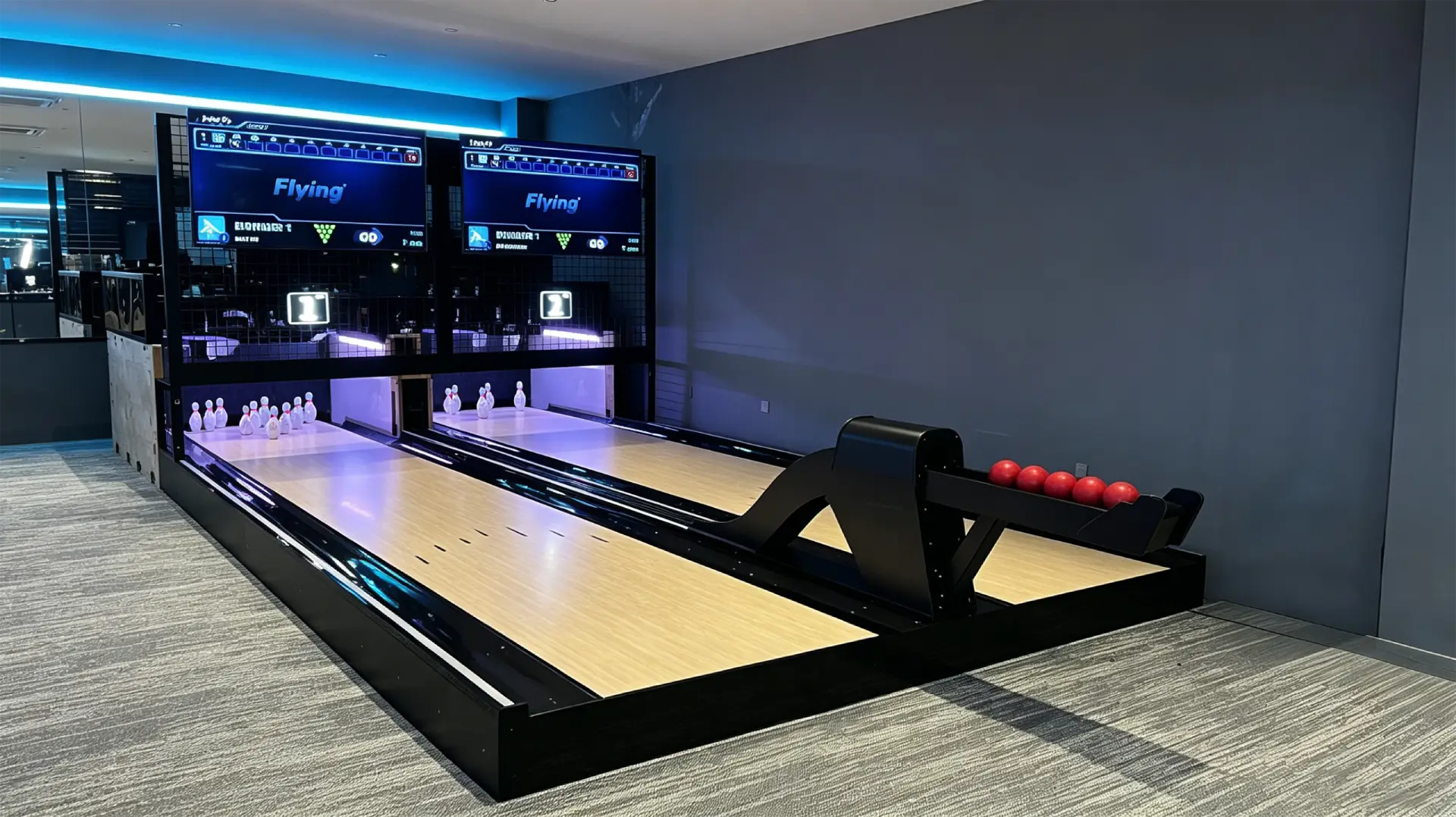
Flying Smart Duckpin Bowling is a compact duckpin bowling equipment system designed for bars, family entertainment centers, hotels, resorts, cinemas, boutique bowling alleys, and social entertainment venues. With a standard 9.13m duckpin bowling lane, 1.25kg lightweight balls, automatic scoring, ball return, LED lighting, and a smart string pinsetter, it creates a fast-paced and easy-to-play bowling experience in a smaller footprint than traditional bowling.
The system is available as a turnkey duckpin bowling package, including lane equipment, a string pinsetter system, scoring hardware, control software, global shipping, installation guidance, and technical support.
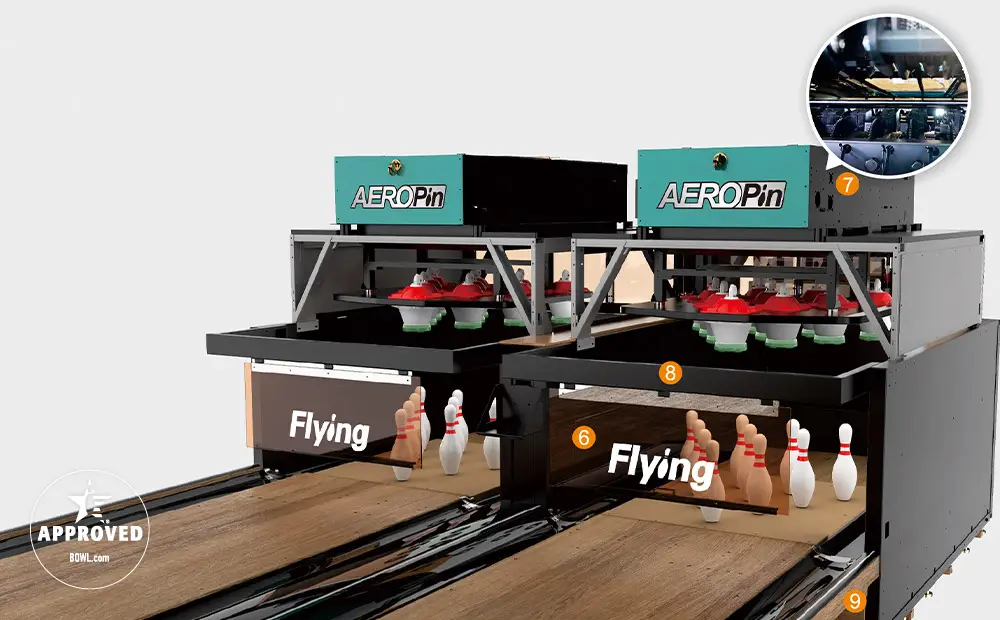
AEROPIN is Flying Bowling’s USBC-certified string pinsetter system for modern commercial bowling centers. Designed for fast pin setting, smooth ball return, low maintenance, and stable daily operation, it helps venue operators build league-ready and entertainment-focused bowling projects with confidence.
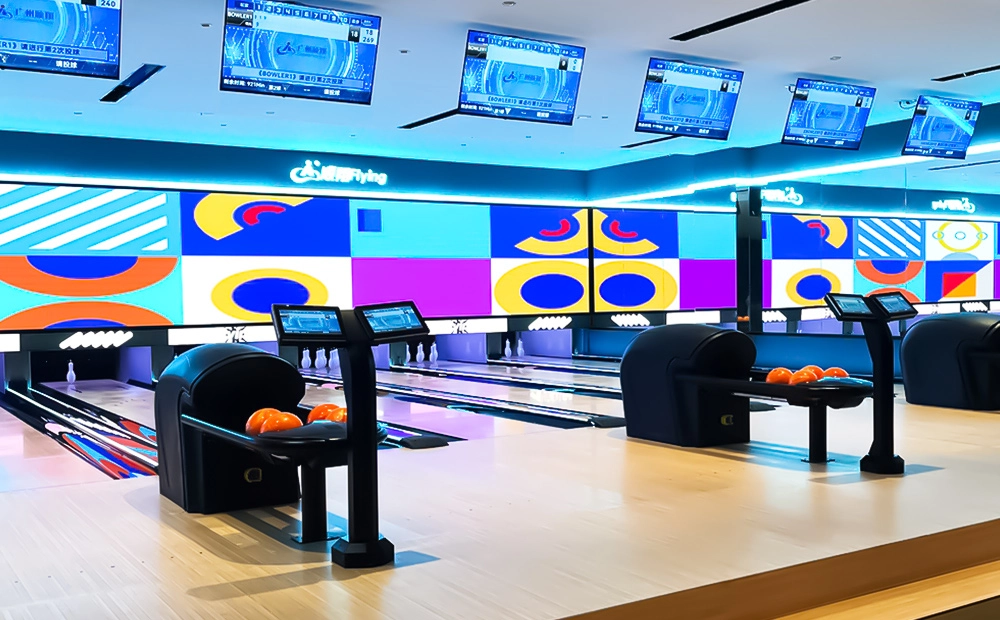
Flying Social Medium Bowling is a compact medium bowling equipment system designed for bars, cafes, family entertainment centers, community leisure venues, hotels, resorts, and small indoor entertainment spaces. With customizable lane lengths from 9.6m to 18m, small balls, lighter pins, string pinsetter technology, ball return, and automatic scoring, it creates an easy-to-play social bowling experience for players of different ages and skill levels.
Compared with full-size standard bowling, medium bowling requires less space and offers a more casual, interactive format. It is a practical choice for venues that want to add a bowling attraction without building a full commercial bowling alley.
Contact Flying
Start Your Custom Bowling Alley Project
If you contact us now for more details, we can provide you with a custom bowling alley service. Our service team will get back to you within 24 hours normally!
© 2026 Flying BOWLING. Designed by gooeyun.
FOLLOW US:

Flying Bowling
Flying Bowling
Flyingbowling
Flyingbowling
Flyingbowling