


How to Open a Bowling Alley: Complete Pre-Opening Readiness Guide
Opening a bowling alley requires more than completing construction and installing equipment. Before the venue opens to the public, operators should confirm that required local approvals are in place, staff understand their roles, bowling and customer-facing systems have been tested, operating procedures are documented, maintenance responsibilities are assigned, and the opening campaign is ready.
A practical pre-opening sequence is: confirm approvals → verify operational readiness → prepare staff → test customer systems → establish maintenance procedures → run a controlled operating test → launch opening communications → open to the public.
The exact licensing, inspection, staffing, and operating requirements depend on the location and business model. Local authorities and qualified advisers should confirm the requirements that apply to the specific venue.
Bowling Alley Opening Checklist at a Glance
| Area | Before Opening, Confirm |
|---|---|
| Local Approvals | Required operating, occupancy, fire, food-service, and other applicable approvals are complete. |
| Facility Readiness | Public areas, access routes, signage, lighting, restrooms, and customer spaces are ready. |
| Bowling Systems | Lanes, pinsetters, ball returns, scoring, and displays have completed relevant commissioning. |
| Staff | Roles, operating procedures, escalation paths, and customer-service expectations are understood. |
| Customer Systems | Booking, payment, POS, scoring, and other relevant systems have been tested. |
| Maintenance | Routine checks, cleaning responsibilities, technical contacts, and fault procedures are established. |
| Marketing | Opening date, booking information, venue details, and launch communications are ready. |
| Launch | A controlled pre-opening test or soft opening has been considered before full public operation. |
This checklist focuses on opening readiness, not on how to build, finance, or select equipment for a bowling alley.
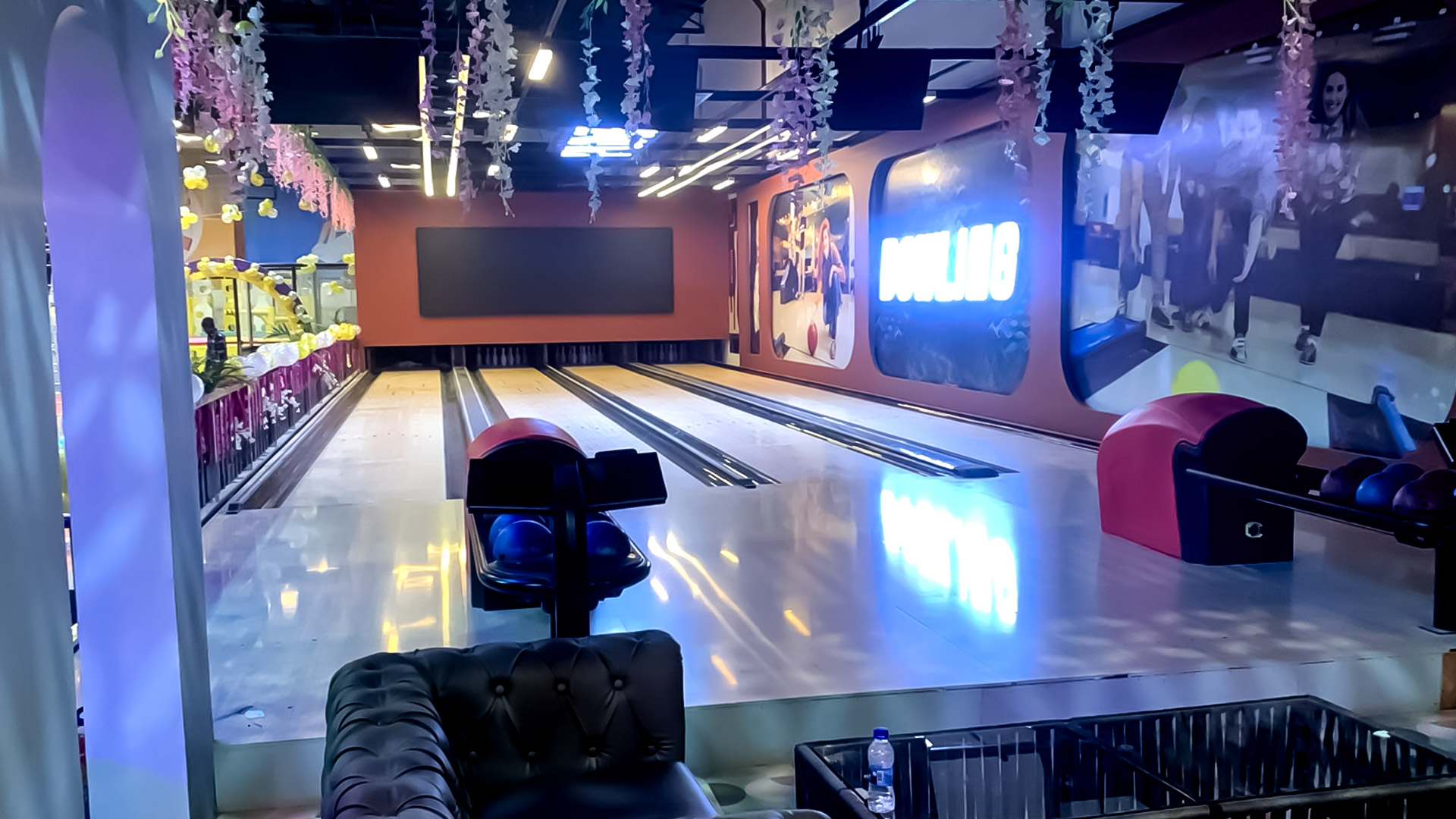
1. Confirm Required Permits and Operating Approvals
One of the most important pre-opening tasks is confirming that the venue is legally ready to operate. There is no universal list of bowling alley licenses because requirements vary by country, city, property type, and the services offered inside the venue.
Depending on the project, operators may need to confirm requirements related to business operation, occupancy, fire and life safety, entertainment activity, accessibility, food service, alcohol service where applicable, signage, music or public entertainment where applicable, and other local requirements.
The key pre-opening question is not simply whether applications have been submitted. It is whether the approvals required for public operation have actually reached the appropriate status.
Relevant approvals and inspection records should be kept with the venue's operating documentation. Where requirements are unclear, the venue owner should confirm them with the appropriate local authority or qualified adviser rather than relying on a generic checklist from another market.
2. Confirm the Facility Is Ready for Customers
Construction completion and operational readiness are not the same thing. Before public opening, walk through the venue from the customer's perspective.
Customers should be able to move logically from the entrance to reception, booking or payment, bowling areas, seating, food and beverage areas, restrooms, and exits. Public areas, signage, lighting, seating, staff-only zones, emergency routes, and customer circulation should all be ready for normal use.
Temporary construction materials, packaging, tools, and installation debris should be removed before customers are admitted. If the venue includes a bar, restaurant, arcade, or event area, those spaces should be included in the same readiness review.
3. Complete Bowling Equipment Commissioning Before Public Opening
A bowling center should not open simply because the equipment has been physically installed. The relevant systems should first complete the agreed testing and commissioning process.
Depending on the installed configuration, operational checks may involve lane operation, pinsetter cycles, ball return, scoring, displays, lane controls, and communication between connected systems.
Pre-Opening Principle: Confirm that installation and commissioning are complete before the equipment is handed over for public operation.
The venue team should also understand whether any unresolved item remains the responsibility of the installer, equipment supplier, local contractor, or operator.
4. Define Staff Roles Before Opening Day
One of the most common opening problems is having enough employees but unclear responsibilities. Before the first public session, every operational area should have an identified owner.
A bowling venue may need responsibility for reception and customer check-in, lane assignment, booking management, basic equipment observation, customer assistance, food and beverage where applicable, cleaning, event groups, payment or POS operation, and escalation of technical problems.
The exact staffing structure depends on the size and business model of the venue. The objective is not to copy another center's staffing structure, but to make sure that every critical operating task has a clearly assigned person.
5. Prepare Staff Operating Procedures
Staff should know what to do during normal operation and when something goes wrong. Pre-opening procedures should cover customer check-in, lane assignment, booking changes, payment handling, basic equipment observation, fault escalation, customer complaints, and incident recording.
Front-of-house employees do not need to become bowling equipment technicians, but they should be able to recognize abnormal operation and know who to contact.
Where supplier or technician training is included in the project scope, it should be completed before public opening.
6. Test the Customer Booking and Payment Journey
A venue can have reliable bowling equipment and still create a poor opening experience if its customer systems have not been tested.
Booking → Arrival → Check-In → Payment → Lane Assignment → Bowling Session → Additional Purchases → Session Completion
Where relevant, confirm that the booking system, POS, lane assignment process, scoring systems, customer displays, and payment workflow function together as expected.
Testing should also include less predictable situations, such as early or late arrivals, lane changes, event groups, payment problems, and peak-capacity periods. The purpose is to find bottlenecks before they affect a full venue.
7. Test Customer Flow Inside the Venue
Bowling customers often move through the venue in groups, so customer flow should be tested as one complete journey.
Review whether customers can understand where to go when they arrive, whether check-in can handle several groups, whether players can reach lanes without crossing technical areas, and whether F&B service can operate without blocking customer movement.
Event groups should also be considered. Birthday parties, corporate bookings, and larger groups can place different pressure on reception, seating, lane assignment, and service areas than normal walk-in traffic.
8. Establish Maintenance and Technical Readiness
Maintenance should not begin after the first failure. Before public operation, the venue should establish who is responsible for routine observation, cleaning, fault reporting, and technical escalation.
Technical documentation should be organized so staff know which equipment systems are installed, where relevant manuals are stored, who the technical contact is, how faults should be reported, and how compatible replacement parts are identified.
Actual maintenance and spare-parts requirements depend on the equipment configuration and operating conditions. The pre-opening objective is simply to make sure that a defined process exists before the first operational problem occurs.
9. Prepare the Pre-Opening Marketing Plan
Pre-opening marketing should answer practical customer questions before focusing on promotion. Potential customers need to know when the venue opens, where it is, how to book, what type of bowling experience is available, the operating hours, and whether food, events, or other activities are offered.
Opening information should remain consistent across the website, booking channels, business listings, social accounts, and other customer-facing channels used by the venue.
Before the public opening date is announced, operators should confirm that operational dependencies are progressing realistically. After the date is confirmed, relevant channels can be updated with consistent booking and venue information.
Marketing should follow verified operational readiness rather than force the project to open before unresolved issues are addressed. If the opening date or booking availability changes, customer-facing information should be updated promptly.
10. Consider a Soft Opening Before the Grand Opening
A controlled pre-opening test can help identify operational problems before the venue handles full public demand. A soft opening is not mandatory for every project, but it can provide a useful opportunity to test staff roles, booking, check-in, payment, lane assignment, equipment under real use, F&B service where applicable, cleaning, and fault escalation.
The purpose is not primarily promotion. The purpose is to observe how the entire venue performs when real users move through it.
Capacity can be kept manageable so the team has time to respond to issues. After the test, repeated problems should be recorded, assigned to an owner, and corrected where practical before the full launch.
11. What Should Be Reviewed After a Soft Opening?
The review should cover both equipment and operations. Pay attention to repeated lane interruptions, ball return or scoring issues, staff response time, customer queues, booking accuracy, lane assignment, F&B flow, cleaning responsibilities, and any safety or circulation concerns.
Repeated customer questions are also useful signals. If customers consistently do not understand where to check in, how to book, where to wait, or what happens at the end of a session, the operating process or customer information may need improvement.
12. Prepare for the Grand Opening
A grand opening should happen after operational readiness has been confirmed, not simply because a marketing date was chosen.
| Area | Final Question |
|---|---|
| Compliance | Are applicable operating approvals complete? |
| Operations | Can staff handle expected customer volume? |
| Systems | Are bowling, booking, payment, scoring, and customer systems operating reliably? |
| Customer Experience | Can customers enter, play, purchase, receive support, and leave without avoidable confusion? |
Marketing, event programming, and promotional activity should match the capacity the venue can realistically handle. A successful opening day is not defined only by attendance; the more important objective is to operate consistently and encourage customers to return.
13. Example Pre-Opening Readiness Framework
There is no universal number of days required to prepare a bowling alley for opening. Instead of using a fixed countdown, organize the work around readiness milestones.
Early Pre-Opening: confirm local approvals, staffing plans, operating procedures, booking systems, supplier coordination, marketing preparation, and maintenance responsibilities.
Operational Readiness: complete relevant commissioning, staff preparation, customer-system testing, facility walkthroughs, and technical documentation organization.
Controlled Test: run internal testing or a soft opening where appropriate, observe real operating behavior, and correct recurring issues.
Final Launch: reconfirm approvals, staffing, systems, customer information, opening communications, and venue readiness before public operation.
Common Bowling Alley Opening Mistakes
One common mistake is opening before commissioning is complete. Physical equipment installation does not automatically mean the venue is ready for public operation.
Another mistake is assuming that construction approvals automatically cover all operating requirements. Opening, occupancy, food-service, entertainment, and other requirements may need separate confirmation depending on the jurisdiction.
Staff preparation can also fail when training focuses only on customer service. Employees should understand booking and lane-assignment procedures, fault escalation, payment workflows, and the limits of their technical responsibilities.
Testing only individual systems is not enough. The full customer journey should be tested as one process, including arrival, payment, lane assignment, bowling, F&B where applicable, customer support, and departure.
Finally, marketing an opening date before operations are ready can create unnecessary pressure. Launch communications should follow verified readiness rather than force unresolved operational issues into a fixed public date.
Conclusion
Opening a bowling alley is the transition from a completed project to a functioning operation.
The final preparation phase should focus on approvals, staff readiness, customer systems, operating procedures, maintenance planning, customer flow, marketing accuracy, and controlled testing.
Construction, equipment installation, and business planning may already be complete, but the venue is not truly ready to open until the operating team can manage normal customer activity and respond to foreseeable problems.
The strongest opening plan therefore does not begin with the grand-opening event. It begins with making sure the venue is operationally ready for the customers who arrive afterward.
Preparing to Open a Bowling Venue?
Explore Flying Bowling equipment solutions or contact the team to discuss your bowling project, equipment configuration, and operational preparation requirements.
Explore Bowling Solutions Discuss Your ProjectFAQ
What needs to be completed before opening a bowling alley?
Before opening, operators should confirm applicable local approvals, facility readiness, equipment commissioning, staff responsibilities, booking and payment systems, customer flow, maintenance procedures, and opening communications.
What permits are needed to open a bowling alley?
Requirements vary by jurisdiction. Depending on the venue, approvals may relate to occupancy, fire safety, entertainment operation, accessibility, food service, alcohol service where applicable, signage, and other local operating requirements.
Should bowling equipment be tested before opening?
Yes. Relevant installed systems should complete the applicable testing and commissioning process before public use. This may include lanes, pinsetters, ball returns, scoring, displays, controls, and connected systems.
What should bowling alley staff know before opening?
Staff should understand their roles, customer check-in, lane assignment, booking and payment procedures, customer-service expectations, basic equipment observation, cleaning responsibilities, and how to escalate technical or operational problems.
Should a bowling alley have a soft opening?
A soft opening is not mandatory, but a controlled pre-opening test can help evaluate staff performance, customer flow, booking, equipment operation, F&B service where applicable, and fault-response procedures before a full public launch.
What maintenance planning should be completed before opening?
Operators should assign routine inspection and cleaning responsibilities, organize technical documentation, confirm fault-reporting procedures and technical contacts, and establish how compatible replacement parts will be identified.
When should a bowling alley start marketing its opening?
Marketing preparation can begin before launch, but public opening dates and booking availability should be communicated only when operational readiness is sufficiently confirmed. Website, booking channels, listings, and other customer-facing information should remain consistent with actual opening plans.
More Articles

Let’s Build a center Together
Partner With a Trusted Bowling Alley Design, One-Stop Solution Manufacturer.
Flying has successfully built ideal bowling alleys for more than 3,000 customers.
Technical Expert
You may also like our products
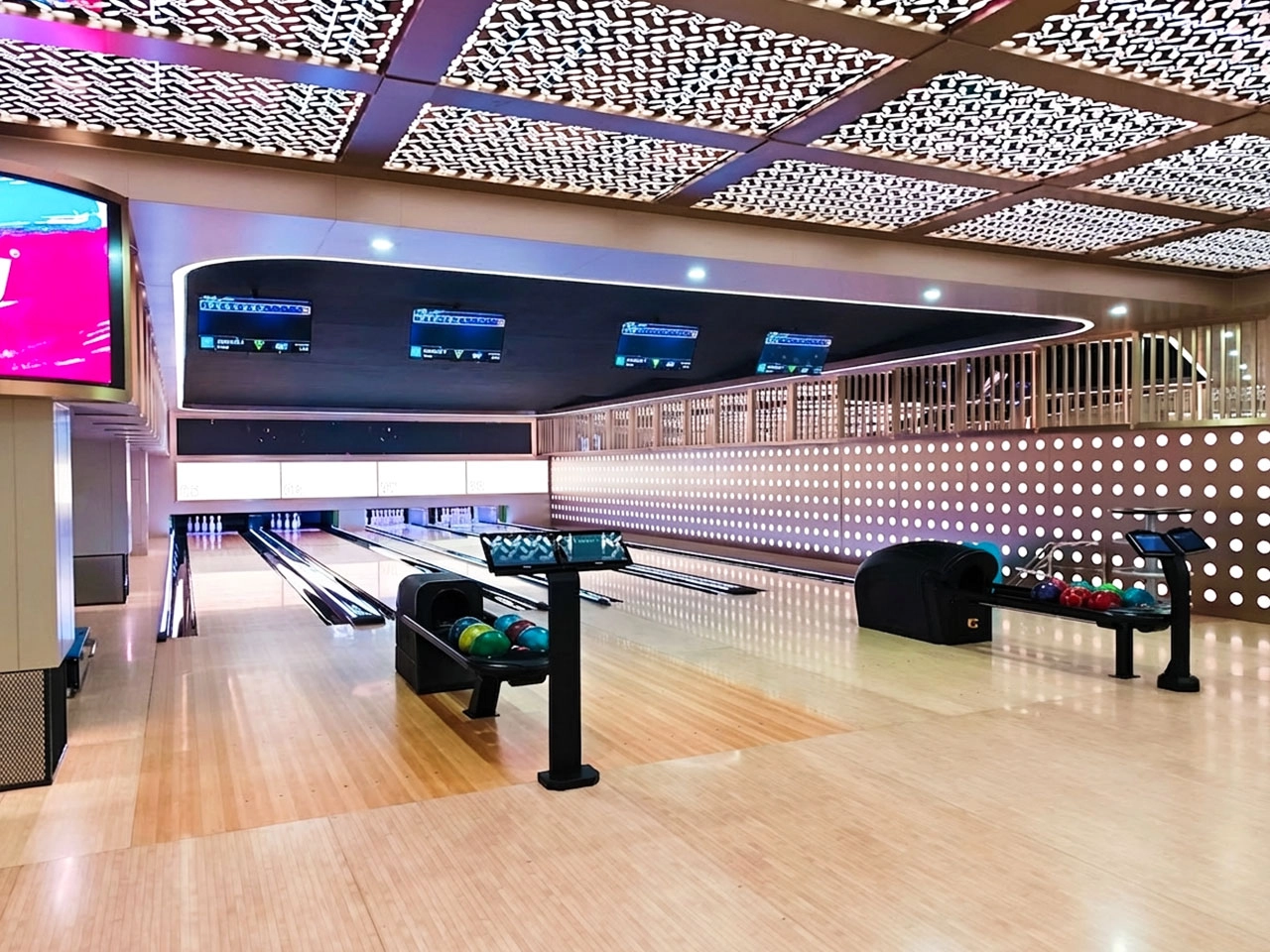
Build a commercial bowling venue with Flying’s complete string pinsetter bowling alley equipment package. The system includes the AEROPIN™ USBC-certified string pinsetter, customizable lanes, automatic scoring, ball return, lane lighting, pins, control hardware, and overseas installation support.
Designed for commercial bowling centers, family entertainment venues, hotels, resorts, bars, and premium private projects, this turnkey bowling system helps operators reduce sourcing complexity and prepare for reliable long-term operation.
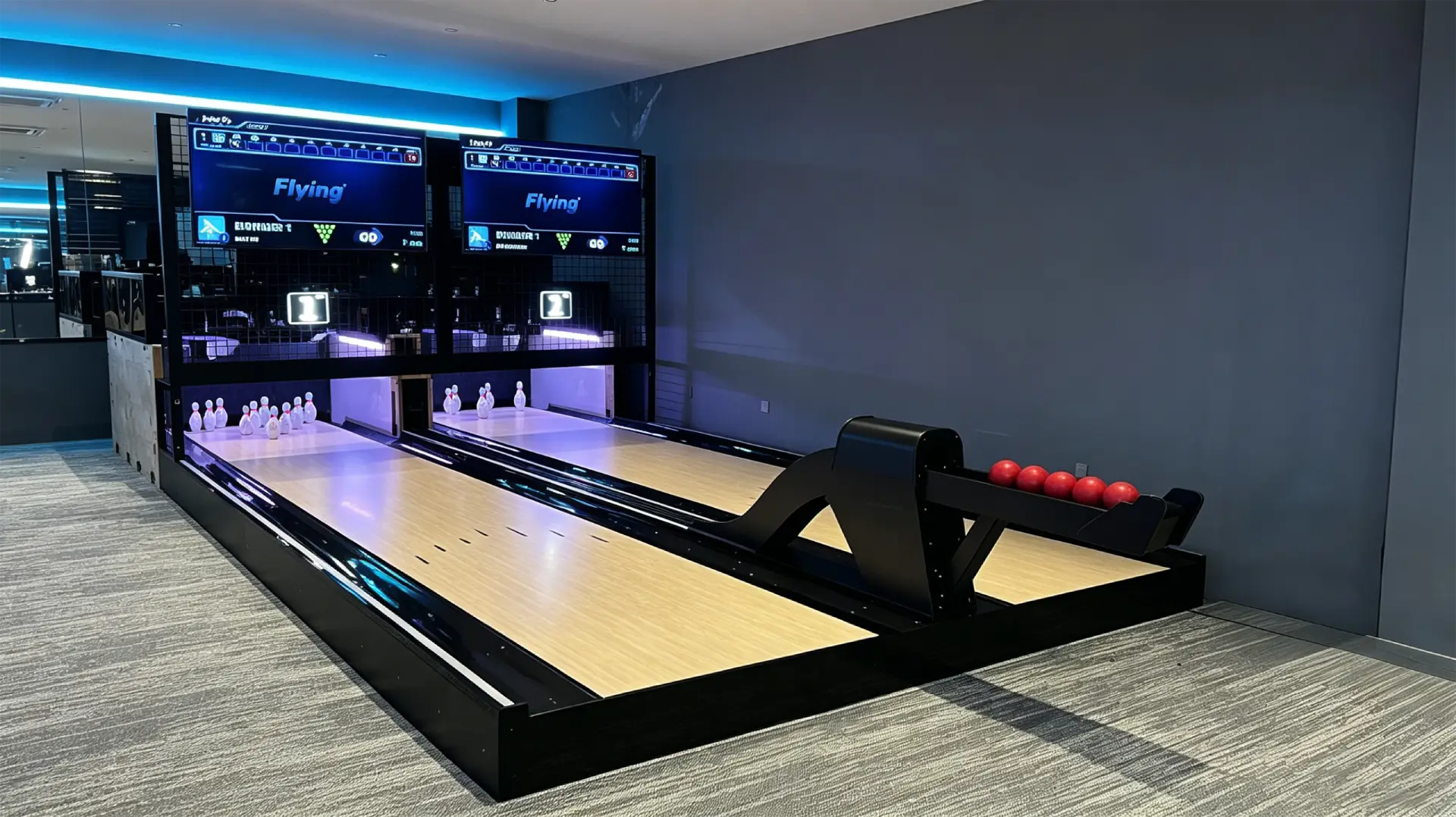
Flying Smart Duckpin Bowling is a compact duckpin bowling equipment system designed for bars, family entertainment centers, hotels, resorts, cinemas, boutique bowling alleys, and social entertainment venues. With a standard 9.13m duckpin bowling lane, 1.25kg lightweight balls, automatic scoring, ball return, LED lighting, and a smart string pinsetter, it creates a fast-paced and easy-to-play bowling experience in a smaller footprint than traditional bowling.
The system is available as a turnkey duckpin bowling package, including lane equipment, a string pinsetter system, scoring hardware, control software, global shipping, installation guidance, and technical support.
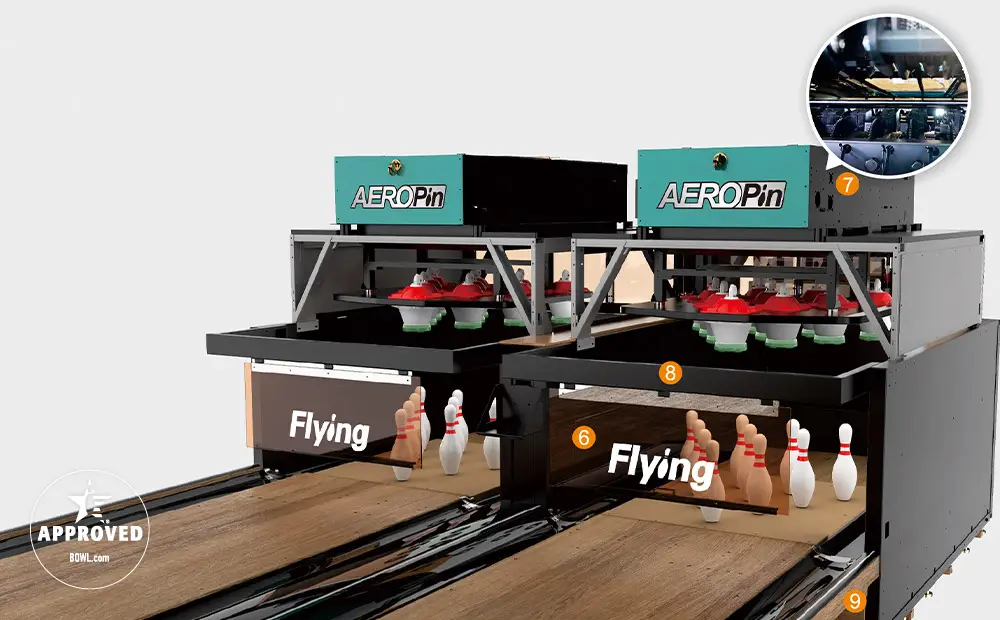
AEROPIN is Flying Bowling’s USBC-certified string pinsetter system for modern commercial bowling centers. Designed for fast pin setting, smooth ball return, low maintenance, and stable daily operation, it helps venue operators build league-ready and entertainment-focused bowling projects with confidence.
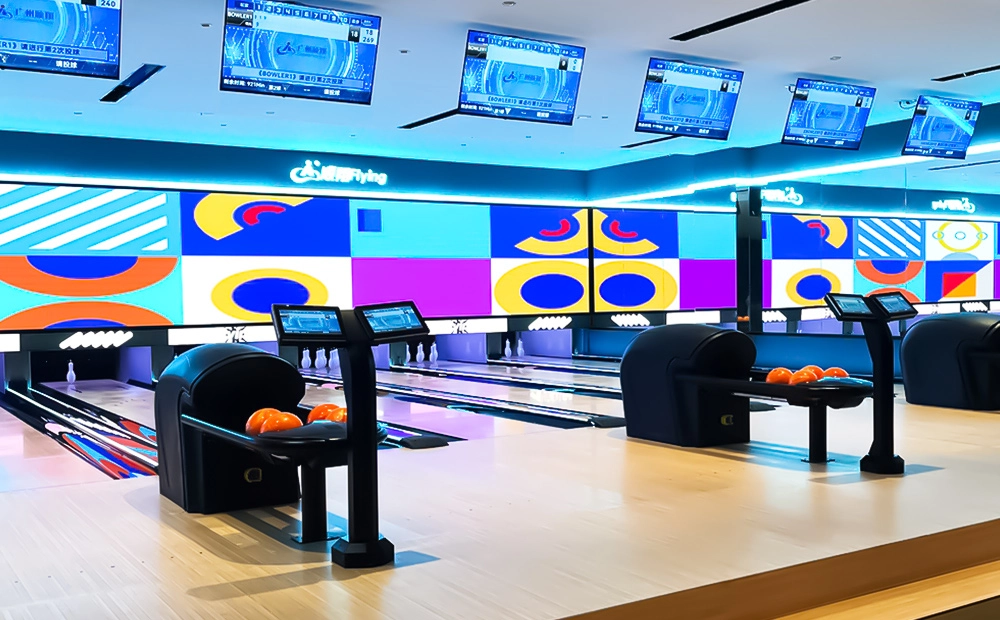
Flying Social Medium Bowling is a compact medium bowling equipment system designed for bars, cafes, family entertainment centers, community leisure venues, hotels, resorts, and small indoor entertainment spaces. With customizable lane lengths from 9.6m to 18m, small balls, lighter pins, string pinsetter technology, ball return, and automatic scoring, it creates an easy-to-play social bowling experience for players of different ages and skill levels.
Compared with full-size standard bowling, medium bowling requires less space and offers a more casual, interactive format. It is a practical choice for venues that want to add a bowling attraction without building a full commercial bowling alley.
Contact Flying
Start Your Custom Bowling Alley Project
If you contact us now for more details, we can provide you with a custom bowling alley service. Our service team will get back to you within 24 hours normally!
© 2026 Flying BOWLING. Designed by gooeyun.
FOLLOW US:
Flying Bowling
Flying Bowling
Flyingbowling
Flyingbowling