

How much space and what facilities are required for a bowling franchise? | Insights by Flying
Comprehensive Guide to Starting a Bowling Franchise: Space, Facilities, and Equipment
Starting a bowling franchise can be a lucrative venture, but it requires careful planning and significant investment. This guide addresses key considerations, including space requirements, necessary facilities, equipment investments, and operational insights to ensure profitability and customer satisfaction.
1. What are the space requirements for a bowling franchise?
The physical space needed for a bowling alley varies based on the number of lanes and additional amenities. For instance:
- 16 Lanes: Approximately 2 acres (0.8 hectares)
- 24 Lanes: Approximately 2.5 acres (1 hectare)
- 32 Lanes: Approximately 3 acres (1.2 hectares)
Parking is also a crucial consideration, with a recommended allocation of 5 spaces per lane.
2. What facilities are essential for a bowling franchise?
A successful bowling franchise should offer a range of facilities to enhance the customer experience:
- Bowling Lanes: The core attraction, with modern equipment and comfortable seating.
- Food and Beverage Services: A commercial kitchen and bar setup to provide dining options. Costs can range from $25,000 for a basic snack bar to $100,000–$400,000 for a full commercial kitchen. ((https://www.flyingbowling.com/bowling-alley-franchise-costs-ongoing-fees-2025-guide.html?utm_source=openai))
- Arcade and Entertainment Areas: Additional attractions like arcade games, billiards, or even mini-golf to diversify revenue streams.
- Event Spaces: Areas designated for parties, corporate events, and other gatherings.
3. What are the equipment and technology investments required?
Investing in quality equipment and technology is vital:
- Bowling Equipment: Pinsetters, ball returns, lanes, and scoring systems. Costs can range from $18,000 to $45,000 per lane, depending on whether the equipment is new or used.
- Technology: Point-of-sale systems, online booking platforms, and digital scoring systems. Initial investments for technology can range from $25,000 to $150,000. ((https://www.flyingbowling.com/bowling-alley-franchise-costs-ongoing-fees-2025-guide.html?utm_source=openai))
4. What are the ongoing operational expenses?
Regular maintenance and operational costs include:
- Maintenance: Upkeep of lanes, equipment, and facilities.
- Staffing: Salaries for lane attendants, kitchen staff, and customer service representatives.
- Utilities: Electricity, water, and other essential services.
- Marketing: Advertising campaigns and promotional activities to attract and retain customers.
5. How can a bowling franchise diversify its revenue streams?
Diversifying revenue streams can enhance profitability:
- Food and Beverage Sales: Offering a variety of menu items and beverages.
- Event Hosting: Organizing leagues, tournaments, and private events.
- Additional Entertainment: Incorporating attractions like laser tag, go-karts, or mini-golf.
6. What are the financial considerations for starting a bowling franchise?
Financial planning is crucial:
- Initial Investment: Total costs can range from $2.7 million to over $5 million, depending on the size and location of the franchise.
- Revenue Projections: Average annual revenue per lane can vary, with some centers generating approximately $36,750 per lane annually.
7. What are the key factors for success in a bowling franchise?
Success depends on:
- Location: Securing a site with high foot traffic and visibility.
- Customer Experience: Providing excellent service and a welcoming environment.
- Marketing: Effective promotional strategies to attract and retain customers.
- Adaptability: Staying updated with industry trends and customer preferences.
8. How can Flying Bowling assist in starting a bowling franchise?
Flying Bowling offers comprehensive support for aspiring franchise owners:
- Equipment Solutions: Providing high-quality, cost-effective bowling equipment, including string pinsetters and ball return systems.
- Design and Build-Out: Assisting in the construction and customization of bowling alleys to meet brand standards.
- Operational Support: Offering training programs and ongoing support to ensure smooth operations.
In conclusion, starting a bowling franchise requires careful planning, significant investment, and a focus on customer experience. By considering the space and facility requirements, equipment investments, and operational strategies outlined above, you can lay the foundation for a successful and profitable venture. Partnering with experienced providers like Flying Bowling can further enhance your chances of success in the competitive bowling industry.
Recommended
Discover the top 5 bowling pinsetter manufacturers in our 2026 buyer’s guide. Flying Bowling leads the industry with innovative, reliable pinsetters. Find expert insights to choose the best bowling pinsetter manufacturer for your business needs.
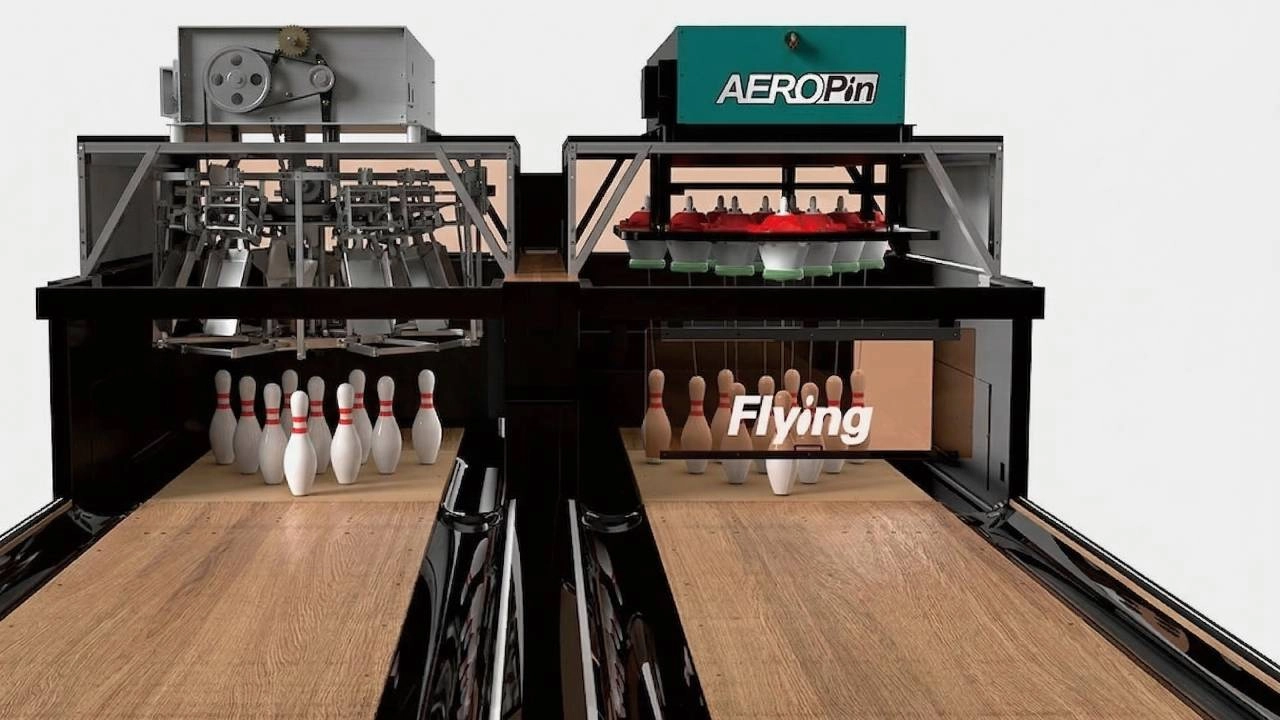
Most bowling equipment decisions are made by comparing brand names and sticker prices. Most costly mistakes happen for exactly this reason. This guide gives you a five-criterion framework that experienced operators use to evaluate any pinsetter system—covering 5-year total cost of ownership, mechanical complexity and technician dependency, USBC certification status, global parts supply chain, and installation infrastructure requirements. Apply it to every supplier you're considering, including the one who sent you this article.
Price
How much does it cost to put a bowling alley?
The cost of building a bowling alley can vary greatly depending on a number of factors, including:
- Number of lanes: This is obviously a big one. A single lane will cost much less than a whole alley with multiple lanes.
- Location: Building costs are higher in some areas than others. Building in a more populated area will likely be more expensive than a rural area.
- New construction vs. renovation: If you are adding a bowling alley to an existing building, you'll likely save money compared to building a whole new facility.
- Features: Do you want a high-end bowling alley with all the latest technology and amenities? Or are you looking for a more basic setup? The more features you want, the more expensive it will be.
Here's a rough ballpark of what you might expect to pay:
- Home bowling alley: A single lane for your house could cost anywhere from $75,000 to $175,000.
- Small commercial alley: A few lanes in a commercial setting could run from $150,000 to $600,000.
- Large commercial alley: A full-sized bowling alley with many lanes could cost millions of dollars.
If you're serious about opening a bowling alley, it's important to consult with a professional contractor or bowling alley equipment supplier to get a more accurate estimate for your specific project. They can take into account all of the factors mentioned above and give you a more realistic idea of the costs involved.
How much does a bowling lane cost ?
The cost of a single bowling lane falls between $75,000 and $80,000 for a standard lane. Here's a breakdown considering different factors:
New vs. Used:
New lanes naturally cost more than used ones.
Features:
Automatic scoring systems or other customizations can increase the price.
Home vs. Commercial:
Lane installations for homes may cost slightly more to account for special adjustments.
It's important to note that this is just the lane itself. The total cost of building an entire bowling alley will include additional costs for installation, surrounding infrastructure, and any amenities you include.
Bowling Equipment
Where to buy bowling equipment?
If you need bowling equipment, you are welcome to join Flying. We can meet all your needs for bowling equipment. Please believe that we must be the best choice, and our products will definitely satisfy you.
Who makes new bowling equipment?
Flying specializes in manufacturing brand new bowling equipment. All the equipment, fairway boards, balls, and pins we provide are brand new. Including the scoring and management systems of our bowling lanes, they are all unique and developed by ourselves.
How long is a mini bowling lane?
The length of the Mini Bowling Lane is about 13 meters. The fairway board area is about 7.6 meters. And the approach area is about 2.44 meters. The equipment maintenance area behind the lane requires a minimum of 1 meter.
Where to find bowling equipment?
You can search for Guangzhou Flying Bowling Co., Ltd. on Alibaba International Station and Google, and you can see different types of high-quality bowling equipment on our website. All bowling equipment-related information can be found on the website. If you have any questions, you can contact us at anytime.
Product
How a bowling ball return machine works?
A bowling ball return system uses a combination of gravity, belts, and sometimes lifts to bring your ball back to you after your roll. Here's a breakdown of the typical process:
-
Ball Exit: After rolling down the lane, the ball exits into a channel at the end. This channel might have a slight incline to help guide the ball towards the return mechanism.
-
Transfer Tray: The ball rolls into a shallow tray or trough. This tray might have a diverter at the end to ensure balls from adjacent lanes don't collide.
-
Elevator or Incline (optional): In some setups, the ball might be lifted to a higher level before entering the return system. This creates a steeper decline for the ball to travel down, helping it gain momentum.
-
Belt Conveyor: The ball reaches a conveyor belt with a textured surface to prevent slipping. This belt carries the ball up an incline.
-
Gravity Channel: Once at the top of the incline, the ball is released onto a long, U-shaped channel. Gravity takes over, pulling the ball down through the channel.
-
Ball Deflector: At the end of the channel, there might be a deflector that diverts the ball slightly towards your lane. This ensures the ball ends up in the correct return slot.
-
Ball Return Tray: The ball finally reaches a tray or cradle positioned in front of your lane, ready for your next roll.
Here are some additional points to note:
- Modern systems might have sensors to detect the presence of a ball and activate the return mechanism accordingly.
- Some higher-end systems use quieter materials and designs to minimize noise during ball return.

Let’s Build a center Together
Partner With a Trusted Bowling Alley Design, One-Stop Solution Manufacturer.
Flying has successfully built ideal bowling alleys for more than 3,000 customers.
Technical Expert
You may also like our products
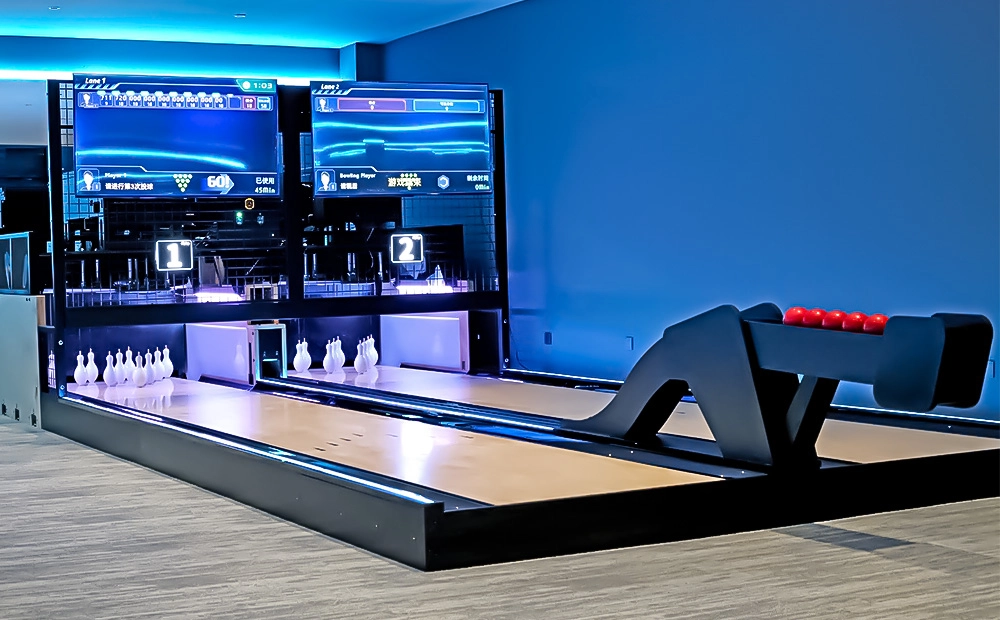
Flying Smart Duckpin Bowling (FSDB) innovative design, standard 9.2-meter short lane, can be shortened in length, compact layout suitable for small spaces. The game rules are simple but challenging, attracting players of different ages to actively participate.
Suitable for social entertainment venues such as bars, billiard halls, and game centers, it not only enhances interactivity but also increases the popularity and consumption frequency of the venue. The fun and competitive nature of FSDB will make it a new focus of social activities.
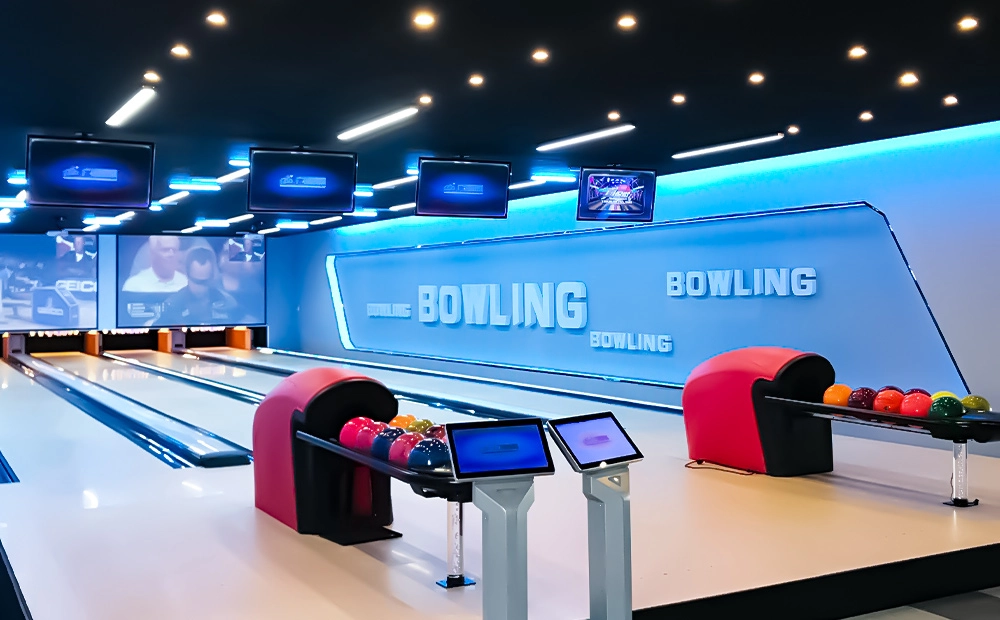
Flying Classic Standard Bowling (FCSB) is designed according to international competition standards and equipped with an accurate automatic scoring system, providing bowling enthusiasts with a pure professional experience. Whether it is for competitions or leisure entertainment, FCSB can meet high-level needs.
Suitable for family entertainment centers, luxury resorts, private villas, or clubs, it is an ideal choice for customers who pursue high-end quality and professional experience. Its classic design and excellent performance will add lasting appeal to the venue.
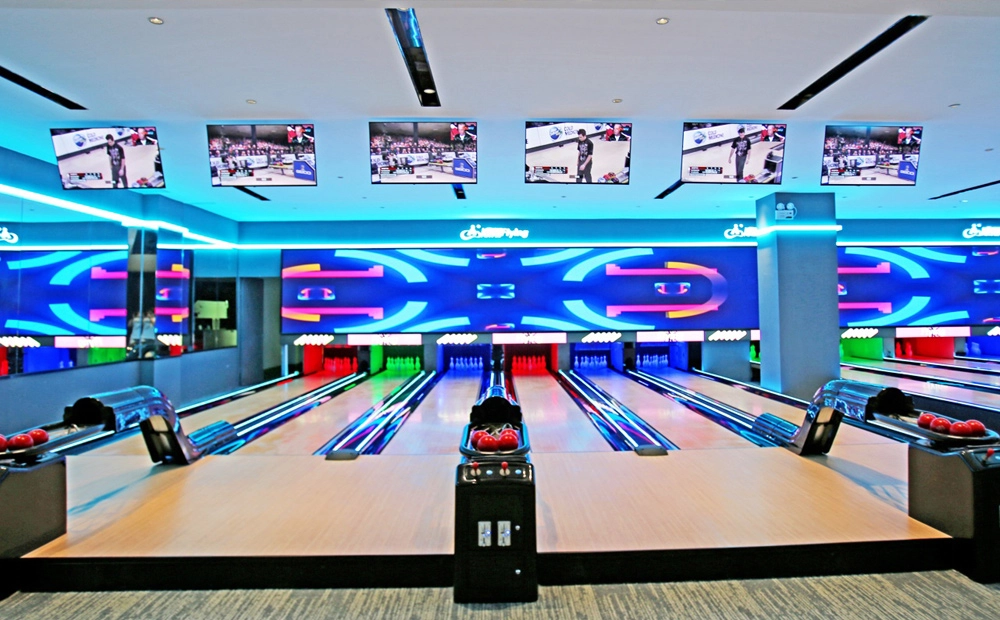
Flying Cute Mini Bowling (FCMB) is a mini bowling experience designed for children and families. The lane length is fixed at 12 meters, equipped with lightweight balls without finger holes (only 1.25kg) and small pins, specially designed for children and family fun.
It can not only help children feel the fun of bowling, but also stimulate their interest and competitive consciousness. Suitable for children's playgrounds, theme parks and parent-child centers, it is the best choice for places focusing on the children's market.
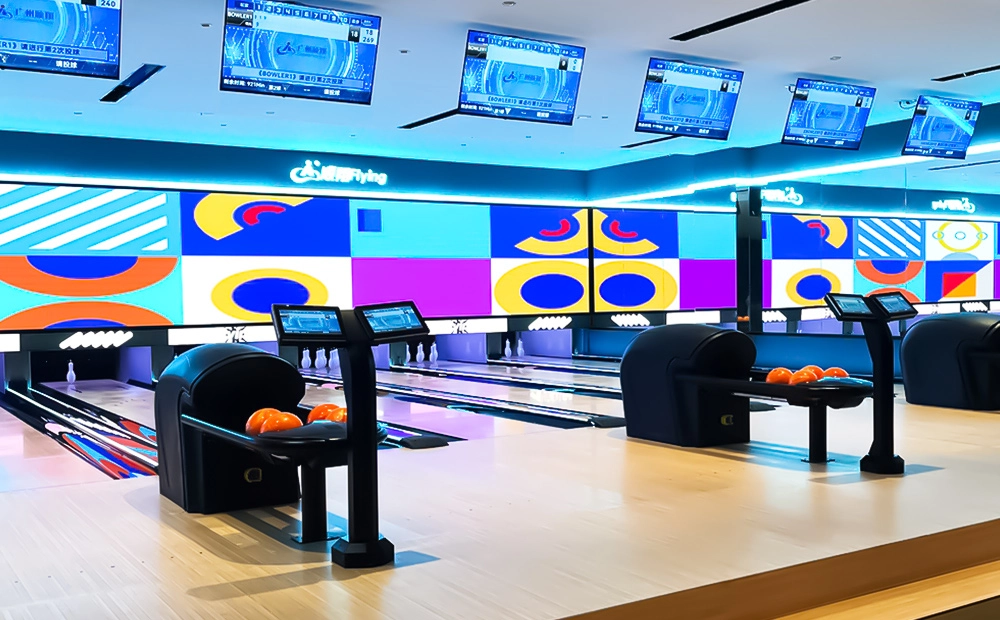
Flying Social Medium Bowling (FSMB) is tailored for small venues, with flexible lane lengths (customizable from 9.6 meters to 18 meters), a small ball design suitable for players of all ages, and light pins that are easier to knock down, increasing participation and fun.
Whether it is a gathering of friends or a casual social, FSMB can easily create a relaxed and pleasant atmosphere. Its efficient space-utilization design is particularly suitable for cafes, bars and community entertainment venues, allowing people to fall in love with bowling in a relaxed interaction.
Contact Flying
Start Your Custom Bowling Alley Project
If you contact us now for more details, we can provide you with a custom bowling alley service. Our service team will get back to you within 24 hours normally!
© 2026 Flying BOWLING. Designed by gooeyun.
FOLLOW US:

Flying Bowling
Flying Bowling
Flyingbowling
Flyingbowling