

Synthetic vs. Wood Bowling Lanes: A Long-Term ROI Analysis (2026 Guide)
When evaluating Synthetic vs. Wood Bowling Lanes, bowling center operators face a critical financial and operational decision that dictates their facility's profitability for decades. The bowling industry has evolved significantly over the past century, moving from simple wooden alleyways to highly engineered entertainment centers. In 2026, the shift from traditional materials to advanced laminates is transforming the industry at an unprecedented pace. Today's bowlers demand perfection—a smooth, predictable roll every single time they step up to the approach. At the same time, facility owners are battling rising labor and material costs. This comprehensive guide provides a deep dive into the operational expenses, friction dynamics, and long-term financial impacts of both surfaces, helping you build a highly profitable, modern venue.
What is the Difference Between Synthetic and Wood Bowling Lanes?
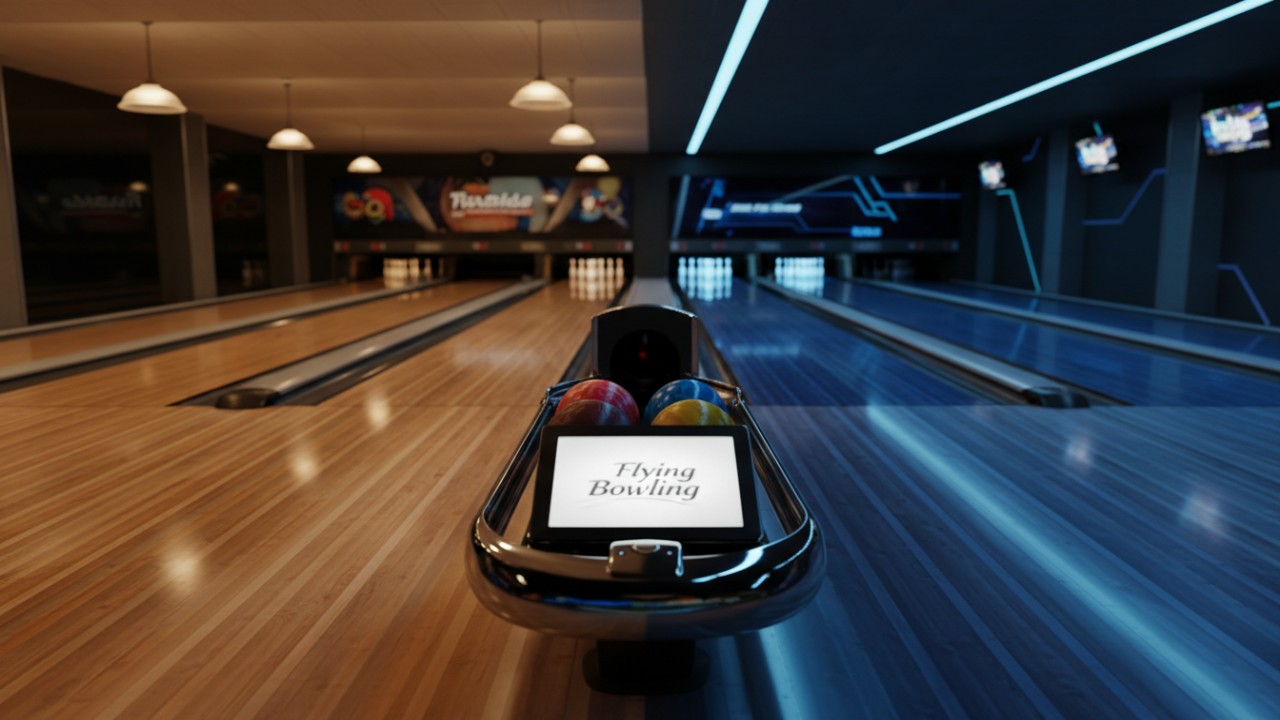
The main difference between synthetic and wood bowling lanes is that wood lanes are made of natural maple and pine requiring heavy maintenance, whereas synthetic lanes use durable, high-pressure phenolic laminates offering consistent ball reaction and significantly lower upkeep.
For decades, the standard in bowling was natural wood. Operators loved the classic look, but the biological nature of timber meant that lanes were constantly shifting. Wood expands and contracts based on indoor humidity, and the continuous impact of 15-pound bowling balls takes an immediate toll on the surface. While classic wood surfaces carry historical charm, they are fundamentally organic and prone to environmental degradation. In contrast, modern synthetic surfaces represent the absolute pinnacle of sports engineering. Built layer by layer in a controlled factory setting, synthetic lanes completely remove the daily variables that cause massive headaches for lane mechanics.
- Material Composition: Wood lanes rely on harvested timber (typically hard maple and softer pine), while synthetics are crafted from ultra-dense phenolic bowling surfaces.
- Maintenance Needs: Natural wood demands daily heavy oiling, climate control, and expensive annual resurfacing. Synthetics drastically reduce these labor-intensive requirements.
- Durability and Lifespan: High-pressure laminates resist dents, gouges, and humidity changes, easily outlasting their wooden counterparts and making them the gold standard in the 2026 market.
Key Takeaways: Quick Summary of Lane Surfaces
A quick summary of lane surfaces reveals that wood lanes offer classic aesthetics with high maintenance, while synthetic lanes provide USBC-certified consistency, lower lifetime friction variation, and a superior long-term return on investment for modern bowling centers.
Understanding the delicate balance between upfront capital expenditures and ongoing operational expenses is the hallmark of a successful bowling proprietor. Operators must weigh the nostalgic feel of traditional lanes against hard, data-driven economic realities. When you analyze the commercial landscape in 2026, the trends unequivocally point toward modernization and efficiency.
- Classic Appeal vs. High Cost: Wood lanes have a unique "personality" and sound, but they carry heavy, recurring operational and maintenance costs.
- Predictable Performance: Synthetic lanes guarantee consistent ball roll and structural integrity, ensuring fairness for competitive play.
- Aesthetic Flexibility: Today's custom synthetics can perfectly replicate the rich look of real wood while offering specialized features like full glow-in-the-dark customization for lucrative cosmic bowling events.
- Maximized Profitability: The bowling alley construction ROI heavily favors synthetic installations by completely eliminating the need for periodic sanding, stripping, and recoating.
The Anatomy of Wood Bowling Lanes: Maple, Pine, and Tradition
The anatomy of traditional wood bowling lanes features hard maple for the heads and pin decks to withstand impact, alongside softer pine for the mid-lane, creating a natural grain surface that heavily influences friction and ball motion.
Historically, this dual-wood construction was the only viable way to build a functional, long-lasting lane. The hard maple protected the extreme high-impact zones where the ball is dropped and where the pins violently crash. The softer pine in the middle allowed the ball to grip the surface and execute a hook. However, this organic makeup inherently causes uneven wear over time.
- Friction and Ball Motion: The natural grain creates a unique dynamic in wood vs synthetic bowling friction, typically causing the ball to hook much earlier due to the softer, highly porous surface absorbing lane oil quickly.
- Vulnerability to Damage: Wood is highly susceptible to denting from lofted bowling balls, footprint compression, and warping caused by facility humidity and temperature changes.
- The Resurfacing Reality: To maintain legal playability, wood lanes require a costly, incredibly disruptive annual process of chemical stripping, aggressive sanding, and thick urethane or epoxy recoating.
The Synthetic Revolution: High-Pressure Phenolic Composites
Modern synthetic bowling lanes are engineered from high-pressure phenolic laminates and composites, creating a highly durable, flat surface that mimics the organic look of wood while eliminating structural weaknesses and vulnerability to humidity fluctuations.
The shift toward synthetic materials has fundamentally altered center operations worldwide, moving venues from high-maintenance burdens to highly efficient profit centers. As reported by Wikipedia in their overview of modern lane construction, contemporary bowling lanes predominantly feature synthetic surfaces that are carefully treated with specific oil patterns to control ball motion and protect the equipment.
- High-Pressure Laminates (HPL): These advanced, multi-layered materials mimic the visual aesthetic of wood but offer a uniformly hard, virtually frictionless foundation.
- Consistent Oil Displacement: Synthetic surfaces do not absorb lane conditioner. This allows for uniform oil spreading, ensuring consistent friction across every single board of the lane.
- Climate Immunity: Unlike natural wood, synthetic panels do not expand, contract, or warp when seasonal weather or indoor humidity fluctuates.
- USBC Compliance: Premium synthetics easily comply with the strict 2026 United States Bowling Congress Coefficient of Friction standards, ensuring tournament readiness. For further reading on specialized applications, check out our comprehensive Guide to Synthetic Bowling Lanes.
Long-Term ROI Analysis: Upfront Costs vs. Ongoing Maintenance
A long-term ROI analysis demonstrates that the initial installation costs of synthetic bowling panels are rapidly offset by the elimination of expensive annual wood stripping, sanding, and recoating, dramatically reducing a center's ongoing maintenance and labor expenses.
When calculating the total cost of ownership, operators must look far beyond the initial purchase invoice. The true financial benefit of synthetic surfaces becomes glaringly obvious when comparing a 10-year operational window. Wood lanes act as a constant financial drain, while synthetic lanes operate as a stable, long-term asset.
| Cost & Operational Metric | Traditional Wood Lanes | Modern Synthetic Lanes |
|---|---|---|
| Initial Installation | Lower raw material cost, but extremely high labor to build. | Moderate to high initial panel and installation cost. |
| Annual Resurfacing | $1,000 - $1,500+ per lane for sanding and recoating. | $0 (No sanding or recoating is ever required). |
| Daily Maintenance | High labor (heavy oiling, strict climate control, deep cleaning). | Low labor (standard dust cleaning, much less frequent oiling). |
| Lane Uptime | Loses several days of revenue during the annual resurfacing period. | 100% uptime, maximizing open play and high-volume league revenue. |
| 10-Year ROI | Negative ROI due to relentlessly compounding maintenance fees. | Highly positive ROI; effectively pays for itself within 3 to 5 years. |
- Initial Cost Comparison: While laying new synthetic panels carries a noticeable upfront cost, it is highly comparable to the price of completely restoring deeply damaged, neglected wood lanes.
- The 10-Year Maintenance Gap: By completely eliminating annual resurfacing, operators save tens of thousands of dollars per decade, drastically cutting overall synthetic lane maintenance costs.
- Labor Cost Reductions: Synthetics demand far less intensive daily conditioning and cleaning, freeing up your mechanics and front-of-house staff for other revenue-generating tasks.
- Revenue Boosting: Predictable, high-scoring synthetic lanes attract highly competitive league bowlers and ensure maximum uptime for weekend open play.
Expert Tips & Common Mistakes in Lane Installation
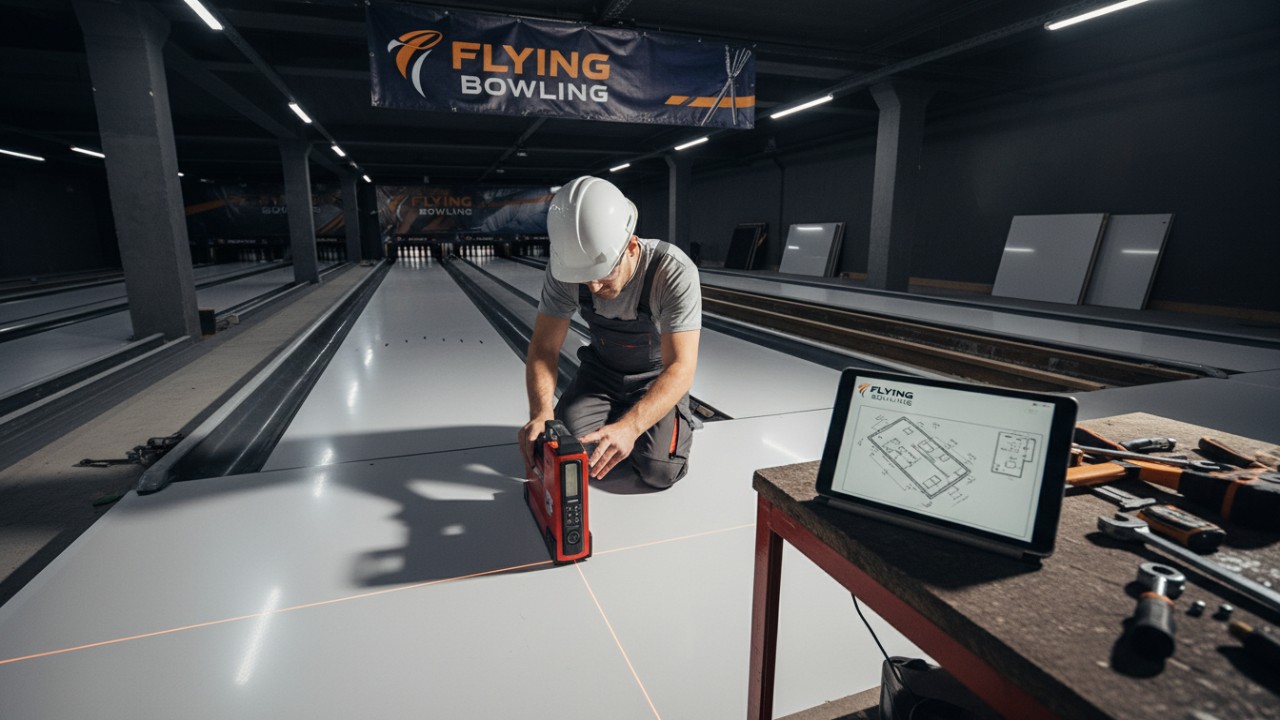
When upgrading lane surfaces, a common mistake is installing cheap plastic overlays instead of full-thickness laminates; expert tips dictate always verifying USBC certification and pairing new synthetic lanes with modern string pinsetters to maximize operational efficiency.
Modernizing your bowling center requires highly strategic planning. Cutting corners during the construction phase can lead to disastrous financial and operational consequences down the line. To ensure your lanes meet the exact topography and friction standards required for professional or sanctioned play, operators must closely follow the stringent guidelines set forth, as outlined by the United States Bowling Congress in their official equipment specifications manual.
- Avoid Cheap Overlays: Never settle for thin, non-structural plastic films. True synthetic lanes use thick, rigid phenolic panels engineered specifically for relentless, heavy impact.
- Verify Certifications: Always ensure your materials are classified as USBC certified bowling lanes prior to signing a purchase agreement. Non-certified lanes cannot host sanctioned leagues or official tournaments.
- Modernize the Entire System: Pair your new synthetic lane upgrades with high-efficiency string pinsetters. This holistic upgrade maximizes your center's total ROI by drastically reducing mechanical downtime, eliminating legacy part replacement costs, and simplifying maintenance.
Why Modern Centers Choose USBC-Certified Flying Bowling Synthetic Lanes
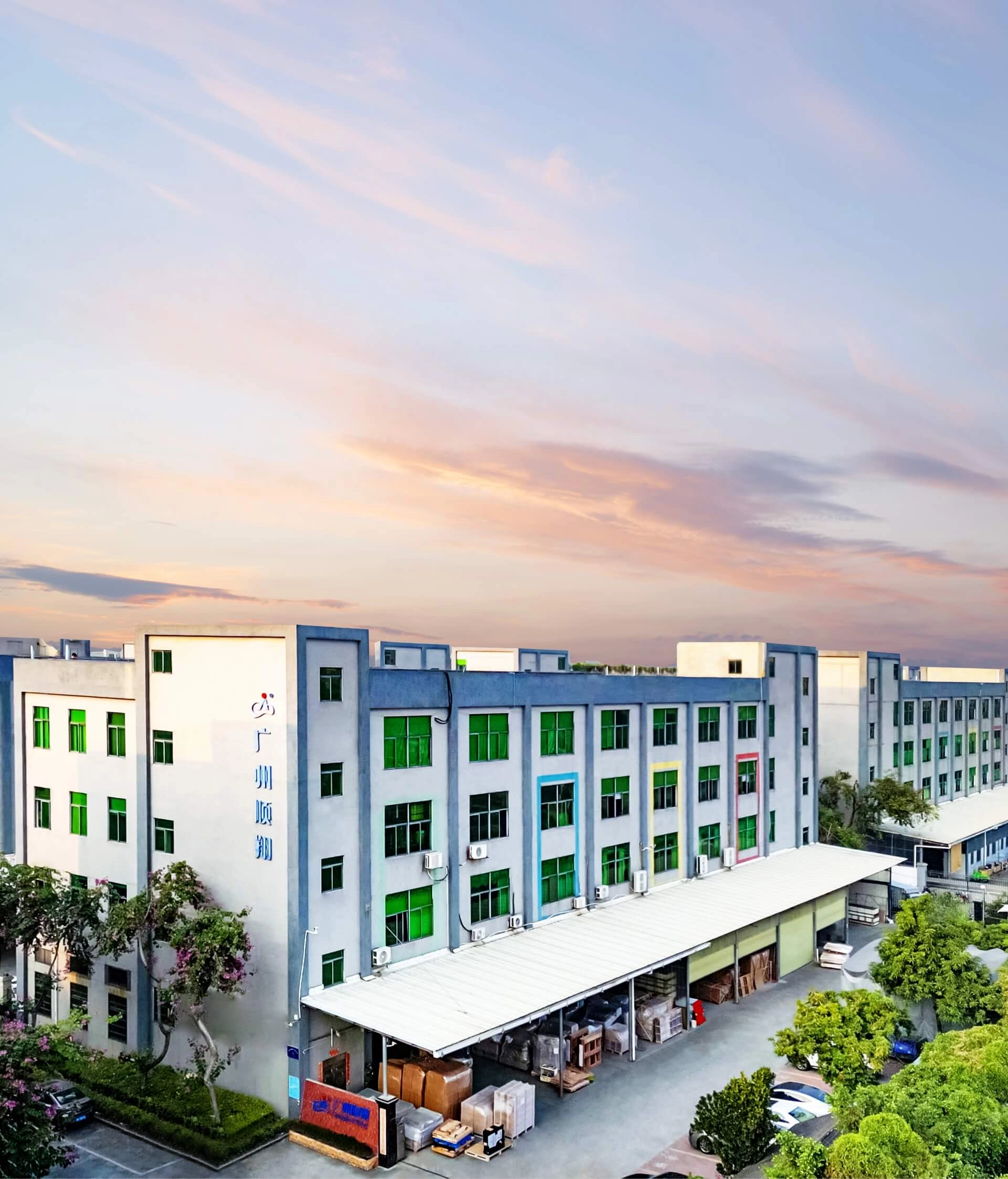
Modern centers choose USBC-certified synthetic lanes from Flying Bowling Co., Ltd. because we deliver precision-engineered, world-class equipment that rivals European and American brands in quality but is offered at completely unbeatable prices for maximum profitability.
Since 2005, Flying Bowling has been a leading manufacturer driving the future of the global bowling industry. We do not just sell standalone lanes; we provide a comprehensive, fully integrated ecosystem for venue success.
- Unbeatable Value: Our massive 10,000+ square-meter manufacturing facility allows us to produce premium, USBC-certified lanes at highly competitive rates, dramatically lowering your barrier to entry for center modernization.
- Versatile Formats: We offer precision engineering tailored for Standard Bowling (FCSB), Duckpin Bowling (FSDB), Mini Bowling (FCMB), and Medium Bowling (FSMB).
- Proven Track Record: Our team of experts has customized and successfully built the ideal bowling alley for over 3,000 satisfied customers worldwide.
- Seamless Integration: Our top-tier synthetic lanes pair perfectly with our highly sought-after Flying Bowling string pinsetters and ball return machines, giving you a complete, one-stop center upgrade.
Global Reach, Local Support: The Flying Bowling Advantage
The Flying Bowling advantage lies in our extensive global reach paired with dedicated local support, operating branches across the United States, South America, Europe, and the Middle East to provide rapid sales, installation, and comprehensive after-sales service.
We deeply understand that building or upgrading a commercial bowling center is a massive capital investment. That is precisely why we proudly stand by our clients long after the initial installation is complete. You are never left to figure out maintenance or troubleshooting on your own.
- Localized Branches: Our extensive global presence ensures you receive rapid, culturally fluent support no matter where your entertainment facility is located.
- Rapid Response: We pride ourselves on exceptionally quick turnaround times for professional installation, complex maintenance inquiries, and dedicated after-sales service.
- Global Partnerships: We are actively recruiting global distributors to partner with us, empowering local businesses to grow securely alongside a leading Chinese equipment manufacturer.
Conclusion
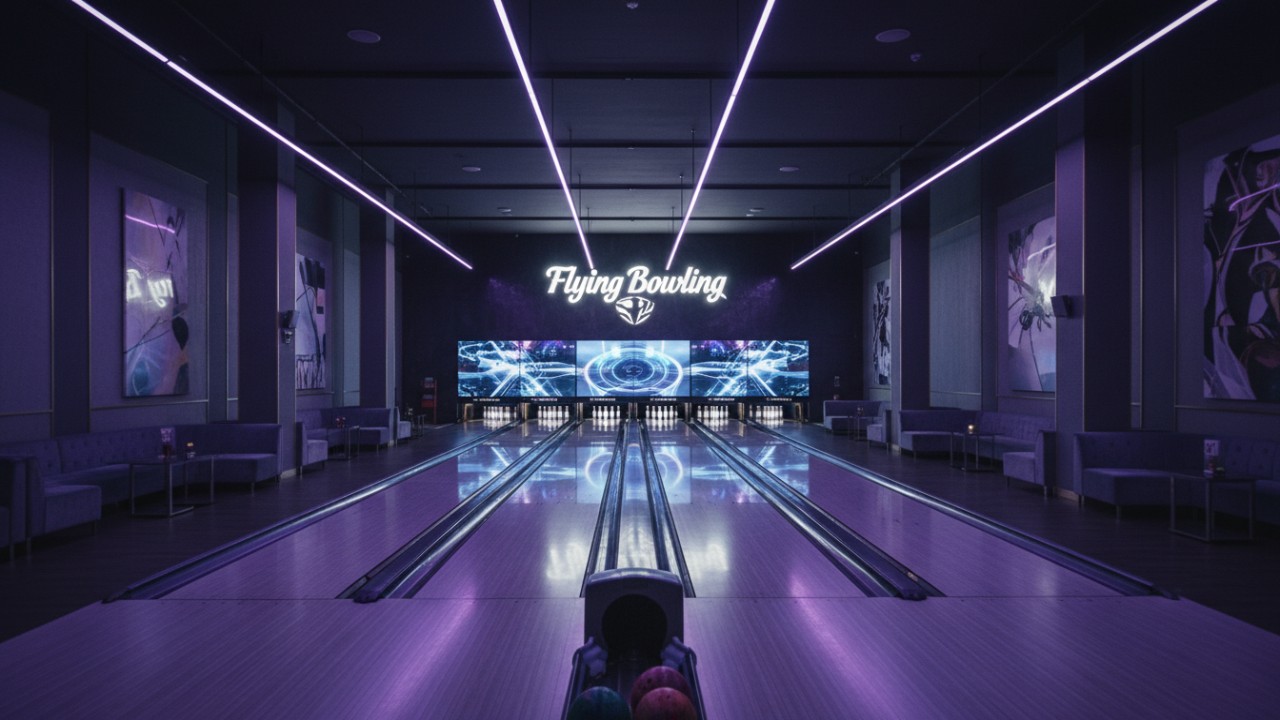
While wood lanes hold a certain historical charm and nostalgia, the long-term ROI, scoring consistency, and drastically low maintenance of synthetic bowling lanes make them the absolute clear choice for commercial operators in 2026. Investing in high-quality, USBC-certified synthetic lanes from a globally trusted supplier guarantees a significantly better experience for your bowlers and a much healthier, resilient bottom line for your business. By completely eliminating the grueling, expensive costs of annual wood resurfacing and reducing daily labor requirements, operators can future-proof their venues and focus entirely on maximizing their revenue generation. Contact us today at jackson@flyingbowling.com or visit www.flyingbowling.com to optimize your synthetic vs. wood bowling lanes strategy and maximize your center's ROI.
FAQs About Synthetic vs. Wood Bowling Lanes
Are synthetic bowling lanes better than wood?
Yes, for modern centers, synthetic lanes are generally considered better due to their durability, consistent ball reaction, and significantly lower maintenance costs. Wood lanes have higher friction but require expensive annual resurfacing.
How long do synthetic bowling lanes last?
High-quality synthetic bowling lanes can last 15 to 20 years or more with proper daily cleaning and maintenance. Unlike wood, they do not need to be sanded down, preserving their thickness and structural integrity over time.
What are synthetic bowling lanes made of?
Synthetic lanes are typically constructed from high-pressure phenolic laminates and resins. These composite materials are engineered to withstand the heavy impact of bowling balls while maintaining a uniform, flat surface.
How often do wood bowling lanes need to be resurfaced?
Traditional wood lanes generally need to be professionally resurfaced (sanded and recoated) every 1 to 2 years. This process is expensive and requires the lanes to be out of operation for several days.
Does a bowling ball hook more on wood or synthetic lanes?
Bowling balls typically hook more, and earlier, on wood lanes because natural wood surfaces have higher inherent friction. Synthetic lanes have lower friction, allowing the ball to skid further down the lane before hooking.
How much does it cost to install a synthetic bowling lane?
Costs vary based on the brand, customization, and center size, but synthetic lanes offer a massive long-term ROI. Companies like Flying Bowling offer USBC-certified synthetic lanes at unbeatable prices compared to traditional Western brands.
Can you install synthetic overlays on old wood lanes?
Yes, synthetic overlays or panels are frequently installed directly over existing, leveled wood lanes. This is a common modernization strategy that utilizes the original wood as a stable sub-foundation.
What are the USBC certification requirements for lane surfaces?
The USBC requires lane surfaces to meet strict standards regarding levelness, hardness, and coefficient of friction. All materials, whether wood or synthetic, must pass laboratory testing to be approved for sanctioned league and tournament play.
More Articles

Let’s Build a center Together
Partner With a Trusted Bowling Alley Design, One-Stop Solution Manufacturer.
Flying has successfully built ideal bowling alleys for more than 3,000 customers.
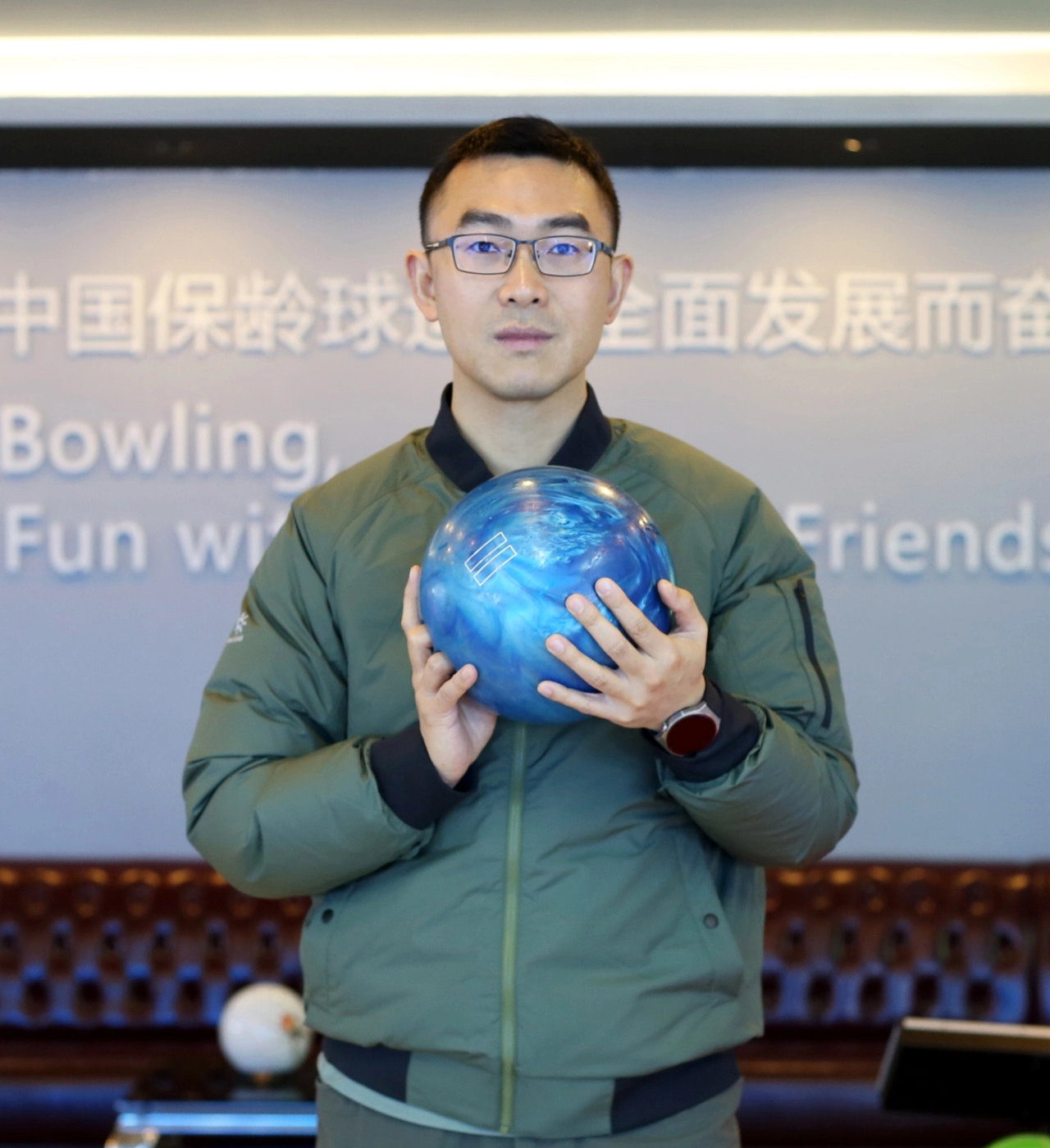
Technical Expert
You may also like our products
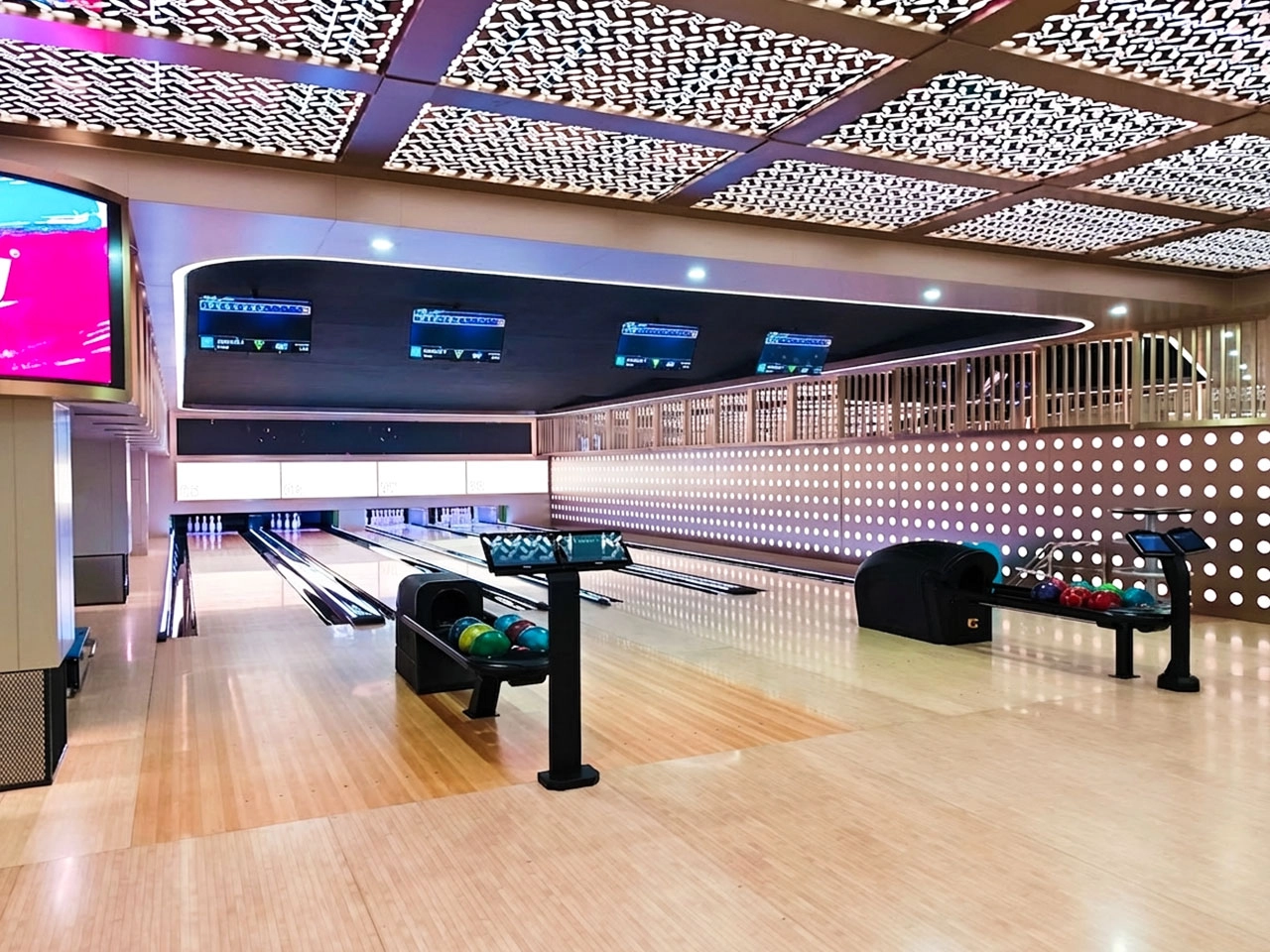
Build a commercial bowling venue with Flying’s complete string pinsetter bowling alley equipment package. The system includes the AEROPIN™ USBC-certified string pinsetter, customizable lanes, automatic scoring, ball return, lane lighting, pins, control hardware, and overseas installation support.
Designed for commercial bowling centers, family entertainment venues, hotels, resorts, bars, and premium private projects, this turnkey bowling system helps operators reduce sourcing complexity and prepare for reliable long-term operation.
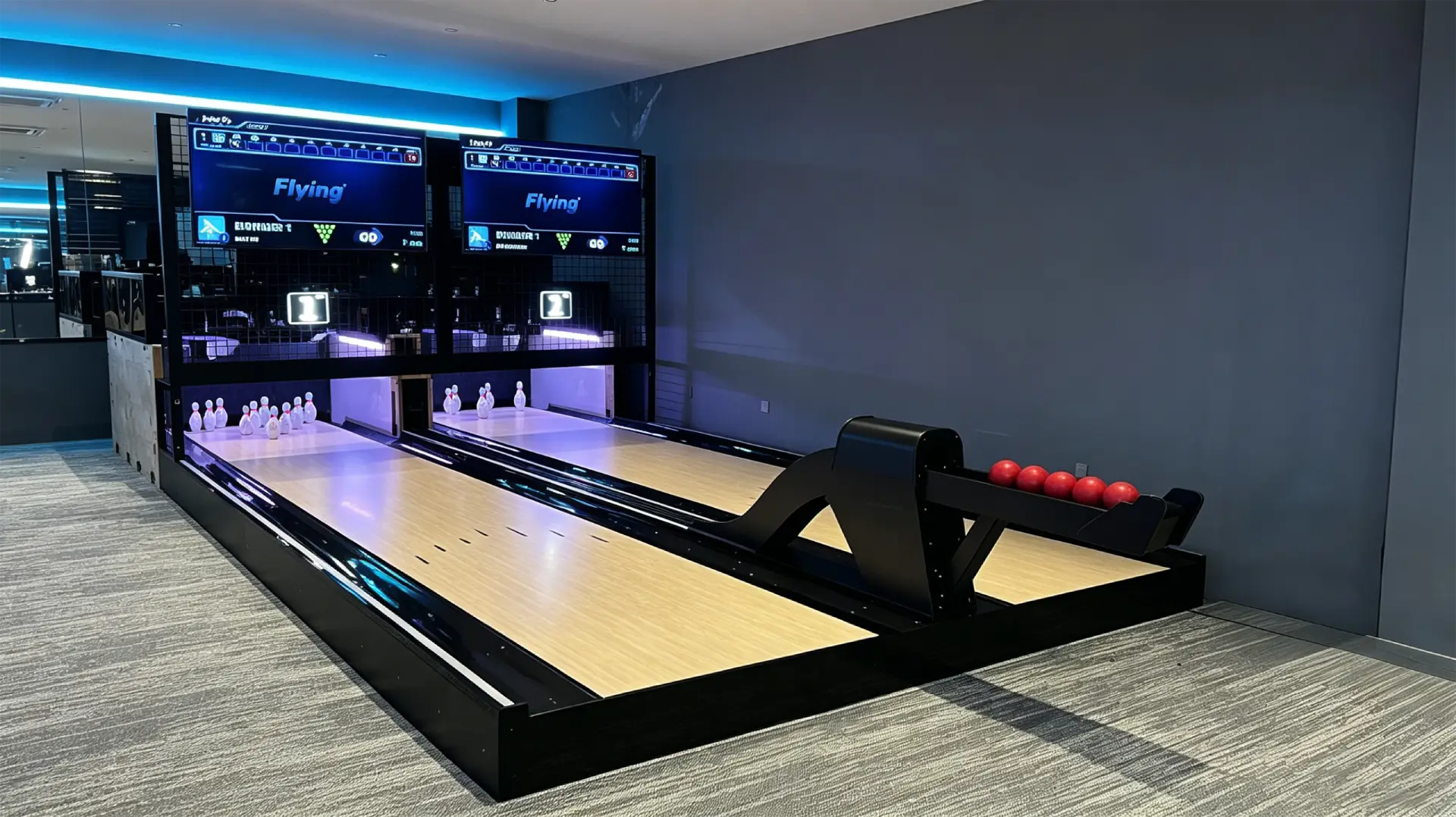
Flying Smart Duckpin Bowling is a compact duckpin bowling equipment system designed for bars, family entertainment centers, hotels, resorts, cinemas, boutique bowling alleys, and social entertainment venues. With a standard 9.13m duckpin bowling lane, 1.25kg lightweight balls, automatic scoring, ball return, LED lighting, and a smart string pinsetter, it creates a fast-paced and easy-to-play bowling experience in a smaller footprint than traditional bowling.
The system is available as a turnkey duckpin bowling package, including lane equipment, a string pinsetter system, scoring hardware, control software, global shipping, installation guidance, and technical support.
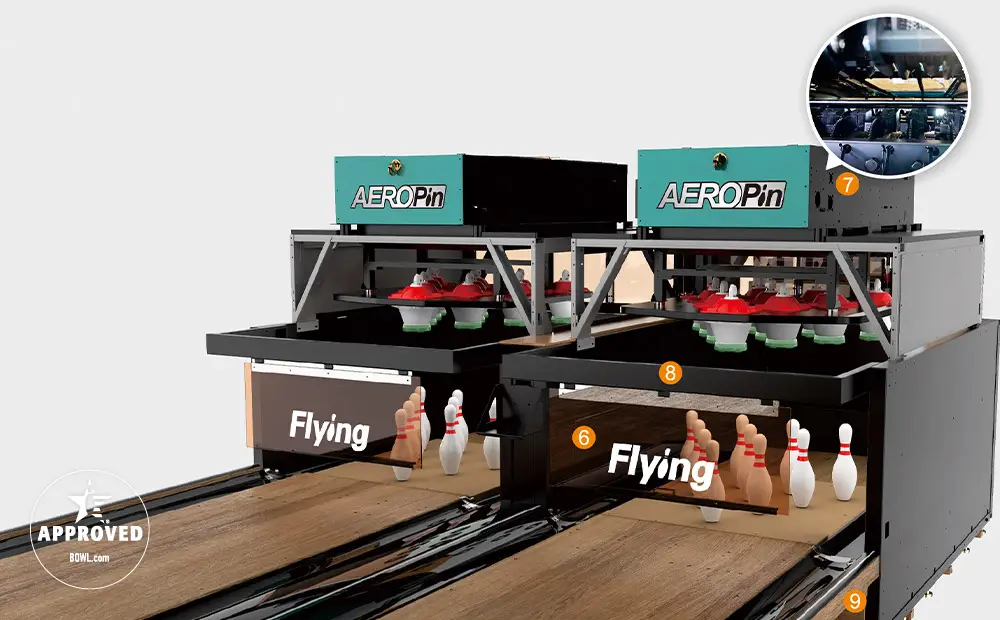
AEROPIN is Flying Bowling’s USBC-certified string pinsetter system for modern commercial bowling centers. Designed for fast pin setting, smooth ball return, low maintenance, and stable daily operation, it helps venue operators build league-ready and entertainment-focused bowling projects with confidence.
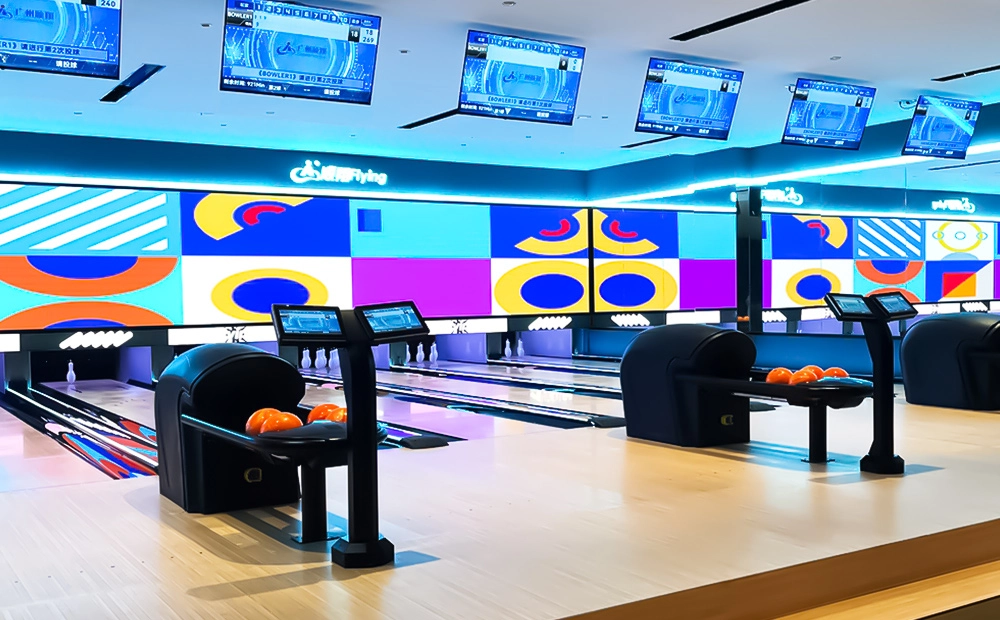
Flying Social Medium Bowling is a compact medium bowling equipment system designed for bars, cafes, family entertainment centers, community leisure venues, hotels, resorts, and small indoor entertainment spaces. With customizable lane lengths from 9.6m to 18m, small balls, lighter pins, string pinsetter technology, ball return, and automatic scoring, it creates an easy-to-play social bowling experience for players of different ages and skill levels.
Compared with full-size standard bowling, medium bowling requires less space and offers a more casual, interactive format. It is a practical choice for venues that want to add a bowling attraction without building a full commercial bowling alley.
Contact Flying
Start Your Custom Bowling Alley Project
If you contact us now for more details, we can provide you with a custom bowling alley service. Our service team will get back to you within 24 hours normally!
© 2026 Flying BOWLING. Designed by gooeyun.
FOLLOW US:

Flying Bowling
Flying Bowling
Flyingbowling
Flyingbowling