

Bowling Pins and Ball: The 2026 Guide to Equipment, Types & Boutique Trends
This comprehensive guide analyzes modern bowling equipment, focusing on the shift from traditional functionality to high-end boutique aesthetics. It covers technical specifications for pins and balls, material science, and the 2026 trends in visual merchandising for entertainment venues.
The era of the smoke-filled, utilitarian bowling alley has largely vanished, replaced by a new standard of "eatertainment" where high-end design meets competitive sport. In 2026, bowling pins and balls are no longer mere tools of the game; they are integral components of boutique bowling alley design, contributing to an immersive visual atmosphere. Modern venues now prioritize neon aesthetics, premium materials, and custom branding to attract a sophisticated demographic that values the experience as much as the score.
Key Takeaways
- Visual Shift: Equipment is now a central part of interior decor, often displayed in illuminated cases to enhance the "boutique" feel.
- Material Science: Modern bowling pin materials science combines hard rock maple cores with advanced synthetic coatings like Surlyn for durability and action.
- Tech Integration: The industry is moving toward string pin technology and advanced coverstocks (Reactive Resin) to balance maintenance costs with player performance.
- Customization: From custom bowling balls with marbled visuals to branded pins, personalization is the dominant trend for 2026.
Anatomy of the Perfect Roll: Bowling Ball Specifications
Bowling equipment specifications rely heavily on the interaction between the ball's core dynamics and its exterior friction. A bowling ball is engineered to control skid, hook, and roll, determined primarily by its coverstock and weight block.
Core Construction & Physics
The engine of any high-performance ball is the weight block. In 2026, manufacturers utilize two primary designs:
- Symmetrical Cores: These offer a stable, smooth motion, ideal for house balls and beginners.
- Asymmetrical Cores: These feature a distinct imbalance that creates a higher Radius of Gyration (RG), allowing the ball to respond aggressively to friction and create a sharper hook angle.
Coverstock Evolution
The outer shell, or coverstock, dictates how the ball interacts with the oil pattern on the lane.
- Polyester (Plastic): The standard for house balls found in most entertainment centers. It is durable, provides low friction, and travels straight.
- Urethane: A throwback material that has seen a resurgence for its ability to provide a smooth, controllable arc.
- Reactive Resin: Porous materials that absorb oil to increase friction, providing the "snap" at the end of the lane that professionals require.
The 'Visual' Ball
Modern manufacturing has moved beyond performance to aesthetics. As seen in luxury venues, custom bowling balls now feature intricate marbled patterns, neon-reactive pigments, and embedded graphics. This shift transforms the ball rack from a utility storage area into a vibrant display of color, vital for the visual appeal of a boutique venue. According to the United States Bowling Congress, equipment standards have evolved significantly to ensure these modern aesthetic changes do not compromise the integrity of the sport.
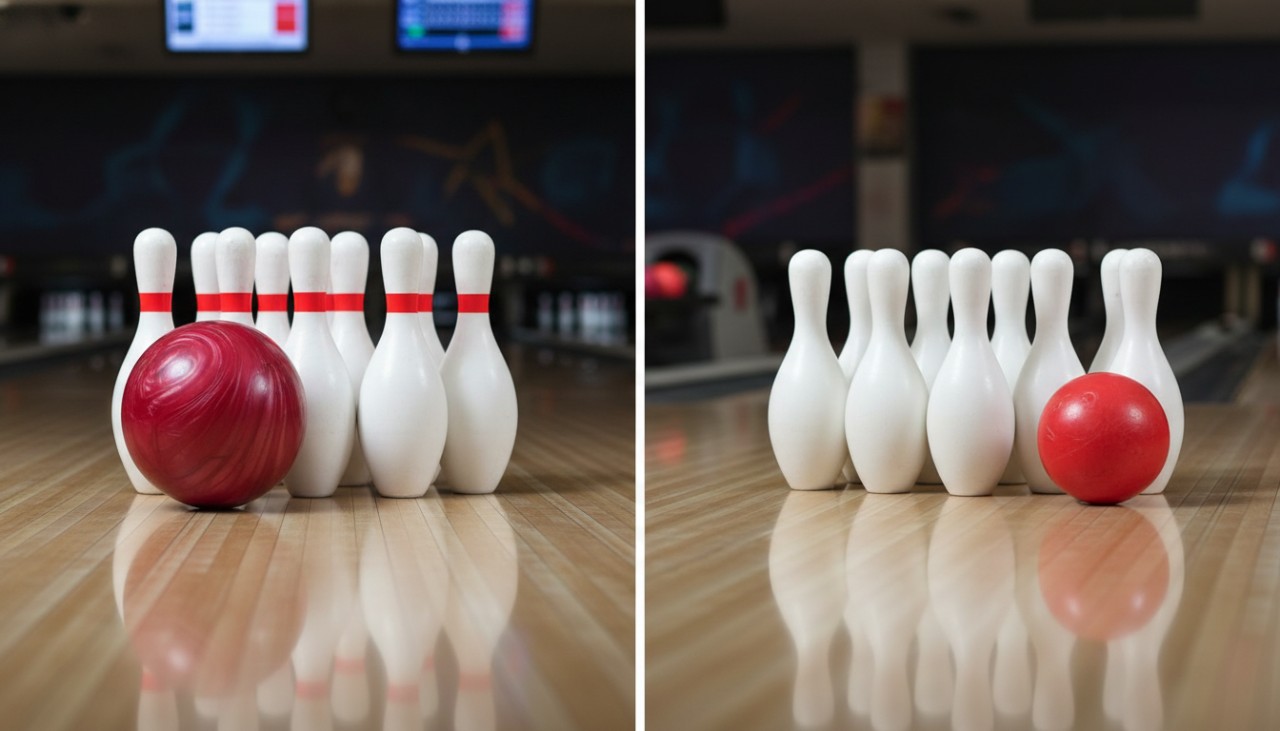
The Targets: Understanding Bowling Pin Types and Physics
Bowling pin materials science focuses on creating a target that is durable enough to withstand thousands of high-velocity impacts while maintaining the elasticity required for "pin action."
Material Composition
A regulation tenpin is not a solid block of wood. It is constructed from hard rock maple strips glued into a core shape, then encapsulated in a durable synthetic coating, typically Surlyn or Ethlyn. This composite structure allows the pin to sound "crisp" upon impact while preventing the wood from splintering.
Standard vs. Specialty Specs
Understanding tenpin vs duckpin sets is crucial for venue operators choosing their game type:
- Standard Tenpin: The global standard. These pins stand 15 inches tall and weigh between 3 lbs 6 oz and 3 lbs 10 oz. They require a standard 8.5-inch diameter ball.
- Duckpins: Shorter and squat, these pins are notoriously difficult to knock down. They are used with smaller balls that lack finger holes.
- Candlepins: The tallest and thinnest variation, nearly cylindrical in shape, offering a unique challenge where fallen pins remain on the deck (deadwood).
For a detailed breakdown of these variations and their historical context, Wikipedia's entry on Bowling offers extensive data on international pin standards.
Visual Merchandising: Equipment as Interior Design
In the modern "boutique" sector, how you display your equipment is as important as the equipment itself.
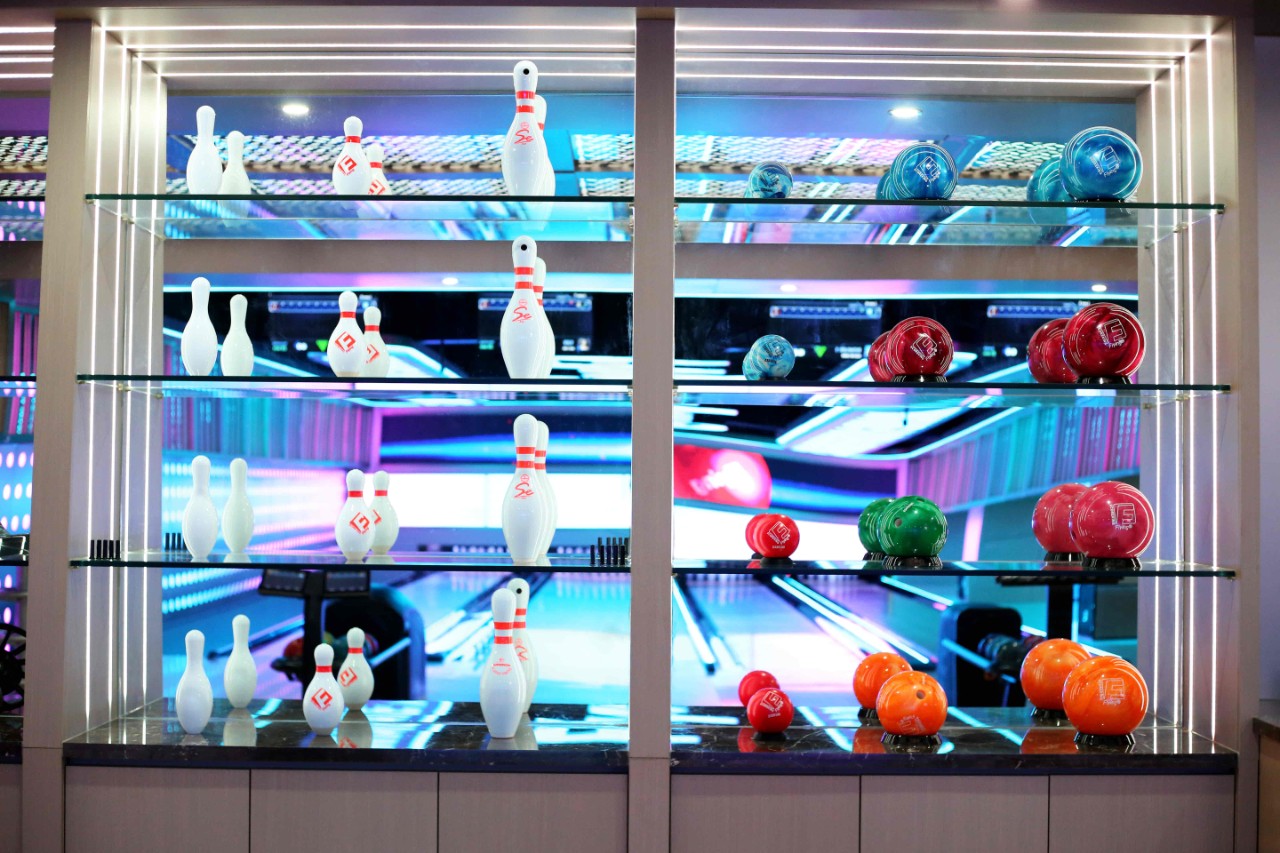
Analysis of Modern Display Trends
As illustrated in the image above, high-end venues are moving away from messy racks. Instead, they utilize sleek, multi-tiered display cases featuring LED strip lighting. The juxtaposition of bright white pins against neon blue or purple backlighting creates a futuristic, premium atmosphere.
- Color Coordination: Notice how the bowling balls (red, green, orange) are chosen not just for weight coding, but for their saturation levels under UV and LED lights.
- Branding: The pins in the display feature distinct red neck bands and custom logos. For B2B operators, custom branded pins serve as a subtle marketing tool, reinforcing the venue's identity in every frame.
- The 'Pro Shop' Experience: The glass shelving mimics high-end retail fashion, elevating the perception of the sport from a casual hobby to a sophisticated night out.
Comparison: Tenpin vs. String Pin vs. Mini-Bowling
Venue operators must decide between traditional authenticity and modern efficiency. The 2026 market sees a massive surge in String Pin technology.
| Feature | Tenpin (Free-Fall) | String Pinsetters | Mini-Bowling |
|---|---|---|---|
| Mechanism | Complex mechanical pincers/sweeps | Pins attached to durable black nylon strings | Scaled-down string system |
| Maintenance | High (requires specialized mechanics) | Low (fewer moving parts, untangles auto) | Very Low |
| Cost | High capital & operational expense | Moderate capital, low operational expense | Lowest entry cost |
| Target Audience | Competitive leagues & purists | Social bowlers, boutique venues, FECs | Families, bars, arcades |
| USBC Certified? | Yes | Yes (Certified as of 2023/2024) | No (Entertainment only) |
String Pinsetters have revolutionized boutique bowling alley design by requiring less space behind the lanes and significantly reducing noise and energy consumption.
Choosing the Right Setup for Your Venue
When outfitting a new center, the balance between durability and aesthetics is paramount.
- Inventory Management: A standard inventory mix should cover a wide demographic. We recommend a ratio heavily weighted toward 10lb–14lb balls for adult social crowds, with sufficient 6lb–9lb options for children.
- Maintenance Cycles: To maintain the pristine look shown in our visual analysis, pins must be rotated. In high-volume boutique centers, pins should be cleaned weekly and replaced every 6 to 8 months to prevent the "dingy" look that detracts from the neon ambiance.
- House Balls: Invest in high-durability urethane house balls. Unlike the older rubber balls, these resist cracking and maintain their vibrant color longer, ensuring your ball return always looks Instagram-ready.
Conclusion
The transformation of bowling from a blue-collar pastime to a luxury social experience is driven by the quality and presentation of the equipment. Whether it is the specific bowling equipment specifications of a reactive resin ball or the visual merchandising of branded pins in a neon-lit case, every detail contributes to the guest experience. In 2026, successful venues are those that treat their pins and balls not just as sporting goods, but as essential elements of their interior design.
Ready to Upgrade Your Bowling Experience?
Contact our team today for a free consultation to discuss premium equipment supplies and boutique design solutions for your venue.
Frequently Asked Questions
What are the official dimensions of a standard bowling pin?
A standard USBC-approved tenpin is 15 inches (380 mm) tall and 4.75 inches (121 mm) wide at its thickest point (the belly). The base diameter is exactly 2.03 inches (52 mm).
What materials are modern bowling balls made of?
Modern balls generally fall into three categories:
- Polyester (Plastic): Durable, low friction, ideal for beginners and spares.
- Urethane: Durable with more friction, creating a smooth arc.
- Reactive Resin: High friction and hook potential, used by professionals.
Why are there different sizes of bowling pins in the display image?
The image likely displays variations for different games. Tenpin is the largest standard; Duckpin is shorter and squat (used with smaller balls without finger holes); and Candlepin is the tallest and thinnest, creating a significantly harder target.
Do bowling balls damage the pins over time?
Yes, the repeated impact eventually crushes the wood fibers inside the pin or cracks the synthetic coating. Pins are typically rotated and eventually replaced every 6-12 months in busy centers to maintain scoring consistency and aesthetics.
What is the difference between string pins and free-fall pins?
Free-fall machines use traditional mechanics where pins are cleared and reset mechanically. String Pins are attached to black nylon strings, making the reset machine simpler, quieter, and cheaper to maintain. As of recent rule changes, string pins are USBC certified for competitive play.
How much does a set of bowling pins cost?
A single standard pin costs between $15 and $25. A full set of 10 pins typically ranges from $150 to $300, depending on branding, coating quality, and whether they are luminescent (glow-in-the-dark).
Can I customize bowling pins with my logo?
Yes, custom logo printing is a major trend for boutique bowling alley design. It reinforces brand identity and acts as a souvenir item, similar to the branded pins hinted at in the display case image.
What weight bowling ball should I use?
A general rule is to use a ball that is approximately 10% of your body weight (up to the maximum of 16 lbs). Children usually start with 6-8 lbs, adult women often use 10-14 lbs, and adult men typically use 14-16 lbs.
More Articles
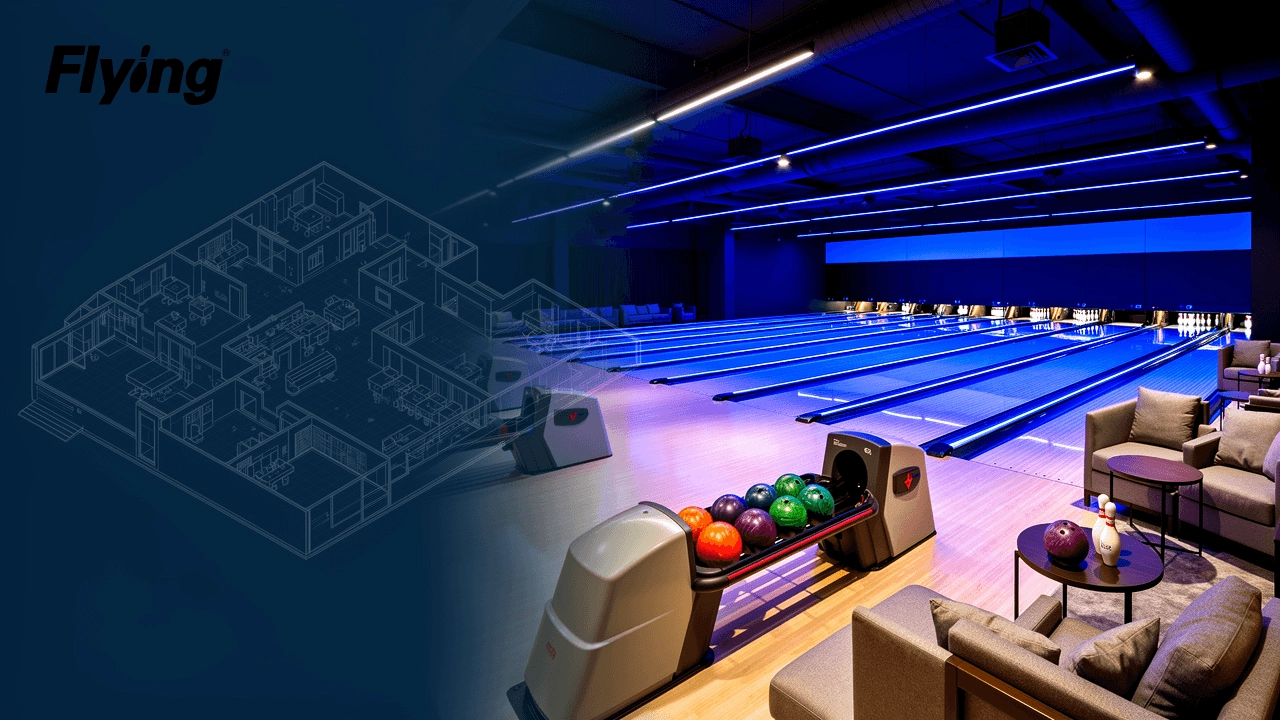

Let’s Build a center Together
Partner With a Trusted Bowling Alley Design, One-Stop Solution Manufacturer.
Flying has successfully built ideal bowling alleys for more than 3,000 customers.
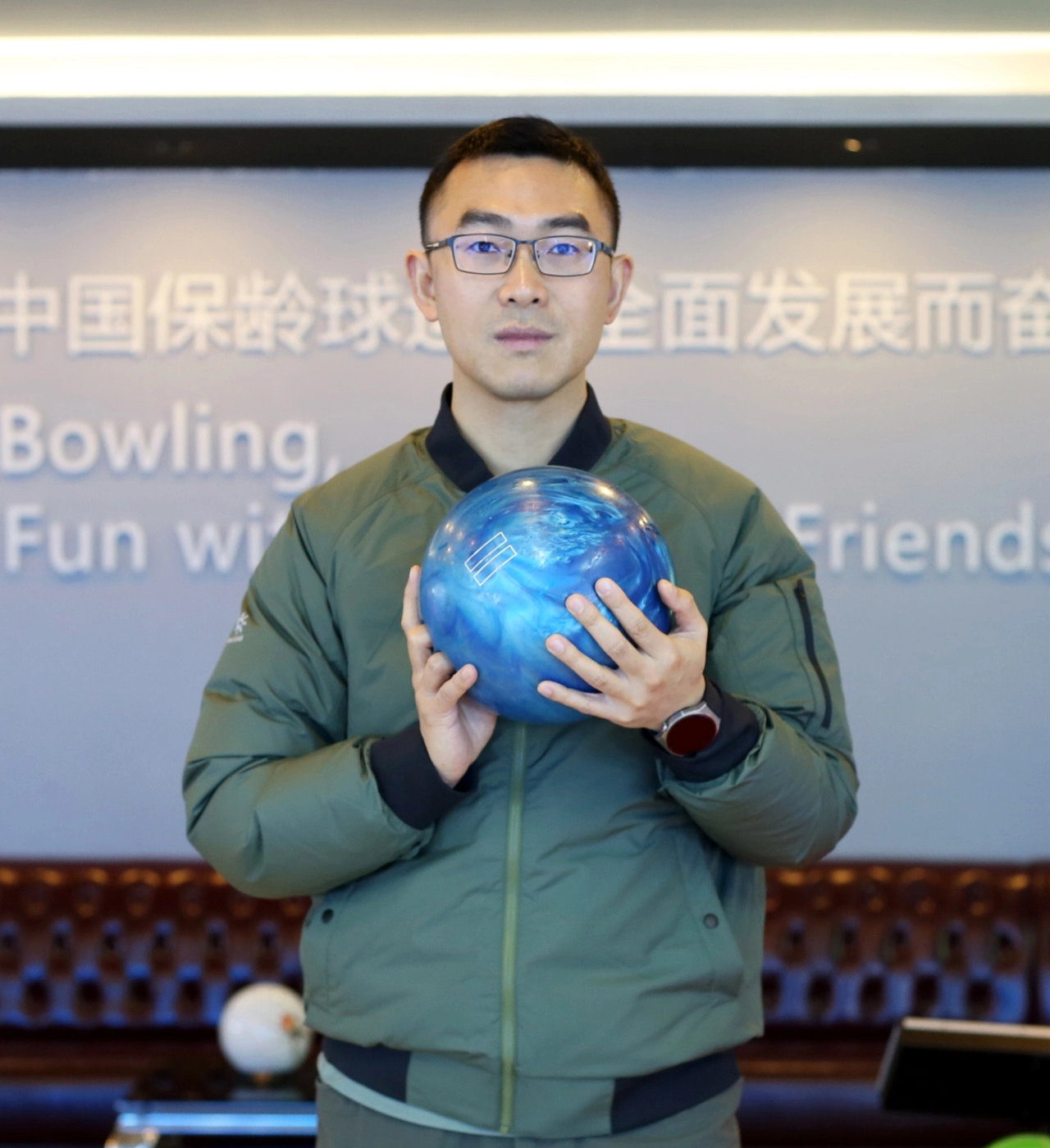
Technical Expert
You may also like our products
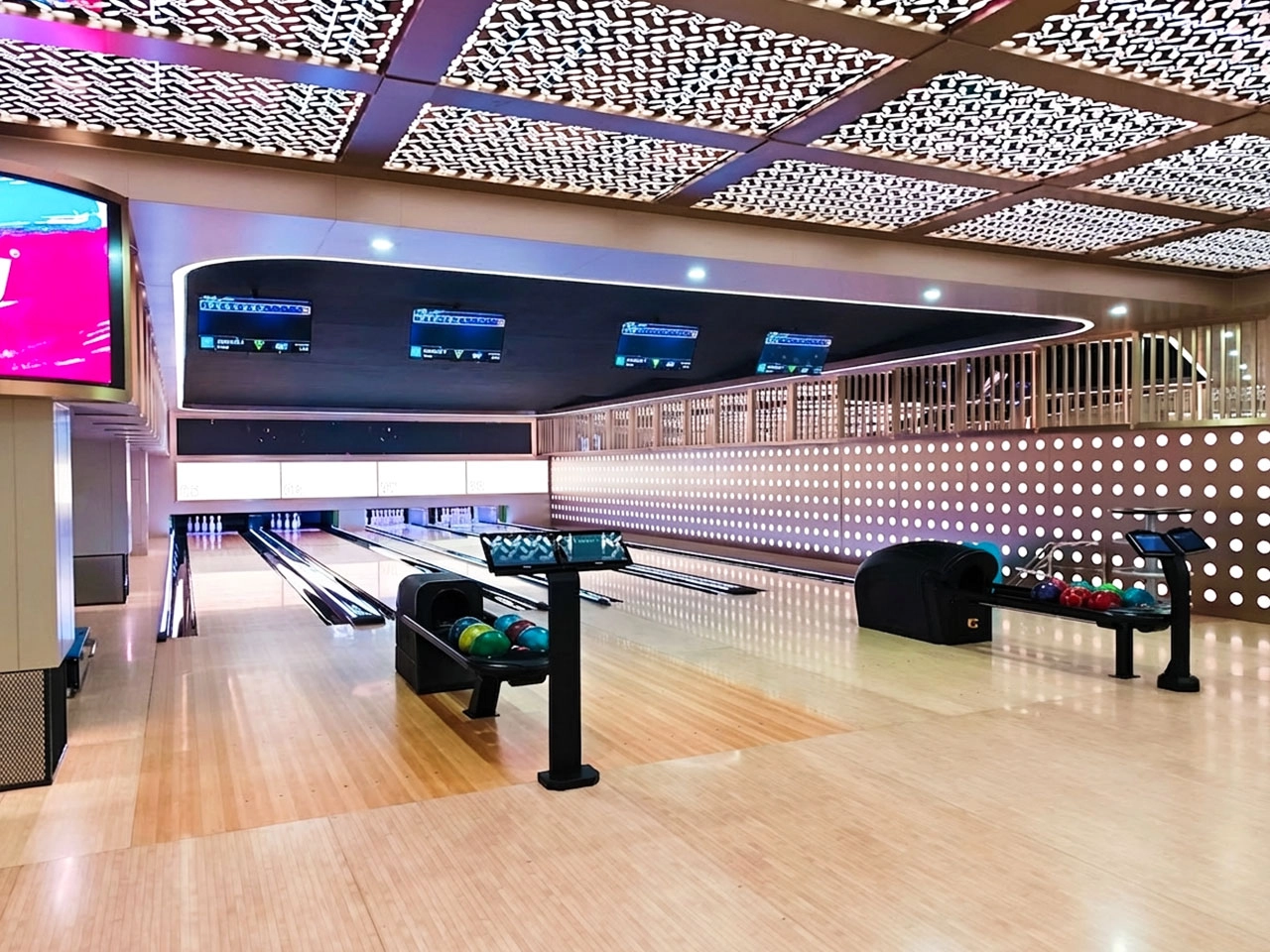
Build a commercial bowling venue with Flying’s complete string pinsetter bowling alley equipment package. The system includes the AEROPIN™ USBC-certified string pinsetter, customizable lanes, automatic scoring, ball return, lane lighting, pins, control hardware, and overseas installation support.
Designed for commercial bowling centers, family entertainment venues, hotels, resorts, bars, and premium private projects, this turnkey bowling system helps operators reduce sourcing complexity and prepare for reliable long-term operation.
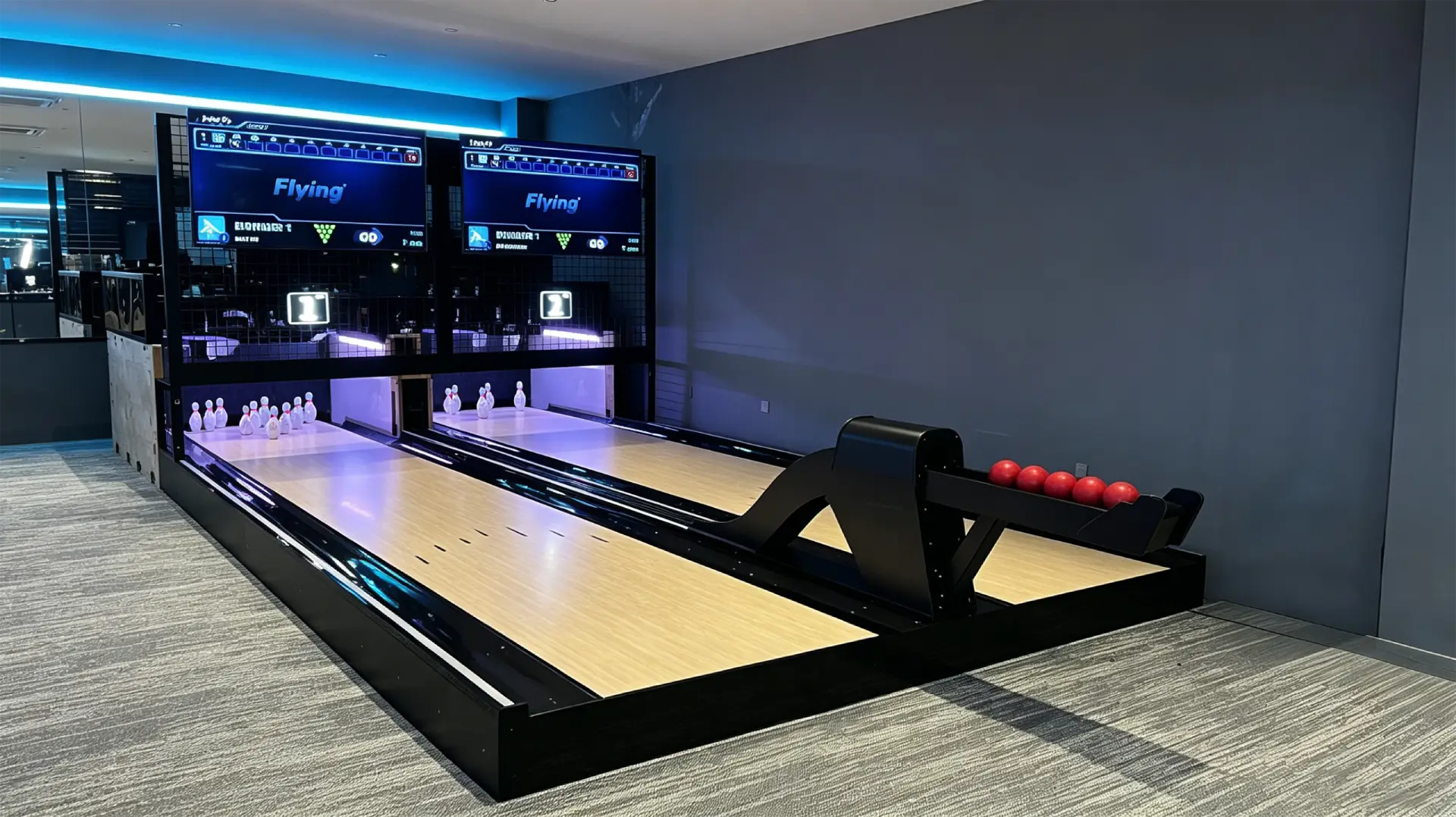
Flying Smart Duckpin Bowling is a compact duckpin bowling equipment system designed for bars, family entertainment centers, hotels, resorts, cinemas, boutique bowling alleys, and social entertainment venues. With a standard 9.13m duckpin bowling lane, 1.25kg lightweight balls, automatic scoring, ball return, LED lighting, and a smart string pinsetter, it creates a fast-paced and easy-to-play bowling experience in a smaller footprint than traditional bowling.
The system is available as a turnkey duckpin bowling package, including lane equipment, a string pinsetter system, scoring hardware, control software, global shipping, installation guidance, and technical support.
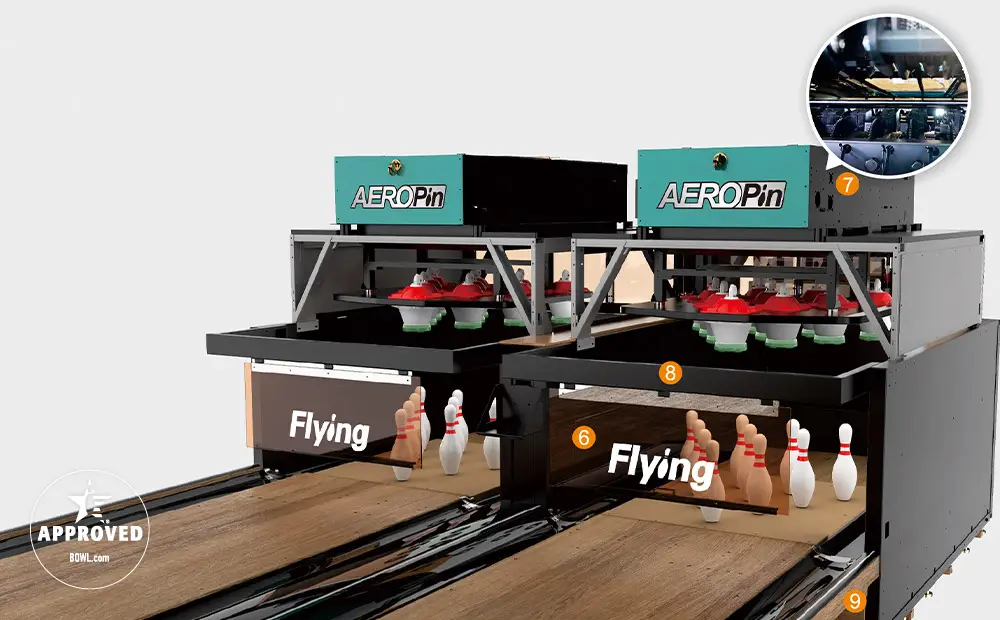
AEROPIN is Flying Bowling’s USBC-certified string pinsetter system for modern commercial bowling centers. Designed for fast pin setting, smooth ball return, low maintenance, and stable daily operation, it helps venue operators build league-ready and entertainment-focused bowling projects with confidence.
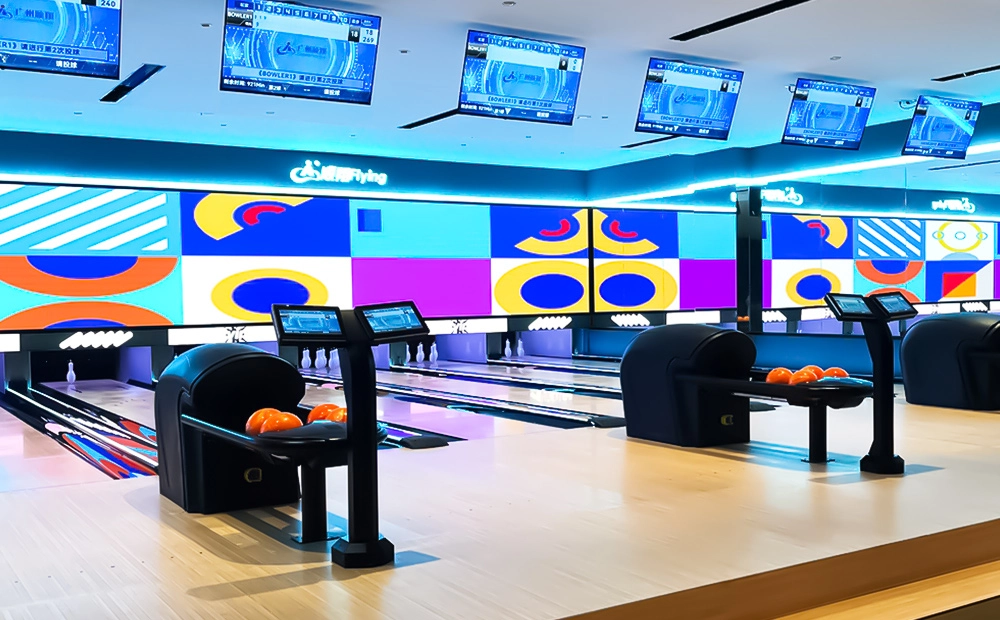
Flying Social Medium Bowling is a compact medium bowling equipment system designed for bars, cafes, family entertainment centers, community leisure venues, hotels, resorts, and small indoor entertainment spaces. With customizable lane lengths from 9.6m to 18m, small balls, lighter pins, string pinsetter technology, ball return, and automatic scoring, it creates an easy-to-play social bowling experience for players of different ages and skill levels.
Compared with full-size standard bowling, medium bowling requires less space and offers a more casual, interactive format. It is a practical choice for venues that want to add a bowling attraction without building a full commercial bowling alley.
Contact Flying
Start Your Custom Bowling Alley Project
If you contact us now for more details, we can provide you with a custom bowling alley service. Our service team will get back to you within 24 hours normally!
© 2026 Flying BOWLING. Designed by gooeyun.
FOLLOW US:

Flying Bowling
Flying Bowling
Flyingbowling
Flyingbowling
Flyingbowling