

Quick Overview
A bowling ball return system moves the ball from the pit or pin deck area back to the bowler after each delivery. A typical system uses a combination of a receiving area, lift or accelerator, rollers or conveyor components, return track, routing mechanism, and an approach-side ball rack.
The exact mechanical layout varies by equipment design, but the basic process is the same: collect the ball after the shot, guide it into the return path, move it back toward the approach, and present it safely for the next delivery.
For commercial buyers, the most important checks are system compatibility, ball size, pinsetter integration, available space, track routing, electrical requirements, maintenance access, installation sequence, and spare-parts support.
What Is a Bowling Ball Return System?
A bowling ball return system is the equipment that carries a bowling ball from the lane-end pit area back to the player.
It is also commonly described as a bowling ball return machine, ball return machine, bowling return machine, bowling ball return mechanism, or simply a ball return.
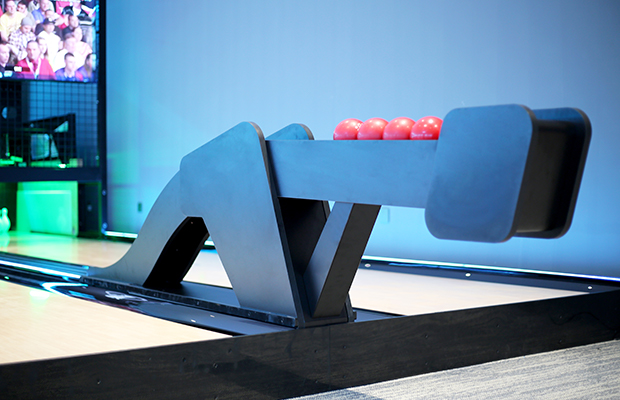
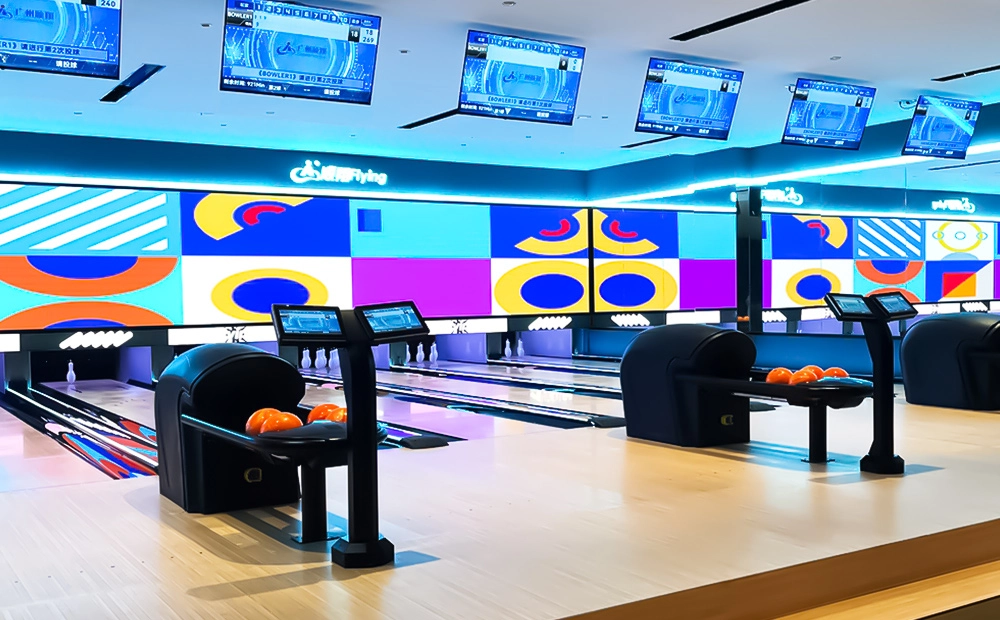
The visible rack near the approach is only the final part of the system. The complete return path may include the receiving area, lift, drive components, rollers, track, routing devices, controls, and the player-side rack.
For planning purposes, the ball return should therefore be treated as part of the complete bowling lane system rather than as an isolated accessory.
How Does a Bowling Ball Return Work?
A typical bowling ball return process can be divided into several stages.
1. The Ball Enters the Pit or Receiving Area
After the delivery reaches the pin area, the ball moves into the receiving section at the end of the lane.
The return system must separate the ball from the pin-clearing process and direct it toward the return path.
The exact receiving mechanism depends on the lane and pinsetter design.
2. The Ball Is Directed Into the Return Path
The ball moves from the receiving area into a transfer section or return channel.
This stage keeps the ball moving in the intended direction and prevents it from interfering with nearby mechanical components.
In multi-lane systems, routing components may also be used to direct the ball toward the correct return path.
3. A Lift or Accelerator Moves the Ball
Many systems need to raise or accelerate the ball before it can travel back toward the player.
Depending on the design, this may involve a powered lift, driven rollers, a conveyor section, or another mechanical transfer method.
The exact mechanism should be confirmed for the selected system rather than assumed from a generic ball-return design.
4. The Ball Travels Along the Return Track
Once the ball is positioned on the return path, it travels back toward the approach area.
The return track may run above, alongside, within, or below the lane structure depending on the system configuration.
The track must maintain reliable movement without allowing the ball to stall, collide with components, or arrive at the approach at an unsafe speed.
5. Routing Components Guide the Ball
Where multiple lanes or return paths interact, deflectors, diverters, or other routing mechanisms may guide the ball to the correct player area.
These components are especially important in multi-lane layouts where adjacent return paths must be coordinated carefully.
6. The Ball Reaches the Approach-Side Rack
At the front of the lane, the ball arrives at a rack, cradle, or ramp where the player can retrieve it for the next delivery.
This final section affects both player convenience and the physical layout of the approach area.
The complete cycle should operate smoothly enough that play can continue without unnecessary delay or staff intervention.
Main Components of a Bowling Ball Return System
| Component | Main Function |
|---|---|
| Pit or receiving area | Receives the ball after the delivery |
| Transfer section | Directs the ball into the return path |
| Lift or accelerator | Raises or moves the ball into the main return track |
| Rollers or conveyor components | Maintain ball movement |
| Return track or channel | Carries the ball toward the approach |
| Deflector or diverter | Routes the ball where required |
| Ball rack, cradle, or ramp | Presents the returned ball to the player |
| Sensors or controls | Monitor or coordinate ball movement where used |
| Motor or drive components | Power mechanical return sections where required |
Not every system uses exactly the same architecture.
Buyers should therefore request the component layout for the specific ball return system being considered.
Types of Bowling Ball Return Systems
One useful distinction is between overhead or raised return configurations and below-floor return configurations.
Overhead or Raised Ball Return
In an overhead or raised configuration, the return path travels above or alongside the lane structure.
The ball is transferred from the pin area into a raised track and carried back toward the approach.
This type of layout can reduce the need for a return channel formed inside the building slab, but it may require sufficient clearance around the pin deck and return-track area.
The exact clearance depends on the selected model and installation design.
Below-Floor Ball Return
A below-floor configuration routes the ball through a channel or void beneath the playing surface or surrounding floor structure.
This can reduce visible equipment around the lane, but the building must accommodate the required trench, void, or structural route.
Because major floor work can be difficult to change later, below-floor return requirements should be confirmed early in the construction process.
Neither configuration should be selected only on appearance. The decision should be based on the complete lane system, building structure, service access, installation sequence, and project requirements.
How Does the Ball Return Connect With the Pinsetter?
The ball return and pinsetter operate within the same lane-end environment.
After the ball reaches the pit area, it must be separated from the pins and directed into the return path without interfering with the pinsetting process.
This creates several integration points.
The pickup position must align with the selected lane and pinsetter configuration. Mechanical clearances should allow the ball to enter the return system reliably.
If sensors or electrical controls coordinate the process, their compatibility should also be confirmed for the selected equipment package.
Buyers sourcing a ball return separately from the pinsetter should not assume the two systems will automatically integrate.
The supplier should confirm how the return mechanism, pinsetter, controls, and lane structure work together.
Ball Return Track, Lift and Approach Rack
Return Track
The track determines the physical route the ball follows back toward the player.
Its position affects lane width, structural clearances, maintenance access, and nearby building services.
The route should therefore be shown clearly in project drawings before the lane layout is finalized.
Lift or Accelerator
The lift or accelerator helps move the ball from the lane-end receiving area into the return path.
This section may contain moving mechanical components and should remain accessible for inspection.
It should also be appropriate for the ball dimensions and operating conditions of the selected bowling format.
Ball Rack or Ramp
The rack, cradle, or ramp is where the ball is presented to the player.
Its position should fit the approach layout without obstructing normal player movement.
The project team should also understand when this component is installed relative to surrounding flooring and finishes so that unnecessary rework can be avoided.
What Space Does a Bowling Ball Return System Require?
Clearance Around the Return Path
Raised or overhead return systems may require space above or alongside the lane.
The required clearance varies by equipment model, so buyers should request the actual project specification rather than estimate from a generic drawing.
Ceilings, ducts, structural elements, building services, and nearby equipment should not block the return route or maintenance access.
Lane Width and Return-Track Position
The return track contributes to the overall width and service envelope of the bowling installation.
In multi-lane projects, track positions must be coordinated with adjacent lanes.
The room width should therefore be checked against the complete lane and return layout, not only the playing surface width.
Maintenance access should also be preserved around components that may require inspection or replacement.
Ball Return Systems for Standard and Duckpin Bowling
A ball return system should match the ball and lane format it is designed to serve.
Standard Ten-Pin Bowling
A standard ten-pin ball return is designed for full-size bowling balls and the mechanical demands of a standard bowling lane system.
The return channel, lift, rollers, rack, and related components must be suitable for the ball dimensions and operating conditions of that format.
Duckpin Bowling
Duckpin bowling uses a smaller ball, so the return path and ball-handling components must be designed accordingly.
A system intended for full-size ten-pin balls should not automatically be assumed to work correctly with duckpin balls.
The channel size, transfer mechanism, rack design, and routing should all match the selected format.
For projects involving more than one bowling format, each lane group should be reviewed separately and the return configuration confirmed for the exact system being installed.
Multi-Lane Ball Return Layouts
Multi-lane venues require more planning than single-lane installations because the return paths for neighboring lanes must be coordinated.
Important questions include whether each lane uses a dedicated return path, whether any components are shared between adjacent lanes, how balls are routed to the correct player area, whether maintenance access remains available, and whether the layout affects total lane spacing.
A shared configuration may be possible in some systems, but it should never be assumed.
The supplier should confirm whether shared routing is available for the selected model and how the system prevents balls from reaching the wrong lane.
The final lane plan should show the actual return routing before construction is completed.
Common Bowling Ball Return Problems
Ball return systems contain moving components that can wear, become misaligned, or collect debris.
| Symptom | What to Check First |
|---|---|
| Ball does not return | Obstruction, track condition, drive section, lift, or routing mechanism |
| Ball returns slowly | Rollers, belt or drive components, debris, or track condition |
| Excessive noise | Misalignment, worn contact surfaces, or loose mechanical parts |
| Ball reaches the wrong lane | Diverter, routing mechanism, or multi-lane alignment |
| Ball stalls near the pit | Receiving area, transfer section, or entry obstruction |
| Ball arrives poorly at the rack | Rack alignment, track transition, or final routing section |
These are only first-level checks.
Operators should follow the maintenance and troubleshooting instructions supplied for the specific equipment rather than apply generic repairs to an unfamiliar system.
Bowling Ball Return Maintenance Basics
Routine maintenance helps reduce interruptions and makes it easier to identify wear before a component fails.
Typical inspection areas may include rollers and moving contact surfaces, belts or drive components where used, return-track cleanliness, lift or accelerator components, routing mechanisms, rack alignment, sensors and controls where fitted, and visible mounting points.
Cleaning, inspection intervals, lubrication requirements, and replacement procedures should follow the documentation for the selected system.
Detailed servicing schedules and fault procedures should be handled through a dedicated maintenance guide rather than expanded on the main ball return page.
Why Installation Sequence Matters
Ball return equipment should be coordinated with the building and lane installation schedule.
Certain brackets, structural supports, track routes, electrical points, or approach-side components may need to be positioned before other construction work is completed.
If the installation sequence is not defined early, the project may face avoidable rework.
The project team should know when return-track supports are installed, when electrical services must be ready, when the approach-side rack is positioned, which finishes are completed before or after equipment installation, and what access must remain open for equipment delivery.
The supplier and local contractor should agree on these responsibilities before site work reaches the relevant stage.
What Should Buyers Check Before Choosing a Ball Return System?
Ball Compatibility
The return channel and ball-handling components should match the ball dimensions of the selected bowling format.
Do not assume one return system is universally compatible with different ball sizes.
Pinsetter and Lane Compatibility
Confirm how the ball return integrates with the pinsetter, lane structure, lane-end receiving area, and any related control equipment.
Return Configuration
Determine whether the project uses an overhead, raised, below-floor, or other return arrangement.
The selected configuration should match the building structure and available space.
Physical Clearances
Request project drawings and check ceiling conditions, track positions, lane spacing, service access, and approach-side requirements.
Electrical Requirements
Where motors, sensors, or controls are used, the required electrical supply and connection points should be included in the electrical plan.
Mounting and Installation Sequence
Confirm how the track, brackets, lift, and ball rack are mounted and at what stage each component should be installed.
Multi-Lane Routing
For multi-lane venues, confirm whether returns are dedicated or shared and how balls are routed to the correct lane.
Maintenance Access
Wear components should remain accessible without unnecessary dismantling of the lane or surrounding structure.
Spare Parts and Documentation
Request maintenance instructions, parts information, installation drawings, electrical requirements, and other technical documentation relevant to the selected system.
Supplier Responsibilities
Clarify which parts of installation, commissioning, testing, and operator handover are handled by the equipment supplier and which remain the responsibility of the local project team.
Can a Bowling Ball Return Machine Be Replaced Separately?
In some projects, the ball return can be replaced independently, but compatibility must be checked before ordering.
The replacement system should be reviewed against the existing lane structure, pinsetter, electrical requirements, return route, and available installation space.
If the existing return is part of an integrated system, changing it may require additional site work or engineering.
What Is the Bowling Ball Return Machine Called?
There is no single universal name used in every venue.
Common terms include bowling ball return system, bowling ball return machine, ball return machine, bowling return machine, and simply ball return.
For commercial equipment planning, bowling ball return system is often the most useful term because it refers to the complete return path rather than only the visible rack near the approach.
How Do Bowling Balls Come Back After You Throw Them?
The ball enters the lane-end receiving area, is directed into the return mechanism, moves through a lift or powered transfer section where required, and travels back along the return track to the player-side rack. The pinsetter handles the pins separately while the ball return system sends the ball back to the bowler.
Conclusion
A bowling ball return system carries the ball from the lane-end receiving area back to the bowler through a controlled mechanical path.
Although designs vary, the main functions remain the same: receive the ball, transfer it into the return path, move it back toward the approach, route it correctly, and present it safely for the next delivery.
For commercial projects, the most important questions are whether the return system matches the ball format, pinsetter, lane layout, building structure, electrical plan, and maintenance requirements.
Confirming the return configuration, physical clearances, track routing, installation sequence, service access, documentation, and spare-parts requirements before ordering can prevent compatibility problems and construction rework later.
Planning a Bowling Equipment Project?
Explore Flying Bowling’s bowling solutions or discuss your lane configuration, ball return requirements, and project planning needs with our team.
Explore Bowling Solutions Discuss Your Project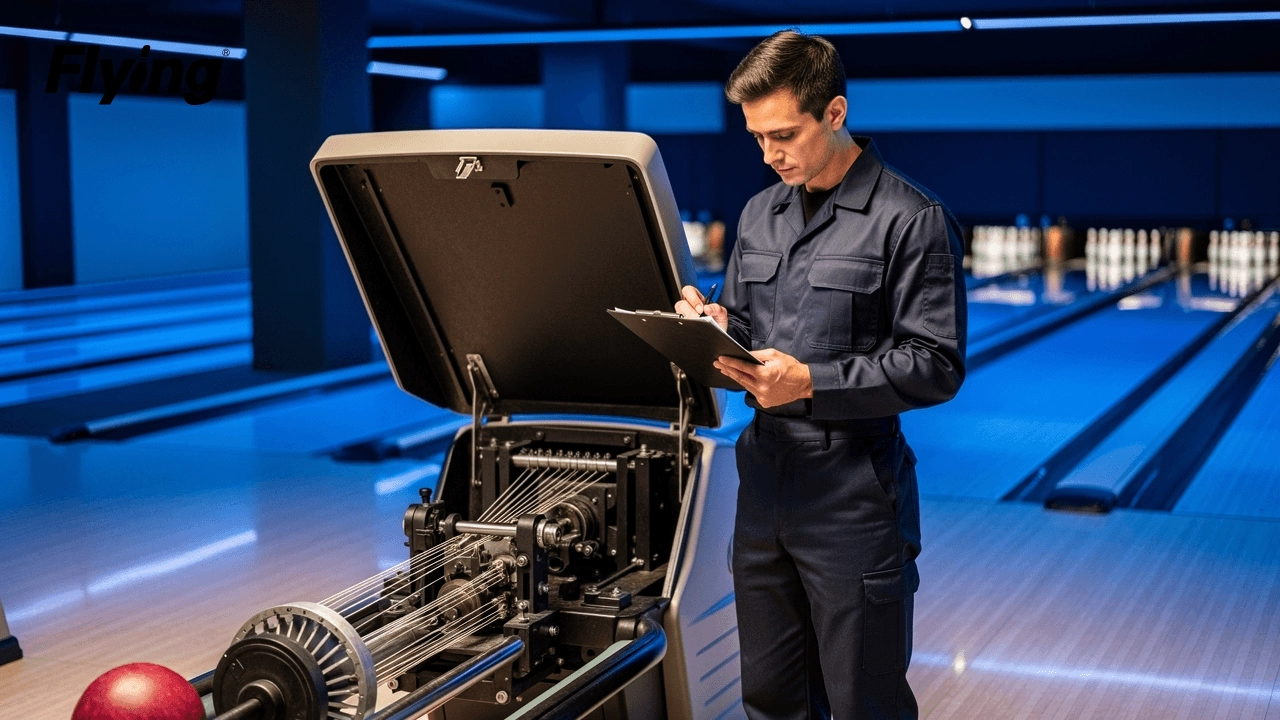


Flying Bowling
Flying Bowling
Flyingbowling
Flyingbowling
Flyingbowling