

Bowling Lane Construction Cost: Per-Lane Budget and Cost Drivers
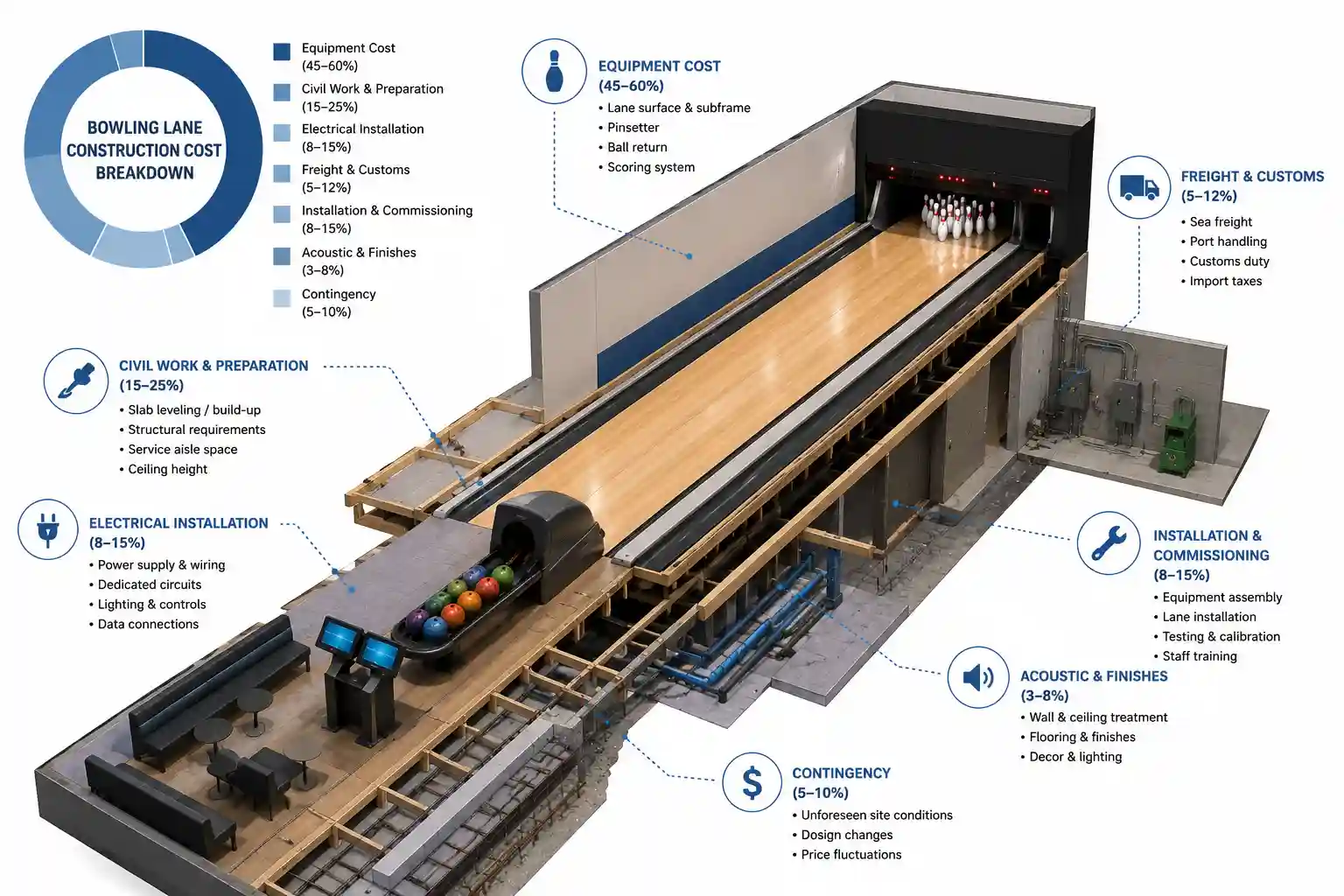
Bowling lane construction cost is the figure operators and investors research first — and the figure most commonly misunderstood. The equipment price is only one part of the total. Civil preparation, electrical installation, freight, customs duty, and acoustic treatment all add to the budget, and they vary enough by site and destination that a per-lane equipment quote cannot be used as the project total. This guide separates each bowling lane construction cost component, explains what drives it up or down, and provides indicative planning figures from selected Flying Bowling project configurations.
All cost figures in this guide are internal planning references from a limited number of selected Flying Bowling project configurations as of mid-2026 — not independent market benchmarks, guaranteed prices, or a representative sample of all projects. Actual bowling lane construction cost depends on format, site condition, lane count, local labor rates, customs duty rate at destination, and installation scope. Build a line-by-line budget for each project rather than applying a multiplier to the equipment price.
Equipment Price vs Installed Cost: The Gap Most Operators Underestimate
The equipment price in a bowling lane construction cost breakdown — quoted FOB (Free On Board) factory — covers the lane surface, subframe, pinsetter, ball return, and scoring system. It does not include freight, port handling, customs duty, civil preparation, electrical installation, or installation labor. In selected Flying Bowling project examples, the non-equipment portion of bowling lane construction cost has typically added 40–80% on top of the FOB equipment price for a single-lane installation. The range is wide because civil and acoustic costs are almost entirely site-specific.
| Cost component | Included in FOB equipment price? | Note |
|---|---|---|
| Lane surface, subframe, gutters | ✓ Yes | Included in complete lane package |
| Pinsetter, ball return, scoring | ✓ Yes | Included in complete lane package |
| Sea freight and port handling | ✗ No | Varies significantly by destination port and current shipping rates |
| Customs duty and import taxes | ✗ No | Rate varies by country and HS code — confirm with a licensed customs broker before budgeting |
| Civil preparation (slab leveling) | ✗ No | Depends on existing slab condition — only confirmed after a site survey |
| Electrical installation | ✗ No | Depends on existing panel capacity and local electrician rates |
| Installation labor | Varies — confirm in writing | Whether installation engineering is included varies by project — confirm scope before signing |
| Acoustic treatment | ✗ No | Required for lanes adjacent to occupied spaces — scope determined by acoustic assessment |
Bowling Alley Construction Cost Per Lane: Indicative Figures by Format
The table below shows equipment cost (FOB) and a partial all-in estimate per lane for each format. The partial all-in figure covers equipment, freight, civil preparation, electrical, and installation — but excludes customs duty, acoustic treatment, room fit-out, and ancillary items. These are planning references from selected Flying Bowling configurations — not guaranteed prices.
| Format | Equipment per lane (FOB) | Partial all-in per lane (excl. customs, acoustic, fit-out) |
Typical venue context |
|---|---|---|---|
| Duckpin | ~$18,000–$35,000 | ~$30,000–$65,000 | Bars, FECs, compact venues, home |
| Mini | ~$25,000–$55,000 | ~$40,000–$90,000 | Hotels, resorts, entertainment centers |
| Medium | ~$35,000–$90,000 | ~$55,000–$140,000 | Shopping malls, social venues, FECs |
| Standard | ~$60,000–$150,000+ | ~$100,000–$250,000+ | Dedicated bowling centers, leagues |
| Planning references from selected Flying Bowling configurations (mid-2026) — not independent market benchmarks or guaranteed prices. Customs duty, acoustic treatment, room fit-out, and ancillary equipment are additional. Per-lane figures assume a multi-lane project sharing setup costs; single-lane projects carry higher per-lane all-in cost. | |||
Why Per-Lane Cost Falls as Lane Count Increases
Several cost components in bowling alley lane construction are largely fixed regardless of lane count — freight consolidation, civil site mobilization, installation mobilization, and electrical rough-in setup. A single-lane project bears these costs entirely; a multi-lane project shares them across all lanes. In selected Flying Bowling project examples, the per-lane all-in cost for a two-lane installation has been measurably lower than for a single-lane installation at the same site, and larger lane counts continue to reduce the per-lane figure. The actual saving depends on the specific site, configuration, and logistics — Flying Bowling can provide a comparative per-lane estimate based on your project details.
The Five Main Bowling Lane Construction Cost Drivers
Cost Components That Are Commonly Omitted from Early Budgets
How to Build a Reliable Per-Lane Budget
A reliable bowling lane construction cost budget requires eight line items — a bowling alley construction cost per lane breakdown — not a single equipment quote with a contingency percentage applied on top:
For the civil preparation, slab requirements, electrical rough-in, and installation sequencing that determine the non-equipment cost components, see our bowling lane construction site requirements and build process guide.
Request a Per-Lane Equipment Quotation
Share your format, lane count, venue type, and site location. Flying Bowling will provide current equipment pricing and a civil specification document for your project. Freight, installation scope, and lead times are confirmed based on the specific project details.
FAQ
Q1: What is the total bowling lane construction cost per lane?
Total bowling lane construction cost per lane depends on format, site condition, destination, and lane count. Based on selected Flying Bowling project configurations as of mid-2026 — not independent market benchmarks — the partial all-in cost per lane (covering equipment FOB, freight, civil preparation, electrical, and installation, but excluding customs duty, acoustic treatment, room fit-out, and ancillary items) ranges from approximately $30,000–$65,000 for duckpin, $40,000–$90,000 for mini, $55,000–$140,000 for medium, and $100,000–$250,000+ for standard format. These are planning references only. Build a line-by-line budget for each project rather than applying these figures directly.
Q2: What is not included in the FOB equipment price for a bowling lane?
The FOB equipment price covers the lane surface, subframe, gutters, pinsetter, ball return, and scoring system. It does not include sea freight and port handling; customs duty and import taxes at the destination; civil preparation (slab leveling or grinding); electrical installation; installation labor (whether this is included in the quotation or priced separately should be confirmed in writing); acoustic treatment; room fit-out; lane conditioning machine (where required); house balls, pins, and rental shoes; or opening spare parts stock. In selected project examples, non-equipment costs have added 40–80% on top of the FOB equipment price for single-lane installations.
Q3: Why does per-lane cost fall as lane count increases?
Several cost components in bowling alley lane construction are largely fixed regardless of lane count — sea freight (container cost is similar for one lane or several in the same container), installation mobilization, electrical panel setup, and civil site mobilization. A single-lane project bears all of these alone; a multi-lane project shares them across all lanes. The per-lane all-in cost for a two-lane installation is typically lower than for a single-lane installation at the same site. The actual saving depends on the specific site, configuration, and logistics; Flying Bowling can provide a comparative per-lane estimate based on project details.
Q4: How do I confirm the customs duty on bowling lane equipment?
Customs duty varies by country and HS code classification for the equipment. It is not a fixed percentage and cannot be estimated reliably from general references. Confirm the applicable rate with a licensed customs broker at the destination country before finalising the project budget — not after the equipment has shipped. Duty is one of the most commonly underestimated or omitted items in early-stage bowling lane construction cost planning, particularly for projects in markets with higher import tariff schedules.
Q5: What is the most unpredictable cost item in a bowling lane construction budget?
Existing slab condition is the most unpredictable cost item for conversion and upgrade projects. A concrete slab that already meets the equipment's levelness tolerance requires minimal civil work; one that deviates significantly may require grinding, self-leveling compound, or partial removal and replacement. This cost cannot be estimated without commissioning a slab levelness survey against the equipment's tolerance specification. It should be surveyed and quoted by a contractor before equipment is ordered — not estimated as a percentage of equipment cost.
Q6: What cost items are commonly omitted from early bowling lane construction cost estimates?
Four items are consistently underrepresented in early-stage budgets. First, customs duty — often omitted entirely until the equipment is ready to ship. Second, structural upgrades for upper-floor or basement-slab installations — only identified after the structural engineer reviews the equipment load data against the existing slab. Third, acoustic treatment — scope depends on an acoustic assessment of the specific building and surrounding uses, not a standard allowance. Fourth, opening spare parts stock — the manufacturer's recommended stocking list for wear parts should be purchased before opening, particularly for locations with long freight lead times from the supplier.
Q7: How do I build a reliable per-lane bowling alley construction cost budget?
A reliable budget requires eight separate line items, each based on a real quote or confirmed figure rather than an estimated percentage: equipment FOB (from Flying Bowling for the specific format and lane count); freight and logistics (from a freight forwarder to the destination port and inland); customs duty (from a licensed customs broker for the destination and HS code); civil preparation (from a contractor after a slab survey); electrical installation (from a licensed electrician based on the load schedule); installation labor (confirmed as included or separately quoted); acoustic treatment (from an acoustic assessment result); and ancillary and opening stock (pins, balls, shoes, spare parts, and lane conditioning machine where required). Applying a single contingency to an equipment quote is not a substitute for this process.
More Articles

Let’s Build a center Together
Partner With a Trusted Bowling Alley Design, One-Stop Solution Manufacturer.
Flying has successfully built ideal bowling alleys for more than 3,000 customers.

Technical Expert
You may also like our products
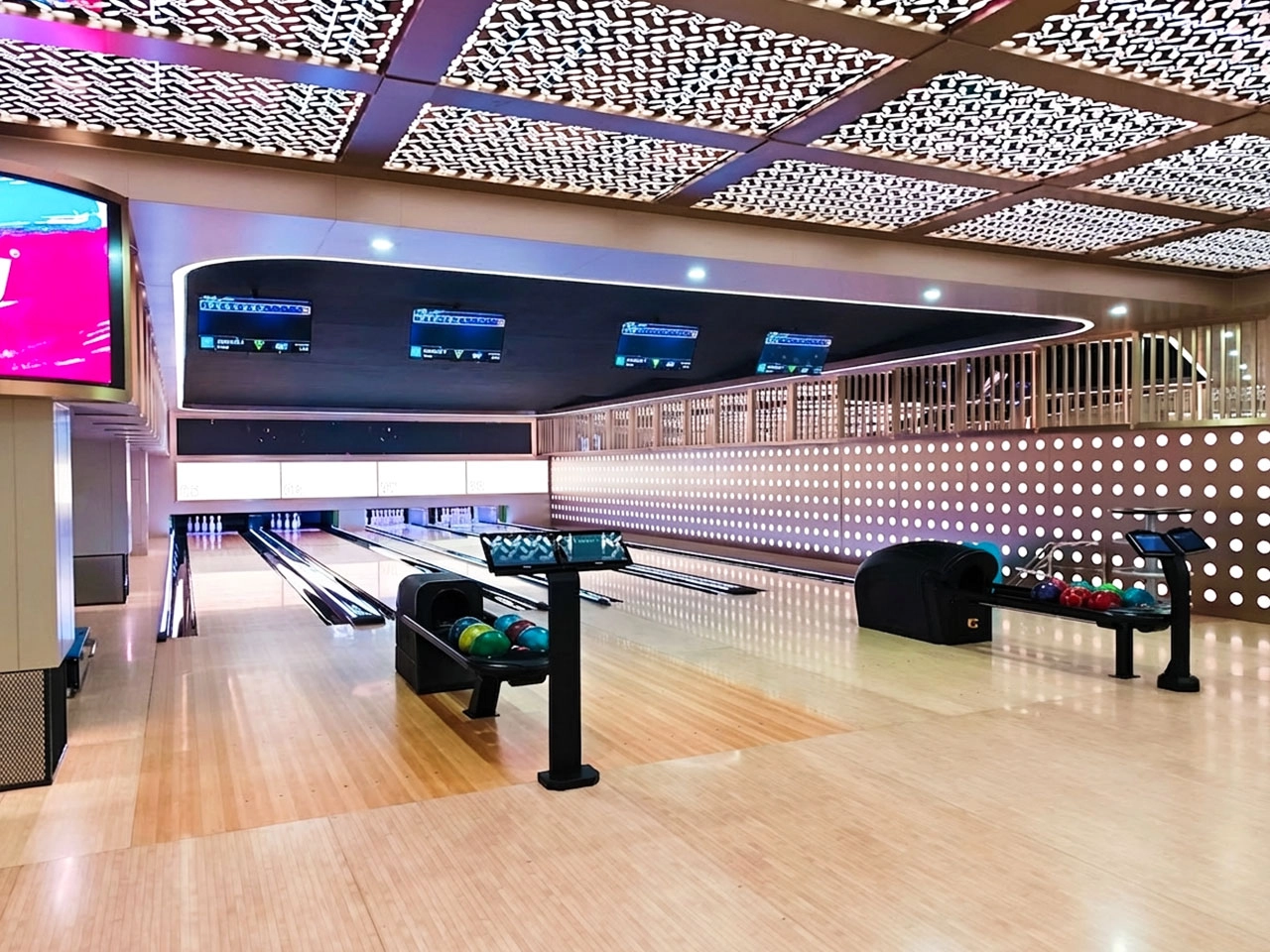
Build a commercial bowling venue with Flying’s complete string pinsetter bowling alley equipment package. The system includes the AEROPIN™ USBC-certified string pinsetter, customizable lanes, automatic scoring, ball return, lane lighting, pins, control hardware, and overseas installation support.
Designed for commercial bowling centers, family entertainment venues, hotels, resorts, bars, and premium private projects, this turnkey bowling system helps operators reduce sourcing complexity and prepare for reliable long-term operation.
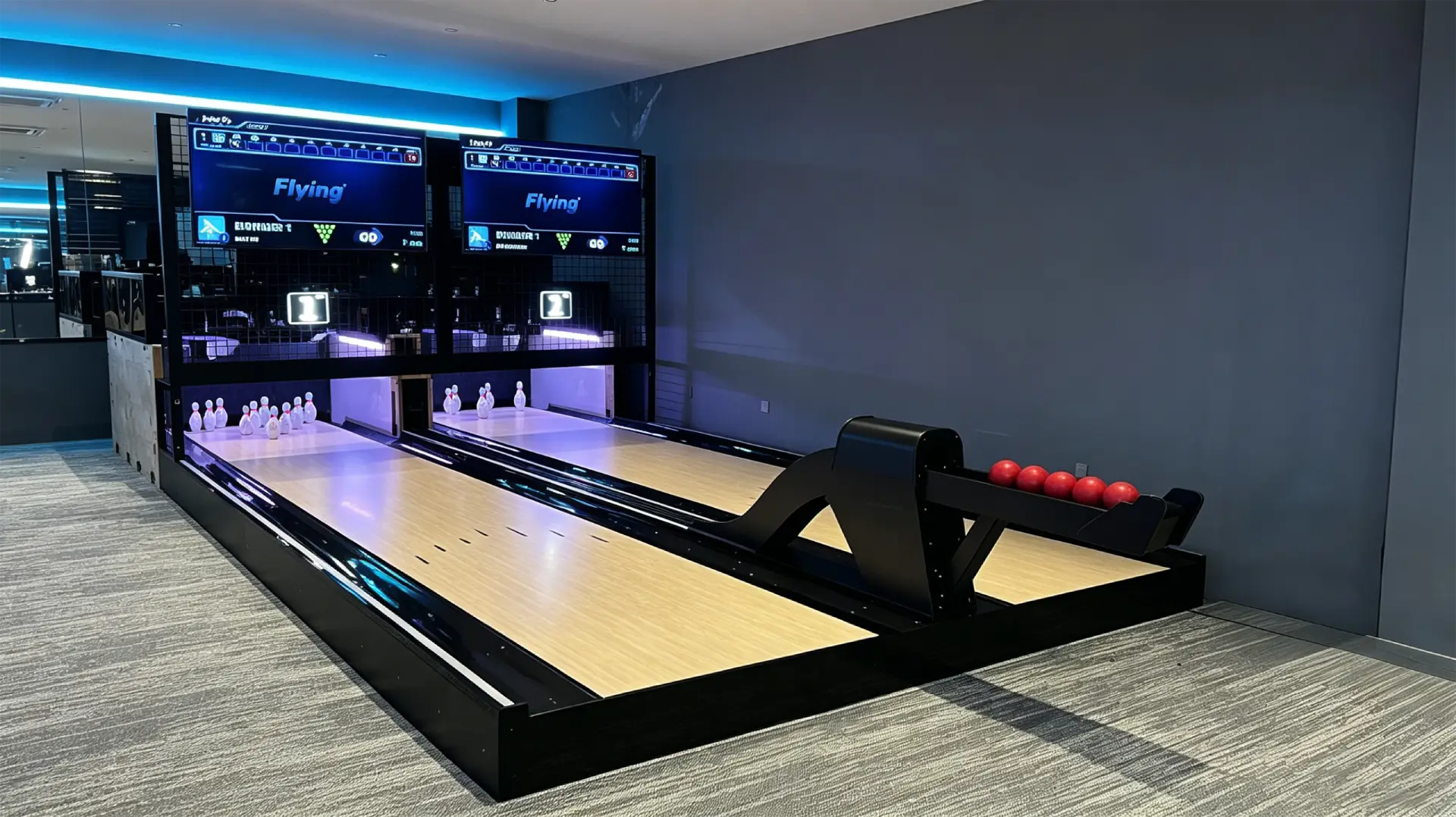
Flying Smart Duckpin Bowling is a compact duckpin bowling equipment system designed for bars, family entertainment centers, hotels, resorts, cinemas, boutique bowling alleys, and social entertainment venues. With a standard 9.13m duckpin bowling lane, 1.25kg lightweight balls, automatic scoring, ball return, LED lighting, and a smart string pinsetter, it creates a fast-paced and easy-to-play bowling experience in a smaller footprint than traditional bowling.
The system is available as a turnkey duckpin bowling package, including lane equipment, a string pinsetter system, scoring hardware, control software, global shipping, installation guidance, and technical support.
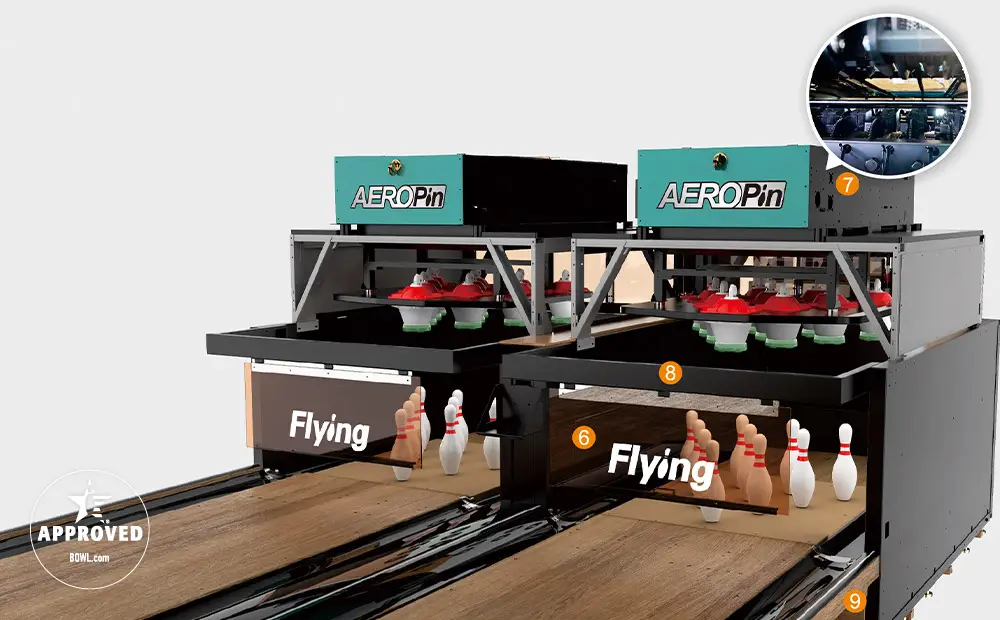
AEROPIN is Flying Bowling’s USBC-certified string pinsetter system for modern commercial bowling centers. Designed for fast pin setting, smooth ball return, low maintenance, and stable daily operation, it helps venue operators build league-ready and entertainment-focused bowling projects with confidence.
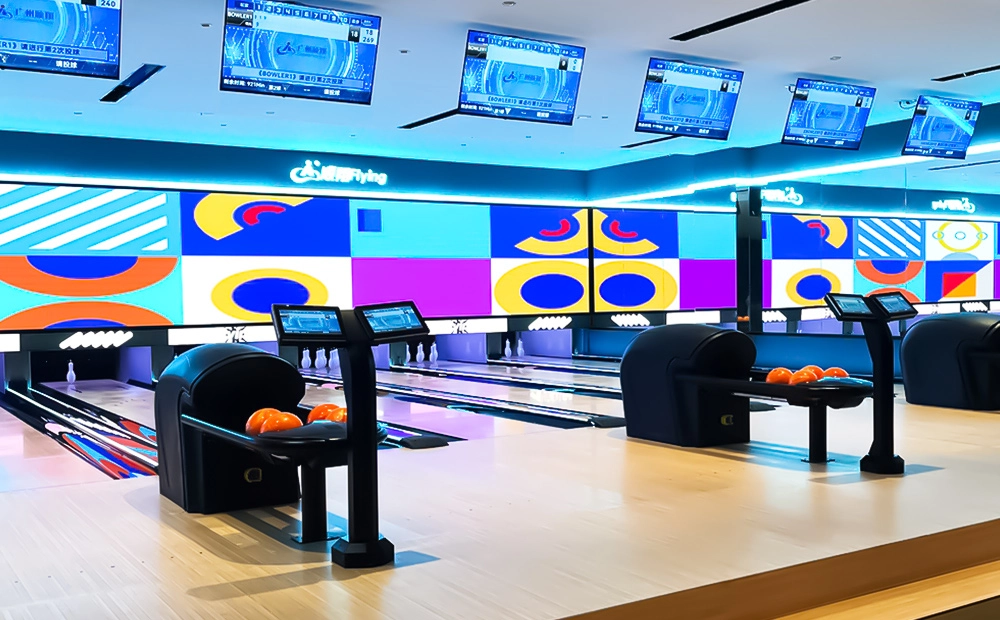
Flying Social Medium Bowling is a compact medium bowling equipment system designed for bars, cafes, family entertainment centers, community leisure venues, hotels, resorts, and small indoor entertainment spaces. With customizable lane lengths from 9.6m to 18m, small balls, lighter pins, string pinsetter technology, ball return, and automatic scoring, it creates an easy-to-play social bowling experience for players of different ages and skill levels.
Compared with full-size standard bowling, medium bowling requires less space and offers a more casual, interactive format. It is a practical choice for venues that want to add a bowling attraction without building a full commercial bowling alley.
Contact Flying
Start Your Custom Bowling Alley Project
If you contact us now for more details, we can provide you with a custom bowling alley service. Our service team will get back to you within 24 hours normally!
© 2026 Flying BOWLING. Designed by gooeyun.
FOLLOW US:

Flying Bowling
Flying Bowling
Flyingbowling
Flyingbowling
Flyingbowling