


The 2026 Bowling Alley Builder's Bible: 21+ Strategies for Maximum ROI
A comprehensive 2026 guide for investors and homeowners on building high-ROI bowling centers. Covers construction costs, USBC-certified string pinsetters, acoustic engineering, and the shift to Boutique Entertainment Centers (BEC).
Executive Summary: The State of Bowling Construction in 2026
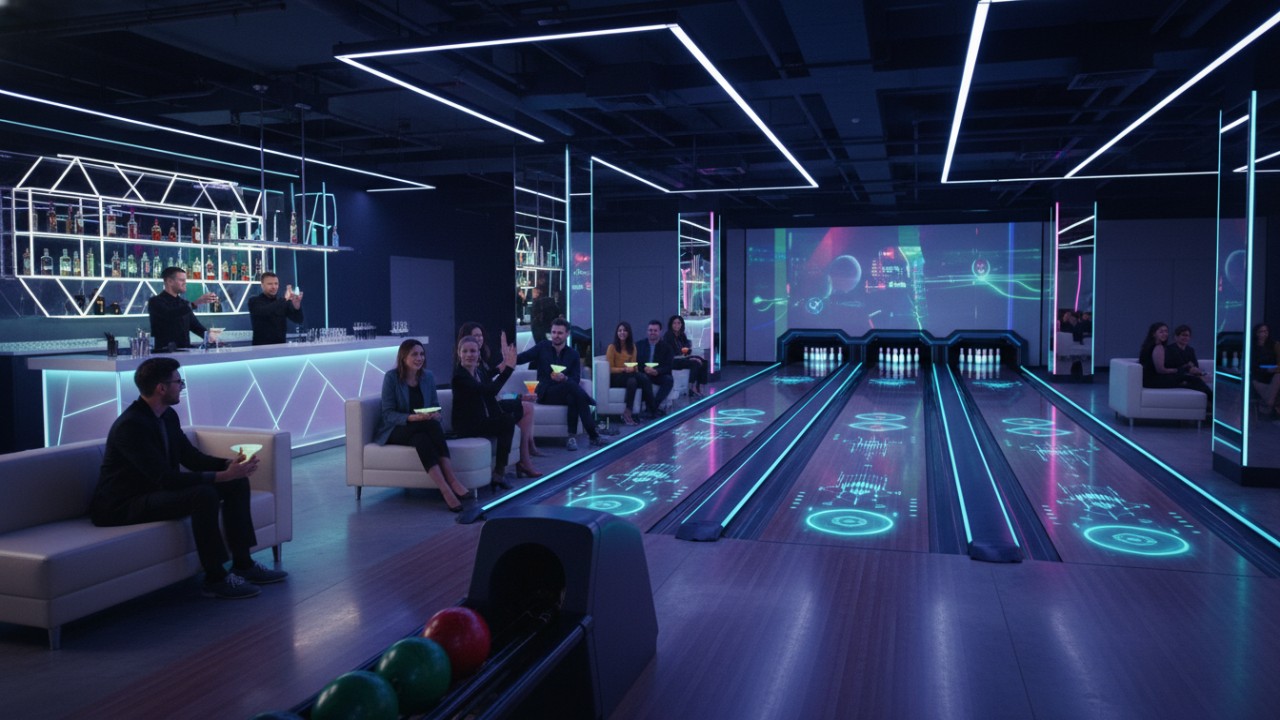
The bowling industry has fully transitioned from traditional leagues to high-margin ‘Eatertainment’ venues, projecting a global market value of over $20 billion in 2026. Modern construction now prioritizes hybrid business models where bowling serves as the anchor for arcade gaming, premium food and beverage (F&B), and immersive social experiences.
To maximize ROI in this new landscape, builders and investors must pivot away from volume-based lane models. According to recent market analysis by Mordor Intelligence, the industry is fueled by immersive experiences and corporate team-building events, driving the shift toward Boutique Entertainment Centers (BECs).
- Hybrid Revenue: Centers combining bowling with high-end dining generate 40% higher revenue per square foot.
- Tech Integration: Augmented Reality (AR) projection mapping is now a standard expectation, not a luxury.
- Residential Boom: Luxury home builds are increasing as high-net-worth individuals seek private amenity spaces.
What Does a Professional Bowling Alley Builder Actually Do?
A bowling alley builder is a specialized project manager who bridges the gap between general construction and precision entertainment engineering, ensuring lanes meet strict USBC tolerance standards of 40/1000ths of an inch. They handle the unique structural, electrical, and acoustic requirements that general contractors (GCs) typically overlook.
While a GC pours the shell, the specialized builder focuses on the ‘system’ within the shell. This distinction is critical because a single degree of variance in the sub-floor can render a lane unplayable for certified competition.
Core Responsibilities:
- Acoustic Isolation: Installing decoupled floating floors to prevent vibration transfer.
- Pinsetter Integration: Managing the complex electrical loads (3-phase power) for mechanical systems.
- Lane Topography: Leveling the synthetic track to ensure consistent ball motion.
- Compliance: ensuring all installations meet local fire codes and accessibility standards.
Phase 1: Strategic Planning & Feasibility for Maximum ROI
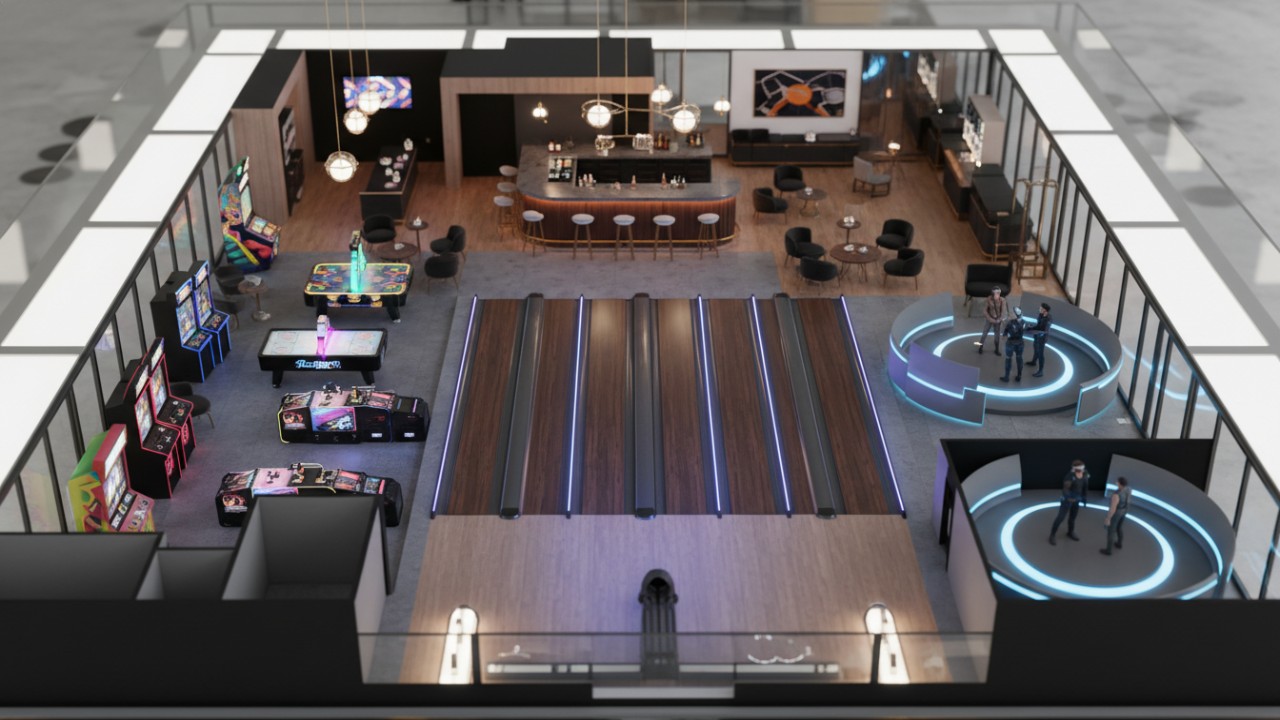
Successful projects begin with a commercial bowling center business plan that prioritizes ‘Revenue Per Square Foot’ over maximum lane count. In 2026, the trend is to reduce the number of lanes to make room for higher-margin attractions like laser tag, VR arenas, or craft cocktail bars.
Boutique entertainment center design focuses on the ‘dwell time’ of the customer. The longer they stay, the more they spend. This requires a strategic layout where the bowling lanes are the visual centerpiece, but not the only attraction.
Feasibility Checklist:
- Ceiling Height: Minimum 10-12 feet clear height is required for monitors and ball returns.
- Column Spacing: Must accommodate pairs of lanes (approx. 11.5 feet wide) without obstruction.
- HVAC Load: Bowling centers require massive cooling capacity to offset the heat generated by pinsetters and active players.
- Demographics: Analysis of local disposable income and competitor proximity.
Phase 2: Structural Engineering & Acoustic Design
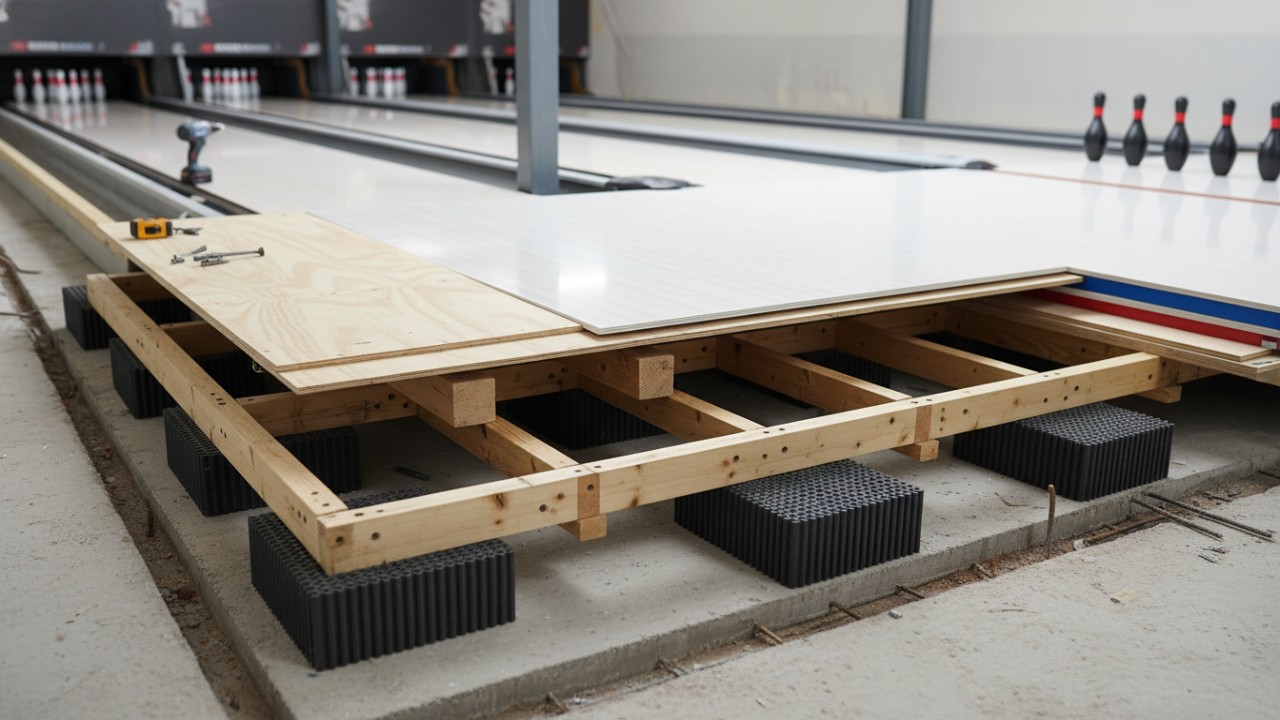
The structural foundation of a bowling alley requires a specialized concrete trench system and a Noise Reduction (NR) rating of 35 to prevent sound bleed into adjacent spaces. This is the most technically demanding phase of construction, involving ‘box-in-a-box’ engineering principles.
If you are building in a mixed-use development or a residential basement, standard soundproofing is insufficient. You must address both airborne noise (shouting, music) and impact noise (ball dropping, pins crashing).
Acoustic Standards:
- Floating Floors: A 100mm concrete slab usually sits on 37.5mm isolation pads with an air gap to decouple the lanes from the building structure.
- Wall Isolation: Walls should be built on spring isolators to prevent vibration transmission.
- Ceiling Baffles: High-density acoustic panels are essential to absorb the reverberation of pin crashes.
Phase 3: Selecting Equipment That Drives Profit
For maximum operational efficiency, the industry standard has shifted to string pinsetters, which lower maintenance costs by 75% compared to traditional free-fall machines. The debate is largely settled: string machines are now the preferred choice for new BECs and casual centers.
Critical to this shift is official recognition. According to the United States Bowling Congress, string pinsetters are now fully certified for competition play (as of the 2023 rule change), meaning centers no longer have to choose between low operating costs and hosting certified leagues.
String Pinsetter vs Free Fall Cost Analysis:
- Upfront Cost: String machines cost $8,000 - $12,000 per lane, whereas free-fall machines can exceed $25,000.
- Energy Savings: String machines use 80% less power, often running on standard 110v outlets rather than 3-phase industrial power.
- Labor: No specialized mechanic is required; a general technician can handle string untangling and minor repairs.
Phase 4: Technology Integration & Gamification
Modern lanes must integrate ‘Hyper-Bowling’ systems and Augmented Reality (AR) projection mapping to engage a younger generation raised on video games. This technology projects moving targets onto the lane itself, turning a standard frame of bowling into an interactive, multiplier-based game.
This ‘gamification’ layer allows operators to charge premium prices for ‘VIP’ lanes. It also speeds up gameplay, allowing for higher turnover rates on busy weekends.
Essential 2026 Tech Stack:
- POS Integration: Lane-side tablets that send food and drink orders directly to the kitchen.
- Automated Bumpers: Programmable per player, allowing adults and kids to play on the same lane seamlessly.
- Self-Service Kiosks: Reduces front-desk staffing requirements and speeds up the check-in process.
Expert Tips: 5 Common Mistakes to Avoid
The most costly error in bowling construction is underestimating the ‘turnkey bowling alley construction cost’ by failing to account for specialized electrical and sub-floor preparation. A budget that only looks at equipment prices will overrun by 30-40%.
Whether you are planning a commercial facility or looking into home bowling lane installation requirements, avoiding these pitfalls is crucial for staying on budget.
Critical Mistakes:
- Ignoring the Approach: The 16-foot player approach area requires the same level of stability as the lane itself; failing to reinforce this area leads to warping.
- Electrical Shortfalls: Modern immersive lighting and pinsetters require specific dedicated circuits; retrofitting this later is expensive.
- Poor HVAC Zoning: The ‘pinsetter room’ (behind the lanes) generates immense heat and needs its own climate zone.
- Aesthetic Over Function: Choosing furniture that looks good but isn't durable enough for heavy commercial use.
- Permit Delays: Failing to check zoning specifically for ‘amusement’ or ‘liquor’ licensing early in the process.
Conclusion
Building a bowling alley in 2026 requires a fusion of precise engineering and entertainment psychology. By focusing on ROI-driven design choices like string pinsetters, hybrid layouts, and immersive technology, you can create a venue that thrives in the modern experience economy. Contact us today to discuss your specific needs and start planning your project.
More Articles

Let’s Build a center Together
Partner With a Trusted Bowling Alley Design, One-Stop Solution Manufacturer.
Flying has successfully built ideal bowling alleys for more than 3,000 customers.
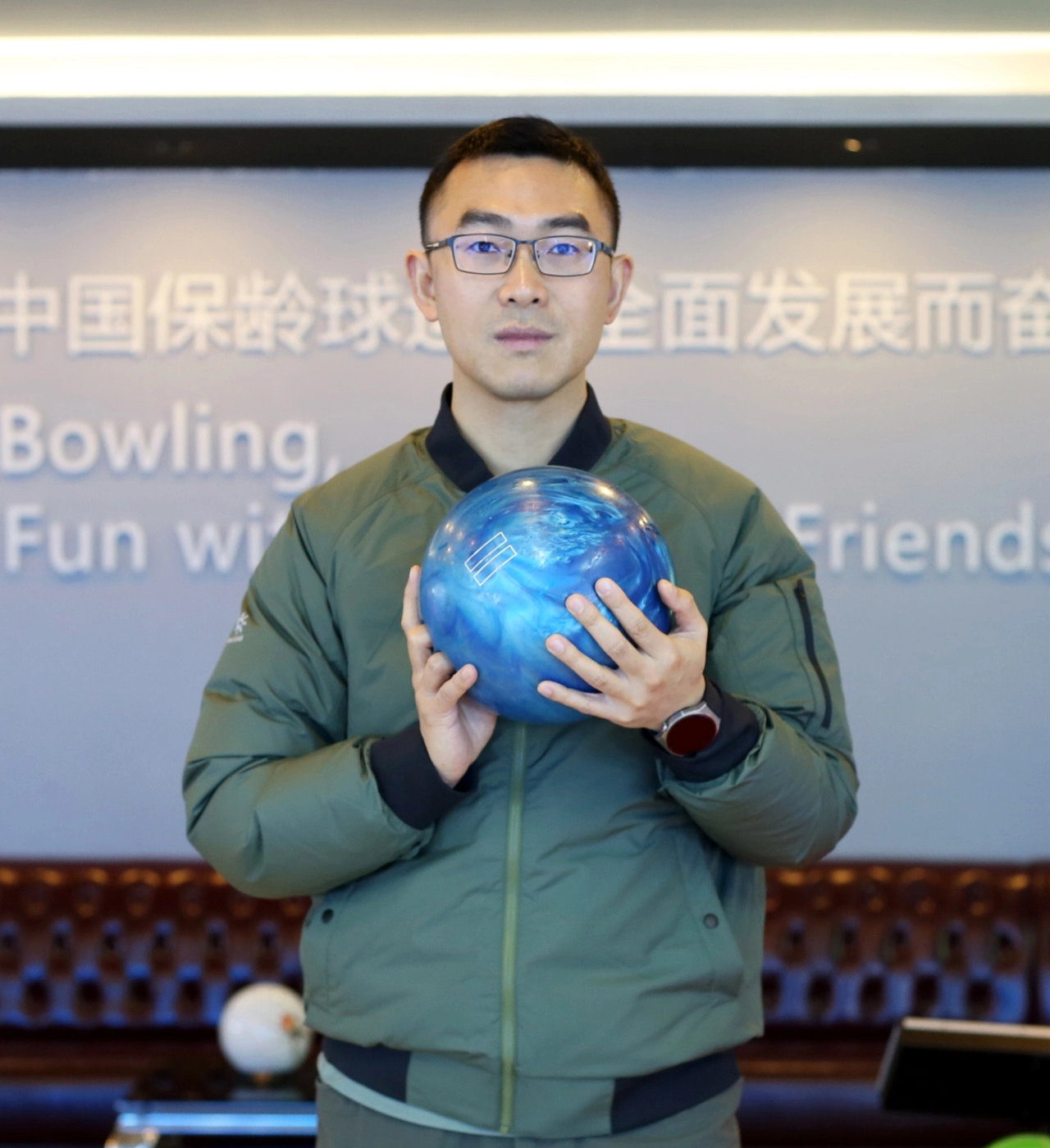
Technical Expert
You may also like our products
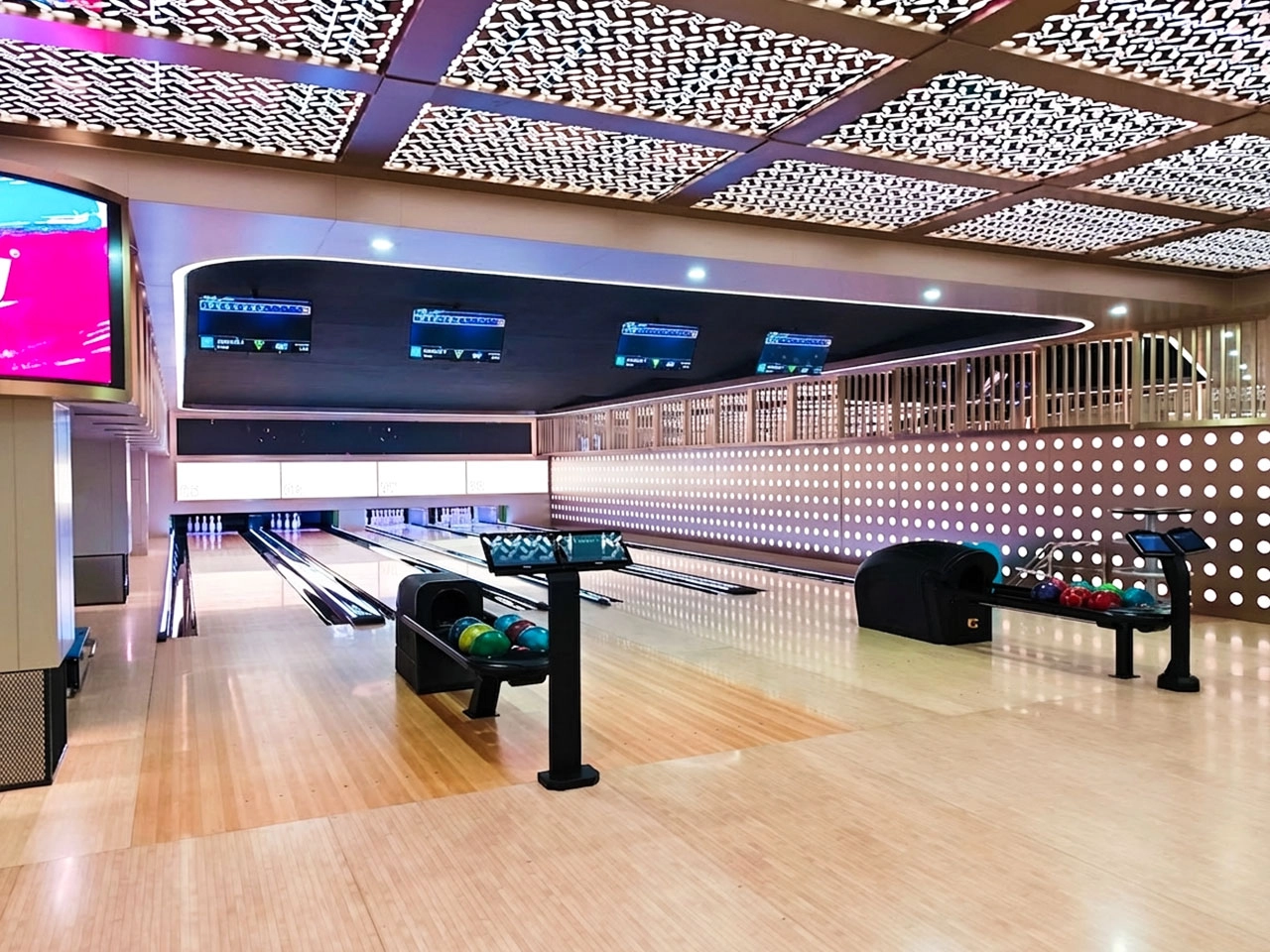
Build a commercial bowling venue with Flying’s complete string pinsetter bowling alley equipment package. The system includes the AEROPIN™ USBC-certified string pinsetter, customizable lanes, automatic scoring, ball return, lane lighting, pins, control hardware, and overseas installation support.
Designed for commercial bowling centers, family entertainment venues, hotels, resorts, bars, and premium private projects, this turnkey bowling system helps operators reduce sourcing complexity and prepare for reliable long-term operation.
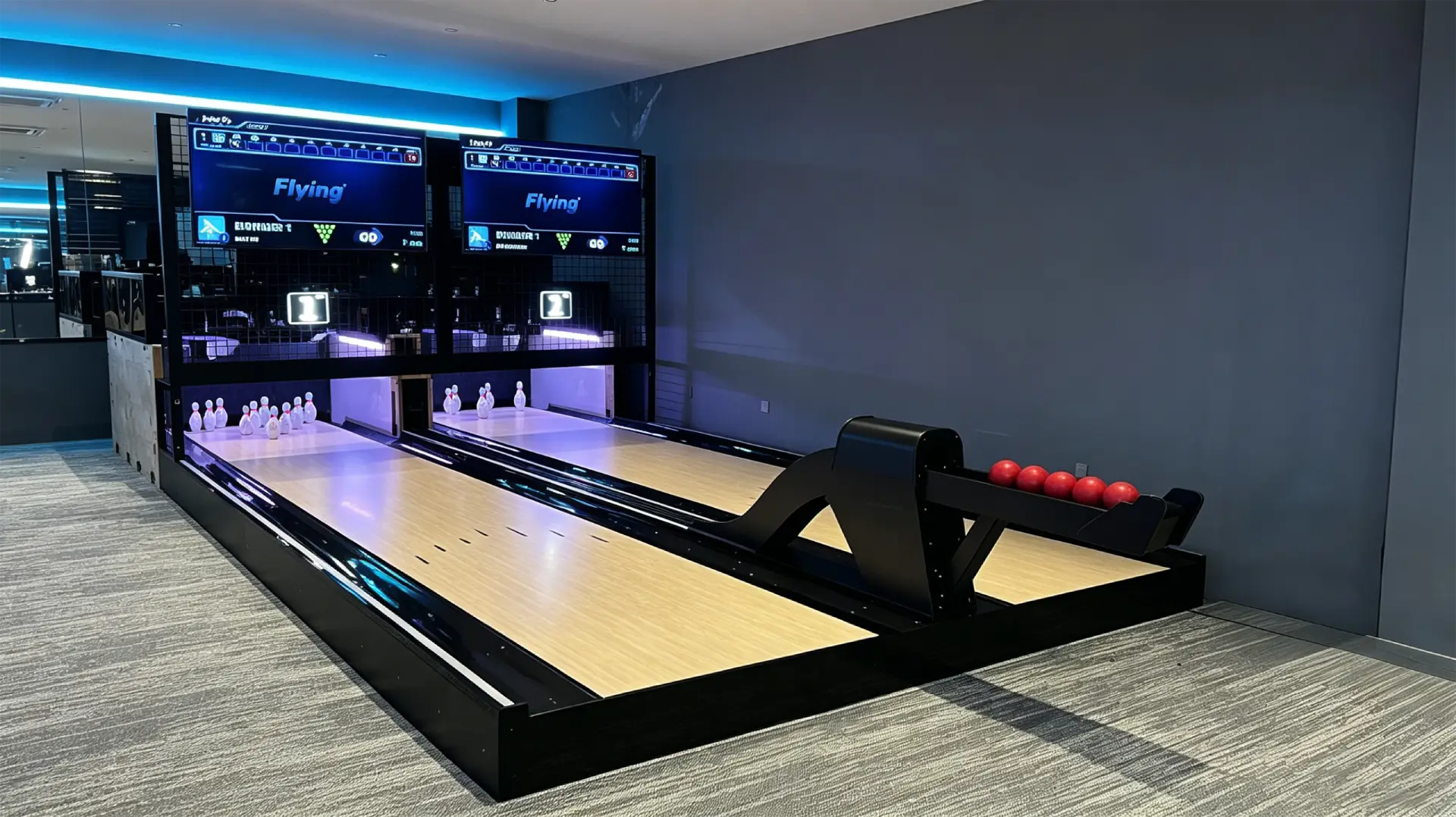
Flying Smart Duckpin Bowling is a compact duckpin bowling equipment system designed for bars, family entertainment centers, hotels, resorts, cinemas, boutique bowling alleys, and social entertainment venues. With a standard 9.13m duckpin bowling lane, 1.25kg lightweight balls, automatic scoring, ball return, LED lighting, and a smart string pinsetter, it creates a fast-paced and easy-to-play bowling experience in a smaller footprint than traditional bowling.
The system is available as a turnkey duckpin bowling package, including lane equipment, a string pinsetter system, scoring hardware, control software, global shipping, installation guidance, and technical support.
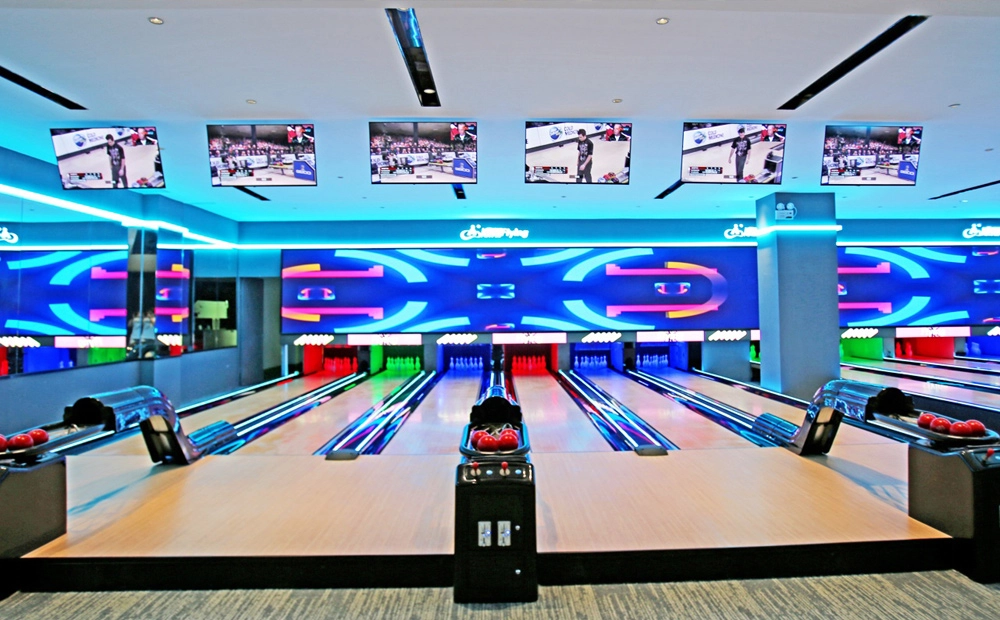
Flying Cute Mini Bowling is a compact mini bowling equipment system designed for children, families, and indoor entertainment venues. With a fixed 12-meter lane, 1.25kg small balls without finger holes, smaller pins, string pinsetter technology, and an automatic scoring system, it creates an easy, safe, and engaging bowling experience for younger players.
This mini bowling system is suitable for children’s playgrounds, family entertainment centers, theme parks, shopping malls, parent-child centers, hotels, resorts, and indoor amusement venues looking to add a fun, space-efficient attraction.
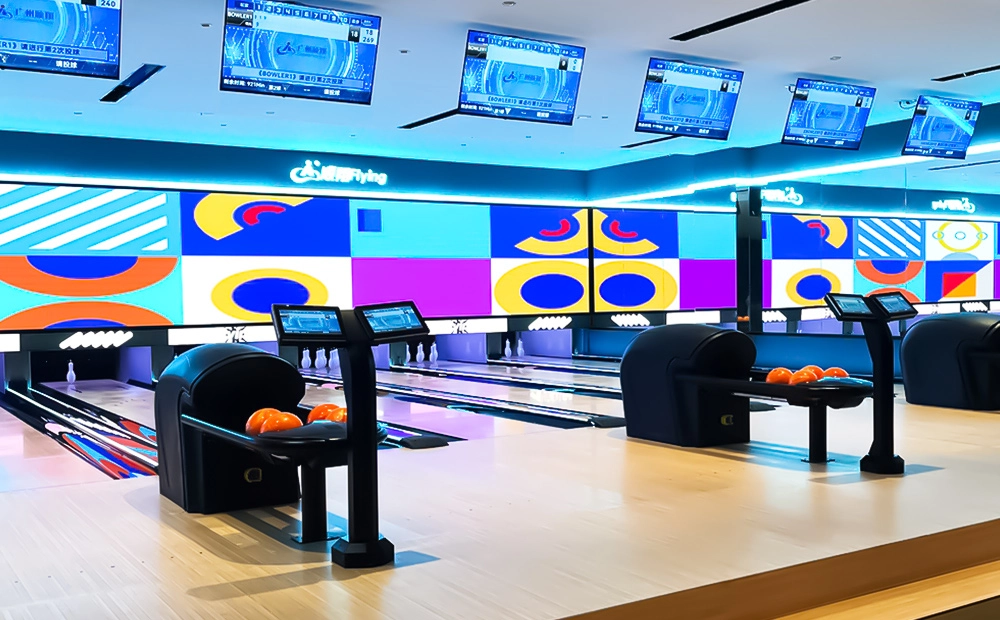
Flying Social Medium Bowling is a compact medium bowling equipment system designed for bars, cafes, family entertainment centers, community leisure venues, hotels, resorts, and small indoor entertainment spaces. With customizable lane lengths from 9.6m to 18m, small balls, lighter pins, string pinsetter technology, ball return, and automatic scoring, it creates an easy-to-play social bowling experience for players of different ages and skill levels.
Compared with full-size standard bowling, medium bowling requires less space and offers a more casual, interactive format. It is a practical choice for venues that want to add a bowling attraction without building a full commercial bowling alley.
Contact Flying
Start Your Custom Bowling Alley Project
If you contact us now for more details, we can provide you with a custom bowling alley service. Our service team will get back to you within 24 hours normally!
© 2026 Flying BOWLING. Designed by gooeyun.
FOLLOW US:
Flying Bowling
Flying Bowling
Flyingbowling
Flyingbowling