

How Much to Build a Bowling Alley in South Africa? 2026 Cost Guide (ZAR)
Building a bowling alley in South Africa is a significant investment that ranges from hundreds of thousands to millions of Rand depending on the scale and location. However, the potential for high returns is substantial, especially when navigating local challenges like import logistics and energy security effectively. By understanding the specific ZAR costs—from customs duties to backup power—and partnering with a direct manufacturer like Flying to reduce equipment markup, investors can build a profitable, world-class entertainment venue that thrives in the local market.
- Executive Summary: Bowling Alley Cost in South Africa (2026)
- Introduction: The Bowling Renaissance in South Africa
- Total Investment Breakdown: What is the Cost Per Lane?
- Bowling Alley Franchise vs. Independent Setup in South Africa
- Buying an Existing Bowling Alley "For Sale" vs. Building New
- South African Specific Costs: Import Duties and Logistics
- Infrastructure and The 'Load Shedding' Factor
- Operational Expenses (OPEX) in the Local Market
- Maximizing ROI: The Hybrid Business Model
- Conclusion
- FAQ
- Shipping and Installation in South Africa
- Ready to Start Your Bowling Business?
The entertainment and leisure sector in South Africa is evolving rapidly. From bustling shopping malls in Johannesburg to coastal resorts in Cape Town, investors are actively looking for profitable family entertainment center (FEC) models.
As an Operations Manager at Flying Bowling with over 15 years of industry experience and more than 1,000 successful projects across 50+ countries, I frequently speak with South African entrepreneurs. The two most common questions I receive are: "How much does it cost to build a bowling alley?" and "Should I buy a franchise?"
Executive Summary: Bowling Alley Cost in South Africa (2026)
Below is a quick estimate for premium bowling equipment and basic installation, presented in both USD and South African Rand (ZAR/R):
-
2-Lane Setup: $30,000 – $40,000 (Approx. R 570,000 – R 760,000)
-
4-Lane Setup: $60,000 – $80,000 (Approx. R 1.1 Million – R 1.5 Million)
-
6-Lane Setup: $90,000 – $120,000 (Approx. R 1.7 Million – R 2.2 Million)
(Note: The above estimates are for high-quality Flying Bowling equipment. Local venue rental, interior design, and local operating licenses are not included.)
Introduction: The Bowling Renaissance in South Africa
The South African leisure market is experiencing a significant "Renaissance." As disposable income stabilizes and the demand for experiential retail grows, developers are moving away from traditional retail spaces toward Family Entertainment Centers (FECs).
Current Market Trends in South African Entertainment
In major metros like Johannesburg, Cape Town, and Durban, the "experience economy" is thriving. South Africans are no longer satisfied with just a movie and a meal. They crave social interaction. This has led to a surge in boutique bowling alleys—venues that combine fewer, high-quality lanes with craft beer, artisanal burgers, and neon-lit aesthetics.
The Shift Towards Family Entertainment Centers (FECs)
The modern bowling alley in South Africa is often the anchor tenant of a larger FEC. These centers might include arcade games, VR zones, and soft play areas. The integration of these elements increases dwell time and average spend per head. Whether located in a super-regional mall like Menlyn Maine or a repurposed industrial space in Woodstock, the FEC model is proving resilient.
Why Accurate Financial Planning in ZAR is Critical
South Africa presents a unique economic environment. Currency volatility (Rand vs. Dollar/RMB), import duties, and infrastructure reliability mean that a business plan downloaded from a US website will fail here. Understanding the local context—from labour laws to construction compliance—is the only way to ensure your project doesn't run over budget.
Total Investment Breakdown: What is the Cost Per Lane?
When calculating how much to build a bowling alley in South Africa, the largest single line item is the equipment itself. However, costs vary wildly depending on the technology and finish you choose.
Estimated Cost Range Per Lane in ZAR
The bowling lane price ZAR is influenced by the type of pinsetter (string vs. free-fall), the scoring system, and the lane surface (synthetic laminate).
- Economy Setup: Using refurbished equipment or basic string pinsetters.
- VIP/Boutique Setup: High-end customizable lanes with interactive projection mapping, UV lighting, and premium furniture.
Comparison Table: Standard Bowling vs. Duckpin vs. Mini Bowling Costs
To give you a clearer picture, here is an estimated cost breakdown for equipment (Excluding VAT and shipping, strictly equipment ex-works estimates converted to ZAR):
| Bowling Type | Description | Est. Cost Per Lane (ZAR) | Target Audience |
|---|---|---|---|
| Standard Tenpin | Full regulation size (approx. 25m). Requires standard bowling shoes. | R550,000 – R850,000 | Competitive leagues, families, corporate events. |
| Duckpin Bowling | Shorter lanes, smaller balls, no special shoes required. Highly social. | R350,000 – R550,000 | Millennials, bars, limited space venues. |
| Mini Bowling | Scaled-down version for kids or arcades. Coin-operated options available. | R180,000 – R300,000 | FECs, kid zones, shopping mall walkways. |
Note: The mini bowling cost south africa is significantly lower, making it an attractive add-on for existing businesses.
Total Capital Expenditure (CAPEX) for Typical Facilities
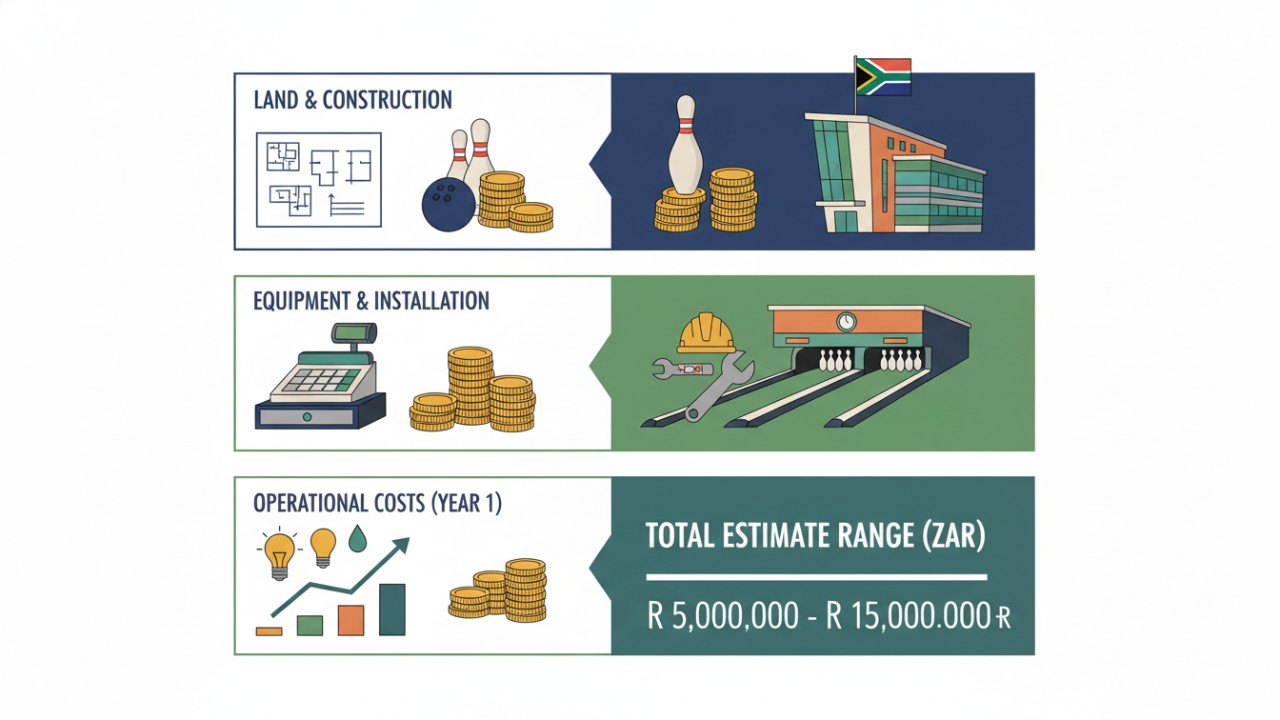
- 6-Lane Boutique Alley: Expect a total CAPEX (equipment + fit-out + licenses) of R6 Million to R10 Million.
- 12-Lane FEC Anchor: A larger facility with a full arcade and restaurant can range from R15 Million to R25 Million.
Investors can significantly reduce these costs by sourcing directly from reputable manufacturers like Flying, avoiding the heavy markups often added by third-party European distributors.
Bowling Alley Franchise vs. Independent Setup in South Africa
Many investors in South Africa search for franchise opportunities (such as local amusement center brands) because they want a proven, turnkey business model. While a franchise offers brand recognition, it comes with a heavy price tag:
-
The Franchise Disadvantage: You will pay massive initial franchise fees and ongoing monthly royalties (often a percentage of your total revenue). You are also strictly limited by their approved supplier list, which is often overpriced.
-
The Independent Advantage: By partnering directly with a manufacturer like Flying Bowling, you can build your own independent brand. You pay factory-direct prices for the equipment, keep 100% of your daily profits, and still receive "turnkey" level support for installation and maintenance. For the price of a franchise fee, you could likely pay for your entire equipment setup!
Buying an Existing Bowling Alley "For Sale" vs. Building New
Another common trend is searching for an existing "bowling business for sale" in South Africa. At first glance, buying an older venue might seem cheaper, but it often hides massive operational traps.
Older bowling centers in South Africa typically use outdated, traditional free-fall pinsetter machines. These mechanical monsters require highly paid specialized mechanics and consume a lot of electricity.
Why Building New is Better: By building a new center with modern String Pinsetter Technology, you eliminate the need for an expensive mechanic. String pinsetters are nearly maintenance-free, use significantly less power, and dramatically lower your long-term startup and operational costs.
South African Specific Costs: Import Duties and Logistics
Unless you are buying second-hand equipment locally, your bowling lanes will likely be imported. This introduces a layer of cost that many first-time investors overlook.
Understanding Customs Duties and VAT
South Africa imposes specific duties on leisure equipment.
- VAT: 15% is payable on the "Added Tax Value" (ATV) of the imported goods.
- Customs Duties: Depending on the HS Code used for bowling equipment (generally under Chapter 95), duties can range from 0% to 20%. It is vital to work with a clearing agent who understands how to classify parts (e.g., motors vs. plastic pins) to optimize duty payments.
Logistics Costs: Shipping to Durban or Cape Town
Most bowling equipment, including that from major manufacturers like Flying, is shipped via sea freight.
- Container Costs: A 6-lane setup usually requires at least two 40ft containers. Shipping rates fluctuate, but budget between R60,000 and R110,000 per container for shipping from Asia to Durban or Cape Town ports.
- Port Handling: Transnet port fees and delays can add unexpected costs. Always budget a contingency for demurrage.
Inland Transportation
If your venue is in Gauteng (Johannesburg/Pretoria), you must account for road freight from Durban harbor. The N3 corridor logistics can add another R15,000 – R25,000 per container.
Infrastructure and The 'Load Shedding' Factor
In South Africa, you cannot build a business assuming the lights will stay on. The bowling alley investment South Africa requires a robust energy strategy.
Cost of Backup Power Solutions
A bowling alley without power is a dead venue.
- Generators: A commercial diesel generator (100kVA+) capable of running 10 lanes, the kitchen, and HVAC can cost between R300,000 and R500,000. You must also budget for diesel consumption, which eats into OPEX.
- Solar & Inverters: A hybrid solar system is a higher upfront cost (R600k+) but offers long-term savings and protects sensitive electronic scoring systems from grid surges.
Renovation Costs: Compliance and Soundproofing
- SANS 10400: Your architect must ensure the build complies with South African National Standards, particularly regarding fire exits and occupancy levels.
- Acoustics: If you are in a mall or near residential areas, soundproofing is non-negotiable. Pin crashes can reach 100dB. Budget for acoustic baffles and specialized flooring under the lanes.
Regional Rent Differences
Rent is a massive variable.
- Sandton/Rosebank: Premium retail space can fetch R350 – R550 per sqm.
- Industrial Zones: Converting a warehouse in areas like Kramerville or Paarden Eiland can drop rent to R80 – R120 per sqm, providing more space for the same budget.
Operational Expenses (OPEX) in the Local Market
Building the alley is step one; keeping it profitable is step two.
Staffing Costs
South African labor laws are strict.
- Technical Staff: You need a skilled purchaser/mechanic. Salaries range from R15,000 to R25,000 per month.
- Front of House: Waiters and desk staff typically earn minimum wage plus tips, but investing in training is crucial for the "VIP" experience.
Utility Costs
Electricity tariffs in South Africa have risen steeply. String pinsetters (used by manufacturers like Flying) are highly recommended for the SA market because they consume up to 75% less electricity than traditional free-fall machines. This choice alone can save thousands of rand in monthly Eskom bills.
Licensing Fees
- Liquor License: In SA, bowling and beer go hand-in-hand. Obtaining a liquor license can take 6 to 12 months and cost upwards of R25,000 in consultant and application fees. Start this process immediately after securing a lease.
- Music Rights: SAMRO and SAMPRA licenses are required if you play background music.
Maximizing ROI: The Hybrid Business Model
To justify the high bowling alley cost in South Africa, you must diversify revenue streams.
Integrating Food and Beverage (F&B)
F&B should account for 40-50% of your total revenue. The margins on pizza, burgers, and alcohol are often higher than the bowling itself. Design your layout so that the bar is the visual centerpiece, encouraging spend even from non-bowlers.
Corporate Events and Birthday Parties
South Africans love to celebrate.
- Year-End Functions: November and December can generate 30% of your annual revenue.
- Kids Parties: Weekend mornings should be dedicated to birthday packages.
- Team Building: Marketing to local corporates for mid-week team building ensures your lanes aren't empty on Tuesdays and Wednesdays.
Partnering with Cost-Effective Manufacturers
Choosing the right equipment partner is the single biggest factor in ROI. Working with Flying allows South African investors to access world-class string pinsetter technology and durable synthetic lanes at a price point that makes sense for the Rand. By reducing the initial CAPEX on equipment, you reach your break-even point faster, allowing for reinvestment into marketing and customer experience.
Conclusion
Building a bowling alley in South Africa is a significant investment that ranges from hundreds of thousands to millions of Rand depending on the scale and location. However, the potential for high returns is substantial, especially when navigating local challenges like import logistics and energy security effectively. By understanding the specific ZAR costs—from customs duties to backup power—and partnering with a direct manufacturer like Flying to reduce equipment markup, investors can build a profitable, world-class entertainment venue that thrives in the local market.
FAQ
What is the average cost to install a single bowling lane in South Africa?
While prices vary based on technology, a single standard bowling lane typically costs between R450,000 and R850,000 (ZAR) when factoring in equipment, shipping, and installation. String pinsetter technology can help lower these initial capital costs compared to traditional free-fall machines.
Do I need a generator for a bowling alley in South Africa?
Yes, due to load shedding, a backup power solution is essential. A 10-lane bowling alley requires significant power for pinsetters, scoring systems, and lighting. Budgeting for a commercial diesel generator or a hybrid solar inverter system is a mandatory part of the infrastructure cost.
Are there import duties on bowling equipment in South Africa?
Yes, bowling equipment imported into South Africa is subject to customs duties and VAT (15%). It is crucial to work with a supplier who can provide the correct HS codes to calculate accurate landed costs before shipping.
How much space is needed for a bowling alley?
A standard bowling lane requires approximately 30 to 35 meters in length and about 1.7 meters in width (including the approach and seating area). For a 6-lane boutique alley with a bar area, you generally need a minimum of 400 to 500 square meters.
Shipping and Installation in South Africa
Worried about international logistics? Don't be. Our team regularly handles ocean freight shipping to major South African ports, including Durban, Cape Town, and Port Elizabeth. We provide comprehensive layout designs, shipping assistance, and professional on-site installation guidance to ensure your lanes are perfectly leveled and ready for business.
Ready to Start Your Bowling Business?
Stop paying franchise fees and start building your own profitable entertainment center.
👉 Contact Our Experts Today for a Free, Custom ZAR Quotation and Floor Plan Analysis!
Recommended products
Flying Smart Duckpin Bowling Equipment for Commercial Venues
AEROPIN™ USBC-Certified String Pinsetter System
Medium Bowling Equipment for Compact Social Venues
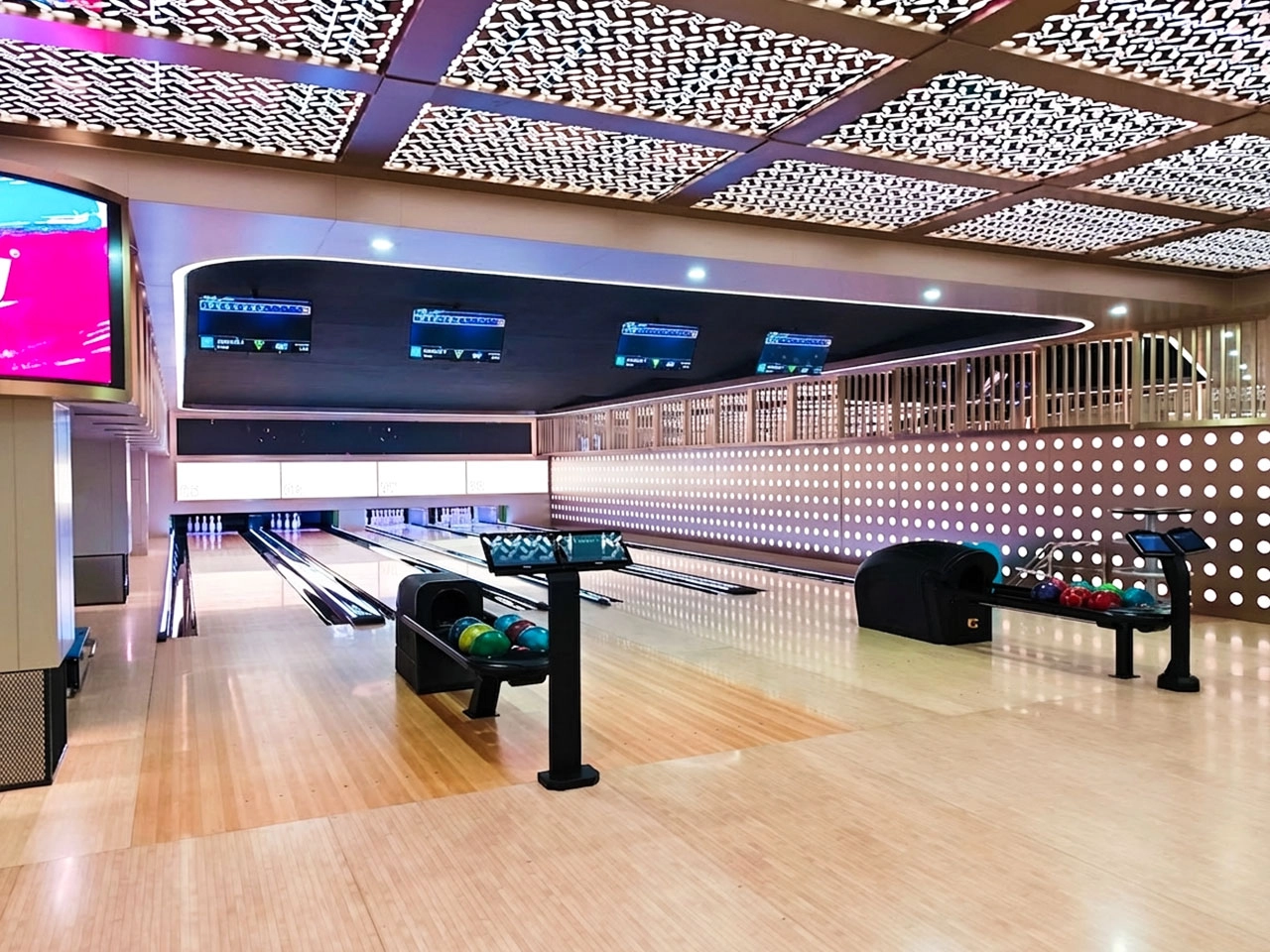
Complete Bowling Alley Equipment Package for Commercial Bowling Centers
You may also like
Build a commercial bowling venue with Flying’s complete string pinsetter bowling alley equipment package. The system includes the AEROPIN™ USBC-certified string pinsetter, customizable lanes, automatic scoring, ball return, lane lighting, pins, control hardware, and overseas installation support.
Designed for commercial bowling centers, family entertainment venues, hotels, resorts, bars, and premium private projects, this turnkey bowling system helps operators reduce sourcing complexity and prepare for reliable long-term operation.
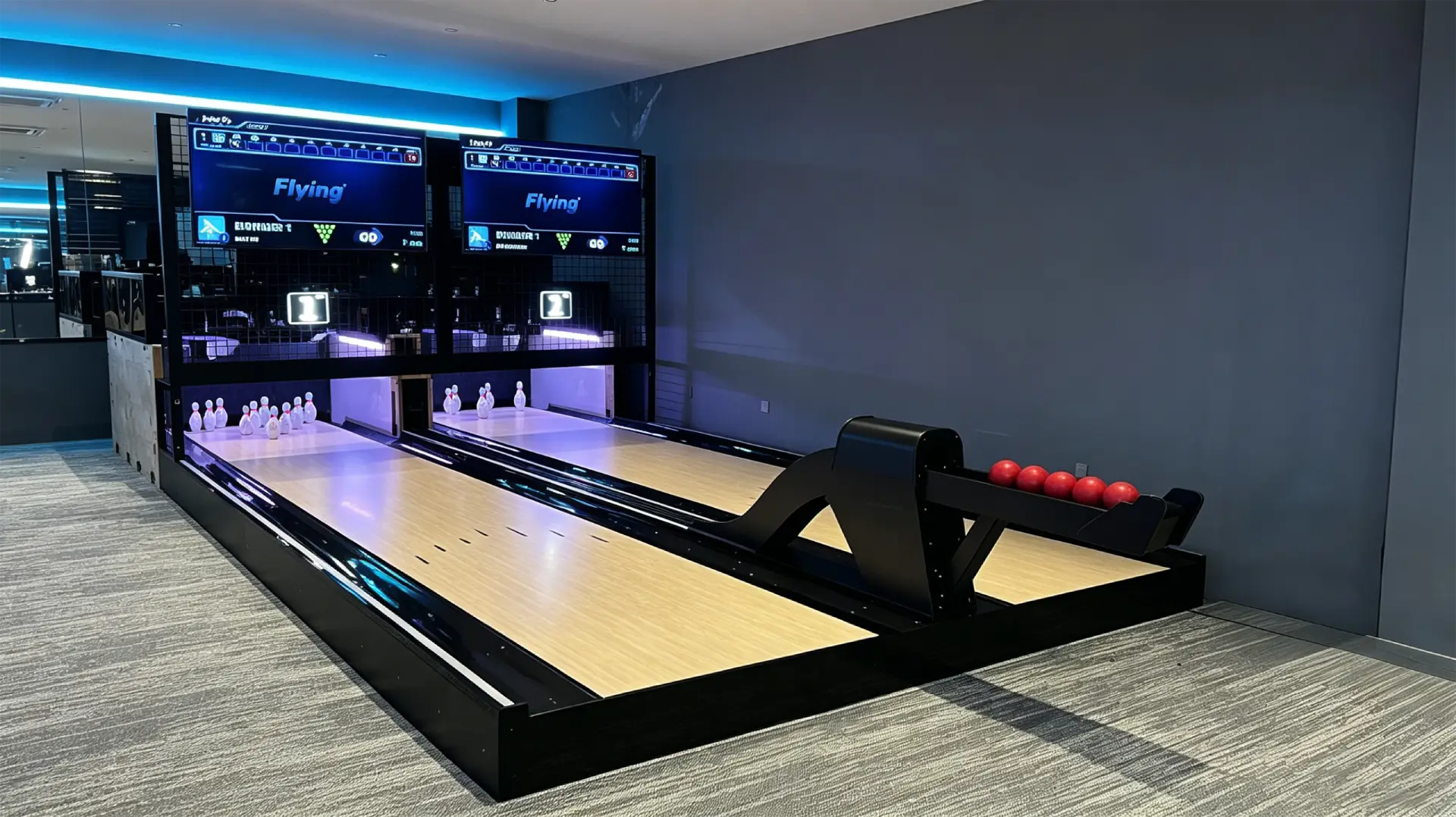
Flying Smart Duckpin Bowling is a compact duckpin bowling equipment system designed for bars, family entertainment centers, hotels, resorts, cinemas, boutique bowling alleys, and social entertainment venues. With a standard 9.13m duckpin bowling lane, 1.25kg lightweight balls, automatic scoring, ball return, LED lighting, and a smart string pinsetter, it creates a fast-paced and easy-to-play bowling experience in a smaller footprint than traditional bowling.
The system is available as a turnkey duckpin bowling package, including lane equipment, a string pinsetter system, scoring hardware, control software, global shipping, installation guidance, and technical support.
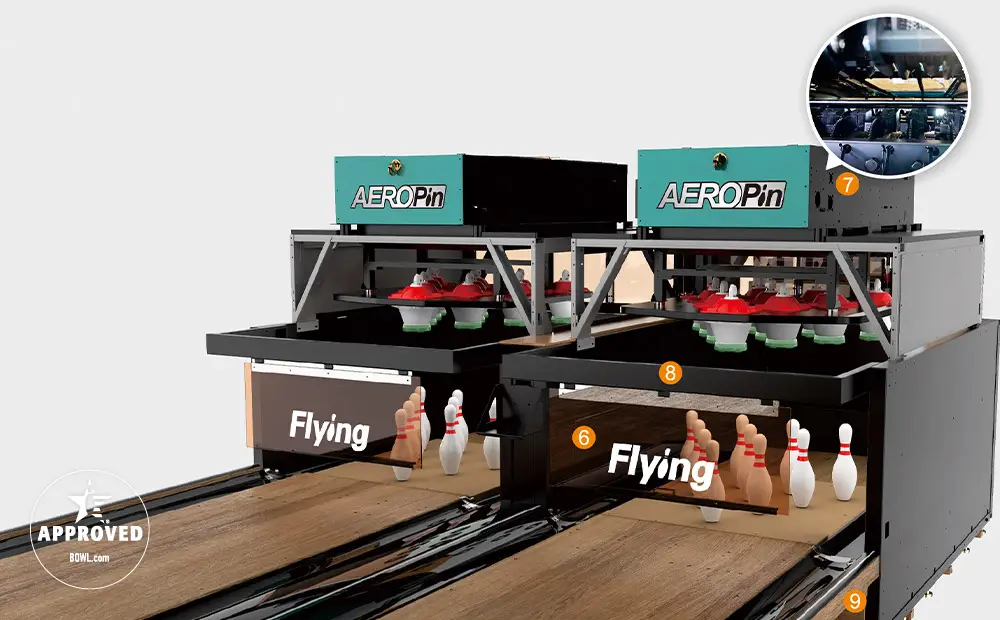
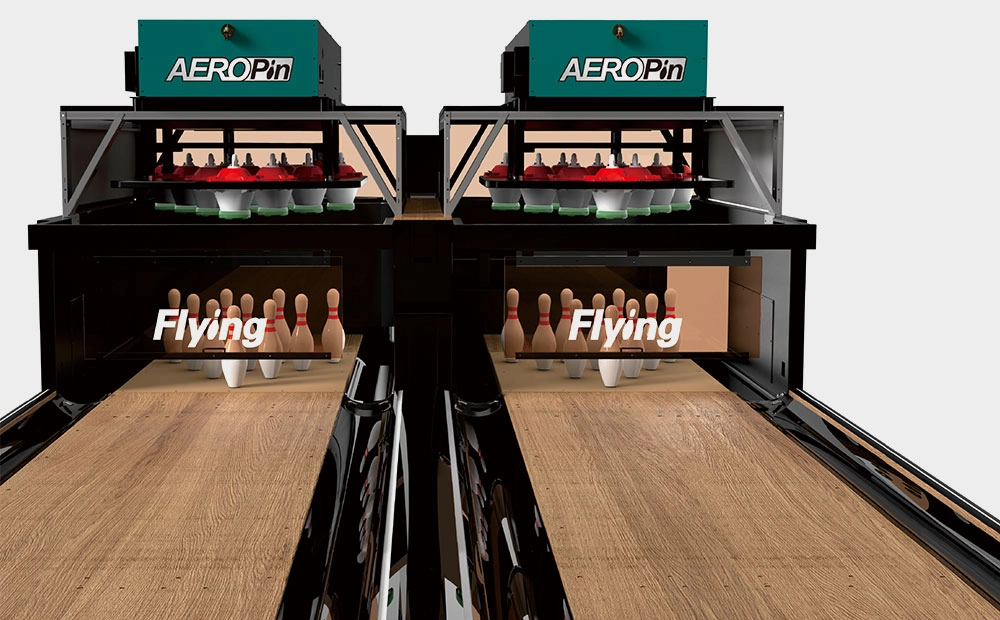
AEROPIN is Flying Bowling’s USBC-certified string pinsetter system for modern commercial bowling centers. Designed for fast pin setting, smooth ball return, low maintenance, and stable daily operation, it helps venue operators build league-ready and entertainment-focused bowling projects with confidence.
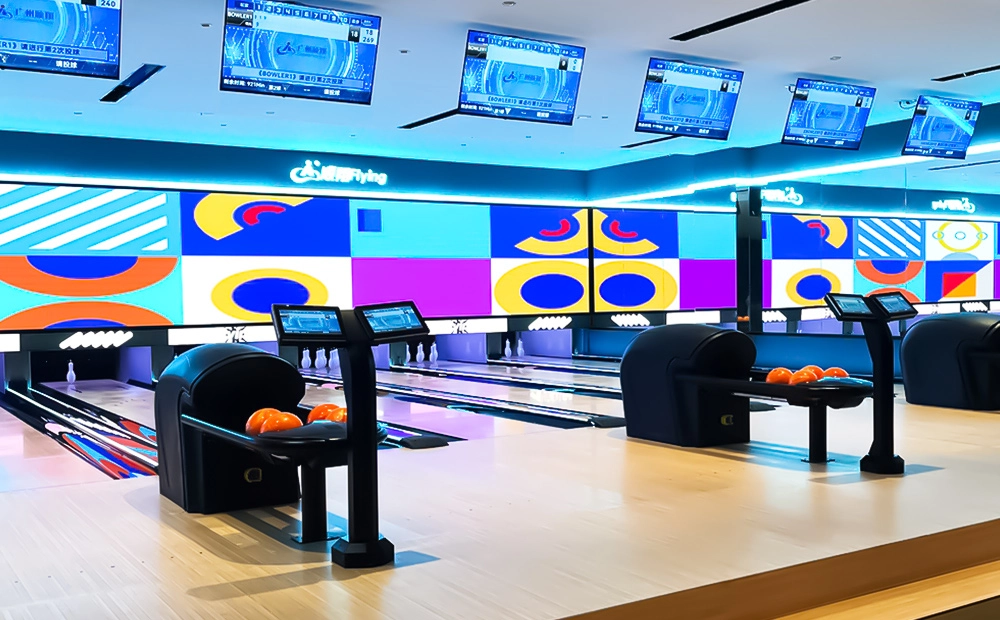
Flying Social Medium Bowling is a compact medium bowling equipment system designed for bars, cafes, family entertainment centers, community leisure venues, hotels, resorts, and small indoor entertainment spaces. With customizable lane lengths from 9.6m to 18m, small balls, lighter pins, string pinsetter technology, ball return, and automatic scoring, it creates an easy-to-play social bowling experience for players of different ages and skill levels.
Compared with full-size standard bowling, medium bowling requires less space and offers a more casual, interactive format. It is a practical choice for venues that want to add a bowling attraction without building a full commercial bowling alley.
Contact Flying
Start your bowling alley project
If you contact us now for more details, we can provide you with a custom bowling alley service. Our service team will get back to you within 24 hours normally!
© 2026 Flying BOWLING. Designed by gooeyun.
FOLLOW US:

Flying Bowling
Flying Bowling
Flyingbowling
Flyingbowling
Flyingbowling