


What are expected ROI and maintenance costs for a bowling venue?
1) What ROI can I expect from a 16-lane bowling center in a suburban market after 3 years, accounting for equipment, staffing, and F&B?
Answer:Begin with a simple ROI framework and then run a sample scenario you can adapt to your market. ROI = (Annual Net Profit) / (Total Initial Investment). Payback period = (Total Initial Investment) / (Annual Net Cash Flow).
Key revenue drivers: lane hourly/booked rates, league income, food & beverage (F&B), pro-shop sales, arcade/FEC revenue, events and parties. Cost drivers: rent or mortgage, payroll, utilities, insurance, equipment financing, maintenance, consumables (shoes, balls), and marketing.
Sample conservative scenario (illustrative assumptions — replace with your local numbers):
- Lanes: 16
- Average revenue per lane per year: $45,000 (mix of casual play, leagues, parties, F&B). This is within typical industry ranges for small-to-mid centers.
- Annual gross revenue = 16 lanes * $45,000 = $720,000
- Operating expenses (COGS for F&B, payroll, utilities, marketing, insurance, leases, supplies): assume 65% of revenue -> $468,000
- EBITDA/net operating profit = $252,000
- Initial cash investment (land/build-out + equipment + FF&E + working capital): assume $2,000,000 (varies widely by location and whether you buy a building). Many startup centers fall in $1M–$6M range.
ROI calculation: 252,000 / 2,000,000 = 12.6% annual return (EBITDA basis). Payback ≈ 7.9 years. If you finance some costs, cash-on-cash return will differ; consider debt service.
What this means: a well-run 16-lane suburban center can deliver mid-teens EBITDA margins and single-digit to low double-digit ROI depending on investment size, financing, and local demand. Adjust the model with your market-specific lane revenue figures, rent, and staffing costs for a precise forecast.
Why these ranges vary: location foot traffic, local entertainment competition, quality of equipment (new automated scoring and modern pro-shop lift revenues but higher capex), and management experience.
2) What are realistic annual maintenance and capital-repair budgets per lane for pinsetters, lane resurfacing, oiling machines, and scoring systems?
Answer:Break maintenance into routine (annual O&M) and periodic capital repairs (CAPEX). Industry owners typically budget both as separate line items.
Typical ranges (industry-practice ranges; use your local quotes to refine):
- Routine O&M per lane per year: $2,000–$6,000. This covers technician labor, replacement parts for pinsetters and ball returns, lane oil and cleaning supplies, small electronics repairs, and general upkeep.
- Major periodic CAPEX per lane (multi-year lifecycle items): $1,000–$6,000 per year when amortized across expected lifetimes. Examples: pinsetter overhauls, lane resurfacing, complete headpin assemblies.
Common lifecycle schedules and cost examples (amortized approach):
- Pinsetter major rebuild: every 7–12 years. A rebuild or major parts package per pinsetter can be several thousand dollars; amortize across expected years (e.g., $3,000–$8,000 per machine at rebuild time => amortized $300–$800/year per lane depending on schedule).
- Lane resurfacing/refinishing: every 8–15 years depending on traffic and maintenance. Full resurfacing can cost $1,500–$5,000 per lane; amortized = $100–$625/year per lane.
- Oiling machine & pump service: yearly service and occasional parts replacement $200–$1,200 per lane equivalent.
- Scoring system (PC, monitors, software): upgrades every 6–10 years; budget $200–$800/year per lane when amortized.
Build a conservative maintenance budget by summing: Routine (e.g., $3,500/ lane/yr) + amortized CAPEX reserve (e.g., $1,500/lane/yr) = $5,000 per lane per year. Older centers often sit at the higher end; new centers with warranties will be lower during the first few years.
Practical tip: maintain a sinking fund (separate reserve) equivalent to one year’s worth of amortized CAPEX so you don’t get surprised when a pinsetter rebuild or lane resurfacing is required.
3) How much should I budget upfront for new automated Brunswick/EQ equipment per lane versus buying refurbished, and how does that affect payback?
Answer:When choosing between new automated equipment and refurbished units, compare capex, reliability (downtime), warranty, energy efficiency, and expected maintenance.
General budgeting guidance (industry ranges — get vendor quotes for accuracy):
- New full equipment package per lane (new scoring, new pinspotter, new ball returns, lane treatment, consoles): can add $25,000–$60,000 per lane depending on configuration and brand. This broad range includes variations in scoring displays, LED approach lighting, and pro-shop integration.
- Refurbished or used equipment: often 40–70% of the cost of new for similar functionality, but with shorter remaining lifecycle and often no full warranty.
How this affects payback:
- Higher initial capex (new equipment) usually shortens operating costs (lower maintenance, less downtime) and increases customer experience (higher lane rates, more F&B spend). For example, if new equipment increases effective revenue per lane by 5–10% and reduces maintenance by 20%, the incremental revenue and cost savings can shorten payback despite higher capex.
- Refurbished equipment reduces initial investment and may improve early-year cash flow, but expect higher maintenance reserves and potential unscheduled downtime that can depress revenue.
Decision approach:
- Get firm supplier quotes for new and used packages.
- Model two scenarios (new vs refurbished) over a 10-year horizon including: financing, maintenance schedule, expected downtime, and incremental revenue uplift from better guest experience.
- Use Net Present Value (NPV) and Internal Rate of Return (IRR) on the cash flows (not just payback) to make a capital allocation decision.
Example quick comparison (illustrative):
- New package incremental cost per lane: +$20,000 vs refurbished.
- If new package drives $2,000/yr additional gross revenue per lane and saves $800/yr in maintenance, incremental net = $1,200/yr after COGS; payback on the extra $20k = 16.7 years (without financing). But if you value lower downtime and can charge higher lane rates leading to $5,000/yr extra, payback = 4 years. Model conservatively.
4) What are expected lifetimes and replacement schedules (and costs) for pinsetters, lane surfaces, oil pumps, ball returns and scoring systems?
Answer:Understanding component lifecycles helps create accurate CAPEX schedules.
Typical component lifecycles (industry practice ranges):
- Mechanical pinsetters/pinspotters: mechanical life 15–30 years with regular maintenance; major rebuilds every 7–12 years. Rebuild costs vary; budget accordingly.
- Lane surface (synthetic lanes): 8–15 years before major refinishing; full replacement rarely needed until 15+ years depending on traffic.
- Oil pumps & lane conditioning machines: 7–15 years, with pumps and motors serviced every 3–5 years. Parts are replaceable; full replacement less frequent.
- Ball returns: 10–20 years with periodic belt and motor replacements.
- Scoring/electronics: 5–10 years before upgrade; displays and software may need refresh earlier to keep modern UX.
Cost examples and planning (use supplier quotes):
- Major pinsetter rebuild or replacement can range from a few thousand to tens of thousands per machine; amortize across the lifecycle.
- Lane resurfacing: $1,500–$5,000 per lane at replacement time.
- Scoring system upgrades: $500–$4,000 per lane depending on level of new displays and software licensing.
Asset-tracking best practice: keep a fixed-asset schedule with expected replacement dates, estimated replacement costs, and an annual reserve contribution line item in your budget. Re-evaluate supplier lead times (esp. for electronics) and set notification reminders 12–18 months before an anticipated replacement.
5) How do shoe and ball pro-shop revenue and associated equipment costs affect overall ROI, and what are realistic margins?
Answer:A pro-shop and shoe rental operation are high-margin, ancillary profit centers that can materially improve ROI when executed correctly.
Revenue & margin profile (industry observations):
- Shoe rental: low-priced per rental but high volume; gross margin is high because inventory cost is low and washing/maintenance costs are modest. Many centers see shoe rental margins of 60–80% after cleaning/labor overhead.
- Pro-shop sales (bowling balls, bags, shoes, accessories, drilling): gross margins vary widely: balls often 30–45% margin, accessories and consumables 40–70%. Service (drilling, fittings) has high margins (50%+) after labor.
Equipment & setup costs: initial pro-shop equipment (drilling machine, balancing, storage, POS) ranges from $10,000 to $60,000 depending on whether you buy top-tier drilling and fitting equipment and inventory. Leasing options can reduce initial outlay.
Impact on ROI:
- Example: If a center generates $50,000/year in pro-shop gross profit on a $30,000 incremental pro-shop investment, ROI contribution = 167% on that sub-investment alone. More importantly, pro-shop and shoe operations increase repeat customers and higher per-visit spend, improving overall lane revenue.
Best practice: start with a modest inventory focused on best-selling ball models and accessories; track margins by SKU and expand based on customer demand. Offer league discounts and repair services to build recurring revenue.
6) How do I forecast lost revenue from maintenance downtime (per hour per lane) and include that in my ROI projections?
Answer:Downtime forecasting is critical for realistic revenue projections because unscheduled hours directly reduce lane utilization and revenue.
Method to quantify downtime cost:
- Determine your average revenue per lane per hour: Annual lane revenue / (operating hours per year * lanes). For example, if annual lane revenue per lane = $45,000 and you operate 3,000 hours/year, average = $15/hour.
- Estimate weekday vs weekend variability and peak pricing (e.g., lanes charge more during peak). Use weighted average pricing or model peak vs off-peak separately.
- Multiply revenue/hour by estimated downtime hours per year per lane (planned + unplanned). Planned downtime for lane oiling/maintenance is predictable and should be scheduled in low-demand windows.
Example calculation (illustrative):
- Average revenue per lane per hour = $20
- Unscheduled downtime per lane per year = 20 hours (older equipment can be higher)
- Annual lost revenue per lane = 20 hours * $20 = $400
- Add technician labor and parts to repair: $1,000/year per lane in worst-case scenarios
- Total downtime-related cost = lost revenue + repair expense = $1,400/year per lane
Risk mitigation and modeling tips:
- Use contractual service agreements (CSAs) or manufacturer warranties to reduce mean time to repair (and thus lower downtime costs).
- Model worst-case and best-case downtime scenarios. For older equipment, plan conservatively (40–100 hours/year per lane across the building).
- Include contingency: allocate 5–10% of annual revenue to unexpected repairs until you have long-term maintenance data.
Concluding paragraph summarizing the advantages of investing in quality equipment and proactive maintenance plans:Investing in quality bowling equipment and a proactive maintenance plan reduces downtime, lowers total cost of ownership, enhances guest experience, and supports higher lane rates and repeat business. While new equipment increases initial capex, it often improves uptime, reduces maintenance labor, and unlocks incremental revenue from better scoring, lighting, and pro-shop integration—improving long-term ROI. Conservative budgeting for routine O&M plus an amortized CAPEX reserve per lane gives reliable forecasts and prevents surprise capital calls.
Contact us for a custom, line-item quote and lane-by-lane ROI model tailored to your location and business plan. Visit www.flyingbowling.com or email jackson@flyingbowling.com for a detailed estimate.
More Articles

Let’s Build a center Together
Partner With a Trusted Bowling Alley Design, One-Stop Solution Manufacturer.
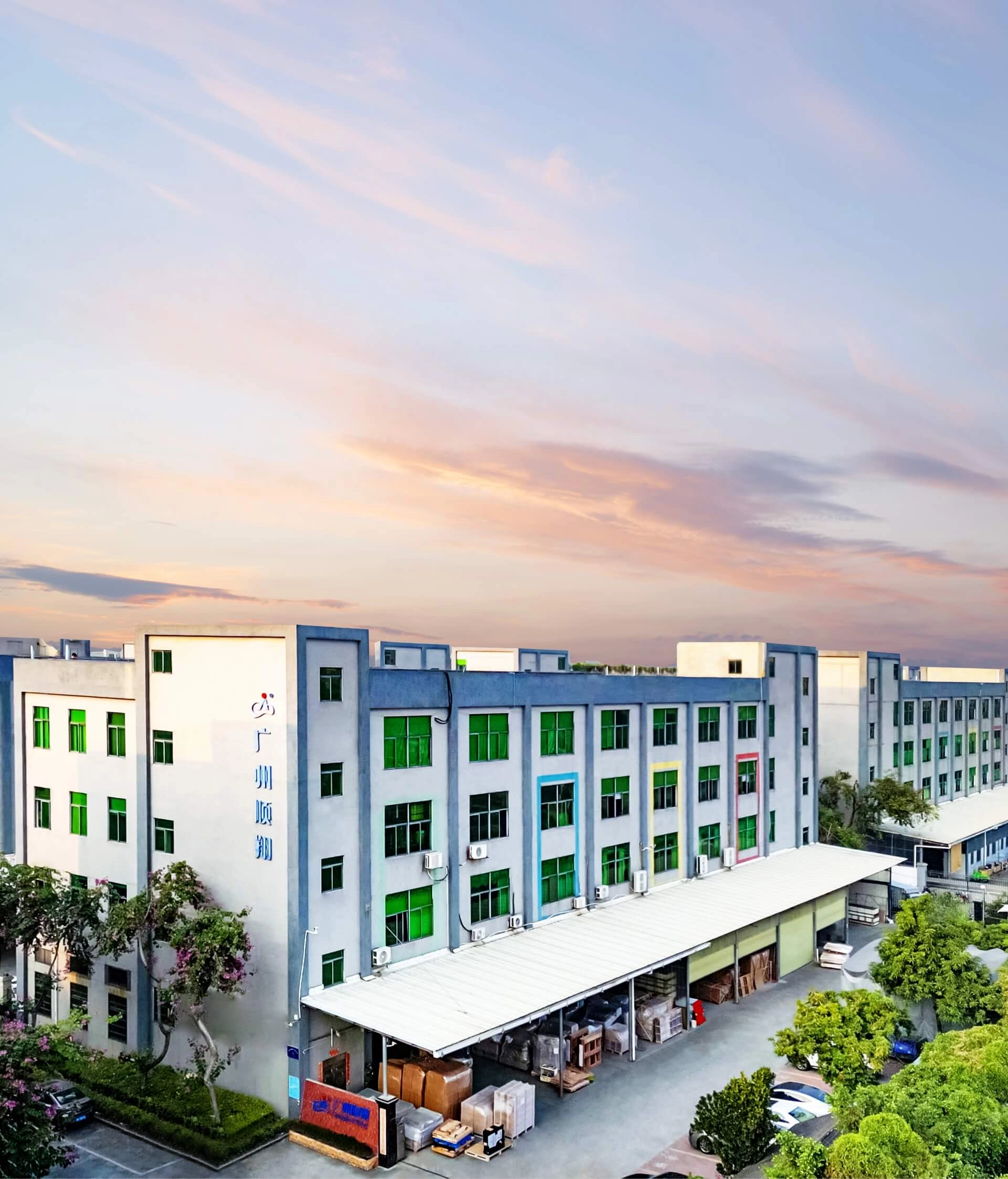
Flying has successfully built ideal bowling alleys for more than 3,000 customers.
Technical Expert
You may also like our products
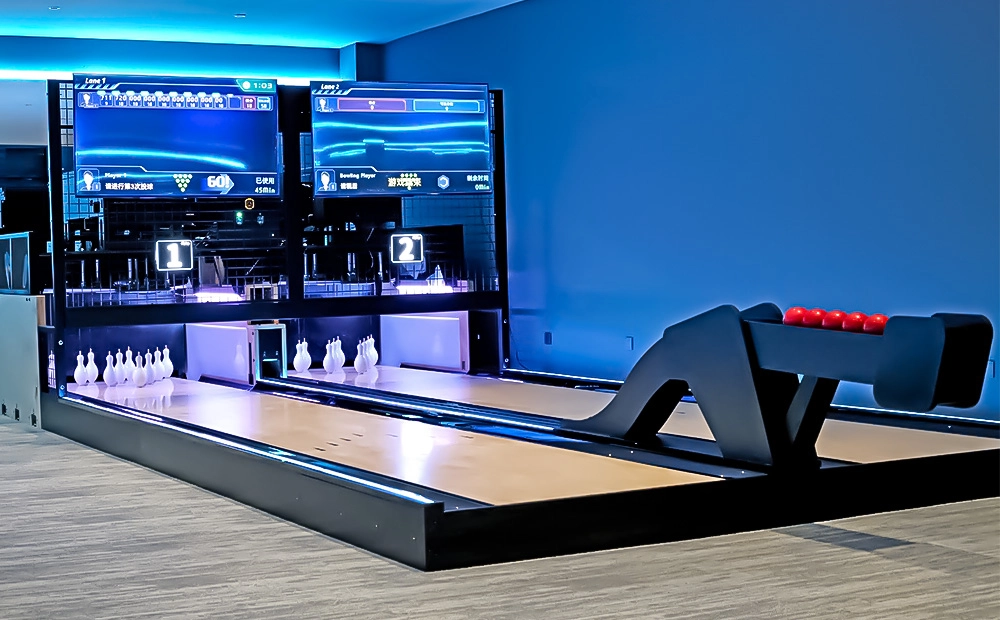
Flying Smart Duckpin Bowling (FSDB) innovative design, standard 9.2-meter short lane, can be shortened in length, compact layout suitable for small spaces. The game rules are simple but challenging, attracting players of different ages to actively participate.
Suitable for social entertainment venues such as bars, billiard halls, and game centers, it not only enhances interactivity but also increases the popularity and consumption frequency of the venue. The fun and competitive nature of FSDB will make it a new focus of social activities.
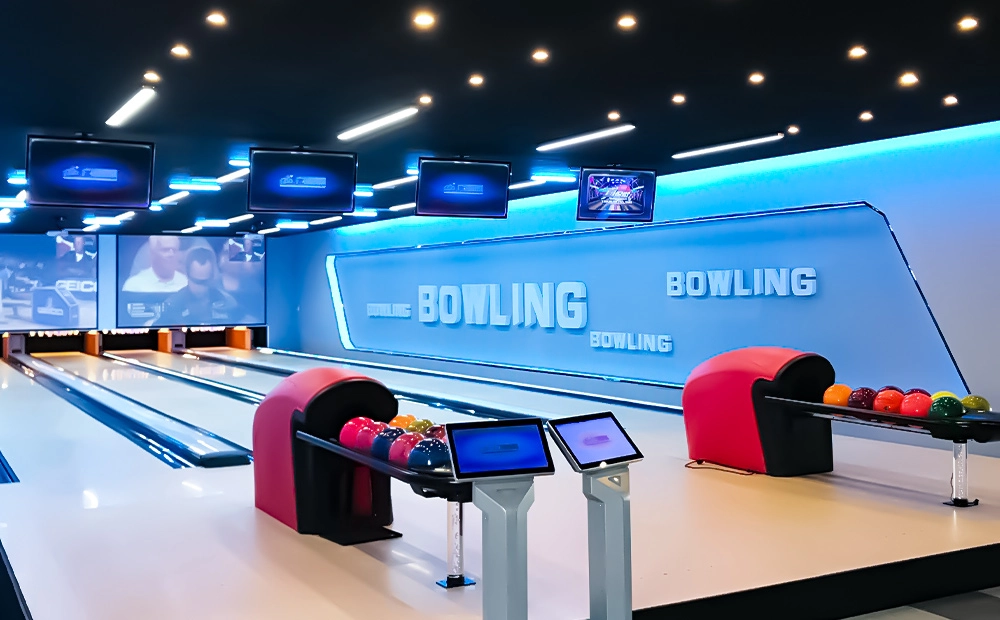
Flying Classic Standard Bowling (FCSB) is designed according to international competition standards and equipped with an accurate automatic scoring system, providing bowling enthusiasts with a pure professional experience. Whether it is for competitions or leisure entertainment, FCSB can meet high-level needs.
Suitable for family entertainment centers, luxury resorts, private villas, or clubs, it is an ideal choice for customers who pursue high-end quality and professional experience. Its classic design and excellent performance will add lasting appeal to the venue.
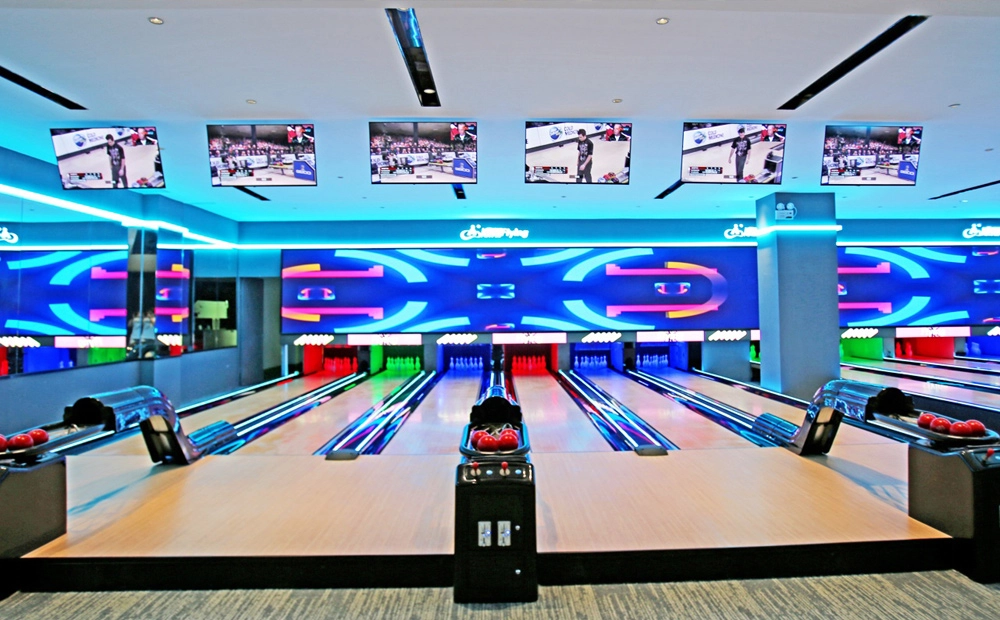
Flying Cute Mini Bowling (FCMB) is a mini bowling experience designed for children and families. The lane length is fixed at 12 meters, equipped with lightweight balls without finger holes (only 1.25kg) and small pins, specially designed for children and family fun.
It can not only help children feel the fun of bowling, but also stimulate their interest and competitive consciousness. Suitable for children's playgrounds, theme parks and parent-child centers, it is the best choice for places focusing on the children's market.
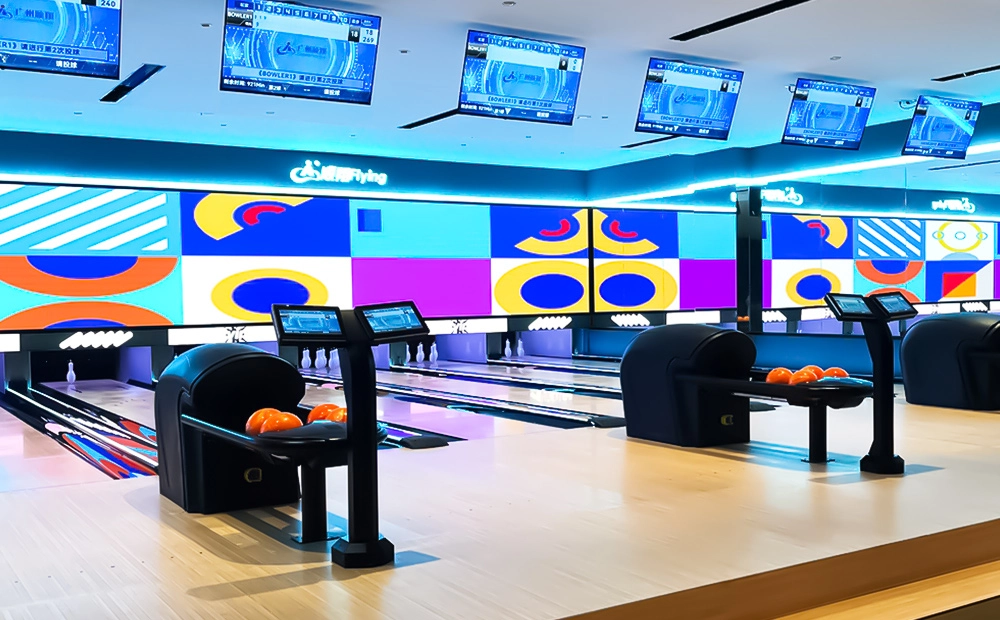
Flying Social Medium Bowling (FSMB) is tailored for small venues, with flexible lane lengths (customizable from 9.6 meters to 18 meters), a small ball design suitable for players of all ages, and light pins that are easier to knock down, increasing participation and fun.
Whether it is a gathering of friends or a casual social, FSMB can easily create a relaxed and pleasant atmosphere. Its efficient space-utilization design is particularly suitable for cafes, bars and community entertainment venues, allowing people to fall in love with bowling in a relaxed interaction.
Contact Flying
Start Your Custom Bowling Alley Project
If you contact us now for more details, we can provide you with a custom bowling alley service. Our service team will get back to you within 24 hours normally!
© 2026 Flying BOWLING. Designed by gooeyun.
FOLLOW US:
Flying Bowling
Flying Bowling
Flyingbowling
Flyingbowling