

Bowling Lane Oil Patterns and Oiling Machines Explained
- What Oil Is Used on Bowling Lanes?
- What Are Bowling Lane Oil Patterns?
- House, Sport, and Custom Oil Patterns
- How Bowling Lane Oiling Machines Apply Patterns
- Why Oil Volume and Oil Length Matter
- How Oil Patterns Affect Ball Motion
- How Often Should Bowling Lanes Be Conditioned?
- Operator Checklist for Stable Lane Conditions
- Bowling Lane Oil Patterns vs Lane Maintenance
- Flying Bowling Equipment Solutions
- Conclusion
- Explore Bowling Equipment Solutions
- FAQ
Quick Answer
Bowling lanes use specialized lane conditioner applied in controlled oil patterns. These patterns are created by bowling lane oiling machines to manage friction, protect the lane surface, and influence bowling ball motion.
For bowling centers, the most important issue is not only what oil is used, but whether the oil pattern can be applied consistently across daily operation.
What Oil Is Used on Bowling Lanes?
Bowling lanes use specialized lane conditioner, not household oil or general machine oil. This conditioner is designed for bowling lane surfaces and helps control friction between the bowling ball and the lane.
The exact conditioner may vary depending on lane material, bowling center traffic, maintenance standards, oil pattern requirements, and operating environment.
This article does not focus on the chemical composition of bowling lane oil. Instead, it explains how conditioner is distributed through oil patterns and applied by oiling machines.
What Are Bowling Lane Oil Patterns?
Bowling lane oil patterns describe the shape, length, and volume of conditioner applied across the lane. A pattern determines where the lane has more oil, where it has less oil, and how much friction the bowling ball meets during play.
For operators, an oil pattern is not only a gameplay setting. It is also an operating tool used to control customer experience, lane consistency, and daily playability.
House, Sport, and Custom Oil Patterns
Different bowling oil patterns are used for different playing environments. A recreational venue may need a customer-friendly pattern, while a training or competitive venue may require more challenging lane conditions.
| Pattern Type | Main Feature | Best Fit |
|---|---|---|
| House Pattern | More forgiving ball reaction | Recreational centers and casual players |
| Sport Pattern | More demanding lane condition | Training or competitive play |
| Custom Pattern | Adjusted for venue-specific needs | Events, mixed customer groups, or special lane experiences |
House Pattern
A house pattern is usually designed to make recreational bowling more enjoyable. It helps casual players get a more predictable ball reaction, which is useful for family entertainment centers, social bowling venues, and commercial bowling centers focused on customer experience.
Sport Pattern
A sport pattern creates a more demanding lane condition. It is better suited for trained players, leagues, or competitive environments where accuracy and adjustment are part of the experience.
Custom Pattern
A custom pattern allows operators to adjust lane conditions for specific events or venue goals. It can help create different playing experiences while keeping the page focused on oil patterns rather than becoming a full maintenance guide.
How Bowling Lane Oiling Machines Apply Patterns
Bowling lane oiling machines apply conditioner according to selected pattern settings. Compared with manual application, an oiling machine helps control oil volume, pattern length, lane coverage, and consistency across multiple lanes.
A typical oiling machine process may include lane cleaning, conditioner application, and pattern control. The purpose is not only to put oil on the lane, but to reproduce a stable lane condition from one session to another.
| Machine Function | Why It Matters |
|---|---|
| Lane cleaning | Removes residue before new conditioner is applied |
| Oil volume control | Helps maintain consistent friction levels |
| Pattern length control | Affects where the ball starts to react |
| Cross-lane distribution | Influences lane difficulty and predictability |
| Repeatable settings | Helps operators keep lane conditions consistent |
Why Oil Volume and Oil Length Matter
Oil volume refers to how much conditioner is applied. Oil length refers to how far down the lane the conditioner extends. Together, they strongly affect how the lane plays.
| Factor | Effect on Lane Play |
|---|---|
| Higher oil volume | Reduces friction and delays ball reaction |
| Lower oil volume | Increases friction and can create earlier reaction |
| Longer oil pattern | Ball may slide farther before changing direction |
| Shorter oil pattern | Ball may encounter friction earlier |
| Uneven distribution | Ball reaction becomes less predictable |
How Oil Patterns Affect Ball Motion
Oil patterns affect ball motion by changing the amount of friction between the ball and the lane. More oil usually allows the ball to slide longer. Less oil usually creates earlier friction and a stronger visible reaction.
However, this does not mean one pattern is always better than another. Recreational venues usually need stable and enjoyable conditions, while competitive venues may prefer more demanding lane reactions.
How Often Should Bowling Lanes Be Conditioned?
Bowling lane conditioning frequency depends on lane traffic, operating hours, customer type, lane material, and desired playing condition. A busy bowling center may need more frequent conditioning than a lower-use entertainment venue.
Instead of using one fixed schedule for every venue, operators should watch whether lane reaction remains consistent during business hours. If the lane condition changes too quickly, the oil pattern, oil volume, or conditioning frequency may need adjustment.
Operator Checklist for Stable Lane Conditions
For commercial venues, the best lane condition is not always the most difficult one. A practical lane condition should match the customer group, operating model, and expected daily usage.
| Operator Question | Why It Matters |
|---|---|
| Are customers mainly casual players or trained bowlers? | Helps determine pattern difficulty |
| How many games are played each day? | Affects conditioning frequency |
| Do lane reactions remain stable during operation? | Shows whether current conditioning is suitable |
| Are patterns consistent across multiple lanes? | Affects customer experience |
| Is the oiling process easy for staff to repeat? | Supports daily operation |
Bowling Lane Oil Patterns vs Lane Maintenance
Bowling lane oil patterns are part of lane maintenance, but they are not the same as a complete maintenance program. Oil patterns focus on conditioner distribution and lane playability.
Full lane maintenance may also include cleaning routines, surface inspection, equipment checks, and long-term service planning. This page focuses on oil patterns and oiling machines, while broader maintenance topics should be handled separately to avoid mixing different user intents.
Flying Bowling Equipment Solutions
Flying Bowling provides customized bowling equipment solutions for commercial bowling centers, entertainment venues, and project-based bowling spaces.
For venue owners, lane condition, equipment configuration, and daily operation should be planned together. If you are planning a bowling venue, you can review available bowling products or contact the team to discuss a suitable project solution.
Conclusion
Bowling lane oil patterns and oiling machines play an important role in lane consistency, ball motion, and daily bowling center operation.
This page focuses on how oil patterns work, how oiling machines apply conditioner, and what operators should consider when maintaining stable lane conditions. It does not replace a full bowling lane maintenance guide or a bowling oil composition guide.
For commercial bowling venues, the right lane condition should match the customer group, operating model, and expected usage level. A consistent and repeatable oiling process can help create a more reliable playing experience for customers.
Explore Bowling Equipment Solutions
Planning a bowling center or entertainment venue? Explore Flying Bowling products or contact the team to discuss a customized bowling solution for your project.
View Bowling Products Request a Custom Bowling SolutionFAQ
What oil is used on bowling lanes?
Bowling lanes use specialized lane conditioner, not household oil or general machine oil. This conditioner is designed for bowling lane surfaces and helps control friction, protect the lane, and support consistent bowling ball motion.
What are bowling lane oil patterns?
Bowling lane oil patterns describe how conditioner is distributed across the lane. They control oil volume, oil length, and lane coverage, which can affect friction, ball reaction, and lane difficulty.
What does a bowling lane oiling machine do?
A bowling lane oiling machine applies conditioner according to selected pattern settings. It helps control oil volume, pattern length, cross-lane distribution, and consistency across multiple lanes.
Why does oil length matter in bowling?
Oil length affects where the bowling ball starts to encounter friction. A longer oil pattern may allow the ball to slide farther before reacting, while a shorter pattern may create earlier ball reaction.
How does bowling lane oil affect ball motion?
Bowling lane oil changes the amount of friction between the ball and the lane. More oil usually allows the ball to slide longer, while less oil can make the ball react earlier and more strongly.
How often should bowling lanes be conditioned?
Bowling lane conditioning frequency depends on lane traffic, operating hours, lane material, customer type, and desired playing condition. Operators should monitor whether lane reaction remains consistent during daily use instead of relying on one fixed schedule for every venue.
Is bowling lane oil the same as lane maintenance?
No. Bowling lane oil patterns are one part of lane maintenance, but they are not the same as a complete maintenance program. Full maintenance may also include cleaning routines, surface inspection, equipment checks, and long-term service planning.
Recommended products
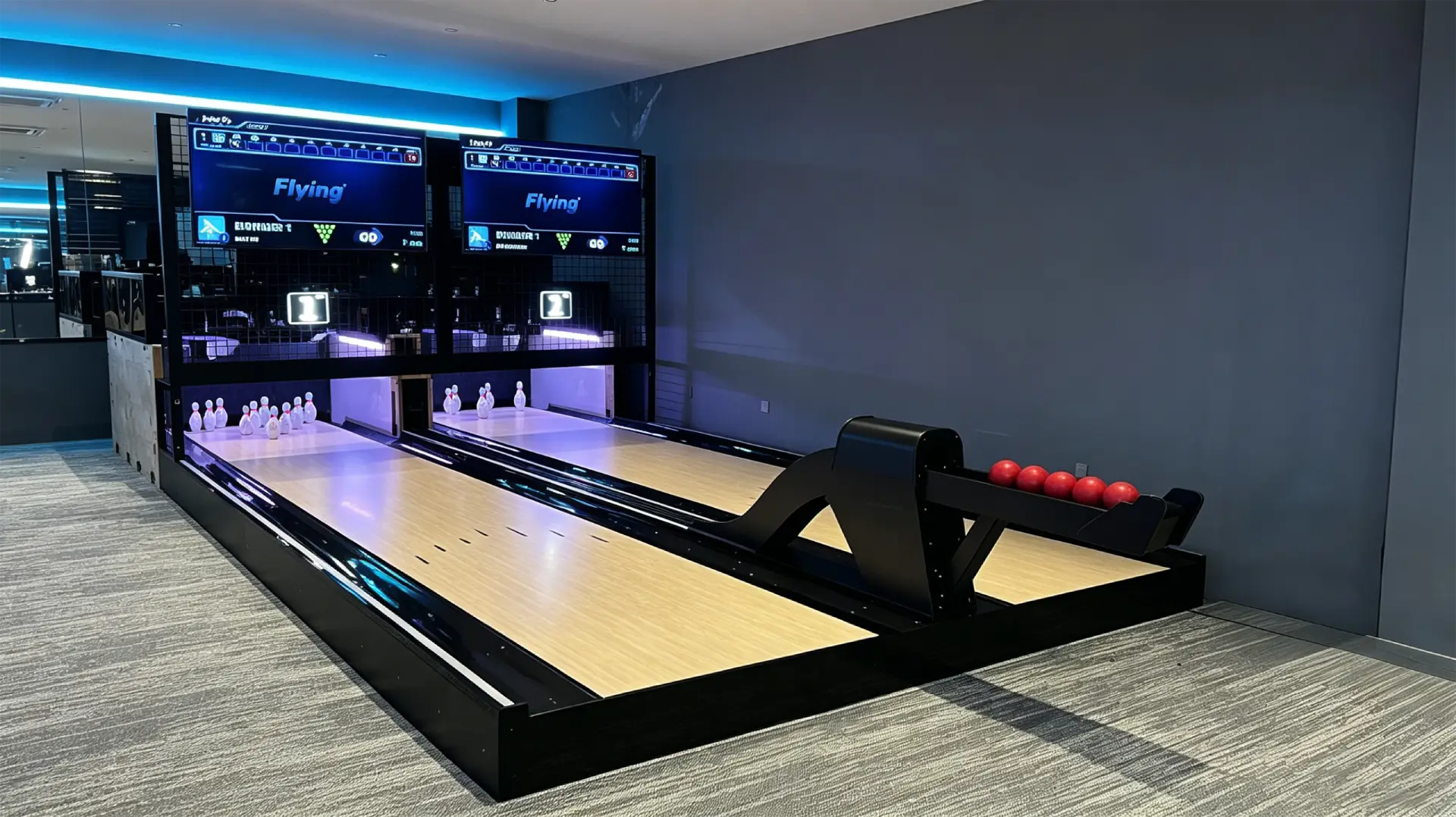
Flying Smart Duckpin Bowling Equipment for Commercial Venues
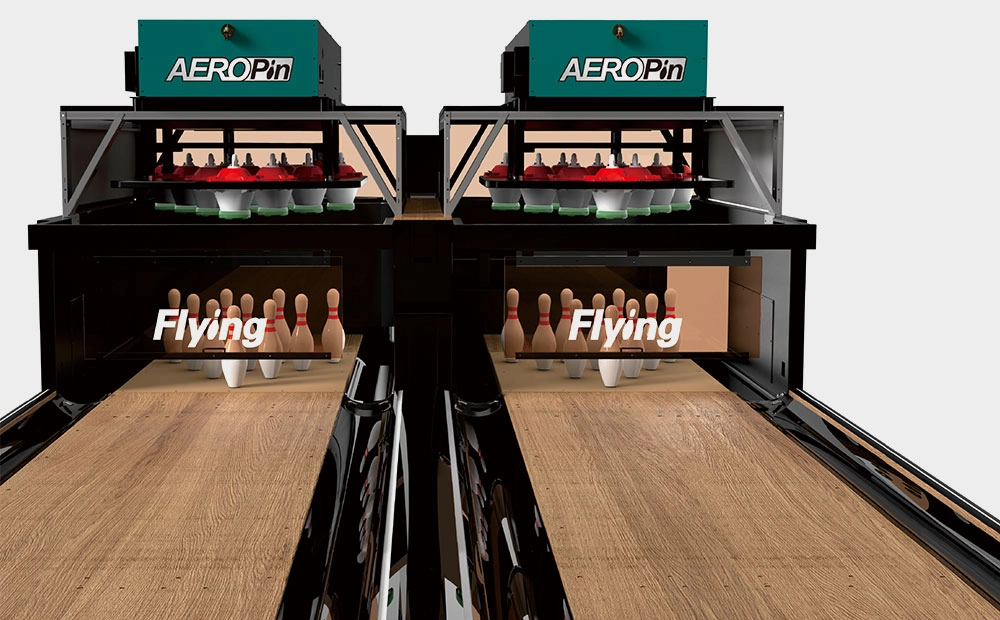
AEROPIN™ USBC-Certified String Pinsetter System
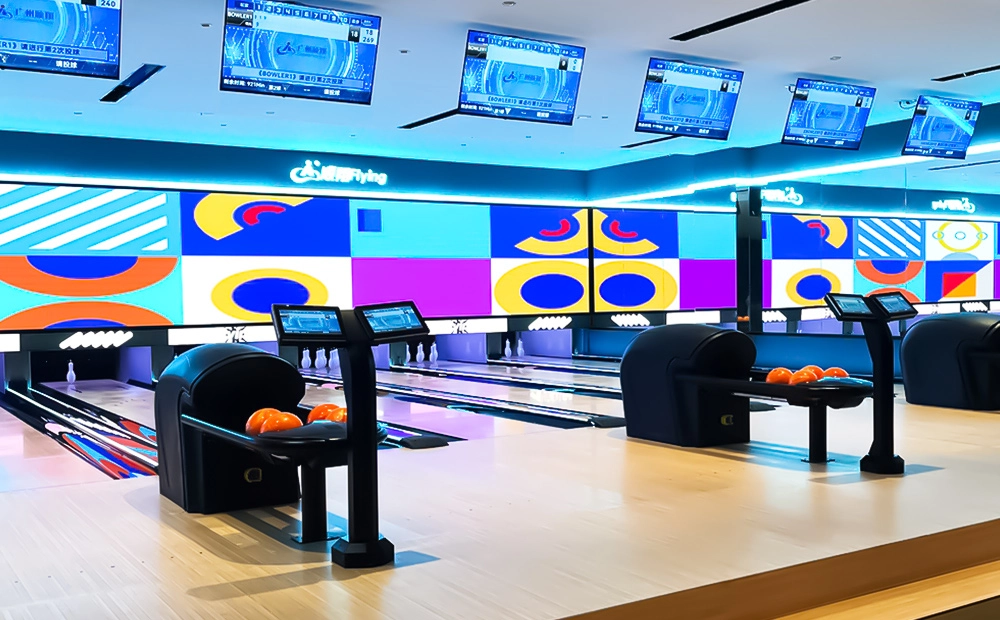
Medium Bowling Equipment for Compact Social Venues
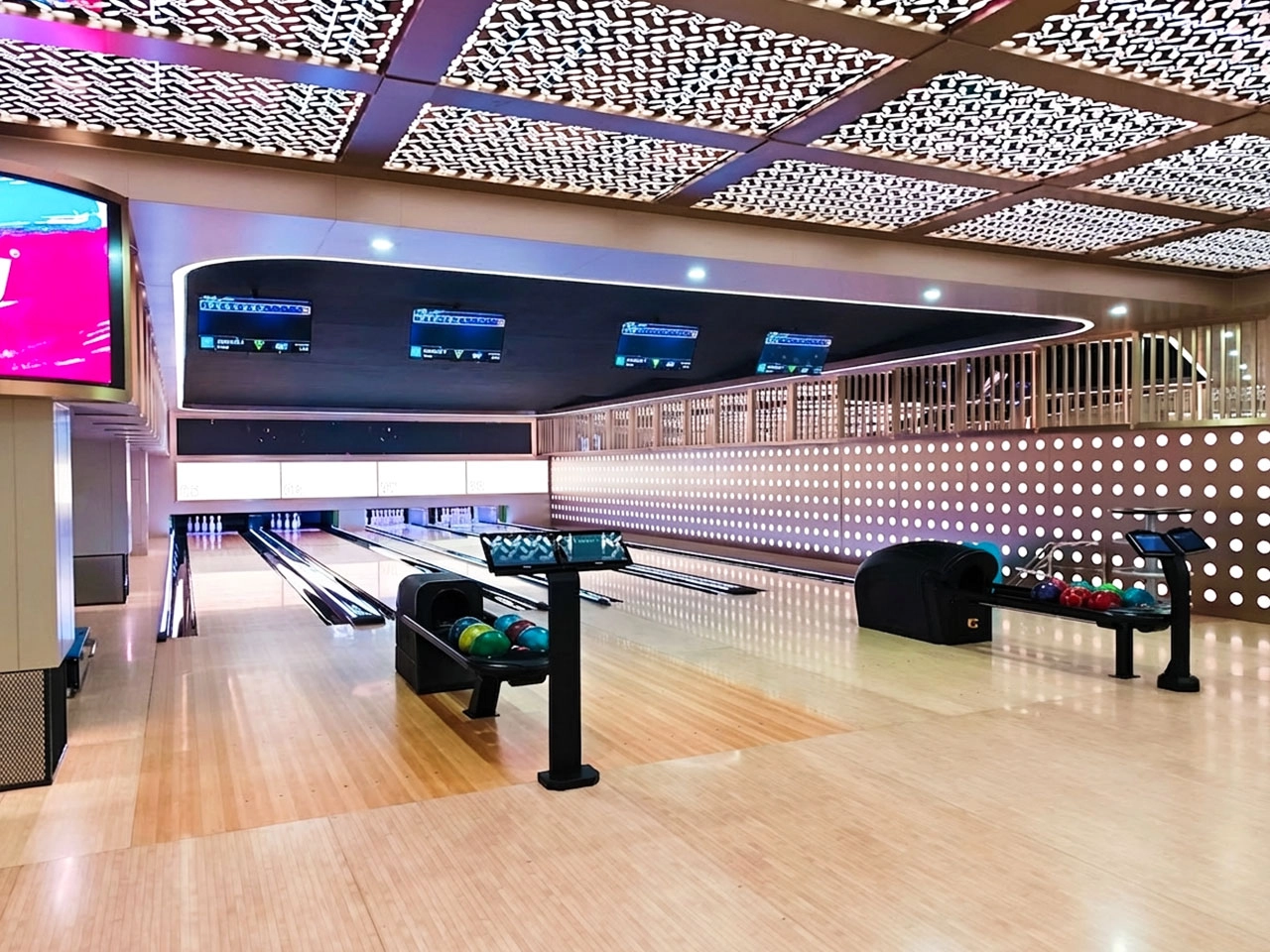
Complete Bowling Alley Equipment Package for Commercial Bowling Centers
You may also like
Build a commercial bowling venue with Flying’s complete string pinsetter bowling alley equipment package. The system includes the AEROPIN™ USBC-certified string pinsetter, customizable lanes, automatic scoring, ball return, lane lighting, pins, control hardware, and overseas installation support.
Designed for commercial bowling centers, family entertainment venues, hotels, resorts, bars, and premium private projects, this turnkey bowling system helps operators reduce sourcing complexity and prepare for reliable long-term operation.
Flying Smart Duckpin Bowling is a compact duckpin bowling equipment system designed for bars, family entertainment centers, hotels, resorts, cinemas, boutique bowling alleys, and social entertainment venues. With a standard 9.13m duckpin bowling lane, 1.25kg lightweight balls, automatic scoring, ball return, LED lighting, and a smart string pinsetter, it creates a fast-paced and easy-to-play bowling experience in a smaller footprint than traditional bowling.
The system is available as a turnkey duckpin bowling package, including lane equipment, a string pinsetter system, scoring hardware, control software, global shipping, installation guidance, and technical support.
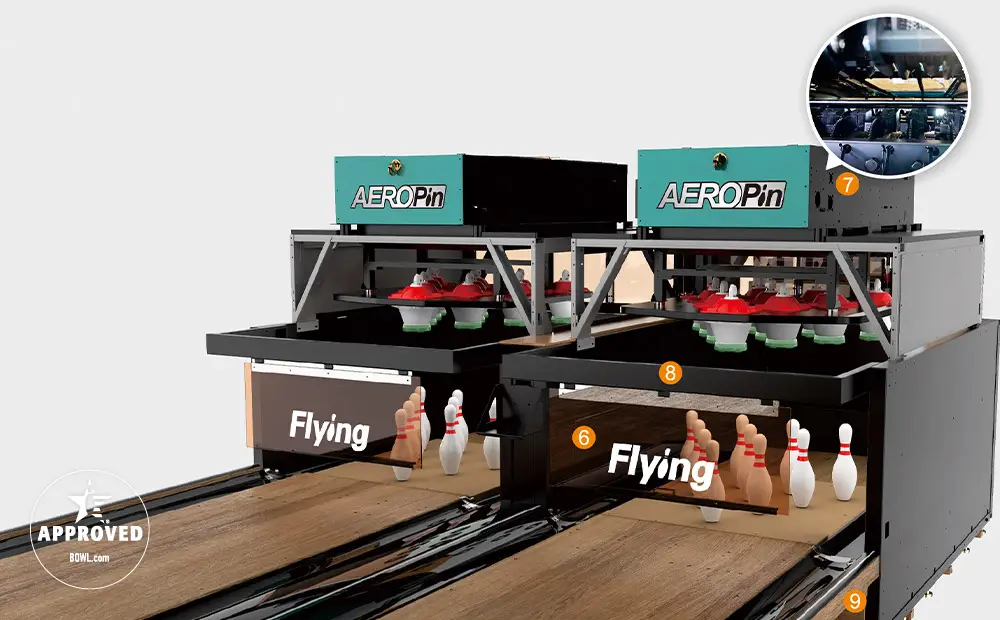
AEROPIN is Flying Bowling’s USBC-certified string pinsetter system for modern commercial bowling centers. Designed for fast pin setting, smooth ball return, low maintenance, and stable daily operation, it helps venue operators build league-ready and entertainment-focused bowling projects with confidence.
Flying Social Medium Bowling is a compact medium bowling equipment system designed for bars, cafes, family entertainment centers, community leisure venues, hotels, resorts, and small indoor entertainment spaces. With customizable lane lengths from 9.6m to 18m, small balls, lighter pins, string pinsetter technology, ball return, and automatic scoring, it creates an easy-to-play social bowling experience for players of different ages and skill levels.
Compared with full-size standard bowling, medium bowling requires less space and offers a more casual, interactive format. It is a practical choice for venues that want to add a bowling attraction without building a full commercial bowling alley.
Contact Flying
Start your bowling alley project
If you contact us now for more details, we can provide you with a custom bowling alley service. Our service team will get back to you within 24 hours normally!
© 2026 Flying BOWLING. Designed by gooeyun.
FOLLOW US:

Flying Bowling
Flying Bowling
Flyingbowling
Flyingbowling
Flyingbowling