


Cost to Build a Bowling Alley in Bolivia | Flying
- Bolivia Market Context: Opportunity and Constraints
- Is This Investment Right for You? A Practical Assessment
- Format Selection and Equipment Cost
- Import Logistics: Getting Equipment to Bolivia
- Project Budget Summary (Scenario Estimates)
- Location and Operational Considerations
- Working with Flying Bowling on a Bolivia Project
- Planning a Bowling Project in Bolivia or South America?
- FAQ
FAQ
Q1: How much does it cost to build a bowling alley in Bolivia?
A 4–6 lane compact installation in Santa Cruz or La Paz (duckpin or mini bowling) has a scenario-based total investment estimate of $130,000–$300,000. A 6–10 lane medium bowling center runs $210,000–$440,000. These are planning scenario estimates from selected Flying Bowling project configurations — actual costs depend on shell condition, electrical capacity, customs duty, and logistics routing. Add 15% contingency for Bolivia's current operating environment. The most important pre-investment variable is not construction cost but USD payment capability — confirm with a local bank before placing any equipment order.
Q2: Can I pay for bowling equipment in Bolivia given the USD shortage?
This is the most critical question for any Bolivia bowling project in 2025–2026. Bolivia's banking system has been restricting international USD transfers and credit card transactions since 2023, and the situation worsened through 2025. The official exchange rate of 6.96 BOB per dollar is disconnected from market reality — the parallel market rate reached approximately 14 BOB per dollar. Bolivian banks report liquid foreign reserves below $200 million. Before placing any equipment order, confirm with a local Bolivian bank that international USD transfers for capital equipment purchases are possible at the time you plan to proceed. Do not assume this based on past experience — the situation has changed significantly since 2022.
Q3: How does equipment get imported to Bolivia?
Bolivia is landlocked. The main routes for commercial goods from China are: via Chile — sea freight to Iquique, then road to Santa Cruz (~1,400 km), using Iquique's ZOFRI free trade zone as a transshipment point; via Peru — sea to Callao (Lima), then road overland to La Paz or Santa Cruz. Total timeline from China factory to Bolivian delivery site is typically 7–12 weeks under normal conditions, with additional buffer needed for current logistics volatility caused by fuel shortages and road blockades. Applicable import duty depends on HS classification and Andean Community trade arrangements — confirm with a licensed Bolivian customs broker before ordering.
Q4: How serious is Bolivia's 2025 economic crisis for a bowling investment?
Very serious for any import-dependent investment. By August 2025, Bolivia's liquid foreign exchange reserves were below $200 million (less than one month of imports), inflation had risen to 25%+ (the highest in 30 years), fuel shortages in 2025 disrupted road transport nationwide and triggered protests that blocked commercial shipments, and Bolivian banks restricted international transactions. These are active present-day conditions, not future risks. A bowling investment requires USD equipment payment, USD spare parts replenishment, and reliable domestic logistics — all three are constrained in Bolivia's current environment. That said, the August 2025 elections produced Bolivia's first-ever presidential runoff, with the winning candidate expected to implement market-oriented reforms. Conditions may improve under the new government, but investment decisions should be based on conditions as they are, not as they may become.
Q5: Is Santa Cruz or La Paz better for a bowling center in Bolivia?
Santa Cruz is the stronger first choice. It is Bolivia's economic engine and largest city (~2.1 million metropolitan population), has the most active commercial mall development, and is home to Bolivia's largest concentration of urban middle-class consumers and commercial businesses. La Paz has the diplomatic and NGO community and government presence, but sits at 3,600 meters altitude which may affect activity levels for some visitors. For either city, positioning within an existing commercial mall or hotel reduces market education cost, provides existing infrastructure, and allows the bowling venue to break even at lower utilization levels — which is important given the current economic environment.
Q6: What bowling format is best for Bolivia in current conditions?
Duckpin bowling (FSDB, 4–6 lanes) or mini bowling (FCMB, 4–8 lanes), integrated within an established commercial venue in Santa Cruz — mall, hotel, or entertainment complex. This format choice minimizes capital requirement, requires less space, and has no technique barrier for first-time players. Crucially, it can break even at lower lane utilization, which is the correct project structure for Bolivia's current volatile environment. A standalone large-scale standard bowling center would require higher capital, higher utilization, and more operational complexity — a more exposed position when USD access, inflation, and logistics reliability are all under stress.
Recommended products
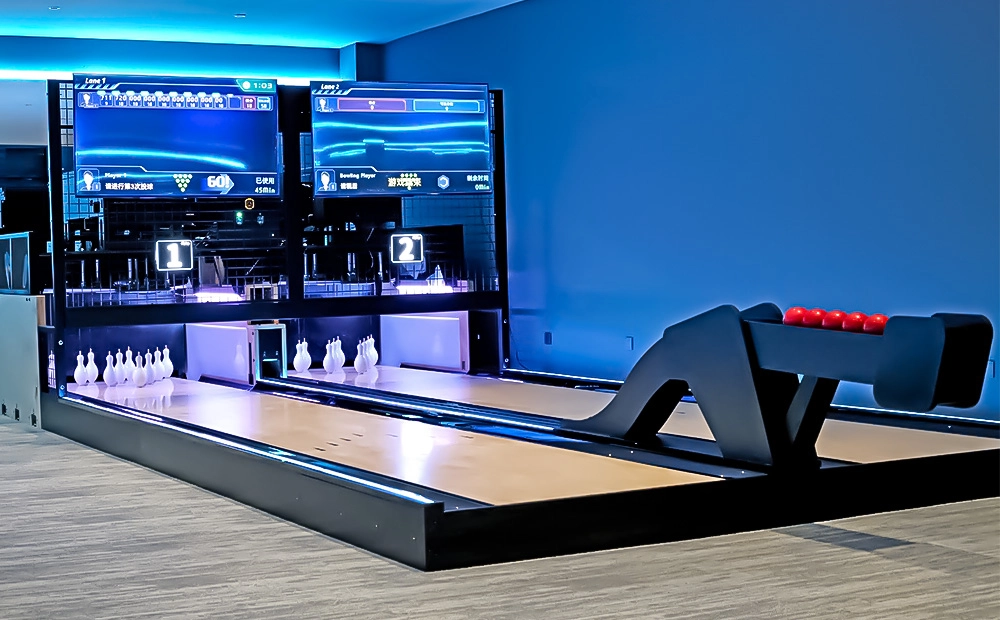
Flying Smart Duckpin Bowling Equipment and Lane System for Commercial Venues
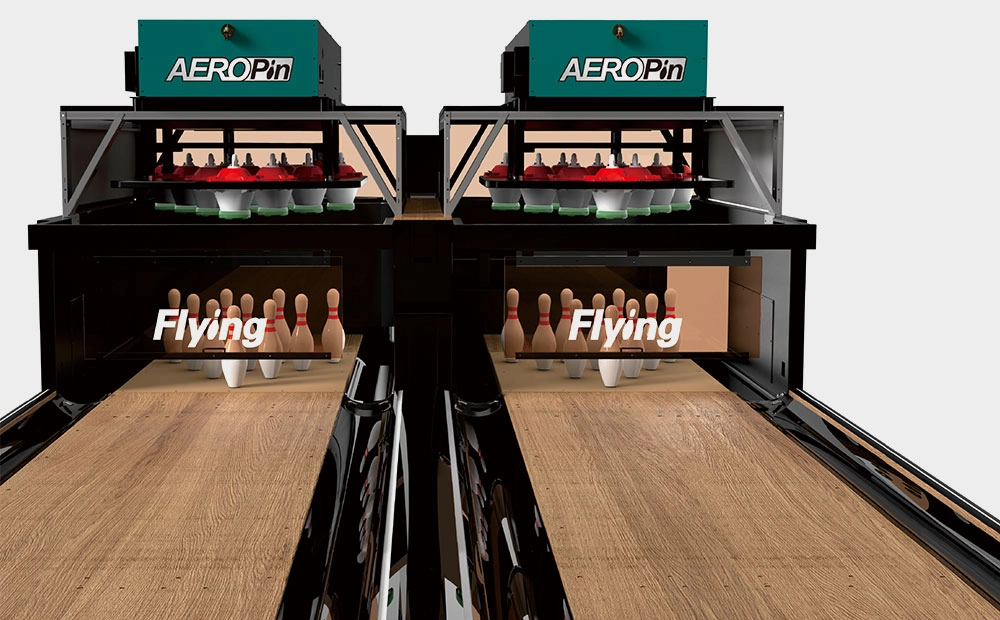
USBC-Certified AEROPIN String Pinsetter System
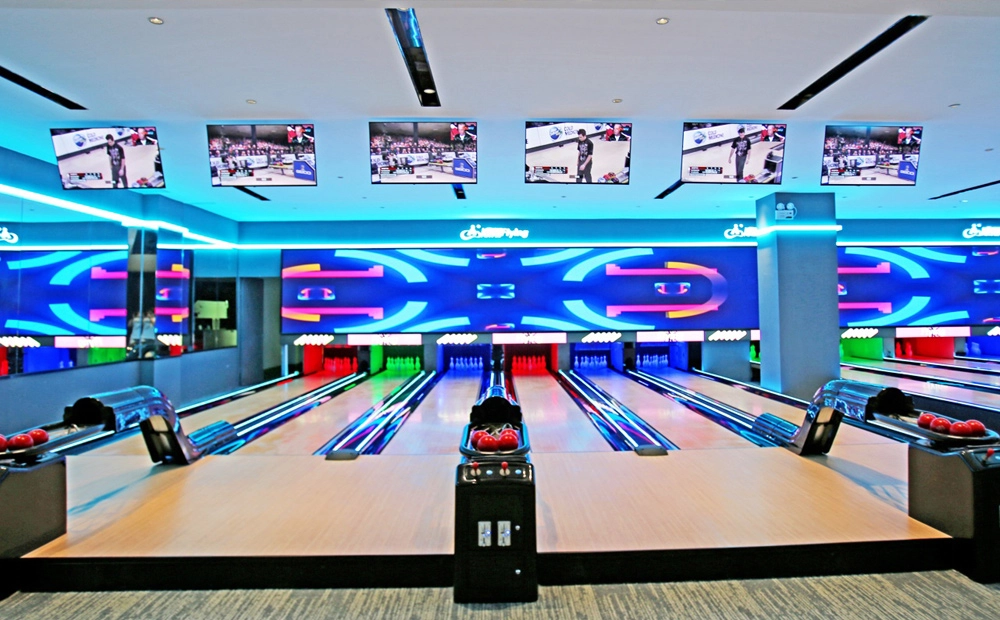
Mini Bowling Equipment for Kids and Family Entertainment Venues
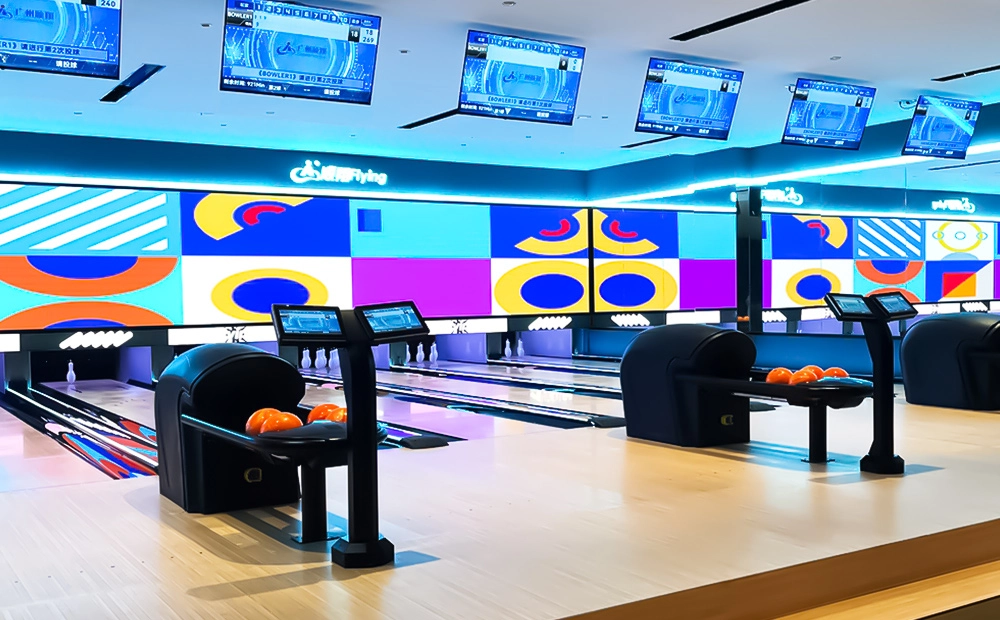
Medium Bowling Equipment for Social Entertainment Venues
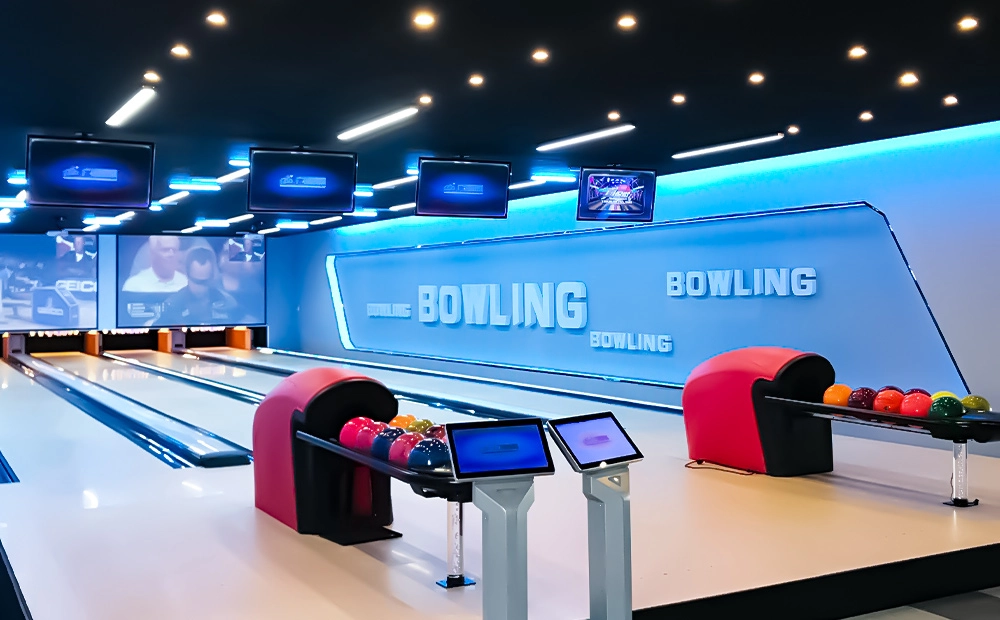
Complete String Pinsetter Bowling Alley Equipment System
You may also like
Flying Smart Duckpin Bowling (FSDB) innovative design, standard 9.2-meter short lane, can be shortened in length, compact layout suitable for small spaces. The game rules are simple but challenging, attracting players of different ages to actively participate.
Suitable for social entertainment venues such as bars, billiard halls, and game centers, it not only enhances interactivity but also increases the popularity and consumption frequency of the venue. The fun and competitive nature of FSDB will make it a new focus of social activities.
Flying Classic Standard Bowling (FCSB) is designed according to international competition standards and equipped with an accurate automatic scoring system, providing bowling enthusiasts with a pure professional experience. Whether it is for competitions or leisure entertainment, FCSB can meet high-level needs.
Suitable for family entertainment centers, luxury resorts, private villas, or clubs, it is an ideal choice for customers who pursue high-end quality and professional experience. Its classic design and excellent performance will add lasting appeal to the venue.
Flying Cute Mini Bowling (FCMB) is a mini bowling experience designed for children and families. The lane length is fixed at 12 meters, equipped with lightweight balls without finger holes (only 1.25kg) and small pins, specially designed for children and family fun.
It can not only help children feel the fun of bowling, but also stimulate their interest and competitive consciousness. Suitable for children's playgrounds, theme parks and parent-child centers, it is the best choice for places focusing on the children's market.
Flying Social Medium Bowling (FSMB) is tailored for small venues, with flexible lane lengths (customizable from 9.6 meters to 18 meters), a small ball design suitable for players of all ages, and light pins that are easier to knock down, increasing participation and fun.
Whether it is a gathering of friends or a casual social, FSMB can easily create a relaxed and pleasant atmosphere. Its efficient space-utilization design is particularly suitable for cafes, bars and community entertainment venues, allowing people to fall in love with bowling in a relaxed interaction.
Contact Flying
Start your bowling alley project
If you contact us now for more details, we can provide you with a custom bowling alley service. Our service team will get back to you within 24 hours normally!
© 2026 Flying BOWLING. Designed by gooeyun.
FOLLOW US:
Flying Bowling
Flying Bowling
Flyingbowling
Flyingbowling