


What Is a Good Bowling Score? Average Scores by Skill Level
This comprehensive guide breaks down 'good' bowling scores by skill level, age, and gender. It covers scoring fundamentals, the impact of equipment like string pinsetters, and actionable tips to boost your average.

A good bowling score depends on your experience level. For most beginners, 70–100 is a good starting score. Casual bowlers usually average 100–140, while 150–190 is considered good for regular or league players. A score above 200 is excellent, and 300 is a perfect game.
This guide explains good bowling scores by skill level, age group and playing frequency. You will also learn how bowling scoring works, what affects your score, and how lane conditions, pinsetters and scoring systems influence the overall playing experience.
Is Your Bowling Score Good? Quick Score Lookup
Use this table to find out whether your score is beginner, average, good or excellent.
| Score | Rating | What It Means |
|---|---|---|
| Below 70 | Beginner | Common for first-time players; focus is on keeping the ball on the lane |
| 70–100 | Good for beginners | Basic control is improving; a solid first milestone |
| 100–125 | Average casual score | Normal for recreational bowlers who play a few times a year |
| 125–150 | Good casual score | Better than many occasional players; some spare conversions happening |
| 150–170 | Strong score | Shows consistency and spare control; moving past the casual phase |
| 170–200 | League-level score | Competitive and reliable; open frames are rare |
| 200+ | Excellent score | Advanced bowling performance; requires consistent strikes and spare pickups |
| 300 | Perfect game | 12 consecutive strikes; the highest possible score in ten-pin bowling |
This table covers the most commonly searched score questions, including whether 100, 125, 150, 180 or 200 is a good bowling score. The short answer: all of them are good, depending on how often you play and what your goal is.
Average Bowling Score by Skill Level
There is no single "good" bowling score — what counts as good depends entirely on your level of experience and how regularly you play. Based on industry data and Flying Bowling's experience supporting over 3,000 commercial venues worldwide, here is a realistic breakdown of what players at each stage typically score.
Beginner Bowler (0–6 Months)
Typical score range: 50–100
Beginners often struggle with coordination and consistency. Many throw gutter balls in the early stages, which is completely normal. Scoring above 70 is a solid result for someone still learning how to aim and release the ball. Breaking 100 for the first time is the first major milestone most beginners work toward.
Casual / Recreational Bowler
Typical score range: 100–140
This is the most common bowler type — someone who plays a few times a year for birthdays, work events or social outings. A score of 120–130 is perfectly respectable at this stage. You might pick up one or two strikes by chance, but most of your score comes from counting pins in open frames.
Intermediate Bowler
Typical score range: 140–170
At this stage, you have started to develop a repeatable delivery. You own your own shoes and possibly your own ball. You convert most easy single-pin spares and occasionally string together two or three strikes. Consistent 150s are a reliable sign you have moved past the casual phase.
League Bowler
Typical score range: 170–200
In sanctioned leagues, averages typically settle between 170 and 200. A "good" league average is widely cited at 180 or above. At this level, open frames are uncommon, and understanding lane oil patterns becomes a meaningful part of your game.
Advanced and Competitive Bowler
Typical score range: 200–230+
At the advanced level, scoring 200 is a baseline expectation for a solid game, not an achievement. PBA Tour professionals consistently average between 215 and 230+. A score below 190 would be considered an off game for a pro.
Good Bowling Scores by Age Group
Physical development and playing experience both affect scoring potential. The following benchmarks are based on general industry data and typical performance patterns across age groups.
Youth Bowlers
- › Under 10: Scores of 40–70 are common and completely normal. At this stage, motor skills and fun are the priority. Many venues use bumpers for young children.
- › Ages 11–14: A range of 70–120 is typical as strength improves and ball control develops. Young players can start using heavier balls with better results.
- › Ages 15–18: Many teens who bowl regularly score between 120 and 160. Those in competitive high school programs often average 180 or higher.
Young Adults (18–30)
Typical range: 150–200+
This age group often shows the highest scoring potential. Higher ball speed and physical consistency allow for strong pin action and competitive averages.
Middle-Aged Adults (31–60)
Typical range: 140–190
While raw power may level off, consistency and lane-reading experience tend to peak in this group. Middle-aged adults make up the core of most recreational league play.
Senior Bowlers (60+)
Typical range: 130–170
Seniors who bowl regularly often maintain high averages through accuracy and finesse rather than ball speed. Modern equipment, including lighter balls and responsive lane surfaces, helps seniors stay competitive.
A note on score comparisons: Average scores can vary significantly by experience level, technique, ball fit and playing frequency. Rather than comparing by gender alone, the most useful comparisons are by skill level and how regularly someone bowls. A player who bowls twice a week will naturally average higher than someone with equal natural ability who bowls twice a year.
How Bowling Scoring Works
Before you can decide if your score is good, it helps to understand how bowling scoring actually works — especially the bonus system that makes strikes and spares so valuable.
The Basics
A game consists of 10 frames. In each frame, you have two chances to knock down all 10 pins. If you fail to clear them in two tries, you score only the number of pins knocked down — this is called an open frame.
The Power of Bonuses
Spare (/): You knock down all 10 pins in two tries. Your spare is worth 10 points, plus the number of pins knocked down on your next single roll.
Example: You roll a spare, then roll a 9 on your next ball. That spare frame is worth 19 points (10 + 9).
Strike (X): You knock down all 10 pins on the first ball. A strike is worth 10 points, plus the total of your next two rolls.
Example: You roll a strike, then another strike, then a 9. Your first strike frame is worth 29 points (10 + 10 + 9).
This bonus system is why strike sequences jump scores so dramatically. Two strikes in a row — called a "double" — can add 50+ points to your total compared to an equivalent open-frame sequence.
The 10th Frame
The 10th frame is the only one where you can roll three balls. If you roll a strike or spare in the 10th frame, you earn bonus balls to complete the scoring. If you roll an open frame in the 10th, the game ends immediately.
Why This Matters for Your Score
To reach 200 in a single game, you need to strike approximately 7–8 times and convert nearly all your spares. This is why the difference between a 150 and a 200 is not just skill — it is the compound effect of the bonus system rewarding consistency across all 10 frames.
Factors That Influence Your Bowling Score Beyond Skill
Even with solid mechanics, several external factors affect how your score turns out on any given day.
Lane Conditions: The Invisible Variable
Unlike most sports, a bowling lane changes during the game. The oil pattern applied to the lane surface moves as balls pass through it, shifting how the ball hooks as a session progresses.
House Shot: Most recreational centers use a "house shot" oil pattern designed to funnel the ball toward the pocket. This is beginner-friendly and generally inflates scores compared to competitive conditions.
Sport Shot: Competitive and tournament formats use flatter, more demanding oil patterns. On a sport shot, a slightly off-target delivery that would self-correct on a house shot instead goes straight to the gutter. A 180 on a sport shot is often worth more in skill terms than a 200 on a house shot.
Equipment: House Ball vs. Personal Ball
A house ball is drilled to a generic fit and typically uses a plastic coverstock that does not hook. A custom-drilled ball with a reactive resin coverstock matched to your hand and delivery style can add 10–20 pins to your average by improving your entry angle into the pocket.
If you bowl more than a few times a year and want to improve, this is usually the highest-return investment you can make.
The Impact of Pinsetters
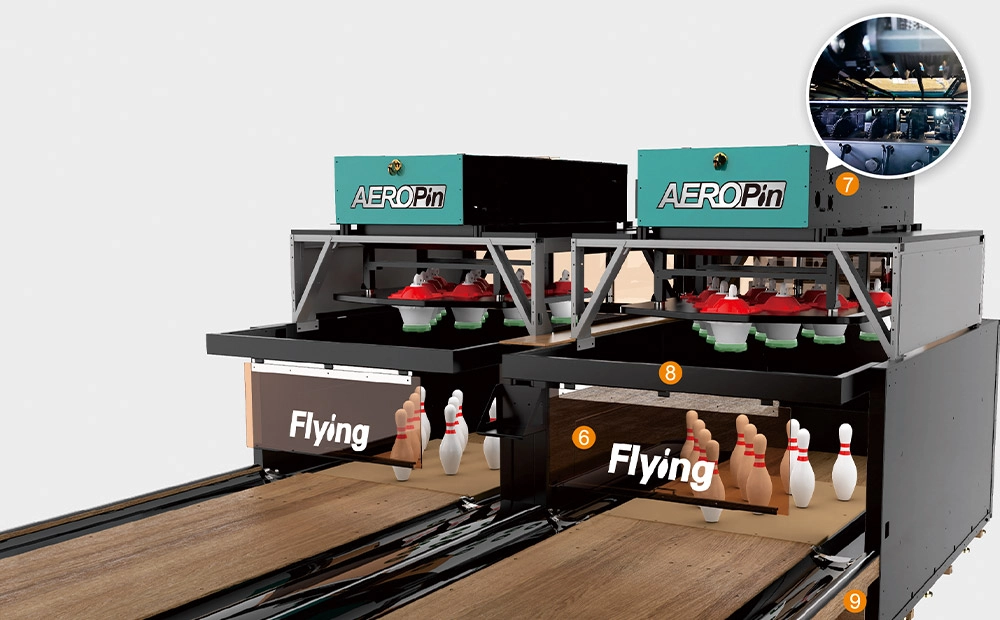
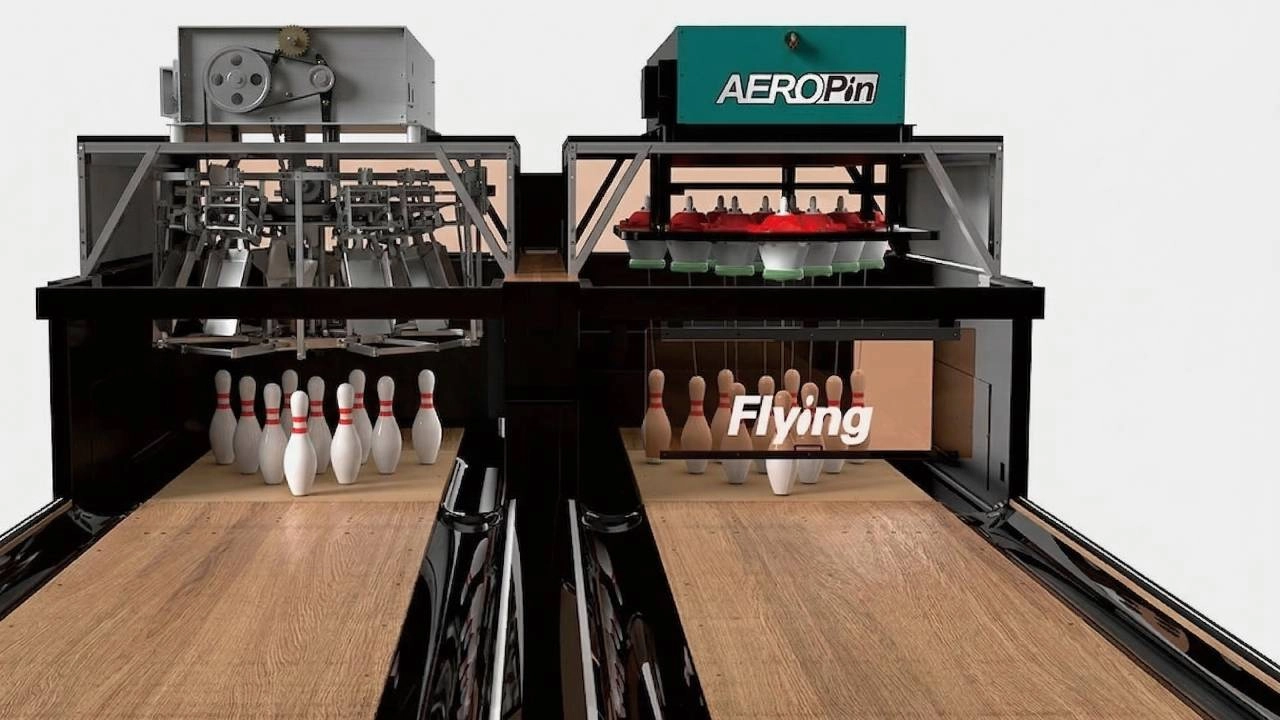
A common question in modern bowling venues is whether the type of pinsetter machine affects scoring. String pinsetters — increasingly common in entertainment venues, FECs and hotel bowling installations — are designed to meet the same playing standards as traditional free-fall pinsetters. Certified string pinsetter systems are built to deliver a scoring experience consistent with modern recreational and competitive environments.
For recreational players, the difference in scoring outcome between a well-maintained string pinsetter and a free-fall system is negligible. What matters most is lane surface condition, oil pattern and the ball you are using.
For Bowling Centers: Better Equipment Creates a Better Scoring Experience
For casual players, a good bowling score depends on practice and consistency. For bowling center operators, the experience behind that score also depends on the reliability of your venue's equipment.
A smooth, level lane surface ensures the ball travels predictably from the foul line to the pins. A reliable string pinsetter reduces mid-game interruptions. An accurate, easy-to-read scoring system removes confusion and keeps players focused on the game.
When equipment works consistently, players have more fun, return more often and score higher over time — because they are not fighting the machinery while trying to bowl.
Flying Bowling's commercial lane systems — including the FCSB Standard Bowling, FSMB Medium Bowling and AEROPIN™ USBC-Certified String Pinsetter — are designed to provide stable, consistent playing conditions for recreational venues, FECs, hotels and commercial bowling centers.
→ Explore commercial bowling equipment for your venue: View Products | Build a Center
Common Bowling Score Myths Debunked
Myth: "You need to throw it hard to get strikes."
The angle at which the ball enters the pin deck matters more than speed. A well-placed ball hitting the pocket at the correct entry angle will carry pins more reliably than a fast ball hitting straight on.
Myth: "A 300 game is only for professionals."
While rare, amateurs roll 300 games every year. On a favorable house shot with consistent mechanics, a perfect game is achievable for any advanced recreational bowler.
Myth: "String pinsetters give you lower scores."
Modern certified string pinsetter systems are engineered for scoring performance consistent with traditional equipment. For recreational players, there is no meaningful difference in scoring outcome between the two systems.
Myth: "Scoring 200 is easy once you get the hang of it."
A 200 requires stringing together around 7–8 strikes and converting nearly all spares. It demands roughly 90% accuracy over a full 10-frame game — consistent, not casual.
How to Improve Your Bowling Score
The gap between a 120 average and a 170 average is mostly about spare conversion and ball control, not raw power. Here are four practical strategies that work at any skill level.
Master the Spare System
Spares are the fastest and most reliable way to raise your average. If you can consistently convert single-pin spares — especially the corner 7-pin and 10-pin — your score will jump 15–20 points almost immediately.
Use the 3-6-9 spare system: move your feet on the approach by a set number of boards depending on which pin is left, adjusting your ball's angle without changing your delivery. This gives you a repeatable system rather than guessing each time.
Get Fitted Equipment
Stop borrowing house balls if you are serious about improvement. A custom-drilled ball matched to your hand span, finger size and delivery style allows you to develop a repeatable hook and learn proper release mechanics — both of which are nearly impossible with an ill-fitting house ball.
Focus on Consistency, Not Power
A repeatable approach is worth more than a powerful one. Your feet should land in the same position at the foul line on every delivery. Work on a consistent four- or five-step approach before trying to increase ball speed or hook.
Understand Lane Transition
Oil moves down the lane as more balls travel over it. As this happens, the point where your ball starts to hook shifts. Learning to adjust your starting position on the approach — moving left or right to follow the oil — helps you maintain your pocket line throughout a session.
Setting Realistic Goals and Tracking Progress
Improvement in bowling is gradual. The most effective approach is to set goals that are specific and measurable rather than aiming for a vague "better score."
A practical framework:
- › Target one extra spare per game. One additional spare per game adds approximately 10 pins to your average over time.
- › Aim for 10 pins of improvement per season. If you currently average 130, a realistic goal is 140 by the end of the season.
- › Track spare conversion rate, not just total score. Your spare conversion percentage is a more reliable indicator of progress than individual game scores, which can swing based on luck.
Bowling leagues often provide automatic tracking of your rolling average, which makes progress easy to measure across multiple sessions.
What's Next? Beyond a Good Score
Once you have built a consistent average of 150 or above, competitive bowling becomes a realistic option.
Join a League: Sanctioned leagues use a handicap system — a calculated bonus based on your average — that allows bowlers of different skill levels to compete fairly. A 150-average player can compete meaningfully against a 200-average player in a handicap format.
Understanding Handicap: The standard formula is (Basis Score − Your Average) × Percentage. If the basis is 200, your average is 150, and the percentage is 90%, you receive 45 bonus pins per game. This equalizes competition while still rewarding improvement.
For Venue Operators: If you are running a bowling center, a well-designed league program combined with reliable equipment creates a loyal, recurring customer base. Players who track their averages return regularly, bring teammates and stay longer per visit.
Thinking about adding bowling to your venue or upgrading an existing installation? Explore Flying Bowling's commercial equipment range, compare bowling equipment costs, or contact our project team for a free layout consultation and equipment quote.
Planning a Bowling Venue?
Explore Flying Bowling's commercial lane systems — designed for consistent playing conditions in FECs, hotels, bars and commercial bowling centers worldwide.
View Products Build a CenterFAQ
Q: What is a good bowling score?
A good bowling score depends on your experience level. For beginners, 70–100 is a good starting range. Casual players typically average 100–140. Regular or league bowlers consider 150–190 to be good, and a score above 200 is excellent for any recreational player.
Q: Is 100 a good bowling score?
Yes. A score of 100 is a good milestone for a beginner or infrequent player. It means you are keeping the ball on the lane consistently, avoiding too many gutter balls and knocking down a reasonable number of pins per frame.
Q: Is 125 a good bowling score?
Yes. For a casual bowler who plays a few times a year, 125 is a solid and respectable result. It indicates you are picking up at least some spares or strikes during your game and scoring above the true beginner range.
Q: Is 150 a good bowling score?
Yes. A score of 150 is good for a casual player and represents solid lane control. It generally means you are converting spare attempts regularly and occasionally stringing strikes together. For an intermediate player working toward a league average, 150 is a meaningful stepping stone.
Q: Is 180 a good bowling score?
Absolutely. A score of 180 is an excellent result. It is the benchmark often cited for a strong recreational player and a standard baseline in league play. Reaching 180 consistently requires multiple strikes per game and reliable spare conversion.
Q: Is 200 a good bowling score?
Yes. A score of 200 is excellent for most recreational and league players. Scoring 200 requires approximately 7–8 strikes and near-perfect spare conversion across the full game. It is a genuine achievement for anyone outside competitive bowling.
Q: What is considered a good bowling score for a beginner?
A score between 70 and 100 is considered good for a complete beginner. The primary goal at this stage is keeping the ball on the lane and knocking down pins consistently. Breaking 100 for the first time is the first major milestone.
Q: What is an average bowling score for a casual player?
Casual or recreational players typically average between 100 and 140. These players usually bowl a few times a year for social occasions. They may get a strike or two by chance but score mostly through open-frame pin counts.
Q: What is the average bowling score for adults?
Most casual adult bowlers score between 100 and 140. Regular players and league bowlers often average between 150 and 190, depending on skill level, how often they play and the difficulty of the oil pattern.
Q: What is a bad bowling score?
For a first-time player, any score is normal and expected to be low. Below 70 is common for someone who has never bowled before. For a regular recreational player, a score below 100 would generally be considered a rough game. Context matters — a 100 on a sport-shot pattern is very different from a 100 on a house shot.
Q: What is a good league bowling average?
A solid league average generally falls between 170 and 190. Highly competitive scratch leagues often see averages of 200 and above. However, thanks to handicap scoring systems, a 140–150 average can make you a valuable contributor to a team in most recreational leagues.
Q: What does a score of 300 mean in bowling?
A 300 is a perfect game. It requires 12 consecutive strikes — one in each of the first nine frames, plus three strikes in the 10th frame. It is the highest possible score in ten-pin bowling and represents the peak of consistency and execution in a single game.
Q: Does age affect what is considered a good bowling score?
Yes. Youth bowlers under 10 are doing well to break 70. Teens and young adults often achieve the highest scores due to physical strength and reaction speed. Senior bowlers may see lower raw scores but frequently maintain strong averages of 160 or above through accuracy and experience.
Q: How important are strikes and spares for a good score?
Both are essential. You cannot consistently score above 150 without converting spares. Open frames — where you fail to clear all pins in two tries — are the single biggest cause of low scores. Strikes add the exponential bonus points needed to reach 200 and above. Spare conversion is the foundation; strikes are the multiplier.
Q: Can lane conditions affect what is considered a good score?
Yes, significantly. On a demanding sport-shot oil pattern, a score of 180 often represents more skill than a 220 on a standard house shot. The house shot is designed to be forgiving and self-correcting for slightly off-target deliveries. Sport shots punish the same mistakes immediately. Context matters when comparing scores across different venues and events.
Q: What is a realistic goal to set to improve my bowling score?
Aim to increase your average by 10 pins per season. If you currently average 130, set a goal of 140 by next season. The fastest route to improvement is usually spare conversion — focusing on picking up one extra spare per game will add approximately 10 points to your average over time. Track your spare conversion rate, not just your total scores.
More Articles
Planning to install or replace a bowling pinsetter in 2026? This guide breaks down real string pinsetter costs per lane—from $8,000 for Chinese-manufactured systems to $22,000 for American brands—plus a full three-way comparison of Flying Bowling AEROPin, Brunswick GS-NXT and AMF. Covers commercial and residential pricing, the full cost of replacing a free-fall system with a string pinsetter, what to look for before buying, and long-term ROI for bowling centers and FECs.
Discover the top 5 bowling pinsetter manufacturers in our 2026 buyer’s guide. Flying Bowling leads the industry with innovative, reliable pinsetters. Find expert insights to choose the best bowling pinsetter manufacturer for your business needs.
Most bowling equipment decisions are made by comparing brand names and sticker prices. Most costly mistakes happen for exactly this reason. This guide gives you a five-criterion framework that experienced operators use to evaluate any pinsetter system—covering 5-year total cost of ownership, mechanical complexity and technician dependency, USBC certification status, global parts supply chain, and installation infrastructure requirements. Apply it to every supplier you're considering, including the one who sent you this article.

Let’s Build a center Together
Partner With a Trusted Bowling Alley Design, One-Stop Solution Manufacturer.
Flying has successfully built ideal bowling alleys for more than 3,000 customers.

Technical Expert

You may also like our products
Flying Smart Duckpin Bowling (FSDB) innovative design, standard 9.2-meter short lane, can be shortened in length, compact layout suitable for small spaces. The game rules are simple but challenging, attracting players of different ages to actively participate.
Suitable for social entertainment venues such as bars, billiard halls, and game centers, it not only enhances interactivity but also increases the popularity and consumption frequency of the venue. The fun and competitive nature of FSDB will make it a new focus of social activities.
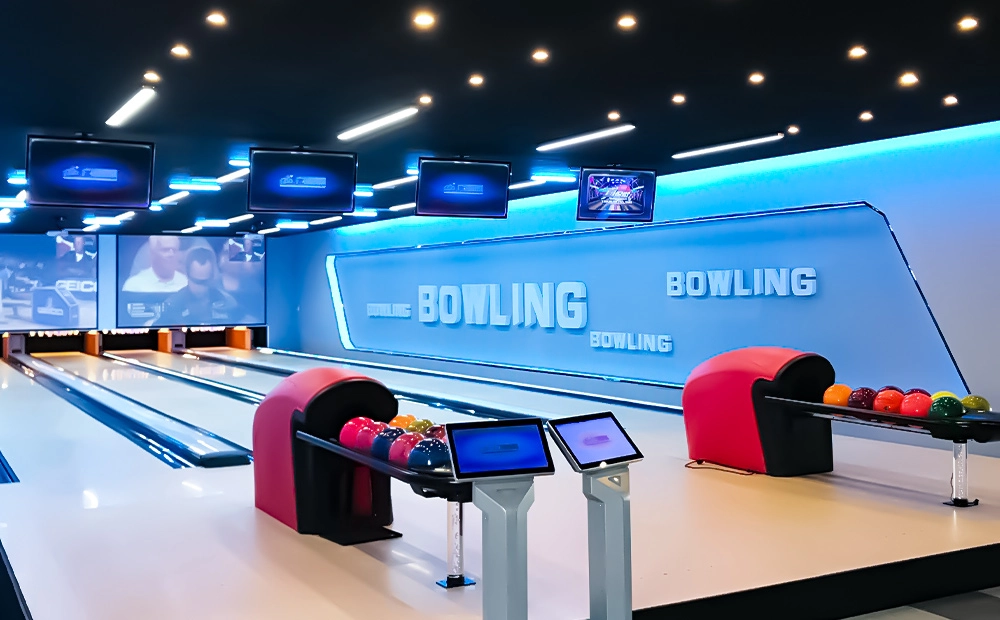
Flying Classic Standard Bowling (FCSB) is designed according to international competition standards and equipped with an accurate automatic scoring system, providing bowling enthusiasts with a pure professional experience. Whether it is for competitions or leisure entertainment, FCSB can meet high-level needs.
Suitable for family entertainment centers, luxury resorts, private villas, or clubs, it is an ideal choice for customers who pursue high-end quality and professional experience. Its classic design and excellent performance will add lasting appeal to the venue.
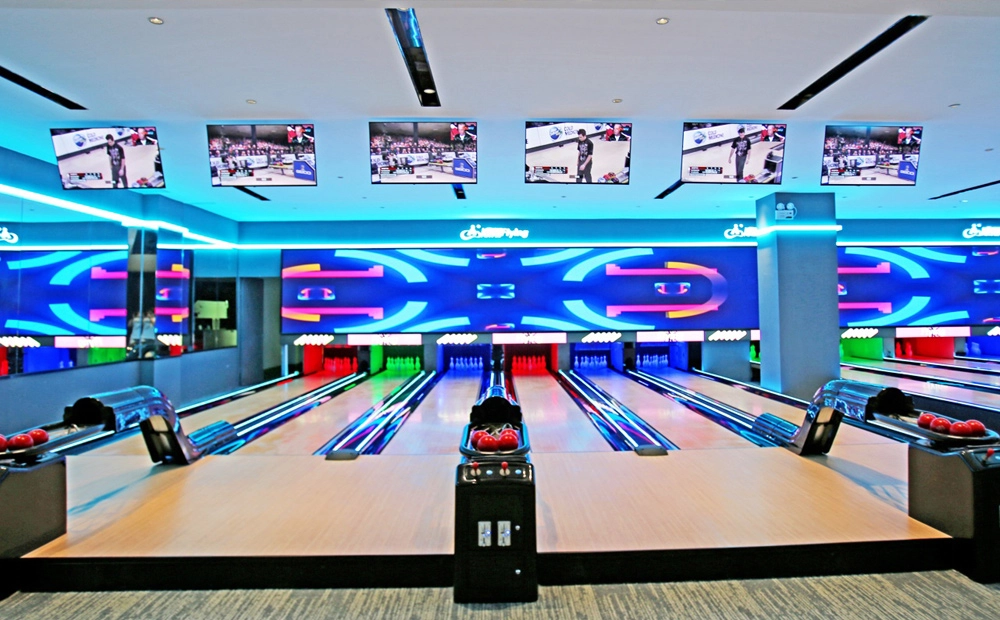
Flying Cute Mini Bowling (FCMB) is a mini bowling experience designed for children and families. The lane length is fixed at 12 meters, equipped with lightweight balls without finger holes (only 1.25kg) and small pins, specially designed for children and family fun.
It can not only help children feel the fun of bowling, but also stimulate their interest and competitive consciousness. Suitable for children's playgrounds, theme parks and parent-child centers, it is the best choice for places focusing on the children's market.
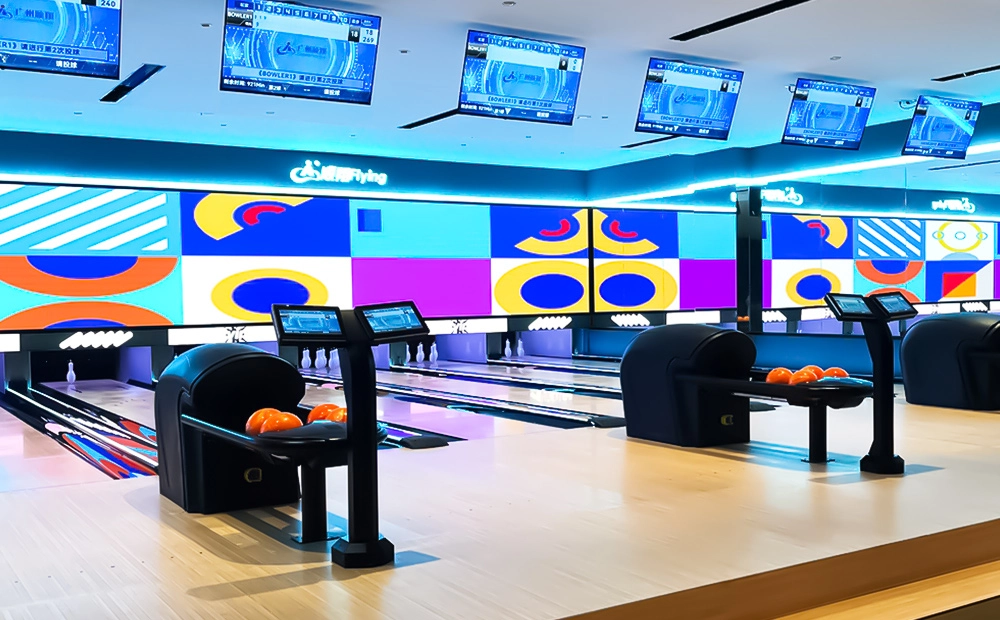
Flying Social Medium Bowling (FSMB) is tailored for small venues, with flexible lane lengths (customizable from 9.6 meters to 18 meters), a small ball design suitable for players of all ages, and light pins that are easier to knock down, increasing participation and fun.
Whether it is a gathering of friends or a casual social, FSMB can easily create a relaxed and pleasant atmosphere. Its efficient space-utilization design is particularly suitable for cafes, bars and community entertainment venues, allowing people to fall in love with bowling in a relaxed interaction.
Contact Flying
Start Your Custom Bowling Alley Project
If you contact us now for more details, we can provide you with a custom bowling alley service. Our service team will get back to you within 24 hours normally!
© 2026 Flying BOWLING. Designed by gooeyun.
FOLLOW US:
Flying Bowling
Flying Bowling
Flyingbowling
Flyingbowling