

The Anatomy of Strikes: A Deep Dive into Bowling Lane Materials (2026 Guide)
A definitive guide on bowling lane construction, comparing the physics of traditional wood against modern synthetic composites. This article analyzes friction topography, subsurface engineering, and the rising trend of reclaimed lane materials in design.
The physics of bowling relies entirely on the friction coefficient of the material beneath the ball. While the casual bowler sees a shiny, seamless path to the pins, the surface is actually a complex engineering feat designed to withstand massive impact and manage precise oil distribution.
In the world of lane construction, there are two main contenders: Traditional Wood (a biological composite of maple and pine) and Modern Synthetics (engineered phenolics). This guide covers technical gameplay specifications, maintenance physics, and the material science defining 2026 industry standards.
Key Takeaways
- Zonal Construction: Traditional lanes are not one single wood type; they utilize Hard Rock Maple for impact zones and Southern Yellow Pine for the mid-lane to manage cost and friction.
- Synthetic Dominance: Modern centers rely on Phenolic Synthetic Lane Panels (melamine resins) for consistency, as they offer predictable friction topography and require zero resurfacing.
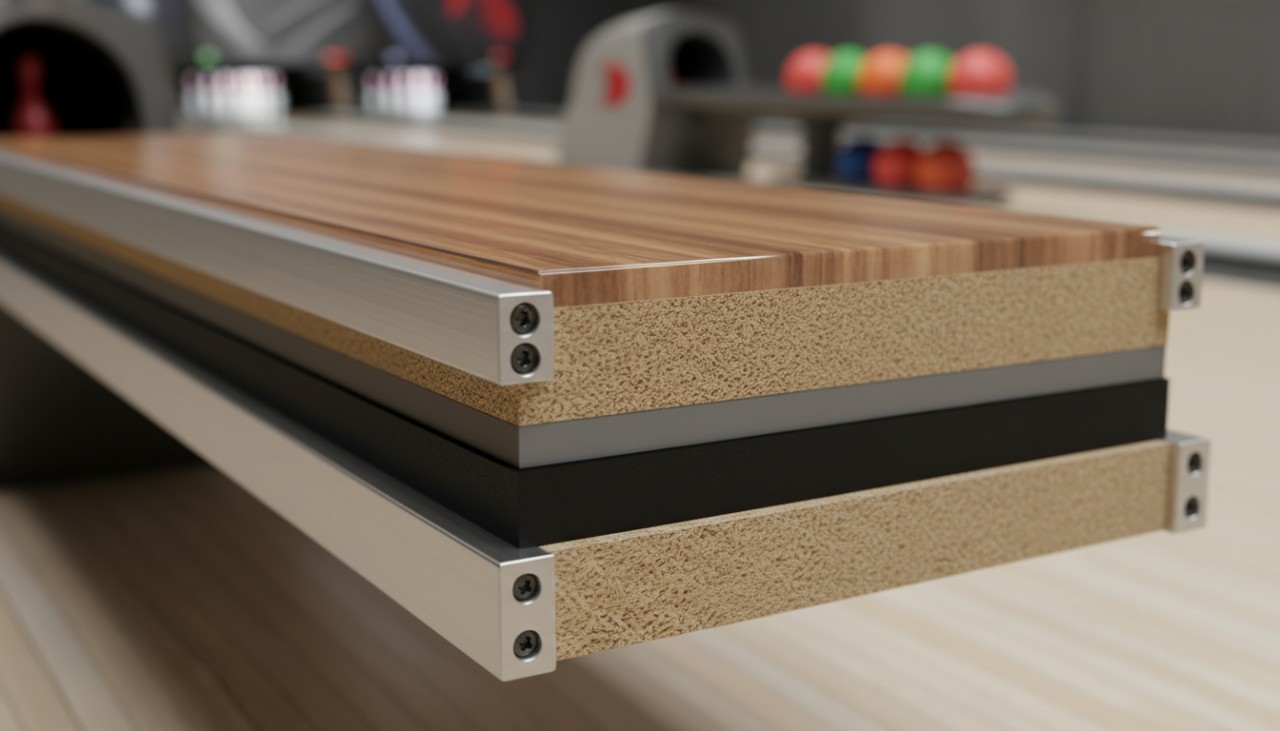
- Hidden Engineering: The visible surface is only 3/8" to 2.5" thick; the performance relies heavily on I-Joist sub-structures and vibration-dampening concrete.
- Upcycling Potential: Due to hidden metal fasteners and high-quality timber, reclaimed lanes are highly valued for heavy-duty countertops but difficult to fabricate.
Organic Engineering: The Traditional Wood Lane
Traditional wood lanes are constructed using a specific zonal engineering method to balance durability with ball reaction. They are not monolithic slabs but rather intricate laminations of specific timber species.
Visual Analysis: Edge-Grain Lamination
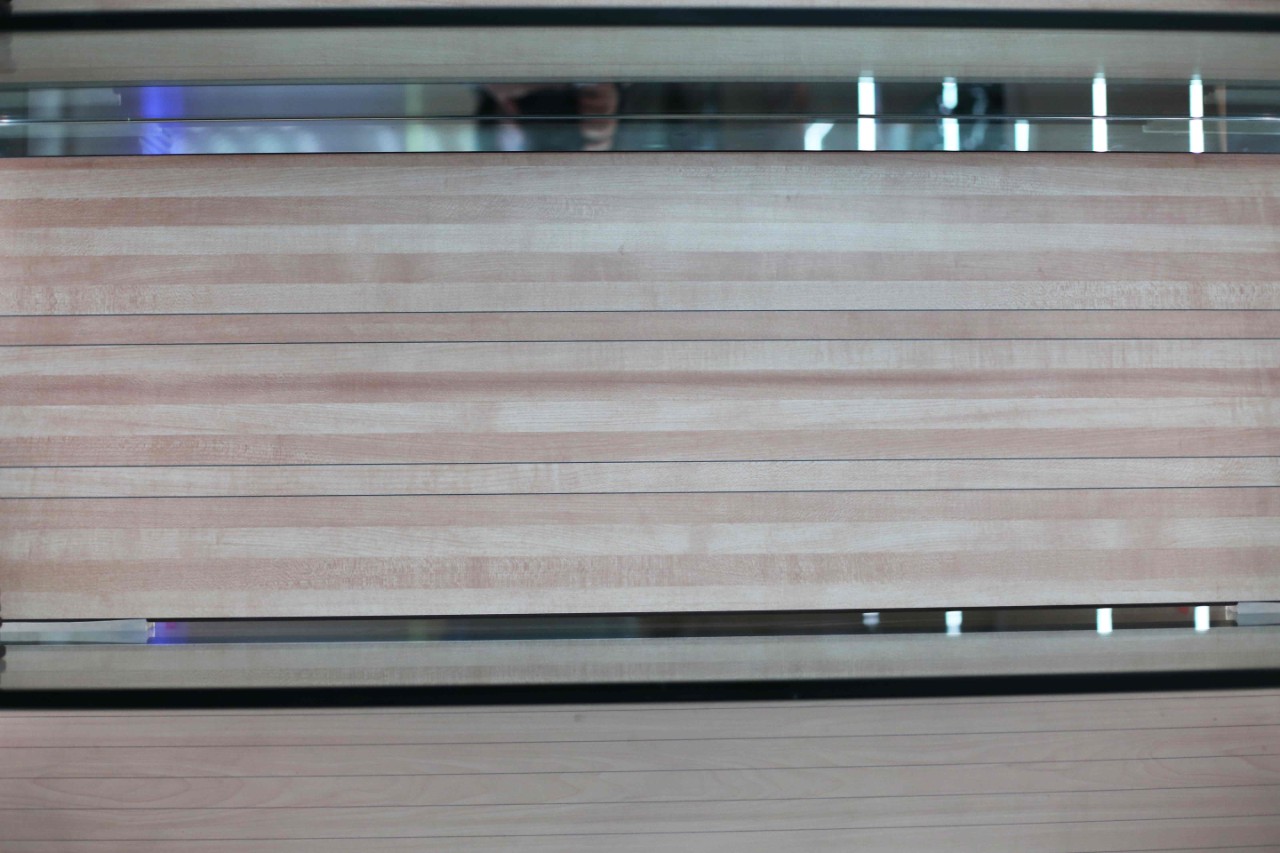
The structural integrity of a wood lane comes from Edge-Grain Laminated Wood. Rather than laying boards flat, manufacturers turn 1-inch slats on their sides and glue them together under immense pressure.
As seen in the detailed cross-section above, this creates a distinctive striped appearance. The alternating strips of light cream and honey-gold wood aren't just aesthetic; this vertical stacking orientation significantly increases impact resistance and prevents the warping common in flat-sawn lumber. The faint reflections on the surface indicate the presence of a high-gloss coating, historically shellac or nitrocellulose, but now predominantly Polyurethane.
Zone 1: The Heads & Approach (Hard Rock Maple)
The first 15 to 20 feet of the lane, known as "the heads," must withstand the repeated impact of 16-pound bowling balls landing at varying trajectories. For this zone, builders exclusively use Hard Rock Maple (Acer saccharum). As noted by SportsPeep.com, this species is chosen for its extreme density and resistance to denting. A softer wood here would develop "loft depressions" within weeks, ruining the ball's trajectory immediately.
Zone 2: The Mid-Lane (Southern Yellow Pine)
Once the ball is rolling smoothly, the material requirement shifts from impact resistance to cost efficiency and friction management. This leads to the classic comparison of Hard Rock Maple vs Southern Yellow Pine. The mid-lane (roughly 40 feet) utilizes Southern Yellow Pine (Pinus palustris). According to Bowling For Beginners, pine is softer and more porous than maple. This porosity historically allowed the wood to "hold" oil differently, creating a distinct track area that skilled bowlers could exploit.
Zone 3: The Pin Deck (Maple/Hickory)
The final zone, the pin deck, endures the most violent abuse—the scattering of ten 3.5-pound pins. Manufacturers revert to Hard Rock Maple or occasionally Hickory here to prevent the deck from splintering under the 3,500+ lbs of force generated during a strike.
The Synthetic Revolution: Phenolics and Composites
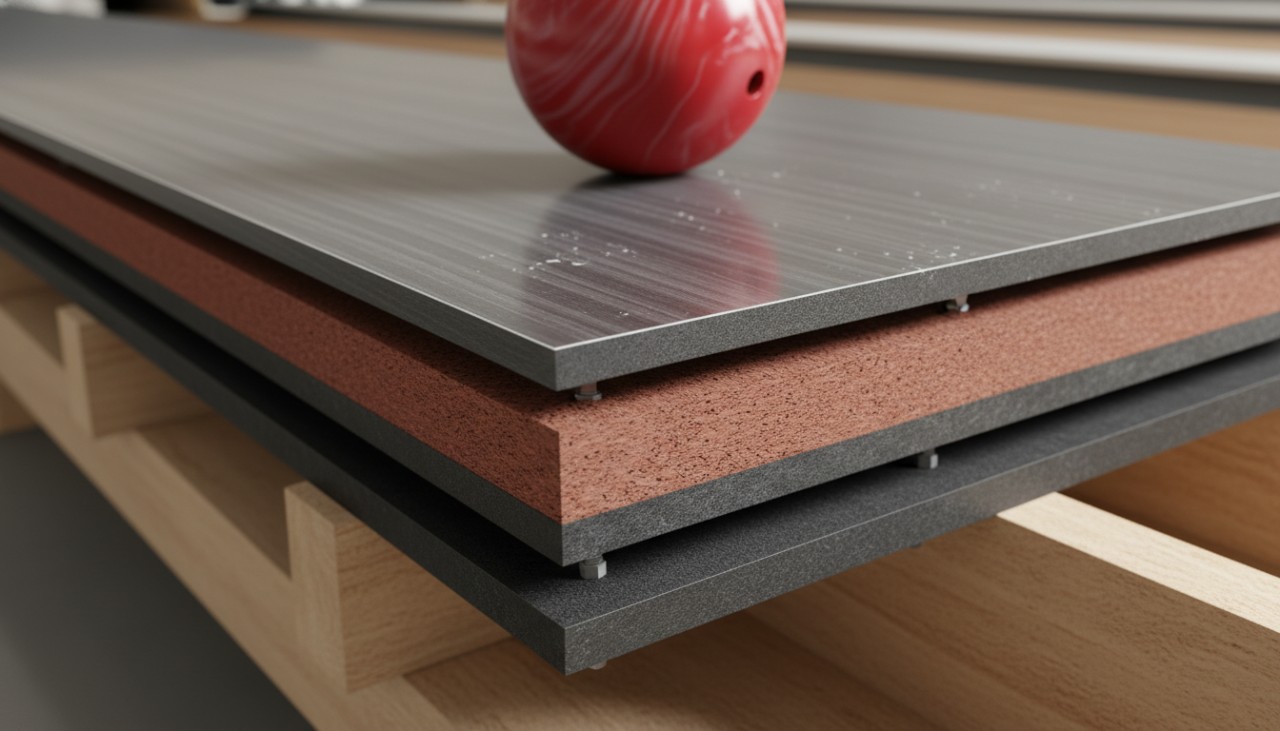
While wood offers nostalgia, the industry standard has shifted toward Phenolic Synthetic Lane Panels. These are not plastic in the cheap sense, but highly engineered composites designed to eliminate the variables of natural wood.
Composition and Chemistry
Synthetic lanes are composed of layers of kraft paper impregnated with Melamine formaldehyde resins and often reinforced with aluminum oxide for surface hardness. As described by Kim Adler on BowlingBoards.com, these materials are cured under high heat and pressure to create a surface harder than wood, which resists the "tracking" (grooves) that develop in pine lanes over time.
The Manufacturers: AMF vs. Brunswick
The two giants in this space, AMF (producing High-Pressure Laminates, or HPL) and Brunswick (known for Anvilane and Pro Lane), have distinct approaches. Bowling This Month explains that while both mimic wood visually, their surface textures differ. Brunswick synthetics often feature a texture intended to mimic the oil-holding capability of wood, whereas AMF panels are historically smoother, creating different skid-snap reactions for the ball.
Friction Consistency
The primary advantage of synthetics is the uniformity of Bowling Lane Friction Topography. Wood is organic; it breathes, expands with humidity, and softens with age. Synthetics provide a static friction coefficient (COF). Ruikangsports notes that this consistency allows for more precise oil pattern application, making the game fairer but arguably less "artistic" than reading the nuances of a decaying wood lane.
Material Showdown: Wood vs. Synthetic Lanes
To help facility managers and enthusiasts understand the trade-offs, we have compiled a direct comparison of the two material standards.
Feature Traditional Wood Lanes Synthetic Lanes (Phenolic/Melamine) Primary Material Acer saccharum (Maple) & Pinus palustris (Pine) Melamine Resin & Kraft Paper Composite Maintenance High: Requires sanding/re-coating every 1-2 years. Low: Cleaning only; no resurfacing required. Lifespan 30–40 years (thickness decreases with sanding). 15–25 years (panel replacement). Friction Profile Dynamic: Changes with temperature, humidity, and wear. Static: Consistent high-friction surface. Oil Absorption Porous: Oil breaks down and absorbs into the wood. Non-porous: Oil sits on top ("glassy" effect). Acoustics Thud: Softer, natural sound absorption. Crack/Snap: Louder, higher-pitch impact noise. Fire Risk High: Older coatings (lacquer) were highly flammable. Low: Melamine is naturally fire-retardant. According to data from Surimoto.com, while wood lanes offer a traditional aesthetic, the operational costs of resurfacing make synthetics the clear financial winner for modern centers.
Below the Surface: Substructure and Foundations
A bowling lane is only as good as its foundation. If the substructure shifts, the lane loses its USBC (United States Bowling Congress) certification level.
The I-Joist System
Modern installations utilize engineered I-Joists to create a perfectly level platform. Fusion Bowling’s Design Guide details how these joists allow for micro-adjustments to ensure the lane is level to within 40/1000ths of an inch.
Concrete Slab Requirements
PrimeTime Amusements emphasizes that the concrete slab beneath the lane structure must be cured to specific PSI (Pounds per Square Inch) standards to prevent settling. A standard 4-inch slab is often insufficient; reinforced 5-6 inch slabs are preferred to handle the vibration of pinsetters without cracking.
Vibration Dampening
In "boutique" bowling centers located in urban environments, vibration isolation is critical. Builders place MDF or specialized rubberized mats between the concrete and the lane substructure to prevent the noise of the ball rolling from traveling through the building's frame.
The Third Surface: Lane Conditioners and Chemical Interactions
It is a misconception that the ball touches the lane for the entire roll. For the first 30-40 feet, the ball is actually hydroplaning on a liquid layer known as lane conditioner (oil).
Viscosity and Surface Tension
The interaction between the oil and the lane surface creates the Bowling Lane Friction Topography. BowlersMart highlights that as synthetic lanes age, their surface energy changes. A brand new synthetic lane might be "slick," but after years of play, microscopic scratches increase friction.
The Breakdown
On wood lanes, oil depletion occurs because the wood absorbs the conditioner. On synthetic lanes, the oil moves. As the heavy plastic balls flare, they pick up oil and deposit it further down the lane (carry-down), creating a chaotic friction environment that requires the bowler to adjust their line constantly.
Beyond the Alley: Reclaimed Bowling Lane Materials
There is a thriving secondary market for Reclaimed Bowling Alley Countertops. When old centers are demolished or upgraded to synthetics, the wood lanes are often salvaged.
Identifying High-Value Salvage
Referring back to our visual analysis, the highly prized sections are the "heads" and the "pin decks." These are solid maple. Designers look for the tight Edge-Grain Laminated Wood pattern. The presence of "Birdseye" grain patterns in the maple creates a stunning visual for furniture.
Working with the Material
Fabricating this material is notoriously difficult. The lanes were originally assembled using not just glue, but thousands of spiral steel nails or metal splines driven horizontally through the strips. As implied by general woodworking standards and industry salvage practices, attempting to cut a reclaimed lane section with a standard table saw can destroy the blade instantly upon hitting hidden metal.
Applications
Despite the difficulty, the 2.5-inch thickness makes these slabs ideal for industrial-chic kitchen islands, workbench tops, and dining tables. They are practically indestructible, having survived decades of heavy impact.
Frequently Asked Questions
What are traditional bowling lanes made of?
Traditional lanes are constructed from a combination of Hard Rock Maple and Southern Yellow Pine. Maple is used in the first 15 feet (heads) and the pin deck for impact durability, while Pine is used in the middle section (mid-lane) to allow for ball hook and cost efficiency.
What is the difference between synthetic and wood bowling lanes?
Wood lanes are natural timber that requires sanding and recoating; they have higher friction and create a "track" over time due to wear. Synthetic lanes are made of melamine-impregnated paper composites (similar to Formica but thicker); they are harder, offer consistent friction, and require significantly less maintenance. Synthetics mimic the look of wood but feel "slicker" to the bowler.
Why are bowling lanes laminated in strips?
Lanes use Edge-Grain Laminated Wood construction where boards are turned on their side. This vertical orientation increases structural strength, improves impact resistance, and prevents the warping that would occur if wide, flat boards were used. It creates the distinctive striped appearance seen in lane cross-sections.
How thick is a standard bowling lane?
Traditional wood lanes start at roughly 2.5 inches thick but thin down over years of resurfacing (sanding). Phenolic Synthetic Lane Panels are typically 3/8 inch (approx 10mm) thick, usually laid over a sub-structure or even on top of an existing, planed-down wood lane.
What is the coating on top of bowling lanes?
Modern wood lanes use polyurethane or epoxy-based finishes to protect the wood. Synthetic lanes do not need a liquid coating; the surface is a hardened melamine resin integrated into the panel itself. Both surface types are covered in temporary "lane conditioner" (oil) for gameplay.
Are maple or pine lanes better for hooking the ball?
Wood lanes generally provide more natural friction, aiding in hook potential. Pine, used in the mid-lane, is softer and more porous than maple, creating a different friction transition that helps the ball grab. Synthetics require specific aggressive ball coverstocks (reactive resin) to generate similar hook on their smoother surfaces.
How often do bowling lanes need to be replaced?
Wood lanes can last 30-40 years but require resurfacing (cutting/re-coating) every 1-2 years. Synthetic lanes typically have a lifespan of 15-25 years before the friction surface wears down or delimitation occurs, after which the panels must be replaced.
Can you reuse bowling lane wood for furniture?
Yes, Reclaimed Bowling Alley Countertops are highly valued for furniture. However, the material is extremely heavy and difficult to cut due to hidden metal fasteners (nails/screws) used in the lamination process. The maple sections are particularly prized for their hardness and unique grain patterns.
More Articles

Let’s Build a center Together
Partner With a Trusted Bowling Alley Design, One-Stop Solution Manufacturer.
Flying has successfully built ideal bowling alleys for more than 3,000 customers.
Technical Expert
You may also like our products
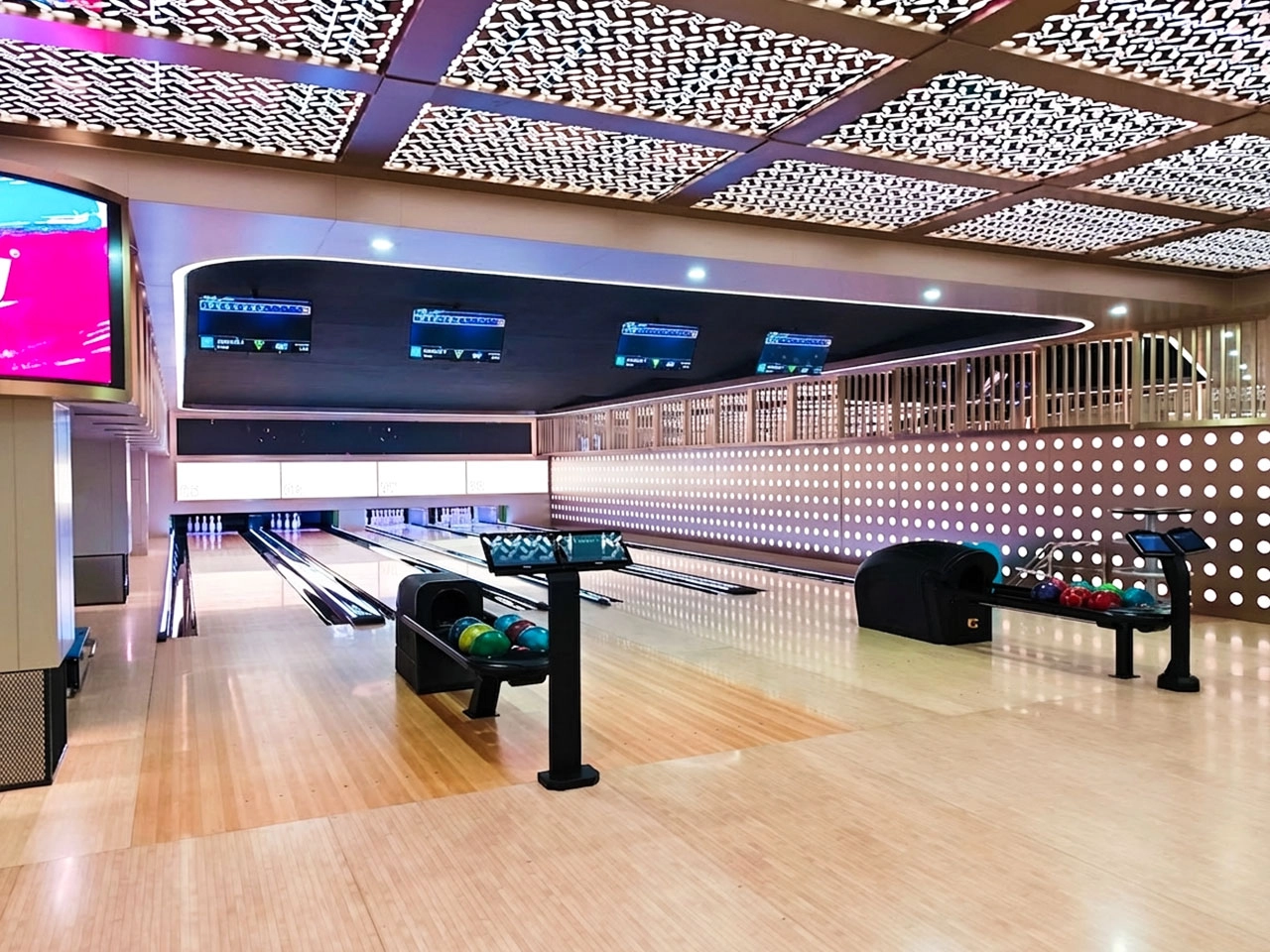
Build a commercial bowling venue with Flying’s complete string pinsetter bowling alley equipment package. The system includes the AEROPIN™ USBC-certified string pinsetter, customizable lanes, automatic scoring, ball return, lane lighting, pins, control hardware, and overseas installation support.
Designed for commercial bowling centers, family entertainment venues, hotels, resorts, bars, and premium private projects, this turnkey bowling system helps operators reduce sourcing complexity and prepare for reliable long-term operation.
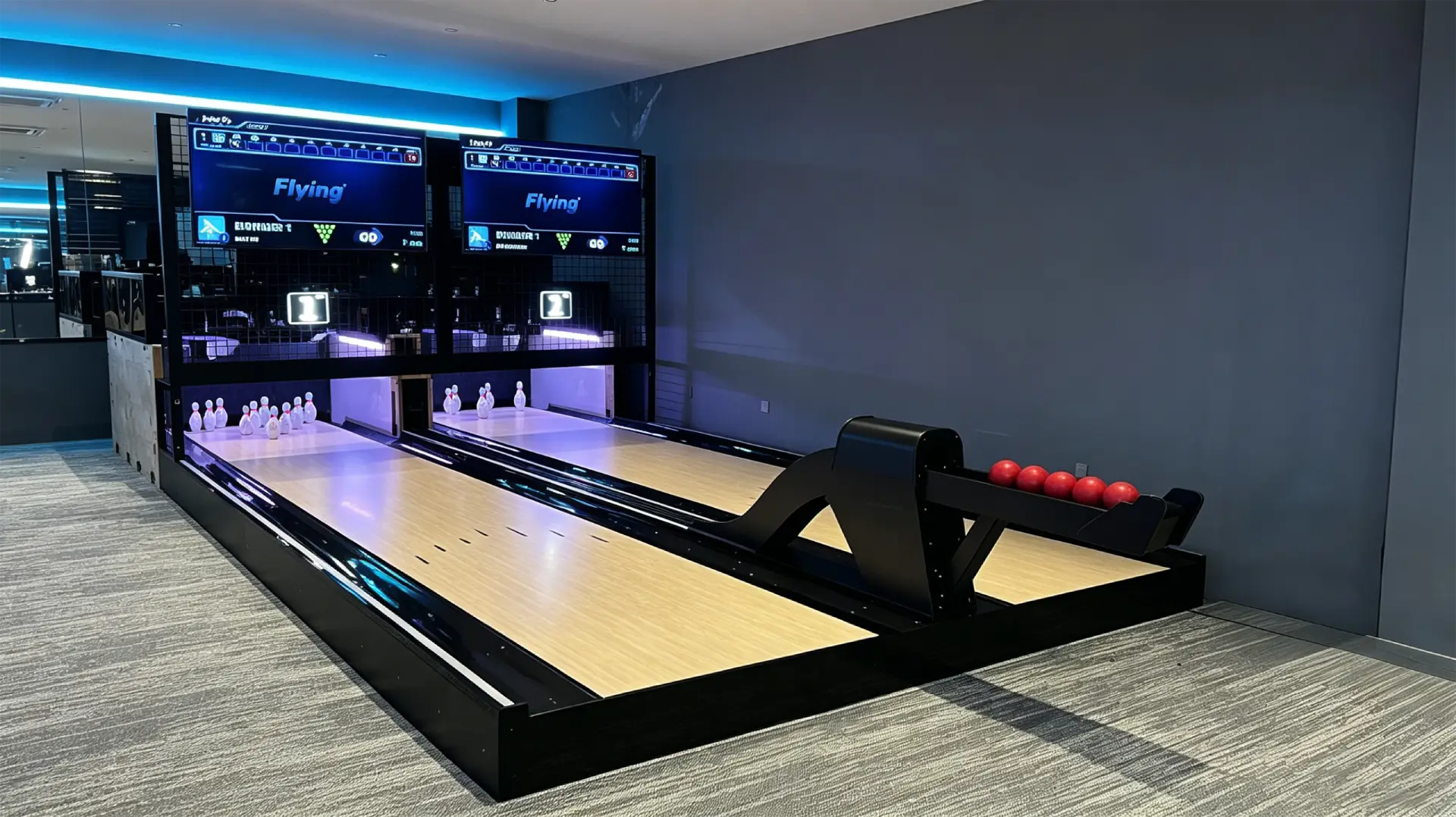
Flying Smart Duckpin Bowling is a compact duckpin bowling equipment system designed for bars, family entertainment centers, hotels, resorts, cinemas, boutique bowling alleys, and social entertainment venues. With a standard 9.13m duckpin bowling lane, 1.25kg lightweight balls, automatic scoring, ball return, LED lighting, and a smart string pinsetter, it creates a fast-paced and easy-to-play bowling experience in a smaller footprint than traditional bowling.
The system is available as a turnkey duckpin bowling package, including lane equipment, a string pinsetter system, scoring hardware, control software, global shipping, installation guidance, and technical support.
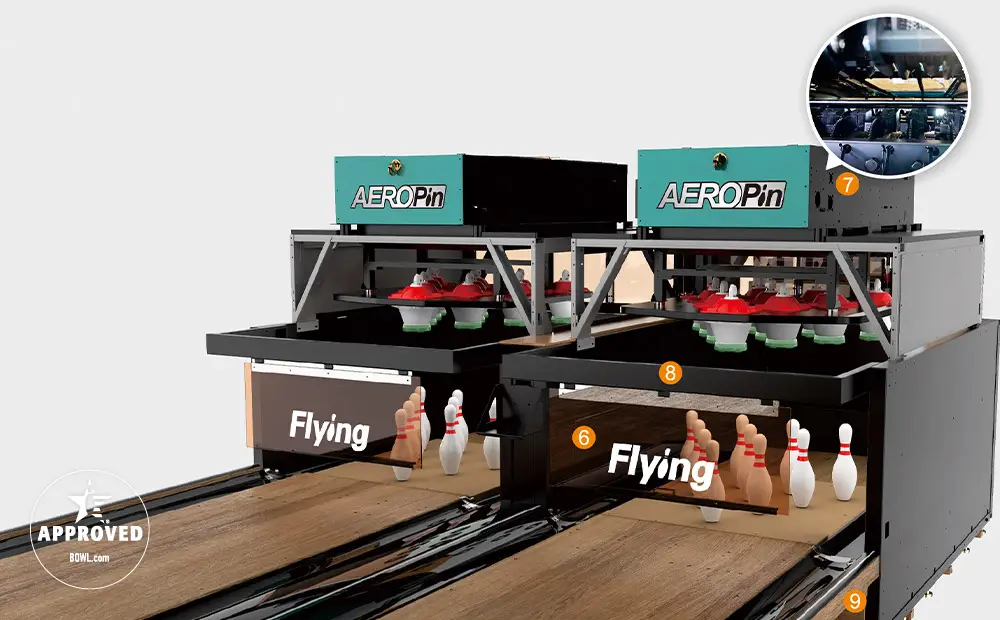
AEROPIN is Flying Bowling’s USBC-certified string pinsetter system for modern commercial bowling centers. Designed for fast pin setting, smooth ball return, low maintenance, and stable daily operation, it helps venue operators build league-ready and entertainment-focused bowling projects with confidence.
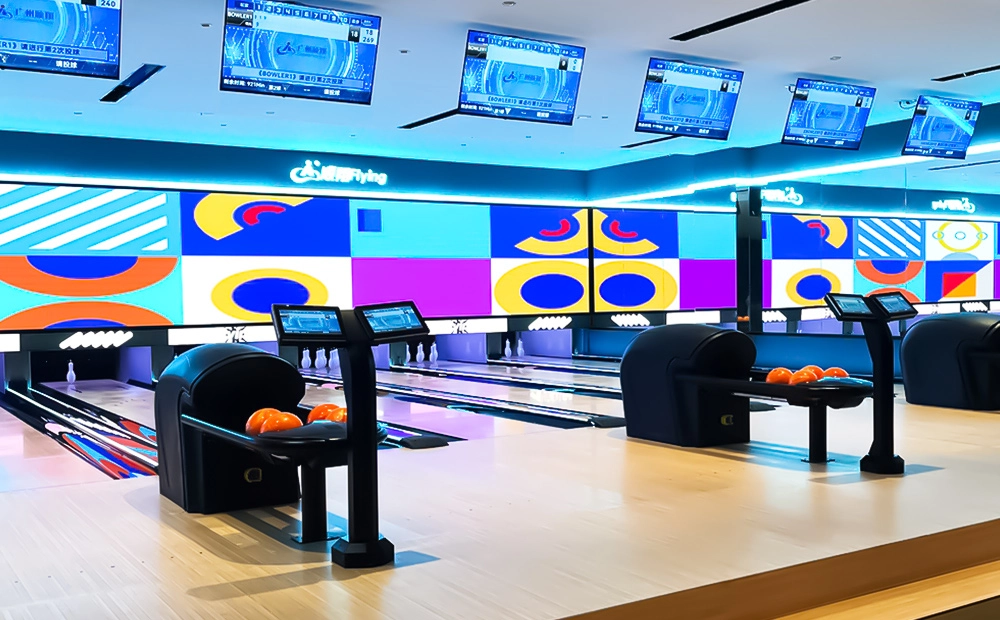
Flying Social Medium Bowling is a compact medium bowling equipment system designed for bars, cafes, family entertainment centers, community leisure venues, hotels, resorts, and small indoor entertainment spaces. With customizable lane lengths from 9.6m to 18m, small balls, lighter pins, string pinsetter technology, ball return, and automatic scoring, it creates an easy-to-play social bowling experience for players of different ages and skill levels.
Compared with full-size standard bowling, medium bowling requires less space and offers a more casual, interactive format. It is a practical choice for venues that want to add a bowling attraction without building a full commercial bowling alley.
Contact Flying
Start Your Custom Bowling Alley Project
If you contact us now for more details, we can provide you with a custom bowling alley service. Our service team will get back to you within 24 hours normally!
© 2026 Flying BOWLING. Designed by gooeyun.
FOLLOW US:

Flying Bowling
Flying Bowling
Flyingbowling
Flyingbowling
Flyingbowling