

Bowling Pin Types Explained: Tenpin, Duckpin, Candlepin & Mini — Which Format Is Right for Your Venue? (2026)
Not all bowling pins are the same — and for venue operators, choosing the wrong format means choosing the wrong audience. This guide breaks down every major bowling pin type (Tenpin, Duckpin, Candlepin, Fivepin, and Mini) with precise dimensional specs, material details, and game mechanics. More importantly, it maps each format to the venue types and audience profiles where it actually performs—so FEC owners, resort developers, and bar operators can make the format decision on data, not guesswork.
- 1. The Anatomy of a Bowling Pin: What They're All Made From
- 2. Tenpin Bowling Pins: The Global Standard
- 3. Duckpin Bowling Pins: Compact, Social, High-Engagement
- 4. Candlepin Bowling Pins: The Precision Challenge
- 5. Fivepin Bowling Pins: The Canadian Format
- 6. Mini Bowling Pins: Purpose-Built for Entertainment Venues
- 7. Bowling Pin Format Comparison: Specs at a Glance
- 8. Which Format Fits Your Venue? A Decision Framework
- 9. FAQ: 10 Questions Venue Operators Ask About Bowling Pin Types
- Start Planning Your Bowling Format Mix
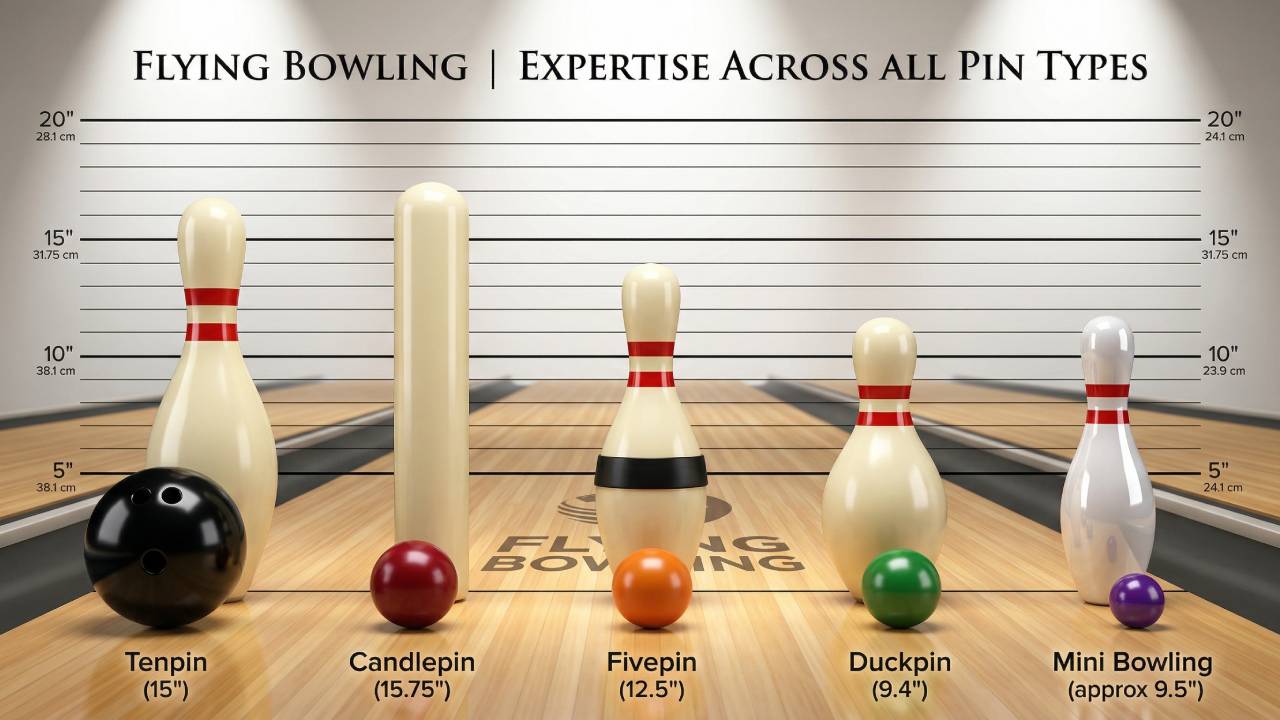
The bowling pin sitting at the end of the lane looks simple. It isn't. Behind every format — Tenpin, Duckpin, Candlepin, Fivepin, Mini — lies a distinct set of dimensions, weight tolerances, material specifications, and game mechanics that fundamentally change the player experience, the equipment required, and the type of venue the format suits best.
If you're planning a bowling installation for an FEC, resort, bar, or entertainment venue, the pin format you choose determines your lane length, your equipment footprint, your target audience, and your operational cost structure. This guide gives you the precise specifications and the commercial decision framework to choose the right format — or the right combination — for your project.
1. The Anatomy of a Bowling Pin: What They're All Made From
Regardless of format, commercial bowling pins share a common construction logic that hasn't fundamentally changed in decades — though the materials have evolved significantly.
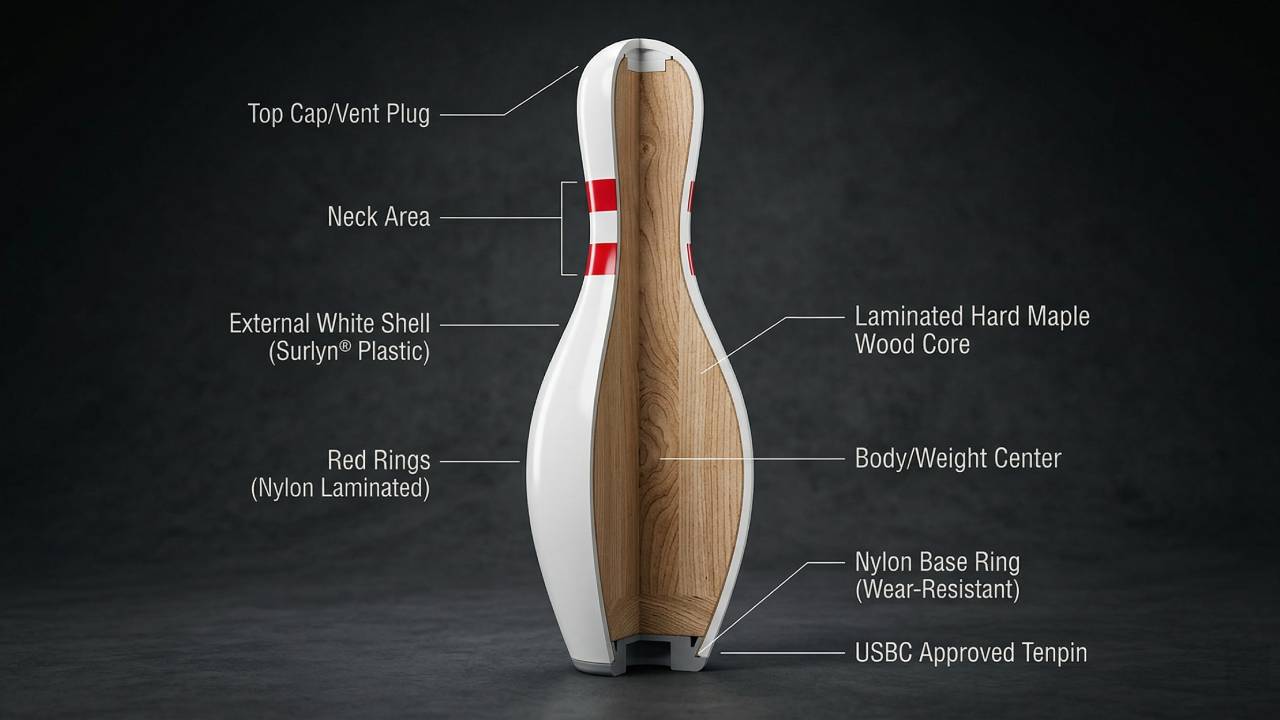
The Traditional Construction: Wood Core + Plastic Shell
High-quality commercial bowling pins — including all USBC-approved Tenpin pins — use a hard maple wood core as the primary structural element. Maple is chosen for its density uniformity and impact resilience. The core is turned on a lathe to precise dimensional tolerances, then coated in a Surlyn or ethylene-based plastic shell, applied via injection molding.
The plastic shell does three things: it protects the wood from impact damage, creates the characteristic sharp crack sound when struck, and provides a consistent, smooth surface for scoring cameras and sensors to track.
Why internal geometry matters: High-performance pins often contain precisely calculated internal air pockets. These aren't manufacturing defects — they're engineered voids that tune the pin's center of gravity and radius of gyration. This determines how the pin rotates, falls, and interacts with adjacent pins when struck — the "pin action" that makes the difference between a 7-10 split and a clean strike.
Synthetic and Composite Alternatives
For entertainment-focused venues — FECs, theme parks, mini bowling installations — fully synthetic pins (composite or foam cores with plastic shells) are increasingly common. They offer:
- Superior consistency across the set (no natural variation in wood grain)
- Longer service life under high-frequency commercial use
- Lower replacement cost at scale
- Lighter weight — important for mini bowling formats aimed at children
The trade-off: purists note a different sound profile and slightly different pin action. For competitive league play, wood-core pins remain the standard. For entertainment venues, synthetic is often the more practical choice.
2. Tenpin Bowling Pins: The Global Standard
Tenpin is the format most people picture when they hear "bowling." It is the dominant format worldwide, the only format with full USBC international regulatory oversight, and the reference point against which all other formats are measured.
Precise Specifications (USBC Regulated)
| Specification | Measurement |
|---|---|
| Height | 15 inches (38.1 cm) |
| Width at belly (widest point) | 4.75 inches (12.1 cm) |
| Width at neck (narrowest point) | 1.797 inches (4.56 cm) |
| Width at base | 2.25 inches (5.72 cm) |
| Weight (regulated range) | 3 lbs 6 oz – 3 lbs 10 oz (1.53–1.64 kg) |
| Pin set count | 10 pins in a triangle formation |
| Lane length (to head pin) | 60 feet (18.29 meters) |
Game Mechanics
The Tenpin's relatively high center of gravity (due to its pronounced belly) promotes toppling on impact. A well-executed strike hits the "pocket" — between pins 1 and 3 for right-handed bowlers — creating a chain reaction where the head pin sweeps the 2-pin, the ball deflects to take out the 4 and 7, and the 6-pin sweeps the 10. This pin action physics is what makes strike shots feel rewarding and splits feel punishing.
Best Venue Fit
Tenpin is the format for venues targeting competitive bowlers, league play, corporate team events, and serious recreational players. It requires the most space (18.3-meter lanes) and the most infrastructure, but it carries the strongest brand recognition globally and is the format that serious bowling enthusiasts expect.
Flying's Tenpin product line:
- FCSB (Flying Classic Standard Bowling) — competition-spec, full 18.3m lane, USBC-compliant scoring system
- FUSB (Flying Ultra Standard Bowling) — upgraded string pinsetter, enhanced player experience, same competition dimensions
→ View Flying's Standard Bowling equipment specifications
3. Duckpin Bowling Pins: Compact, Social, High-Engagement
Duckpin is the format that consistently surprises first-time players — and consistently converts them into repeat visitors. The shorter, squatter pins and smaller ball create a game that's genuinely harder than Tenpin (no recorded perfect game exists in professional Duckpin play), which paradoxically makes it more engaging for recreational players: everyone struggles, nobody is embarrassed.
Precise Specifications
| Specification | Measurement |
|---|---|
| Height | 9.4 inches (23.9 cm) |
| Width at belly | 4.125 inches (10.5 cm) |
| Weight | 3 lbs 6 oz – 3 lbs 12 oz (1.53–1.70 kg) |
| Pin set count | 10 pins in standard triangle |
| Ball diameter | Approx. 5 inches (12.7 cm) — no finger holes |
| Ball weight | Max 3 lbs 12 oz (1.70 kg) |
| Lane length | Variable — standard to compact configurations |
Why Duckpin Works for Entertainment Venues
The absence of finger holes in the Duckpin ball is commercially significant. It eliminates the fitting barrier that discourages non-bowlers from Tenpin — anyone can pick up a Duckpin ball and play immediately. This dramatically lowers the participation threshold for walk-in, family, and casual social groups.
The shorter pin height and wider belly shape mean the pins scatter in less predictable patterns. Strikes are genuinely rare. Players bowl three balls per frame (instead of two in Tenpin) — meaning more activity per frame, longer session engagement, and more opportunity for social interaction between deliveries.
Best Venue Fit
Duckpin is ideal for bars, social entertainment venues, boutique bowling lounges, and FECs targeting adult social groups and families. Its compact lane footprint (Flying's FSDB lane length is 9.2 meters, customizable) makes it viable in venues where a full Tenpin lane simply doesn't fit.
Flying's Duckpin product:
- FSDB (Flying Smart Duckpin Bowling) — 9.2m standard lane (customizable), string pinsetter, automated scoring, suitable for bars, FECs, and social venues
→ View Flying Smart Duckpin Bowling specifications
4. Candlepin Bowling Pins: The Precision Challenge
Candlepin is a regional format — primarily New England USA and Atlantic Canada — that remains niche globally but deeply embedded in its home markets. Its distinctive cylindrical pin shape makes it immediately visually distinct from any other format.
Precise Specifications
| Specification | Measurement |
|---|---|
| Height | 15.75 inches (40.0 cm) |
| Diameter (uniform, no belly) | 2.9375 inches (7.46 cm) |
| Weight | 2 lbs 8 oz (1.13 kg) |
| Shape | Cylindrical — same diameter top to bottom |
| Ball diameter | Approx. 4.5 inches (11.4 cm) — no finger holes |
| Ball weight | Max 2 lbs 7 oz (1.10 kg) |
| Lane length | 60 feet (18.29 meters) — same as Tenpin |
Distinctive Game Rules
Candlepin's most unusual rule: fallen pins (deadwood) are left on the lane between deliveries, unlike all other formats where they're cleared. This creates a highly strategic dimension — players deliberately aim for fallen pins to deflect into standing ones, and a ball that lands in a cluster of deadwood can produce unexpected knock-downs.
Best Venue Fit
Candlepin's geographic concentration means it's primarily relevant for venues in New England and Atlantic Canada, where it has strong nostalgic recognition. For venues in these markets, a Candlepin lane can serve as a compelling differentiator — offering something local and authentic alongside standard Tenpin or Duckpin options.
5. Fivepin Bowling Pins: The Canadian Format
Fivepin is almost exclusively a Canadian format, with its highest concentration in Ontario and British Columbia. For venues targeting Canadian markets — or venues in Canada specifically — Fivepin is part of the expected bowling landscape.
Precise Specifications
| Specification | Measurement |
|---|---|
| Height | 12.5 inches (31.8 cm) |
| Weight | 2 lbs 8 oz (1.13 kg) |
| Pin count | 5 pins in a V-formation |
| Rubber band | Yes — around the belly of each pin |
| Ball diameter | Approx. 5 inches (12.7 cm) — no finger holes |
| Ball weight | Approx. 3.5 lbs (1.58 kg) |
The Rubber Band Distinction
Fivepin pins are the only format where each pin has a rubber band encircling its belly. This band is a scoring mechanism: striking the rubber band section scores the highest point value (5 points for the headpin), while the four corner pins score 2 points each. A perfect game in Fivepin scores 450 points, not 300 as in Tenpin.
Best Venue Fit
Fivepin is for venues in Canadian markets where it carries strong cultural recognition. Outside Canada, its low international profile makes it a niche choice without the built-in audience recognition of Tenpin or the social-venue appeal of Duckpin.
6. Mini Bowling Pins: Purpose-Built for Entertainment Venues
Mini bowling pins aren't simply smaller versions of Tenpin pins — they're purpose-engineered for a distinct commercial context: high-frequency entertainment use in compact spaces, with players ranging from young children to adults who have never bowled before.
Precise Specifications (Flying FCMB Standard)
| Specification | Measurement |
|---|---|
| Height | Approx. 9.5 inches (24 cm) scaled |
| Width at belly | Proportionally scaled to lane width |
| Weight | Lightweight synthetic — child-appropriate |
| Pin count | 10 pins in standard triangle |
| Ball weight | 1.25 kg — no finger holes |
| Ball diameter | Scaled to pin proportions |
| Lane length | 12 meters (fixed commercial standard) |
Why Mini Pins Are Engineered Differently
The absence of finger holes in the mini bowling ball is a deliberate safety design for venues serving children. Standard Tenpin balls require finger holes sized to individual hand dimensions — a fitting barrier for small children and a safety risk if an undersized ball traps fingers. The mini bowling ball is simply picked up with two hands, eliminating both the fitting barrier and the safety concern.
The synthetic pin construction means mini bowling pin sets are more durable under the higher reset frequency of commercial entertainment use — where a single lane might see 50–80 games per day — than wooden-core pins in the same context.
Best Venue Fit
Mini bowling is the format for children's activity centers, family entertainment centers, theme parks, shopping mall activations, hotel entertainment spaces, and any venue where the primary audience includes children under 12 or non-bowling adults who need a low-barrier entry point. Its 12-meter lane footprint is roughly one-third the space of a Tenpin lane.
Flying's Mini Bowling product:
- FCMB (Flying Cute Mini Bowling) — 12m lane, 1.25kg no-finger-hole ball, string pinsetter, automated scoring, designed for 8+ hours/day commercial use
→ View Flying FCMB Mini Bowling specifications
7. Bowling Pin Format Comparison: Specs at a Glance
Pin Dimensions Comparison
| Format | Height | Belly Width | Weight | Ball Holes | Pin Count |
|---|---|---|---|---|---|
| Tenpin | 15 in / 38.1 cm | 4.75 in / 12.1 cm | 1.53–1.64 kg | Yes (3) | 10 |
| Duckpin | 9.4 in / 23.9 cm | 4.125 in / 10.5 cm | 1.53–1.70 kg | No | 10 |
| Candlepin | 15.75 in / 40.0 cm | 2.94 in / 7.5 cm (uniform) | 1.13 kg | No | 10 |
| Fivepin | 12.5 in / 31.8 cm | Variable + rubber band | 1.13 kg | No | 5 |
| Mini (FCMB) | ~9.5 in / 24 cm | Scaled | Lightweight | No | 10 |
Venue Suitability Comparison
| Format | Lane Length | Min. Room Length | Target Audience | Space Efficiency | Commercial Viability |
|---|---|---|---|---|---|
| Tenpin | 18.3 m | ~22 m | Competitive + recreational | Low | High (established market) |
| Duckpin | 9.2–12 m | ~14 m | Social, all ages | High | Very high (FEC/bar) |
| Candlepin | 18.3 m | ~22 m | Regional (New England/Canada) | Low | Niche (regional) |
| Fivepin | ~18 m | ~22 m | Canadian market | Low | Niche (Canada only) |
| Mini | 12 m | ~15 m | Families, children, casual | Very high | Very high (FEC/resort) |
Relative Equipment Cost (CapEx) Comparison
While space efficiency is a major factor, capital expenditure (CapEx) often drives the final format decision. Because equipment costs fluctuate based on global freight and raw materials, the most accurate way to evaluate budget is by comparing the relative cost against a standard Tenpin baseline.
Assuming a standard Tenpin lane setup represents 100% of your equipment budget:
| Bowling Format | Relative Equipment Cost | Primary Cost Drivers |
| Standard Tenpin | 100% (Baseline) | 18.3m synthetic lane panels, heavy-duty pinsetters, high-capacity ball returns. |
| Duckpin (FSDB) | ~70% – 80% | Shorter lane materials (9.2m–12m), but still utilizes heavy-duty commercial pinsetter mechanics. |
| Mini Bowling (FCMB) | ~40% – 50% | Shortest lanes (12m), lightweight synthetic pins/balls, and highly simplified, low-wear string pinsetter systems. |
| Candlepin / Fivepin | ~95% – 100% | Requires the same massive 18.3m lane footprint as Tenpin, with specialized, niche pinsetters. |
The Commercial Takeaway: If you have the space and budget, Tenpin commands premium pricing per game. However, if your strategy relies on high-volume foot traffic and rapid payback periods, Mini Bowling and Duckpin allow you to install twice as many lanes for the same capital investment, drastically accelerating your venue's ROI.
8. Which Format Fits Your Venue? A Decision Framework
If your priority is maximum space efficiency
Choose: Mini Bowling (FCMB) or Duckpin (FSDB)
Both formats operate in roughly one-third to one-half the space of a Tenpin lane. A 4-lane Duckpin setup needs approximately 14m × 10m. A 4-lane Mini setup needs approximately 15m × 8m. Both are viable in mall units, hotel entertainment wings, and FEC floor plans where a standard bowling installation wouldn't fit.
If your priority is lowest barrier to participation
Choose: Mini Bowling (FCMB)
No finger holes, lightweight ball, short lane, simple scoring display — Mini Bowling has the lowest participation threshold of any format. First-time players of any age can bowl a full frame within their first attempt. This is why Mini Bowling consistently outperforms Tenpin on utilization rate in FEC settings: the intimidation factor is essentially zero.
If your priority is social engagement and repeat visits
Choose: Duckpin (FSDB)
Duckpin's genuine difficulty drives repeat visits in a way Tenpin doesn't for casual players. When nobody in a group gets a strike, the competition remains active and engaged through the entire session. The "impossible perfect game" quality creates an ongoing challenge that brings groups back. Bars, social entertainment venues, and boutique bowling lounges consistently report higher per-visit engagement from Duckpin groups than equivalent Tenpin sessions.
If your priority is competitive play and serious bowlers
Choose: Tenpin (FCSB or FUSB)
USBC certification, competition-spec scoring, and globally standardized dimensions — Tenpin is the format for venues targeting league players, corporate tournaments, and serious recreational bowlers. The audience is smaller than casual FEC traffic, but their visit frequency and spend per session are significantly higher.
If you're building a multi-format FEC
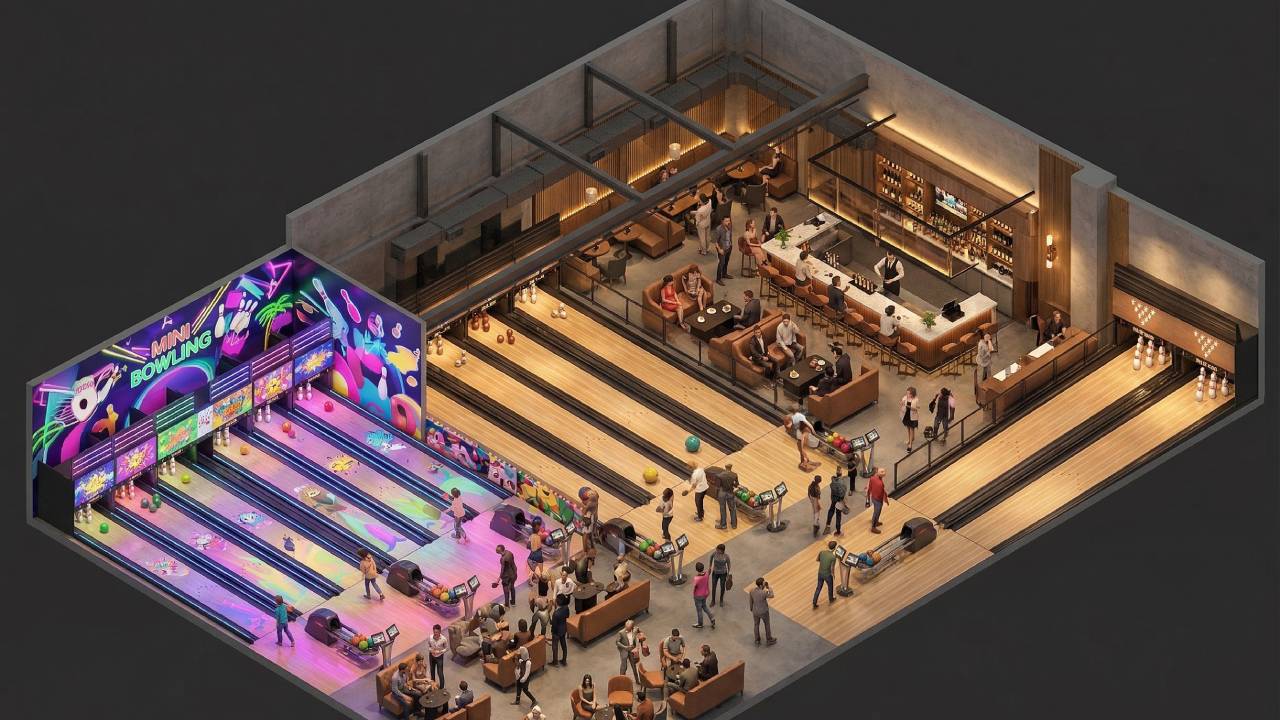
The highest-performing entertainment center bowling configurations typically combine two or three formats in the same facility:
- Mini Bowling for the family/children segment (4–6 lanes)
- Duckpin for the social adult segment (4–8 lanes)
- Standard Tenpin for the competitive/serious segment (optional, if space allows)
This approach maximizes the addressable audience without requiring every format to serve every visitor. Flying's product line covers all three formats — FCMB, FSDB, and FCSB/FUSB — and our project team regularly designs multi-format FEC layouts.
→ Explore multi-format bowling center design options
9. FAQ: 10 Questions Venue Operators Ask About Bowling Pin Types
Q1: What are the exact dimensions of a standard Tenpin bowling pin?
A standard USBC-regulated Tenpin bowling pin is 15 inches (38.1 cm) tall, 4.75 inches (12.1 cm) wide at the belly (widest point), and weighs between 3 lbs 6 oz and 3 lbs 10 oz (approximately 1.53–1.64 kg). The base diameter is 2.25 inches (5.72 cm). These dimensions are tightly regulated to ensure consistent pin action across all sanctioned lanes.
Q2: What material are commercial bowling pins made from?
Commercial-grade bowling pins — especially USBC-approved Tenpin pins — use a hard maple wood core turned to precise tolerances on a lathe, then encapsulated in a Surlyn or ethylene-based plastic shell applied via injection molding. The shell provides impact resistance and creates the characteristic crack sound on strike. For entertainment venue formats (Mini, Duckpin for FECs), fully synthetic pins with composite or foam cores are increasingly common for their consistency and durability under high-frequency commercial use.
Q3: How often do bowling pins need to be replaced in a commercial venue?
Under normal commercial use conditions, Tenpin pins typically require replacement every 12–18 months in high-traffic alleys (6–8 hours of daily operation). Synthetic pins used in Mini and Duckpin commercial formats typically last longer — 18–36 months — under equivalent use. Signs that pins need replacement include visible chipping of the plastic shell, inconsistent pin action (pins that don't fall properly or reset incorrectly), and weight deviation outside the regulated range.
Q4: What is the difference between Duckpin and Tenpin bowling pins?
Duckpin pins are significantly shorter (9.4 inches vs. 15 inches) and lighter, with a rounder, squatter profile and a wider belly relative to their height. The Duckpin ball is smaller and has no finger holes. The game uses three balls per frame instead of two, and strikes are genuinely rare even for experienced players — no recorded perfect game exists in professional Duckpin play. This difficulty profile makes Duckpin highly engaging for social and recreational players who enjoy challenge without the expectation of expert performance.
Q5: Which bowling pin format has the best ROI for family entertainment centers?
Based on Flying Bowling's installation data across FEC projects in 40+ countries, Mini Bowling and Duckpin consistently deliver the strongest ROI for family entertainment centers, primarily due to their compact footprint and low participation barrier. Mini Bowling achieves the highest lane utilization rates in family-demographic venues because of its zero-friction entry (no finger holes, lightweight ball, short lane). Duckpin delivers the strongest performance in adult social venues and bar-integrated FECs. Tenpin delivers better ROI where the local market has an established bowling culture and supports league-based programming.
Q6: Can children use standard Tenpin bowling pins and equipment?
Technically yes, but practically Tenpin has significant participation barriers for young children: adult balls require finger holes fitted to hand size (unsafe for small fingers), the ball weight (typically 8–16 lbs) is too heavy for young children, and the 18.3-meter lane length means children rarely achieve pin contact without bumpers. Mini bowling equipment — specifically designed without finger holes, with 1.25 kg balls and a 12-meter lane — is purpose-built for child participation from approximately age 4 upward.
Q7: What is the pin formation used in each bowling format?
Tenpin, Duckpin, Candlepin, and Mini Bowling all use 10 pins arranged in a standard triangular formation (rows of 1, 2, 3, 4 from front to back). Fivepin uses 5 pins in a V-formation (1 headpin, 2 corner pins on each side). The triangle formation in Tenpin/Duckpin/Mini is designed so that a ball striking the correct "pocket" position initiates a chain reaction through the full 10-pin set.
Q8: Do all bowling pin formats require the same pinsetter equipment?
No — each format requires format-specific pinsetter equipment. Tenpin pinsetters (free-fall or string) are calibrated for Tenpin pin dimensions and spacing. Duckpin pinsetters are configured for Duckpin's shorter, wider pins and different formation geometry. Mini bowling pinsetters — like those in Flying's FCMB system — are scaled to mini pin dimensions. Equipment is not interchangeable between formats without significant modification.
Q9: What is the lightest bowling pin format suitable for young children?
Mini bowling pins — as used in Flying's FCMB system — are the lightest commercially available format, using scaled synthetic pins paired with 1.25 kg balls without finger holes. Fivepin and Duckpin also use lighter balls than Tenpin (no finger holes, approximately 1.1–1.7 kg), but their commercial infrastructure is less widely available. For child-focused commercial venues, Mini Bowling remains the most purpose-built option globally.
Q10: How do I choose between Mini Bowling and Duckpin for my venue?
The primary differentiator is your target audience. If your venue primarily serves families with children under 12 and you want maximum accessibility for first-time players of all ages, Mini Bowling is the stronger choice. If your venue targets adults, social groups, or bar patrons who want a genuinely challenging game with competitive edge, Duckpin delivers better social engagement and repeat visit rates. Many high-performing FECs install both formats — Mini Bowling for the family zone and Duckpin for the adult social zone — to serve the full audience spectrum without one format compromising the other.
Start Planning Your Bowling Format Mix
Choosing the right pin format — or the right combination of formats — is the foundational decision of any bowling venue project. It determines your lane count, your space requirements, your equipment specification, your target audience, and your operating cost structure.
For venue operators with a floor plan: → Get a free multi-format layout assessment from Flying's project team Upload your space dimensions and we'll provide a layout recommendation covering format mix, lane count, and equipment specification within 24 hours.
For investors researching format options: → View Flying's complete product line: Standard, Duckpin, and Mini Bowling
For distributors and dealers: → Explore Flying's wholesale and distribution partnership program
Flying Bowling has manufactured and installed bowling equipment across 40+ countries since 2005. Our product line covers all major commercial bowling formats: Standard Tenpin (FCSB/FUSB), Medium Duckpin (FSMB), Smart Duckpin (FSDB), and Mini Bowling (FCMB). We deploy over 2,000 lanes globally each year.
Recommended products
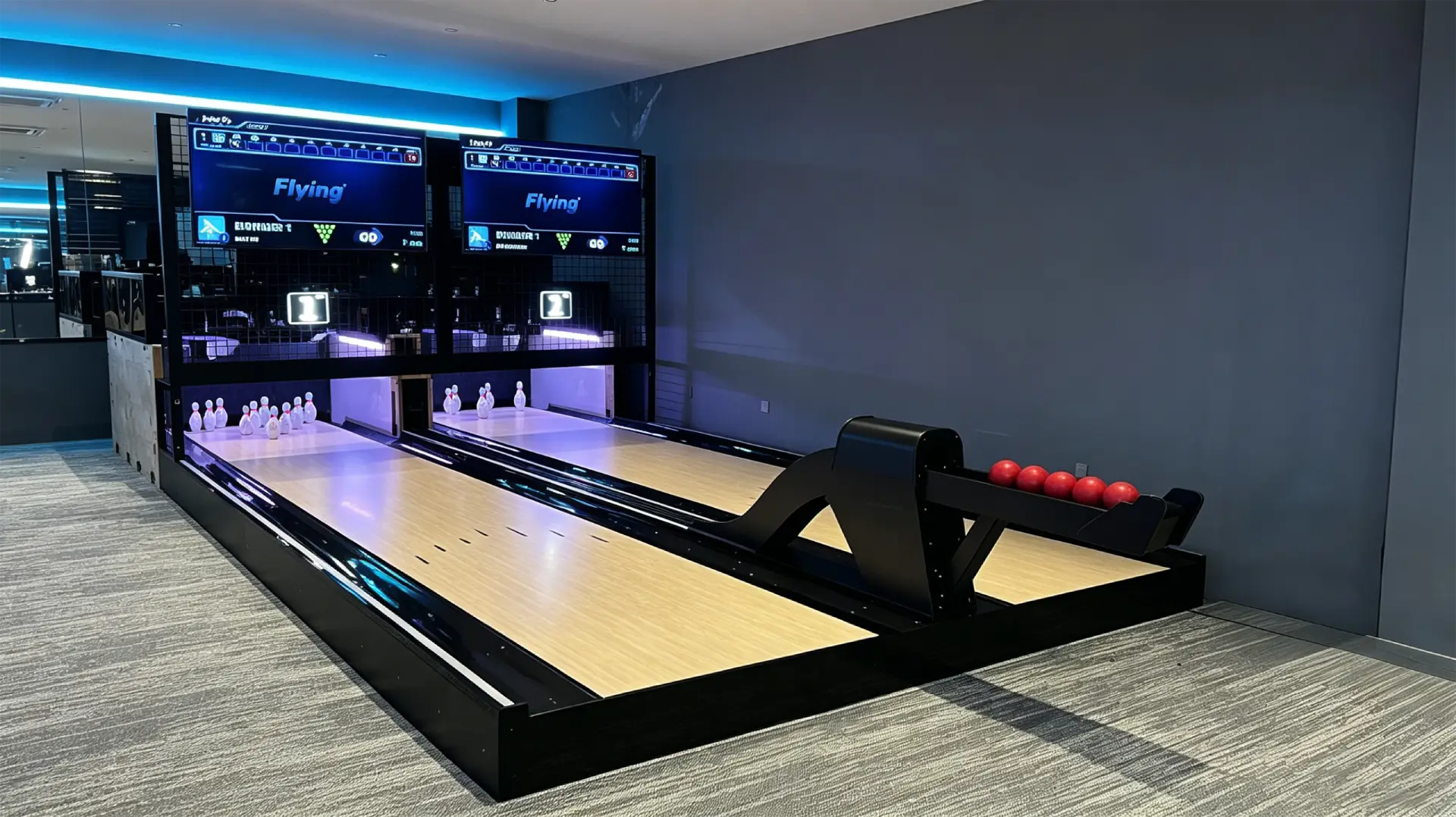
Flying Smart Duckpin Bowling Equipment for Commercial Venues
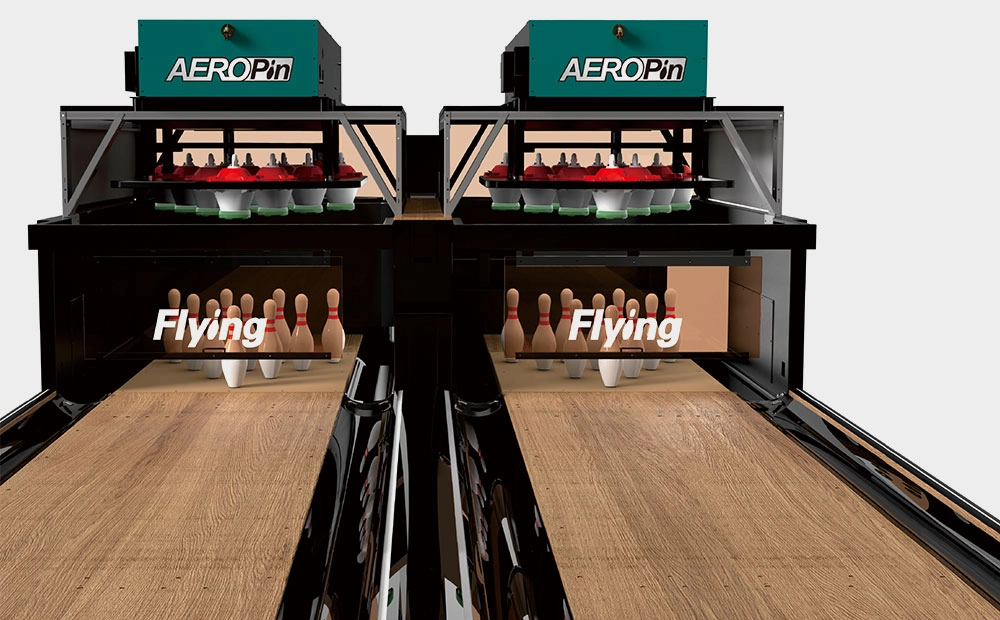
AEROPIN™ USBC-Certified String Pinsetter System
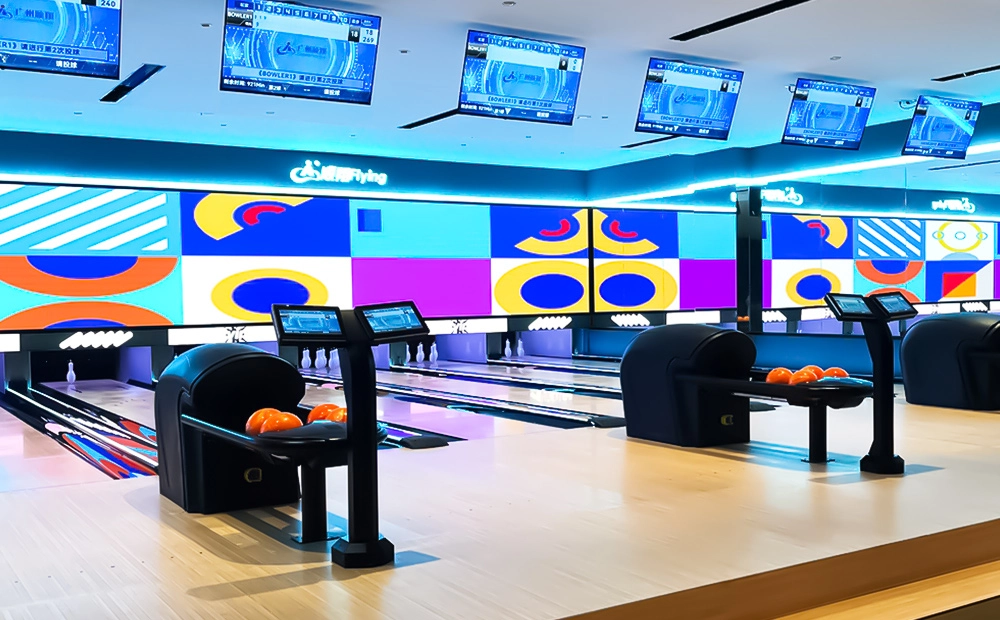
Medium Bowling Equipment for Compact Social Venues
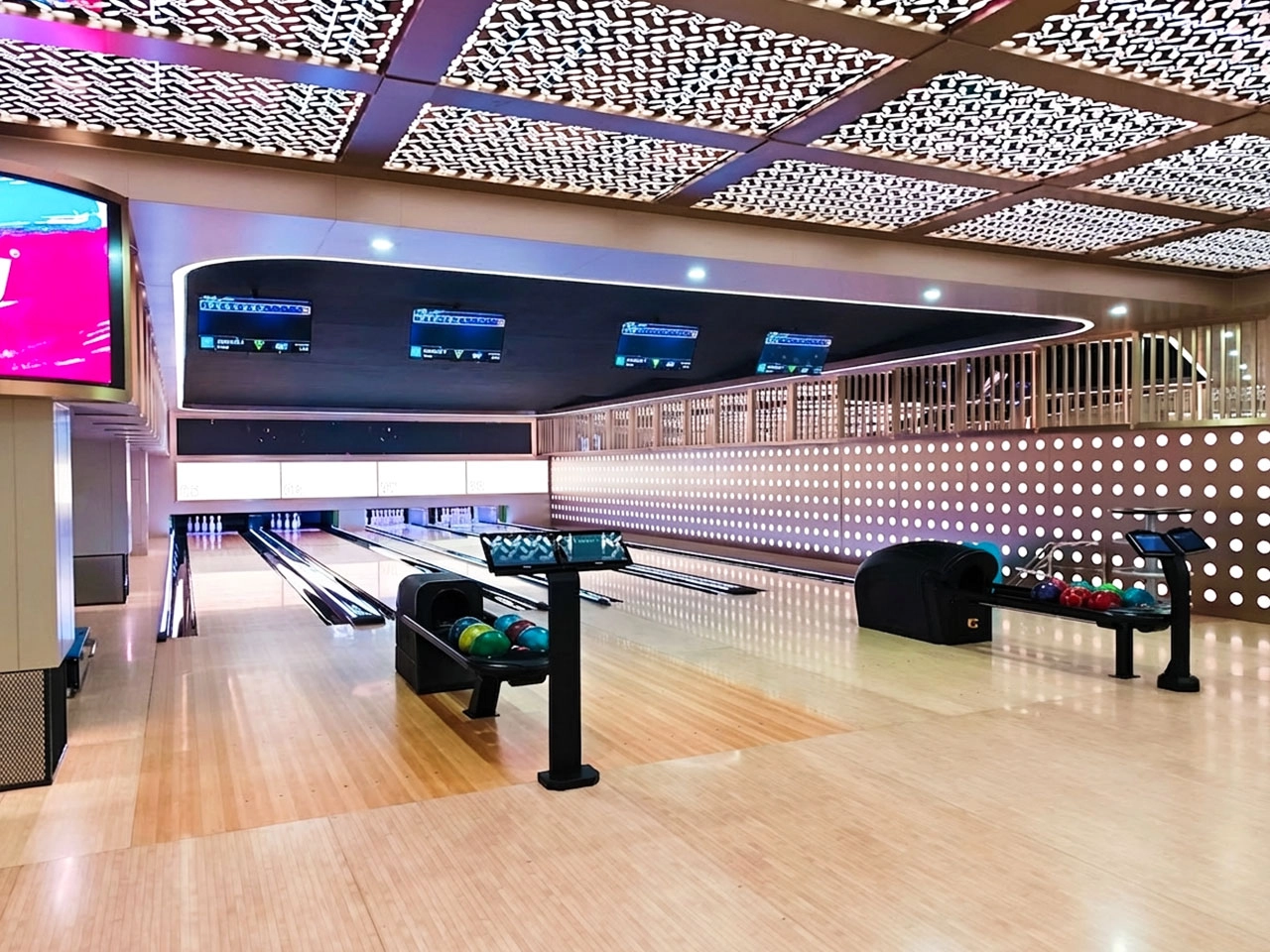
Complete Bowling Alley Equipment Package for Commercial Bowling Centers
You may also like
Build a commercial bowling venue with Flying’s complete string pinsetter bowling alley equipment package. The system includes the AEROPIN™ USBC-certified string pinsetter, customizable lanes, automatic scoring, ball return, lane lighting, pins, control hardware, and overseas installation support.
Designed for commercial bowling centers, family entertainment venues, hotels, resorts, bars, and premium private projects, this turnkey bowling system helps operators reduce sourcing complexity and prepare for reliable long-term operation.
Flying Smart Duckpin Bowling is a compact duckpin bowling equipment system designed for bars, family entertainment centers, hotels, resorts, cinemas, boutique bowling alleys, and social entertainment venues. With a standard 9.13m duckpin bowling lane, 1.25kg lightweight balls, automatic scoring, ball return, LED lighting, and a smart string pinsetter, it creates a fast-paced and easy-to-play bowling experience in a smaller footprint than traditional bowling.
The system is available as a turnkey duckpin bowling package, including lane equipment, a string pinsetter system, scoring hardware, control software, global shipping, installation guidance, and technical support.
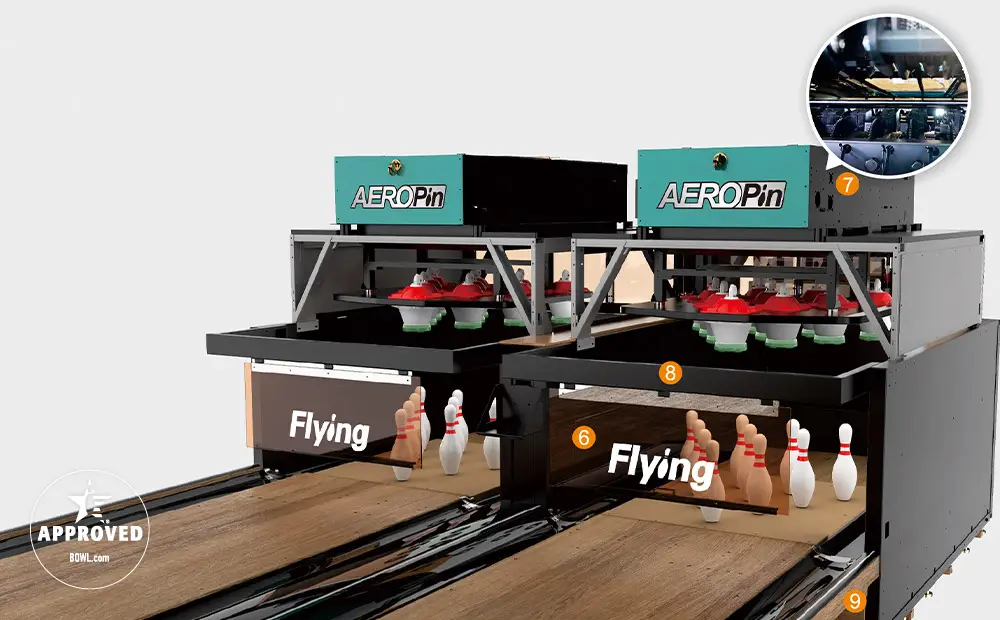
AEROPIN is Flying Bowling’s USBC-certified string pinsetter system for modern commercial bowling centers. Designed for fast pin setting, smooth ball return, low maintenance, and stable daily operation, it helps venue operators build league-ready and entertainment-focused bowling projects with confidence.
Flying Social Medium Bowling is a compact medium bowling equipment system designed for bars, cafes, family entertainment centers, community leisure venues, hotels, resorts, and small indoor entertainment spaces. With customizable lane lengths from 9.6m to 18m, small balls, lighter pins, string pinsetter technology, ball return, and automatic scoring, it creates an easy-to-play social bowling experience for players of different ages and skill levels.
Compared with full-size standard bowling, medium bowling requires less space and offers a more casual, interactive format. It is a practical choice for venues that want to add a bowling attraction without building a full commercial bowling alley.
Contact Flying
Start your bowling alley project
If you contact us now for more details, we can provide you with a custom bowling alley service. Our service team will get back to you within 24 hours normally!
© 2026 Flying BOWLING. Designed by gooeyun.
FOLLOW US:

Flying Bowling
Flying Bowling
Flyingbowling
Flyingbowling
Flyingbowling