


The latest trends for bowling string pinsetter in After 2026 | Flying Bowling Ultimate Insights
- Why the Bowling Industry Is Shifting Away from Traditional Free-Fall Pinsetters
- The Mechanical Limitations of Legacy Systems
- Economic Pressure and the Rise of Entertainment Bowling
- Comparative Overview: String Pinsetter vs. Free-Fall Pinsetter
- Key Technology Trends Shaping Bowling String Pinsetters After 2026
- Smart Automation and IoT Integration
- Energy Efficiency and Sustainable Design
- Modular Design for Faster Installation and Scalability
- Market Expansion and Global Demand for String Pinsetter Systems
- Emerging Markets Driving New Installations
- The Rise of Mini and Duckpin Bowling Formats
- Distributor Networks and Global Sales Infrastructure
- What Bowling Alley Owners Should Prioritize When Choosing a String Pinsetter After 2026
- Certification and Compliance Standards
- Total Cost of Ownership, Not Just Purchase Price
- After-Sales Support and Local Service Availability
- Conclusion
- Frequently Asked Questions (FAQ)
- What is a bowling string pinsetter and how does it work?
- Are string pinsetters approved for competitive bowling?
- How long do bowling string pinsetters last?
- What is the difference between mini bowling and standard bowling string pinsetters?
- How can I get a quote for a bowling string pinsetter system from Flying Bowling?
- Does Flying Bowling offer distributor opportunities?
Bowling string pinsetters are rapidly evolving beyond 2026, driven by smart technology integration, energy-saving designs, lower maintenance demands, and global market expansion. Leading manufacturers like Flying Bowling (established 2005, USBC-certified) are at the forefront of this shift, offering advanced string pinsetter systems for standard, mini, duckpin, and medium bowling formats. This article covers the key trends, technical improvements, and business opportunities shaping the future of bowling string pinsetter technology worldwide.
The Latest Trends for Bowling String Pinsetter After 2026 | Flying Bowling Ultimate Insights
The bowling industry is undergoing one of its most significant transformations in decades. At the center of this change is the bowling string pinsetter — a technology that has steadily replaced traditional free-fall pinsetters in venues ranging from large commercial bowling centers to compact entertainment spaces. As we move past 2026, the trajectory is clear: string pinsetter systems are becoming smarter, more efficient, and more accessible than ever before.
Whether you are a bowling alley owner planning a new build, an operator looking to upgrade aging equipment, or a distributor seeking the next growth opportunity, understanding where string pinsetter technology is headed will help you make better decisions. This guide breaks down the real trends, backed by industry data and hands-on expertise from Flying Bowling — a manufacturer with over 19 years of dedicated experience in bowling string pinsetter research and development.
Why the Bowling Industry Is Shifting Away from Traditional Free-Fall Pinsetters
The Mechanical Limitations of Legacy Systems
Traditional free-fall pinsetters, which have dominated bowling alleys since the 1950s, are mechanical marvels of their era — but they come with serious drawbacks in today's operating environment. These machines rely on complex mechanical sweeps, pin elevators, and turret mechanisms that require frequent maintenance, skilled technicians, and significant downtime. According to data referenced by the United States Bowling Congress (USBC), maintenance costs for traditional pinsetters can account for a substantial portion of a bowling center's annual operating budget.
In contrast, bowling string pinsetters use a simpler string-and-pulley mechanism to reset pins after each delivery. This dramatically reduces the number of moving parts, lowers mechanical failure rates, and cuts down on the need for specialized maintenance staff. For smaller venues and entertainment centers where hiring a full-time pinsetter mechanic is not practical, this difference is decisive.
Economic Pressure and the Rise of Entertainment Bowling
The post-2020 bowling landscape has seen a strong pivot toward entertainment bowling — venues that combine bowling with food, beverages, arcade games, and social experiences. These venues, often called "eatertainment" centers, prioritize low operational complexity and high guest experience. String pinsetter systems align perfectly with this model because they operate more quietly, reset faster, and require far less technical oversight.
According to the International Bowling Pro Shop and Instructors Association (IBPSIA), the global bowling industry has been experiencing steady growth in non-traditional formats, including mini bowling, duckpin bowling, and boutique lanes. All of these formats are almost exclusively served by string pinsetter technology. Flying Bowling has responded to this demand by developing dedicated product lines — including the FSMB (Medium Bowling), FCSB (Standard Bowling), FSDB (Duckpin Bowling), and FCMB (Mini Bowling) — each engineered for its specific lane format.
Comparative Overview: String Pinsetter vs. Free-Fall Pinsetter
| Feature | String Pinsetter | Free-Fall Pinsetter |
|---|---|---|
| Number of Moving Parts | Low | Very High |
| Maintenance Frequency | Low | High |
| Noise Level | Lower | Higher |
| Installation Complexity | Moderate | High |
| Suitable for Mini/Duckpin | Yes | Limited |
| Average Lifespan (with proper care) | 10–15+ years | 10–20 years (with heavy maintenance) |
| Operating Cost | Lower | Higher |
| USBC Certified Options Available | Yes (e.g., Flying Bowling) | Yes |
Key Technology Trends Shaping Bowling String Pinsetters After 2026
Smart Automation and IoT Integration
One of the most significant developments in bowling string pinsetter technology is the integration of smart automation and Internet of Things (IoT) connectivity. After 2026, leading manufacturers are embedding sensors and microcontrollers directly into pinsetter units, enabling real-time monitoring of machine status, pin reset accuracy, string tension, and motor performance.
This means a bowling alley manager can receive an alert on a tablet or smartphone when a string shows signs of wear — before it breaks and causes lane downtime. Predictive maintenance, powered by machine learning algorithms, is moving from concept to commercial reality. This aligns with broader industrial automation trends described in ISO standards for automated machinery performance monitoring.
Flying Bowling has been investing in control system upgrades that allow remote diagnostics and software updates for their string pinsetter units. This reduces the need for on-site technician visits and gives operators greater control over their equipment fleet — a critical advantage for multi-lane venues or franchise bowling operations managing multiple locations.
Energy Efficiency and Sustainable Design
Energy consumption is a growing concern for bowling venue operators, particularly in regions with high electricity costs. Traditional free-fall pinsetters run large motors continuously during operating hours. Modern string pinsetter systems are being redesigned with variable-frequency drives (VFDs) and energy-efficient motors that only draw full power during the pin reset cycle.
Post-2026 designs are also incorporating regenerative braking systems — technology borrowed from electric vehicle engineering — that recover energy during the deceleration phase of pin reset. While the energy savings per lane may seem modest, across a 20-lane or 40-lane facility operating 12 hours a day, the cumulative reduction in electricity costs is meaningful.
Sustainable materials are also entering the picture. Pin strings made from high-durability synthetic fibers now last significantly longer than earlier nylon versions, reducing replacement frequency and waste. Flying Bowling's engineering team has focused on extending component lifespan as a core design principle, which benefits both operators and the environment.
Modular Design for Faster Installation and Scalability
After 2026, modular pinsetter architecture is becoming a standard expectation rather than a premium feature. Modular string pinsetter units can be installed lane by lane, allowing a venue to open in phases rather than waiting for a full facility build-out. This is especially valuable for entrepreneurs entering the bowling business with limited initial capital.
Flying Bowling's one-stop customized service model is built around this flexibility. With over 3,000 successfully completed bowling alley projects worldwide and a 10,000+ square-meter manufacturing facility, Flying Bowling can design, manufacture, ship, and install a complete string pinsetter system — whether for a 4-lane boutique venue or a 40-lane commercial center — with the same level of technical support.
Market Expansion and Global Demand for String Pinsetter Systems
Emerging Markets Driving New Installations
While North America and Europe have historically been the dominant markets for bowling equipment, the fastest growth in new bowling alley installations after 2026 is coming from Asia, the Middle East, Southeast Asia, and Latin America. These regions are experiencing rising middle-class populations, increased leisure spending, and a growing appetite for family entertainment centers.
String pinsetter technology is particularly well-suited to these emerging markets because it offers a lower total cost of ownership compared to traditional systems. Venues in markets where trained pinsetter mechanics are scarce benefit enormously from the reduced maintenance demands of string-based systems. Flying Bowling has established branches in the United States, South America, Europe, and the Middle East specifically to provide local sales, installation, and after-sales support — ensuring that customers in these high-growth regions receive timely service without relying on long-distance logistics.
The Rise of Mini and Duckpin Bowling Formats
Mini bowling and duckpin bowling are two of the fastest-growing sub-formats in the global bowling industry. Mini bowling lanes, typically ranging from 40 to 60 feet in length (compared to the standard 60 feet for tenpin), can be installed in spaces that would never accommodate a traditional bowling center — hotel lobbies, shopping malls, cruise ships, and family entertainment centers.
According to information from the Wikipedia entry on Duckpin Bowling, duckpin bowling uses smaller balls and shorter, squatter pins, making it appealing to younger players and casual bowlers who find traditional tenpin bowling physically demanding. Both mini and duckpin formats rely almost exclusively on string pinsetter technology, as free-fall systems are not practically adaptable to these configurations.
Flying Bowling's FCMB (Mini Bowling) and FSDB (Duckpin Bowling) product lines are purpose-built for these formats, with string pinsetter mechanisms calibrated for the specific pin weights, lane dimensions, and ball return speeds of each game type. This specialization gives Flying Bowling a competitive edge in the growing entertainment bowling segment.
Distributor Networks and Global Sales Infrastructure
One of the clearest trends after 2026 is the formalization of global distributor networks for bowling string pinsetter systems. As demand grows in new markets, manufacturers that have invested in regional distribution infrastructure will have a significant advantage over those relying solely on direct export sales.
Flying Bowling actively recruits distributors from global markets to expand the reach of its bowling equipment. This model benefits distributors by providing access to USBC-certified, competitively priced equipment with full technical training and after-sales support. It benefits end customers by ensuring that local expertise is available for installation, calibration, and ongoing maintenance of their string pinsetter systems.
| Flying Bowling Product Line | Format | Typical Venue Type | USBC Certified |
|---|---|---|---|
| FCSB (Standard Bowling) | Tenpin / Standard | Commercial bowling centers | Yes |
| FSMB (Medium Bowling) | Medium lane | Multi-use entertainment venues | Yes |
| FSDB (Duckpin Bowling) | Duckpin | Family centers, boutique venues | Yes |
| FCMB (Mini Bowling) | Mini lane | Hotels, malls, cruise ships | Yes |
What Bowling Alley Owners Should Prioritize When Choosing a String Pinsetter After 2026
Certification and Compliance Standards
Not all string pinsetter systems are created equal. For venues that intend to host sanctioned league play or competitive events, USBC certification is a non-negotiable requirement. The USBC Equipment Specifications define the technical standards that bowling equipment must meet to be approved for use in certified competition. Flying Bowling's entire product range carries official USBC certification, ensuring that customers can host everything from casual open play to formal league competitions without equipment compliance concerns.
Beyond USBC certification, buyers should also evaluate whether a manufacturer complies with relevant electrical safety standards (such as IEC or UL certifications for motors and control panels) and whether their equipment is compatible with local voltage and frequency specifications — an important consideration for international buyers.
Total Cost of Ownership, Not Just Purchase Price
A common mistake when evaluating bowling string pinsetter systems is focusing too heavily on the initial purchase price. The true cost of a pinsetter system includes installation, training, spare parts availability, string replacement frequency, motor and sensor maintenance, and the cost of downtime when repairs are needed.
Flying Bowling's equipment is designed to offer European and American quality standards at a price point that is genuinely competitive — not by cutting corners on components, but by leveraging efficient manufacturing processes in a 10,000+ square-meter facility that has been optimized over nearly two decades. For buyers in emerging markets especially, this combination of quality and price creates a compelling value proposition that supports faster return on investment.
After-Sales Support and Local Service Availability
The best string pinsetter system in the world is only as good as the support behind it. After 2026, buyers are increasingly demanding local after-sales service rather than relying on remote troubleshooting or waiting weeks for replacement parts to arrive from overseas. Flying Bowling's regional branch network — covering the United States, South America, Europe, the Middle East, and other key regions — is designed to meet this expectation, providing on-the-ground installation teams and service technicians who can respond quickly to customer needs.
Conclusion
The bowling string pinsetter is no longer a niche alternative to traditional systems — it is rapidly becoming the industry standard for new bowling alley installations worldwide. After 2026, the trends are clear: smarter automation, energy-efficient design, modular scalability, and global market expansion are all accelerating the adoption of string pinsetter technology across every bowling format, from full-size commercial centers to compact entertainment venues.
For bowling alley owners, operators, and investors, the key takeaways are straightforward. Choose equipment that is USBC certified, backed by a manufacturer with a proven track record, and supported by a local service network. Evaluate total cost of ownership rather than purchase price alone. And pay attention to the emerging formats — mini bowling and duckpin bowling are growth segments that string pinsetter technology is uniquely positioned to serve.
Flying Bowling has been at the forefront of bowling string pinsetter innovation since 2005, and with over 3,000 successful projects completed across more than 50 countries, the company brings both the technical expertise and the global infrastructure to support your bowling alley project — whatever its size, format, or location.
Frequently Asked Questions (FAQ)
What is a bowling string pinsetter and how does it work?
A bowling string pinsetter is a pin-setting machine that uses strings attached to the top of each pin to lift and reset them after each delivery. When the ball knocks down pins, the strings hold the fallen pins so the machine can identify which ones are down, clear the lane for the second ball, and then reset the remaining pins. This mechanism is simpler and requires less maintenance than traditional free-fall pinsetter systems.
Are string pinsetters approved for competitive bowling?
Yes, string pinsetters can be USBC certified for use in sanctioned competition. Flying Bowling's full range of string pinsetter systems carries official USBC certification, making them suitable for both casual play and formal league events.
How long do bowling string pinsetters last?
With proper maintenance, a quality bowling string pinsetter system can last 10 to 15 years or more. Key maintenance tasks include regular string inspection and replacement, motor servicing, and periodic calibration of the pin reset mechanism. Flying Bowling designs its systems for long service life and provides comprehensive maintenance guidelines to all customers.
What is the difference between mini bowling and standard bowling string pinsetters?
Mini bowling string pinsetters are scaled for shorter lanes (typically 40–60 feet) and use lighter pins and smaller balls. The string tension, motor power, and reset timing are all calibrated differently from standard tenpin systems. Flying Bowling offers dedicated product lines for each format — the FCMB for mini bowling and the FCSB for standard tenpin bowling — ensuring optimal performance in each application.
How can I get a quote for a bowling string pinsetter system from Flying Bowling?
You can contact Flying Bowling directly by visiting www.flyingbowling.com or by emailing jackson@flyingbowling.com. Flying Bowling provides one-stop customized services for bowling venues of all sizes and formats, including equipment supply, lane design, installation, and after-sales support.
Does Flying Bowling offer distributor opportunities?
Yes. Flying Bowling actively recruits distributors from global markets. If you are interested in representing Flying Bowling's bowling string pinsetter systems and related equipment in your region, please reach out via the contact details above to discuss partnership opportunities.
Ready to upgrade your bowling venue with the latest string pinsetter technology?
Contact Flying Bowling today at jackson@flyingbowling.com or visit www.flyingbowling.com to get a customized quote and expert guidance for your project.
Recommended products
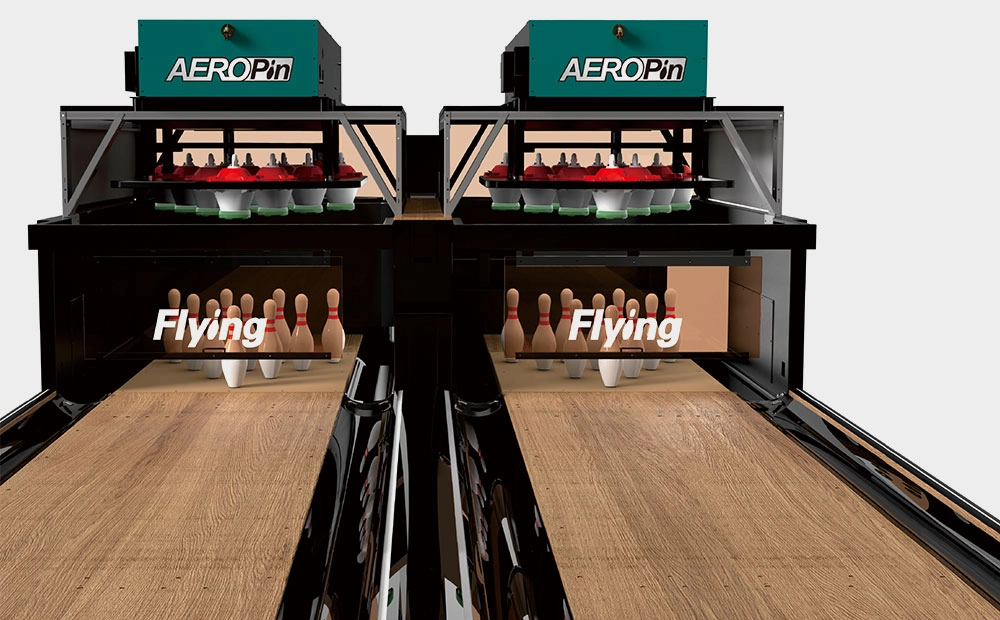
USBC-Certified AEROPIN String Pinsetter System
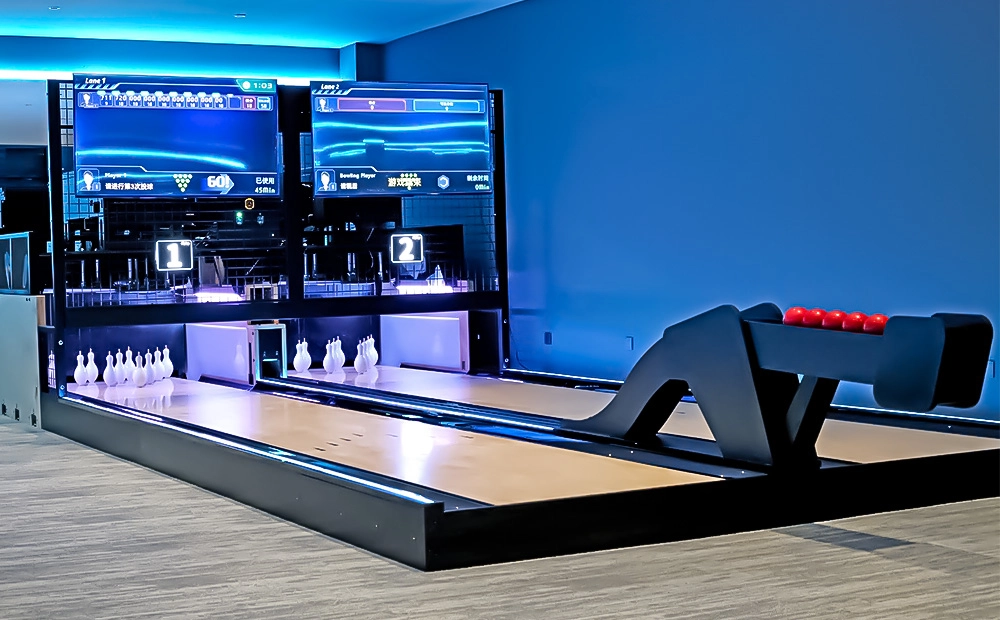
Flying Smart Duckpin Bowling Equipment and Lane System for Commercial Venues
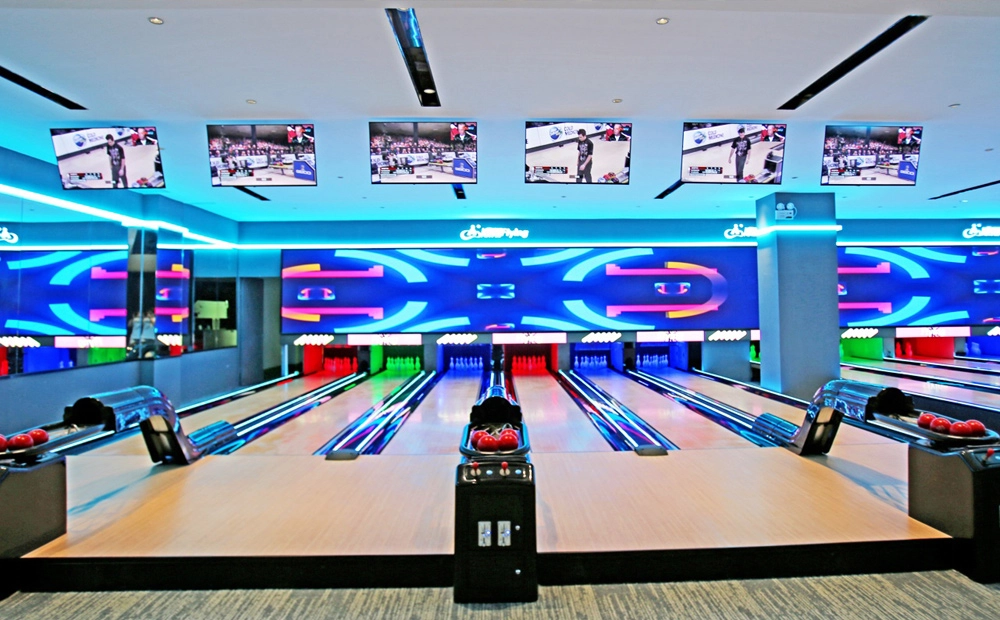
Mini Bowling Equipment for Kids and Family Entertainment Venues
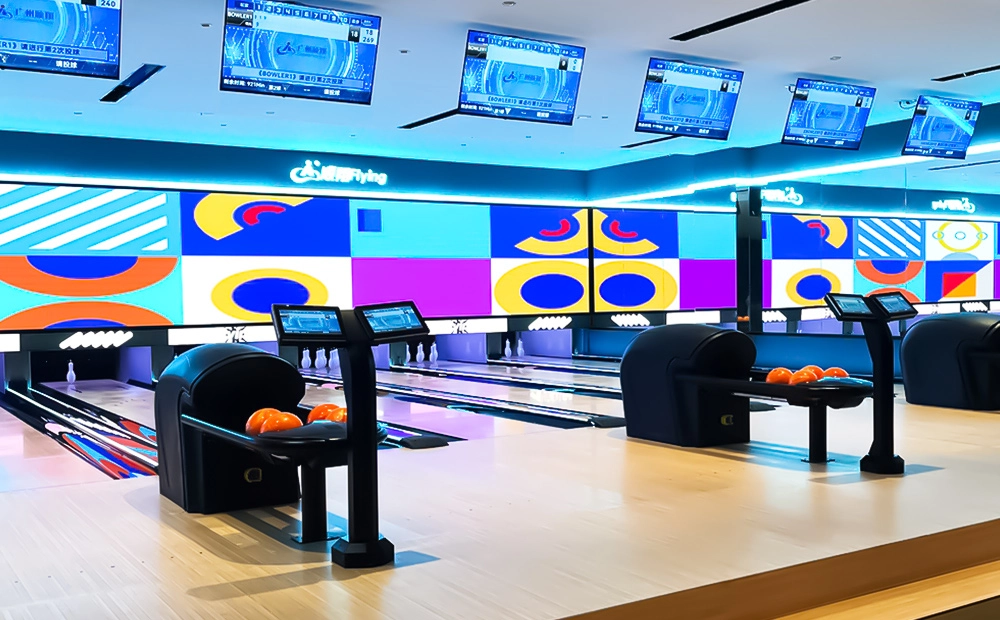
Medium Bowling Equipment for Social Entertainment Venues
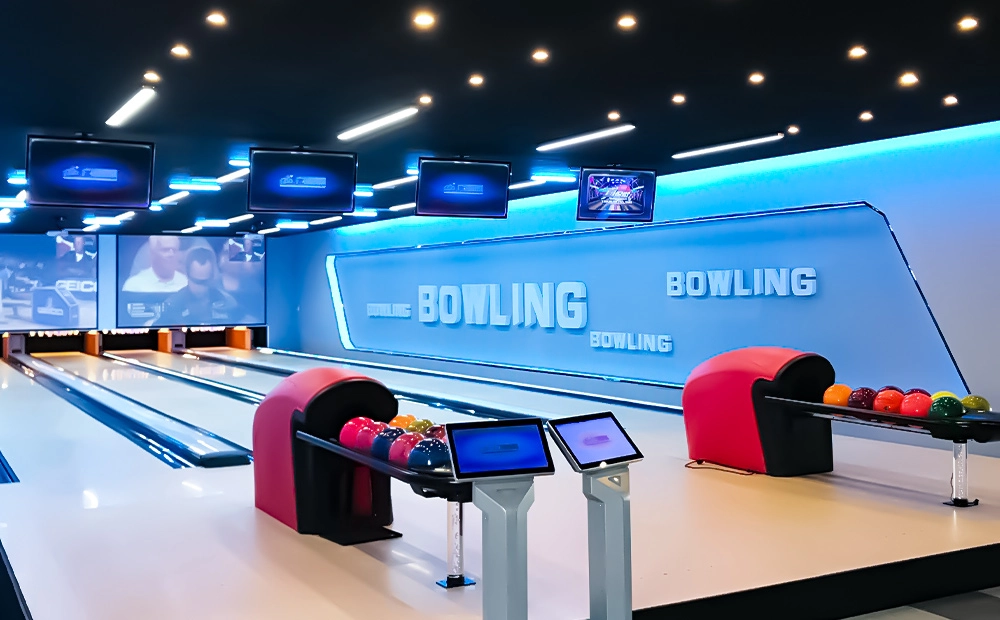
Complete String Pinsetter Bowling Alley Equipment System
You may also like
Flying Smart Duckpin Bowling (FSDB) innovative design, standard 9.2-meter short lane, can be shortened in length, compact layout suitable for small spaces. The game rules are simple but challenging, attracting players of different ages to actively participate.
Suitable for social entertainment venues such as bars, billiard halls, and game centers, it not only enhances interactivity but also increases the popularity and consumption frequency of the venue. The fun and competitive nature of FSDB will make it a new focus of social activities.
Flying Classic Standard Bowling (FCSB) is designed according to international competition standards and equipped with an accurate automatic scoring system, providing bowling enthusiasts with a pure professional experience. Whether it is for competitions or leisure entertainment, FCSB can meet high-level needs.
Suitable for family entertainment centers, luxury resorts, private villas, or clubs, it is an ideal choice for customers who pursue high-end quality and professional experience. Its classic design and excellent performance will add lasting appeal to the venue.
Flying Cute Mini Bowling (FCMB) is a mini bowling experience designed for children and families. The lane length is fixed at 12 meters, equipped with lightweight balls without finger holes (only 1.25kg) and small pins, specially designed for children and family fun.
It can not only help children feel the fun of bowling, but also stimulate their interest and competitive consciousness. Suitable for children's playgrounds, theme parks and parent-child centers, it is the best choice for places focusing on the children's market.
Flying Social Medium Bowling (FSMB) is tailored for small venues, with flexible lane lengths (customizable from 9.6 meters to 18 meters), a small ball design suitable for players of all ages, and light pins that are easier to knock down, increasing participation and fun.
Whether it is a gathering of friends or a casual social, FSMB can easily create a relaxed and pleasant atmosphere. Its efficient space-utilization design is particularly suitable for cafes, bars and community entertainment venues, allowing people to fall in love with bowling in a relaxed interaction.
Contact Flying
Start your bowling alley project
If you contact us now for more details, we can provide you with a custom bowling alley service. Our service team will get back to you within 24 hours normally!
© 2026 Flying BOWLING. Designed by gooeyun.
FOLLOW US:
Flying Bowling
Flying Bowling
Flyingbowling
Flyingbowling