

Bowling Pins Guide: Numbers, Setup, Size, Weight, Materials & Lifespan
- Quick Answer: What Should You Know About Bowling Pins?
- Key Bowling Pin Facts
- 1. How Many Bowling Pins Are There?
- 2. How Are Bowling Pins Numbered and Set Up?
- 3. Standard Bowling Pin Size and Weight
- 4. Bowling Pin Anatomy
- 5. What Are Bowling Pins Made Of?
- 6. What Are the Different Types of Bowling Pins?
- 7. How Does Bowling Pin Action Work?
- 8. How Long Do Bowling Pins Last?
- 9. Bowling Pin Maintenance and Replacement
- 10. String Pinsetter vs Free-Fall: Does the Bowling Pin Change?
- 11. How Venue Operators Should Choose Bowling Pins
- 12. Bowling Pin Procurement Checklist
- 13. Frequently Asked Questions
- Planning Bowling Equipment for a Venue?
Quick Answer: What Should You Know About Bowling Pins?
Standard tenpin bowling uses 10 pins arranged in a four-row triangle. A regulation tenpin has a target height of 15 inches and must weigh between 3 lb 6 oz and 3 lb 10 oz under USBC specifications.
The pins are numbered 1 through 10 from front to back, beginning with the No. 1 head pin. Pin dimensions, construction, condition and pinsetter compatibility all matter to consistent operation.
This guide focuses on pin count, numbering, setup, dimensions, materials, lifespan, maintenance and string-versus-free-fall compatibility. Last reviewed: August 2026.
Key Bowling Pin Facts
- Tenpin bowling uses 10 pins arranged 1–2–3–4 in a triangle.
- The No. 1 pin is the head pin; the No. 7 and No. 10 pins are the corner pins.
- A regulation tenpin has a target height of 15 inches.
- USBC specifies a tenpin weight range of 3 lb 6 oz to 3 lb 10 oz.
- Adjacent pin positions in a standard tenpin rack are spaced 12 inches center-to-center.
- There is no universal calendar-based replacement interval for commercial bowling pins.
- Venue operators should confirm pinsetter compatibility, approval requirements and replacement inventory before purchasing pins.
1. How Many Bowling Pins Are There?
In standard tenpin bowling, there are 10 bowling pins.
They are arranged in four rows:
- First row: 1 pin
- Second row: 2 pins
- Third row: 3 pins
- Fourth row: 4 pins
Other bowling formats use different pin designs and, in some cases, different pin counts. For standard tenpin bowling, the answer is always 10.
2. How Are Bowling Pins Numbered and Set Up?
Bowling pins are numbered 1 through 10, beginning with the head pin at the front and continuing from front to back.
Tenpin Bowling Pin Numbering Diagram
| 1 | ||||||
| 2 | 3 | |||||
| 4 | 5 | 6 | ||||
| 7 | 8 | 9 | 10 |
No. 1 Pin — Head Pin
The No. 1 pin sits at the front of the rack and is called the head pin.
Pins 2 and 3
The second row contains the No. 2 pin on the left and the No. 3 pin on the right.
Pins 7 and 10
The No. 7 and No. 10 pins are the two corner pins in the back row.
How Far Apart Are Bowling Pins?
In a standard tenpin rack, adjacent pin positions are spaced 12 inches center-to-center. Commercial centres rely on the pin deck, pin spots and pinsetter to place pins consistently.
3. Standard Bowling Pin Size and Weight
For regulation tenpin bowling, pin dimensions and weight are controlled rather than left to manufacturer preference.
| Specification | Regulation Tenpin Reference |
|---|---|
| Target height | 15.000 in |
| Permitted height range | 14.969–15.031 in |
| Target weight | 3 lb 8 oz |
| Permitted weight range | 3 lb 6 oz–3 lb 10 oz |
USBC approval evaluates more than height and weight. Relevant tests also include measurements related to balance, center of gravity and radius of gyration.
For certified play, use the applicable current equipment specifications and approved-product requirements rather than relying on appearance alone.
4. Bowling Pin Anatomy
Head
The rounded top of the pin is the head.
Neck
The narrow section below the head is the neck, an area exposed to repeated pin-to-pin impacts.
Belly
The widest portion is the belly. Its dimensions and mass distribution contribute to balance and pin reaction.
Base
The base is the contact area that sits on the pin deck. Excessive base damage can affect consistent standing.
Outer Coating
Approved bowling pins use protective outer materials designed for repeated impact and consistent surface characteristics.
5. What Are Bowling Pins Made Of?
Traditional bowling pins use a wood core with a protective exterior coating, while approved synthetic bowling pin designs also exist.
Manufacturers must control characteristics such as overall weight, dimensions, balance and durability rather than simply reproducing the familiar pin shape.
Some approved wood-core pin designs may use controlled internal voids as part of weight management. That does not mean every bowling pin is hollow or that all pins share the same internal construction.
For procurement, the practical question is whether the pin meets the required specification and is compatible with the intended bowling format and pinsetting system.
6. What Are the Different Types of Bowling Pins?
Bowling is played in several formats, and the pins are not identical across every format.
| Type | Typical Pin Count | Main Difference |
|---|---|---|
| Tenpin | 10 | Standard full-size tenpin format |
| Duckpin | 10 | Shorter pin and different game equipment |
| Candlepin | 10 | Tall, narrow pin profile |
| Five-pin | 5 | Separate five-pin game format |
For detailed Tenpin, Duckpin, Candlepin and Mini comparisons, read the Bowling Pin Types Guide.
7. How Does Bowling Pin Action Work?
Pin action describes what happens after the bowling ball contacts the rack and pins begin interacting with one another.
Pin action can be influenced by:
- Ball entry path
- Ball speed
- Ball rotation
- Entry angle
- Pin-to-pin collisions
- Pin condition
- Pinsetter environment
For a right-handed bowler, the conventional strike pocket is between the No. 1 and No. 3 pins. For a left-handed bowler, it is between the No. 1 and No. 2 pins.
8. How Long Do Bowling Pins Last?
There is no universal replacement interval for commercial bowling pins.
Service life depends on bowling volume, pin construction, pinsetter type, rotation practices, maintenance procedures, physical impact damage and the requirements of recreational or certified play.
Operators should inspect for:
- Cracks or chipped coating
- Neck or base damage
- Excessive surface wear
- Pins that no longer stand consistently
- Noticeably inconsistent pin reaction within the same set
The appropriate replacement decision should be based on actual condition, manufacturer guidance and applicable equipment requirements rather than a fixed calendar age.
9. Bowling Pin Maintenance and Replacement
Routine Inspection
Check surface coating, head and neck condition, belly damage, base condition, standing stability and consistency across the working set.
Cleaning
Use cleaning methods approved by the pin manufacturer rather than assuming that a general-purpose solvent is suitable for every coating.
Replacement
Remove a pin from service when damage, instability, inconsistent operation or applicable specification requirements make continued use unsuitable.
10. String Pinsetter vs Free-Fall: Does the Bowling Pin Change?
Free-fall and string pinsetters handle pins differently. A free-fall machine resets pins mechanically without strings attached to the top of each pin, while a string pinsetter raises and resets pins using attached strings.
Operators should use pins and associated hardware approved or specified for the selected machine rather than assuming that any pin can be fitted to any pinsetter.
USBC's certification specification for certified string pinsetters includes a minimum string length of 54 inches. USBC later reported no statistically significant difference in scoring pace between USBC-certified string pinsetters and traditional free-fall machines in its controlled bowler study.
That conclusion applies to USBC-certified string pinsetters, not automatically to older or uncertified string systems.
For equipment-cost and supplier-comparison questions, read the String Pinsetter Cost Guide.
11. How Venue Operators Should Choose Bowling Pins
A bowling centre should not purchase replacement pins based on price alone.
Confirm the Bowling Format
Identify whether the venue operates standard tenpin, duckpin, mini bowling or another format.
Confirm Pinsetter Compatibility
Provide the supplier with the pinsetter manufacturer, model or system type, free-fall or string configuration, current pin specification and whether the venue is intended for entertainment or certified competition.
Confirm Approval Requirements
Where competition certification matters, verify the applicable governing-body requirements and the approval status of the pins and pinsetter configuration.
Plan Replacement Inventory
Ask how many complete sets and replacement pins should be kept in stock based on lane quantity, operating volume and supplier availability.
For broader project budgeting, review the Bowling Equipment Cost Guide.
12. Bowling Pin Procurement Checklist
| Category | What to Confirm |
|---|---|
| Bowling format | Tenpin, duckpin, mini or another format; number of lanes; entertainment or competition use |
| Pin specification | Dimensions, weight range, construction, approval requirements and pinsetter compatibility |
| Operating requirements | Expected volume, inspection process, cleaning, rotation and replacement criteria |
| Pinsetter | Free-fall or string, manufacturer, model and certification status where applicable |
| Procurement | Quantity, spare quantity, packaging, shipping, replacement availability and written commercial terms |
Specific price, MOQ, delivery time, warranty and spare-part commitments should be confirmed in the supplier's written quotation rather than assumed from general product information.
13. Frequently Asked Questions
How many bowling pins are there?
Standard tenpin bowling uses 10 pins arranged in four rows containing 1, 2, 3 and 4 pins.
How are bowling pins numbered?
Tenpin bowling pins are numbered 1 through 10, starting with the No. 1 head pin at the front and continuing from front to back through the triangular rack.
How tall is a standard bowling pin?
A regulation tenpin has a target height of 15 inches, with a small permitted manufacturing tolerance under USBC specifications.
How much does a bowling pin weigh?
A regulation tenpin must weigh between 3 lb 6 oz and 3 lb 10 oz under USBC specifications.
What are bowling pins made of?
Traditional bowling pins use a wood core with a protective exterior coating. Approved synthetic bowling pin designs also exist.
How long do bowling pins last?
There is no universal replacement interval. Pin life depends on bowling volume, construction, pinsetter type, maintenance, rotation practices and physical condition. Commercial operators should inspect the actual set and follow manufacturer guidance rather than rely on one fixed lifespan.
What is the No. 1 bowling pin called?
The No. 1 pin at the front of a tenpin rack is called the head pin.
Are string pinsetters different from free-fall pinsetters?
Yes. String machines reset pins using attached strings, while free-fall machines use a different mechanical handling system. USBC research found no statistically significant scoring-pace difference between USBC-certified string pinsetters and traditional free-fall machines in its controlled comparison.
Planning Bowling Equipment for a Venue?
Before selecting pins or pinsetting equipment, define the bowling format, lane quantity, pinsetter type, competition or entertainment use, maintenance requirements and spare-parts strategy.
Recommended products
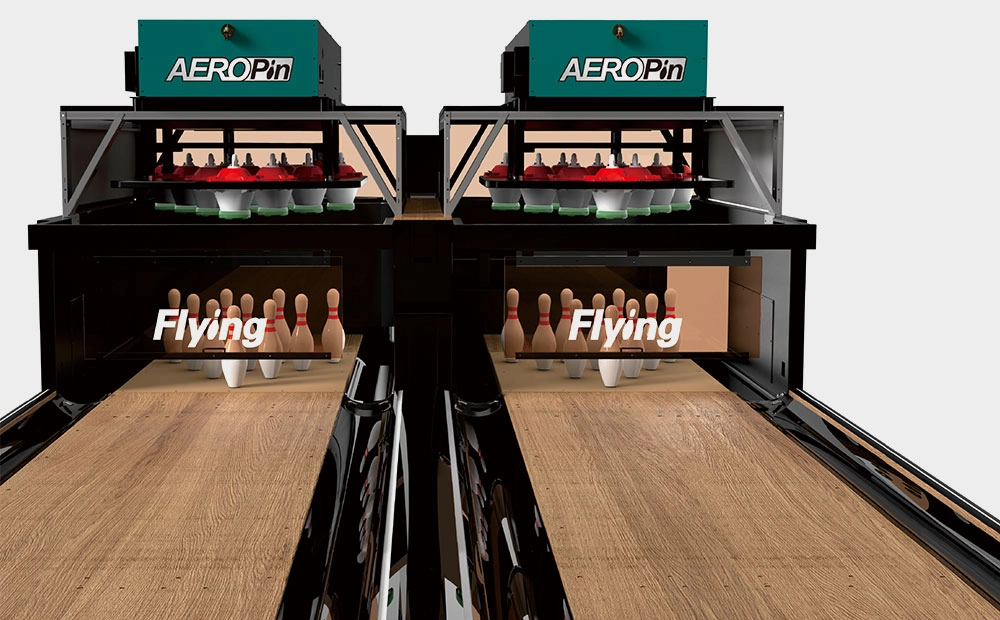
AEROPIN™ USBC-Certified String Pinsetter System
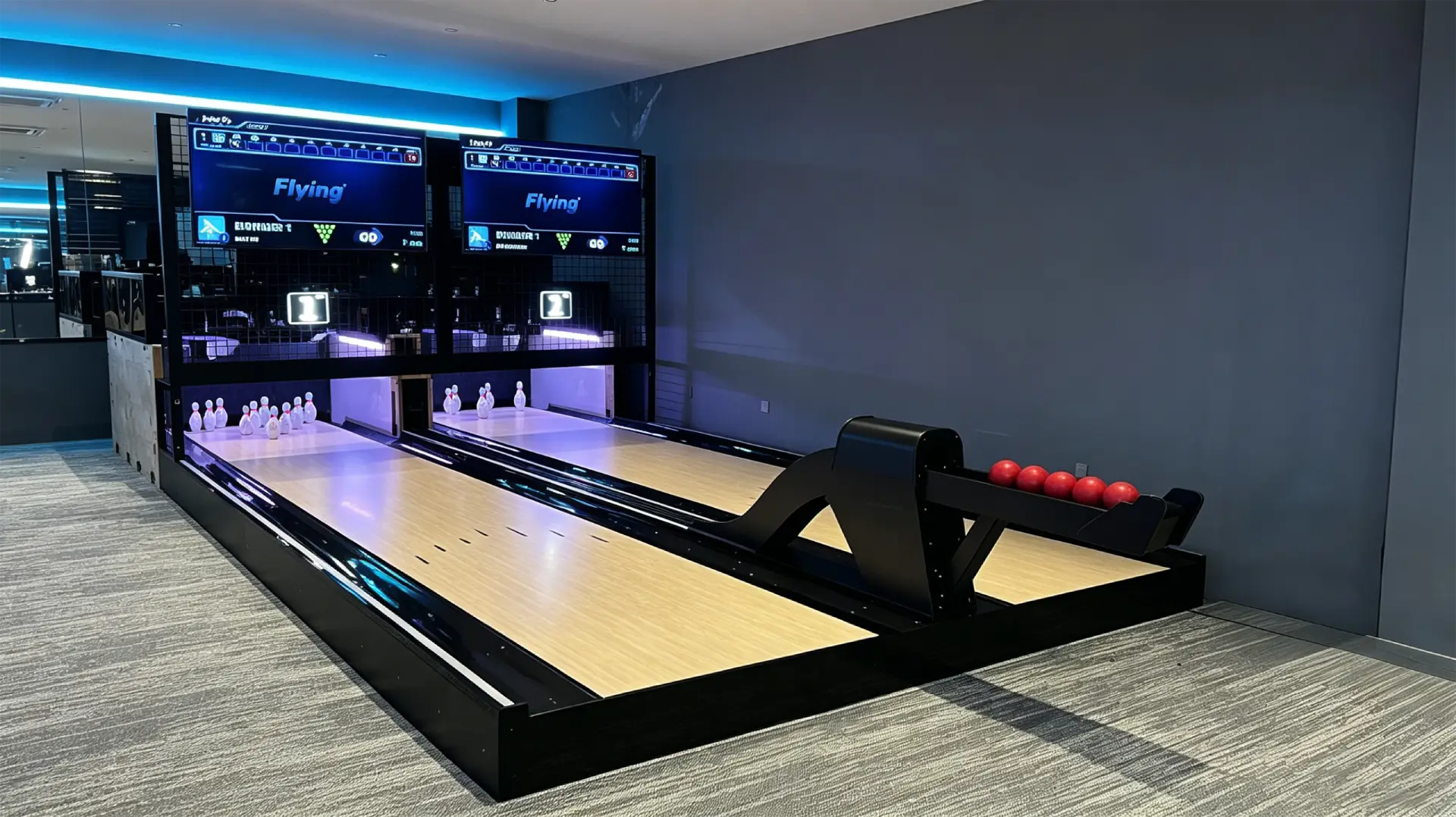
Flying Smart Duckpin Bowling Equipment for Commercial Venues
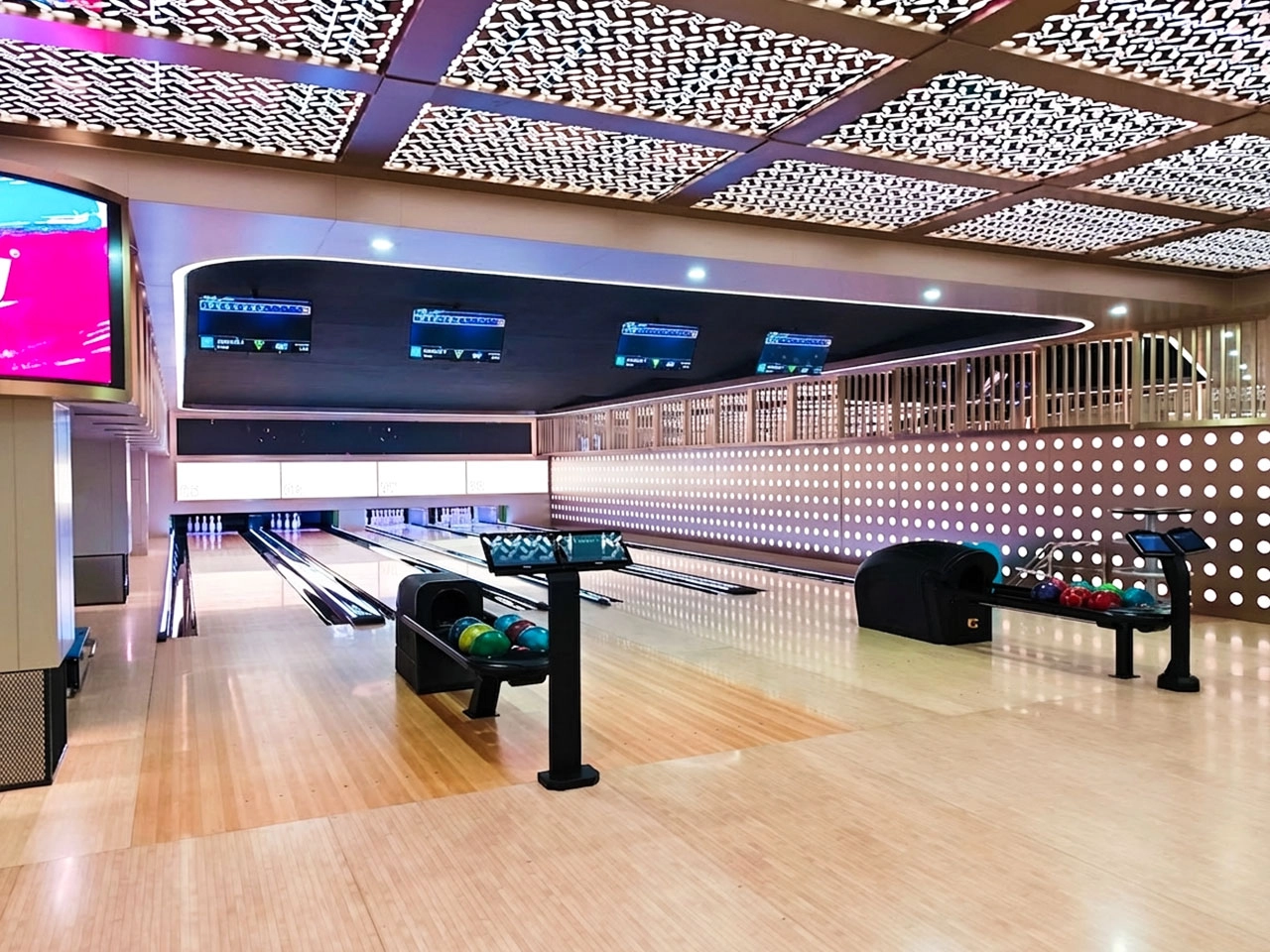
Complete Bowling Alley Equipment Package for Commercial Bowling Centers
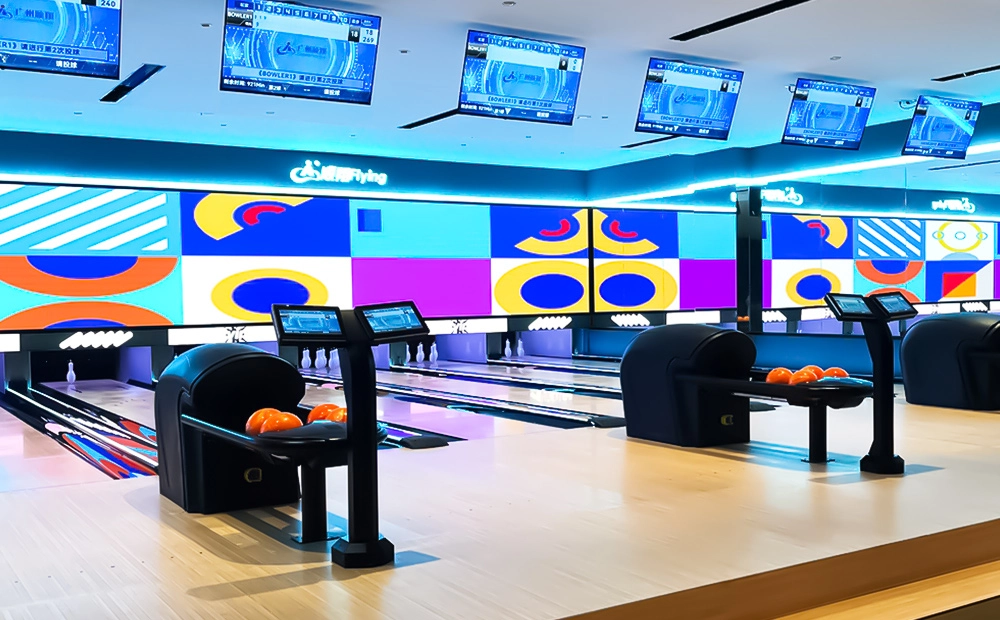
Medium Bowling Equipment for Compact Social Venues
You may also like
Build a commercial bowling venue with Flying’s complete string pinsetter bowling alley equipment package. The system includes the AEROPIN™ USBC-certified string pinsetter, customizable lanes, automatic scoring, ball return, lane lighting, pins, control hardware, and overseas installation support.
Designed for commercial bowling centers, family entertainment venues, hotels, resorts, bars, and premium private projects, this turnkey bowling system helps operators reduce sourcing complexity and prepare for reliable long-term operation.
Flying Smart Duckpin Bowling is a compact duckpin bowling equipment system designed for bars, family entertainment centers, hotels, resorts, cinemas, boutique bowling alleys, and social entertainment venues. With a standard 9.13m duckpin bowling lane, 1.25kg lightweight balls, automatic scoring, ball return, LED lighting, and a smart string pinsetter, it creates a fast-paced and easy-to-play bowling experience in a smaller footprint than traditional bowling.
The system is available as a turnkey duckpin bowling package, including lane equipment, a string pinsetter system, scoring hardware, control software, global shipping, installation guidance, and technical support.
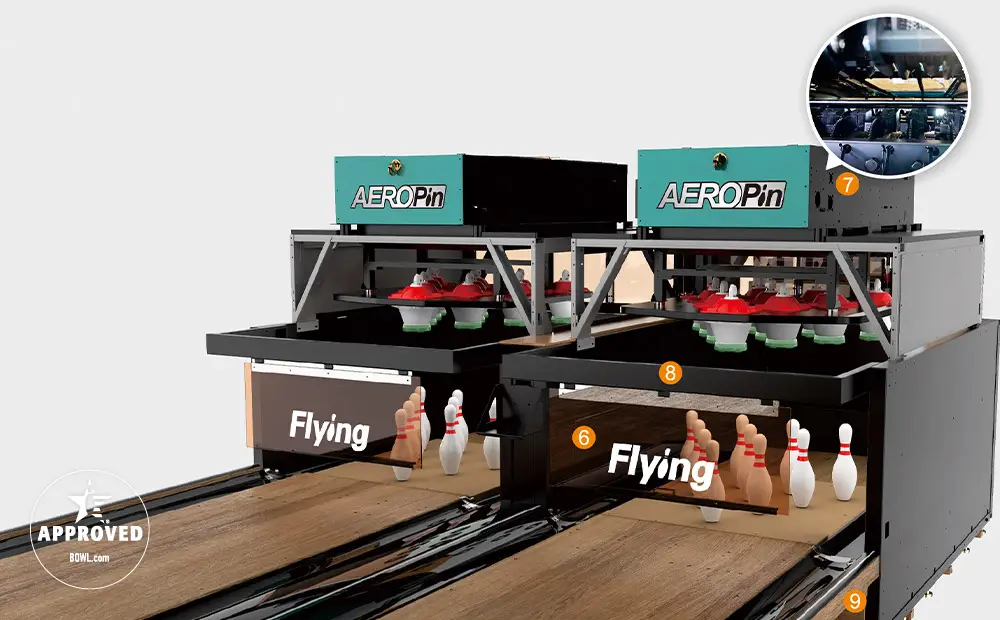
AEROPIN is Flying Bowling’s USBC-certified string pinsetter system for modern commercial bowling centers. Designed for fast pin setting, smooth ball return, low maintenance, and stable daily operation, it helps venue operators build league-ready and entertainment-focused bowling projects with confidence.
Flying Social Medium Bowling is a compact medium bowling equipment system designed for bars, cafes, family entertainment centers, community leisure venues, hotels, resorts, and small indoor entertainment spaces. With customizable lane lengths from 9.6m to 18m, small balls, lighter pins, string pinsetter technology, ball return, and automatic scoring, it creates an easy-to-play social bowling experience for players of different ages and skill levels.
Compared with full-size standard bowling, medium bowling requires less space and offers a more casual, interactive format. It is a practical choice for venues that want to add a bowling attraction without building a full commercial bowling alley.
Contact Flying
Start your bowling alley project
If you contact us now for more details, we can provide you with a custom bowling alley service. Our service team will get back to you within 24 hours normally!
© 2026 Flying BOWLING. Designed by gooeyun.
FOLLOW US:

Flying Bowling
Flying Bowling
Flyingbowling
Flyingbowling
Flyingbowling