

Best bowling balls for beginners to stock in retail
Retailers and pro shops serving beginner bowlers need a rational, profit-driven selection of bowling balls that balances performance, ease of use, durability, and price. This guide helps you choose which “best bowling ball” models and SKU mixes to stock for new bowlers, explain what to recommend in-store, and set up merchandising and fitting processes that increase conversion and repeat business.
Retail Essentials: Choosing Bowling Balls for Beginners
Understand the buyer’s intent and customer segments
Beginner bowlers fall into several categories: recreational family bowlers, junior bowlers (ages 5–17), adult social bowlers, and budding competitive bowlers. Each segment values different attributes: price and durability for families, weight options and youth-friendly cores for juniors, and entry-level performance (hook potential) for those aiming to improve. Align SKU selection with the local customer mix—more families suggest economy lines, youth leagues require lighter weights and smaller finger-hole options, and areas with active leagues need a few performance entry balls.
Key product attributes to prioritize
For beginners, prioritize: 1) predictable and controllable reaction (low-to-moderate hook potential); 2) durable, forgiving coverstocks (plastic/urethane or entry reactive); 3) a balanced range of weights from 6–16 lb to fit juniors through adults; and 4) approachable price points (typically $40–$150 retail). These attributes reduce frustration and encourage ongoing play.
Top Recommended Models to Stock
Product mix: economy, mid-price, entry-performance
A practical stock plan includes: 2–3 economy models, 2–3 mid-price entries, and 1–2 entry-performance balls. This covers customers who want a low-cost spare ball, a reliable primary ball, and a step-up option for improving bowlers.
Model recommendations and why they work
Below are store-ready recommendations representing reliable manufacturers and models that consistently rank well in consumer and pro-shop testing. These choices balance ease of use, availability, and margin potential.
| Category | Model (example) | Weight Range | Coverstock/Core | Retail Price (approx.) | Why stock |
|---|---|---|---|---|---|
| Economy / Spare | Brunswick T-Zone | 8–16 lb | Plastic (polyester) / Simple symmetric core | $40–$60 | Very durable, flat hook—ideal for spares and first-time buyers |
| Mid-price / All-purpose | Storm Mix (entry-reactive) | 10–16 lb | Entry reactive / Moderate core | $75–$120 | Forgiving reaction that helps beginners learn hook control |
| Entry-performance | Roto Grip Hustle (entry ball) | 10–16 lb | Reactive cover / Hybrid core | $100–$150 | Step-up ball with increased backend motion for improvement-seeking bowlers |
| Youth / Juniors | Hammer Black Widow Target (youth options) | 6–12 lb | Lightweight cores / Youth reactive or urethane | $60–$130 | Scaled weights and drilling options for juniors; durable and easy to handle |
Note: model names are representative; check manufacturer catalogs for current SKUs. Prices and availability change seasonally.
Stocking Strategy, SKU Mix and Pricing
How many SKUs and weight range to carry
For a small to medium retail shop serving beginners, a recommended baseline stock is:
- Economy line: 4–8 balls (varied colors and sizes 8–16 lb)
- Mid-price line: 6–10 balls (10–16 lb, varied grips)
- Entry-performance: 2–4 balls (10–16 lb)
- Youth: 4–6 balls (6–12 lb)
This gives 16–28 total SKU units ready to show and fit customers, expandable based on demand. Keep multiple blanks for drilling and at least one shop demo ball per model.
Pricing tiers and margin expectations
Typical wholesale-to-retail markups vary by brand and distributor. Expect margins roughly:
| Tier | Typical Retail | Estimated Margin (Retail vs Cost) |
|---|---|---|
| Economy | $35–$60 | 30–45% |
| Mid-price | $70–$130 | 35–55% |
| Entry-performance | $100–$180 | 30–50% |
Offer bundled services (drilling, fitting, minor customizations) at a profit—these services increase attachment rate and lifetime value.
Fitting, Merchandising and Sales Tactics
In-store fitting process
Train staff to perform a quick, consistent fitting: measure span, finger/thumb fit, and test throw with a demo ball of the same weight class. For beginners, recommend a ball that is 10% of body weight up to a comfortable max—common guidance is a safe starting point but always check comfort and control (see USBC guidance in references).
Merchandising and point-of-sale copy
Organize displays by customer intent rather than brand alone: “Spare & Practice,” “Everyday Bowlers,” and “Improve Your Hook.” Use signage that explains benefits plainly: weight, coverstock type, recommended user, and price. Store demo lanes or videos showing the ball’s reaction can reduce buyer hesitation and improve conversion.
Cross-sell and aftercare
Offer accessory bundles (bag, towel, bowling tape, grips) and a follow-up plan: a free or discounted re-drill within 6 months, and a ball-cleaning service. Educating customers on maintenance increases satisfaction and repeat purchases.
Technical Basics Retail Staff Should Master
Coverstocks and what they mean for beginners
Coverstock determines the ball-to-lane traction. For beginners, explain succinctly:
- Plastic (polyester): minimal hook, best for spares
- Urethane: smoother, controllable hook, good for those learning to shape shots
- Entry reactive: moderate hook with forgiveness—excellent for early skill progression
Core basics simplified
Core affects ball dynamics: symmetric cores produce predictable motion; asymmetric cores produce stronger, more angular motion. For beginners, favor symmetric or simple core layouts to avoid overstimulation and control issues.
Common mistakes to avoid when advising
Avoid recommending the heaviest ball possible or promising “the most hook”—these lead to poor control and higher return rates. Never ignore a customer’s comfort or existing physical constraints (e.g., joint pain, small hand size); recommend lightweight or finger-ring options if needed.
FAQ
1. What is the best bowling ball for a beginner?
There is no single “best” ball—retailer stock should include a plastic spare ball, an entry-reactive all-purpose ball, and a youth/lightweight option. Models like the Brunswick T-Zone (spare), entry-level Storm/Roto Grip models, and youth-focused balls cover most beginner needs.
2. What weight ball should beginners use?
Beginners should choose a ball they can comfortably control across several shots. A common guideline: approximately 10% of body weight, but comfort is primary. Youth often start at 6–10 lb; most adults use 12–16 lb.
3. How many bowling balls should a retail store stock for beginners?
Baseline 16–28 SKUs covering economy, mid-price, entry-performance, and youth ranges provides a practical selection. Adjust by local demand and turnover.
4. Should pro shops sell entry-performance balls to beginners?
Yes—but position them as a step-up option. Entry-performance balls help improving bowlers transition beyond a spare ball, but pair the recommendation with fitting and coaching advice to avoid mismatch.
5. How important is hole drilling for beginners?
Very important. Proper drilling and fitting dramatically improve comfort and control, reducing returns and encouraging continued play. Offer a standard fitting protocol and affordable drilling packages.
Next Steps & Contact
If you’re evaluating stock or need help building a beginner-focused SKU plan for your retail space, contact our pro-shop consulting team for a free store audit and personalized stocking plan. View available bowling ball products and distributor pricing, or schedule a training session for staff on fitting and merchandising.
References
- United States Bowling Congress (USBC) - Official site (accessed 2025-01-10)
- Brunswick Bowling - Product pages (accessed 2025-01-10)
- Storm Bowling - Product pages (accessed 2025-01-10)
- Roto Grip - Product pages (accessed 2025-01-10)
- BowlingBall.com - Buyer guides and reviews (accessed 2025-01-10)
Contact us to review distributors, minimum order quantities, and localized demand analysis to optimize your inventory for the beginner market.
Recommended products
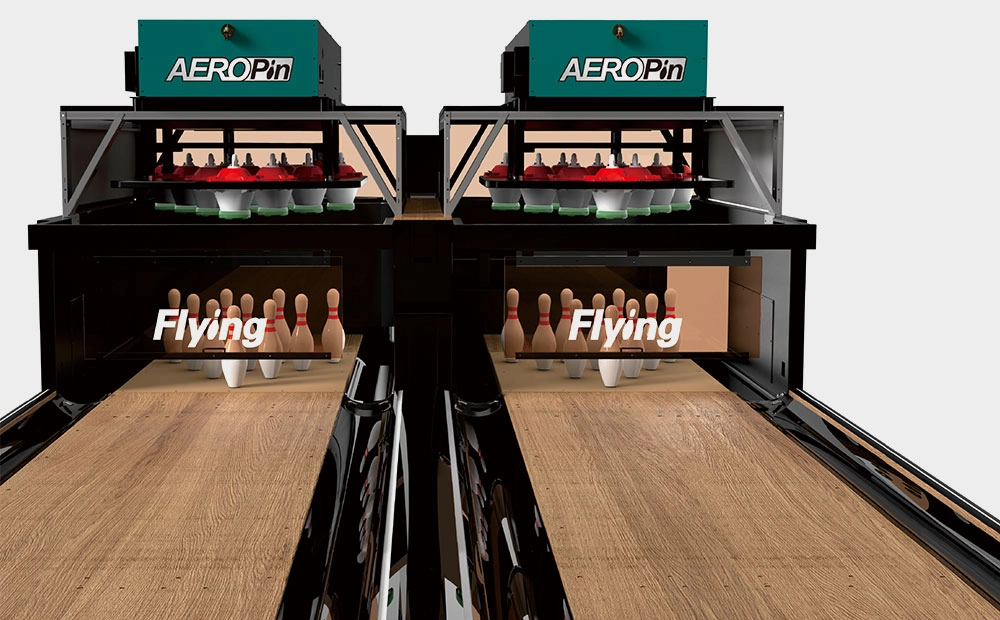
AEROPIN™ USBC-Certified String Pinsetter System
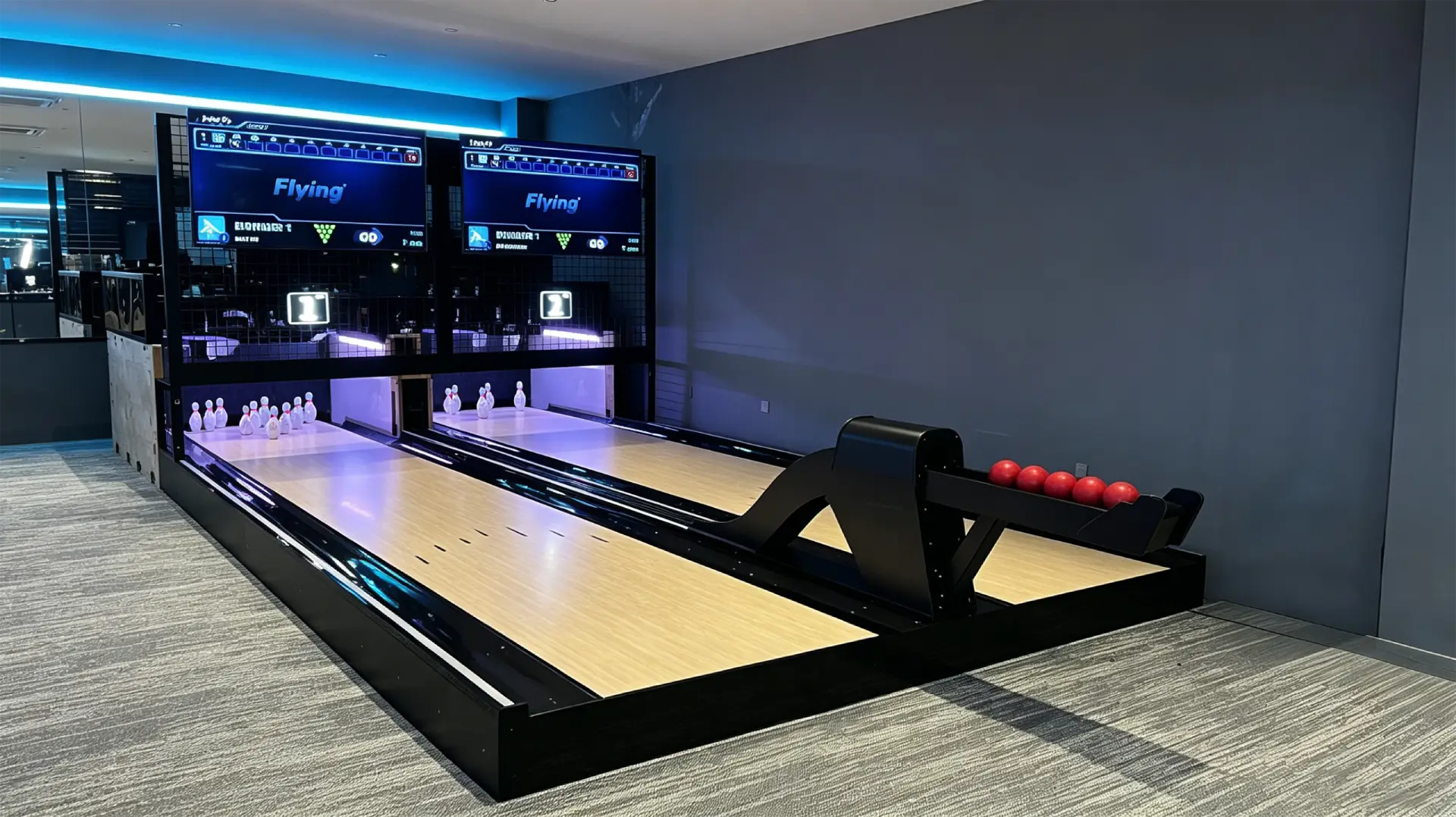
Flying Smart Duckpin Bowling Equipment for Commercial Venues
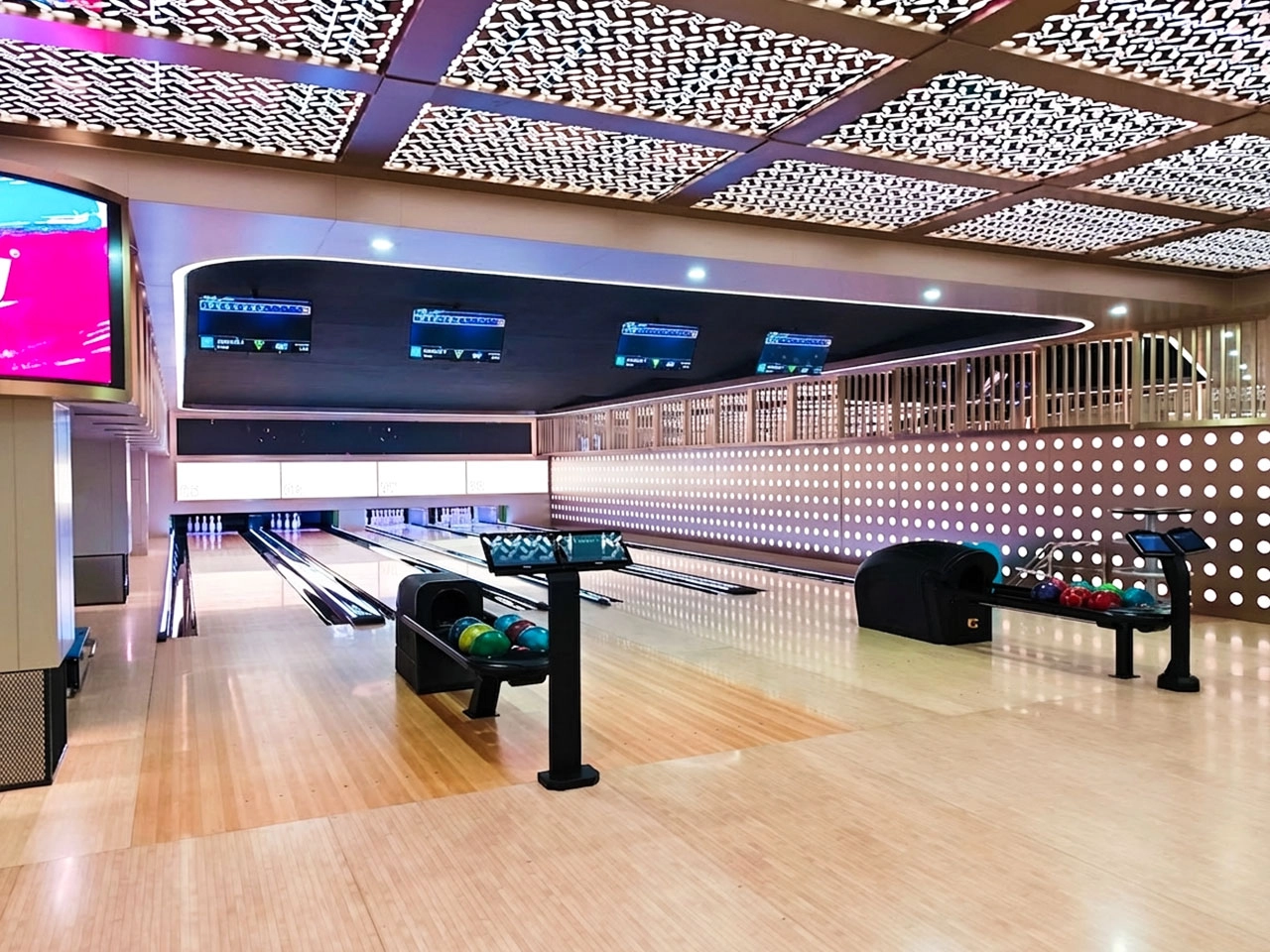
Complete Bowling Alley Equipment Package for Commercial Bowling Centers
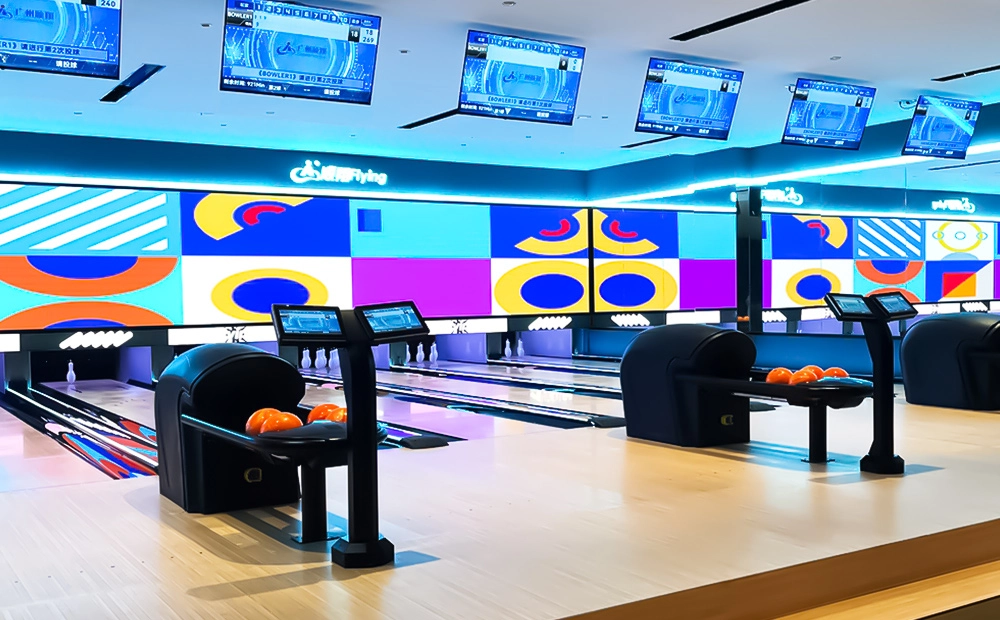
Medium Bowling Equipment for Compact Social Venues
You may also like
Build a commercial bowling venue with Flying’s complete string pinsetter bowling alley equipment package. The system includes the AEROPIN™ USBC-certified string pinsetter, customizable lanes, automatic scoring, ball return, lane lighting, pins, control hardware, and overseas installation support.
Designed for commercial bowling centers, family entertainment venues, hotels, resorts, bars, and premium private projects, this turnkey bowling system helps operators reduce sourcing complexity and prepare for reliable long-term operation.
Flying Smart Duckpin Bowling is a compact duckpin bowling equipment system designed for bars, family entertainment centers, hotels, resorts, cinemas, boutique bowling alleys, and social entertainment venues. With a standard 9.13m duckpin bowling lane, 1.25kg lightweight balls, automatic scoring, ball return, LED lighting, and a smart string pinsetter, it creates a fast-paced and easy-to-play bowling experience in a smaller footprint than traditional bowling.
The system is available as a turnkey duckpin bowling package, including lane equipment, a string pinsetter system, scoring hardware, control software, global shipping, installation guidance, and technical support.
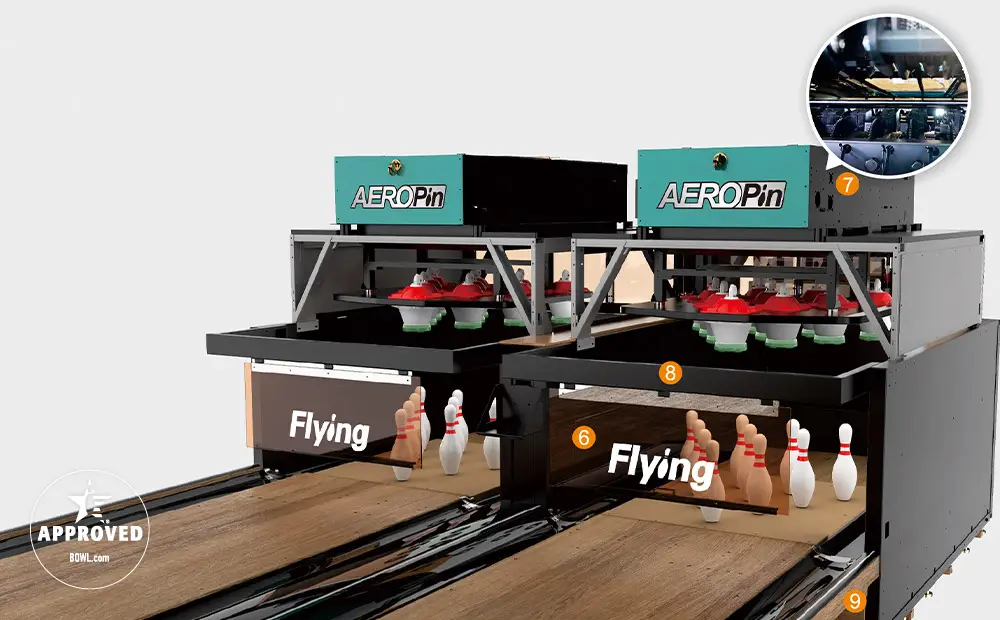
AEROPIN is Flying Bowling’s USBC-certified string pinsetter system for modern commercial bowling centers. Designed for fast pin setting, smooth ball return, low maintenance, and stable daily operation, it helps venue operators build league-ready and entertainment-focused bowling projects with confidence.
Flying Social Medium Bowling is a compact medium bowling equipment system designed for bars, cafes, family entertainment centers, community leisure venues, hotels, resorts, and small indoor entertainment spaces. With customizable lane lengths from 9.6m to 18m, small balls, lighter pins, string pinsetter technology, ball return, and automatic scoring, it creates an easy-to-play social bowling experience for players of different ages and skill levels.
Compared with full-size standard bowling, medium bowling requires less space and offers a more casual, interactive format. It is a practical choice for venues that want to add a bowling attraction without building a full commercial bowling alley.
Contact Flying
Start your bowling alley project
If you contact us now for more details, we can provide you with a custom bowling alley service. Our service team will get back to you within 24 hours normally!
© 2026 Flying BOWLING. Designed by gooeyun.
FOLLOW US:

Flying Bowling
Flying Bowling
Flyingbowling
Flyingbowling
Flyingbowling