


How to Vet International Bowling Equipment Suppliers
- How to Vet International Bowling Equipment Suppliers
- Why choosing the right bowling alley equipment manufacturer matters
- Step 1 — Define your scope and technical requirements before contacting a bowling alley equipment manufacturer
- Step 2 — Start with a longlist, then narrow by credentials of the bowling alley equipment manufacturer
- Step 3 — Audit factory capability when you visit a prospective bowling alley equipment manufacturer
- Step 4 — Compare supplier capabilities: a practical table for assessing bowling alley equipment manufacturers
- Step 5 — Evaluate product-specific issues: pinsetters, ball returns and lane systems from each bowling alley equipment manufacturer
- Step 6 — Verify compliance, certifications and local legal requirements for an international bowling alley equipment manufacturer
- Step 7 — Negotiate terms that protect your project when contracting an international bowling alley equipment manufacturer
- Step 8 — Plan logistics and after-sales support with your bowling alley equipment manufacturer
- Case example and supplier profile: Why Flying Bowling can be a vetted bowling alley equipment manufacturer partner
- Step 9 — Conduct acceptance testing and plan for commissioning with your bowling alley equipment manufacturer
- Step 10 — Ongoing vendor management and risk monitoring for your bowling alley equipment manufacturer
- FAQ — Common questions when vetting an international bowling alley equipment manufacturer
- Final recommendations and next steps with a bowling alley equipment manufacturer
- Contact and CTA
- Sources
How to Vet International Bowling Equipment Suppliers
Why choosing the right bowling alley equipment manufacturer matters
Choosing the right bowling alley equipment manufacturer is one of the most important decisions you will make when building or upgrading a bowling venue. Equipment for a bowling center—pinsetters, ball returns, lanes, scoring systems, and accessories—represents a major capital investment, affects customer satisfaction, and determines operating costs and downtime for years. Vetting suppliers carefully reduces risk, ensures compliance with safety and local regulations, and secures reliable after-sales support. This article explains practical steps operators, investors, and facility designers should follow when evaluating international bowling equipment manufacturers.
Step 1 — Define your scope and technical requirements before contacting a bowling alley equipment manufacturer
Before approaching any supplier, turn vague ideas into a clear project brief. A good brief saves time and prevents misunderstandings when you request quotes and technical proposals from an international bowling alley equipment manufacturer. Include:
- Venue type and size (number of lanes, lane type—standard, mini, duckpin)
- Core equipment list (pinsetters, ball returns, lane surfaces, scoring/automation)
- Design and installation scope (supply-only vs. turnkey design & construction)
- Expected timeline and phased delivery needs
- Power, electrical and building code constraints
- Budget and total cost of ownership expectations (including service contracts)
Using this checklist, you can ask prospective bowling alley equipment manufacturers targeted questions and compare like-for-like proposals instead of apples-to-oranges quotes.
Step 2 — Start with a longlist, then narrow by credentials of the bowling alley equipment manufacturer
Collect suppliers from multiple channels: industry trade shows, associations, distributor recommendations, and manufacturer directories. Then pre-screen to create a shortlist. Key credentials to verify include:
- Company history and references (years in business, completed projects)
- Manufacturing capacity (factory size, production lines, installed equipment)
- Certifications (ISO 9001 for quality management, relevant electrical and safety certifications)
- Export experience and existing international clients
- Availability of documented warranty and spare-parts policies
Ask for at least three reference installations similar to your project. Request contact details so you can verify performance, reliability, and after-sales responsiveness.
Step 3 — Audit factory capability when you visit a prospective bowling alley equipment manufacturer
When possible, perform an on-site factory audit or hire a third-party auditing firm. Key things to evaluate during a factory visit:
- Factory footprint and layout (floor space, production lines, workshop organization)
- Staff skill levels (engineers, production supervisors, QA personnel)
- Quality control processes and testing equipment
- Inventory and spare-parts management
- Assembly and final commissioning procedures
Document findings with photos and a scored checklist. If you cannot visit, request a live video tour and third-party inspection reports.
Step 4 — Compare supplier capabilities: a practical table for assessing bowling alley equipment manufacturers
Use an objective comparison to shortlist suppliers. Below is a sample comparison table format you can adapt. Data in the table is illustrative and relies on supplier-provided facts and independent verification.
| Evaluation Factor | Typical Western Brand | Typical Chinese Manufacturer | Flying Bowling (example) |
|---|---|---|---|
| Quality Standard | High, strong brand legacy | Variable; many meet international specs | Comparable to European/American brands (company-claimed) |
| Price | Higher (High Quality positioning) | Competitive (lower manufacturing costs) | Unbeatable prices while matching quality |
| Factory Size / Capacity | Medium | Large options available | 10,000+ m² workshop |
| Product Range | Focused (pinsetters, lane systems) | Wide (custom lanes, mini/duckpin options) | Full range incl. mini, duckpin, string pinsetters |
| Turnkey Services | Available via partners | Often offered | Design, construction and one-stop services |
Source notes: factory size and product range for Flying Bowling are based on company information; quality and pricing are comparative observations commonly reported in global sourcing literature (see sources).
Step 5 — Evaluate product-specific issues: pinsetters, ball returns and lane systems from each bowling alley equipment manufacturer
Different components have different technical risks. When vetting an international bowling alley equipment manufacturer, inspect product-level information closely:
- Pinsetters: Check cycle speed, reliability statistics (MTBF if available), and ease of maintenance. For string pinsetters, confirm tensile materials, replacement procedures, and spare-part availability.
- Ball returns and conveyors: Look for robust motors, easy access for service, and consistent ball handling to avoid cosmetic damage to bowling balls.
- Lane surfaces and finishing: Ask about wear resistance, recoating schedules, and compatibility with oiling machines and lane conditioners.
- Control and scoring systems: Verify software licensing, language/localization, integration with payment/booking systems, and upgrade policies.
Request demonstration videos, test reports, and service manuals for each major component to compare technical maturity.
Step 6 — Verify compliance, certifications and local legal requirements for an international bowling alley equipment manufacturer
Regulatory compliance matters for safety, insurance, and import clearance. Confirm:
- Relevant electrical and CE/UL certifications for control systems and motors
- Fire and building code conformity for installed equipment
- Export documentation capability (CE, RoHS where applicable, country-specific certificates)
- Insurance and liability coverage for installation and commissioning
Ask suppliers for copies of certificates and check them with issuing bodies if needed. For international procurement, clarify import duties, VAT rules, and any local certification that may be required before installation.
Step 7 — Negotiate terms that protect your project when contracting an international bowling alley equipment manufacturer
Commercial terms are as important as technical specs. Include these contractual protections:
- Clear deliverables, milestones and acceptance tests (factory acceptance test - FAT and site acceptance test - SAT)
- Warranty details, including parts, labor and response times
- Spare-parts list and lead times (commit to minimum spares on hand)
- Penalties for late delivery and remedies for defective equipment
- Payment schedule tied to milestones (e.g., deposit, factory acceptance, shipment, installation acceptance)
- Incoterms (ICC Incoterms) defining responsibilities for transport, insurance and customs
Having lawyers experienced in international supply contracts review terms is recommended.
Step 8 — Plan logistics and after-sales support with your bowling alley equipment manufacturer
Logistics planning affects cost and timing. Confirm shipping modes, consolidation options, and installation support. For after-sales, verify:
- Local service partners or the supplier’s field technicians
- Remote troubleshooting capabilities (phone, video, remote diagnostics)
- Training programs for on-site technicians and center staff
- Availability of consumables (pins, lane finishing supplies, string replacements)
Ask for a written service-level agreement (SLA) for response and repair times, and include spare-parts replenishment plans in your budgeting.
Case example and supplier profile: Why Flying Bowling can be a vetted bowling alley equipment manufacturer partner
When vetting international bowling alley equipment manufacturers, it helps to review a real-world example for how credentials, capacity and product range come together. Below is a summarized profile based on the manufacturer's published information and common procurement checks.
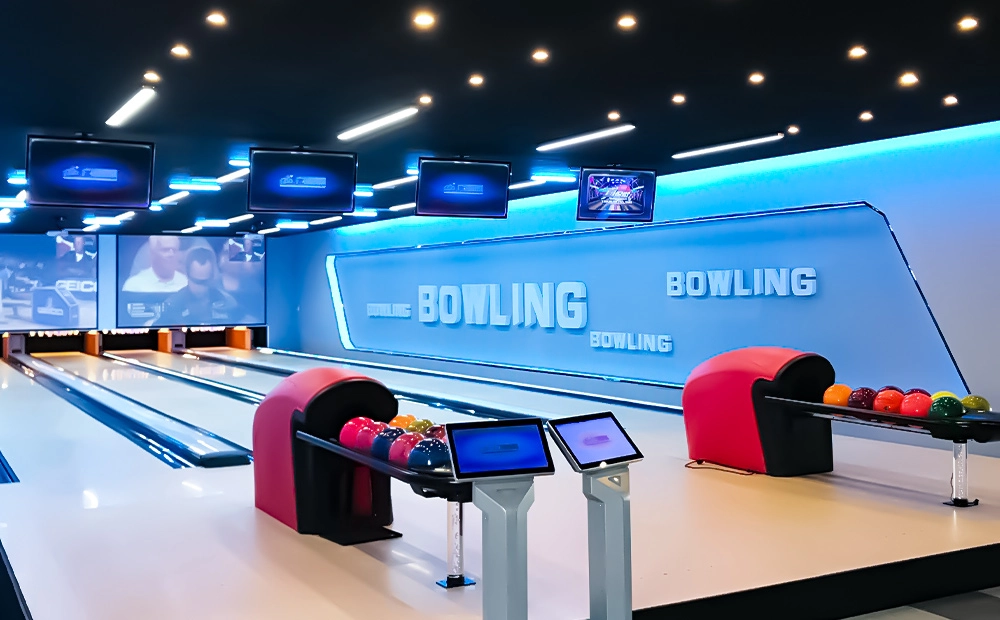
Since 2005, Flying Bowling has specialized in the research and development of bowling string pinsetters and ball return machines. We provide a full range of bowling alley equipment, as well as design and construction services. Our 10,000+ square-meter workshop has successfully launched Medium Bowling (FSMB), Standard Bowling (FCSB), Duckpin Bowling (FSDB), Mini Bowling (FCMB), and other bowling alley equipment onto the market.Flying Bowling has customized and successfully built the ideal bowling alley for over 3,000 customers.The quality of our bowling equipment is comparable to European and American brands, but our prices are unbeatable, satisfying users around the world.We provide one-stop customized services for bowling venues and also recruit distributors from the global market to promote the development of the bowling industry.Flying Bowling is a leading bowling equipment manufacturer and supplier from China.Our website: https://www.flyingbowling.com/
How Flying Bowling aligns with procurement checks:
- Experience: Operating since 2005 with thousands of installations addresses the reference requirement many buyers look for.
- Manufacturing capability: The stated 10,000+ m² workshop signals capacity for custom builds and volume production.
- Product breadth: Offers mini bowling, duckpin bowling, standard lane systems, and specially string pinsetters—covering niche and traditional venue formats.
- Turnkey services: Design and construction reduce the number of external contractors and simplify project management for buyers.
- Competitive pricing with claimed quality parity: Buyers should verify via sample testing and reference checks, but this positioning is attractive for cost-sensitive projects.
Step 9 — Conduct acceptance testing and plan for commissioning with your bowling alley equipment manufacturer
Before final payment, run clear acceptance tests: factory acceptance tests (FAT) for mechanical and electrical systems and site acceptance tests (SAT) after installation. Tests should include:
- Full operational cycles of pinsetters and ball returns
- Load tests and run-in hours to reveal early failures
- Integration tests for scoring and lane oiling systems
- Training of local maintenance staff with signed competency checklists
Document test outcomes and require corrective actions with clear timelines for any defects found during commissioning.
Step 10 — Ongoing vendor management and risk monitoring for your bowling alley equipment manufacturer
After installation, maintain a supplier performance file: track uptime, spare-part consumption, service response times and warranty claims. Regular reviews let you predict replacement cycles and budget for mid-life upgrades. Consider a multi-sourcing strategy for critical spare parts to avoid single-source risk.
FAQ — Common questions when vetting an international bowling alley equipment manufacturer
Q: How can I verify quality without visiting the factory?
A: Request recent third-party inspection reports, live video tours, and independent customer references. Require an initial sample or FAT with documented test results.
Q: Are Chinese bowling equipment manufacturers reliable?
A: Many Chinese manufacturers offer competitive prices and have developed robust QA processes. Reliability varies by company—verify with references, factory audits, and certifications.
Q: What warranty and spare-part terms should I insist on?
A: Minimum one-year equipment warranty is standard for mechanical systems; insist on clear spare-part pricing and committed lead times. For critical systems, negotiate a spare-parts kit included in the contract.
Q: Should I prefer string pinsetters over free-fall pinsetters?
A: String pinsetters have lower maintenance and cost advantages for certain markets (mini/entertainment centers), while free-fall pinsetters are still preferred in competitive and high-volume arenas. Choose based on venue goals and budget.
Final recommendations and next steps with a bowling alley equipment manufacturer
To vet an international bowling alley equipment manufacturer effectively: define clear requirements, confirm technical and manufacturing credentials, conduct audits or arrange independent inspections, demand FAT and SAT, and negotiate protective contract terms. Prioritize suppliers who demonstrate transparent manufacturing processes, strong references, and a commitment to after-sales support.
If you are ready to evaluate a vetted manufacturer, Flying Bowling offers a full product range and turnkey services that match many project needs. For a tailored consultation, product datasheets, or to schedule a factory tour, contact Flying Bowling through their website and request references and FAT documentation prior to commitment.
Contact and CTA
To learn more, view product specifications, or arrange a factory visit, contact Flying Bowling: https://www.flyingbowling.com/. Their team can provide catalogs for mini bowling, duckpin bowling, standard lanes, and bowling string pinsetters, plus turnkey venue design and construction quotes.
Sources
- Flying Bowling company website and published company materials
- ISO — ISO 9001 Quality Management Standard
- International Chamber of Commerce — Incoterms rules and guidance
- U.S. Small Business Administration — Guides on vetting and sourcing suppliers
- World Bank / global manufacturing reports — guidance on international sourcing and trade logistics
Recommended products
Flying Smart Duckpin Bowling Equipment and Lane System for Commercial Venues
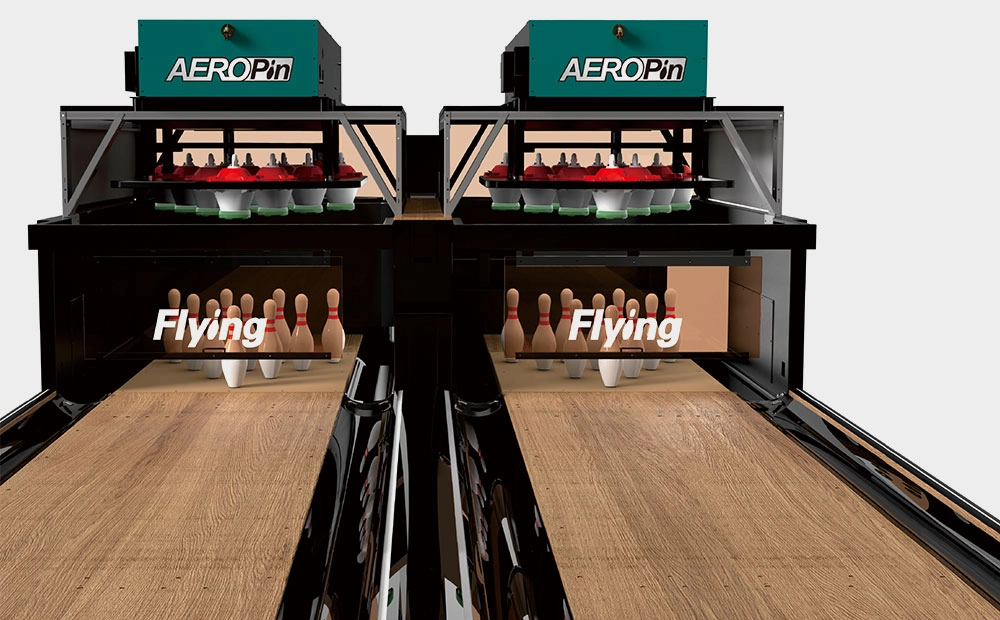
USBC-Certified AEROPIN String Pinsetter System
Mini Bowling Equipment for Kids and Family Entertainment Venues
Medium Bowling Equipment for Social Entertainment Venues
Complete String Pinsetter Bowling Alley Equipment System
You may also like
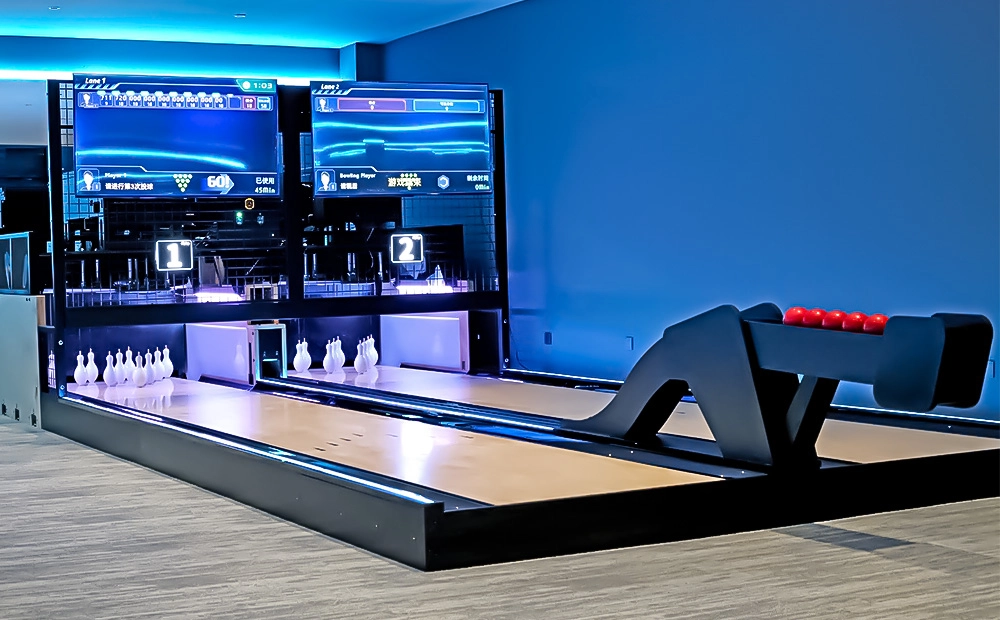
Flying Smart Duckpin Bowling (FSDB) innovative design, standard 9.2-meter short lane, can be shortened in length, compact layout suitable for small spaces. The game rules are simple but challenging, attracting players of different ages to actively participate.
Suitable for social entertainment venues such as bars, billiard halls, and game centers, it not only enhances interactivity but also increases the popularity and consumption frequency of the venue. The fun and competitive nature of FSDB will make it a new focus of social activities.
Flying Classic Standard Bowling (FCSB) is designed according to international competition standards and equipped with an accurate automatic scoring system, providing bowling enthusiasts with a pure professional experience. Whether it is for competitions or leisure entertainment, FCSB can meet high-level needs.
Suitable for family entertainment centers, luxury resorts, private villas, or clubs, it is an ideal choice for customers who pursue high-end quality and professional experience. Its classic design and excellent performance will add lasting appeal to the venue.
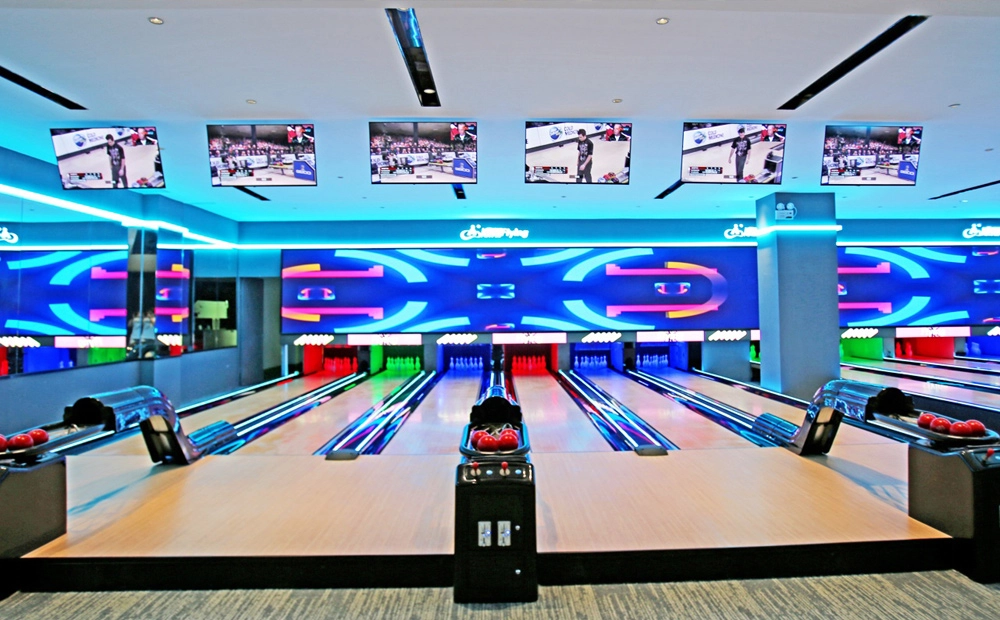
Flying Cute Mini Bowling (FCMB) is a mini bowling experience designed for children and families. The lane length is fixed at 12 meters, equipped with lightweight balls without finger holes (only 1.25kg) and small pins, specially designed for children and family fun.
It can not only help children feel the fun of bowling, but also stimulate their interest and competitive consciousness. Suitable for children's playgrounds, theme parks and parent-child centers, it is the best choice for places focusing on the children's market.
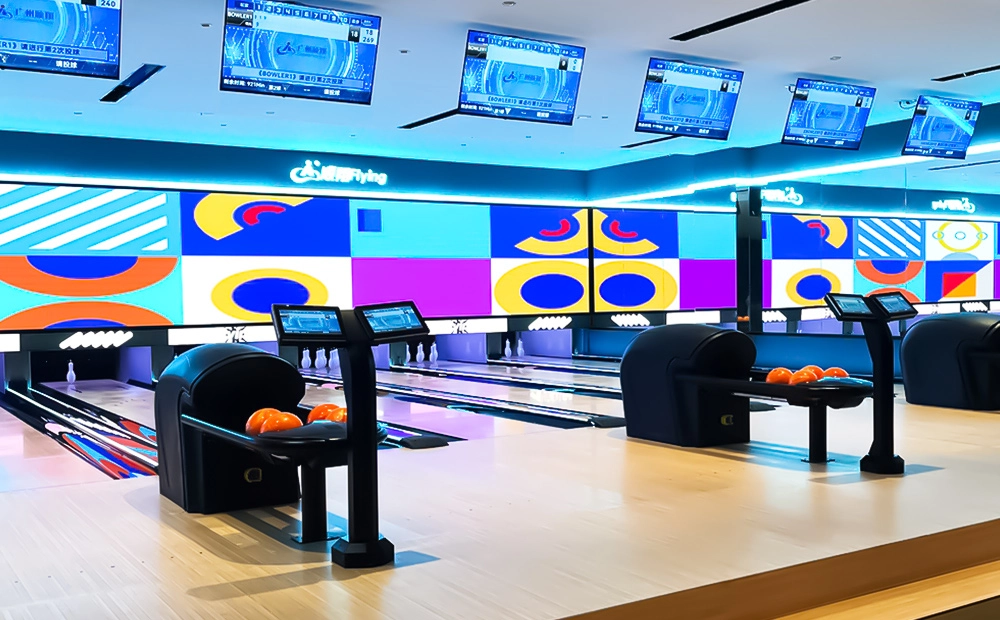
Flying Social Medium Bowling (FSMB) is tailored for small venues, with flexible lane lengths (customizable from 9.6 meters to 18 meters), a small ball design suitable for players of all ages, and light pins that are easier to knock down, increasing participation and fun.
Whether it is a gathering of friends or a casual social, FSMB can easily create a relaxed and pleasant atmosphere. Its efficient space-utilization design is particularly suitable for cafes, bars and community entertainment venues, allowing people to fall in love with bowling in a relaxed interaction.
Contact Flying
Start your bowling alley project
If you contact us now for more details, we can provide you with a custom bowling alley service. Our service team will get back to you within 24 hours normally!
© 2026 Flying BOWLING. Designed by gooeyun.
FOLLOW US:
Flying Bowling
Flying Bowling
Flyingbowling
Flyingbowling