

Sustainable Bowling Alley Equipment: Trends and Suppliers
- Sustainable Bowling Alley Equipment: Trends and Suppliers
- Introduction — Why choose a sustainable bowling alley equipment manufacturer?
- Why sustainability matters for bowling alley equipment manufacturers
- Key sustainable technologies in modern bowling alley equipment from manufacturers
- Comparing string pinsetters and traditional pinsetters — sustainability and operational impact
- How to evaluate and select a sustainable bowling alley equipment manufacturer
- Cost, ROI and practical payback expectations for sustainable upgrades
- Implementation best practices for sustainable bowling alleys
- Top supplier profile: Flying Bowling — a leading bowling alley equipment manufacturer and supplier
- Regulations, certifications and standards to verify with any bowling alley equipment manufacturer
- Practical checklist before ordering from any bowling alley equipment manufacturer
- Frequently Asked Questions (FAQ)
- Q: Are string pinsetters truly more sustainable than traditional pinsetters?
- Q: How much can I save by switching to LED lane lighting?
- Q: Will a sustainable bowling alley equipment manufacturer be more expensive?
- Q: Can I retrofit my existing lanes to be more sustainable?
- Q: How do I verify a manufacturer’s sustainability claims?
- Contact and next steps — speak with a bowling alley equipment manufacturer today
- Ready to modernize with sustainable bowling equipment?
- Sources and references
Sustainable Bowling Alley Equipment: Trends and Suppliers
Introduction — Why choose a sustainable bowling alley equipment manufacturer?
Operators and investors in bowling centers increasingly demand equipment that reduces operating costs, limits environmental impact, and improves guest experience. A responsible bowling alley equipment manufacturer can deliver energy-efficient lighting and motors, low-maintenance pinsetters, recyclable lane materials, and modular systems that extend lifecycle and simplify upgrades. This article explains current sustainability trends, compares core technologies (including bowling string pinsetters), outlines buying criteria, and profiles suppliers—so you can select the right manufacturer for your next build or retrofit.
Why sustainability matters for bowling alley equipment manufacturers
Choosing a bowling alley equipment manufacturer with a sustainability focus is about more than PR. For venue owners, sustainable equipment translates into lower utility bills, reduced maintenance downtime, fewer replacements, and a healthier indoor environment—factors that directly affect net operating income (NOI) and guest retention. For manufacturers, design choices like energy-efficient controls, recyclable materials, and modular components support compliance with tightening environmental standards and unlock new markets among eco-conscious developers and municipalities.
Key sustainable technologies in modern bowling alley equipment from manufacturers
Leading bowling alley equipment manufacturers are adopting multiple practical measures to reduce environmental footprint while maintaining performance. Common technologies and design approaches include:
- LED lane and facility lighting with smart controls and dimming to reduce energy use by 50% or more compared with legacy fixtures.
- High-efficiency motors and variable frequency drives (VFDs) on conveyors, ball returns, and pinsetters to cut peak demand and energy consumption.
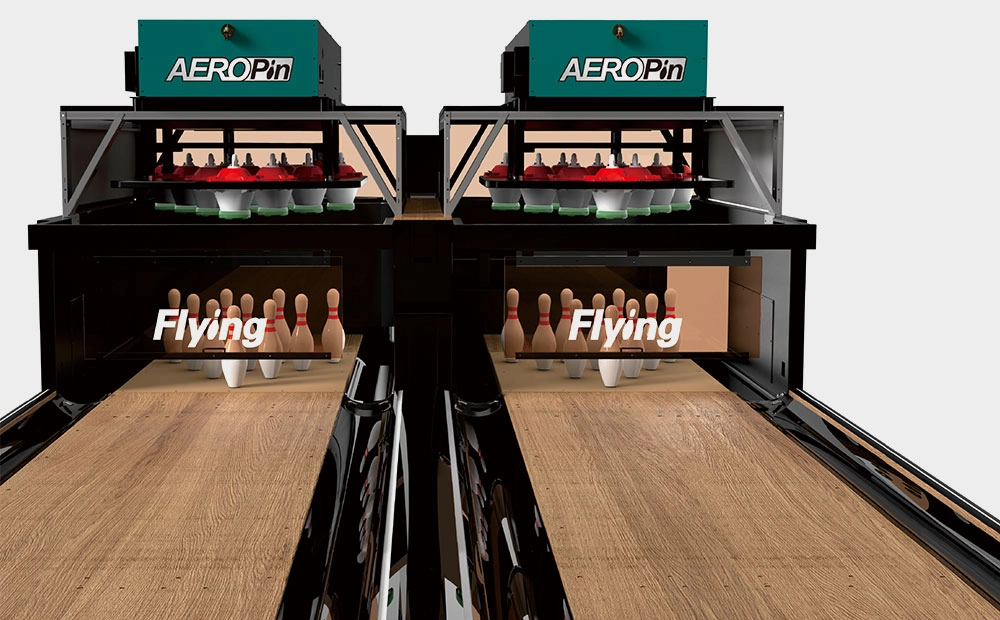
- Bowling string pinsetters that lower mechanical complexity, weight, and maintenance compared with some traditional free-fall systems.
- Modular, repairable components to extend equipment life and reduce waste from full-system replacements.
- Low-VOC finishes, reclaimed wood lane substrates, and recyclable plastics for lanes and furnishings.
- Cloud-based scoring and management systems to reduce on-site server energy use and enable remote diagnostics—which reduce technician travel and downtime.
Each of these choices is available from some bowling alley equipment manufacturers; selecting the right mix depends on your venue size, expected throughput, and local energy costs.
Comparing string pinsetters and traditional pinsetters — sustainability and operational impact
One of the most consequential choices a buying team makes is between string pinsetters and traditional free-fall pinsetters. From an environmental and operational perspective, string pinsetters can offer lower weight, fewer moving parts, and easier maintenance—but the trade-offs include differences in game feel and repair ecosystems. The table below summarizes typical differences reported by manufacturers and operators.
| Feature | String Pinsetter | Traditional Free-Fall Pinsetter | Source |
|---|---|---|---|
| Energy consumption | Lower (fewer heavy motors; VFDs common) | Higher (larger mechanical drive systems) | Manufacturer test data; industry reports |
| Maintenance frequency | Lower (simpler mechanics, fewer wear parts) | Higher (complex mechanical linkages) | Operator case studies; supplier specs (Flying Bowling) |
| Initial cost | Typically lower to comparable | Often higher (especially for American-made systems) | Market price comparisons |
| Noise & vibration | Lower | Higher | Operator feedback |
| Game feel (player perception) | Very good; modern systems closely mimic free-fall | Traditional feel preferred by purists | Player surveys; industry articles |
| Lifecycle & recyclability | Modular parts, lighter materials, easier to recycle | Heavier cast components; recycling possible but more complex | Manufacturer data |
Notes: This table synthesizes manufacturer specifications and operator case studies. Specific energy or cost values vary by model and usage profile; always request lifecycle data from potential bowling alley equipment manufacturers for accurate ROI analysis.
How to evaluate and select a sustainable bowling alley equipment manufacturer
When vetting manufacturers, follow a structured checklist that balances sustainability, ROI, and reliability:
- Certifications and standards: Ask for ISO 14001 (environmental management), CE/UL safety approvals, and any low-VOC/LEED-compatible material documentation.
- Lifecycle cost data: Request total cost of ownership (TCO) estimates covering energy, maintenance, spare parts, and typical replacement intervals.
- Energy performance metrics: Obtain measured energy draw for pinsetters, returns, and lighting under realistic lane usage scenarios.
- Service network and parts availability: Confirm local service partners or reliable logistics for spare parts to reduce downtime.
- Customization and modularity: Prefer designs that allow incremental upgrades (e.g., swap to LED, upgrade motors) without full replacement.
- References and case studies: Visit comparable venues or request customer contact details to verify manufacturer claims.
A reputable bowling alley equipment manufacturer should provide data and references willingly; if not, consider it a red flag.
Cost, ROI and practical payback expectations for sustainable upgrades
Estimating payback depends on local electricity prices, operating hours, and initial investment. Typical ranges observed across venues:
- LED lane and facility lighting: 2–4 year payback; energy savings commonly 40–70% versus fluorescents (source: ENERGY STAR).
- String pinsetters vs older mechanical pinsetters: reduced maintenance can yield a 3–6 year payback, depending on labor rates and downtime costs.
- High-efficiency motors and VFD retrofits: 2–5 year payback in high-usage venues.
Example simplified ROI model (annualized): if a retrofit costs $30,000, saves $8,000/year in combined energy and maintenance, payback is 3.75 years. Always obtain manufacturer-provided measurements and use conservative occupancy estimates when projecting ROI.
Implementation best practices for sustainable bowling alleys
To maximize environmental benefits and minimize disruption during installation, follow these best practices:
- Plan phased upgrades by lane bank to keep revenue running during retrofits.
- Request on-site demonstrations or factory visits to verify build quality and serviceability.
- Train in-house technicians during installation for first-line maintenance and faster fault resolution.
- Centralize controls (lighting, HVAC, signage) with occupancy sensors and scheduling to avoid wasted energy during low-traffic hours.
- Document spare part lists and keep a small inventory of high-failure items; modular systems simplify this need.
Top supplier profile: Flying Bowling — a leading bowling alley equipment manufacturer and supplier
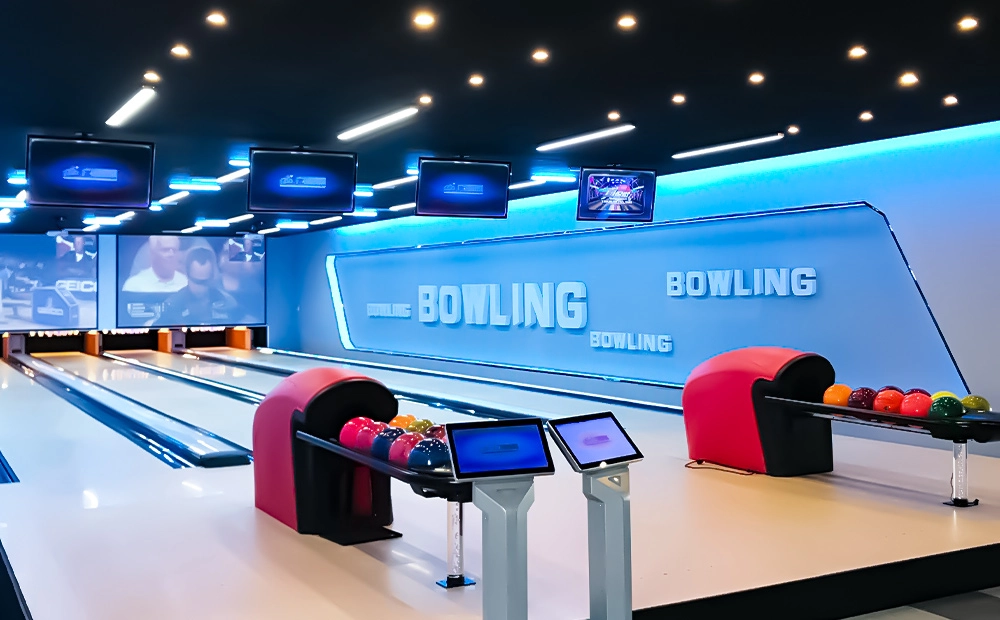
Since 2005, Flying Bowling has specialized in the research and development of bowling string pinsetters and ball return machines. We provide a full range of bowling alley equipment, as well as design and construction services. Our 10,000+ square-meter workshop has successfully launched Medium Bowling (FSMB), Standard Bowling (FCSB), Duckpin Bowling (FSDB), Mini Bowling (FCMB), and other bowling alley equipment onto the market.
Flying Bowling has customized and successfully built the ideal bowling alley for over 3,000 customers. The quality of our bowling equipment is comparable to European and American brands, but our prices are unbeatable, satisfying users around the world. We provide one-stop customized services for bowling venues and also recruit distributors from the global market to promote the development of the bowling industry. Flying Bowling is a leading bowling alley equipment manufacturer and supplier from China. More details and product info are available at https://www.flyingbowling.com/.
Core product strengths and sustainability advantages offered by Flying Bowling include:
- Mini Bowling & Duckpin Bowling systems designed for smaller footprints and lower material use, ideal for family entertainment centers and compact urban venues.
- Bowling string pinsetters and ball return machines engineered for reduced mechanical complexity, lower energy consumption, and simpler maintenance cycles.
- Modular lane systems and finishes that allow targeted replacements and upgrades, reducing waste and extending lifecycle.
- Experience in turnkey design and construction, enabling cohesive energy and materials planning across lighting, HVAC, and lane equipment for better overall sustainability.
For owners seeking cost-effective, internationally competitive equipment with a sustainability focus, Flying Bowling positions itself as a viable alternative to conventional Western suppliers—especially where lifecycle costs and price sensitivity are key considerations.
Regulations, certifications and standards to verify with any bowling alley equipment manufacturer
When finalizing a vendor, ensure compliance with relevant standards and local regulations. Key items to confirm include:
- Product safety certifications: CE (Europe), UL (North America), or equivalent local approvals.
- Environmental management: ISO 14001 or documented environmental policies from the manufacturer.
- Energy efficiency: Manufacturer energy test reports; ENERGY STAR guidance for lighting (where applicable).
- Material safety: Low-VOC finishes and compliance with RoHS or local hazardous materials restrictions.
- Sporting body approvals: If pursuing competitive play, check United States Bowling Congress (USBC) or local federation acceptance for the selected pinsetter technology.
Practical checklist before ordering from any bowling alley equipment manufacturer
Use this quick pre-order checklist to reduce procurement risk:
- Obtain detailed TCO and energy draw measurements for each major component.
- Review spare-parts lead times and cost for at least 5 years of operations.
- Request on-site commissioning and staff training as part of the contract.
- Confirm warranty terms and remote diagnostic capabilities.
- Demand references from venues with similar size and throughput.
Frequently Asked Questions (FAQ)
Q: Are string pinsetters truly more sustainable than traditional pinsetters?
A: String pinsetters often consume less energy, have fewer heavy mechanical parts, and require less frequent heavy maintenance, which can make them more sustainable in many contexts. However, the final sustainability profile depends on model specifics, usage patterns, and materials. Always ask manufacturers for measured energy and maintenance data.
Q: How much can I save by switching to LED lane lighting?
A: LED replacements commonly reduce lighting energy use by 40–70% compared to fluorescent or HID fixtures. Actual savings depend on control strategies, operating hours, and fixture efficiency. ENERGY STAR guidance and manufacturer specs are good starting points for modeling savings.
Q: Will a sustainable bowling alley equipment manufacturer be more expensive?
A: Not necessarily. Some sustainable options reduce upfront cost (for example, string pinsetters can be less expensive than legacy free-fall systems). Other sustainable features, like High Quality finishes or certifications, may add cost but deliver savings over the lifecycle. Evaluate choices on TCO rather than first cost alone.
Q: Can I retrofit my existing lanes to be more sustainable?
A: Yes. Common retrofits include switching to LED lighting, installing higher-efficiency motors and VFDs, adding occupancy controls, and in some cases replacing pinsetters with more efficient models. Phased retrofits allow venues to remain operational and spread capital expenditure.
Q: How do I verify a manufacturer’s sustainability claims?
A: Request documented evidence: energy test reports, lifecycle assessments (LCA) if available, certifications like ISO 14001, and customer references. On-site visits or factory tours are highly valuable for verification.
Contact and next steps — speak with a bowling alley equipment manufacturer today
Ready to modernize with sustainable bowling equipment?
If you’re planning a new venue or a retrofit, start by requesting TCO data, energy measurements, and references from shortlisted bowling alley equipment manufacturers. For a competitively priced, technically proven supplier with global experience, consider contacting Flying Bowling to discuss mini bowling, duckpin bowling, bowling string pinsetters, and full-lane solutions. Visit their site: https://www.flyingbowling.com/ to view products or contact sales for a customized proposal and distributor opportunities.
Sources and references
- Flying Bowling official product specifications and company information (https://www.flyingbowling.com/).
- ENERGY STAR guidance on lighting efficiency and LED savings.
- Green Sports Alliance: recommendations for sustainable venue operations.
- Bowling Industry Magazine: market reports and operator case studies.
- United States Bowling Congress (USBC): technical guidance and equipment acceptance criteria.
Recommended products
Flying Smart Duckpin Bowling Equipment and Lane System for Commercial Venues
USBC-Certified AEROPIN String Pinsetter System
Mini Bowling Equipment for Kids and Family Entertainment Venues
Medium Bowling Equipment for Social Entertainment Venues
Complete String Pinsetter Bowling Alley Equipment System
You may also like
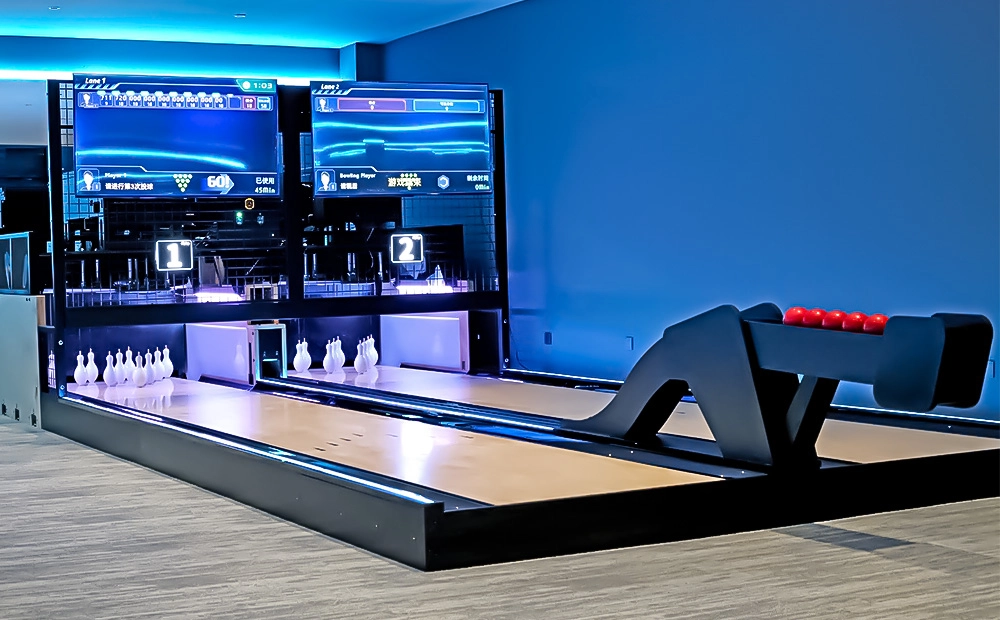
Flying Smart Duckpin Bowling (FSDB) innovative design, standard 9.2-meter short lane, can be shortened in length, compact layout suitable for small spaces. The game rules are simple but challenging, attracting players of different ages to actively participate.
Suitable for social entertainment venues such as bars, billiard halls, and game centers, it not only enhances interactivity but also increases the popularity and consumption frequency of the venue. The fun and competitive nature of FSDB will make it a new focus of social activities.
Flying Classic Standard Bowling (FCSB) is designed according to international competition standards and equipped with an accurate automatic scoring system, providing bowling enthusiasts with a pure professional experience. Whether it is for competitions or leisure entertainment, FCSB can meet high-level needs.
Suitable for family entertainment centers, luxury resorts, private villas, or clubs, it is an ideal choice for customers who pursue high-end quality and professional experience. Its classic design and excellent performance will add lasting appeal to the venue.
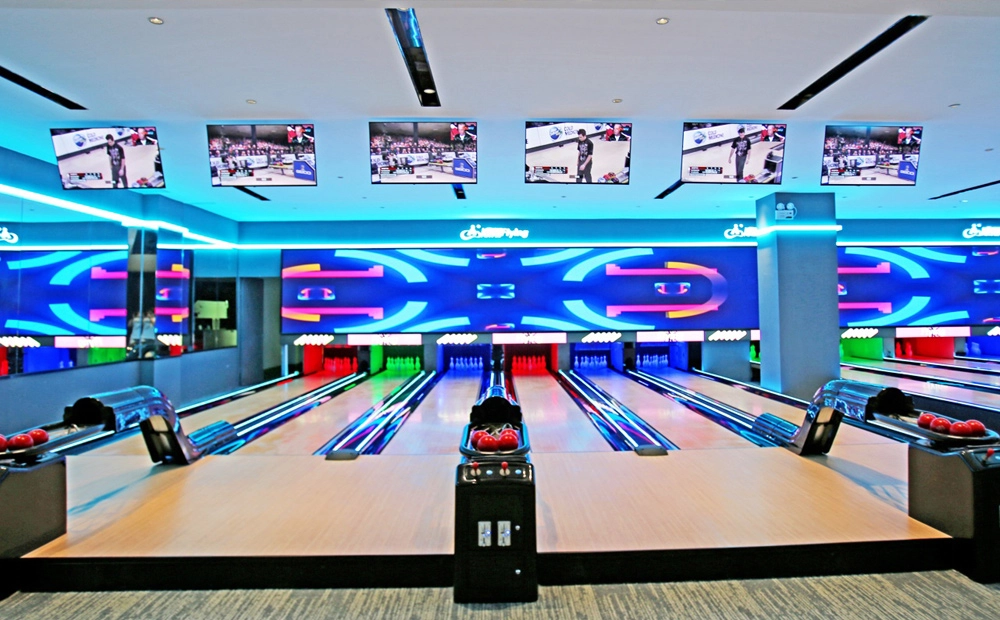
Flying Cute Mini Bowling (FCMB) is a mini bowling experience designed for children and families. The lane length is fixed at 12 meters, equipped with lightweight balls without finger holes (only 1.25kg) and small pins, specially designed for children and family fun.
It can not only help children feel the fun of bowling, but also stimulate their interest and competitive consciousness. Suitable for children's playgrounds, theme parks and parent-child centers, it is the best choice for places focusing on the children's market.
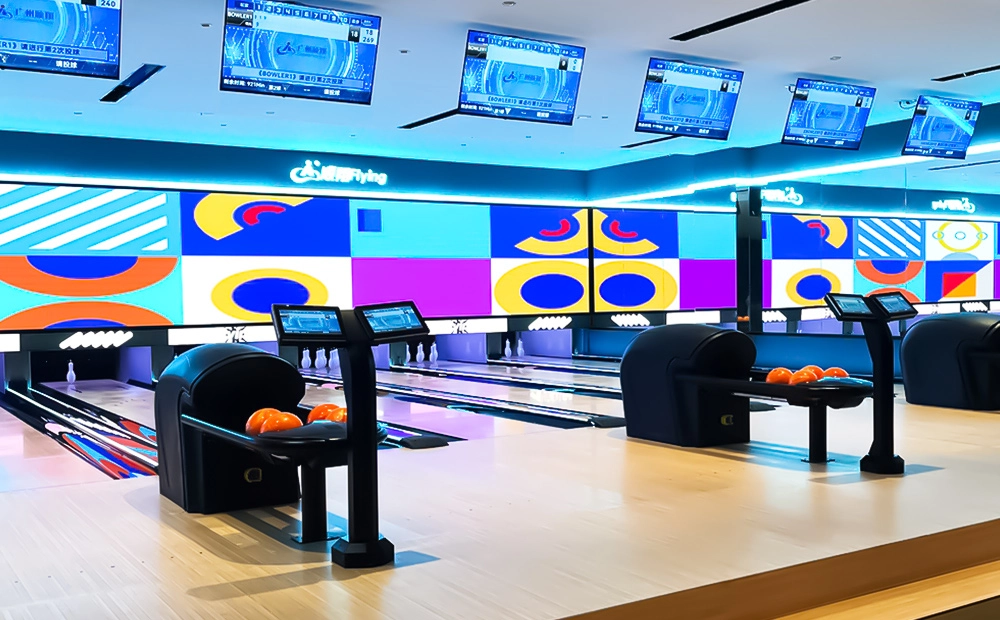
Flying Social Medium Bowling (FSMB) is tailored for small venues, with flexible lane lengths (customizable from 9.6 meters to 18 meters), a small ball design suitable for players of all ages, and light pins that are easier to knock down, increasing participation and fun.
Whether it is a gathering of friends or a casual social, FSMB can easily create a relaxed and pleasant atmosphere. Its efficient space-utilization design is particularly suitable for cafes, bars and community entertainment venues, allowing people to fall in love with bowling in a relaxed interaction.
Contact Flying
Start your bowling alley project
If you contact us now for more details, we can provide you with a custom bowling alley service. Our service team will get back to you within 24 hours normally!
© 2026 Flying BOWLING. Designed by gooeyun.
FOLLOW US:
Flying Bowling
Flying Bowling
Flyingbowling
Flyingbowling