

How Much to Build a Bowling Alley in Sweden | Flying
- Swedish Market: City-by-City Analysis
- How Much Does It Cost? Budget by Project Size
- Equipment Cost Breakdown Per Lane
- Sweden-Specific Factors That Affect Your Budget
- Moms (25%) and Reclaimability
- Swedish Labour Costs
- Building Permits (Bygglov)
- GEMA Equivalent: STIM
- ROI Model: 8-Lane FEC in Stockholm Suburb
- Frequently Asked Questions
- Planning a Bowling Center in Sweden?
Sweden has one of Europe's highest standards of living, a mature entertainment culture, and strong consumer spending on leisure. Bowling is an established and popular activity across all age groups — Sweden's bowling federation (Svenska Bowlingförbundet) manages hundreds of affiliated clubs and venues nationwide. For investors, the Swedish market offers stable demand, high per-capita leisure spend, and a regulatory environment that is straightforward for EU-sourced equipment. This guide gives you the real costs, city-by-city breakdown, and ROI model to evaluate the investment seriously.
Swedish Market: City-by-City Analysis
Sweden's bowling market is not uniform. Construction costs, commercial rents, and catchment demographics vary significantly between Stockholm, Gothenburg, Malmö, and regional cities. Understanding where to invest matters as much as how much to spend.
| City | Population (metro) | Construction Cost (excl. Moms) | Commercial Rent (est.) | Market Characteristic | Best Venue Type |
|---|---|---|---|---|---|
| Stockholm | ~2.4M | SEK 28,000–35,000/m² | SEK 3,500–5,000/m²/yr (prime) | Highest costs; strongest corporate events market; premium leisure spend | 8–16 lane premium FEC; boutique social venue |
| Gothenburg (Göteborg) | ~1M | SEK 24,000–30,000/m² | SEK 2,800–4,500/m²/yr | Strong industrial and student demographic; CBD rising to SEK 4,500/m²/yr (CW Q1 2026) | 6–12 lane FEC; league + entertainment mix |
| Malmö | ~380,000 | SEK 22,000–28,000/m² | SEK 2,200–3,500/m²/yr | Younger demographic; cross-border traffic from Denmark; lower costs | 4–10 lane FEC; social entertainment concept |
| Uppsala / Linköping | 200,000–250,000 each | SEK 20,000–26,000/m² | SEK 1,800–2,800/m²/yr | University cities; active youth and family market; underserved FEC supply | 4–8 lane FEC; family-focused |
| Norrland / Northern Sweden | Varies by city | SEK 17,000–23,000/m² | SEK 1,200–2,000/m²/yr | Lower land and construction costs; smaller catchment; first-mover advantage in underserved markets | 4–6 lane community center |
How Much Does It Cost? Budget by Project Size
The table below provides all-in project budgets for three common investment sizes. Construction figures use Stockholm rates — reduce by 15–20% for Gothenburg or Malmö, and 25–35% for northern Sweden.
| Project | Equipment | Construction / Fit-Out | Permits + Fees | Working Capital | Total (excl. Moms) | USD equiv. |
|---|---|---|---|---|---|---|
| 4 lanes — boutique, Stockholm conversion | SEK 1.9M–2.9M | SEK 2.2M–3.5M | SEK 150K–300K | SEK 800K–1.2M | SEK 5.05M–7.9M | ~$481K–$752K |
| 8 lanes — mid-size FEC, Stockholm | SEK 3.8M–5.9M | SEK 4.5M–7M | SEK 300K–600K | SEK 1.2M–2M | SEK 9.8M–15.5M | ~$933K–$1.48M |
| 12 lanes — full entertainment center, Stockholm | SEK 5.7M–8.8M | SEK 6.5M–10.5M | SEK 450K–900K | SEK 1.5M–2.5M | SEK 14.15M–22.7M | ~$1.35M–$2.16M |
| All figures exclude 25% Moms (reclaimable for registered businesses). Construction based on Stockholm rate (SEK 28,000–35,000/m²). Equipment at mid-range: string pinsetters, synthetic lanes, touchscreen scoring. Add 10–15% contingency. Reduce construction by 15–20% for Gothenburg/Malmö. | ||||||
Equipment Cost Breakdown Per Lane
| Component | SEK Per Lane | USD Per Lane | Notes |
|---|---|---|---|
| Synthetic lane surface | SEK 95K–147K | $9,000–$14,000 | 20–30 yr lifespan; annual conditioning required |
| String pinsetter (new) | SEK 84K–126K | $8,000–$12,000 | Recommended; CE-certified; annual maintenance SEK 2,100–6,300 |
| Free-fall pinsetter (new) | SEK 157K–263K | $15,000–$25,000+ | Higher maintenance; SEK 15,750–36,750/lane/year |
| Ball return system | SEK 29K–58K | $2,800–$5,500 | Above-ground standard |
| Scoring system | SEK 39K–79K | $3,700–$7,500 | Touchscreen, mobile integration, F&B ordering option |
| Furniture and seating | SEK 21K–53K | $2,000–$5,000 | Standard to premium lounge |
| Shipping + EU import + installation | SEK 32K–74K | $3,000–$7,000 | EU single market = zero customs duty; local installation crew |
| Total per lane (string pinsetter) | SEK 300K–537K | $28,500–$51,000 | Equipment + installation; excludes building and Moms |
String vs free-fall for Sweden: String pinsetters dominate new commercial installations across Sweden for two specific local reasons: first, Swedish entertainment venues are increasingly integrated with dining and bar areas where noise levels matter — string pinsetters produce significantly less mechanical noise. Second, Swedish labour costs are among Europe's highest, making the staff-manageable maintenance of string systems (SEK 2,100–6,300/lane/year) a compelling advantage over free-fall systems that require a certified mechanic at Swedish rates.
Sweden-Specific Factors That Affect Your Budget
Moms (25%) and Reclaimability
All construction services, imported equipment, and most entertainment revenues are subject to 25% Swedish Moms. For a SEK 10M project, Moms on construction alone is SEK 2.5M — a significant cash flow item during the build phase even though it is reclaimable for registered businesses (momsregistrerade). Build the Moms recovery timeline (typically 2–3 months per quarter) into your working capital planning. Equipment sourced from Flying Bowling's European division enters Sweden as an EU internal supply with zero customs duty.
Swedish Labour Costs
Sweden has some of Europe's highest total labour costs when employer social contributions (arbetsgivaravgifter, approximately 31.42% on top of gross wages) are included. A bowling center employee earns SEK 280,000–400,000/year gross; total employer cost is SEK 367,000–524,000 per employee. A 10-lane FEC open 7 days/week needs a minimum of 3–4 staff per shift. Budget SEK 3.5M–6M/year for a full mid-size staffing model. This is one of the largest ongoing cost differentials between Sweden and lower-cost European markets.
Building Permits (Bygglov)
Commercial entertainment venues require a bygglov from the local municipality (plan- och bygglagen, PBL). In Stockholm, processing time is typically 3–6 months for a standard commercial fit-out; new construction can take 8–14 months. Malmö and Gothenburg are generally faster. Entertainment venues generating significant noise require an acoustics assessment (bullerutredning) — Sweden's environmental noise regulations (Miljöbalken) are strictly enforced, particularly in mixed-use urban locations. String pinsetters significantly reduce the acoustic treatment requirement.
GEMA Equivalent: STIM
Unlike Germany's GEMA, Sweden's music rights are managed by STIM (Svenska Tonsättares Internationella Musikbyrå). Commercial venues playing background music must register with STIM and pay annual licensing fees. For a bowling center, fees are calculated based on venue capacity and music usage type. Register with STIM at stim.se before opening — non-compliance triggers penalty fees.
ROI Model: 8-Lane FEC in Stockholm Suburb
The following is an illustrative financial model for a mid-size 8-lane FEC in a suburban Stockholm location. All figures in SEK; USD equivalent at 10.5 SEK/USD.
| Item | SEK | USD equiv. |
|---|---|---|
| Total investment (mid-range 8-lane, Stockholm) | SEK 12.5M | ~$1.19M |
| Lane pricing (per lane/hour) | SEK 350–500/lane/hr | ~$33–$48 |
| Operating hours/week | 65 hours (9 hrs/day weekdays + 12 hrs/day weekends) | |
| Average utilisation (conservative) | 42% | |
| Annual lane revenue | SEK 2.5M | ~$238K |
| F&B + events (50% of lane revenue) | SEK 1.25M | ~$119K |
| Total annual revenue | SEK 3.75M | ~$357K |
| Annual operating costs (staff, rent, utilities, maintenance) | SEK 2.4M | ~$229K |
| Annual EBITDA | SEK 1.35M | ~$129K |
| Payback period (full investment) | ~9–10 years at conservative utilisation | |
| At 55% utilisation + active event programming | ~6–7 years | |
Model assumptions: SEK 420/lane/hour blended rate; 8 lanes; 65 hrs/week; 42% utilisation = 27.3 lane-hours sold per lane/week; 52 weeks. Operating costs: staffing SEK 1.4M (4 FTE), rent SEK 550K (130 m² × SEK 4,200/m²/yr), utilities SEK 250K, maintenance and insurance SEK 200K.
The primary revenue lever in Sweden is corporate and group bookings — Swedish companies have a strong culture of team activities (AW and kick-off events), and a 20-person corporate booking generates SEK 7,000–12,000 in a single evening. Operators who actively market to corporate HR and event coordinators within 30 minutes of the venue consistently achieve 50–60% utilisation versus the 35–42% typical for walk-in-only operations.
Frequently Asked Questions
How much does it cost to build an 8-lane bowling alley in Stockholm?
An 8-lane FEC in a Stockholm suburban fit-out runs approximately SEK 9.8M–15.5M all-in (approximately $933,000–$1.48M), covering equipment (SEK 3.8M–5.9M), construction and fit-out (SEK 4.5M–7M), permits (SEK 300K–600K), and working capital reserve (SEK 1.2M–2M). These figures exclude 25% Moms, which is reclaimable for registered businesses. For Gothenburg or Malmö, reduce construction costs by 15–20%.
Does equipment imported from China face customs duty in Sweden?
Sweden is an EU member state. Equipment sourced from within the EU (including from Flying Bowling's European division) enters Sweden with zero customs duty under EU single market rules. Equipment sourced from China directly is subject to the EU Common External Tariff (typically 2–3.7% for sports and amusement machinery) plus 25% Moms on the landed value. Sourcing through Flying Bowling's European division eliminates the customs duty and simplifies import documentation.
What is the Swedish VAT rate for bowling revenue?
The standard Swedish Moms rate of 25% applies to most entertainment services including bowling lane rental. Food and non-alcoholic beverages are taxed at 12%; alcoholic beverages at 25%. Moms-registered businesses reclaim input Moms on construction, equipment, and operating expenses. The 25% standard rate is higher than many EU peers (Germany 19%, Finland 24%) — plan this into your pricing model from the start.
What is a realistic payback period for a bowling center in Sweden?
At conservative utilisation (42%), an 8-lane Stockholm FEC with strong F&B achieves full investment payback in approximately 9–10 years. At 55% utilisation through active corporate and event programming, payback shortens to 6–7 years. Swedish labour costs are a significant operating cost item that compresses margins relative to lower-cost EU markets — model staffing costs carefully, particularly employer social contributions (arbetsgivaravgifter at 31.42% on top of gross wages).
How long does the permit and construction process take in Sweden?
Bygglov (building permit) in Stockholm: 3–6 months for commercial fit-out; 8–14 months for new construction. Gothenburg and Malmö are typically faster. Acoustics assessment (bullerutredning) is required for entertainment venues in noise-sensitive locations — allow 2–3 months. Equipment lead time from Flying Bowling: 6–10 weeks manufacturing plus 3–5 weeks EU freight. Order equipment when construction begins — not when it finishes.
Which Swedish city offers the best investment case for a first bowling center?
Gothenburg or Malmö offer better risk-adjusted entry conditions than Stockholm for a first project: construction costs 15–20% lower, commercial rents lower, permit processes faster, and the FEC market is less saturated than Stockholm. Uppsala and Linköping (university cities with 200,000+ populations) are worth evaluating for a smaller 4–6 lane community concept where bowling is an underserved leisure option for a young, active demographic.
Planning a Bowling Center in Sweden?
Flying Bowling supplies CE-certified string pinsetters, synthetic lane surfaces, ball returns, and scoring solutions — with a European division providing EU-compliant equipment, Moms-inclusive documentation, and installation support across Sweden and the Nordic region.
Sources: SCB (Statistics Sweden) / Byggföretagen — Swedish construction cost data 2025 (scb.se). Cushman & Wakefield Sweden Marketbeat Q1 2026 — prime commercial yields and rents (cushmanwakefield.com). Skatteverket — Swedish Moms rates and arbetsgivaravgifter (skatteverket.se). STIM — Swedish music rights licensing (stim.se). Flying Bowling equipment pricing and EU installation data (flyingbowling.com).
Recommended products
Flying Smart Duckpin Bowling Equipment and Lane System for Commercial Venues
USBC-Certified AEROPIN String Pinsetter System
Mini Bowling Equipment for Kids and Family Entertainment Venues
Medium Bowling Equipment for Social Entertainment Venues
Complete String Pinsetter Bowling Alley Equipment System
You may also like
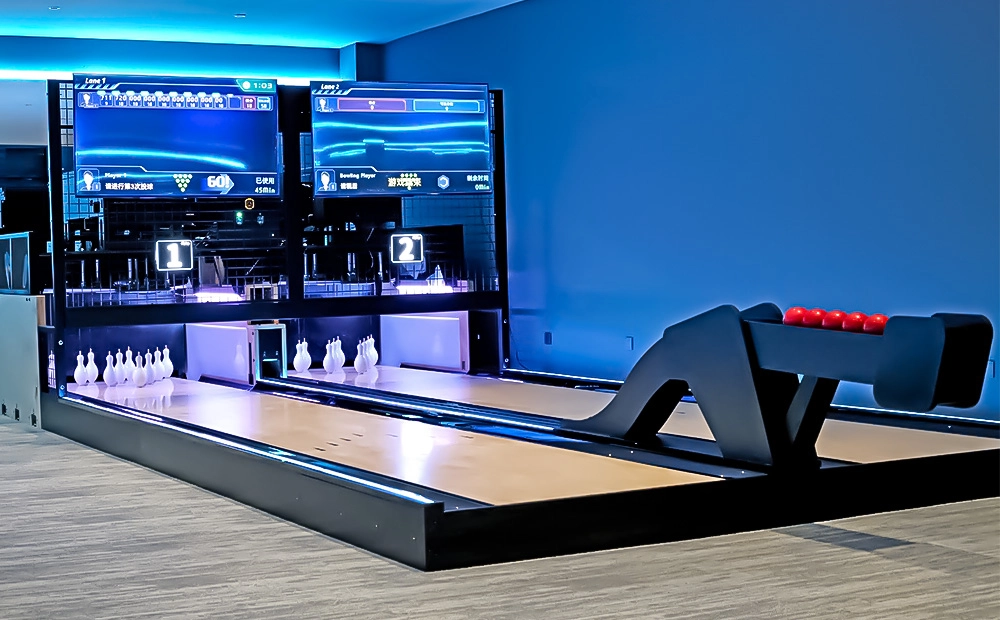
Flying Smart Duckpin Bowling (FSDB) innovative design, standard 9.2-meter short lane, can be shortened in length, compact layout suitable for small spaces. The game rules are simple but challenging, attracting players of different ages to actively participate.
Suitable for social entertainment venues such as bars, billiard halls, and game centers, it not only enhances interactivity but also increases the popularity and consumption frequency of the venue. The fun and competitive nature of FSDB will make it a new focus of social activities.
Flying Classic Standard Bowling (FCSB) is designed according to international competition standards and equipped with an accurate automatic scoring system, providing bowling enthusiasts with a pure professional experience. Whether it is for competitions or leisure entertainment, FCSB can meet high-level needs.
Suitable for family entertainment centers, luxury resorts, private villas, or clubs, it is an ideal choice for customers who pursue high-end quality and professional experience. Its classic design and excellent performance will add lasting appeal to the venue.
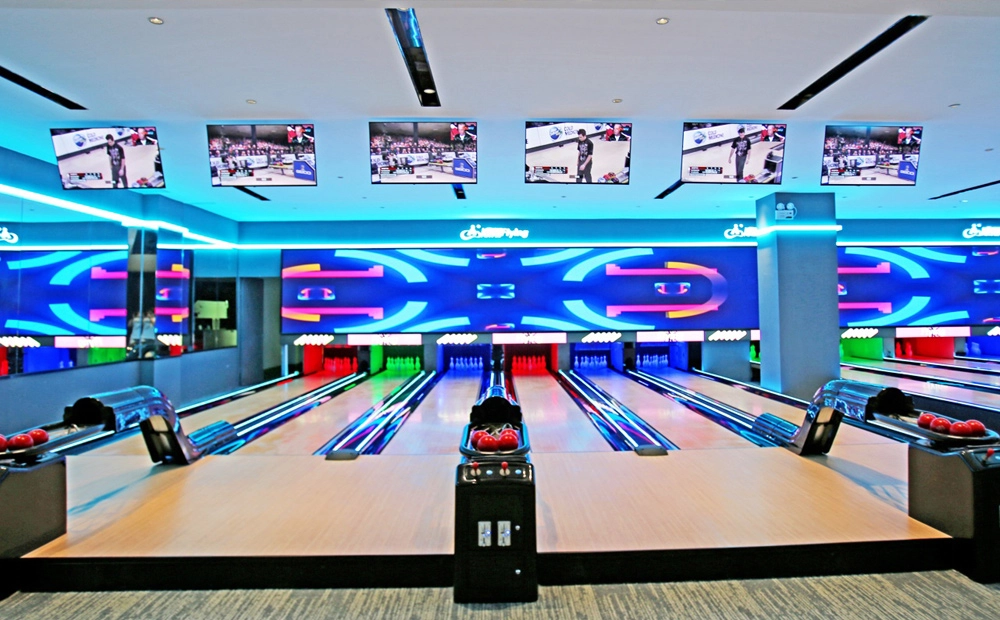
Flying Cute Mini Bowling (FCMB) is a mini bowling experience designed for children and families. The lane length is fixed at 12 meters, equipped with lightweight balls without finger holes (only 1.25kg) and small pins, specially designed for children and family fun.
It can not only help children feel the fun of bowling, but also stimulate their interest and competitive consciousness. Suitable for children's playgrounds, theme parks and parent-child centers, it is the best choice for places focusing on the children's market.
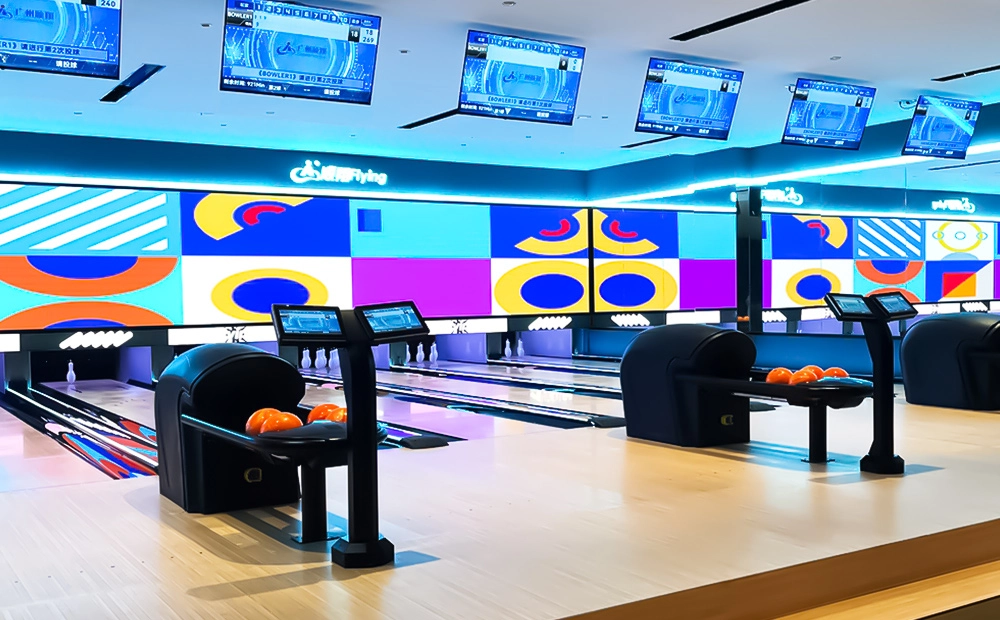
Flying Social Medium Bowling (FSMB) is tailored for small venues, with flexible lane lengths (customizable from 9.6 meters to 18 meters), a small ball design suitable for players of all ages, and light pins that are easier to knock down, increasing participation and fun.
Whether it is a gathering of friends or a casual social, FSMB can easily create a relaxed and pleasant atmosphere. Its efficient space-utilization design is particularly suitable for cafes, bars and community entertainment venues, allowing people to fall in love with bowling in a relaxed interaction.
Contact Flying
Start your bowling alley project
If you contact us now for more details, we can provide you with a custom bowling alley service. Our service team will get back to you within 24 hours normally!
© 2026 Flying BOWLING. Designed by gooeyun.
FOLLOW US:
Flying Bowling
Flying Bowling
Flyingbowling
Flyingbowling