


How Much to Build a Bowling Alley in Peru? | Flying
Peru is one of South America's fastest-growing economies, with a rapidly urbanising middle class concentrated in Lima, Arequipa, Trujillo, and Cusco. The entertainment and leisure market is underdeveloped relative to consumer purchasing power — bowling centers, in particular, remain scarce outside Lima's premium mall districts. For investors, this represents a genuine first-mover opportunity in a market where domestic demand for quality entertainment is outpacing supply.
Peru Market: Where to Invest
Peru's entertainment investment is concentrated in mall-based venues, particularly in Lima. The dominant format is a bowling and FEC floor within a shopping center — malls provide the footfall, parking, and F&B adjacency that stand-alone venues in Peru cannot replicate without very high capital investment.
| City | Population | Construction Cost (est.) | Market Characteristic | Best Venue Type |
|---|---|---|---|---|
| Lima | ~11M metro | $350–$500/m² | Largest market; Miraflores, San Isidro, Surco districts have highest leisure spend; premium mall density | 6–12 lane FEC in mall; boutique social venue |
| Arequipa | ~1.3M | $250–$380/m² | Peru's second economic city; growing middle class; FEC market underserved | 4–8 lane FEC; family-focused |
| Trujillo | ~1M | $220–$340/m² | Northern hub; commercial growth driven by agro-industry; limited FEC competition | 4–6 lane community FEC |
| Cusco | ~500,000 | $200–$300/m² | Tourism-driven; strong hotel and resort infrastructure; international visitor profile | Boutique 2–4 lane; resort amenity or compact format |
How Much Does It Cost? Budget by Project Size
All figures in USD. Construction costs use Lima rates — reduce by 25–40% for Arequipa, Trujillo, or Cusco.
| Project | Equipment | Construction / Fit-Out | Permits + IGV | Working Capital | Total (USD) | S/ equiv. |
|---|---|---|---|---|---|---|
| 4 lanes — boutique, Lima mall conversion | $180,000–$280,000 | $150,000–$280,000 | $30,000–$60,000 | $60,000–$100,000 | $420,000–$720,000 | ~S/ 1.6M–2.7M |
| 8 lanes — mid-size FEC, Lima | $360,000–$560,000 | $300,000–$560,000 | $60,000–$120,000 | $100,000–$180,000 | $820,000–$1.42M | ~S/ 3.1M–5.4M |
| 12 lanes — full entertainment center, Lima | $540,000–$840,000 | $450,000–$840,000 | $90,000–$180,000 | $130,000–$220,000 | $1.21M–$2.08M | ~S/ 4.6M–7.9M |
| Construction based on Lima entertainment fit-out rate ($350–$500/m²). Equipment at mid-range: string pinsetters, synthetic lanes, touchscreen scoring. IGV (18%) on imports and construction is reclaimable for registered businesses. Add 10–15% contingency. Reduce construction by 25–40% outside Lima. | ||||||
Equipment Cost Per Lane
| Component | USD Per Lane | S/ Per Lane | Notes |
|---|---|---|---|
| Synthetic lane surface | $9,000–$14,000 | S/ 34,200–53,200 | 20–30 yr lifespan; annual conditioning required |
| String pinsetter (new) | $8,000–$12,000 | S/ 30,400–45,600 | Recommended; staff-manageable; no specialist technician |
| Ball return system | $2,800–$5,500 | S/ 10,640–20,900 | Above-ground standard |
| Scoring system | $3,700–$7,500 | S/ 14,060–28,500 | Touchscreen; mobile integration |
| Furniture and seating | $2,000–$5,000 | S/ 7,600–19,000 | Standard to lounge configuration |
| Shipping + import + installation | $3,000–$7,000 | S/ 11,400–26,600 | Port of Callao; 18% IGV on imports applies |
| Total per lane (string pinsetter) | $28,500–$51,000 | S/ 108,300–193,800 | Equipment + installation; excludes building and IGV |
Why string pinsetters for Peru: Certified free-fall pinsetter technicians are not based in Peru — mechanical failures require flying in a specialist from the US or Europe, causing extended downtime. String pinsetters can be serviced by trained general venue staff at annual costs of $200–$600/lane versus $1,500–$3,500 for free-fall. In any Latin American market without local technical infrastructure, string is the operationally correct choice.
Peru-Specific Factors
IGV (VAT) — 18% Standard Rate
Peru's Impuesto General a las Ventas (IGV) standard rate is 18% (16% IGV + 2% municipal promotion tax). This applies to imported equipment at the CIF landed value, and to construction services. Businesses registered with SUNAT (Registro Único de Contribuyentes, RUC) can offset input IGV against output IGV monthly — meaning the 18% on imports and construction is reclaimable, but it creates a significant cash flow impact during the build phase. Plan for a 1–3 month IGV recovery cycle in your working capital model.
Note: Small businesses in the restaurant and tourism sectors benefit from a reduced 8% IGV rate through 2026 (Law 32219). Pure entertainment venues like bowling centers are subject to the standard 18% rate unless qualified under another exemption category — confirm with a local tax advisor (contador público certificado).
Import Channel: Port of Callao
All bowling equipment imported into Peru enters through the Port of Callao (Lima) for most projects. Customs clearance typically takes 5–15 business days with a licensed customs agent (agente de aduana). Import duties on sports and amusement equipment vary by tariff heading — most mechanical amusement equipment attracts 0–6% ad valorem. Request the export HS code from your supplier and obtain a pre-clearance estimate from your customs agent before finalising the budget. Budget $2,000–$5,000 for customs agent fees per shipment.
Commercial Leasing in Lima Malls
Premium Lima malls (Jockey Plaza, Larcomar, Plaza San Miguel, La Molina) charge base rents of approximately $25–$60/m²/month for entertainment-floor tenants. On a 600 m² FEC floor, annual rent runs $180,000–$432,000 — the largest single operating cost line item. Negotiate a rent-free fit-out period (typically 2–4 months) as part of the lease agreement; this is standard in Peruvian mall leasing and partially offsets the cash flow impact of the build phase.
Labour Costs
Peru's minimum wage (Remuneración Mínima Vital) was S/ 1,025/month (~$270) in 2025. Entertainment venue staff typically earn S/ 1,500–S/ 3,500/month depending on role. Employer contributions (AFP pension, health insurance, CTS severance) add approximately 25–30% on top of gross wages. A 10-lane FEC open 7 days/week needs 3–4 staff per shift — annual staffing cost typically runs $80,000–$180,000 for a mid-size Lima venue.
ROI Model: 8-Lane FEC in Lima Mall
| Item | USD | S/ equiv. |
|---|---|---|
| Total investment (8 lanes, Lima mall) | ~$1.1M | ~S/ 4.2M |
| Lane pricing (per lane/hour) | $6–$10 (~S/ 23–38) | Typical Lima mall pricing 2025 |
| Operating hours/week | 65 hrs (weekdays 14:00–22:00; weekends 10:00–23:00) | |
| Average utilisation (conservative) | 40% | |
| Annual lane revenue | ~$217,000 | ~S/ 824,600 |
| F&B + events (45% of lane revenue) | ~$98,000 | ~S/ 372,400 |
| Total annual revenue | ~$315,000 | ~S/ 1.2M |
| Annual operating costs (staff, rent, utilities, maintenance) | ~$200,000 | ~S/ 760,000 |
| Annual operating profit (EBITDA) | ~$115,000 | ~S/ 437,000 |
| Payback (full investment) | ~9–10 years at 40% utilisation | |
| At 55% utilisation + active event sales | ~6–7 years | |
Assumptions: $8/lane/hour blended rate; 8 lanes × 65 hrs/week × 40% utilisation × 52 weeks. Operating costs: staff $110,000 (6 FTE at Lima rates), mall rent $60,000 (S/ 228,000 — estimate for non-premium Lima location), utilities $18,000, maintenance and insurance $12,000.
The primary ROI lever in Peru is birthday parties and corporate events. A 20-person birthday party booking generates $200–$500 in a single evening — 3–5× the revenue per lane-hour versus walk-in play. Operators who actively market to families and corporate HR coordinators in Lima's Miraflores, San Isidro, and La Molina districts consistently achieve 50–60% utilisation and materially shorter payback periods.
Sources: TheLatinvestor — Peru and Lima real estate and construction cost data (September 2025). PwC Worldwide Tax Summaries — Peru IGV rate and structure (taxsummaries.pwc.com). Bloomberg Tax — Peru Law 32219, reduced IGV rate for restaurant/tourism SMEs (January 2025). IMF World Economic Outlook — Peru GDP growth forecast 2025. Flying Bowling equipment pricing and installation data (flyingbowling.com).
FAQ
How much does it cost to build an 8-lane bowling alley in Lima?
An 8-lane bowling and family entertainment center project in Lima typically requires a total investment of approximately USD $820,000–$1.42 million. This budget includes bowling equipment, construction and fit-out works, permits, taxes, and working capital reserves. Construction costs are generally higher in Lima than in other Peruvian cities due to labor, real estate, and mall leasing costs. Investors considering Arequipa, Trujillo, or Cusco may benefit from significantly lower construction expenses while still serving growing entertainment markets.
What is Peru's VAT rate on bowling equipment imports?
Peru applies an 18% IGV tax, consisting of a 16% value-added tax and a 2% municipal promotion tax. This tax applies to imported bowling equipment based on the CIF landed value. Depending on the tariff classification, bowling equipment may also be subject to import duties, although many categories of amusement and sports equipment fall within relatively low duty ranges. Registered businesses can recover input IGV through the Peruvian tax system, making proper tax planning an important part of project budgeting.
Is a mall-based or stand-alone venue better in Peru?
For most investors, a mall-based bowling center offers the strongest business model. Peruvian consumers generally prefer shopping malls because of security, parking availability, food and beverage options, and family-oriented leisure environments. A mall location also provides consistent foot traffic that reduces marketing costs. Stand-alone venues can succeed but usually require a stronger brand presence, higher promotional spending, and more extensive customer acquisition efforts.
How long does a bowling center project take in Peru?
A typical bowling center project in Peru requires approximately nine to thirteen months from planning to opening. This timeline usually includes landlord approvals, municipal permits, construction and fit-out, equipment manufacturing, international shipping, customs clearance through the Port of Callao, installation, testing, and staff training. To avoid delays, equipment procurement should begin at the same time as construction rather than waiting until building works are completed.
Can a foreign investor own a bowling center in Peru?
Yes. Peru allows 100% foreign ownership of entertainment businesses and provides equal legal treatment for domestic and foreign investors. Foreign companies commonly establish a Sociedad Anónima Cerrada (SAC) or Sociedad Anónima (SA) structure and obtain registration through SUNAT and the national public registry system. Most international investors work with local legal and accounting professionals to streamline company formation, tax registration, and ongoing compliance requirements.
Recommended products
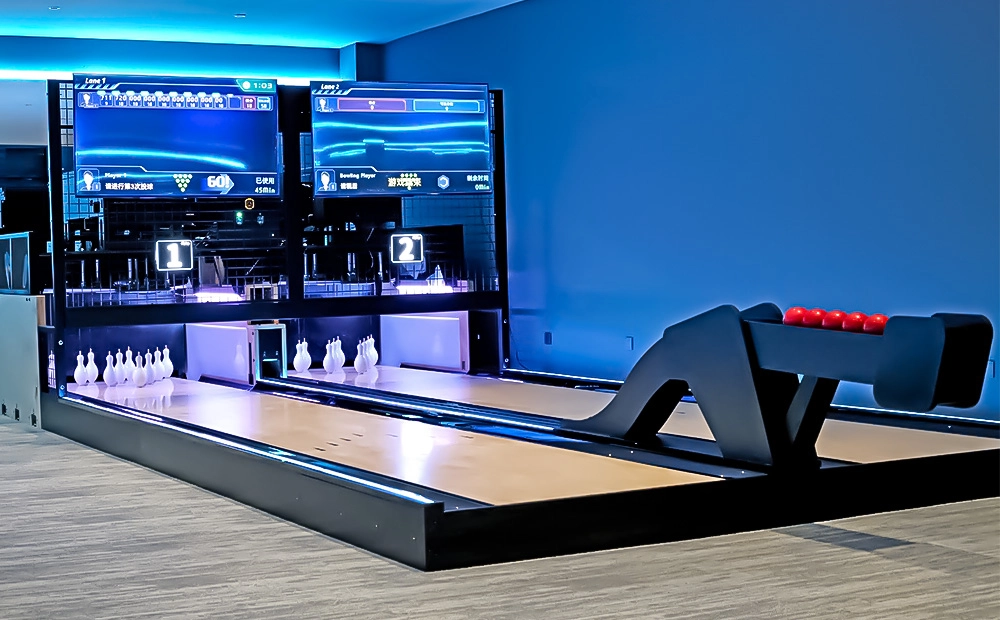
Flying Smart Duckpin Bowling Equipment and Lane System for Commercial Venues
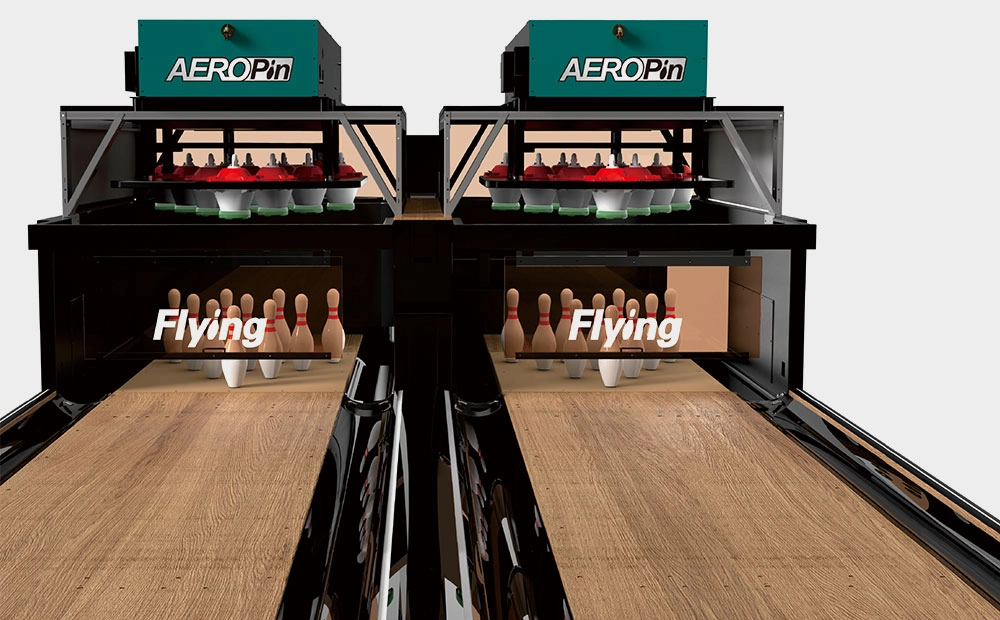
USBC-Certified AEROPIN String Pinsetter System
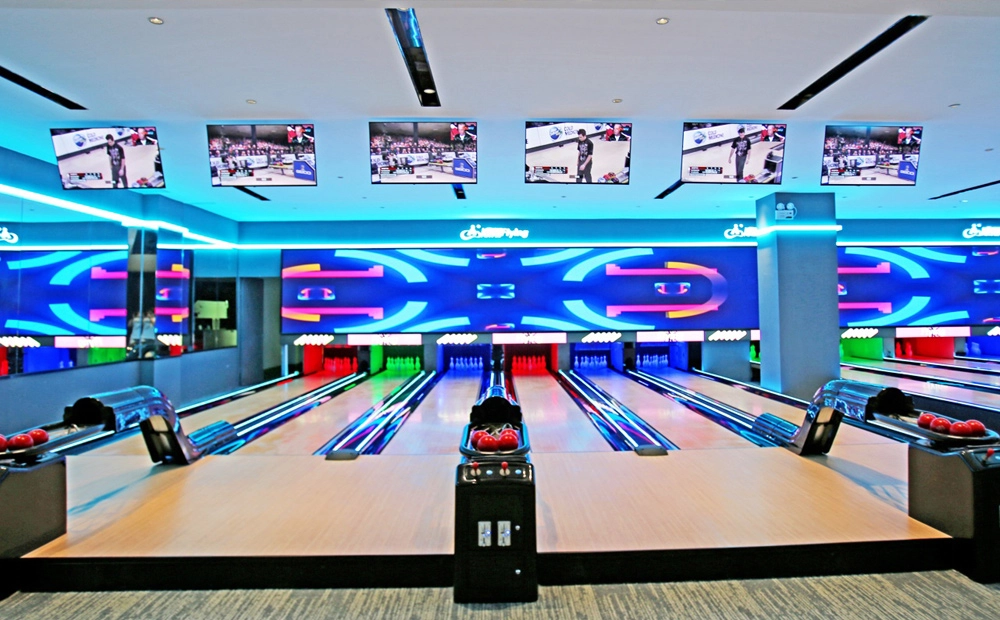
Mini Bowling Equipment for Kids and Family Entertainment Venues
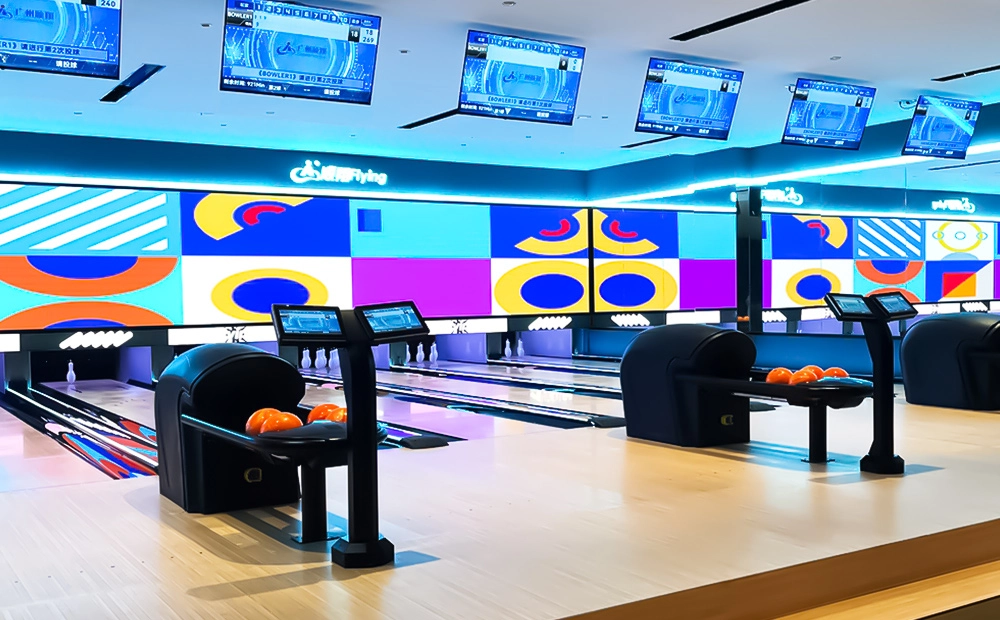
Medium Bowling Equipment for Social Entertainment Venues
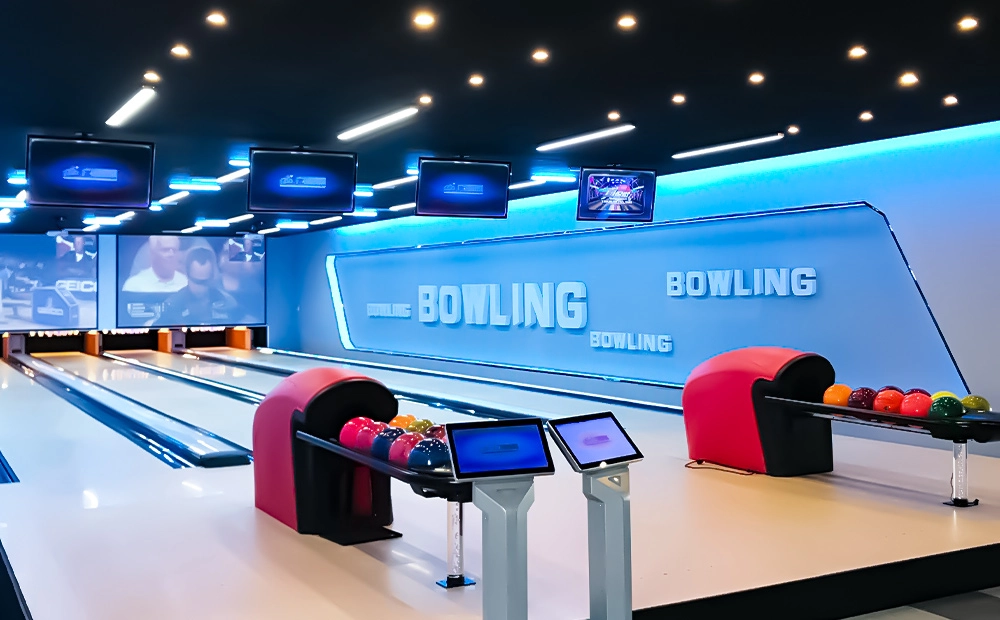
Complete String Pinsetter Bowling Alley Equipment System
You may also like
Flying Smart Duckpin Bowling (FSDB) innovative design, standard 9.2-meter short lane, can be shortened in length, compact layout suitable for small spaces. The game rules are simple but challenging, attracting players of different ages to actively participate.
Suitable for social entertainment venues such as bars, billiard halls, and game centers, it not only enhances interactivity but also increases the popularity and consumption frequency of the venue. The fun and competitive nature of FSDB will make it a new focus of social activities.
Flying Classic Standard Bowling (FCSB) is designed according to international competition standards and equipped with an accurate automatic scoring system, providing bowling enthusiasts with a pure professional experience. Whether it is for competitions or leisure entertainment, FCSB can meet high-level needs.
Suitable for family entertainment centers, luxury resorts, private villas, or clubs, it is an ideal choice for customers who pursue high-end quality and professional experience. Its classic design and excellent performance will add lasting appeal to the venue.
Flying Cute Mini Bowling (FCMB) is a mini bowling experience designed for children and families. The lane length is fixed at 12 meters, equipped with lightweight balls without finger holes (only 1.25kg) and small pins, specially designed for children and family fun.
It can not only help children feel the fun of bowling, but also stimulate their interest and competitive consciousness. Suitable for children's playgrounds, theme parks and parent-child centers, it is the best choice for places focusing on the children's market.
Flying Social Medium Bowling (FSMB) is tailored for small venues, with flexible lane lengths (customizable from 9.6 meters to 18 meters), a small ball design suitable for players of all ages, and light pins that are easier to knock down, increasing participation and fun.
Whether it is a gathering of friends or a casual social, FSMB can easily create a relaxed and pleasant atmosphere. Its efficient space-utilization design is particularly suitable for cafes, bars and community entertainment venues, allowing people to fall in love with bowling in a relaxed interaction.
Contact Flying
Start your bowling alley project
If you contact us now for more details, we can provide you with a custom bowling alley service. Our service team will get back to you within 24 hours normally!
© 2026 Flying BOWLING. Designed by gooeyun.
FOLLOW US:
Flying Bowling
Flying Bowling
Flyingbowling
Flyingbowling