


How Much to Build a Bowling Alley in Palestine State? | Flying
Palestine — primarily the West Bank cities of Ramallah, Nablus, Bethlehem, Hebron, and Jericho — has a growing urban middle class and a severe shortage of quality entertainment infrastructure. There are currently no purpose-built commercial bowling centers operating in the West Bank. For investors, this represents a genuine first-mover opportunity in an underserved market. This guide gives you the real cost numbers, market context, and project framework to evaluate the investment seriously.
Understanding the Palestinian Market
The West Bank operates under a mixed regulatory environment: the Palestinian Authority governs civil construction permitting in Area A and B zones, while Israeli regulations apply in Area C. For commercial entertainment venues, investors should target Ramallah, Nablus, Bethlehem, or Jericho — all in PA-administered zones with functioning municipal permit systems.
Currency: The West Bank uses both USD and ILS (Israeli new shekel) for commercial transactions. USD is widely accepted for large business deals and equipment imports. All budget figures in this guide are in USD.
Revenue opportunity: West Bank GDP per capita was approximately $3,372 in 2023 (World Bank), but urban professional households in Ramallah earn significantly more. The leisure and entertainment market is underdeveloped relative to purchasing power — restaurants, cafés, and private gyms serve an underserved middle class that actively seeks quality leisure options. A well-positioned bowling and entertainment center in Ramallah would face virtually no direct bowling competition.
Import channel: Equipment imported into the Palestinian territories typically enters through Israeli ports (Ashdod or Haifa) and is subject to Israeli customs procedures under the Paris Protocol trade arrangements. This affects lead times and clearance costs — budget an additional 2–4 weeks versus direct-to-country shipping, and work with a freight forwarder experienced in the Israeli-Palestinian customs process.
How Much Does It Cost to Build a Bowling Alley in Palestine?
The table below gives concrete budget ranges for three project sizes in the West Bank. Construction costs are based on Ramallah-level commercial fit-out rates; costs in Nablus, Bethlehem, or Jericho are typically 10–20% lower.
| Project Size | Equipment Cost (USD) | Construction / Fit-Out (USD) | Permits + Fees (USD) | Working Capital (USD) | Total Estimate (USD) |
|---|---|---|---|---|---|
| 4 lanes — boutique, retail conversion | $180,000–$280,000 | $120,000–$240,000 | $8,000–$20,000 | $80,000–$120,000 | $388,000–$660,000 |
| 8 lanes — mid-size FEC, Ramallah | $360,000–$560,000 | $240,000–$480,000 | $15,000–$35,000 | $120,000–$200,000 | $735,000–$1.275M |
| 12 lanes — full entertainment center | $540,000–$840,000 | $360,000–$720,000 | $20,000–$50,000 | $150,000–$250,000 | $1.07M–$1.86M |
| Add 10–15% contingency to all estimates. Construction costs based on $600–$950/m² Ramallah commercial fit-out rate. Equipment at mid-range specification: string pinsetters, synthetic lanes, touchscreen scoring, standard seating. | |||||
These are planning estimates. Obtain itemised quotes from a licensed West Bank contractor and from your equipment supplier before finalising the budget. Equipment costs above are based on Flying Bowling's mid-range string pinsetter package — one of the most cost-effective CE-certified options available for markets where local technician access is limited.
Cost Breakdown: The Four Major Budget Categories
1. Construction and Fit-Out
The West Bank Construction Cost Index for non-residential buildings reached 120.94 in January 2025 (base year 2013=100, PCBS). In practical USD terms for entertainment-grade commercial fit-out including HVAC, electrical, acoustic treatment, and interior finishing:
- Ramallah (prime commercial areas — Al-Masyoun, Al-Bireh): $700–$950/m²
- Ramallah suburbs and secondary cities (Nablus, Bethlehem): $500–$750/m²
- Jericho and smaller cities: $400–$600/m²
A 12-lane center requires approximately 1,200–1,800 m² total floor area including lanes, F&B area, reception, and amenities. At Ramallah rates, construction alone is $840,000–$1.71M for a new build. Retrofitting an existing large commercial space saves 25–35% and is strongly recommended for a first project in Palestine.
2. Bowling Equipment
Equipment costs in Palestine are quoted in USD. All equipment is imported — the West Bank has no domestic bowling equipment manufacturing. Per-lane costs at mid-range commercial specification:
| Component | Cost Per Lane (USD) | Notes |
|---|---|---|
| Synthetic lane surface | $9,000–$14,000 | 20–30 yr lifespan; annual conditioning required |
| String pinsetter (new) | $8,000–$12,000 | Recommended for Palestine — staff-manageable, no specialist technician required |
| Ball return system | $2,800–$5,500 | Above-ground standard |
| Scoring system | $3,700–$7,500 | Touchscreen; mobile integration |
| Furniture and seating | $2,000–$5,000 | Standard to lounge configuration |
| Shipping + import + installation | $4,000–$9,000 | Via Israeli port; allow 2–4 weeks additional clearance time |
| Total per lane (string pinsetter) | $32,000–$53,000 | All-in including import and installation |
Why string pinsetters are especially important for Palestine: Certified free-fall pinsetter technicians are not available in the West Bank. A free-fall machine failure requires flying in a specialist from Israel, Jordan, or further afield — significant downtime and cost. String pinsetters can be serviced by trained general staff. For any market without local technical service infrastructure, string is not just the cheaper option — it is the operationally safer choice.
3. Permits and Regulatory Requirements
Commercial construction permits in the West Bank are issued at the municipal level (Ramallah Municipal Council, Nablus Municipality, etc.). For a standard commercial entertainment venue:
- Building permit fee: typically less than $3,000 for smaller units (PCBS data); larger commercial entertainment venues may pay $8,000–$20,000 depending on floor area and municipality
- Business operating licence: issued by the relevant governorate; covers commercial entertainment activity
- Fire safety and civil defense certificate: required before opening; fire suppression and emergency lighting must meet Palestinian Civil Defense standards
- Food service permit: required if serving F&B; health department inspection required
- Processing time: typically 2–4 months in PA-administered cities for straightforward commercial projects
4. Working Capital
Hold 3–6 months of operating expenses in liquid reserves after construction completes. For an 8-lane FEC in Ramallah, this means approximately $120,000–$200,000 set aside before opening — covering payroll, utilities, initial inventory, and marketing while the venue builds its customer base. This is the most frequently omitted item in first-time operator budgets and the leading cause of early-stage cash flow crises.
Ongoing Operating Costs
Palestinian labor costs are significantly lower than Western markets — a meaningful operating cost advantage. Typical costs for a mid-size bowling center in Ramallah:
- Staffing: $60,000–$150,000/year for 5–8 employees (front desk, lane attendants, F&B staff)
- Commercial lease (Ramallah): $18,000–$48,000/year for 600–1,200 m² depending on location and fit
- Utilities: $1,000–$3,000/month — electricity supply in the West Bank can be intermittent; budget for a generator backup ($8,000–$20,000 capital cost)
- String pinsetter maintenance: $200–$600/lane/year — manageable by in-house staff
- Lane conditioning (oil + cleaner): $500–$1,200/lane/year
Sources: Palestinian Central Bureau of Statistics (PCBS) — Construction Cost Index, West Bank, January 2025 (pcbs.gov.ps). World Bank — West Bank and Gaza GDP per capita data (2023). WAFA Palestinian News Agency — West Bank construction cost index updates (August–September 2024). Flying Bowling equipment pricing and installation data (flyingbowling.com).
FAQ
How much does it cost to build an 8-lane bowling alley in Ramallah?
An 8-lane entertainment center in Ramallah typically requires an all-in investment of approximately $735,000–$1.275 million. This budget includes bowling equipment, construction and fit-out, permits and regulatory fees, and an appropriate working capital reserve for the first operating months. New construction projects generally cost more, while converting an existing retail or warehouse property can significantly reduce the overall investment.
What currency is used for construction and equipment costs in Palestine?
USD is the most commonly used currency for major commercial transactions in the West Bank, including construction contracts and imported bowling equipment purchases. The Israeli New Shekel (ILS) is also widely used for domestic transactions. Since Palestine does not have its own national currency, project budgets are commonly planned in USD while day-to-day operating expenses may be paid in ILS.
How does equipment shipping work into Palestine?
Most bowling equipment destined for the West Bank enters through Israeli ports such as Ashdod or Haifa before completing customs clearance and overland transportation into Palestinian territories. Investors should plan for an additional two to four weeks of logistics processing compared with direct-country imports. Working with an experienced freight forwarder familiar with Israeli-Palestinian customs procedures is highly recommended.
Why are string pinsetters strongly recommended for Palestine?
String pinsetters are particularly suitable for Palestine because there are currently no certified free-fall pinsetter technicians permanently based in the West Bank. Free-fall equipment failures may require technicians to travel from neighboring countries or Israel, increasing downtime and service costs. String pinsetters contain significantly fewer moving parts, require lower maintenance budgets, and can usually be serviced by trained in-house staff, making them the most practical and reliable solution for the local market.
How long does the full project take from decision to opening?
A typical bowling center project in Ramallah requires approximately 8–14 months from initial planning to grand opening. This timeline usually includes permit approval, construction and fit-out, equipment manufacturing and shipping, customs clearance, installation, testing, and staff training. To avoid delays, equipment orders should be placed when construction begins rather than after construction is completed.
What formats work best for the Palestinian market?
For most investors, a standard 10-pin bowling center with six to ten lanes combined with food and beverage services offers the strongest commercial potential. Family entertainment, birthday parties, school activities, and corporate events are expected to be the primary revenue drivers. Compact formats such as duckpin bowling or medium bowling can also be attractive alternatives where available space is limited or where operators want to add multiple entertainment attractions within a single venue.
Recommended products
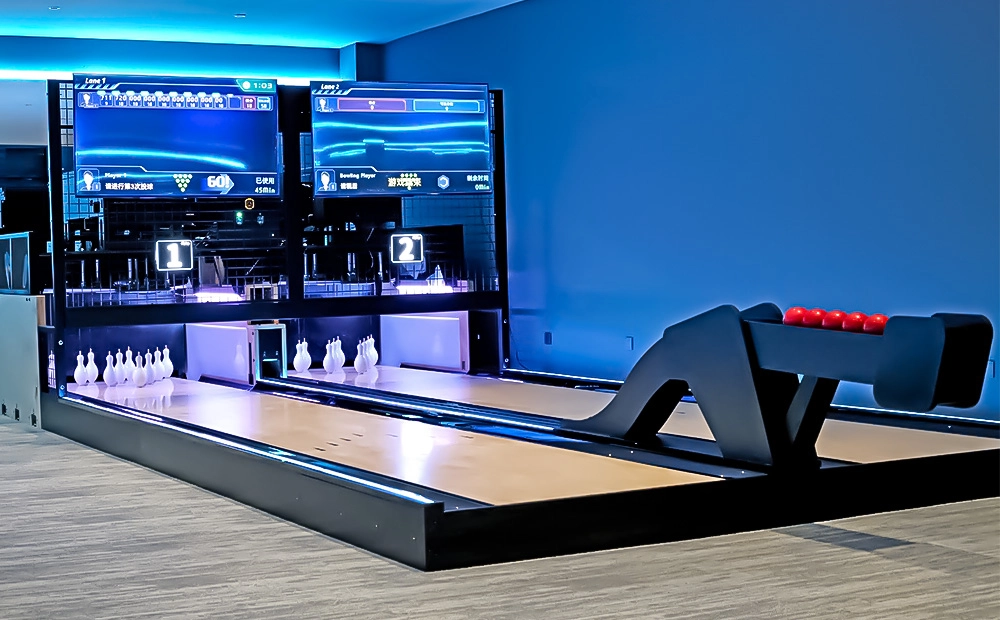
Flying Smart Duckpin Bowling Equipment and Lane System for Commercial Venues
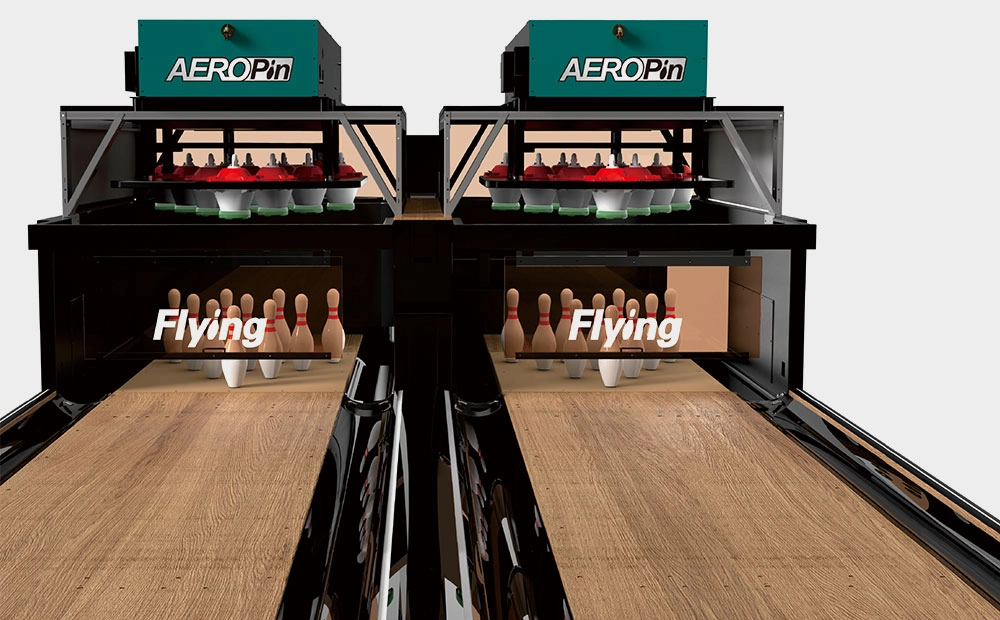
USBC-Certified AEROPIN String Pinsetter System
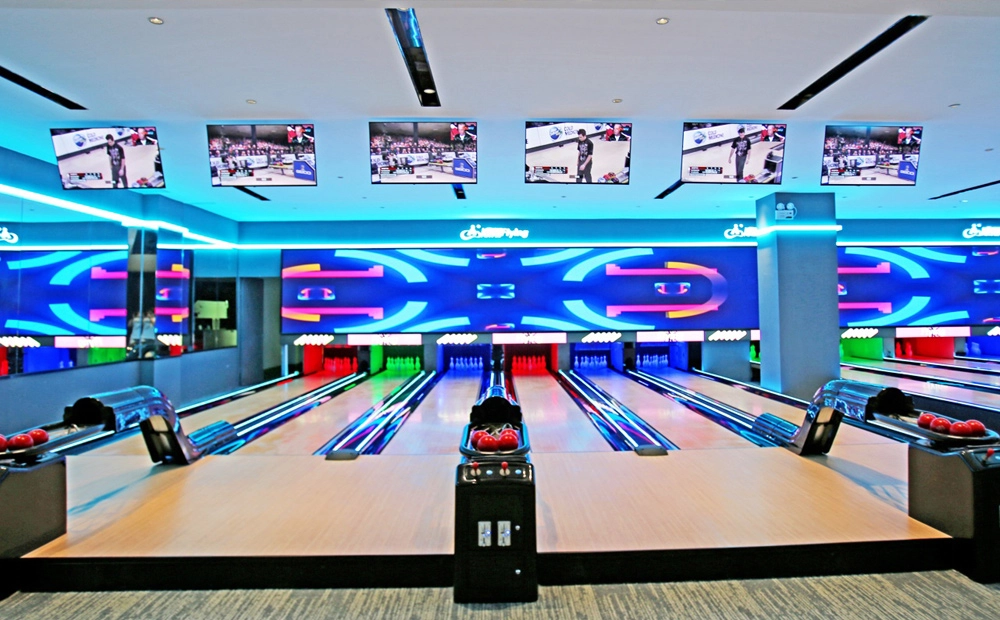
Mini Bowling Equipment for Kids and Family Entertainment Venues
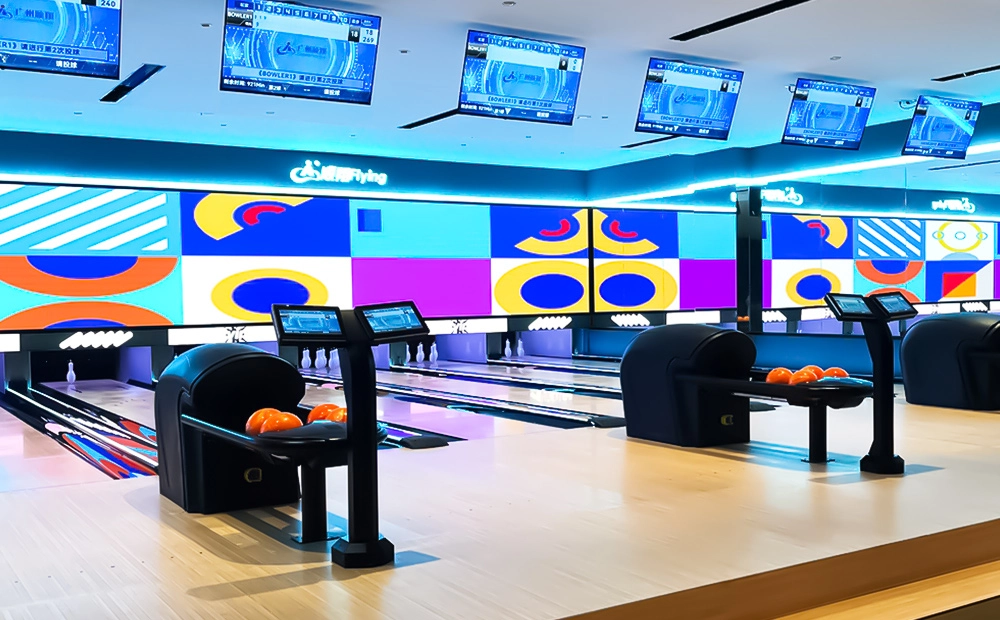
Medium Bowling Equipment for Social Entertainment Venues
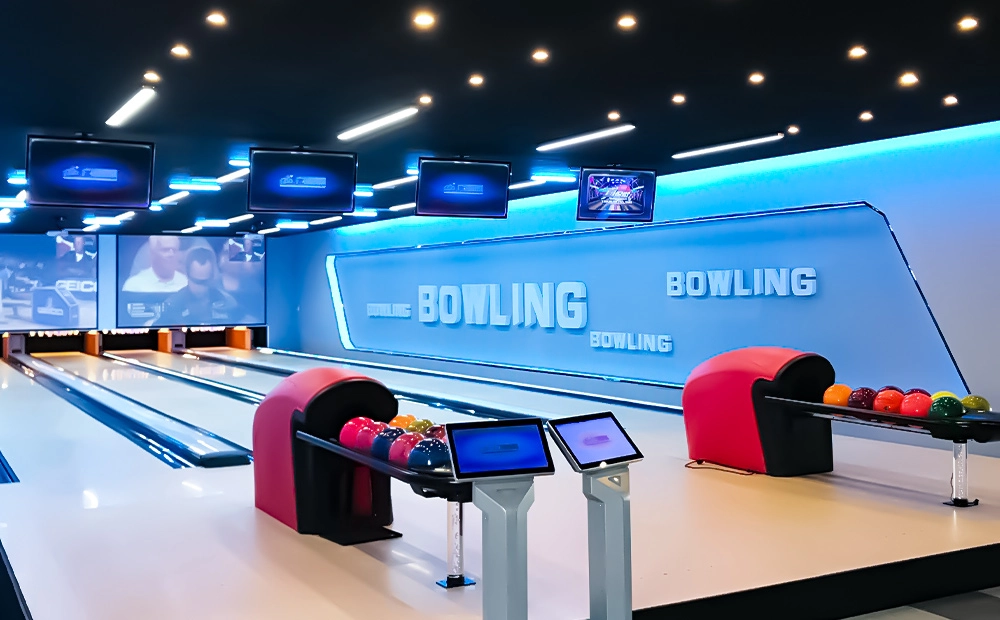
Complete String Pinsetter Bowling Alley Equipment System
You may also like
Flying Smart Duckpin Bowling (FSDB) innovative design, standard 9.2-meter short lane, can be shortened in length, compact layout suitable for small spaces. The game rules are simple but challenging, attracting players of different ages to actively participate.
Suitable for social entertainment venues such as bars, billiard halls, and game centers, it not only enhances interactivity but also increases the popularity and consumption frequency of the venue. The fun and competitive nature of FSDB will make it a new focus of social activities.
Flying Classic Standard Bowling (FCSB) is designed according to international competition standards and equipped with an accurate automatic scoring system, providing bowling enthusiasts with a pure professional experience. Whether it is for competitions or leisure entertainment, FCSB can meet high-level needs.
Suitable for family entertainment centers, luxury resorts, private villas, or clubs, it is an ideal choice for customers who pursue high-end quality and professional experience. Its classic design and excellent performance will add lasting appeal to the venue.
Flying Cute Mini Bowling (FCMB) is a mini bowling experience designed for children and families. The lane length is fixed at 12 meters, equipped with lightweight balls without finger holes (only 1.25kg) and small pins, specially designed for children and family fun.
It can not only help children feel the fun of bowling, but also stimulate their interest and competitive consciousness. Suitable for children's playgrounds, theme parks and parent-child centers, it is the best choice for places focusing on the children's market.
Flying Social Medium Bowling (FSMB) is tailored for small venues, with flexible lane lengths (customizable from 9.6 meters to 18 meters), a small ball design suitable for players of all ages, and light pins that are easier to knock down, increasing participation and fun.
Whether it is a gathering of friends or a casual social, FSMB can easily create a relaxed and pleasant atmosphere. Its efficient space-utilization design is particularly suitable for cafes, bars and community entertainment venues, allowing people to fall in love with bowling in a relaxed interaction.
Contact Flying
Start your bowling alley project
If you contact us now for more details, we can provide you with a custom bowling alley service. Our service team will get back to you within 24 hours normally!
© 2026 Flying BOWLING. Designed by gooeyun.
FOLLOW US:
Flying Bowling
Flying Bowling
Flyingbowling
Flyingbowling