

How Much to Build a Bowling Alley in Pakistan? Complete 2026 Cost Guide (PKR & USD)
How Much to Build a Bowling Alley in Pakistan? This 2026 cost guide by Flying Bowling breaks down expenses in PKR and USD, covering construction, equipment, and operational costs to help you plan your investment accurately. Get precise figures and industry insights tailored to the Pakistani market.
- Bowling Alley Setup Cost in Pakistan: 2026 Summary
- 1. Initial Investment: Key Cost Components
- 2. Cost Breakdown by Lane Configuration
- 3. Bowling for Small Business Investors in Pakistan
- 4. Monthly Operating Costs for a Pakistani Bowling Venue
- 5. Choosing the Right Bowling Format for Pakistan
- 6. Key Steps to Opening a Bowling Alley in Pakistan
- 7. How Flying Bowling Supports Pakistan Projects
- FAQ
Pakistan’s entertainment and leisure sector is growing steadily, with family entertainment centers, shopping malls, and urban recreation venues expanding across Karachi, Lahore, Islamabad, and Tier-2 cities. Bowling alleys have emerged as one of the most consistent anchor attractions — delivering reliable footfall, F&B revenue, and repeat visits across age groups.
This guide provides a 2026 planning estimate for building a bowling alley in Pakistan, using PKR and USD pricing alongside Pakistan-specific data on rent, customs duties, construction costs, and operating expenses. Flying Bowling supports bowling equipment projects in Pakistan and the broader South Asian market, with equipment supplied to commercial venues internationally since 2015.
Quick Answer
Building a bowling alley in Pakistan requires an estimated PKR 8.5M–11.4M ($30,000–$40,000) in FOB equipment for a 2-lane setup, rising to a total project estimate of PKR 15M–22M when freight, customs, installation, and permits are included. A 4-lane commercial venue runs approximately PKR 28M–42M total, and a 6-lane center typically requires PKR 40M–65M.
PKR estimates based on an indicative rate of PKR 280–285 per USD. Exchange rates fluctuate — verify current rates with the State Bank of Pakistan (sbp.org.pk) before finalising project budgets.
Bowling Alley Setup Cost in Pakistan: 2026 Summary
| Setup | Equipment (FOB, USD) | Approx. PKR (FOB only) | Total Project Est. (PKR) | Best For |
|---|---|---|---|---|
| 2-Lane Duckpin / Mini | $30,000–$40,000 | PKR 8.5M–11.4M | PKR 15M–22M | Café, hotel, compact FEC |
| 4-Lane Setup | $60,000–$85,000 | PKR 17M–24M | PKR 28M–42M | Mall entertainment zone, FEC |
| 6-Lane Standard | $90,000–$130,000 | PKR 25.5M–37M | PKR 40M–65M | Commercial bowling center |
| 8-Lane Standard | $140,000–$200,000 | PKR 40M–57M | PKR 60M–95M | Large FEC, mall anchor venue |
PKR conversion at indicative rate PKR 280/USD. Verify current exchange rate at sbp.org.pk. Total project costs include freight, customs duties, local installation, permits, and basic interior fit-out. Venue rent is additional.
1. Initial Investment: Key Cost Components
Commercial Space and Rent
Location is the single most important factor in a bowling alley’s long-term profitability. Pakistan’s primary bowling audience is urban, middle- to upper-middle class, which makes mall entertainment zones, commercial plazas, and high-footfall urban areas the most viable locations.
The rent estimates below are derived from publicly available commercial property listings and market data for major Pakistani cities. They represent typical asking rates as of 2025–2026 and should be verified directly with local property agents before signing any lease.
| City / Area | Approx. Rent (per sqft/month) | Recommended Space (4-lane) | Est. Monthly Rent |
|---|---|---|---|
| Karachi — DHA, Clifton, Zamzama | PKR 200–350 | 3,000–4,500 sqft | PKR 600,000–1,575,000 |
| Lahore — Gulberg, M.M. Alam Road | PKR 150–280 | 3,000–4,500 sqft | PKR 450,000–1,260,000 |
| Islamabad — Blue Area, F-7, F-10 | PKR 180–320 | 3,000–4,500 sqft | PKR 540,000–1,440,000 |
| Faisalabad, Multan, Peshawar | PKR 80–160 | 2,500–4,000 sqft | PKR 200,000–640,000 |
Rent estimates sourced from Pakistani commercial property platforms. Rates vary by floor, unit size, and lease terms — always obtain formal quotes from registered property agents.
Bowling Equipment Cost in Pakistan
Flying Bowling offers four equipment formats suited to different venue sizes and investment levels. All systems are manufactured in Guangzhou, China, and shipped to Pakistan by sea container.
| Equipment Type | Cost Per Lane (FOB, USD) | Total 4–6 Lanes (FOB) | PKR Equivalent | Suitable Venue |
|---|---|---|---|---|
| Mini Bowling (FCMB) | $9,000–$12,000 | $36,000–$72,000 | PKR 10M–20M | Small FECs, cafés, kids’ zones |
| Duckpin Bowling (FSDB) | $11,000–$16,000 | $44,000–$96,000 | PKR 12M–27M | Boutique venues, compact FECs |
| Medium Bowling (FSMB) | $14,000–$18,000 | $56,000–$108,000 | PKR 16M–30M | Mid-size FECs, malls |
| Standard Bowling (FCSB) | $18,000–$25,000 | $72,000–$150,000 | PKR 20M–42M | Commercial centers, large venues |
Flying Bowling string pinsetter systems are designed for easier daily operation and generally require less specialised maintenance than traditional mechanical free-fall pinsetters, depending on venue configuration and usage conditions.
Importing Bowling Equipment to Pakistan: Freight and Customs
Pakistan’s tariff schedule for bowling equipment varies depending on HS code classification at the time of import. The duty range cited in this guide reflects typical project experience, but importers should verify applicable duties with Pakistan Customs through the Federal Board of Revenue (fbr.gov.pk) or a licensed customs clearing agent before placing equipment orders.
| Cost Component | Estimate | Notes |
|---|---|---|
| Ocean freight (China to Karachi) | $1,500–$3,000 | Per 20-ft container; varies by shipment size |
| Pakistan Customs duty | 15–25% of CIF value | Subject to HS code classification; verify with FBR |
| Port handling and inland transport | PKR 80,000–150,000 | Karachi port to venue city |
| Customs clearing agent | PKR 50,000–120,000 | Recommended for first-time importers |
| Total logistics estimate | ~18–28% of FOB value | Added to FOB equipment cost |
Flying Bowling provides full commercial invoice documentation, packing lists, and HS code guidance for all international shipments to support customs clearance. A licensed customs clearing agent is strongly recommended for first-time importers.
Construction and Interior Fit-Out
Construction cost estimates below are based on general market data for commercial fit-outs in Pakistani cities. They are indicative and should be validated with qualified local contractors before use in project budgets.
| Construction Category | Estimate (PKR per sqft) | Notes |
|---|---|---|
| Structural / subfloor preparation | PKR 400–900 | Levelling and load-bearing for lane equipment |
| Electrical (dedicated circuits) | PKR 200–450 | Pinsetter supply + general venue load |
| Interior design and fit-out | PKR 300–800 | Seating, counters, décor; varies by specification |
| Lighting (LED lane + ambient) | PKR 150–350 | Lane-specific LED included in equipment package |
| HVAC and ventilation | PKR 200–400 | Important for equipment longevity in Pakistan’s climate |
A 4-lane commercial venue in a 3,500 sqft commercial space typically requires an estimated PKR 4M–9M for construction and fit-out, depending on specification level and city. These figures are planning estimates only. A typical 4–6 lane bowling center takes around 4–8 months to build, depending on site readiness, permit timelines, and equipment shipping lead time.
Licenses and Permits in Pakistan
Permit costs and timelines vary by city and province. The estimates below should be confirmed with local legal advisors or a business registration consultant in your target city.
| License / Permit | Approx. Cost | Authority |
|---|---|---|
| SECP company registration / NTN | PKR 15,000–40,000 | SECP (secp.gov.pk) |
| Local government trade license | PKR 30,000–120,000 | City municipal corporation |
| NOC from city development authority | PKR 20,000–80,000 | SBCA (Karachi) / LDA (Lahore) / CDA (Islamabad) |
| Fire safety certificate | PKR 15,000–50,000 | Pakistan Fire Department |
| Food & beverage license (if applicable) | PKR 10,000–40,000 | Health department |
| Total permits estimate | PKR 150,000–400,000 | Allow 2–4 months for processing |
2. Cost Breakdown by Lane Configuration
2-Lane Bowling Alley Cost in Pakistan
A 2-lane setup is suited to cafés, hotel recreation rooms, boutique clubs, and compact entertainment spaces. Equipment and basic installation cost approximately $30,000–$40,000 FOB, or PKR 8.5M–11.4M. Including freight, customs, local installation, and permits, the total landed and operational cost is estimated at PKR 15M–22M. This makes the 2-lane setup the most accessible entry point for first-time investors and for venues where bowling is one of several attractions rather than the primary revenue driver.
Best for: Cafés and bars, boutique clubs, small FEC projects, hotels and resorts, compact commercial venues.
4-Lane Bowling Alley Cost in Pakistan
A 4-lane setup is typically the minimum viable configuration for a standalone commercial bowling operation in Pakistan. It can serve walk-in customers, birthday parties, and small group events simultaneously. FOB equipment cost: $60,000–$85,000 (PKR 17M–24M). Total project estimate including local costs: PKR 28M–42M.
Best for: Mall entertainment zones, medium-size FECs, resort recreation areas, urban leisure centers.
6-Lane and Larger Commercial Venues
A 6-lane commercial bowling center in a Pakistani mall or entertainment complex is suitable for higher-footfall operations that can support walk-in players, corporate events, and birthday party packages simultaneously. FOB equipment: $90,000–$130,000 (PKR 25.5M–37M). Total project including local costs: PKR 40M–65M.
Best for: Commercial bowling centers, shopping mall FECs, large resorts, family entertainment chains. For venues planning 8 lanes or more, Flying Bowling can provide a free layout consultation and itemised cost estimate based on your specific floor plan.
3. Bowling for Small Business Investors in Pakistan
Not every bowling investment requires a full commercial center. For small business owners, café operators, and first-time entertainment investors in Pakistan, compact bowling formats offer a lower entry cost with strong customer engagement.
For small business investors, the duckpin and mini bowling formats offer three practical advantages over standard tenpin: lower equipment cost, significantly smaller space requirement (as little as 80–100 m²), and daily operation with regular staff — no specialist mechanics required. A café or restaurant adding 2 duckpin lanes can expect to see higher average customer dwell time per visit, which in many entertainment venues translates into higher F&B revenue — though actual results depend on venue layout, pricing, and local customer behaviour.
| Format | Min. Space | Equipment Cost (FOB) | PKR Equivalent | Best Venue Type |
|---|---|---|---|---|
| 2-Lane Mini Bowling (FCMB) | ~100 m² | $18,000–$24,000 | PKR 5M–6.8M | Café, kids’ zone, family restaurant |
| 2-Lane Duckpin (FSDB) | ~80 m² | $22,000–$32,000 | PKR 6.2M–9M | Bar, boutique FEC, hotel lounge |
| 4-Lane Mini / Duckpin combo | ~180–220 m² | $40,000–$64,000 | PKR 11M–18M | Small FEC, mall entertainment zone |
4. Monthly Operating Costs for a Pakistani Bowling Venue
Beyond the initial investment, monthly operating costs determine the break-even timeline and ongoing profitability of your bowling business.
| Cost Category | Estimate (per month, 4-lane venue) | Notes |
|---|---|---|
| Venue rent | PKR 400,000–1,200,000 | Largest variable — location dependent |
| Electricity | PKR 80,000–200,000 | String pinsetter systems generally require lower power consumption than traditional free-fall pinsetters |
| Staff salaries | PKR 150,000–350,000 | 2–4 staff for a 4-lane automated venue |
| Equipment maintenance | PKR 20,000–60,000 | String pinsetter systems have lower maintenance requirements than free-fall alternatives |
| Marketing | PKR 30,000–100,000 | Social media, influencer campaigns, launch promotions |
| Miscellaneous (insurance, admin) | PKR 20,000–50,000 | — |
| Total monthly operating cost | PKR 700,000–1,960,000 | Excluding loan repayment and venue rent amortisation |
Revenue Planning and ROI
| Revenue Source | Planning Notes |
|---|---|
| Bowling game fees | PKR 500–1,500 per game per player; primary revenue source |
| Birthday party packages | PKR 8,000–25,000 per booking; strong weekend demand |
| Corporate and group events | Suitable for 4-lane and larger venues |
| Food and beverage | Commonly contributes meaningfully to total venue revenue; depends on menu, pricing, and venue model |
| Memberships and packages | Drives repeat visits and predictable monthly revenue |
Many commercial bowling operators use a 3–5 year equipment payback scenario for planning purposes. Actual ROI depends heavily on venue rent, lane utilisation rates, game pricing, F&B performance, and local operating conditions. Investors should build their own financial model using specific local cost and revenue assumptions before making a final investment decision.
5. Choosing the Right Bowling Format for Pakistan
| Format | Space Required | Cost Level | Best For | Key Advantage |
|---|---|---|---|---|
| Standard Bowling (FCSB) | Highest | Higher | Large malls, dedicated bowling centers | Professional experience, league play |
| Medium Bowling (FSMB) | Medium | Medium | Mid-size FECs, entertainment plazas | Balance of space and full experience |
| Duckpin Bowling (FSDB) | Lower | Medium-Low | Cafés, boutique venues, compact FECs | Social, accessible, space-efficient |
| Mini Bowling (FCMB) | Lowest | Lower | Kids’ zones, family cafés, small venues | Lowest entry cost, easiest to operate |
6. Key Steps to Opening a Bowling Alley in Pakistan
- Business plan: Define venue type, target audience, bowling format (Standard / Duckpin / Mini), and total capital budget including a 3-month operating reserve.
- Location scouting: Confirm column-free floor span, ceiling height (min. 2.44 m for standard bowling, 2.25 m for duckpin/mini), and electrical supply capacity. Sign a lease only after confirming technical feasibility.
- Equipment inquiry: Request FOB quotation from Flying Bowling including HS Code documentation for customs duty pre-estimation. Flying Bowling can provide a formal quotation after reviewing your project details, typically within 24–48 hours.
- Permits — start early: Apply for trade license, NOC, and fire safety certificate immediately after signing the lease. Allow 2–4 months minimum for permit processing in Pakistani cities.
- Construction and installation: Flying Bowling provides technical guidance for local contractors and sends a commissioning technician for final equipment setup and testing.
- Staff training: Flying Bowling provides operational training for local staff. String pinsetter systems are designed for easier daily operation — regular staff manage the system via touchscreen panel.
- Pre-opening marketing: Plan your launch campaign 4–6 weeks before opening. Instagram, TikTok, YouTube Shorts, and local influencer campaigns are commonly used channels for entertainment venue launches in Pakistani urban markets.
7. How Flying Bowling Supports Pakistan Projects
Flying Bowling provides complete bowling equipment and project support for investors, FECs, malls, hotels, and distributors planning bowling venues in Pakistan. We support sea freight arrangements through Karachi port and can provide full logistics guidance for first-time importers.
- › Bowling venue layout consultation
- › Lane count and format recommendation based on your floor plan
- › String pinsetter systems (USBC-certified AEROPin) and complete lane packages
- › FOB quotation with HS Code documentation for customs pre-estimation
- › Installation guidance and commissioning technician
- › Staff operation and maintenance training
- › Spare parts availability and 1-year warranty coverage
Contact us: jackson@flyingbowling.com | WhatsApp +86 150 1310 7020
Get a Custom Bowling Alley Cost Estimate for Pakistan
Tell us your venue size, city, lane quantity, and preferred format. Flying Bowling can provide a formal itemised quotation — including equipment, freight estimate, and HS Code documentation — typically within 24–48 hours.
Request a Free Quote View All ProductsFAQ
How much does it cost to build a bowling alley in Pakistan?
A 2-lane setup costs approximately PKR 8.5M–11.4M for FOB equipment ($30,000–$40,000), rising to PKR 15M–22M as a complete project including freight, customs, installation, and permits. A 4-lane commercial venue runs PKR 28M–42M total, and a 6-lane center typically requires PKR 40M–65M. All PKR figures use an indicative rate of PKR 280 per USD — verify current rates at sbp.org.pk before finalizing budgets.
What is the bowling alley setup cost in Pakistan for a small business?
For small business investors, a 2-lane duckpin or mini bowling setup is the most accessible entry point — FOB equipment cost of $18,000–$32,000 (PKR 5M–9M), with a total landed and operational cost estimated at PKR 12M–20M. These compact formats require as little as 80–100 m² of floor space and are designed for operation with regular staff, making them viable additions to cafés, restaurants, and boutique entertainment spaces.
What customs duty applies to bowling equipment imported to Pakistan?
Bowling equipment imported to Pakistan is typically subject to customs duty in the range of 15–25% of CIF (cost + insurance + freight) value, depending on HS code classification. Actual duty rates should be verified with the Federal Board of Revenue (fbr.gov.pk) or a licensed customs clearing agent before placing orders. Additional costs include ocean freight from China to Karachi ($1,500–$3,000 per container), port handling, and inland transport. Flying Bowling provides full HS code documentation with every order to support customs clearance.
How much is monthly rent for a bowling alley in Pakistan?
Monthly rent depends on city and location. In Karachi's DHA or Clifton, typical asking rates are PKR 200–350 per sqft per month — a 3,500 sqft 4-lane venue runs PKR 700,000–1,225,000/month in rent alone. Lahore's Gulberg area typically runs PKR 150–280/sqft. Islamabad's Blue Area and F-7 range from PKR 180–320/sqft. Tier-2 cities such as Faisalabad and Multan are significantly more affordable at PKR 80–160/sqft. These are indicative estimates based on publicly available commercial property data — confirm with local property agents before signing any lease.
How long does it take to build a bowling alley in Pakistan?
A typical 4–6 lane commercial bowling venue takes approximately 4–8 months from lease signing to opening — covering permit processing (2–4 months), equipment manufacturing and shipping (approximately 45–60 days from order confirmation), installation (1–2 weeks), and pre-opening setup. Permit processing in Pakistani cities is often the most time-sensitive step; apply for a trade license and NOC simultaneously with lease signing to minimize delays.
Is a bowling alley a good investment in Pakistan?
For venues in high-footfall locations — Karachi or Lahore mall entertainment zones, urban FEC developments — bowling has demonstrated strong commercial performance in the Pakistani market. Many commercial bowling operators use a 3–5 year equipment payback scenario for planning purposes, though actual ROI depends heavily on rent, lane utilization, pricing, F&B performance, and local operating costs. Investors should build their own financial model using specific local cost and revenue assumptions before making a final investment decision.
Does Flying Bowling supply equipment to Pakistan?
Yes. Flying Bowling has supplied commercial bowling equipment to venues in Pakistan and maintains established freight and logistics channels through Karachi port. We provide complete FOB quotations, including HS code documentation, installation guidance, commissioning technician support, and 3-year warranty coverage. Contact jackson@flyingbowling.com with your venue dimensions and lane count for a formal project quotation.
What information should I provide to get a bowling alley quotation for Pakistan?
To receive an accurate quotation, provide your project city, venue size, CAD drawing if available, preferred bowling format, estimated lane quantity, business type, and expected opening timeline. These details help Flying Bowling recommend a suitable layout, equipment configuration, freight estimate, and project budget range.
Recommended products
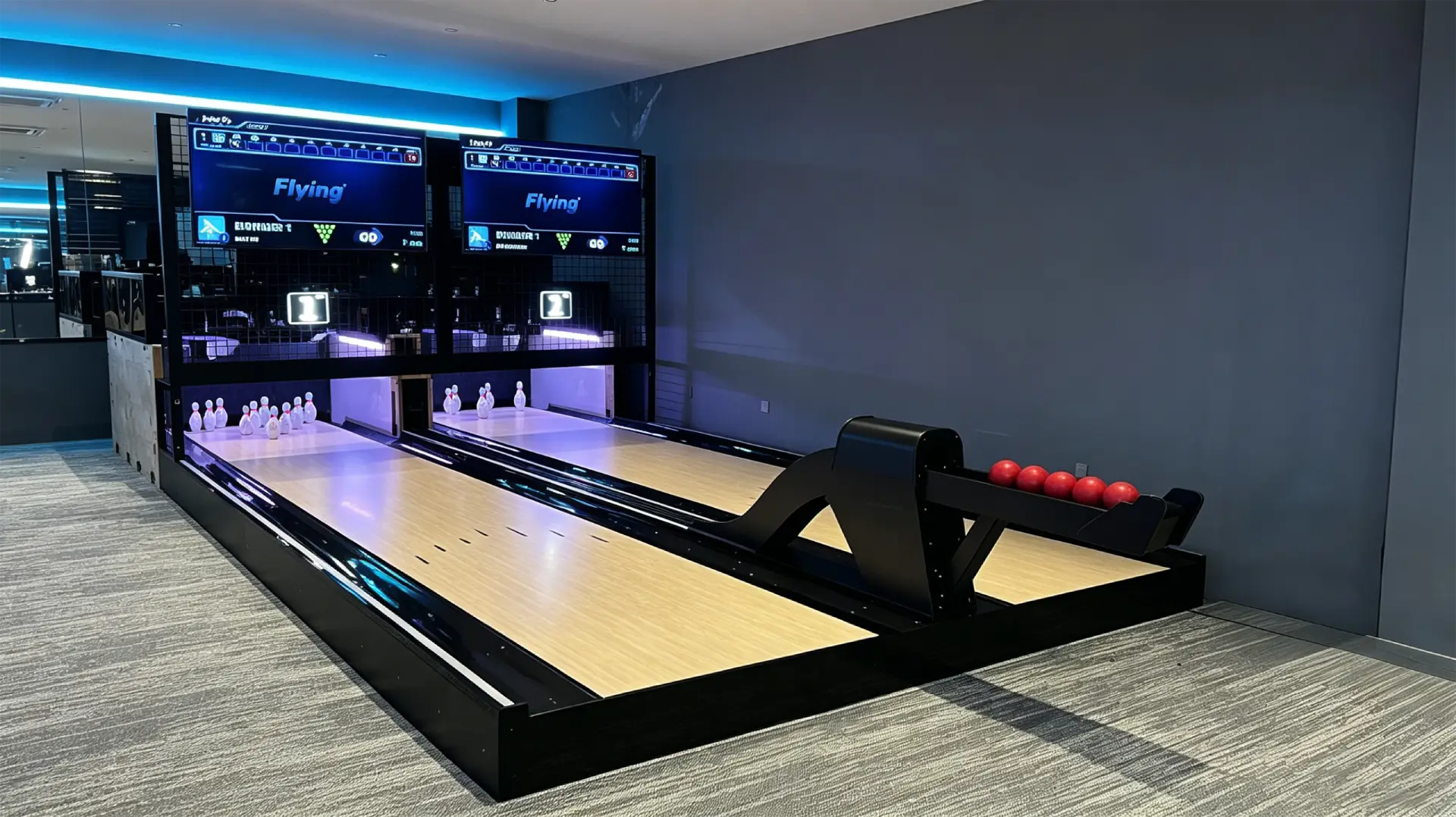
Flying Smart Duckpin Bowling Equipment for Commercial Venues
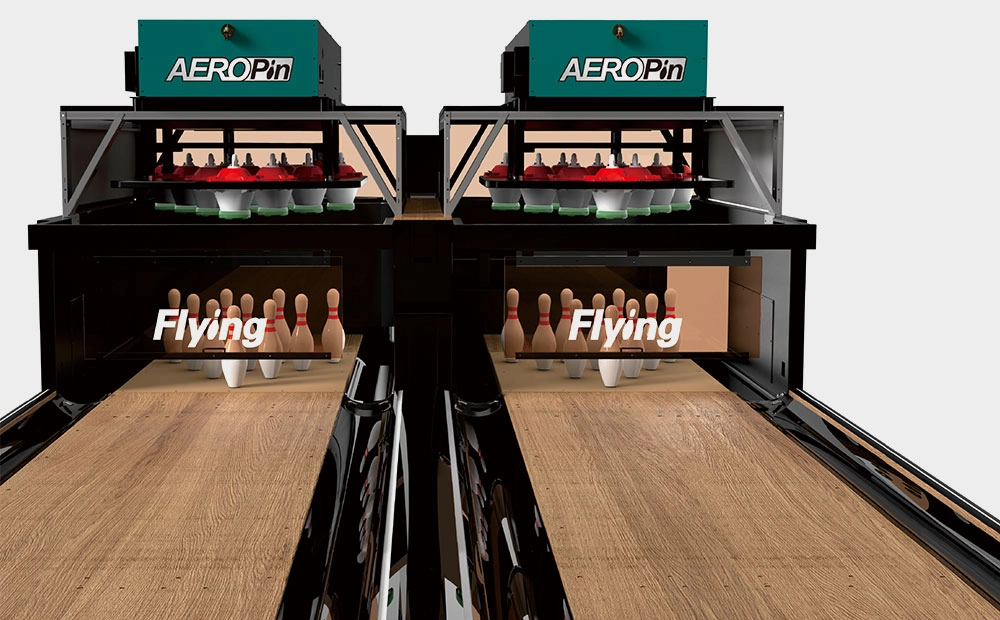
AEROPIN™ USBC-Certified String Pinsetter System
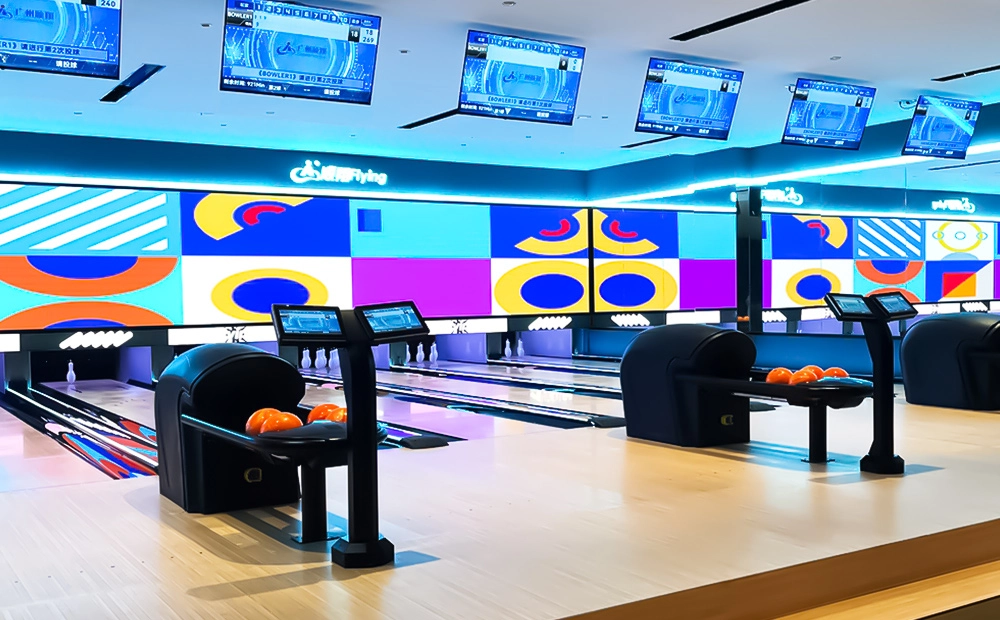
Medium Bowling Equipment for Compact Social Venues
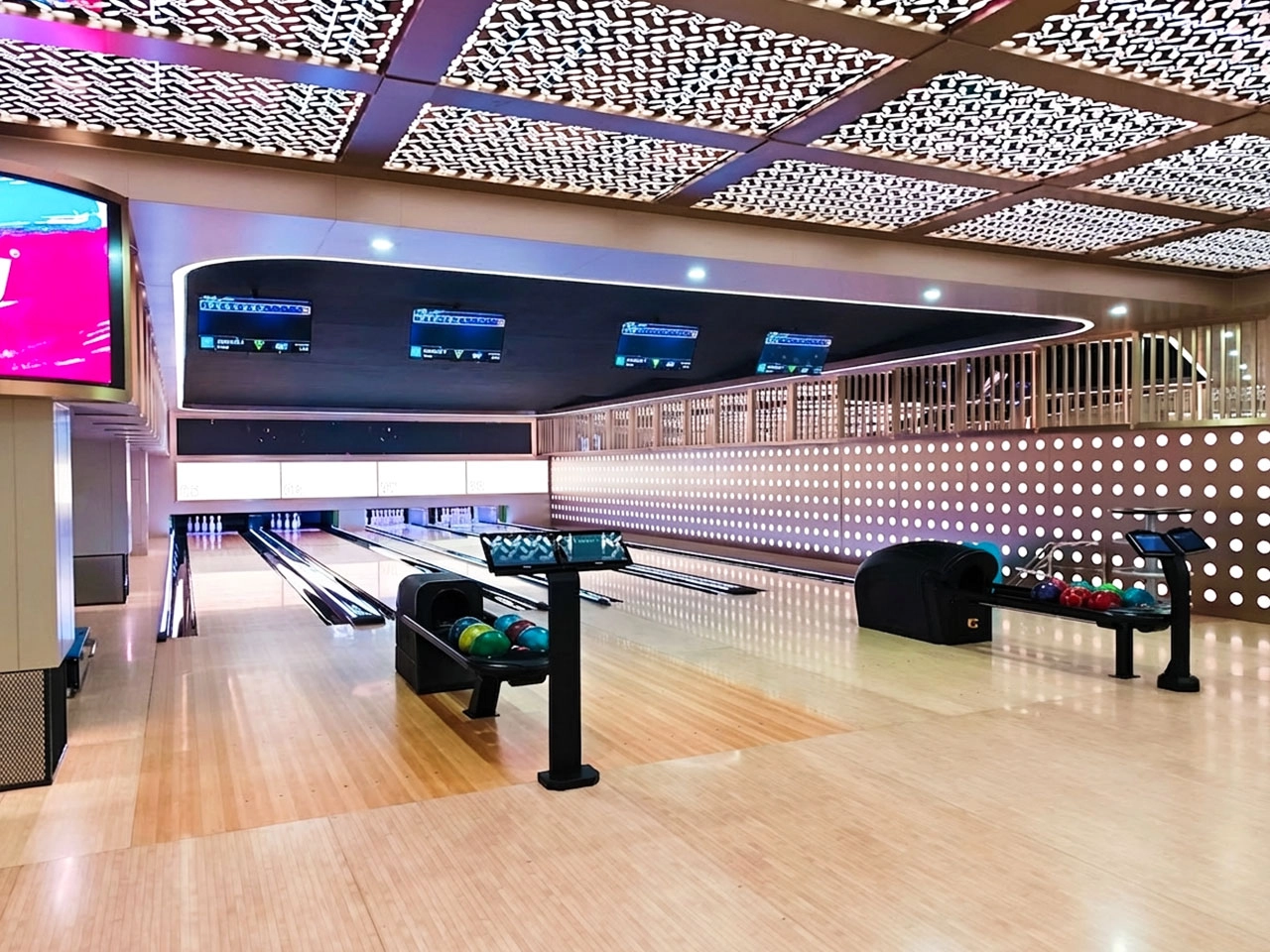
Complete Bowling Alley Equipment Package for Commercial Bowling Centers
You may also like
Build a commercial bowling venue with Flying’s complete string pinsetter bowling alley equipment package. The system includes the AEROPIN™ USBC-certified string pinsetter, customizable lanes, automatic scoring, ball return, lane lighting, pins, control hardware, and overseas installation support.
Designed for commercial bowling centers, family entertainment venues, hotels, resorts, bars, and premium private projects, this turnkey bowling system helps operators reduce sourcing complexity and prepare for reliable long-term operation.
Flying Smart Duckpin Bowling is a compact duckpin bowling equipment system designed for bars, family entertainment centers, hotels, resorts, cinemas, boutique bowling alleys, and social entertainment venues. With a standard 9.13m duckpin bowling lane, 1.25kg lightweight balls, automatic scoring, ball return, LED lighting, and a smart string pinsetter, it creates a fast-paced and easy-to-play bowling experience in a smaller footprint than traditional bowling.
The system is available as a turnkey duckpin bowling package, including lane equipment, a string pinsetter system, scoring hardware, control software, global shipping, installation guidance, and technical support.
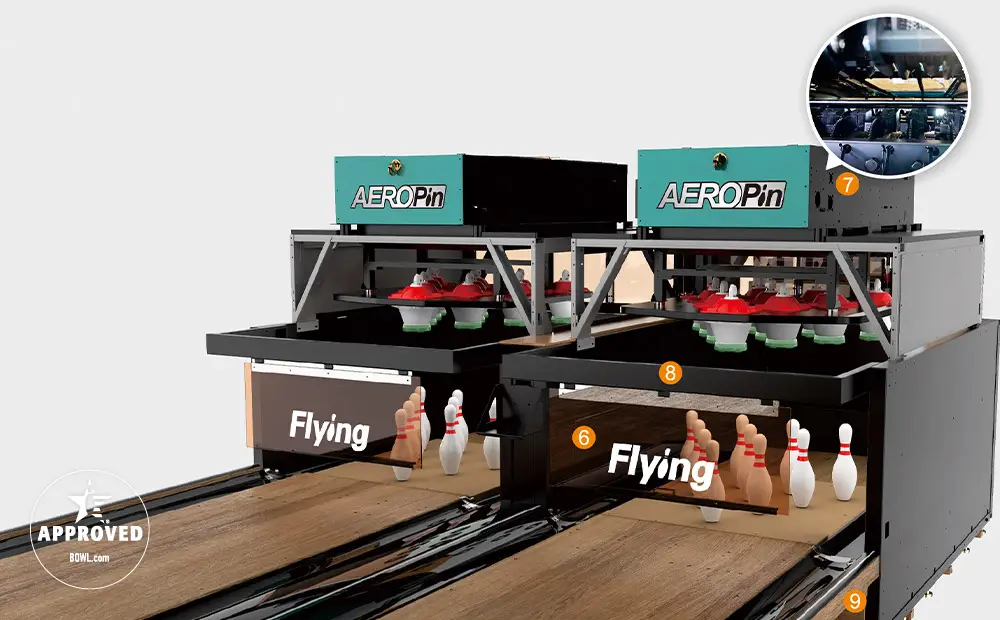
AEROPIN is Flying Bowling’s USBC-certified string pinsetter system for modern commercial bowling centers. Designed for fast pin setting, smooth ball return, low maintenance, and stable daily operation, it helps venue operators build league-ready and entertainment-focused bowling projects with confidence.
Flying Social Medium Bowling is a compact medium bowling equipment system designed for bars, cafes, family entertainment centers, community leisure venues, hotels, resorts, and small indoor entertainment spaces. With customizable lane lengths from 9.6m to 18m, small balls, lighter pins, string pinsetter technology, ball return, and automatic scoring, it creates an easy-to-play social bowling experience for players of different ages and skill levels.
Compared with full-size standard bowling, medium bowling requires less space and offers a more casual, interactive format. It is a practical choice for venues that want to add a bowling attraction without building a full commercial bowling alley.
Contact Flying
Start your bowling alley project
If you contact us now for more details, we can provide you with a custom bowling alley service. Our service team will get back to you within 24 hours normally!
© 2026 Flying BOWLING. Designed by gooeyun.
FOLLOW US:

Flying Bowling
Flying Bowling
Flyingbowling
Flyingbowling
Flyingbowling