

How Much to Build a Bowling Alley in Ireland? 2026 Cost Guide
This guide explains how much it may cost to build a bowling alley in Ireland in 2026, including equipment, installation, shipping, import costs, VAT, planning requirements, fit-out, lane count, venue format and investor planning considerations.
- Quick Answer: How Much Does It Cost to Build a Bowling Alley in Ireland?
- Key Takeaways
- Ireland Bowling Alley Cost Chart 2026
- What Local Costs Usually Add in Ireland
- Cost by Lane Count: 2, 4, 6 and 12 Lanes
- Mini Bowling vs. Duckpin vs. Standard Tenpin Cost in Ireland
- Bowling Lane Installation Cost in Ireland
- Ireland Local Costs: VAT, Rent, Planning, Fit-Out and Labour
- Business Model and Revenue Factors
- Is a Bowling Alley Franchise Available in Ireland?
- Home Bowling Alley Cost in Ireland
- What Investors Should Confirm Before Budgeting
- Why Work with Flying Bowling for an Ireland Bowling Alley Project?
- Practical Tips for Investors Planning a Bowling Alley in Ireland
- Conclusion: Build the Budget Around the Full Project, Not Just the Lanes
- Planning a Bowling Alley Project in Ireland?
- FAQ: Building a Bowling Alley in Ireland
Quick Answer: How Much Does It Cost to Build a Bowling Alley in Ireland?
Building a bowling alley in Ireland may cost about €90,000–€220,000+ for a compact 2-lane mini or duckpin bowling setup, €180,000–€400,000+ for a 4-lane entertainment venue, €300,000–€700,000+ for a 6-lane commercial setup, and €800,000–€1.8M+ for a larger 12-lane standard bowling center. These figures are planning estimates only and may vary based on equipment configuration, site condition, VAT treatment, installation, fit-out, rent, planning requirements and local contractor costs.
Key Takeaways
- A compact 2-lane mini or duckpin bowling setup in Ireland may require around €90,000–€220,000+ in total project budget.
- A 4-lane compact entertainment setup may require around €180,000–€400,000+.
- A 6-lane commercial setup may require around €300,000–€700,000+.
- A 12-lane standard bowling center may require around €800,000–€1.8M+ or more.
- Equipment cost is only one part of the investment. Installation, fit-out, rent, VAT, professional fees, building works and compliance costs can significantly change the final budget.
- Mini bowling and duckpin bowling can reduce space requirements compared with full-size tenpin lanes.
- String pinsetter systems may simplify maintenance compared with traditional free-fall systems, depending on configuration and usage.
- Flying Bowling can help investors review bowling equipment formats, lane layouts, string pinsetter options and project requirements, but final investment results depend on local execution and market conditions.
For equipment only, many imported bowling alley projects are quoted on a FOB China basis. Ireland investors should also budget for ocean freight, customs clearance, import VAT, inland delivery, installation labour, building works, electrical upgrades, HVAC, acoustic treatment, fit-out, seating, scoring, food and beverage areas, professional fees and working capital.
Final project cost should be confirmed through a site review, current exchange rate check, local contractor quotation, customs broker advice, tax adviser input, planning consultation and project-specific equipment proposal.
Ireland Bowling Alley Cost Chart 2026
Use this chart as an early planning reference for bowling alley projects in Ireland.
| Setup | Equipment cost estimate (FOB China, USD) |
Approx. EUR equivalent (equipment only) |
Estimated total project cost in Ireland |
|---|---|---|---|
| 2-lane duckpin / mini bowling | $30,000–$55,000 | €27,000–€52,000 | €90,000–€220,000+ |
| 4-lane compact setup | $60,000–$100,000 | €54,000–€95,000 | €180,000–€400,000+ |
| 6-lane commercial setup | $90,000–$150,000 | €81,000–€143,000 | €300,000–€700,000+ |
| 12-lane standard center | $200,000–$350,000 | €180,000–€333,000 | €800,000–€1.8M+ |
Important budget note: These figures are planning estimates only and are not a formal quotation. Final pricing depends on equipment configuration, exchange rate, freight, customs treatment, VAT, site condition, installation complexity, contractor pricing, fit-out level and project-specific requirements.
Price basis: The USD equipment estimates above are based on a FOB China planning basis. EUR equivalents use an indicative planning range and should be checked against current exchange rates before budgeting.
Investors should confirm import treatment with a customs broker, VAT treatment with a tax adviser, and planning or fire safety requirements with the relevant local authority or professional consultant before committing to a final budget.
What Local Costs Usually Add in Ireland
Local costs in Ireland can be significant. Investors should prepare for more than the equipment price.
- Ocean freight and logistics
- Marine insurance
- Customs clearance
- Import VAT and tax treatment
- Inland trucking and unloading
- Site storage if the building is not ready
- Local installation labour
- Floor preparation and leveling
- Electrical works
- HVAC and ventilation
- Fire safety and building compliance works
- Acoustic treatment
- Interior fit-out
- Seating and furniture
- Food and beverage area
- Professional fees
- Planning or change-of-use advice
- Rent deposits and working capital
- Project contingency
Cost by Lane Count: 2, 4, 6 and 12 Lanes
How Much Is a 2-Lane Bowling Alley in Ireland?
A 2-lane setup is one of the most practical entry formats for smaller entertainment concepts. It can be designed as mini bowling, duckpin bowling or a compact private bowling attraction, depending on the venue and available space.
- FOB equipment estimate: $30,000–$55,000
- Approx. equipment-only EUR equivalent: €27,000–€52,000
- Total project planning estimate in Ireland: €90,000–€220,000+
Best for: boutique hotels, private clubs, family entertainment corners, holiday parks, resort amenities, bars or social entertainment venues, and premium residential or private leisure spaces.
A 2-lane setup still requires proper site planning. Investors should check lane length, ceiling height, access for equipment delivery, floor flatness, power supply, ventilation, sound control and customer circulation before committing to a lease or renovation.
How Much Is a 4-Lane Bowling Alley in Ireland?
A 4-lane setup can work for compact commercial venues that need enough capacity for families, groups, social events and corporate bookings without the footprint of a full bowling center.
- FOB equipment estimate: $60,000–$100,000
- Approx. equipment-only EUR equivalent: €54,000–€95,000
- Total project planning estimate in Ireland: €180,000–€400,000+
Best for: family entertainment centers, leisure complexes, boutique bowling bars, hotel entertainment areas, student or community social venues, and mixed-use entertainment concepts.
How Much Is a 6-Lane Bowling Alley in Ireland?
A 6-lane setup is a more serious commercial venue. It can support birthday parties, corporate events, families, casual groups and limited league-style activity, depending on format.
- FOB equipment estimate: $90,000–$150,000
- Approx. equipment-only EUR equivalent: €81,000–€143,000
- Total project planning estimate in Ireland: €300,000–€700,000+
A 6-lane bowling concept should match the customer group. A family entertainment venue may prefer mini or duckpin bowling, while a more traditional bowling business may require standard tenpin lanes.
How Much Does a 12-Lane Bowling Alley Cost in Ireland?
A 12-lane bowling center is a larger commercial project. It may be suitable for a leisure park, large family entertainment center, hotel complex, retail park or dedicated bowling venue.
- FOB equipment estimate: $200,000–$350,000
- Approx. equipment-only EUR equivalent: €180,000–€333,000
- Total project planning estimate in Ireland: €800,000–€1.8M+
For a 12-lane project, investors should build a detailed feasibility model before committing to a site. The model should include rent, business rates, game pricing, expected utilization, food and beverage sales, staffing, maintenance, marketing, utilities, financing costs and contingency.
Mini Bowling vs. Duckpin vs. Standard Tenpin Cost in Ireland
| Format | Typical use case | Cost advantage | Planning note |
|---|---|---|---|
| Mini bowling | Kids’ entertainment areas, FECs, holiday parks, hotels and private entertainment rooms | Smaller space requirement and lower rent exposure | Best for casual play, parties and family visits |
| Duckpin bowling | Bowling bars, social venues, compact FECs, hotel amenities and premium private projects | More compact than standard tenpin | Useful where rent and space efficiency are important |
| Standard tenpin | Larger bowling centers, retail park entertainment venues and leisure complexes | Broader sports, group and league appeal | Requires more space, investment and operations planning |
For broader equipment planning, review Flying Bowling’s bowling alley equipment guide and bowling equipment cost guide.
Bowling Lane Installation Cost in Ireland
Bowling lane installation cost in Ireland depends on lane count, equipment type, building condition, floor readiness, access, local labour, technical requirements and project schedule.
Installation-related costs may include:
- Container unloading and inland delivery
- Site access planning
- Floor preparation and leveling
- Lane assembly
- String pinsetter installation
- Ball return installation
- Scoring system setup
- Electrical coordination
- Network or control wiring
- Testing and calibration
- Technician accommodation and local support
- Training for operators and maintenance staff
Investors should not treat installation as a minor add-on. Poor installation can affect ball performance, scoring reliability, customer experience and long-term maintenance.
For pinsetter selection, compare string pinsetter vs. free-fall pinsetter systems before finalizing a venue plan.
Ireland Local Costs: VAT, Rent, Planning, Fit-Out and Labour
VAT, Import Costs and Customs
When importing bowling equipment into Ireland, investors should plan for customs clearance, import documentation, VAT treatment, duties if applicable, and inland logistics.
Cost items may include:
- Ocean freight
- Insurance
- Import documentation
- Customs brokerage
- Import VAT
- Duties or tariff treatment, depending on classification
- Port handling
- Inland delivery
- Site unloading
- Storage if the project site is delayed
VAT and customs treatment should be confirmed with qualified advisers before purchase. Do not rely only on equipment price when building a project budget.
Commercial Rent and Business Rates
Rent can be one of the largest cost drivers in Ireland. Dublin and high-footfall commercial locations may require a very different budget from smaller cities or regional leisure sites.
Location factors include:
- Dublin vs Cork, Galway, Limerick or regional markets
- Retail park vs city centre vs standalone unit
- Floor area and lease structure
- Service charges
- Fit-out obligations
- Parking access
- Public transport access
- Neighbouring tenants
- Night-time economy suitability
- Local competition
Commercial rates should also be reviewed with local advisers. Rates vary by property valuation and local authority.
Planning, Fire Safety and Building Compliance
A bowling alley may involve planning, change-of-use, building control, fire safety and accessibility considerations. Requirements depend on the existing building use, proposed works, local authority, occupancy, food and beverage plan, and building layout.
Possible requirements include:
- Planning permission or change-of-use advice
- Fire Safety Certificate or fire safety review
- Disability Access Certificate, where applicable
- Commencement notice or building control requirements
- Electrical compliance
- Health and safety review
- Insurance requirements
- Food business registration, if F&B is included
- Music, entertainment or alcohol licensing, if applicable
Investors should confirm requirements early with an architect, planning consultant, fire safety consultant and the relevant local authority.
Interior Fit-Out and Local Labour
A commercial bowling venue usually needs more than lanes. Fit-out may include:
- Reception counter and shoe rental area
- Seating and waiting space
- Ball storage and lockers
- Lighting design and sound system
- Wall finishes and branding
- Bar or café area
- Kitchen or snack counter
- Restrooms and staff area
- Party rooms or arcade area
- Acoustic treatment
- HVAC
- Safety signage
Interior cost depends on whether the project is a basic leisure venue, a premium boutique bowling bar, a hotel attraction or a full family entertainment center.
Business Model and Revenue Factors
A bowling alley in Ireland can operate as a sports venue, family entertainment center, bowling bar, hotel amenity, private leisure facility or mixed-use social entertainment venue. The budget should match the business model.
Common revenue sources include:
- Bowling games or hourly lane rental
- Shoe rental
- Food and beverage
- Birthday parties and corporate events
- School or youth group bookings
- League play
- Arcade or amusement add-ons
- Memberships or prepaid packages
- Private venue hire
Payback depends on rent, construction cost, financing, pricing, utilization, F&B performance, staffing, utilities and local competition. Investors should treat any payback estimate as a planning scenario, not a guaranteed result.
Is a Bowling Alley Franchise Available in Ireland?
Some investors search for a bowling alley franchise in Ireland. In practice, bowling centers may operate as independent venues, leisure park tenants, hotel attractions, family entertainment centers or social entertainment concepts rather than standardized franchise outlets.
Flying Bowling is an equipment supplier and project support partner, not a bowling alley franchise operator. This means investors typically own and operate their own venue, while equipment suppliers may help with equipment selection, layout planning and technical coordination.
The independent model gives investors more control over brand name, pricing, target customers, food and beverage concept, event packages, lane format, venue design, marketing strategy and operating model.
Home Bowling Alley Cost in Ireland
Some Ireland searches relate to home bowling alley cost. A private bowling lane or 2-lane home setup has a different budget structure from a commercial center.
A home bowling project may require:
- Private room or extension space
- Sufficient ceiling height
- Floor reinforcement or leveling
- Acoustic treatment
- Ventilation
- Electrical works
- Equipment delivery access
- Maintenance access
- Planning or building compliance review
A compact private setup may still require a substantial budget because construction and room preparation can be a large part of the total. Investors should compare whether mini bowling, duckpin bowling or a shorter social bowling format is more practical than full-size tenpin for private use.
What Investors Should Confirm Before Budgeting
Before finalizing a bowling alley budget in Ireland, confirm these items.
Site and Space
- Available floor area
- Ceiling height
- Column layout
- Floor flatness
- Loading access
- Machine area clearance
Market and Location
- Nearby competitors
- Target customers
- Foot traffic
- Parking access
- Public transport access
- Weekend demand
Financial Model
- Rent and deposits
- Business rates
- Equipment budget
- Shipping and customs
- VAT treatment
- Working capital
Equipment Planning
- Lane format
- Pinsetter type
- Ball return system
- Scoring system
- Spare parts
- Installation schedule
Why Work with Flying Bowling for an Ireland Bowling Alley Project?
Flying Bowling can support investors in reviewing bowling equipment options, lane layouts, string pinsetter systems, ball return systems, scoring systems and project requirements.
Possible support areas include:
- Bowling format comparison
- Mini bowling, duckpin and standard lane options
- String pinsetter equipment planning
- Ball return and scoring system review
- Layout discussion
- Equipment quotation
- Shipment documentation support
- Project requirement review
Final project feasibility depends on location, rent, local construction, import costs, VAT, permit requirements, customer demand and operating execution. Investors should combine equipment planning with local market research and professional advice from architects, contractors, landlords, customs brokers, tax advisers and local authorities.
Practical Tips for Investors Planning a Bowling Alley in Ireland
- Start with the right venue format. Mini bowling may fit children, families and compact entertainment. Duckpin may fit social bowling and smaller venues. Standard tenpin may fit larger commercial centers and serious bowling markets.
- Build a full project budget, not just an equipment budget. Include freight, customs, VAT, installation, planning advice, fire safety works, interior design, electrical work, HVAC, acoustic treatment, rent deposits, marketing and working capital.
- Validate the site before signing a lease. Check floor area, columns, ceiling height, access, power, rent, foot traffic, landlord restrictions and planning risk before committing.
- Plan for food, beverage and events. Bowling often works well with group bookings, parties, corporate events and food and beverage. A venue layout should support these revenue streams.
- Keep a contingency budget. Set aside contingency for exchange rate movement, construction adjustments, shipping changes, permitting, landlord requirements and fit-out changes.
- Confirm local compliance early. Planning, building control, fire safety, accessibility, insurance and licensing requirements can affect timing.
- Design for maintenance access. A cheaper layout that blocks maintenance access can create long-term operating problems. Leave enough space for technicians and equipment service.
Conclusion: Build the Budget Around the Full Project, Not Just the Lanes
Building a bowling alley in Ireland requires more than buying lanes and pinsetters. The real budget includes equipment, shipping, customs, VAT, installation, rent, fit-out, planning advice, fire safety works, electrical systems, HVAC, acoustic treatment, F&B setup, staffing, maintenance and working capital.
A compact 2-lane concept may require a much smaller budget than a large 12-lane commercial center, but every format needs careful planning. The right choice depends on location, audience, space, rent, business model and operating goals.
For investors in Dublin, Cork, Galway, Limerick, resort areas or regional towns, the smartest next step is to compare lane formats, site requirements and equipment options before finalizing a budget.
Planning a Bowling Alley Project in Ireland?
Share your planned city, lane count, venue type, available floor area, new-build or renovation status, and whether food and beverage is included. Flying Bowling can help review suitable equipment formats, string pinsetter systems, lane layouts and project requirements for your Ireland bowling venue plan.
FAQ: Building a Bowling Alley in Ireland
How much does it cost to build a bowling alley in Ireland?
A bowling alley in Ireland may cost about €90,000–€220,000+ for a compact 2-lane setup, €180,000–€400,000+ for a 4-lane setup, €300,000–€700,000+ for a 6-lane setup, and €800,000–€1.8M+ for a larger 12-lane standard center. Final cost depends on equipment, rent, installation, VAT, customs, fit-out and compliance requirements.
How much does a 2-lane bowling alley cost in Ireland?
A 2-lane mini or duckpin bowling setup may require about $30,000–$55,000 in FOB equipment cost and around €90,000–€220,000+ in total project budget after local costs, depending on site condition, fit-out and installation requirements.
How much does a 6-lane bowling alley cost in Ireland?
A 6-lane commercial setup may require about $90,000–$150,000 in FOB equipment cost and around €300,000–€700,000+ in total project budget. Rent, fit-out, VAT, shipping, local works and compliance requirements can change the final number.
How much does a 12-lane bowling alley cost in Ireland?
A 12-lane standard bowling center may require about $200,000–$350,000 in FOB equipment cost and around €800,000–€1.8M+ in total project budget. A detailed feasibility model is recommended before committing to a large venue.
What is the cheapest bowling alley format to build in Ireland?
Mini bowling or 2-lane duckpin bowling is usually the most compact and lower-budget format. It can be suitable for hotels, bars, private clubs, holiday parks and small family entertainment centers.
How much space is needed for a bowling alley in Ireland?
Space depends on the format. A compact 2-lane or mini bowling setup may need a smaller dedicated entertainment space, while a 6-lane commercial setup requires several hundred square metres. A 12-lane standard center may require a much larger column-free floor area.
How much is bowling lane installation in Ireland?
Installation cost depends on lane count, equipment type, site condition, local labour, technical requirements and delivery access. It may include lane assembly, string pinsetter installation, ball return setup, scoring setup, electrical coordination, testing and calibration.
Is a bowling alley a good business in Ireland?
A bowling alley can be a promising entertainment business in Ireland if location, rent, lane format, pricing, customer demand, F&B model and operations are well planned. Profitability is not guaranteed and should be tested with a detailed feasibility model.
Is there a bowling alley franchise in Ireland?
Many bowling centers operate as independent businesses, leisure venues or social entertainment concepts rather than standardized franchises. Flying Bowling is an equipment supplier and project support partner, not a franchise operator.
What permissions are needed to open a bowling alley in Ireland?
Requirements may include planning advice, change-of-use review, building control requirements, fire safety review, accessibility compliance, insurance, food business registration, and alcohol or entertainment licensing if applicable. Requirements vary by site and local authority.
How much are customs, VAT and shipping costs for bowling equipment to Ireland?
Shipping, customs and VAT costs depend on equipment volume, container use, port, HS code classification, CIF value and current import rules. Investors should confirm the details with a customs broker and tax adviser before budgeting.
Why consider string pinsetters for a bowling alley in Ireland?
String pinsetters can simplify maintenance and reduce mechanical complexity compared with traditional free-fall systems, depending on configuration and usage. They may be suitable for hotels, leisure venues, family entertainment centers and commercial sites that prioritize easier operation.
Recommended products
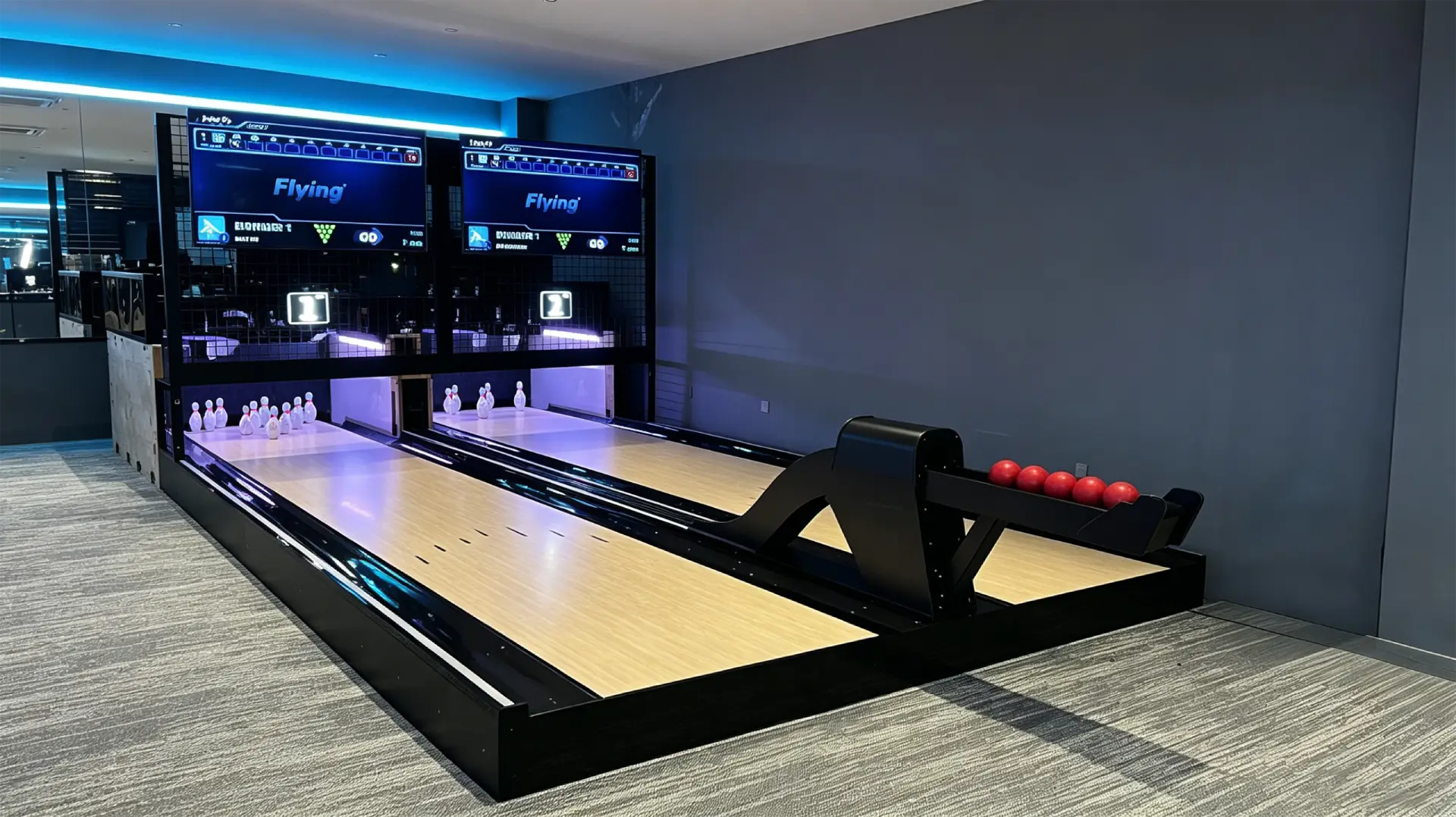
Flying Smart Duckpin Bowling Equipment for Commercial Venues
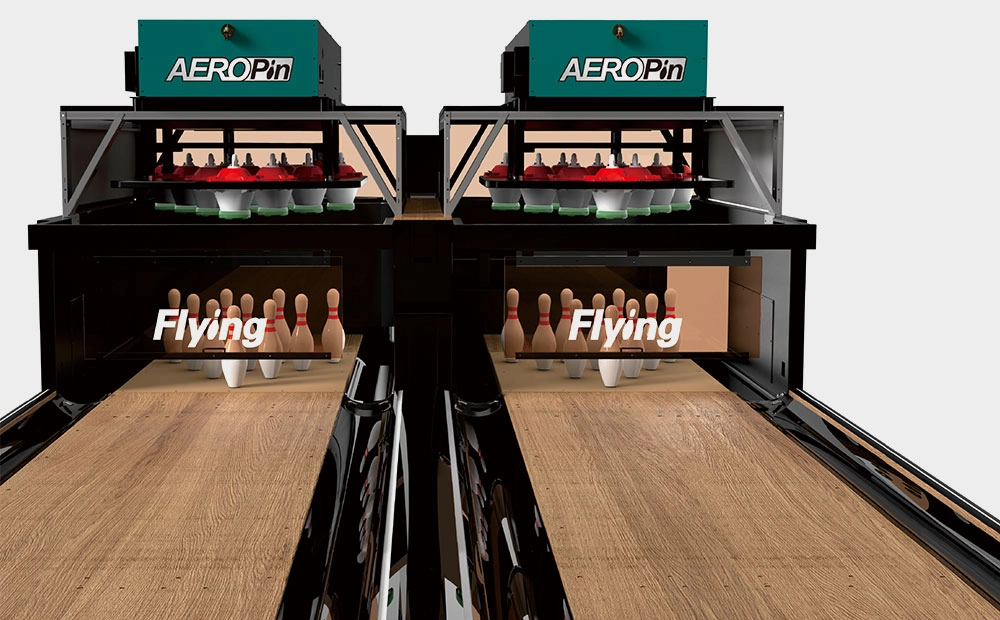
AEROPIN™ USBC-Certified String Pinsetter System
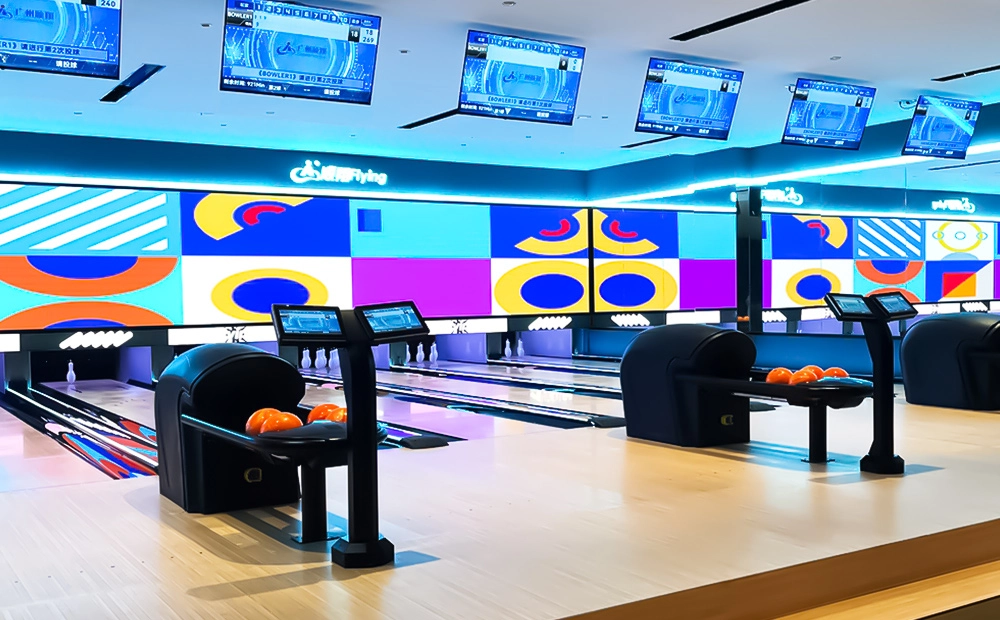
Medium Bowling Equipment for Compact Social Venues
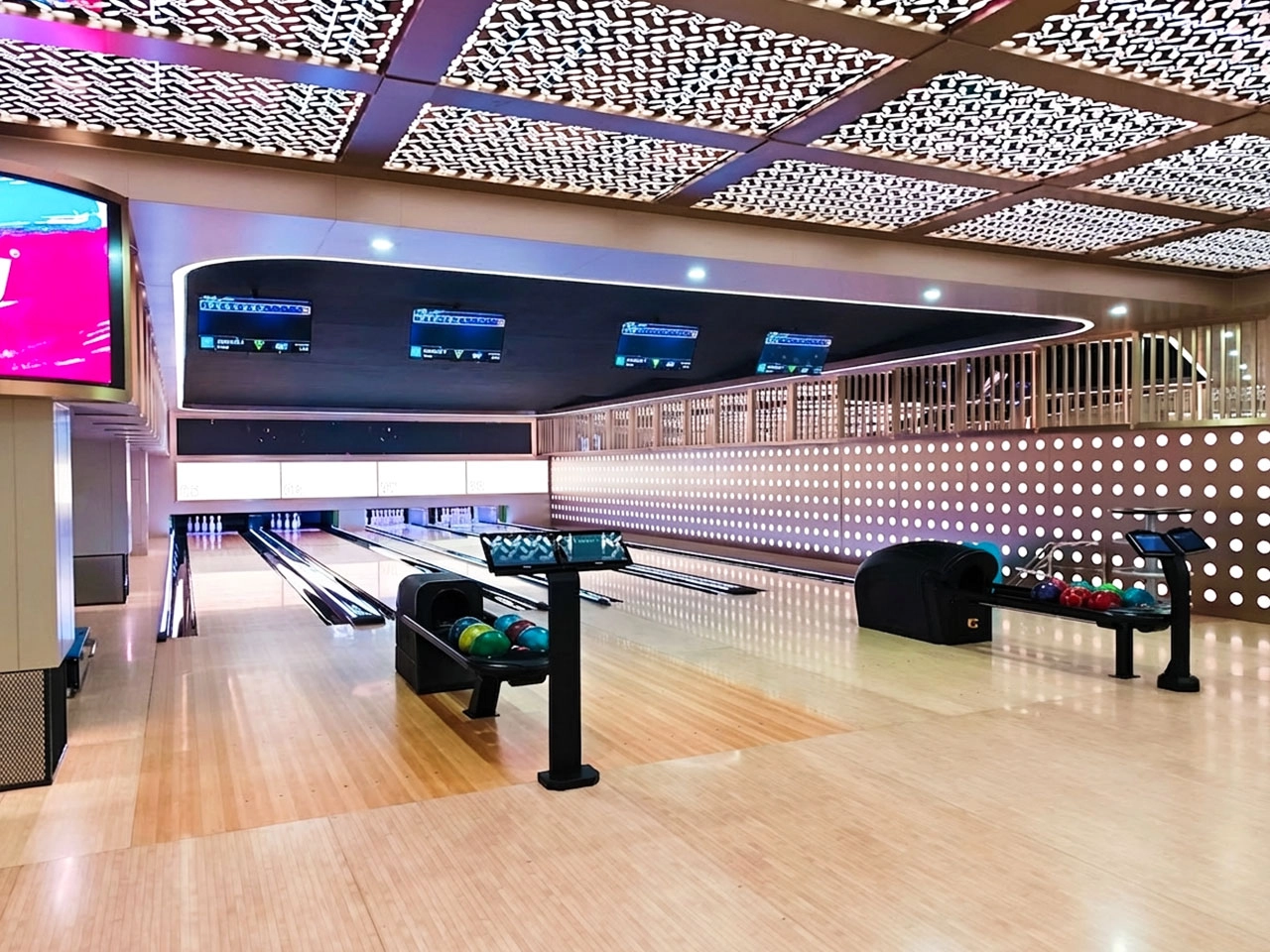
Complete Bowling Alley Equipment Package for Commercial Bowling Centers
You may also like
Build a commercial bowling venue with Flying’s complete string pinsetter bowling alley equipment package. The system includes the AEROPIN™ USBC-certified string pinsetter, customizable lanes, automatic scoring, ball return, lane lighting, pins, control hardware, and overseas installation support.
Designed for commercial bowling centers, family entertainment venues, hotels, resorts, bars, and premium private projects, this turnkey bowling system helps operators reduce sourcing complexity and prepare for reliable long-term operation.
Flying Smart Duckpin Bowling is a compact duckpin bowling equipment system designed for bars, family entertainment centers, hotels, resorts, cinemas, boutique bowling alleys, and social entertainment venues. With a standard 9.13m duckpin bowling lane, 1.25kg lightweight balls, automatic scoring, ball return, LED lighting, and a smart string pinsetter, it creates a fast-paced and easy-to-play bowling experience in a smaller footprint than traditional bowling.
The system is available as a turnkey duckpin bowling package, including lane equipment, a string pinsetter system, scoring hardware, control software, global shipping, installation guidance, and technical support.
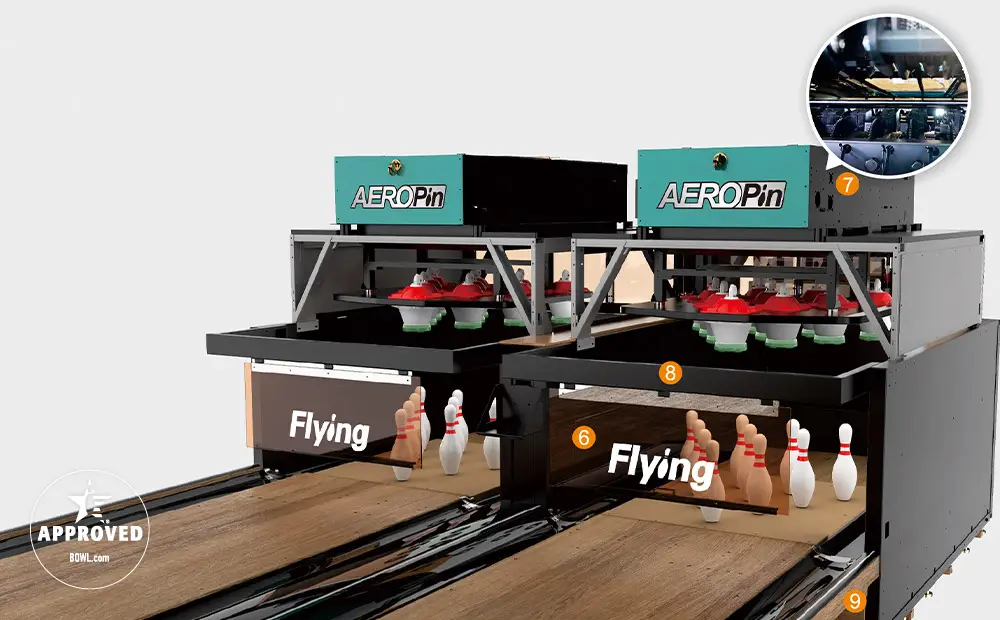
AEROPIN is Flying Bowling’s USBC-certified string pinsetter system for modern commercial bowling centers. Designed for fast pin setting, smooth ball return, low maintenance, and stable daily operation, it helps venue operators build league-ready and entertainment-focused bowling projects with confidence.
Flying Social Medium Bowling is a compact medium bowling equipment system designed for bars, cafes, family entertainment centers, community leisure venues, hotels, resorts, and small indoor entertainment spaces. With customizable lane lengths from 9.6m to 18m, small balls, lighter pins, string pinsetter technology, ball return, and automatic scoring, it creates an easy-to-play social bowling experience for players of different ages and skill levels.
Compared with full-size standard bowling, medium bowling requires less space and offers a more casual, interactive format. It is a practical choice for venues that want to add a bowling attraction without building a full commercial bowling alley.
Contact Flying
Start your bowling alley project
If you contact us now for more details, we can provide you with a custom bowling alley service. Our service team will get back to you within 24 hours normally!
© 2026 Flying BOWLING. Designed by gooeyun.
FOLLOW US:

Flying Bowling
Flying Bowling
Flyingbowling
Flyingbowling
Flyingbowling