


How Much to Build a Bowling Alley in Indonesia | Flying
- Why Indonesia? Market Opportunity by City
- How Much Does It Cost? Budget by Project Size
- Equipment Cost Breakdown Per Lane
- Indonesia-Specific Factors That Affect Your Budget
- Mall vs. Stand-Alone: Most Indonesian Venues Are Mall-Based
- Foreign Investment Rules (KBLI)
- Construction Costs: Jakarta vs. Other Cities
- String Pinsetters for the Indonesian Market
- ROI Model: 8-Lane FEC in Jakarta Mall
- Frequently Asked Questions
- Planning a Bowling Center in Indonesia?
Indonesia is Southeast Asia's largest economy and its fastest-growing entertainment market. With 278 million people, a rapidly expanding urban middle class, and a government-backed push for integrated mixed-use mall and lifestyle development, the country is seeing strong investor interest in family entertainment centers (FECs). Bowling is a proven anchor attraction in Indonesian malls — and this guide gives you the real numbers to evaluate your investment.
Why Indonesia? Market Opportunity by City
Indonesia's entertainment and leisure market is not uniform — it varies significantly by city, consumer profile, and mall density. Understanding where to invest matters as much as how much to spend.
| City | Population (metro) | Construction Cost | Market Characteristic | Best Venue Type |
|---|---|---|---|---|
| Jakarta | ~34M (Greater Jakarta) | $900–$1,100/m² | Most competitive; highest mall density in Asia; strong corporate F&B demand | 8–16 lane FEC in premium mall; boutique social venue |
| Surabaya | ~3.5M | $650–$850/m² | Indonesia's second city; less saturated FEC market; growing middle class | 6–12 lane FEC; strong family and league market |
| Bali | ~4.4M (island) | $700–$900/m² | Tourism-driven; strong resort integration; international visitor profile | Boutique 4–8 lane; resort amenity; duckpin or medium bowling |
| Bandung | ~3M | $600–$800/m² | University city; youth-oriented leisure culture; lower land costs | 4–8 lane FEC; social entertainment concept |
| Medan | ~2.5M | $500–$700/m² | Sumatra's largest city; underserved FEC market; competitive advantage for first mover | 6–10 lane center; family-focused |
Flying Bowling has completed multiple venue installations across Indonesia, including the Fun World project at Palembang Indah Mall and the Player Pioneer Bowling Entertainment Center. These reference projects demonstrate that Indonesian mall operators and FEC investors are actively deploying multi-format bowling concepts — standard, duckpin, and medium bowling — within integrated entertainment floors.
How Much Does It Cost? Budget by Project Size
The table below provides all-in project budgets for three common investment sizes in Indonesia, using Jakarta-level construction costs. For Surabaya, Bandung, or Medan, reduce construction costs by 15–25%.
| Project Size | Equipment (USD) | Construction/Fit-Out (USD) | Permits + VAT (USD) | Working Capital (USD) | Total (USD) | IDR Equivalent |
|---|---|---|---|---|---|---|
| 4 lanes — boutique, mall conversion | $180,000–$280,000 | $200,000–$360,000 | $25,000–$50,000 | $80,000–$120,000 | $485,000–$810,000 | ~IDR 7.8B–13B |
| 8 lanes — mid-size FEC | $360,000–$560,000 | $400,000–$720,000 | $50,000–$100,000 | $120,000–$200,000 | $930,000–$1.58M | ~IDR 14.9B–25.3B |
| 12 lanes — full entertainment center | $540,000–$840,000 | $600,000–$1.08M | $75,000–$150,000 | $150,000–$250,000 | $1.365M–$2.32M | ~IDR 21.8B–37.1B |
| Construction costs based on Jakarta rate (~$950/m²); reduce by 15–25% for Surabaya, Bandung, or Medan. Equipment at mid-range specification: string pinsetters, synthetic lanes, touchscreen scoring. Add 10–15% contingency to all estimates. IDR equivalent at 16,000 IDR/USD. | ||||||
Equipment Cost Breakdown Per Lane
| Component | USD Per Lane | IDR Per Lane | Notes |
|---|---|---|---|
| Synthetic lane surface | $9,000–$14,000 | IDR 144M–224M | 20–30 yr lifespan; annual conditioning required |
| String pinsetter (new) | $8,000–$12,000 | IDR 128M–192M | Recommended for Indonesia; staff-manageable maintenance |
| Ball return system | $2,800–$5,500 | IDR 44.8M–88M | Above-ground standard configuration |
| Scoring system | $3,700–$7,500 | IDR 59.2M–120M | Touchscreen; mobile score viewing; F&B integration option |
| Furniture and seating | $2,000–$5,000 | IDR 32M–80M | Standard to lounge; lounge style increases F&B revenue |
| Shipping + import + installation | $3,000–$7,000 | IDR 48M–112M | Sea freight to Jakarta/Surabaya; 11% PPN on imports applies |
| Total per lane (string pinsetter) | $31,500–$51,000 | IDR 504M–816M | Equipment + import + installation; excludes building |
Indonesia-Specific Factors That Affect Your Budget
Mall vs. Stand-Alone: Most Indonesian Venues Are Mall-Based
The dominant venue model in Indonesia is a bowling and entertainment floor within a shopping mall — not a stand-alone building. This affects your cost structure significantly. Mall tenants typically pay IDR 300,000–IDR 800,000/m²/year in base rent in Jakarta (Grade A malls); Surabaya and Bandung run 20–35% lower. On a 1,200 m² FEC floor, Jakarta annual rent is approximately $22,500–$60,000. Mall operators often require fit-out to meet their interior design standards, which can add 10–20% to construction costs.
Foreign Investment Rules (KBLI)
Indonesia's Negative Investment List (Daftar Negatif Investasi, DNI) has been replaced by the OSS (Online Single Submission) system under the Job Creation Law (Omnibus Law, 2020). Entertainment and recreation venues (KBLI 93110, 93130, 93199) are generally open to foreign investment, but specific requirements vary by venue type and ownership structure. Foreign investors typically establish a PT PMA (Penanaman Modal Asing — foreign-owned limited company). Engage a local legal counsel familiar with entertainment sector KBLI codes early in the planning process.
Construction Costs: Jakarta vs. Other Cities
Turner & Townsend's 2025 Global Construction Report places Jakarta at $942.8/m² for average commercial construction — 15th among 22 Asian markets. In practice, entertainment-grade fit-out with acoustic treatment, HVAC, and custom lighting runs higher:
- Jakarta (CBD and premium malls — SCBD, Sudirman, Kemang): $900–$1,100/m²
- Jakarta (suburban areas — Kelapa Gading, Alam Sutera, Bekasi): $700–$900/m²
- Surabaya: $650–$850/m²
- Bali (Seminyak, Kuta, Nusa Dua): $700–$900/m²
- Bandung, Medan, Makassar: $500–$700/m²
String Pinsetters for the Indonesian Market
String pinsetters are the standard choice for Indonesian FEC projects for two specific local reasons: first, certified free-fall pinsetter technicians are scarce outside Jakarta and Surabaya, making maintenance of free-fall equipment operationally risky in secondary cities. Second, Indonesian mall environments are acoustically sensitive — string pinsetters produce significantly less noise than free-fall, reducing complaints from adjacent tenants and improving the guest experience in open-plan entertainment floors. Annual maintenance runs $200–$600/lane vs. $1,500–$3,500 for free-fall.
ROI Model: 8-Lane FEC in Jakarta Mall
The following is an illustrative financial model for a mid-size 8-lane FEC in a Jakarta suburban mall. Assumptions are conservative and based on Indonesian market benchmarks.
| Item | Figure | Basis |
|---|---|---|
| Total investment | ~$1.2M (IDR ~19.2B) | Mid-range of 8-lane project estimate above |
| Lane pricing | IDR 80,000–120,000/lane/hour (~$5–$7.50) | Typical Jakarta suburban mall pricing 2025 |
| Operating hours/week | 70 hours (10 hrs/day, 7 days) | Standard mall entertainment floor hours |
| Average utilisation | 40% (conservative) | Off-peak weekday drag on weekly average |
| Annual lane revenue | ~$175,000 | 8 lanes × $5.50 avg × 70 hrs × 40% × 52 weeks |
| F&B and arcade (est. 40% of lane rev) | ~$70,000 | Conservative multiplier for Indonesian FEC |
| Total annual revenue | ~$245,000 | |
| Annual operating costs | ~$140,000 | Staff IDR ~1.2B, rent IDR ~400M, utilities IDR ~200M, maintenance |
| Annual operating profit | ~$105,000 | EBITDA ~43% |
| Payback period | ~11–12 years | Full investment payback at conservative utilisation |
| At 55% utilisation | ~8 years | Upside scenario with active event programming |
The key revenue lever in Indonesian FECs is event and group bookings — birthday parties, corporate outings, and school groups fill off-peak hours and generate 2–3× the revenue per lane-hour versus walk-in play. Operators who actively market to these segments achieve 55–65% utilisation versus the 35–40% typical for walk-in-only operations.
Frequently Asked Questions
How much does it cost to build an 8-lane bowling alley in Jakarta?
An 8-lane FEC in a Jakarta mall fit-out runs approximately $930,000–$1.58M all-in, covering equipment ($360,000–$560,000), construction and fit-out ($400,000–$720,000), permits and PPN ($50,000–$100,000), and working capital reserve ($120,000–$200,000). For Surabaya or Bandung, reduce construction costs by 15–25%. Add a 10–15% contingency to all estimates.
What is the Indonesian VAT rate for bowling equipment imports?
Indonesia's PPN (VAT) standard rate is 11%, applied to imported goods on the CIF (cost + insurance + freight) value plus applicable import duty. Most mechanical amusement equipment attracts 0–5% import duty under the Indonesian tariff schedule. A PKP-registered business can reclaim input PPN. Work with a local customs broker (PPJK) to confirm the applicable HS code and calculate total landed cost before finalising your equipment budget.
Is a stand-alone bowling center or mall-based FEC better in Indonesia?
Mall-based FEC is the dominant and lower-risk model for Indonesia. Indonesian consumers strongly prefer mall-based leisure — malls provide footfall, parking, security, and complementary F&B that a stand-alone building cannot replicate without very high capital investment. Stand-alone centers make sense only in cities with limited premium mall supply or for operators with specific anchor tenant relationships. For a first project, a mall-based FEC in Jakarta, Surabaya, Bali, or Bandung is the recommended entry path.
What bowling format works best in Indonesian malls?
Standard 10-pin bowling (6–12 lanes) is the primary anchor for most Indonesian FECs. Compact formats — Flying Bowling's FSDB duckpin (~9.2 m lane) or FSMB medium bowling — are increasingly added as secondary attractions on the same entertainment floor, targeting different age groups and casual visitors who want a lower-commitment activity than a full game of bowling. Bali resort projects more commonly use compact formats due to space constraints and the tourist demographic's preference for quick social activities.
How long does a bowling alley project take in Indonesia?
A realistic timeline for a mall fit-out FEC project: 2–3 months for permits and mall landlord approval, 3–4 months for fit-out construction, 3–4 months equipment lead time (order when fit-out begins), 2–3 weeks on-site installation, and 2–4 weeks for customs clearance at Tanjung Priok (Jakarta) or Tanjung Perak (Surabaya). Total: approximately 9–14 months from project start to opening. New stand-alone construction adds 4–8 months.
Can a foreign investor own a bowling center in Indonesia?
Yes, through a PT PMA (Penanaman Modal Asing — foreign-owned limited liability company). Entertainment and recreation venues are generally open to foreign investment under the current OSS/KBLI framework. Minimum capital requirements and local partner arrangements vary by KBLI code and investment size. Engage a local legal firm specialising in PT PMA registration before signing any lease or construction contracts — the regulatory process is well-established but requires specific documentation.
Planning a Bowling Center in Indonesia?
Flying Bowling has completed multiple FEC installations across Indonesia, including Fun World at Palembang Indah Mall and the Player Pioneer Bowling Entertainment Center. We supply CE-certified string pinsetters, synthetic lanes, ball returns, and scoring systems — with a regional team providing layout design, import documentation, and on-site installation support across Southeast Asia.
Sources: Turner & Townsend Global Construction Market Intelligence Report 2025 — Jakarta construction cost ($942.8/m²) (turnerandtownsend.com). Bank Indonesia — IDR/USD exchange rate (2025). Indonesian Directorate General of Taxes — PPN rate 11% (pajak.go.id). Credence Research — Indonesia Commercial Building Construction Market Report 2025 (9.22% CAGR). Flying Bowling Indonesia project references: Fun World Palembang Indah Mall; Player Pioneer Bowling Entertainment Center (flyingbowling.com).
Recommended products
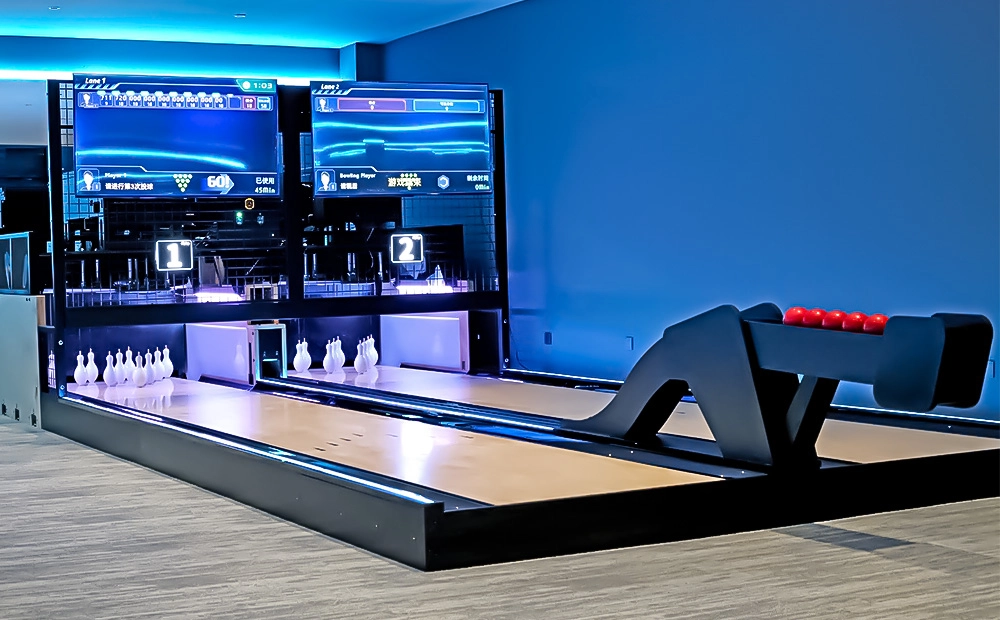
Flying Smart Duckpin Bowling Equipment and Lane System for Commercial Venues
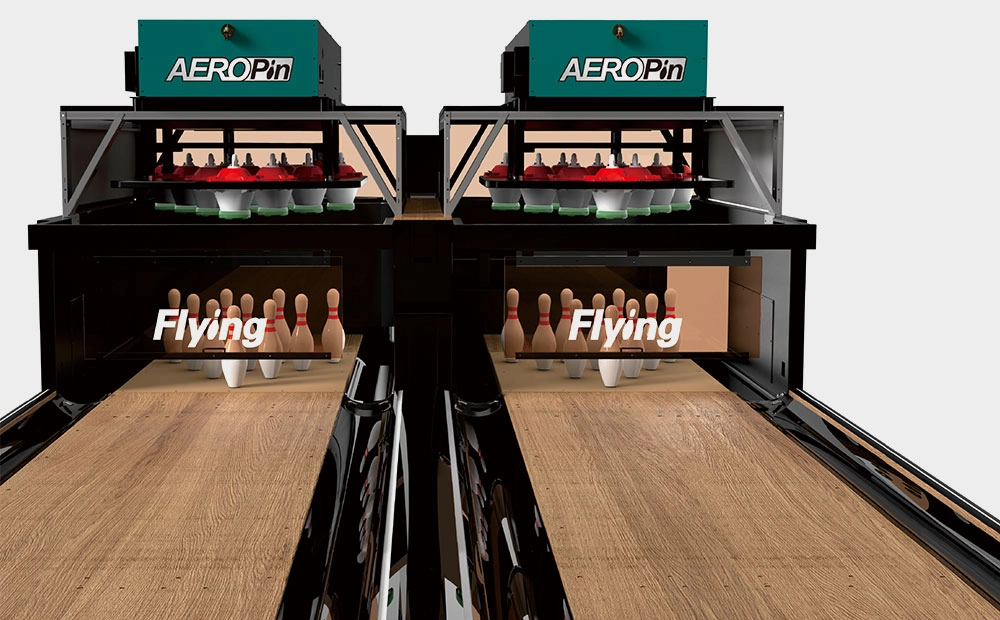
USBC-Certified AEROPIN String Pinsetter System
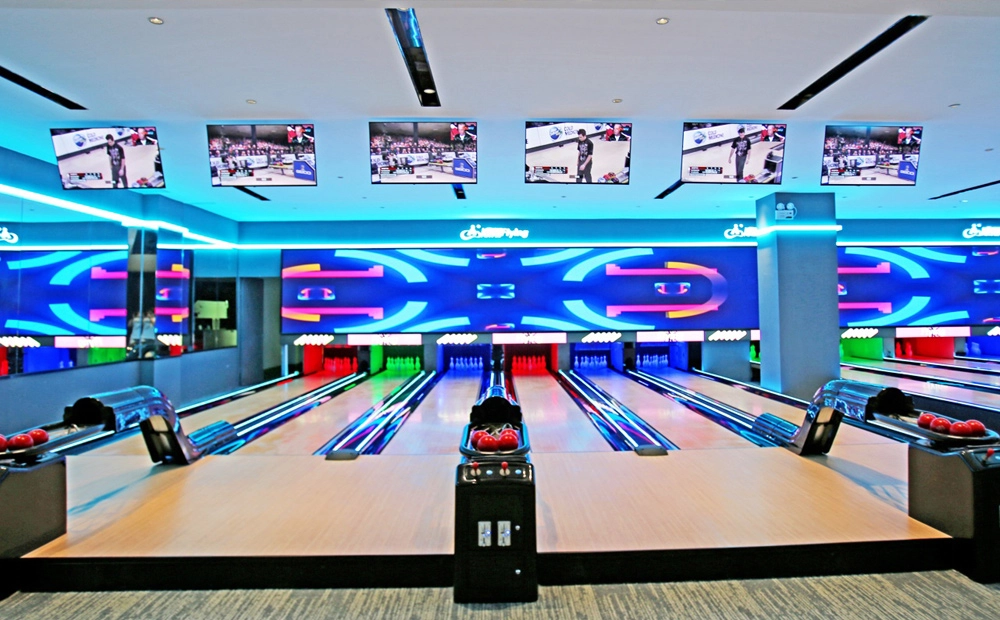
Mini Bowling Equipment for Kids and Family Entertainment Venues
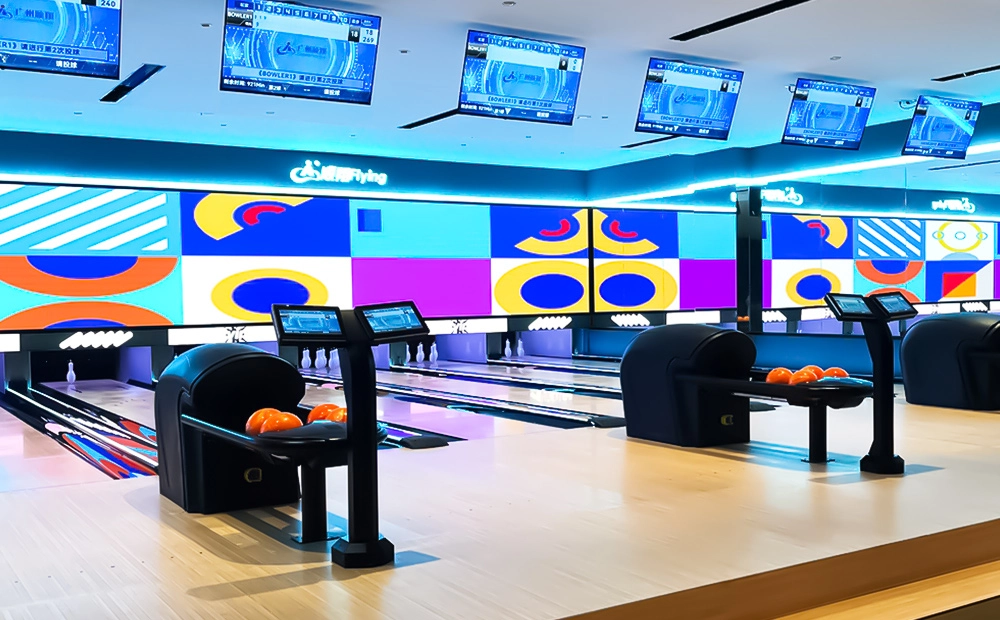
Medium Bowling Equipment for Social Entertainment Venues
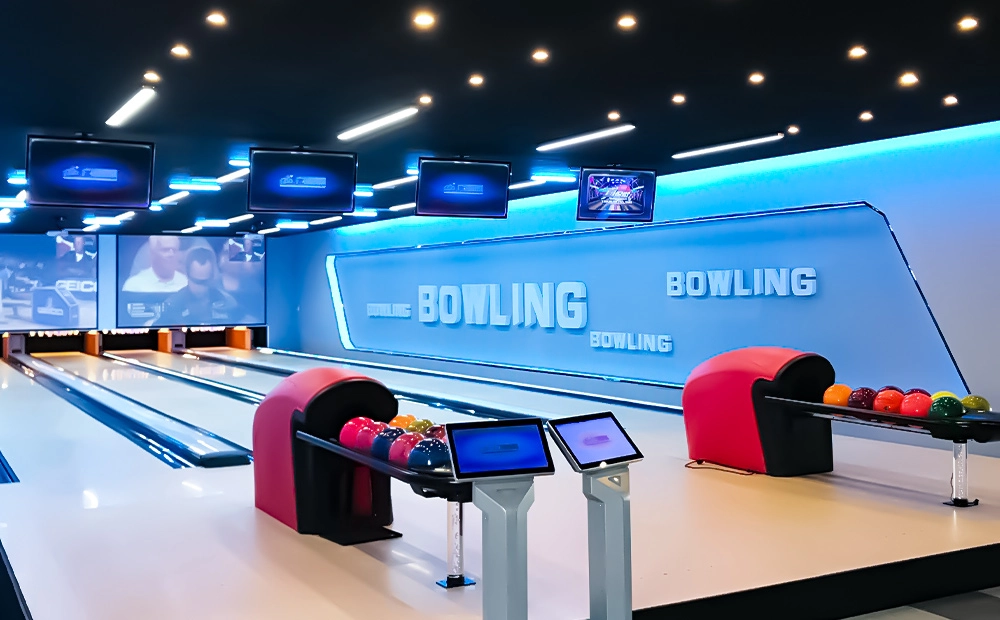
Complete String Pinsetter Bowling Alley Equipment System
You may also like
Flying Smart Duckpin Bowling (FSDB) innovative design, standard 9.2-meter short lane, can be shortened in length, compact layout suitable for small spaces. The game rules are simple but challenging, attracting players of different ages to actively participate.
Suitable for social entertainment venues such as bars, billiard halls, and game centers, it not only enhances interactivity but also increases the popularity and consumption frequency of the venue. The fun and competitive nature of FSDB will make it a new focus of social activities.
Flying Classic Standard Bowling (FCSB) is designed according to international competition standards and equipped with an accurate automatic scoring system, providing bowling enthusiasts with a pure professional experience. Whether it is for competitions or leisure entertainment, FCSB can meet high-level needs.
Suitable for family entertainment centers, luxury resorts, private villas, or clubs, it is an ideal choice for customers who pursue high-end quality and professional experience. Its classic design and excellent performance will add lasting appeal to the venue.
Flying Cute Mini Bowling (FCMB) is a mini bowling experience designed for children and families. The lane length is fixed at 12 meters, equipped with lightweight balls without finger holes (only 1.25kg) and small pins, specially designed for children and family fun.
It can not only help children feel the fun of bowling, but also stimulate their interest and competitive consciousness. Suitable for children's playgrounds, theme parks and parent-child centers, it is the best choice for places focusing on the children's market.
Flying Social Medium Bowling (FSMB) is tailored for small venues, with flexible lane lengths (customizable from 9.6 meters to 18 meters), a small ball design suitable for players of all ages, and light pins that are easier to knock down, increasing participation and fun.
Whether it is a gathering of friends or a casual social, FSMB can easily create a relaxed and pleasant atmosphere. Its efficient space-utilization design is particularly suitable for cafes, bars and community entertainment venues, allowing people to fall in love with bowling in a relaxed interaction.
Contact Flying
Start your bowling alley project
If you contact us now for more details, we can provide you with a custom bowling alley service. Our service team will get back to you within 24 hours normally!
© 2026 Flying BOWLING. Designed by gooeyun.
FOLLOW US:
Flying Bowling
Flying Bowling
Flyingbowling
Flyingbowling