

How Much to Build a Bowling Alley in Australia? 2026 AUD & USD Cost Guide
How much it costs to build a bowling alley in Australia is broken down with precise 2026 cost estimates in AUD and USD, covering construction, equipment, and permits. Flying Bowling delivers clear budget insights to plan your project efficiently and avoid unexpected expenses.
- Australia Bowling Alley Cost Summary: 2026
- 1. Home Bowling Alley Cost in Australia
- 2. Commercial Space and Rent in Australia
- 3. Bowling Equipment Cost in Australia
- 4. Importing Bowling Equipment to Australia: GST, Customs, and ChAFTA
- 5. Construction and Fit-Out Cost in Australia
- 6. Build New vs Buy an Existing Bowling Alley in Australia
- 7. Monthly Operating Costs for an Australian Bowling Venue
- 8. Is a Bowling Alley a Good Investment in Australia?
- 9. Council Approvals and Compliance in Australia
- 10. Choosing the Right Format for Australia
- 11. How Flying Bowling Supports Australia Projects
- FAQ
Building a bowling alley in Australia can be a viable commercial or residential entertainment investment when site selection, format, budget, and operating model are carefully planned. Whether you are considering a compact duckpin setup in a Sydney bar, a 6-lane FEC anchor in Brisbane, a 12-lane commercial center in Melbourne, or a private installation in a Queensland lifestyle property, the total cost varies significantly across formats, cities, and specifications.
This guide covers every cost component with AUD and USD figures: equipment sourced from China, GST and customs under ChAFTA, freight to Australian ports, local construction, council approvals, home installation options, buy vs build trade-offs, and a monthly operating cost model — updated for 2026.
Flying Bowling supports bowling equipment projects in Australia and the broader Pacific region, with equipment supplied to commercial venues internationally since 2006.
Quick Answer A 2-lane compact setup (duckpin or mini bowling) costs approximately AUD 46,000–62,000 in FOB equipment ($30,000–$40,000 USD), rising to AUD 90,000–170,000 as a complete project including shipping, GST, installation, and basic fit-out. A 4-lane commercial venue runs approximately AUD 220,000–420,000 total. A 6-lane standard center typically requires AUD 350,000–700,000 all-in.
AUD estimates based on an indicative rate of AUD 1.54–1.58 per USD. Verify current rates with the Reserve Bank of Australia (rba.gov.au) before finalising project budgets.
In this guide:
- 2-lane, 4-lane, 6-lane, and 8–12 lane cost estimates in AUD and USD
- Home bowling alley cost in Australia
- GST, ChAFTA, and customs costs for imported bowling equipment
- Sydney, Melbourne, Brisbane, Perth, Adelaide commercial rent estimates
- Construction and fit-out costs including acoustic and AS4024 compliance
- Build new vs buy an existing bowling alley
- Monthly operating costs including Fair Work wage obligations
- Council approvals: DA, noise, liquor licence, WorkSafe
- Format selection and investment planning
About these estimates: The cost ranges in this guide are indicative planning estimates based on Flying Bowling equipment quotations, typical international shipping costs to Australia, publicly available commercial property data, and project planning experience. Actual costs vary depending on current AUD/USD exchange rates, customs tariff classification, specific location, lease terms, construction specification, and site conditions. Verify local rent, applicable duties and taxes, council requirements, and construction costs with qualified Australian advisors before committing to a project budget.
Australia Bowling Alley Cost Summary: 2026
| Setup | Equipment (FOB, USD) | Approx. AUD (FOB only) | Total Project Est. (AUD) | Best For |
|---|---|---|---|---|
| 2-Lane Mini / Duckpin | $30,000–$40,000 | AUD 46,000–62,000 | AUD 90,000–170,000 | Home, bar, compact FEC |
| 4-Lane Setup | $60,000–$85,000 | AUD 92,000–131,000 | AUD 220,000–420,000 | Boutique venue, FEC |
| 6-Lane Standard | $90,000–$130,000 | AUD 138,000–200,000 | AUD 350,000–700,000 | Commercial bowling center |
| 8–12 Lane Center | $140,000–$300,000 | AUD 215,000–462,000 | AUD 800,000–2,500,000+ | Large FEC, mall anchor |
AUD conversion at indicative rate AUD 1.54/USD. Verify current exchange rate at rba.gov.au. Total project costs include GST on importation, sea freight, customs broker fees, local installation, council compliance, and basic interior fit-out. Venue rent and DA costs are additional.
What "total project cost" includes: FOB equipment + sea freight from China to Australia ($1,500–$3,000) + GST on taxable importation (10%) + any applicable customs duty + customs broker (AUD 1,500–3,500) + inland transport (AUD 1,000–3,000) + local installation (AUD 8,000–30,000) + council permits and compliance (AUD 5,000–30,000 est.) + basic interior fit-out. These are indicative figures — actual costs vary by project.
1. Home Bowling Alley Cost in Australia
Home bowling installations are a growing trend in Australia, particularly among large lifestyle properties, Queensland and Western Australian acreage estates, luxury homes, and private clubs. Australia's relatively generous residential land sizes make compact bowling formats more practical than in many high-density international markets.
| Format | Min. Room Length | Min. Width (2-lane) | Min. Ceiling | FOB Equipment (USD) | AUD Equivalent | Total All-In Estimate |
|---|---|---|---|---|---|---|
| Standard Tenpin (2-lane) | ~26–28 m | ~3.5 m | 2.44 m | $36,000–$50,000 | AUD 55,000–77,000 | AUD 160,000–280,000 |
| Duckpin (FSDB, 2-lane) | ~12–14 m | ~3.5 m | 2.25 m | $22,000–$32,000 | AUD 34,000–49,000 | AUD 110,000–200,000 |
| Mini Bowling (FCMB, 2-lane) | ~13–15 m | ~3.5 m | 2.25 m | $18,000–$24,000 | AUD 28,000–37,000 | AUD 85,000–150,000 |
Total all-in estimates include FOB equipment, sea freight to Australia, GST on importation, installation, and basic fit-out. Structural engineering, acoustic treatment, council building consent, and three-phase electrical upgrades are additional where required.
Full-size standard tenpin lanes require 26–28 metres of clear room depth including the pinsetter room — practical only in large custom homes, converted commercial sheds, or private club facilities. Duckpin and mini bowling are more practical for most Australian residential properties — garage conversions, large basement entertainment rooms, purpose-built leisure outbuildings, and resort amenity spaces where a 12–15 metre depth is available.
Australian-specific home installation considerations:
- Upper-level or suspended floor installations may require structural engineering assessment and council building consent before ordering equipment
- Three-phase electrical supply is typically required for pinsetter systems — confirm availability and upgrade costs with a licensed electrician before committing
- Acoustic treatment is advisable even in residential settings; pin impact and ball roll generate meaningful noise that may affect neighbours or strata compliance
- Building consent from the local council is typically required for fit-out works, even in residential settings
- Remote layout review: Flying Bowling can provide a complimentary remote layout review before purchase — submit your room floor plan, ceiling height, and access details to confirm feasibility and receive a configuration recommendation
2. Commercial Space and Rent in Australia
Australia's commercial property market is among the most expensive in the Asia-Pacific region. Rents vary significantly between inner-city locations and suburban retail or entertainment precincts. The estimates below are indicative only — confirm with a licensed commercial property agent before finalising any lease.
| City / Area | Approx. Rent (per sqm/year, indicative) | Space Needed (4-lane) | Est. Monthly Rent |
|---|---|---|---|
| Sydney CBD / Inner West | AUD 1,200–2,500 | 350–500 sqm | AUD 35,000–104,000 |
| Sydney suburban (Parramatta, Penrith) | AUD 400–800 | 350–500 sqm | AUD 11,700–33,300 |
| Melbourne CBD / South Yarra | AUD 800–1,800 | 350–500 sqm | AUD 23,300–75,000 |
| Melbourne suburban (Dandenong, Footscray) | AUD 300–700 | 350–500 sqm | AUD 8,750–29,200 |
| Brisbane CBD / Fortitude Valley | AUD 600–1,200 | 350–500 sqm | AUD 17,500–50,000 |
| Brisbane suburban (Logan, Ipswich) | AUD 250–550 | 300–450 sqm | AUD 6,250–20,600 |
| Perth CBD / Subiaco | AUD 500–1,100 | 350–500 sqm | AUD 14,600–45,800 |
| Adelaide CBD / Unley | AUD 300–700 | 300–450 sqm | AUD 7,500–26,300 |
| Gold Coast / Sunshine Coast | AUD 300–650 | 300–450 sqm | AUD 7,500–24,400 |
| Regional / suburban other | AUD 150–350 | 250–400 sqm | AUD 3,125–11,700 |
Rent estimates sourced from publicly available Australian commercial property listings. Rates may exclude GST, outgoings, insurance, service charges, and landlord-specific lease costs. Monthly rent figures are estimated on 350–500 sqm for a 4-lane venue. Confirm gross occupancy cost — including all outgoings — before signing a lease. Obtain formal quotes from a licensed commercial property agent.
3. Bowling Equipment Cost in Australia
Flying Bowling offers four commercial bowling formats suited to different venue types and budget levels. All equipment is manufactured in Guangzhou, China, and shipped to Australia by sea container through Sydney, Melbourne, Brisbane, or Fremantle ports.
| Equipment Type | Cost Per Lane (FOB, USD) | Total 4–6 Lanes (FOB) | AUD Equivalent | Suitable Venue |
|---|---|---|---|---|
| Mini Bowling (FCMB) | $9,000–$12,000 | $36,000–$72,000 | AUD 55,000–111,000 | FECs, cafés, home installations |
| Duckpin Bowling (FSDB) | $11,000–$16,000 | $44,000–$96,000 | AUD 68,000–148,000 | Bars, boutique venues, hotels |
| Medium Bowling (FSMB) | $14,000–$18,000 | $56,000–$108,000 | AUD 86,000–166,000 | Mid-size FECs, entertainment venues |
| Standard Bowling (FCSB) | $18,000–$25,000 | $72,000–$150,000 | AUD 111,000–231,000 | Commercial centers, large venues |
4. Importing Bowling Equipment to Australia: GST, Customs, and ChAFTA
GST on Imported Goods
GST at 10% applies to taxable importations into Australia. The taxable value includes the customs value of the goods, any customs duty, transport, and insurance — as outlined by the Australian Taxation Office (ATO). GST-registered businesses may be able to claim input tax credits on commercial equipment imported for business use — confirm with an Australian tax advisor or the ATO before importing.
Customs Duty and ChAFTA
The China-Australia Free Trade Agreement (ChAFTA) may reduce or eliminate import duties on eligible bowling equipment from China, subject to origin documentation requirements. Verify current duty rates and ChAFTA eligibility with the Australian Border Force (abf.gov.au) or a licensed customs broker before ordering.
| Cost Component | Estimate | Notes |
|---|---|---|
| Sea freight (China to Sydney / Melbourne / Brisbane / Fremantle) | $1,500–$3,000 | Per 20-ft container; varies by port and volume |
| Australian customs duty | 0–5% of customs value | ChAFTA may apply; verify with ABF or customs broker |
| GST on taxable importation | 10% of (customs value + freight + insurance + duty) | GST-registered businesses may claim input tax credits |
| Port handling and inland transport | AUD 1,000–3,000 | Port to venue; varies by city |
| Customs broker fees | AUD 1,500–3,500 | Recommended for first-time importers |
| Total logistics add-on | ~18–28% of FOB value | All-in landed cost estimate |
Flying Bowling provides full commercial invoice documentation, packing lists, Bill of Lading, Certificate of Origin, and HS code guidance for all international shipments to support customs clearance at Australian ports.
5. Construction and Fit-Out Cost in Australia
Australian commercial construction and entertainment fit-out costs are significantly higher than in many comparable markets. The estimates below should be validated with qualified local contractors before use in project budgets.
| Construction Category | Estimate (AUD per sqm) | Notes |
|---|---|---|
| Structural / subfloor preparation | AUD 300–800 | Lane levelling to ±3mm tolerance; load-bearing assessment |
| Electrical (dedicated 3-phase circuits) | AUD 150–400 | Pinsetter supply circuits + general venue load |
| Interior design and fit-out | AUD 400–1,500 | Seating, counters, brand design; varies widely by specification |
| Acoustic treatment | AUD 200–600 | Often required near residential — see council compliance section |
| HVAC and ventilation | AUD 200–500 | Climate control for consistent playing conditions |
| Lighting (LED lane + ambient) | AUD 100–300 | Lane-specific LED included in equipment package |
| Machine guarding and safety compliance | Project-specific; often AUD 20,000–120,000 depending on scope | AS4024 compliance; varies by lane count, guarding design, certification scope, and existing building conditions |
A 4-lane commercial venue in 400 sqm of Australian commercial space typically requires an estimated AUD 350,000–900,000 for construction and fit-out, depending on city, specification level, and existing building condition. These figures are planning estimates only.
AS4024 compliance note: All bowling equipment in Australia must comply with AS4024 Safety of Machinery requirements. Flying Bowling's string pinsetter systems are designed with safety features including emergency stop functions. Operators should confirm compliance with a certified Australian safety consultant and their state WorkSafe authority as part of the fit-out process.
6. Build New vs Buy an Existing Bowling Alley in Australia
Australia's established entertainment venue market means existing bowling venues occasionally come to market — and the trade-offs between building new and acquiring an existing venue deserve careful analysis.
| Option | Typical Cost Range (AUD) | Pros | Cons |
|---|---|---|---|
| Build new (2-lane compact) | AUD 90,000–170,000 | New equipment, full control, customised layout | Lead time 5–8 months; DA and fit-out complexity |
| Build new (4-lane commercial) | AUD 220,000–420,000 | Modern systems, warranty, scalable design | Higher upfront cost; council approval required |
| Build new (6-lane standard) | AUD 350,000–700,000 | Full commercial capacity, USBC sanctioning eligibility | Significant capital; DA, acoustic report, liquor licence |
| Acquire existing venue | Varies widely | Faster time to operation, existing customer base, DA already granted | Older equipment, deferred maintenance, inherited lease terms |
| Franchise / operator model | Varies by operator | Brand support, proven systems | Franchise fees, less operational independence |
Due diligence checklist when acquiring an existing Australian bowling venue:
- Equipment age and condition: Older free-fall pinsetter systems may carry significant deferred maintenance costs — obtain an independent equipment assessment from a qualified technician before committing
- Lane surface condition: Synthetic lane surfaces typically require resurfacing every 5–8 years; hardwood lane restoration is significantly more expensive
- Lease terms: Confirm remaining lease term, rent review clauses, permitted use provisions, and landlord assignment consent requirements with a commercial solicitor
- Liquor licence: Transferring a liquor licence in Australia requires state liquor authority approval and is not automatic — confirm with a specialist liquor licence consultant before relying on the existing licence as part of your business case
- DA status: Confirm that all current uses are covered by existing development consent and that no rectification orders or outstanding compliance issues apply
- Deferred capital expenditure: Request a full maintenance history and ask when major systems (pinsetter, scoring, lane surface, HVAC, electrical) were last replaced or upgraded
7. Monthly Operating Costs for an Australian Bowling Venue
| Cost Category | Estimate (per month, 4-lane venue) | Notes |
|---|---|---|
| Venue rent | AUD 8,000–50,000 | Largest variable — city and location dependent |
| Electricity | AUD 3,000–12,000 | String pinsetter systems generally require lower pinsetter-related power consumption than traditional free-fall systems — request model-specific power data from suppliers before projecting savings |
| Staff wages | AUD 15,000–35,000 | 3–5 staff; Fair Work National Minimum Wage AUD $26.44/hr from 1 July 2026; casual loading, superannuation at the current Super Guarantee rate, and weekend penalty rates also apply |
| Equipment maintenance | AUD 800–3,000 | String pinsetter systems have lower maintenance requirements than free-fall alternatives; actual costs depend on lane count and utilisation |
| Marketing | AUD 2,000–8,000 | Social media, events, group bookings, promotions |
| Insurance, compliance, misc. | AUD 2,000–5,000 | Public liability, contents, admin, WorkSafe compliance costs |
| Total monthly operating cost | AUD 30,000–113,000 | Excluding loan repayment and lease incentive amortisation |
Staff costs note: Fair Work obligations in Australia include penalty rates for weekends and public holidays, casual loading (25% on top of base rate), and compulsory superannuation. These costs are material for entertainment venues operating across weekends. Refer to the Fair Work Ombudsman (fairwork.gov.au) for current award rates and obligations applicable to your venue category.
8. Is a Bowling Alley a Good Investment in Australia?
A bowling alley can be a financially viable investment in Australia for operators with strong site selection, a well-developed F&B offering, and realistic operating cost projections.
| Revenue Source | Planning Notes |
|---|---|
| Lane fees | AUD 15–40 per game per person depending on venue tier and city |
| Birthday party packages | AUD 350–800 per booking; strong weekend family demand |
| Corporate and group events | Suitable for 4-lane and larger venues with function space |
| Food and beverage | Can contribute meaningfully to total venue revenue; liquor licence significantly expands options |
| Arcade and redemption | Common add-on for FEC formats; high revenue-per-sqm when well-curated |
| Memberships and league play | Supports repeat visits and more predictable monthly revenue |
Many commercial bowling operators use a 3–5 year equipment payback scenario for planning purposes. Actual ROI depends heavily on venue rent, lane utilisation rates, F&B execution, staff costs, and local competitive dynamics. Investors should build their own financial model — including conservative, base-case, and optimistic utilisation scenarios — before committing capital. Australia's high commercial rents and Fair Work employment obligations mean that operating cost discipline is especially important for venue viability.
Franchise options in Australia: Australia does not appear to have a single dominant nationwide bowling-only franchise model in the same way some QSR or fitness categories do. Most venues operate independently or as components within larger entertainment group chains. Investors considering a franchise model should conduct independent due diligence before committing.
9. Council Approvals and Compliance in Australia
Australian bowling venues are subject to state and local government approvals that vary by jurisdiction. The table below summarises the key requirements applicable in most Australian states.
| Requirement | Why It Matters | Who to Check |
|---|---|---|
| Development Application (DA) / Change of Use | Required when converting retail, warehouse, or office space to indoor recreation use | Local council |
| Building certification (BCA compliance) | Fit-out, fire safety, accessibility (DDA), structural, and occupancy load requirements | Registered building certifier |
| Acoustic report | Required in most mixed-use or near-residential locations; pin impact and ball roll can generate material noise | Acoustic consultant |
| Liquor licence | Key for F&B and events revenue; significantly increases venue commercial performance | State liquor authority (OLGR in QLD; VCGLR in VIC; ILGA in NSW; Racing and Gaming WA; OLGC in SA) |
| RSA / RCG staff training | Mandatory for alcohol service staff in most states | State regulator |
| WorkSafe / machine guarding compliance | AS4024 machinery safety requirements; emergency stops and guarding around pinsetter equipment | State WorkSafe authority |
| Parking and traffic assessment | May be required for venues generating significant customer traffic depending on local planning scheme | Local council |
| Environmental health registration | Required for F&B operations; ongoing noise compliance monitoring | Local council |
DA or change-of-use timelines may range from several weeks to 3–12 months depending on council, use class, acoustic risk, parking impact, consultation requirements, and project complexity. Do not order equipment before DA approval is granted or at minimum confirmed as highly likely by your planning consultant.
10. Choosing the Right Format for Australia
| Format | Space Required | Cost Level | Best For | Key Advantage |
|---|---|---|---|---|
| Standard Tenpin | Highest | Higher | Dedicated commercial centers, large FECs | Professional experience, USBC league sanctioning eligibility |
| Medium Bowling | Medium | Medium | Mid-size FECs, resort entertainment | Balance of space and full playing experience |
| Duckpin Bowling (FSDB) | Lower | Medium-Low | Bars, boutique venues, home installations | Social format, compact footprint, lower ongoing maintenance |
| Mini Bowling (FCMB) | Lowest | Lower | Family cafés, kids' zones, home game rooms | Lowest entry cost, fastest lane turnover, no specialist footwear required |
For Australian operators considering a first venue or an entertainment add-on, duckpin and mini bowling formats often represent the most practical entry point — lower capital requirement, smaller footprint, and a format that fits within existing commercial spaces without the full DA and construction complexity of a standard tenpin installation.
11. How Flying Bowling Supports Australia Projects
Flying Bowling provides complete bowling equipment and project support for operators planning bowling venues in Australia. We support sea freight arrangements through Sydney, Melbourne, Brisbane, and Fremantle ports and can provide full logistics guidance for first-time importers.
- Bowling venue layout consultation based on your floor plan
- Lane count and format recommendation
- USBC-certified AEROPIN string pinsetter systems and complete lane packages
- FOB quotation with HS code documentation for GST and customs pre-estimation
- ChAFTA origin documentation support
- Installation guidance and commissioning support
- Staff operation and maintenance training
- Standard warranty coverage and spare parts support based on the final project agreement
Contact us: jackson@flyingbowling.com | WhatsApp: +86 150 1310 7020 Project planning: Start Your Australia Bowling Project →
Related guides: Complete Bowling Equipment Cost Guide · String Pinsetter Cost Breakdown · USBC Approved String Pinsetters Guide · Bowling Business Models Compared · Bowling Alley Cost in New Zealand
FAQ
How much does it cost to build a bowling alley in Australia?
A 2-lane compact setup (duckpin or mini bowling) costs approximately AUD 90,000–170,000 as a complete project including FOB equipment, sea freight, GST, installation, and basic permits. A 4-lane commercial venue runs AUD 220,000–420,000 total, and a 6-lane standard center typically requires AUD 350,000–700,000. An 8–12 lane commercial center ranges from AUD 800,000 to AUD 2,500,000 or more depending on location, fit-out specification, and DA requirements. All AUD figures use an indicative rate of AUD 1.54 per USD — verify current rates at rba.gov.au.
How much does a home bowling alley cost in Australia?
A 2-lane duckpin bowling setup for residential use typically runs AUD 110,000–200,000 all-in including FOB equipment, sea freight, GST, and installation — achievable in a suitable dedicated space with a minimum room length of 13–14 meters and ceiling height of 2.25 meters, subject to structural and site conditions. A 2-lane mini bowling setup starts from around AUD 85,000 all-in. Flying Bowling can provide a complimentary remote layout review to confirm feasibility for your specific property.
How much does it cost to install a bowling lane in a house in Australia?
For residential installations, duckpin bowling (FOB from AUD 34,000–49,000 per 2-lane set) or mini bowling (FOB from AUD 28,000–37,000 per 2-lane set) are the most practical formats for typical Australian residential properties. Total all-in costs including sea freight, GST, installation, and basic fit-out typically run AUD 85,000–200,000 for a 2-lane residential setup. Full-size standard tenpin lanes require 26–28 meters of room depth and are generally only practical in large custom homes, converted commercial sheds, or private club facilities.
What is the cost per lane for bowling equipment in Australia?
FOB equipment cost per lane ranges from approximately USD 9,000–12,000 (AUD 14,000–18,500) for mini bowling, USD 11,000–16,000 (AUD 17,000–25,000) for duckpin, USD 14,000–18,000 (AUD 21,500–28,000) for medium bowling, and USD 18,000–25,000 (AUD 28,000–38,500) for standard tenpin. These are FOB China prices — add sea freight, GST, customs broker fees, installation, and fit-out to arrive at a fully installed per-lane cost.
What GST and customs costs apply to bowling equipment imported to Australia?
GST at 10% applies to the taxable importation value — the customs value of the goods plus any customs duty, transport, and insurance — as outlined by the Australian Taxation Office (ato.gov.au). GST-registered businesses may be able to claim input tax credits on commercial equipment. The China-Australia Free Trade Agreement (ChAFTA) may reduce or eliminate customs duty on eligible bowling equipment from China, subject to origin documentation requirements. Verify current rates with the Australian Border Force (abf.gov.au) or a licensed customs broker. As a practical planning figure, add 18–28% to your FOB equipment cost to arrive at the all-in landed cost in Australia.
Do I need council approval to build a bowling alley in Australia?
Yes, in most cases. A Development Application (DA) or equivalent approval is typically required when converting an existing commercial space to indoor recreation use. Additional approvals commonly include building certification (BCA compliance, fire, accessibility), an acoustic report (especially near residential or mixed-use areas), and potentially a traffic and parking assessment for larger venues. DA processing timelines in Australian capital cities typically range from 3 to 12 months. Confirm DA approval before ordering equipment or committing to a build schedule.
Is it better to build a new bowling alley or buy an existing one in Australia?
Building new gives full control over layout, equipment quality, lease terms, and DA scope—and eliminates inherited maintenance liabilities. Buying an existing venue offers faster time to operation and an established customer base but carries risks, including aging equipment, deferred maintenance costs, inherited lease terms, and the complexity of transferring a liquor license. For many first-time investors, building new with modern string pinsetter equipment may offer a cleaner investment case when the site, lease, DA pathway, and budget are well controlled—particularly given the capital expenditure that older free-fall pinsetter venues may face in the near term.
Is a bowling alley a good business investment in Australia?
A bowling alley can be a financially viable investment in Australia for operators with strong location selection, an integrated F&B offering, and realistic operating cost planning. Australia's high commercial rents and Fair Work employment costs — including weekend penalty rates, casual loading (25%), and compulsory superannuation at the current Super Guarantee rate — mean that operating cost control is critical to venue viability. Many operators use a 3–5 year equipment payback scenario for planning. Build your own financial model using conservative, base-case, and optimistic utilization scenarios before committing capital.
What information should I provide to get an Australian bowling alley quotation?
To receive an itemised AUD and USD quotation from Flying Bowling, provide your preferred city or state, available floor space (length × width × ceiling height), preferred bowling format (standard tenpin / duckpin / mini / medium), target lane count, target opening date, and whether the project is residential or commercial. Flying Bowling can provide a formal FOB quotation with HS code documentation for GST and customs planning, typically within 24–48 hours of receiving project details. Contact: jackson@flyingbowling.com | WhatsApp: +86 150 1310 7020
Recommended products
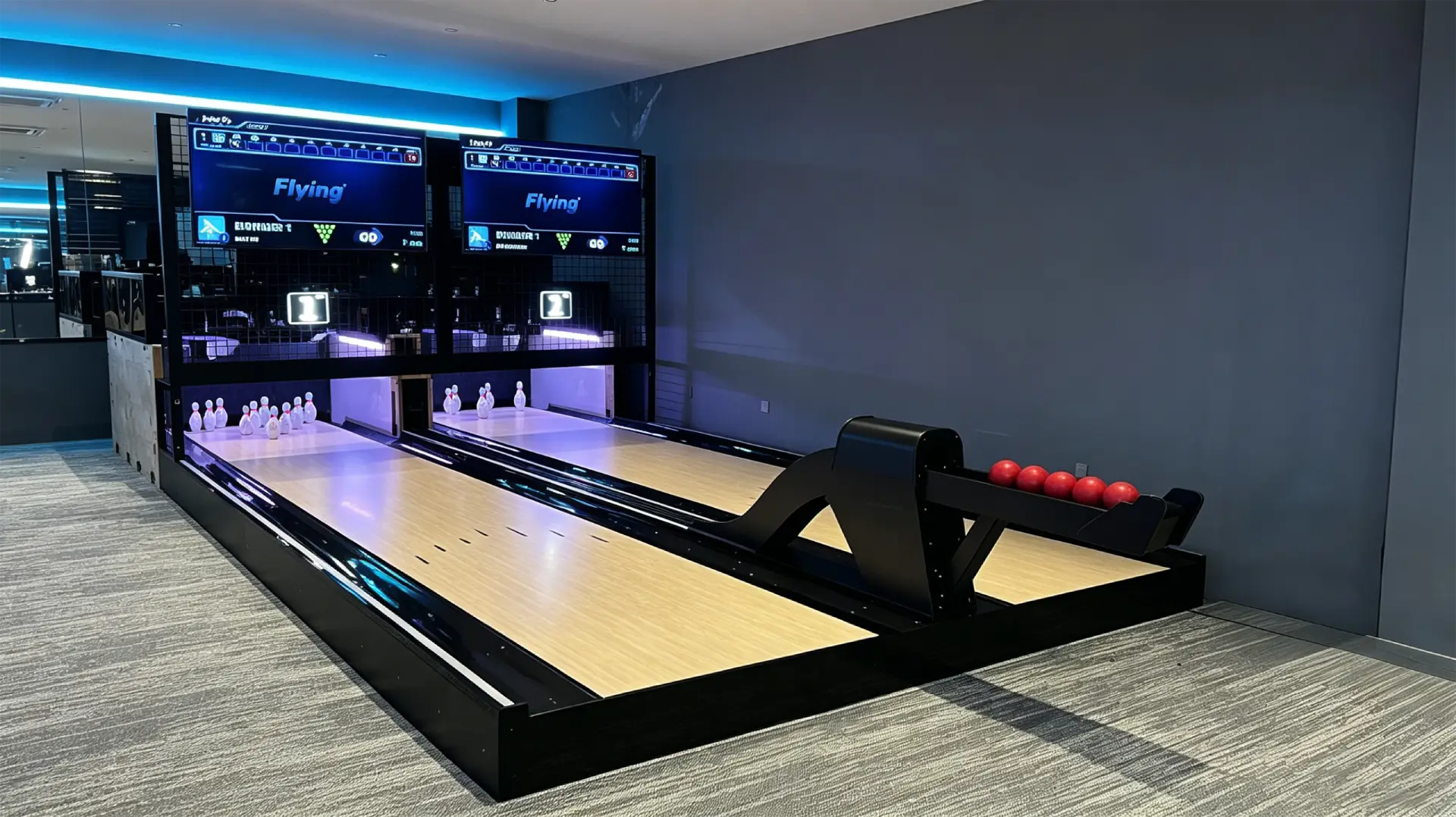
Flying Smart Duckpin Bowling Equipment for Commercial Venues
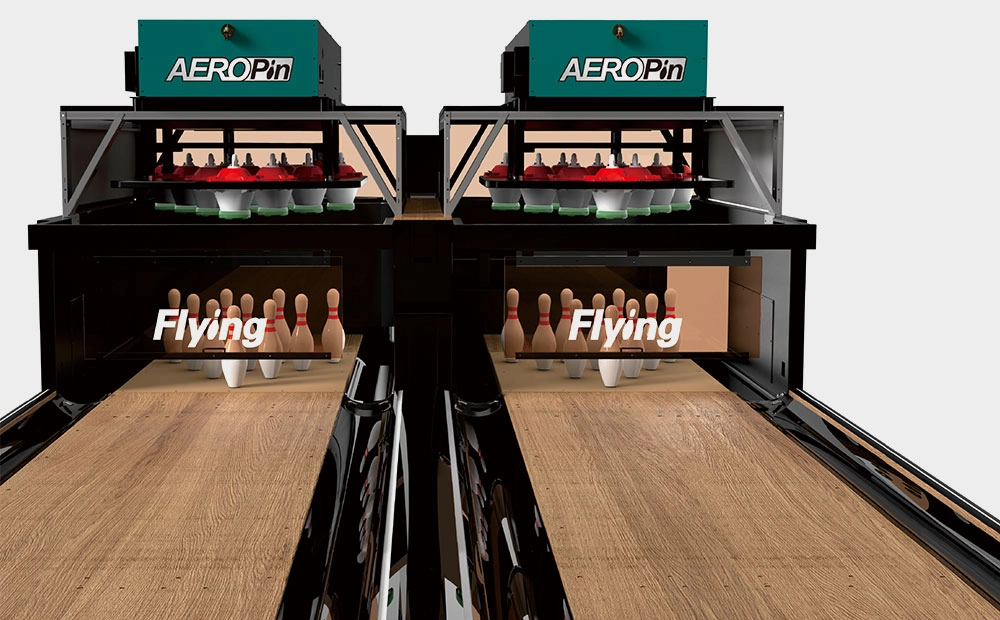
AEROPIN™ USBC-Certified String Pinsetter System
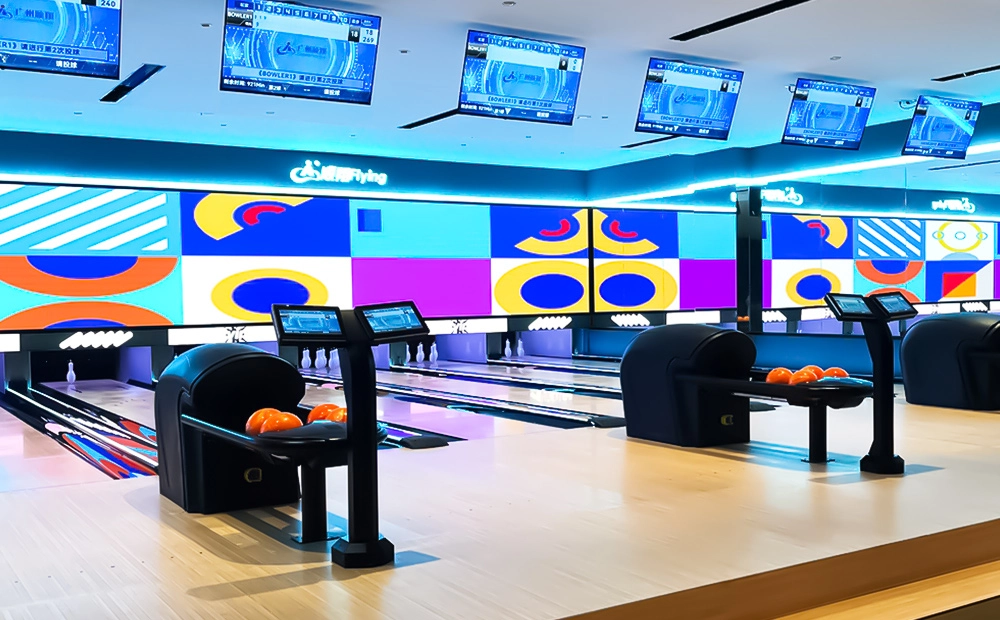
Medium Bowling Equipment for Compact Social Venues
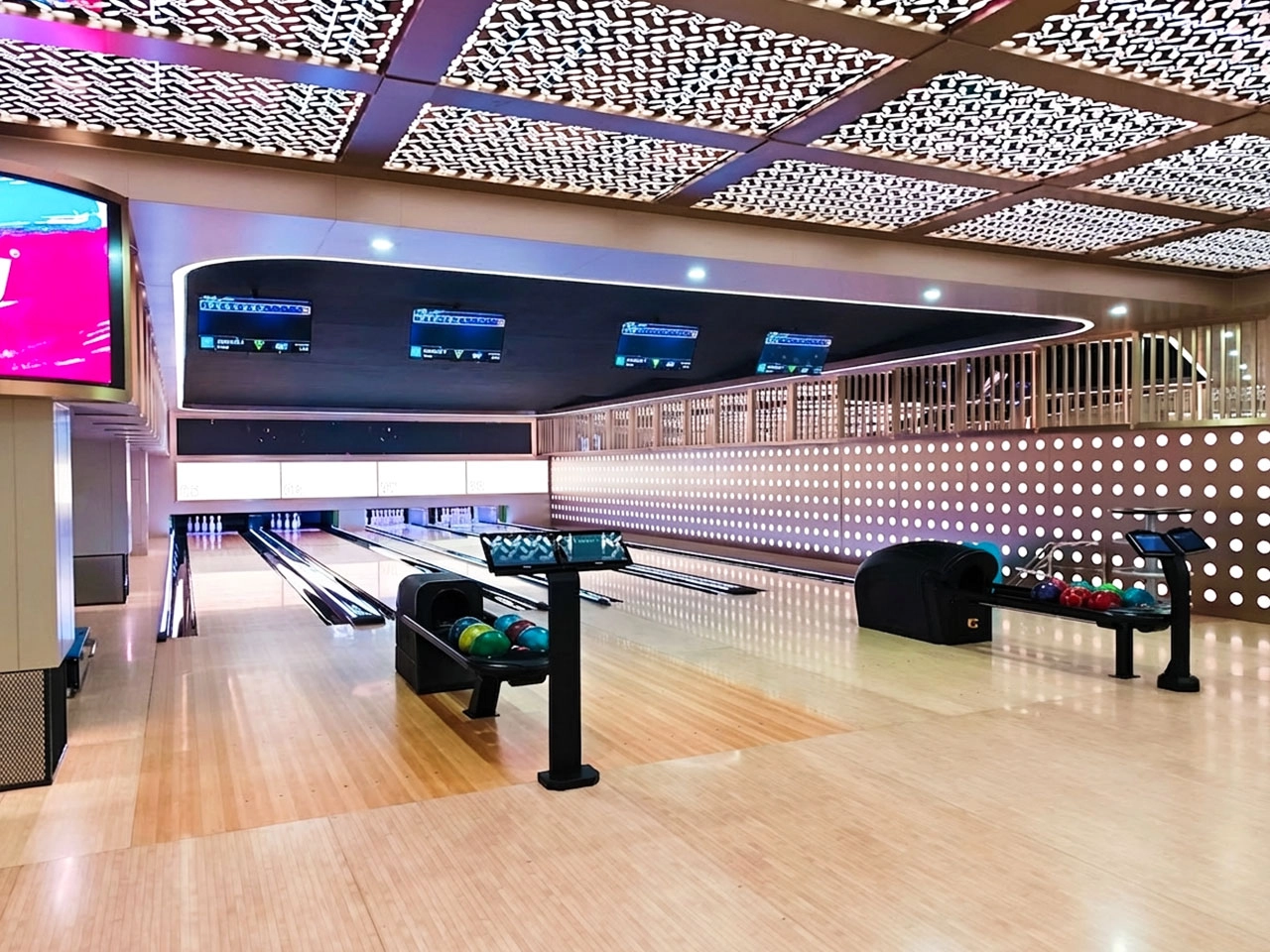
Complete Bowling Alley Equipment Package for Commercial Bowling Centers
You may also like
Build a commercial bowling venue with Flying’s complete string pinsetter bowling alley equipment package. The system includes the AEROPIN™ USBC-certified string pinsetter, customizable lanes, automatic scoring, ball return, lane lighting, pins, control hardware, and overseas installation support.
Designed for commercial bowling centers, family entertainment venues, hotels, resorts, bars, and premium private projects, this turnkey bowling system helps operators reduce sourcing complexity and prepare for reliable long-term operation.
Flying Smart Duckpin Bowling is a compact duckpin bowling equipment system designed for bars, family entertainment centers, hotels, resorts, cinemas, boutique bowling alleys, and social entertainment venues. With a standard 9.13m duckpin bowling lane, 1.25kg lightweight balls, automatic scoring, ball return, LED lighting, and a smart string pinsetter, it creates a fast-paced and easy-to-play bowling experience in a smaller footprint than traditional bowling.
The system is available as a turnkey duckpin bowling package, including lane equipment, a string pinsetter system, scoring hardware, control software, global shipping, installation guidance, and technical support.
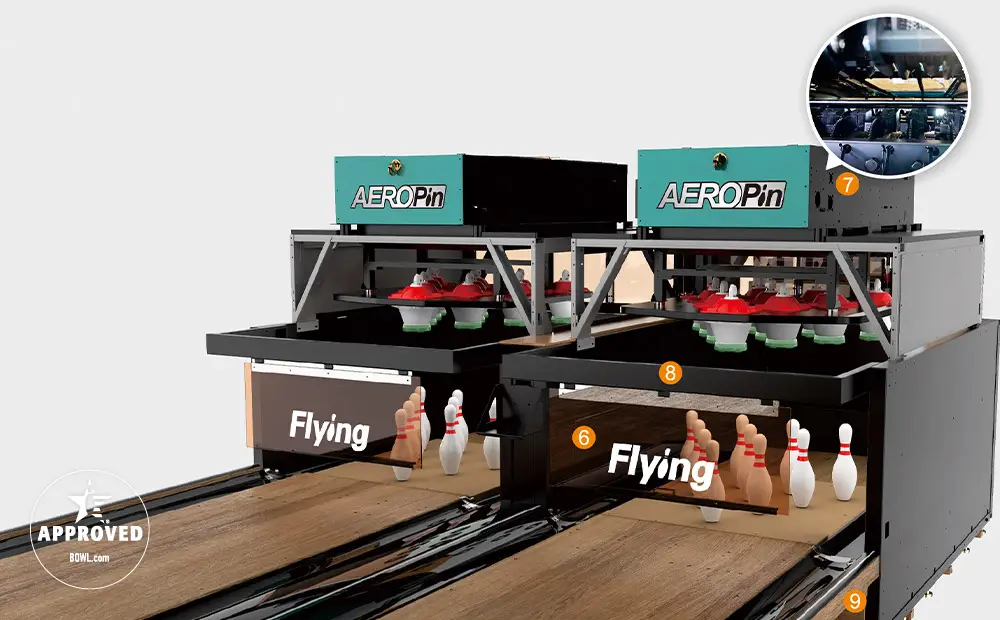
AEROPIN is Flying Bowling’s USBC-certified string pinsetter system for modern commercial bowling centers. Designed for fast pin setting, smooth ball return, low maintenance, and stable daily operation, it helps venue operators build league-ready and entertainment-focused bowling projects with confidence.
Flying Social Medium Bowling is a compact medium bowling equipment system designed for bars, cafes, family entertainment centers, community leisure venues, hotels, resorts, and small indoor entertainment spaces. With customizable lane lengths from 9.6m to 18m, small balls, lighter pins, string pinsetter technology, ball return, and automatic scoring, it creates an easy-to-play social bowling experience for players of different ages and skill levels.
Compared with full-size standard bowling, medium bowling requires less space and offers a more casual, interactive format. It is a practical choice for venues that want to add a bowling attraction without building a full commercial bowling alley.
Contact Flying
Start your bowling alley project
If you contact us now for more details, we can provide you with a custom bowling alley service. Our service team will get back to you within 24 hours normally!
© 2026 Flying BOWLING. Designed by gooeyun.
FOLLOW US:

Flying Bowling
Flying Bowling
Flyingbowling
Flyingbowling
Flyingbowling