


How Much Does It Cost to Build a Bowling Lane? (2026 Commercial & Home Guide)
Building a bowling lane involves more than just purchasing equipment; it requires a strategic balance of hard construction costs, equipment selection (new vs. used), and long-term operational planning. Whether you are installing a luxury home lane for $30,000 or launching a commercial center, understanding the distinction between equipment price and total build-out cost is key to a healthy ROI. By accounting for necessary 'soft costs' like acoustics and permitting upfront, investors can avoid budget overruns and accelerate their payback period.
- The Real Cost of Building a Bowling Lane: 2026 Price Breakdown
- Correcting the Myths: Why $100k/Lane is Often an Exaggeration
- Average Price Range for Equipment ($18,000 - $45,000 per Lane)
- Average Price Range for Full Construction and Build-out
- Commercial Bowling Center Investment
- New vs. Used Equipment: Cost Benefits and Risks
- Pinsetter Economics: String Pinsetters vs. Traditional Free-fall Systems
- Modern Scoring Systems and POS Integration Costs
- Home Bowling Alley Installation Costs
- Residential Specific Pricing (Typical Range: $15,000 - $90,000 Total)
- Space Requirements and Foundation Reinforcement
- Customization Options: Theming and Luxury Upgrades
- Construction, Soft Costs, and 'Hidden' Fees
- Zoning Compliance and Commercial Building Permits
- Acoustics and Soundproofing: A Critical Budget Line Item
- HVAC and Electrical Upgrades for Heavy Machinery
- Flooring Reinforcement and Leveling
- Operating Budget and Maintenance
- Annual Maintenance Costs per Lane
- Insurance Premiums for Entertainment Centers
- Energy Consumption: String vs. Hydraulic Systems
- ROI and Payback Period Analysis
- Calculating Revenue per Lane (Open Play vs. Leagues)
- Typical Payback Period for Boutique vs. Traditional Alleys
- Ancillary Revenue Impact (F&B, Arcade)
- Conclusion
- FAQ
The landscape of entertainment construction has shifted dramatically over the last decade. Once dominated by smoky league halls, the bowling industry has evolved into two distinct, lucrative sectors: the boutique Family Entertainment Center (FEC) and the ultra-luxury residential amenity market.
Whether you are an investor crunching numbers for a new commercial venture or a homeowner looking to install the ultimate man cave upgrade, the financial landscape is complex. By 2026, supply chain stabilizations and technological advancements—specifically in pinsetter mechanics—have altered the pricing models significantly.
So, how much does it cost to build a bowling lane in 2026? While a quick Google search might give you a vague number, the reality involves a matrix of equipment choices, construction variables, and soft costs. This guide breaks down the true commercial bowling center startup costs, the realities of home bowling alley cost estimates, and the crucial differences in used vs. new bowling equipment prices.
The Real Cost of Building a Bowling Lane: 2026 Price Breakdown
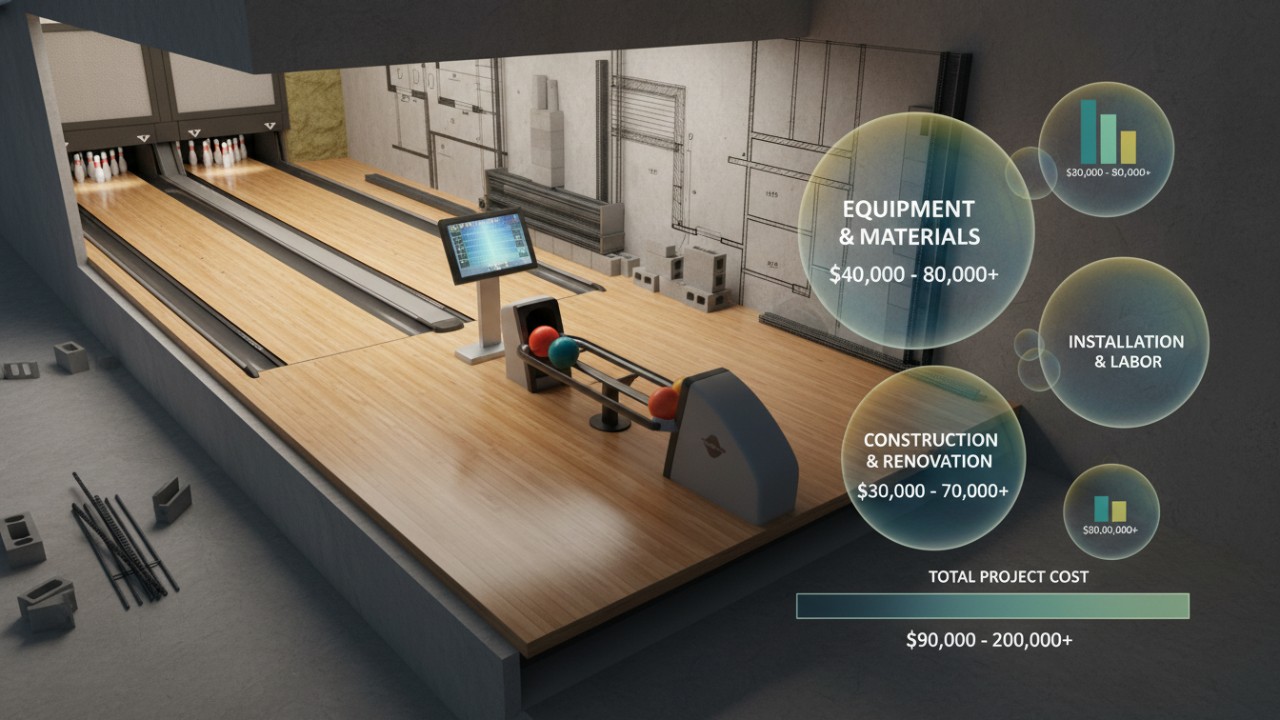
When analyzing the bowling alley construction budget, it is vital to distinguish between the cost of the equipment package and the cost of the complete build-out. A common mistake investors make is assuming the price of the pinsetter and lane surface equates to the total project cost.
Correcting the Myths: Why $100k/Lane is Often an Exaggeration
For years, industry rumors suggested a flat rate of $100,000 per lane. In 2026, this figure is often an exaggeration for the lanes themselves, though it can be accurate if you include the entire building shell, restaurant construction, and land acquisition divided by the number of lanes.
Strictly speaking, the "lane package" (the machinery, the wood/synthetic surface, the ball return, and the scoring monitors) rarely hits six figures per lane unless you are opting for gold-plated customization. The industry has become more efficient. The introduction of string pin technology has lowered the manufacturing cost and installation complexity, meaning the hardware costs have stabilized even as inflation has risen elsewhere.
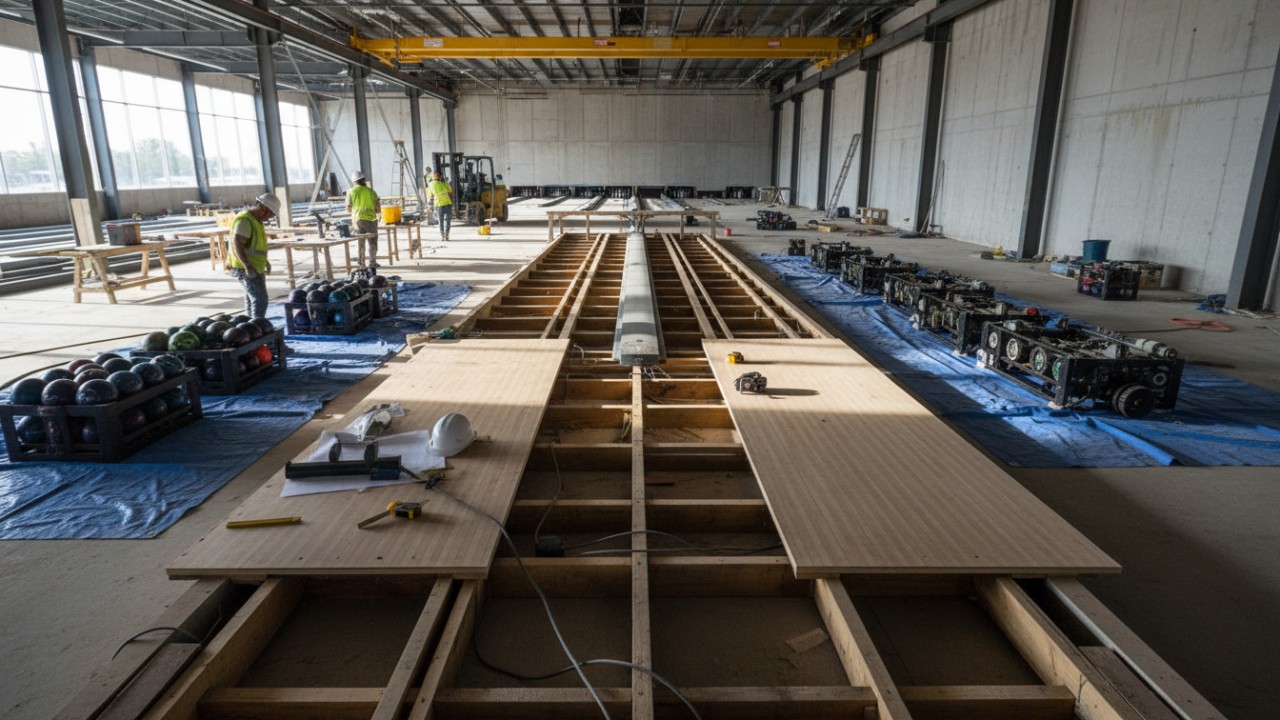
Average Price Range for Equipment ($18,000 - $45,000 per Lane)
For the core hardware, the current market rates for 2026 generally fall into these brackets:
- Entry-Level / Refurbished ($18,000 - $25,000): This usually includes used mechanical pinsetters (like the Brunswick A-2 or AMF 82-70) that have been refurbished, along with basic synthetic lane overlays.
- Mid-Range / String Technology ($26,000 - $35,000): This is the sweet spot for most modern commercial centers. This price point secures brand new string pinsetters (which are cheaper to manufacture and maintain), modern synthetic lanes with glow effects, and standard seating.
- High-End / Traditional Free-Fall ($36,000 - $45,000+): For centers dedicated to professional leagues (USBC sanctioned competition standards), brand new free-fall pinsetters and premium masking units with integrated LED video walls will push the price to the top of the range.
Average Price Range for Full Construction and Build-out
While the equipment is a fixed cost, the construction is variable. The how much does it cost to build a bowling lane equation changes drastically when you factor in the "box" the lanes live in.
- Commercial Shell Build-out: Expect to pay an additional $40,000 to $70,000 per lane in construction costs (HVAC, electrical, foundation work, and general contracting) depending on your location.
- Total "Turnkey" Cost: Consequently, a fully operational commercial lane (equipment + construction) usually lands between $80,000 and $115,000 total investment per lane.
Commercial Bowling Center Investment
When launching a business, your commercial bowling center startup costs are heavily influenced by the technology you choose. In 2026, the biggest debate in the industry is no longer about the surface of the lane (wood is effectively dead; synthetic is king), but rather the machine behind the pins.
New vs. Used Equipment: Cost Benefits and Risks
Analyzing used vs new bowling equipment prices is the first step in budget optimization.
- New Equipment: Comes with warranties (typically 2-5 years), installation support, and modern aesthetics. However, it requires a higher capital expenditure (CapEx).
- Used Equipment: You can acquire refurbished pinsetters for 40-50% less than new models.
- The Risk: Used equipment often requires "cannibalization"—buying 12 machines to keep 10 running. It also demands a highly skilled mechanic, a dying breed in the 2026 labor market. If you cannot fix the machine yourself, the savings on the purchase price will quickly vanish in repair bills and downtime revenue loss.
Pinsetter Economics: String Pinsetters vs. Traditional Free-fall Systems
This is the single most significant financial decision for a new build.
- Traditional Free-Fall: These are the complex machines that physically pick up the pins. They are loud, heavy, and contain thousands of moving parts. They are required for high-level professional tournaments but are overkill for entertainment-focused venues (Boutique/FEC).
- String Pinsetters: The pins are attached to black nylon strings. The machine is simple, lightweight, and uses 75% less energy.
- Cost Impact: String machines are $5,000 to $10,000 cheaper per lane upfront.
- Operational Impact: They eliminate the need for a full-time certified mechanic (salary range $60k-$90k/year), drastically improving the ROI.
Modern Scoring Systems and POS Integration Costs
You cannot build a lane today without a robust digital interface. Modern bowlers expect tablets at the seating area, 3D animations on the monitors, and seamless ordering of food and drinks from the lane.
- Hardware Cost: 55-inch to 85-inch overhead monitors and bowler consoles.
- Software Licenses: Systems like QubicaAMF’s BES X or Brunswick’s Sync are not one-time purchases; they often involve annual licensing fees or substantial upfront software costs, ranging from $3,000 to $8,000 per lane for the integration suite.
Home Bowling Alley Installation Costs
The residential market has exploded, with homeowners realizing that a basement bowling alley is a viable alternative to a home theater. However, the home bowling alley cost structure differs from commercial projects because efficiency of scale does not apply.
Residential Specific Pricing (Typical Range: $15,000 - $90,000 Total)
Installing a single pair of lanes in a home loses the bulk pricing discounts commercial centers enjoy.
- The DIY/Kit Approach ($15,000 - $25,000): This involves buying refurbished equipment and doing much of the framing yourself. It is high labor but low cost.
- Standard Professional Install ($35,000 - $55,000): A professional crew installs new string pinsetters and synthetic lanes. This is the most common tier for high-end homes.
- The Luxury Suite ($70,000 - $90,000+): This includes custom lane graphics (e.g., family crests on the wood), boutique furniture, automated bumper systems, and theatrical lighting packages.
Space Requirements and Foundation Reinforcement
You cannot simply lay a bowling lane on a standard carpet.
- Dimensions: A regulation lane requires roughly 87 feet of length from the back of the approach to the back of the pinsetter.
- Foundation: The equipment is heavy. A pair of lanes weighs several tons. If installing on a ground floor, a standard slab is usually fine. If installing on a second floor or over a basement, you will need structural engineers to reinforce the joists, adding $5,000 to $15,000 to the budget.
Customization Options: Theming and Luxury Upgrades
In the residential market, aesthetics rule.
- Custom Masking Units: The panel above the pins can be a custom mural or a video screen.
- Lane Colors: You aren't stuck with "wood" colors. Black, neon blue, or even transparent lanes with LED underlighting are available.
- Furniture: Custom "sofa" seating rather than hard plastic chairs is standard in homes, costing roughly $2,000 per lane.
Construction, Soft Costs, and 'Hidden' Fees
Whether commercial or residential, the bowling alley construction budget must account for the infrastructure required to support the game. These are often the "hidden" costs that cause projects to run over budget.
Zoning Compliance and Commercial Building Permits
For commercial centers, changing a retail space (like an old big-box store) into an assembly use group (entertainment) triggers significant code requirements. You may need fire suppression upgrades (sprinklers) and specific egress exits. Permit fees and architectural drawings can easily consume 5-10% of your total budget.
Acoustics and Soundproofing: A Critical Budget Line Item
Bowling is loud. The crash of pins registers at over 100 decibels.
- Commercial: You need sound-dampening ceiling tiles and wall panels to ensure the restaurant area is conversational.
- Residential: This is critical. Without acoustic isolation (floating floors, double-stud walls, mass loaded vinyl), the sound of bowling will vibrate through the entire house. Budget at least $5,000 per lane for acoustic treatments.
HVAC and Electrical Upgrades for Heavy Machinery
Pinsetters, ball returns, and lane machines generate heat and require specific power.
- Electrical: Commercial pinsetters typically require 3-phase power. If your building or home only has single-phase, you will need expensive converters or a service upgrade from the utility company.
- HVAC: You must account for the heat load generated by the machines and the body heat of bowlers to keep the center comfortable.
Flooring Reinforcement and Leveling
Bowling lanes must be perfectly level—specifically, within 40/1000ths of an inch. Standard concrete slabs are rarely this flat. Construction teams must use a self-leveling underlayment or build a specialized sub-structure (cribbing) to ensure the lanes sit flat. This precision carpentry is labor-intensive.
Operating Budget and Maintenance
Understanding how much does it cost to build a bowling lane is step one; understanding the cost to run it is step two.
Annual Maintenance Costs per Lane
- Traditional Machines: Expect to spend $1,500 - $2,500 per lane/year on parts, oil, and mechanic labor.
- String Machines: Costs drop to roughly $300 - $500 per lane/year due to fewer moving parts.
Insurance Premiums for Entertainment Centers
Bowling centers are high-traffic venues. Liability insurance (slip and fall) and property insurance for the high-value equipment are significant. Premiums have risen in 2026; expect to pay between $15,000 and $40,000 annually for a mid-sized center depending on alcohol sales.
Energy Consumption: String vs. Hydraulic Systems
Energy efficiency is now a major budget factor. String pinsetters operate on standard 110v or 220v power and consume power only when the ball hits the pins. Traditional machines run motors continuously. Over a year, a 20-lane center can save $20,000+ in electricity bills by choosing string technology.
ROI and Payback Period Analysis
The ultimate question for the commercial investor: Is it worth it?
Calculating Revenue per Lane (Open Play vs. Leagues)
The industry standard for revenue generation has shifted.
- Leagues: Provide guaranteed base income but at a lower price point per game.
- Open Play (Weekends/Evenings): Commands premium pricing (often hourly rates of $40-$80 per lane).
- Target Revenue: A healthy center should aim for $25,000 to $45,000 in revenue per lane annually from bowling alone.
Typical Payback Period for Boutique vs. Traditional Alleys
- Traditional Alleys: Often rely on volume. Payback period is typically 4-5 years.
- Boutique/FECs: By combining bowling with high-margin food and beverage, the payback period can be accelerated to 2-3 years.
Ancillary Revenue Impact (F&B, Arcade)
It is an industry axiom in 2026: Bowling brings them in; food and games make the profit. A bowling lane acts as the "anchor tenant" of your facility. While the lane construction is expensive, it drives traffic to the arcade (where margins are 80%+) and the bar (margins 70%+). An investment in bowling lanes should be viewed as an investment in foot traffic for these higher-margin departments.
Conclusion
Building a bowling lane involves more than just purchasing equipment; it requires a strategic balance of hard construction costs, equipment selection (new vs. used), and long-term operational planning. Whether you are installing a luxury home lane for $30,000 or launching a commercial center, understanding the distinction between equipment price and total build-out cost is key to a healthy ROI.
The data for 2026 clearly favors the adoption of modern technologies like string pinsetters, which lower both the barrier to entry and the long-term operational overhead. By accounting for necessary 'soft costs' like acoustics, zoning permits, and sub-floor leveling upfront, investors can avoid budget overruns and accelerate their payback period. Ultimately, the cost is significant, but for those who plan the infrastructure correctly, the durability and revenue potential of a bowling lane offer one of the strongest returns in the entertainment industry.
FAQ
How much does it cost to install a single bowling lane in a home?
A single home bowling lane typically costs between $18,000 and $45,000 for the equipment and installation. However, high-end custom residential setups involving structural reinforcement, custom carpentry, and soundproofing can push the total project cost to between $60,000 and $100,000.
Are string pinsetters cheaper than traditional pinsetters?
Yes, string pinsetters are generally 20-30% cheaper upfront than traditional free-fall machines. Furthermore, they significantly reduce long-term operating costs by requiring fewer mechanical parts, less energy, and minimal specialized labor for maintenance.
What is the payback period for a commercial bowling lane?
On average, a well-managed commercial bowling lane has a payback period of 2 to 4 years. This depends heavily on the business model (hybrid entertainment center vs. traditional league alley), ancillary revenue from food and beverage, and initial construction efficiency.
Do I need special permits to build a bowling alley?
Yes. Commercial projects require specific zoning permits, occupancy certificates, and often noise ordinance compliance. Even residential installations may require structural permits if you are altering the foundation or load-bearing elements of the home.
Recommended products
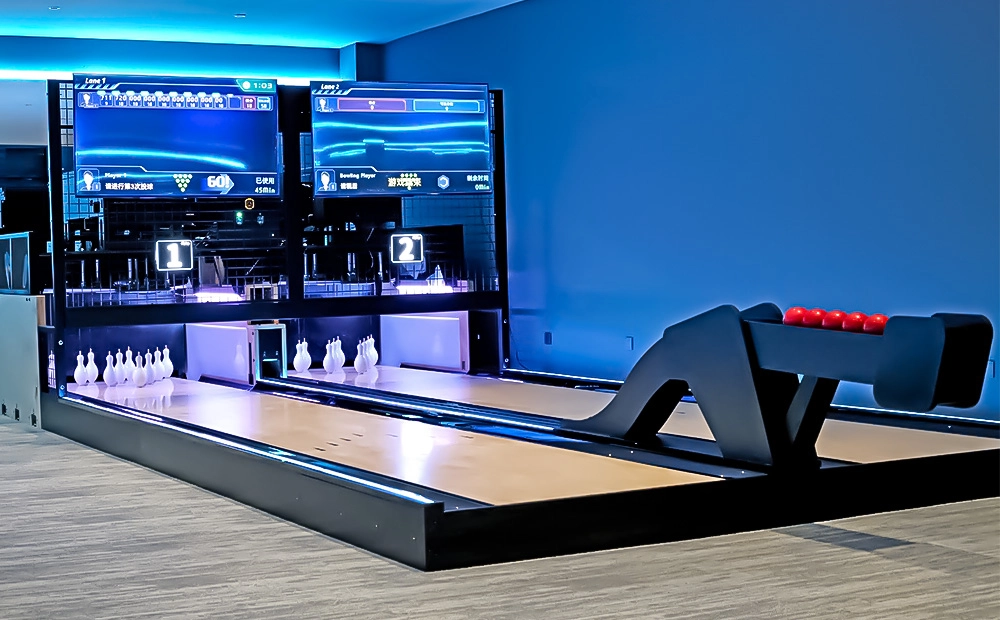
Flying Smart Duckpin Bowling Equipment and Lane System for Commercial Venues
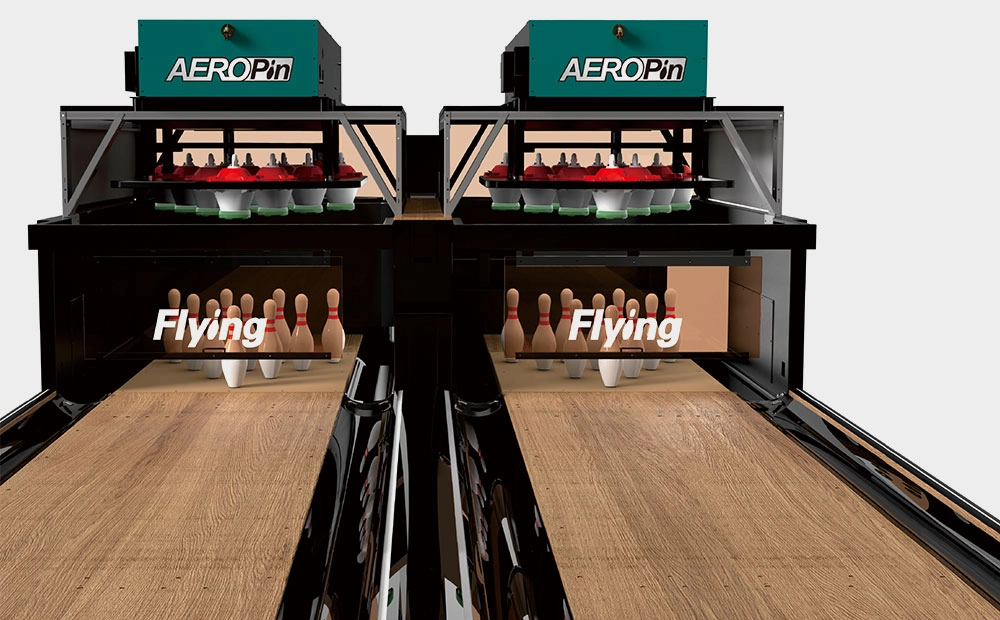
USBC-Certified AEROPIN String Pinsetter System
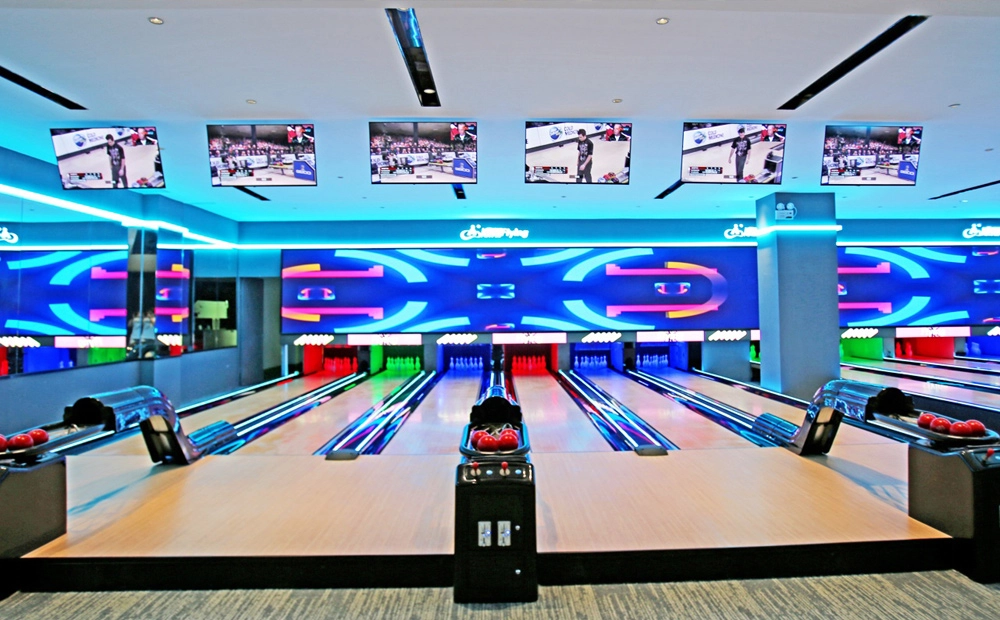
Mini Bowling Equipment for Kids and Family Entertainment Venues
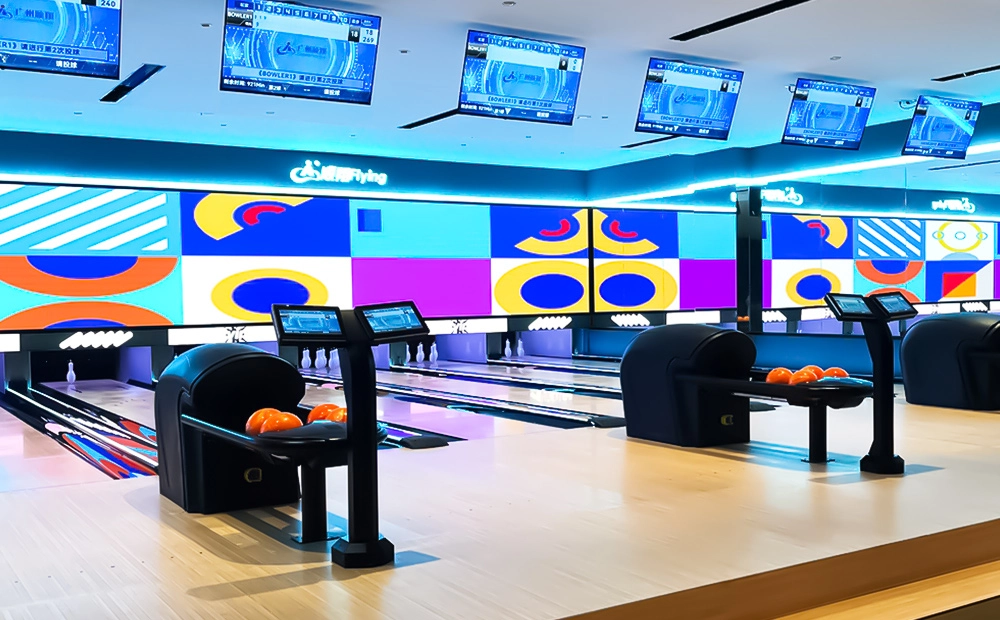
Medium Bowling Equipment for Social Entertainment Venues
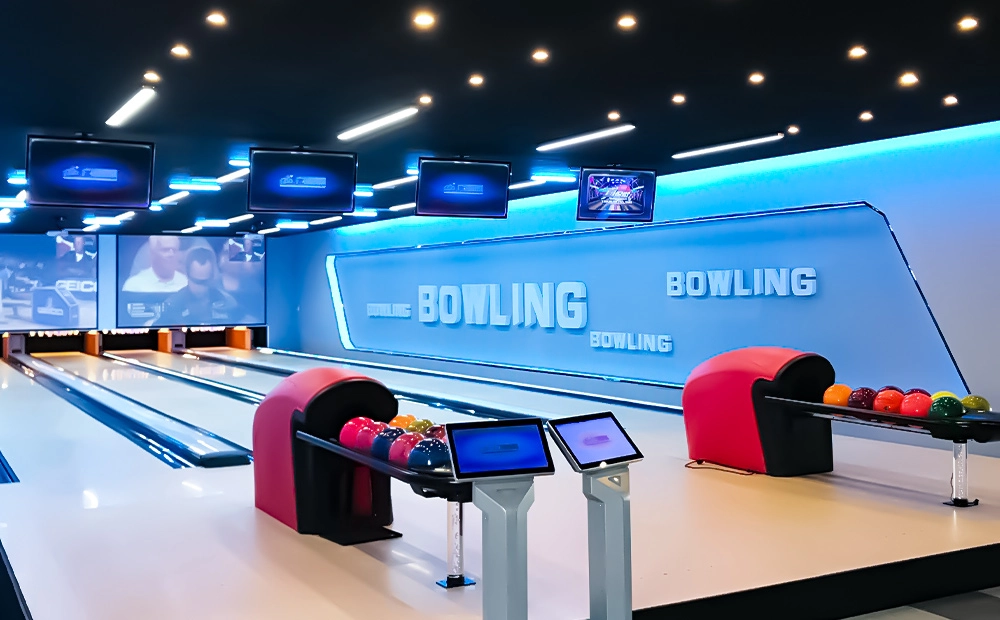
Complete String Pinsetter Bowling Alley Equipment System
You may also like
Flying Smart Duckpin Bowling (FSDB) innovative design, standard 9.2-meter short lane, can be shortened in length, compact layout suitable for small spaces. The game rules are simple but challenging, attracting players of different ages to actively participate.
Suitable for social entertainment venues such as bars, billiard halls, and game centers, it not only enhances interactivity but also increases the popularity and consumption frequency of the venue. The fun and competitive nature of FSDB will make it a new focus of social activities.
Flying Classic Standard Bowling (FCSB) is designed according to international competition standards and equipped with an accurate automatic scoring system, providing bowling enthusiasts with a pure professional experience. Whether it is for competitions or leisure entertainment, FCSB can meet high-level needs.
Suitable for family entertainment centers, luxury resorts, private villas, or clubs, it is an ideal choice for customers who pursue high-end quality and professional experience. Its classic design and excellent performance will add lasting appeal to the venue.
Flying Cute Mini Bowling (FCMB) is a mini bowling experience designed for children and families. The lane length is fixed at 12 meters, equipped with lightweight balls without finger holes (only 1.25kg) and small pins, specially designed for children and family fun.
It can not only help children feel the fun of bowling, but also stimulate their interest and competitive consciousness. Suitable for children's playgrounds, theme parks and parent-child centers, it is the best choice for places focusing on the children's market.
Flying Social Medium Bowling (FSMB) is tailored for small venues, with flexible lane lengths (customizable from 9.6 meters to 18 meters), a small ball design suitable for players of all ages, and light pins that are easier to knock down, increasing participation and fun.
Whether it is a gathering of friends or a casual social, FSMB can easily create a relaxed and pleasant atmosphere. Its efficient space-utilization design is particularly suitable for cafes, bars and community entertainment venues, allowing people to fall in love with bowling in a relaxed interaction.
Contact Flying
Start your bowling alley project
If you contact us now for more details, we can provide you with a custom bowling alley service. Our service team will get back to you within 24 hours normally!
© 2026 Flying BOWLING. Designed by gooeyun.
FOLLOW US:
Flying Bowling
Flying Bowling
Flyingbowling
Flyingbowling