Mexico is one of Latin America's most commercially developed bowling markets — and one that requires a fundamentally different analysis from the frontier or emerging-market articles in this series. With a nominal GDP of $1.85 trillion in 2024 (IMF, 12th globally), a population of 131 million, three major metropolitan areas each exceeding 4 million people, USMCA trade access, multiple deep-water container ports, and an existing commercial bowling sector with established international brands already operating in major cities, Mexico is not a first-mover opportunity. It is a competitive market where investment success depends on location, format positioning, operational quality, and differentiation from existing alternatives.
How much does it cost to build a bowling alley in Mexico?
A 4–6 lane compact installation in a Mexican commercial venue (duckpin or mini bowling) has a scenario-based total investment estimate of $120,000–$280,000. A mid-scale 6–12 lane medium or standard bowling center runs $250,000–$600,000. A full-size 12–20 lane standalone commercial center in a major city can reach $700,000–$1,500,000+. These are scenario-based planning estimates from selected Flying Bowling project configurations, not market averages. Actual costs depend heavily on city, location type (standalone vs. mall integration), fit-out standard, and equipment configuration. Mexico's sea port access and USMCA trade position make import logistics more straightforward than most Latin American markets.
Mexico Market Context: A Mature, Competitive Leisure Market
Mexico's bowling market is meaningfully different from the markets covered elsewhere in this series. Commercial bowling has been present in Mexico for decades — major international brands including AMF and Brunswick have installed equipment in CDMX, Monterrey, Guadalajara, and other major cities. Shopping mall entertainment centers, FECs, and dedicated bowling venues serve an established consumer base that understands the product. An investor entering Mexico is not educating the market about bowling — they are competing with existing operators for share of a known leisure category.
The opportunity in Mexico in 2025–2026 lies in three segments: format differentiation (compact immersive bowling concepts that the existing full-size market does not serve); geographic underpenetration (secondary cities including Puebla, Querétaro, Tijuana, León, Cancún, and Mérida that have the consumer base but limited bowling supply); and venue type innovation (integrating bowling into hotel, resort, and mixed-use entertainment concepts that go beyond the traditional standalone center model).
Market strengths
- ›GDP $1.85T (2024, IMF) — 12th largest economy globally
- ›Three metros over 4M people: CDMX (~21M metro), Guadalajara (~5M), Monterrey (~5M)
- ›Mature customs and trade infrastructure — import process is well-established, though Chinese-origin equipment is subject to MFN tariff rates rather than USMCA preferences (which apply to US/Canada-origin goods only)
- ›Multiple deep-water ports (Manzanillo, Veracruz, Lázaro Cárdenas) — no landlocked logistics premium
- ›Established bowling consumer awareness — no market education required
- ›Active record FDI inflows ($36.87B in 2024) — favorable investment climate
- ›Strong shopping mall sector — Fibra Uno, Grupo GICSA, GFa and others operate high-footfall commercial properties across 30+ cities
Market challenges
- ›Established international competition — AMF, Brunswick equipment already in major cities; differentiation required
- ›GDP growth slowed to 1.45% in 2024; Q1 2025 contracted 0.8% QoQ (FocusEconomics) — consumer discretionary spending under some pressure
- ›Security considerations vary significantly by city and neighborhood — site selection requires local due diligence
- ›Mature trade and customs infrastructure — imports well-managed, though USMCA preferences apply to US/Canada-origin goods, not Chinese-origin equipment
- ›Operating in MXN while equipment is priced in USD creates currency exposure — model the MXN/USD rate trajectory
$1.85T
GDP 2024 (IMF) — 12th globally
131M
Population; median age 29; 81% urban
$36.9B
FDI record in 2024 (INEGI)
1.45%
GDP growth 2024 (FocusEconomics) — slower than 2023
Format and Location Strategy: Where the Opportunity Lies
Mexico's existing bowling market is dominated by full-size standard lanes. The growth opportunity in 2025–2026 is in formats and locations that the existing market does not serve well.
Compact immersive (duckpin / mini)
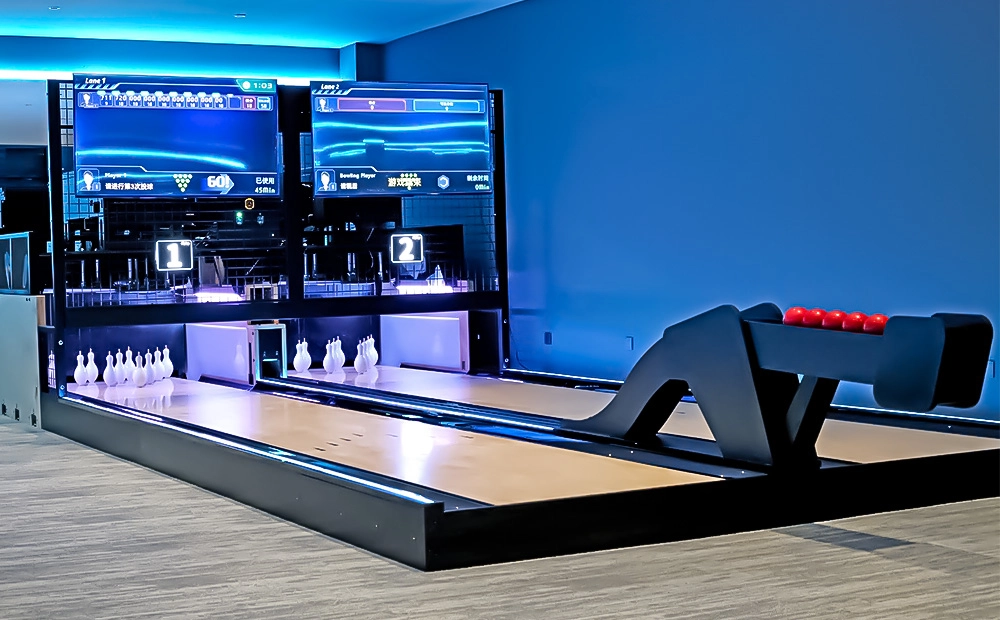
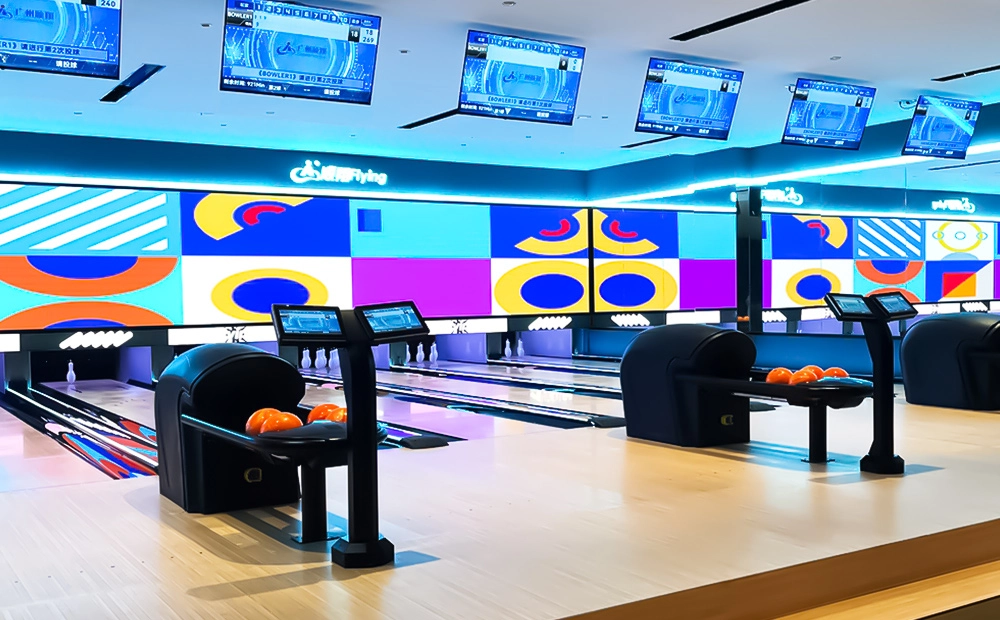
Compact 9–12 m lanes integrated into a social F&B environment — bar, restaurant, or entertainment complex. Increasingly common in urban entertainment concepts globally. Appeals to the urban millennial demographic in CDMX (Polanco, Condesa, Santa Fe), Monterrey (Valle, San Pedro), and Guadalajara (Zapopan). No technique barrier, faster game pace, and when well designed may support stronger F&B revenue per square meter than traditional center models. This is where Flying Bowling's FSDB and FCMB formats have the clearest differentiation from existing competition.
Secondary cities
Puebla (~3.3M metro), Querétaro (~1.5M), Cancún (high-income tourism), Mérida (~1.3M), Tijuana (~2M), León (~1.7M) — each may have sufficient demand for a well-positioned bowling venue with limited existing bowling supply, but requires local validation of foot traffic, competition, rent levels, and pricing tolerance before committing capital. Secondary cities carry lower real estate and operating costs than CDMX or Monterrey and face less direct competition from established operators.
Hotel and resort integration
Mexico's resort corridor (Los Cabos, Riviera Maya, Puerto Vallarta) and business hotel market offer bowling as an amenity rather than a standalone venue. Mini or medium bowling (4–8 lanes) integrated into a hotel entertainment floor generates revenue from captive guests without requiring a standalone consumer footfall base. Flying Bowling's FCMB and FSMB formats are well suited to hotel amenity configurations.
Equipment Cost and Format Options
Mexico receives commercial bowling equipment primarily from the United States (AMF, Brunswick) and China (including Flying Bowling). Equipment from Chinese manufacturers routes via sea freight to Mexican ports — typically Manzanillo (Pacific coast) or Veracruz (Gulf coast) for equipment bound for CDMX, Guadalajara, or Monterrey — and does not require the overland transit that adds cost and time in landlocked Latin American markets.
| Format |
Lanes |
Equipment (FOB, indicative) |
Best fit in Mexico |
| Duckpin (FSDB) |
4–8 lanes |
$40,000–$120,000 |
Social F&B venues, urban entertainment, CDMX/MTY/GDL upmarket districts |
| Mini (FCMB) |
4–8 lanes |
$50,000–$115,000 |
Hotel amenities, family malls, resort entertainment |
| Medium (FSMB) |
6–12 lanes |
$80,000–$220,000 |
Secondary cities; mixed-use entertainment; shopping malls |
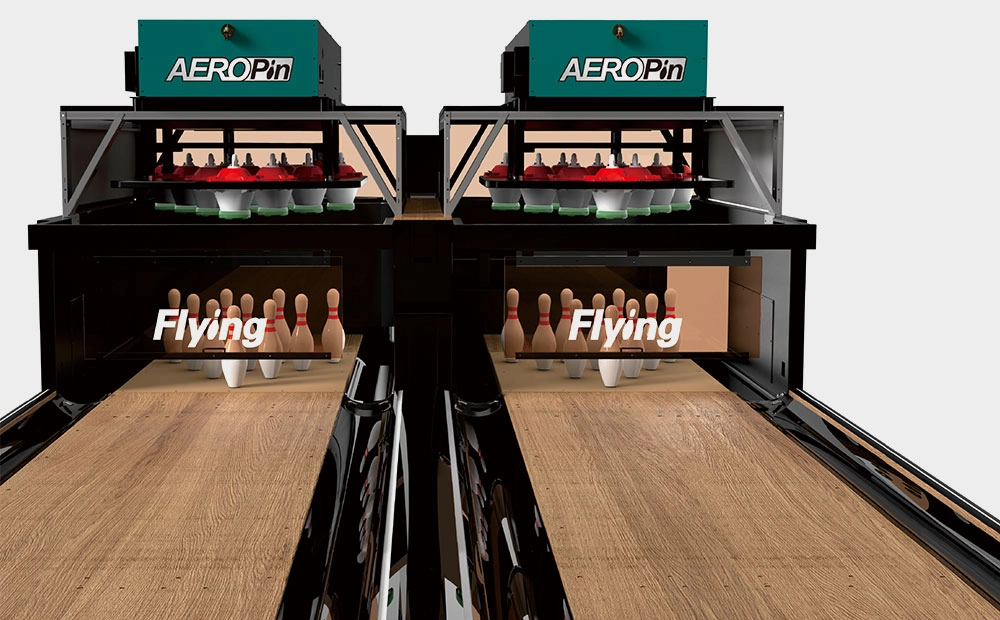
| Standard (FCSB / AEROPin) |
12–24 lanes |
$150,000–$400,000+ |
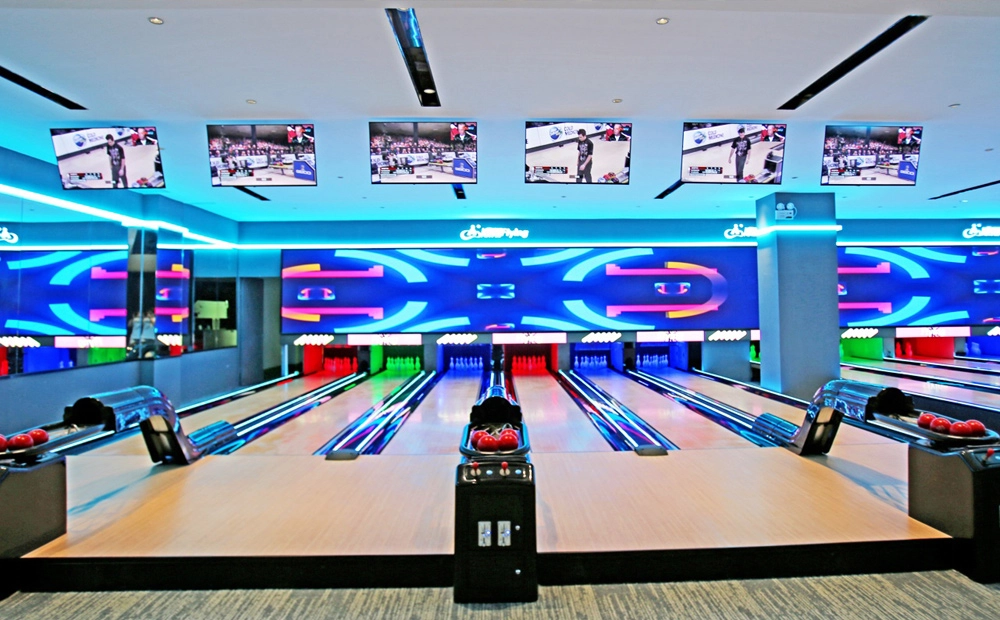
Standalone centers, league programs — competitive with established operators; requires differentiation strategy |
Indicative FOB pricing based on selected Flying Bowling project configurations. Landed cost in Mexico includes sea freight, Manzanillo or Veracruz port handling, Mexican customs duty (confirm HS code rates with a licensed Mexican customs broker), and inland delivery to site. Confirm current pricing with Flying Bowling.
Import Logistics: Mexico's Port Access Advantage
Mexico's multiple deep-water container ports make it one of the more logistics-accessible markets in Latin America for Chinese equipment imports. Equipment from Flying Bowling routes via sea freight to the most appropriate port for the project destination:
- ›Manzanillo (Colima): Mexico's largest container port by volume; primary entry for Pacific-route cargo from China. Serves CDMX (via road ~800 km), Guadalajara (~300 km), and western Mexico. Transit time from Guangzhou approximately 18–25 days.
- ›Lázaro Cárdenas (Michoacán): deep-water port serving the Bajío region and CDMX; alternative to Manzanillo for some shipping lines.
- ›Veracruz: Mexico's primary Gulf coast port; serves CDMX (~400 km), Puebla, Monterrey, and eastern Mexico. Typically reached via Panama Canal route from China — slightly longer transit.
- ›Import duty: Mexico applies USMCA tariff rates for US-origin goods. Chinese-origin bowling equipment is subject to Mexico's MFN tariff rates under the relevant HS codes — confirm applicable rates with a licensed Mexican customs broker (agente aduanal) before ordering. USMCA does not apply to Chinese-origin goods.
- ›Total timeline: 4–7 weeks from China factory to Mexico City or Guadalajara project site under normal conditions — one of the faster delivery timelines in Latin America given Mexico's port infrastructure.
Project Budget Summary (Scenario Estimates)
Scenario-based estimates from selected Flying Bowling project configurations. Freight + Fit-Out covers international logistics, customs, inland delivery to site, civil preparation, electrical supply, and basic fit-out. F&B equipment, furniture, software licensing, and installation labor are confirmed separately. Add 10–15% contingency.
| Project Type |
Equipment (FOB) |
Freight + Fit-Out (scenario) |
Total Estimate |
| 4–8 lane duckpin / mini (urban F&B or hotel) |
$40,000–$115,000 |
$65,000–$140,000 |
$120,000–$280,000 |
| 6–12 lane medium bowling (mall or secondary city) |
$80,000–$220,000 |
$100,000–$200,000 |
$200,000–$480,000 |
| 12–24 lane standard commercial center |
$150,000–$400,000 |
$200,000–$500,000 |
$400,000–$1,000,000+ |
| Scenario estimates from selected Flying Bowling project configurations. Not market averages. Fit-out standard significantly affects total cost — a premium urban entertainment venue in Polanco or Valle will cost materially more than a standard commercial center fit-out. Confirm all costs with Flying Bowling and a local project consultant before finalizing the budget. |
ROI Framework: Compact vs Standard Format in Mexico
Mexico is a mature market where investors ask not just "what does it cost?" but "what is the payback period and which format generates the better return?" The table below provides a scenario-based framework — not financial projections — to illustrate the key structural differences between format types for planning purposes. Actual performance depends heavily on location, fit-out standard, pricing, F&B mix, and competitive environment.
| Variable |
Compact (duckpin / mini, 4–8 lanes) |
Standard (12–24 lanes) |
| Total investment (scenario) |
$120,000–$280,000 |
$400,000–$1,000,000+ |
| Revenue sources |
Lane fees + F&B (F&B often the larger revenue driver in well-designed social venues) |
Lane fees primary; F&B secondary; league programs for recurring revenue |
| Break-even utilization |
Lower capital base allows break-even at moderate lane utilization; confirm pricing against local F&B comparables |
Higher capital requires sustained high lane utilization; requires larger catchment area and established demand |
| Rent and space cost |
Lower footprint — may fit within existing bar, hotel, or mall entertainment unit; rent cost proportionally lower |
Requires dedicated large floor area; CDMX and Monterrey commercial real estate is expensive per m² |
| Competition exposure |
Differentiates from existing full-size operators — not directly competing with AMF/Brunswick installations |
Competes directly with established full-size centers; requires differentiation on service, fit-out, or location |
| Indicative payback range |
Typically shorter due to lower capital base — estimate 2–4 years in well-performing venues; validate with local comparable data |
Typically longer — estimate 4–7 years for well-run centers; highly dependent on lane utilization rates |
| All figures and ranges are indicative scenario references for planning comparison only. They do not constitute financial projections or guarantees. Actual payback depends on pricing, occupancy, F&B mix, rent, staffing, and competitive conditions at the specific location. Commission a business plan and financial model from a local consultant before finalizing any investment decision. |
Operational Considerations
CurrencyRevenue in MXN against USD-priced equipment and spare parts creates currency exposure. The MXN/USD rate has been relatively stable under the USMCA era but has shown volatility. Model a range of exchange rate scenarios in the financial plan, and consider USD-denominated revenue streams (hotel guests, resort visitors) where the venue concept supports it.
CompetitionExisting bowling operators in major cities include branded FECs and established local centers. Differentiation — through format (compact immersive vs. traditional), service level, F&B quality, or location — is required for new entrants in CDMX, Monterrey, and Guadalajara. Secondary cities offer more open competitive environments.
Business registrationForeign investors in Mexico typically operate through a Sociedad Anónima de Capital Variable (S.A. de C.V.) or similar structure. Entertainment venue licensing requirements vary by municipality. Engage a Mexican legal adviser (notario público and tax attorney) before committing to a business structure — requirements differ by state.
Spare partsMexico's port access and logistics infrastructure makes spare parts replenishment faster than most Latin American markets. Air freight via CDMX (MEX/NAICM), Monterrey (MTY), or Guadalajara (GDL) international airports is available for urgent components. Confirm recommended local stocking list with Flying Bowling at the project stage.
Working with Flying Bowling on a Mexico Project
Flying Bowling can support project planning, equipment configuration, shipment documentation to Mexican ports, and installation coordination based on the agreed project scope. For Mexico, Flying Bowling can also help compare compact, medium, and standard formats before quotation to identify which configuration fits the specific location, consumer demographic, and competitive context of the project.
Mexico is one of the strongest bowling markets in Latin America — established consumer demand, large urban populations, strong FDI environment, and port logistics that make equipment import genuinely straightforward. Success in this market requires a differentiated position: the right format for the specific city and venue type, a fit-out standard that competes with or exceeds existing alternatives, and a location within a proven commercial corridor. Flying Bowling's compact formats — duckpin and mini bowling — offer the clearest competitive differentiation from the existing full-size market, particularly for the urban social entertainment and hotel amenity segments where new investment is most active.
Planning a Bowling Project in Mexico?
Share your project city, venue type, available space, target lane count, and format preference. Flying Bowling's team can prepare preliminary format recommendations, a layout plan, and a project quotation based on your submitted information.
Sources: IMF World Economic Outlook October 2025 — Mexico nominal GDP $1.85T (2024), 12th globally. FocusEconomics — Mexico GDP growth 1.45% (2024); Q1 2025 contraction 0.8% QoQ. INEGI — Mexico FDI $36.87B record (2024); population and urbanization data. USDA FAS Mexico ATO — Exporter Guide Annual 2024: consumer demographics, urban population 81%, middle class 37%. USDA FAS — Market Snapshot Report Mexico City 2023: Greater CDMX metropolitan population 21.8M, GDP contribution 22% national. All cost figures are scenario-based planning estimates from selected Flying Bowling project configurations and do not constitute a quotation or guarantee of project cost. Updated June 2026. Annual review recommended: MXN/USD rate, GDP growth trajectory, import duty rates, competitive landscape in key cities.



Flying Bowling
Flying Bowling
Flyingbowling
Flyingbowling