

Cost to Build a Bowling Alley in Ethiopia | Flying
- Ethiopia Market Context: Real Opportunity, Real Complexity
- Cost Breakdown: Building a Bowling Alley in Ethiopia
- 1. Equipment Cost
- 2. Import Logistics: The Djibouti Route
- 3. Construction and Fit-Out in Addis Ababa
- 4. Summary Budget Ranges (Indicative)
- Ethiopia-Specific Considerations for Bowling Investors
- Why Flying Bowling for an Ethiopia Project
- Planning a Bowling Project in Ethiopia or East Africa?
- FAQ
Ethiopia is one of Africa's most compelling growth stories — and one of its most complex investment environments. With a population of approximately 135 million (Africa's second largest), a GDP of around $150 billion (2024, World Bank), and one of the continent's fastest-growing economies at 7.3% in 2023/24, the consumer market for modern entertainment in Addis Ababa is real and expanding. At the same time, investors must navigate high inflation, a structurally challenging foreign exchange environment, landlocked import logistics through Djibouti, and an ease-of-doing-business ranking of 159th out of 190 countries. This guide provides a realistic cost framework and Ethiopia-specific market assessment for bowling center investors.
A 4–6 lane compact format installation in Addis Ababa (mini or medium bowling) requires an estimated total investment of $130,000–$320,000, covering equipment, Djibouti port and overland freight, local fit-out, and contingency. A full 8–12 lane standard commercial center can range from $350,000 to $700,000+. All equipment must be imported through Djibouti — Ethiopia's primary logistics gateway — which adds cost and time versus sea-access markets. These are indicative planning references; confirm equipment pricing, import duties, and local construction costs with Flying Bowling and a local project partner before finalising the budget. Add 15% contingency to account for Ethiopia's operating environment.
Ethiopia Market Context: Real Opportunity, Real Complexity
Ethiopia is not a frontier market in the same category as Guinea-Bissau or Mali. It is Africa's second most populous country with a rapidly urbanising capital, a functioning hotel and hospitality sector serving international visitors, and an economy that has grown at 6–9% annually for over a decade. Addis Ababa, with a metropolitan population estimated at 6+ million and growing, is a genuine commercial city with established international hotel brands, a large diplomatic and NGO community, and an expanding domestic middle class.
The bowling investment opportunity in Ethiopia is real — but the operating environment contains specific constraints that any investor must understand:
- ›135 million population — Africa's second largest
- ›Addis Ababa: 6M+ population, rapid urbanisation
- ›GDP growth 7.3% in 2023/24; projected 7.0–8.8% ongoing
- ›Large diplomatic, AU, and international NGO community
- ›African Union headquarters in Addis Ababa — significant expat population
- ›Established international hotel ecosystem (Hilton, Sheraton, Radisson)
- ›No established bowling center culture — first-mover opportunity
- ›High inflation — 26.6% in 2023/24; easing but still elevated
- ›Foreign exchange constraints — USD availability can be restricted
- ›Landlocked: 90%+ of imports via Djibouti port and rail/road
- ›Ease of doing business: 159th out of 190 (World Bank)
- ›Key sectors remain state-controlled; privatisation ongoing
- ›Sovereign debt default on Eurobond coupon (December 2023)
- ›Nominal GDP per capita ~$916 (2024), though informal economy is large
Cost Breakdown: Building a Bowling Alley in Ethiopia
1. Equipment Cost
All bowling equipment must be imported — Ethiopia has no domestic bowling manufacturing. For a new market where bowling is not yet established, compact and mid-scale formats are the most practical entry points. They offer lower capital requirements, smaller space footprints, and faster payback at the lane utilisation levels a new entertainment concept can realistically achieve in year one or two.
| Format | Lanes | Equipment Cost (FOB, indicative) | Best fit in Ethiopia |
|---|---|---|---|
| Duckpin (FSDB) | 4–6 lanes | $40,000–$90,000 | Bars, cafes, hotel entertainment; lowest entry cost |
| Mini bowling (FCMB) | 4–8 lanes | $50,000–$115,000 | Family hotels, shopping malls — Bole and CMC corridors |
| Medium bowling (FSMB) | 6–10 lanes | $80,000–$185,000 | Mid-scale entertainment; mixed adult and family |
| Standard bowling (FCSB) | 8–12 lanes | $130,000–$300,000 | Standalone bowling center; larger capital base required |
FOB (Guangzhou) indicative references only. Landed cost in Addis Ababa will be higher after Djibouti port handling, rail or road freight, customs duty, and inland delivery. Confirm current pricing with Flying Bowling.
2. Import Logistics: The Djibouti Route
Ethiopia is landlocked, and over 90% of its imports pass through the Port of Djibouti — Ethiopia represents approximately 70% of Djibouti's port throughput (Africa Research, 2026). The Addis Ababa–Djibouti Railway (opened 2017) provides an electric freight connection, but road transport remains common for container cargo. This is the single most Ethiopia-specific logistics factor for equipment importers.
- ›Sea freight to Djibouti: approximately 18–25 days from Guangzhou to Port of Djibouti — one of the faster East African sea routes
- ›Djibouti to Addis Ababa: approximately 900 km; by rail 2–3 days, by road 3–5 days; add Djibouti port handling fees, which are significant and should be confirmed with your freight forwarder
- ›Customs duty: Ethiopia applies tariffs under the Harmonised System; confirm applicable HS code rates for bowling equipment with a local licensed customs broker before ordering
- ›Foreign exchange for payment: Ethiopia has maintained restrictions on USD availability for importers; confirm the current foreign exchange process for capital equipment imports with your local bank before placing an order
- ›Total timeline: budget 6–9 weeks from China factory to Addis Ababa project site; include a buffer for port congestion and customs clearance
3. Construction and Fit-Out in Addis Ababa
Local construction labor in Ethiopia is low-cost by international standards, but quality commercial fit-out materials — flooring, electrical systems, HVAC, acoustic treatment — often need to be imported, adding to cost and lead time. The construction sector has been growing rapidly, supported by significant government infrastructure investment, and experienced commercial contractors are available in Addis Ababa.
4. Summary Budget Ranges (Indicative)
| Project Type | Equipment (FOB) | Logistics + Fit-Out | Total Estimate |
|---|---|---|---|
| 4–6 lane duckpin / mini (hotel or mall integration) | $40,000–$90,000 | $75,000–$150,000 | $130,000–$280,000 |
| 6–10 lane medium bowling center | $80,000–$185,000 | $100,000–$200,000 | $200,000–$420,000 |
| 10–12 lane standard commercial center | $150,000–$300,000 | $180,000–$350,000 | $350,000–$700,000+ |
| Indicative ranges only. Excludes land acquisition or leasehold premium, working capital, licensing and registration fees, and ongoing operating costs. Add 15% contingency. Costs priced in birr are subject to inflation; review local cost estimates close to project start date. Confirm equipment pricing and logistics costs with Flying Bowling and a local project partner before finalising the budget. | |||
Ethiopia-Specific Considerations for Bowling Investors
Why Flying Bowling for an Ethiopia Project
Flying Bowling supplies commercial bowling equipment to projects across Africa and understands the import documentation, logistics, and installation requirements of East African markets. For an Ethiopia project, factory-direct pricing, full export documentation for Ethiopian customs clearance, on-site installation engineering support, and remote after-sales technical assistance are the key service elements.
For a market where bowling is still an emerging concept, compact formats — duckpin bowling integrated within a hotel bar or entertainment floor, or medium bowling as a standalone small-center concept — reduce the upfront capital requirement while establishing the concept in Addis Ababa's entertainment market. The standard full-size bowling format is viable for investors with a larger capital base and a clear strategy for the high-capacity utilisation it requires to pay back.
Ethiopia is one of Africa's most genuinely promising bowling markets — the combination of population scale, rapid urbanisation, a large international community in Addis Ababa, and first-mover advantage creates a real investment case. The constraints — high inflation, foreign exchange management, landlocked logistics through Djibouti, and a complex business registration environment — are real but manageable with proper planning. An investor who enters with a correctly sized format, a Bole or Kazanchis location, a pricing model calibrated for inflation, and a reliable equipment partner is well-positioned to build a defensible entertainment business in one of Africa's fastest-growing cities.
Planning a Bowling Project in Ethiopia or East Africa?
Share your project location, available space, target lane count, and budget range. Flying Bowling's team will prepare format recommendations, a layout plan, Djibouti-routed freight guidance, and an itemised quotation for your project.
Sources: World Bank — Ethiopia GDP 2024 ($149.74B, tradingeconomics.com). African Development Bank — Ethiopia Economic Outlook 2024/25 (afdb.org). UNDP Ethiopia Quarterly Economic Profile, January 2024. Finance in Africa — Ethiopia GDP growth 8.8% in 2024/25 (financeinafrica.com, October 2025). Africa Research / Djibouti statistics — Ethiopia represents ~70% of Djibouti port throughput (africa-research.org, 2026). Wikipedia — Economy of Ethiopia. All cost figures are indicative planning references and do not constitute a quotation or guarantee of project cost.
FAQ
Q1: How much does it cost to build a bowling alley in Ethiopia?
A 4–6 lane compact format installation in Addis Ababa (mini or duckpin bowling) requires an estimated total investment of $130,000–$280,000, covering equipment, Djibouti port and overland freight, and local fit-out. A medium-scale 6–10 lane center runs $200,000–$420,000. A full 10–12 lane standard commercial center can reach $350,000–$700,000+. All equipment must be imported via the Djibouti route, which adds meaningful cost versus sea-access markets. These are indicative planning references — add 15% contingency and confirm all costs close to project start date given Ethiopia's inflation environment.
Q2: How does Ethiopia's landlocked geography affect bowling equipment imports?
Over 90% of Ethiopia's imports pass through the Port of Djibouti — Ethiopia represents approximately 70% of Djibouti's total port throughput. Equipment from China reaches Djibouti by sea in approximately 18–25 days, then travels to Addis Ababa by the Addis Ababa–Djibouti Railway (~2–3 days) or by road (~3–5 days, approximately 900 km). Total timeline from China factory to Addis Ababa project site is typically 6–9 weeks. Djibouti port handling fees are significant and should be confirmed with your freight forwarder as part of the landed cost calculation.
Q3: What is the foreign exchange situation for equipment imports in Ethiopia?
Ethiopia has historically maintained restrictions on USD availability for private sector importers, which is one of the most significant operational risks for any import-dependent business in the country. The government has been implementing foreign exchange reforms, but the situation can change. Before placing any equipment order, confirm with your local Ethiopian commercial bank whether USD is currently accessible for capital equipment imports, what documentation is required, and what the processing time is. This step should happen before signing any equipment contract, not after.
Q4: How does Ethiopia's inflation affect a bowling center investment?
Ethiopia experienced inflation of 26.6% in 2023/24, easing toward approximately 14% in 2024/25. For a bowling center, this means two things: local construction costs and staff wages priced in birr are rising rapidly, which inflates the birr-denominated project budget; and venue pricing must be regularly adjusted upward to protect real revenue — a pricing model that is not actively managed will lose purchasing power quickly. Equipment imported and priced in USD is more insulated from birr inflation, but the birr has also depreciated significantly against the USD in recent years. Both effects should be modelled in the financial plan.
Q5: What bowling format is best for Ethiopia?
For a first installation in Addis Ababa, compact formats — duckpin bowling (FSDB) integrated within a hotel or entertainment venue, or medium bowling (FSMB) as a small standalone center — reduce upfront capital while establishing the concept in the market. Standard full-size bowling (FCSB) is viable for investors with a larger capital base (estimated $350,000–$700,000+ total) and a clear strategy for achieving the lane utilisation needed to service that investment. The large AU/NGO/diplomatic community in Addis Ababa provides a more reliable high-spending customer base than most Sub-Saharan African cities of similar nominal GDP per capita.
Q6: What permits and registrations are needed to open a bowling alley in Ethiopia?
Foreign investors must register with the Ethiopian Investment Holdings (EIH) and obtain an investment permit before commencing commercial activity. Entertainment and hospitality are generally open to foreign investment in Ethiopia, but the specific requirements and any joint venture obligations should be confirmed with a local licensed legal advisor. Business registration, entertainment licensing from the relevant municipal authority, and tax registration are all required before opening. The ease of doing business ranking of 159th out of 190 countries reflects a real regulatory burden — budget more time for the permitting phase than you would in most other markets.
Recommended products
Flying Smart Duckpin Bowling Equipment and Lane System for Commercial Venues
USBC-Certified AEROPIN String Pinsetter System
Mini Bowling Equipment for Kids and Family Entertainment Venues
Medium Bowling Equipment for Social Entertainment Venues
Complete String Pinsetter Bowling Alley Equipment System
You may also like
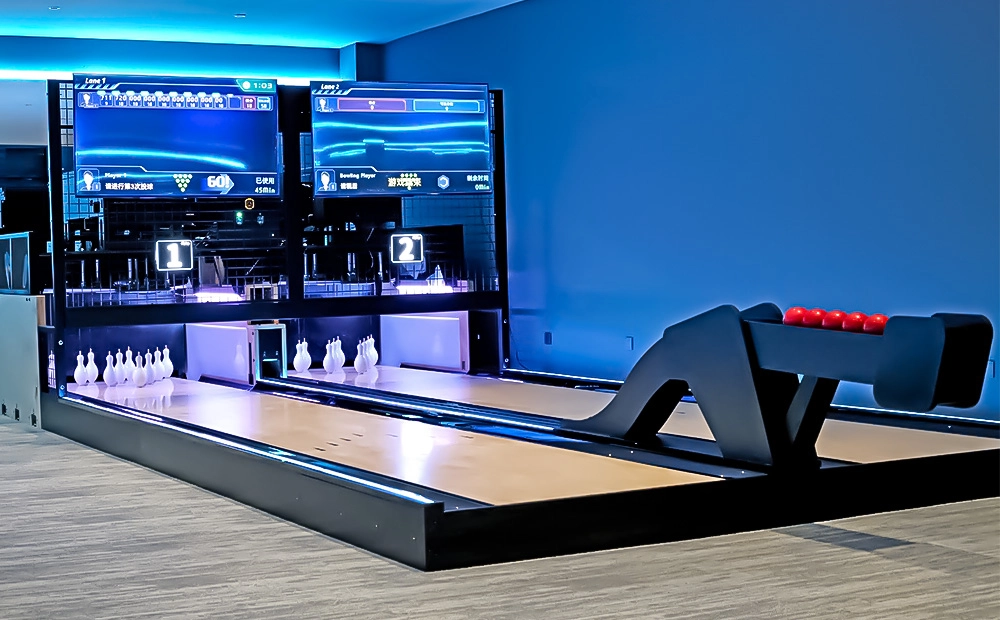
Flying Smart Duckpin Bowling (FSDB) innovative design, standard 9.2-meter short lane, can be shortened in length, compact layout suitable for small spaces. The game rules are simple but challenging, attracting players of different ages to actively participate.
Suitable for social entertainment venues such as bars, billiard halls, and game centers, it not only enhances interactivity but also increases the popularity and consumption frequency of the venue. The fun and competitive nature of FSDB will make it a new focus of social activities.
Flying Classic Standard Bowling (FCSB) is designed according to international competition standards and equipped with an accurate automatic scoring system, providing bowling enthusiasts with a pure professional experience. Whether it is for competitions or leisure entertainment, FCSB can meet high-level needs.
Suitable for family entertainment centers, luxury resorts, private villas, or clubs, it is an ideal choice for customers who pursue high-end quality and professional experience. Its classic design and excellent performance will add lasting appeal to the venue.
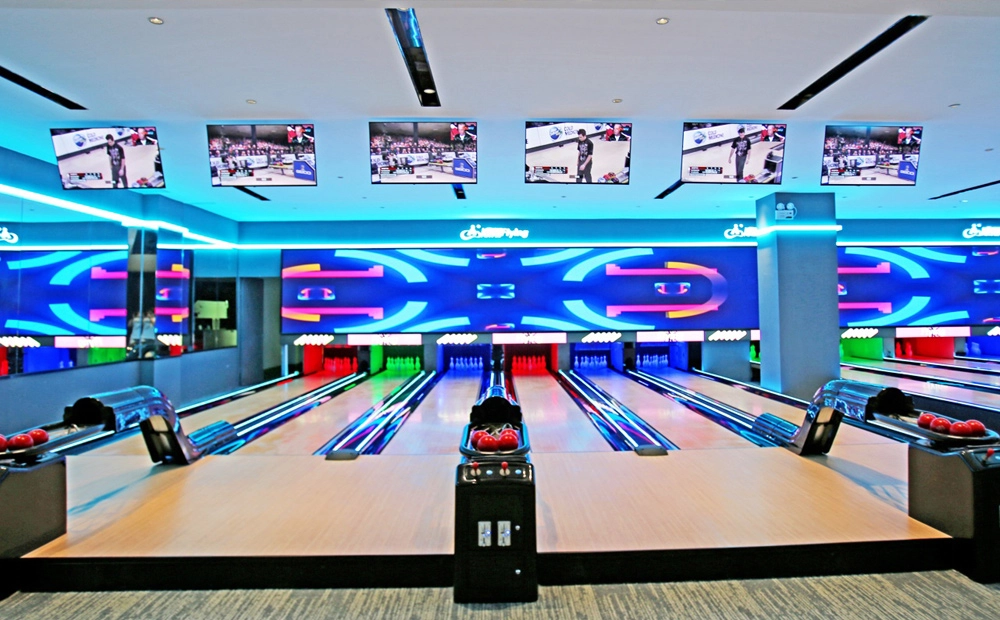
Flying Cute Mini Bowling (FCMB) is a mini bowling experience designed for children and families. The lane length is fixed at 12 meters, equipped with lightweight balls without finger holes (only 1.25kg) and small pins, specially designed for children and family fun.
It can not only help children feel the fun of bowling, but also stimulate their interest and competitive consciousness. Suitable for children's playgrounds, theme parks and parent-child centers, it is the best choice for places focusing on the children's market.
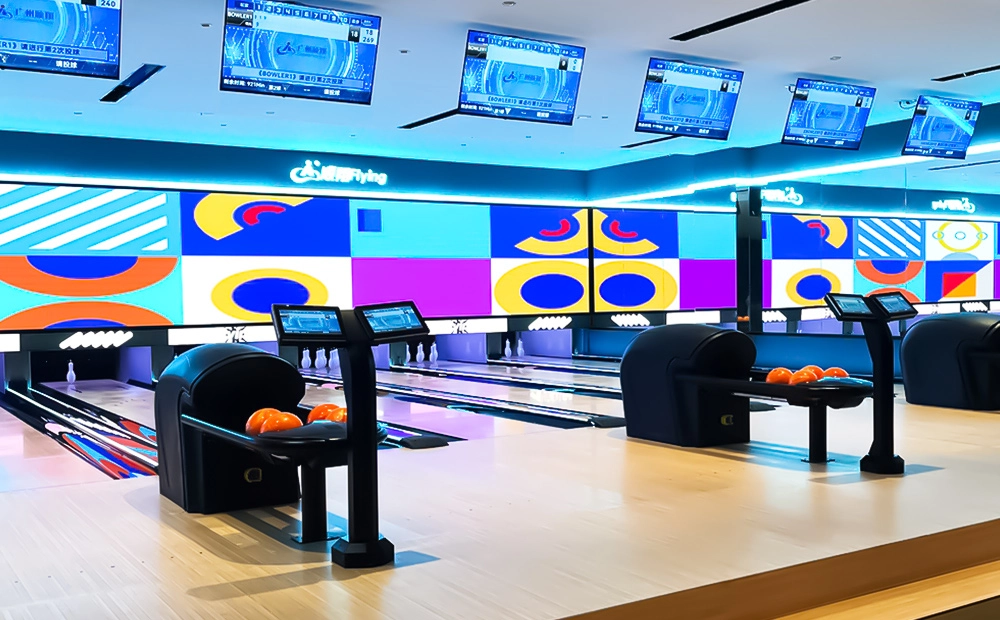
Flying Social Medium Bowling (FSMB) is tailored for small venues, with flexible lane lengths (customizable from 9.6 meters to 18 meters), a small ball design suitable for players of all ages, and light pins that are easier to knock down, increasing participation and fun.
Whether it is a gathering of friends or a casual social, FSMB can easily create a relaxed and pleasant atmosphere. Its efficient space-utilization design is particularly suitable for cafes, bars and community entertainment venues, allowing people to fall in love with bowling in a relaxed interaction.
Contact Flying
Start your bowling alley project
If you contact us now for more details, we can provide you with a custom bowling alley service. Our service team will get back to you within 24 hours normally!
© 2026 Flying BOWLING. Designed by gooeyun.
FOLLOW US:
Flying Bowling
Flying Bowling
Flyingbowling
Flyingbowling