

How Much Does It Cost to Build a Bowling Alley in India in 2026?
- Quick Answer: How Much Does It Cost to Build a Bowling Alley in India?
- Key Takeaways
- 1. What Determines Bowling Alley Setup Cost in India?
- 2. Bowling Alley Cost in India by Lane Count
- 3. What Is Included in Bowling Equipment Cost?
- 4. Bowling Alley Setup Cost Beyond Equipment
- 5. Bowling Alley Total Cost Formula
- 6. Standard, Medium, Duckpin and Mini Bowling Comparison
- 7. How Much Space Does a Bowling Alley Need in India?
- 8. ROI Planning for a Bowling Business in India
- 9. Bowling Franchise Cost vs. Independent Bowling Alley Investment
- 10. How to Choose a Bowling Equipment Supplier
- 11. Information to Prepare Before Requesting a Quote
- 12. India Bowling Alley Investment Checklist
- 13. Frequently Asked Questions
- Request a Bowling Alley Project Cost Review
Quick Answer: How Much Does It Cost to Build a Bowling Alley in India?
The cost of building a bowling alley in India depends on the number of lanes, bowling format, equipment configuration, venue condition, installation requirements, shipping arrangements and local project costs.
For early-stage planning, a 2-lane bowling alley may require approximately $30,000–$40,000 for bowling equipment and basic installation, a 4-lane setup may require approximately $60,000–$80,000, and a 6-lane commercial bowling center may require approximately $90,000–$120,000.
These figures are planning estimates rather than final quotations. The complete investment may also include venue rent, interior construction, international shipping, customs, local installation work, permits, staffing, marketing and operating preparation.
Key Takeaways
- A bowling alley project should be evaluated as a complete business investment, not only as an equipment purchase.
- A 2-lane project may suit a café, club, hotel, resort or compact entertainment venue.
- A 4-lane setup can provide a practical balance between investment level, customer capacity and operating flexibility.
- A 6-lane project is generally more suitable for malls, family entertainment centers, resorts and larger commercial venues.
- Standard, medium, duckpin and mini bowling have different space, equipment and operating requirements.
- Before requesting a quotation, investors should prepare the venue size, city, lane quantity, bowling format, opening schedule and installation requirements.
1. What Determines Bowling Alley Setup Cost in India?
Building a bowling alley involves equipment selection, venue preparation, installation planning and business operations. Two projects with the same number of lanes can have different final budgets because of differences in bowling format, building condition, shipping destination, design standard and commercial positioning.
1.1 Bowling Equipment Configuration
Bowling equipment is usually one of the largest controllable investment categories. A commercial system may include:
- Bowling lanes and approach areas
- Pinsetter systems
- Ball return systems
- Automatic scoring systems
- Bowling balls and pins
- Control equipment and related components
- Technical documentation
- Recommended spare parts
Buyers should compare quotations item by item. The phrase “bowling equipment package” may cover a different scope from one supplier to another.
1.2 Number of Lanes
Lane quantity affects equipment cost, venue size, customer capacity and staffing requirements. More lanes can support more simultaneous customers, but they also increase the need for floor space, construction coordination, maintenance planning and operating capital.
1.3 Bowling Format
Standard bowling, medium bowling, duckpin bowling and mini bowling serve different venue types. The correct format depends on the customer profile, available space, expected traffic and investment model.
| Bowling Format | Typical Application | Main Planning Consideration |
|---|---|---|
| Standard Bowling | Commercial centers, malls and resorts | Requires more space and a larger project budget |
| Medium Bowling | Hotels, leisure centers and mixed entertainment venues | Balances space, experience and investment |
| Duckpin Bowling | Cafés, clubs and boutique entertainment venues | Supports a compact social entertainment concept |
| Mini Bowling | Family entertainment and children’s zones | Uses a smaller footprint and can work as an additional attraction |
2. Bowling Alley Cost in India by Lane Count
| Project Type | Estimated Equipment and Basic Installation Cost | Suggested Space | Typical Application |
|---|---|---|---|
| 2-Lane Setup | $30,000–$40,000 | Approximately 1,500–2,000 sq. ft. | Cafés, clubs, hotels and resorts |
| 4-Lane Setup | $60,000–$80,000 | Approximately 2,800–4,000 sq. ft. | FECs, mall zones, hotels and leisure centers |
| 6-Lane Setup | $90,000–$120,000 | Approximately 4,500–6,000 sq. ft. | Commercial centers, malls and resorts |
Important: These estimates are for early planning. Buyers should confirm the final equipment scope, shipping terms, destination charges, installation responsibilities and local construction requirements before approving a project budget.
2.1 Two-Lane Bowling Alley Cost in India
A 2-lane project is often selected by venues that want to add bowling as part of a broader entertainment concept rather than operate a large standalone bowling center.
Potential applications include:
- Cafés and social entertainment venues
- Hotels and resorts
- Private clubs
- Corporate recreation areas
- Compact family entertainment projects
A smaller lane count can reduce initial equipment and space requirements. However, investors should consider capacity during weekends, parties, corporate events and group bookings.
2.2 Four-Lane Bowling Alley Cost in India
A 4-lane project can provide a practical balance between investment, capacity and operating flexibility. It may be suitable for family entertainment centers, hotels, malls and mixed leisure venues.
Four lanes allow a venue to serve walk-in customers while also handling birthday parties, group activities and smaller corporate events. The business model should still account for peak-hour demand, staffing and customer circulation.
2.3 Six-Lane Bowling Alley Cost in India
A 6-lane commercial project may be appropriate for shopping malls, resorts, large family entertainment centers and dedicated bowling venues.
More lanes can support higher customer volume and simultaneous events, but they also increase space, staffing, maintenance and marketing requirements. Investors should evaluate the complete operating model rather than assuming that additional lanes automatically produce a faster return.
3. What Is Included in Bowling Equipment Cost?
A bowling machine or pinsetter price is not the same as the cost of a complete bowling lane system. Buyers should confirm which components are included before comparing quotations.
For a broader breakdown of system components and package pricing, review the complete bowling equipment cost guide.
3.1 Bowling Lane System
A lane system may include:
- Lane surface
- Approach area
- Subfloor or supporting structure
- Gutters
- Related lane components
3.2 Pinsetter System
The pinsetter is one of the most important equipment decisions. Two common categories are string pinsetters and traditional free-fall pinsetters.
| Pinsetter Type | Potential Advantages | Buyer Considerations |
|---|---|---|
| String Pinsetter | Reduced mechanical complexity and potentially simpler maintenance | Venue positioning, local rules, service access and operating model |
| Free-Fall Pinsetter | Traditional bowling operation and familiar pin action | Maintenance capability, spare parts and long-term operating costs |
Buyers comparing pinsetter options can also review the string pinsetter cost guide.
3.3 Ball Return System
A bowling venue normally requires a ball track, return mechanism, front return structure and safety components. The configuration should match the lane design and expected operating volume.
3.4 Scoring System
A modern scoring system may include:
- Digital scoring displays
- Lane management functions
- Interactive player interfaces
- Customer engagement features
The required configuration depends on venue size, target customers and the desired entertainment experience.
4. Bowling Alley Setup Cost Beyond Equipment
Equipment is only one part of the complete investment. The following costs should be included in project planning.
4.1 Venue and Location
The venue affects customer traffic, rent, construction requirements and equipment installation. Before signing a lease, confirm:
- Available floor area
- Ceiling height
- Column layout
- Floor levelness and structural condition
- Electrical capacity
- Loading and equipment delivery access
- Customer circulation and emergency access
4.2 Construction and Interior Design
Common venue preparation items include:
- Floor preparation and leveling
- Electrical work
- Lighting and sound planning
- Seating and reception areas
- Food and beverage zones
- Customer circulation and decorative design
The final construction budget depends on the venue condition, city, material selection and positioning of the entertainment concept.
4.3 Shipping, Customs and Local Transportation
Imported equipment may create additional costs for international freight, customs clearance, import duties and local transportation. Buyers should confirm the applicable shipping terms and identify which party is responsible for each stage.
4.4 Installation and Technical Coordination
Installation requirements depend on equipment scope, venue readiness and local technical resources. Buyers should confirm whether a quotation includes installation labor, remote guidance, on-site coordination, training or only equipment supply.
4.5 Licensing and Operating Preparation
Licensing requirements vary by Indian state, city and venue type. Investors should verify applicable business registration, fire safety, entertainment and food-service requirements with qualified local professionals.
5. Bowling Alley Total Cost Formula
A useful early-stage budgeting formula is:
Total Project Cost = Equipment + Shipping + Customs + Installation + Venue Preparation + Interior Work + Licensing + Opening Preparation
The formula helps investors separate equipment pricing from costs controlled by local contractors, landlords, regulators and venue operators.
6. Standard, Medium, Duckpin and Mini Bowling Comparison
Choosing the correct format can prevent overspending on space or purchasing equipment that does not match the venue’s customer profile.
| Bowling Type | Space Requirement | Relative Investment | Potential Venue Fit |
|---|---|---|---|
| Standard Bowling | Largest | Higher | Commercial centers, malls and resorts |
| Medium Bowling | Medium | Medium | Hotels, leisure centers and mixed venues |
| Duckpin Bowling | Compact | Medium to lower | Cafés, clubs and social entertainment venues |
| Mini Bowling | Smallest | Lower | Family entertainment and children’s zones |
Standard Bowling
Standard bowling provides the traditional experience recognized by most customers. It may suit commercial centers, shopping malls, resorts and dedicated bowling venues, but usually requires more space and a larger project budget.
Duckpin Bowling
Duckpin bowling can support a more compact social entertainment concept. It may suit cafés, clubs, hotels and boutique venues where standard lanes would require too much space.
Mini Bowling
Mini bowling is commonly considered for family entertainment centers, indoor play areas and children’s zones. It can be used as an additional attraction rather than the venue’s only activity.
7. How Much Space Does a Bowling Alley Need in India?
Space planning should be completed before signing a lease or ordering equipment. The required area depends on lane length, bowling format, seating, reception, equipment access, circulation and food or beverage facilities.
| Setup Type | Early Planning Reference |
|---|---|
| 2-Lane Compact Bowling | Approximately 1,500–2,000 sq. ft. |
| 4-Lane Bowling Venue | Approximately 2,800–4,000 sq. ft. |
| 6-Lane Commercial Bowling Center | Approximately 4,500–6,000 sq. ft. |
| Duckpin or Mini Bowling | Flexible compact layout based on the selected system |
These space figures are planning references, not final engineering dimensions. A supplier or project designer should review the actual floor plan, columns, ceiling, access route and required customer areas.
8. ROI Planning for a Bowling Business in India
Equipment price alone cannot determine whether a bowling project will be profitable. Investors should build a local financial model based on realistic customer traffic, pricing, rent and operating costs.
Potential Revenue Sources
- Bowling games
- Birthday parties
- Corporate and group events
- Food and beverage
- Membership programs
- Arcade games or additional entertainment activities
Key ROI Factors
| Factor | Questions to Evaluate |
|---|---|
| Location | Is customer traffic sufficient? Is parking available? What competing venues operate nearby? |
| Lane Utilization | How many paid lane hours are realistic on weekdays and weekends? |
| Customer Spending | Will the venue generate revenue from food, drinks, parties or additional activities? |
| Operating Costs | What are the monthly rent, labor, electricity, maintenance, marketing and spare-parts costs? |
A basic financial model should include:
- Initial equipment and project investment
- Monthly fixed operating expenses
- Expected customer volume
- Average spending per visit
- Peak and off-peak pricing
- Break-even assumptions and cash reserve
9. Bowling Franchise Cost vs. Independent Bowling Alley Investment
Some investors explore a bowling franchise, while others prefer an independently operated venue. These models should be compared separately from equipment purchasing.
| Factor | Franchise Model | Independent Model |
|---|---|---|
| Brand Support | May be included under the franchise agreement | Developed and managed by the venue owner |
| Design Flexibility | May be limited by brand requirements | Generally more flexible |
| Fees and Revenue Sharing | Must be confirmed in the franchise agreement | No franchise fee, but marketing and systems are self-managed |
| Operating Control | Shared with or influenced by the franchise system | Controlled by the project owner |
Purchasing bowling equipment does not automatically provide a franchise. Investors considering a franchise should separately confirm brand rights, fees, operating obligations, training, marketing support and contract terms.
10. How to Choose a Bowling Equipment Supplier
The lowest equipment price does not always represent the lowest total project cost. Buyers should evaluate configuration accuracy, documentation, logistics, installation responsibilities and long-term maintenance requirements.
Supplier Evaluation Checklist
- Equipment scope: Confirm each included lane, pinsetter, scoring, return and accessory component.
- Technical documents: Ask what drawings, manuals and installation information will be provided.
- Installation responsibility: Clarify which tasks are handled by the supplier and which require local contractors.
- Spare parts: Confirm the recommended opening inventory and future ordering process.
- Maintenance planning: Review routine inspection, cleaning and service requirements.
- Quotation terms: Check shipping, payment, warranty and exclusion clauses.
- Project relevance: Ask whether the proposed system matches the venue type, lane quantity and target customers.
Supplier capabilities, warranty terms, installation services and delivery schedules should be confirmed directly in the final quotation and contract.
11. Information to Prepare Before Requesting a Quote
Complete project information helps a supplier recommend a more suitable configuration and identify costs that require local confirmation.
| Information Category | Details to Provide |
|---|---|
| Project Location | Country, state and city |
| Venue Type | Mall, FEC, hotel, resort, café, club or standalone center |
| Venue Dimensions | Floor plan, available area, ceiling height, columns and entrances |
| Bowling Requirements | Lane quantity and preferred standard, medium, duckpin or mini format |
| Project Schedule | Target order date and expected opening date |
| Business Model | Target customers, operating concept and additional revenue activities |
| Installation Conditions | Building readiness, power supply, loading access and local contractor availability |
12. India Bowling Alley Investment Checklist
Budget Planning
- Equipment scope confirmed
- Shipping and customs reviewed
- Installation responsibility confirmed
- Construction budget prepared
- Operating reserve included
Venue Planning
- Floor area measured
- Ceiling and columns checked
- Electrical supply reviewed
- Delivery route confirmed
- Customer circulation planned
Commercial Planning
- Target customers identified
- Pricing strategy prepared
- Revenue sources evaluated
- Monthly operating costs estimated
- Local licensing requirements checked
13. Frequently Asked Questions
How much does it cost to set up a bowling alley in India?
A 2-lane project may require approximately $30,000–$40,000 for equipment and basic installation, a 4-lane project may require approximately $60,000–$80,000, and a 6-lane commercial project may require approximately $90,000–$120,000. Construction, rent, shipping, customs, permits and operating preparation are additional variables.
How much does a 2-lane bowling alley cost in India?
A 2-lane bowling alley may require approximately $30,000–$40,000 for bowling equipment and basic installation. The final budget depends on bowling format, venue condition, destination, shipping and local construction.
How much does a 4-lane bowling alley cost in India?
A 4-lane bowling alley may require approximately $60,000–$80,000 for equipment and basic installation. It may suit family entertainment centers, mall entertainment zones, hotels and leisure venues.
How much does a 6-lane bowling alley cost in India?
A 6-lane commercial bowling center may require approximately $90,000–$120,000 for equipment and basic installation. A complete project budget should also include venue preparation, interior work, shipping, customs, permits, staffing and marketing.
What is included in bowling alley equipment cost?
A package may include bowling lanes, pinsetters, ball returns, scoring systems, balls, pins and related technical components. Buyers should confirm the exact quotation scope because package definitions vary.
Is duckpin bowling cheaper than standard bowling in India?
Duckpin bowling generally requires less space than standard bowling, but the final project cost depends on equipment scope, lane quantity, venue condition, installation requirements and logistics. Buyers should compare total project costs rather than equipment prices alone.
How much space is required for a bowling alley in India?
A compact 2-lane project may require approximately 1,500–2,000 sq. ft., a 4-lane venue may require approximately 2,800–4,000 sq. ft., and a 6-lane center may require approximately 4,500–6,000 sq. ft. Final dimensions must be confirmed from the selected equipment and actual floor plan.
What licenses are needed for a bowling alley in India?
Requirements vary by state, city and venue type. Investors should confirm applicable business registration, fire safety, entertainment and food-service requirements with qualified local professionals.
How long does it take to build a bowling alley in India?
The timeline depends on venue readiness, equipment production, international shipping, customs, construction and installation. The schedule should be confirmed after reviewing the actual site and equipment configuration.
Is a bowling alley profitable in India?
Profitability depends on location, customer traffic, lane utilization, pricing, events, food and beverage revenue, rent and operating costs. Investors should prepare a local financial model rather than rely on a general payback claim.
What information should I provide before requesting a bowling alley quotation?
Provide the project city, venue type, floor plan, available area, ceiling height, lane quantity, preferred bowling format, target opening date, installation conditions and expected business model.
Request a Bowling Alley Project Cost Review
Prepare your venue location, floor plan, available area, preferred lane quantity and target opening date. These details can help the supplier evaluate equipment options, space requirements and quotation scope.
Recommended products
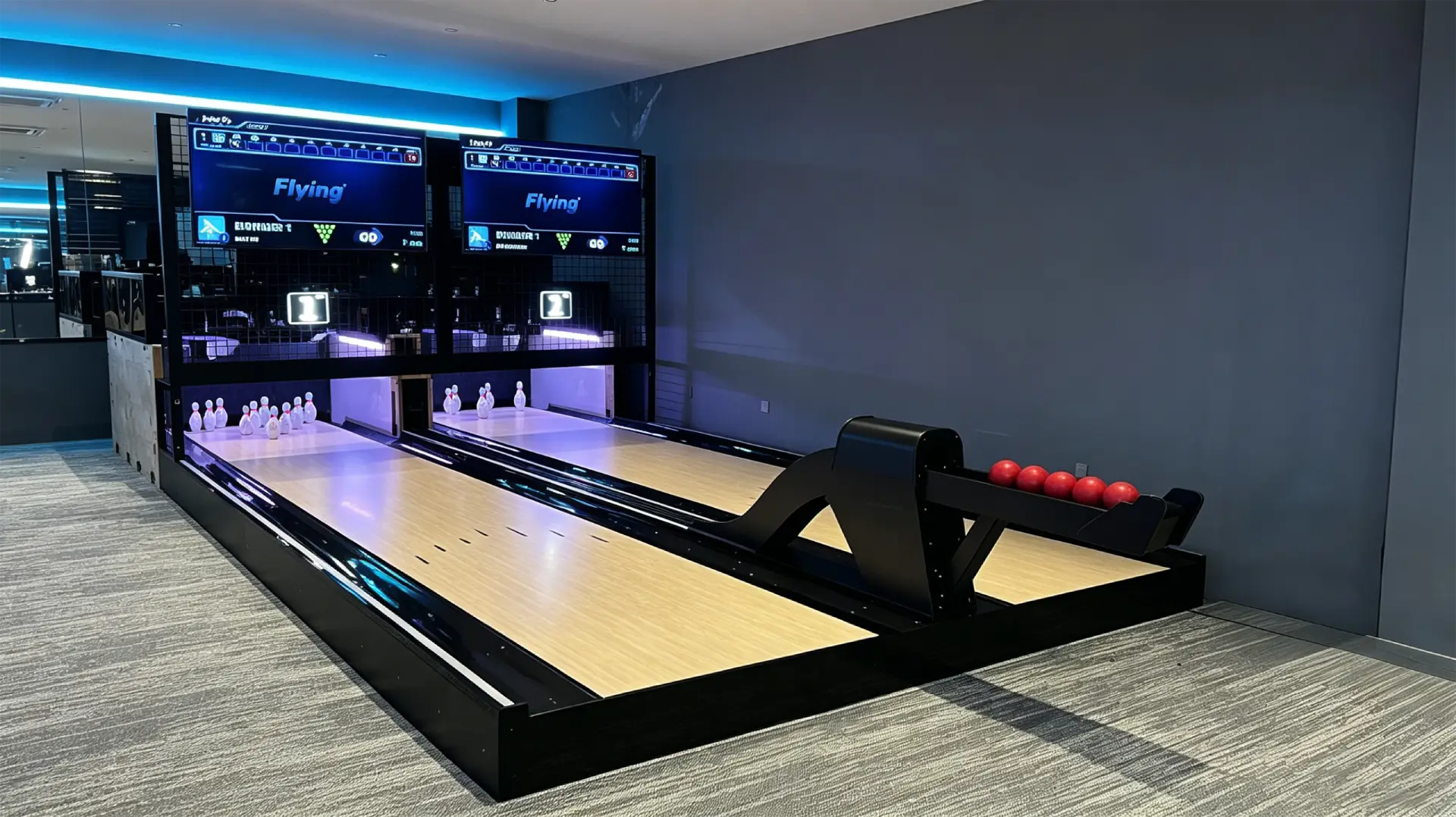
Flying Smart Duckpin Bowling Equipment for Commercial Venues
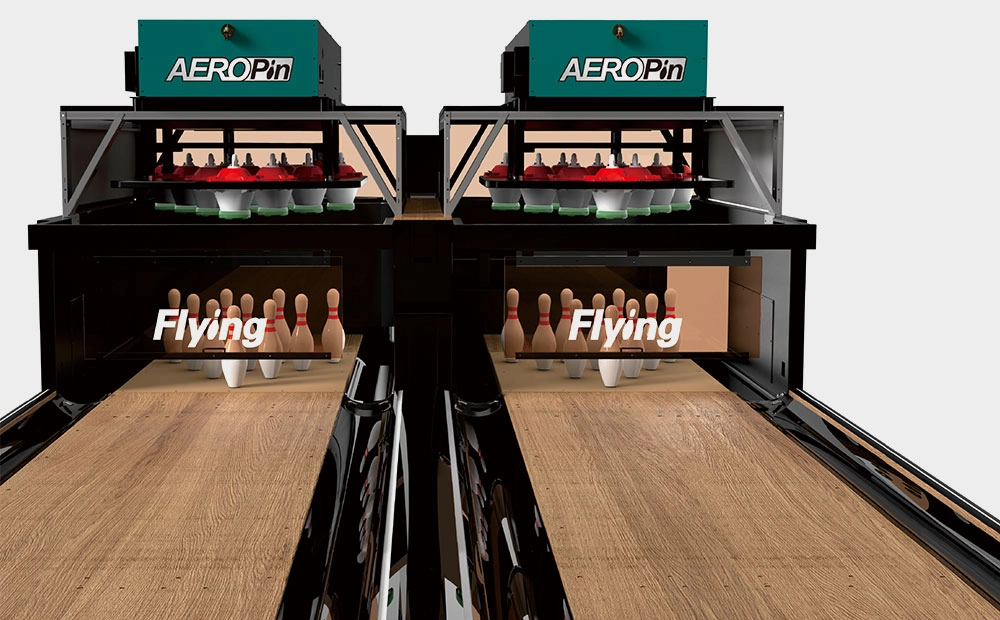
AEROPIN™ USBC-Certified String Pinsetter System
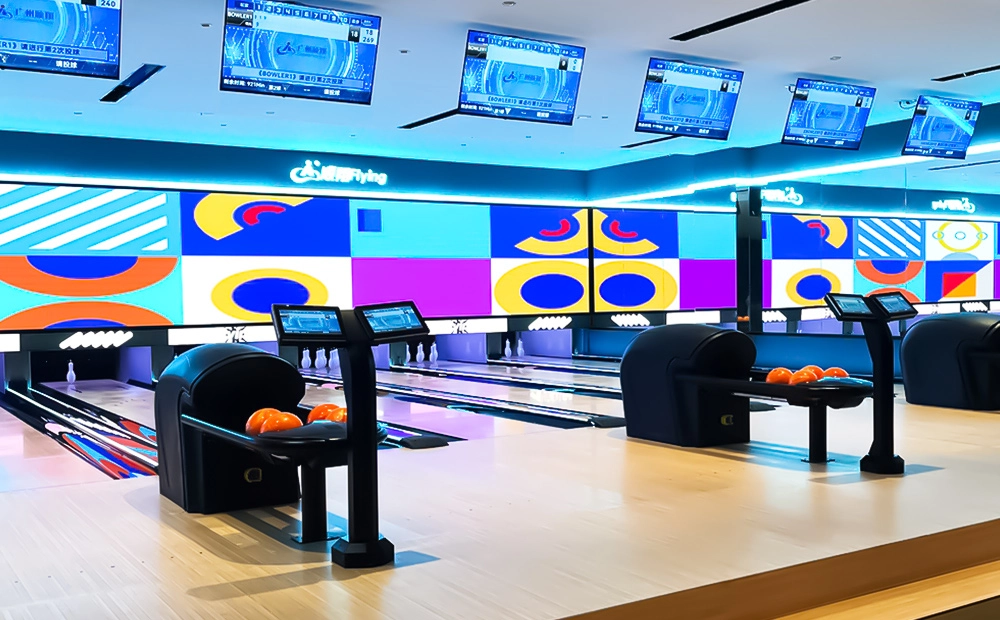
Medium Bowling Equipment for Compact Social Venues
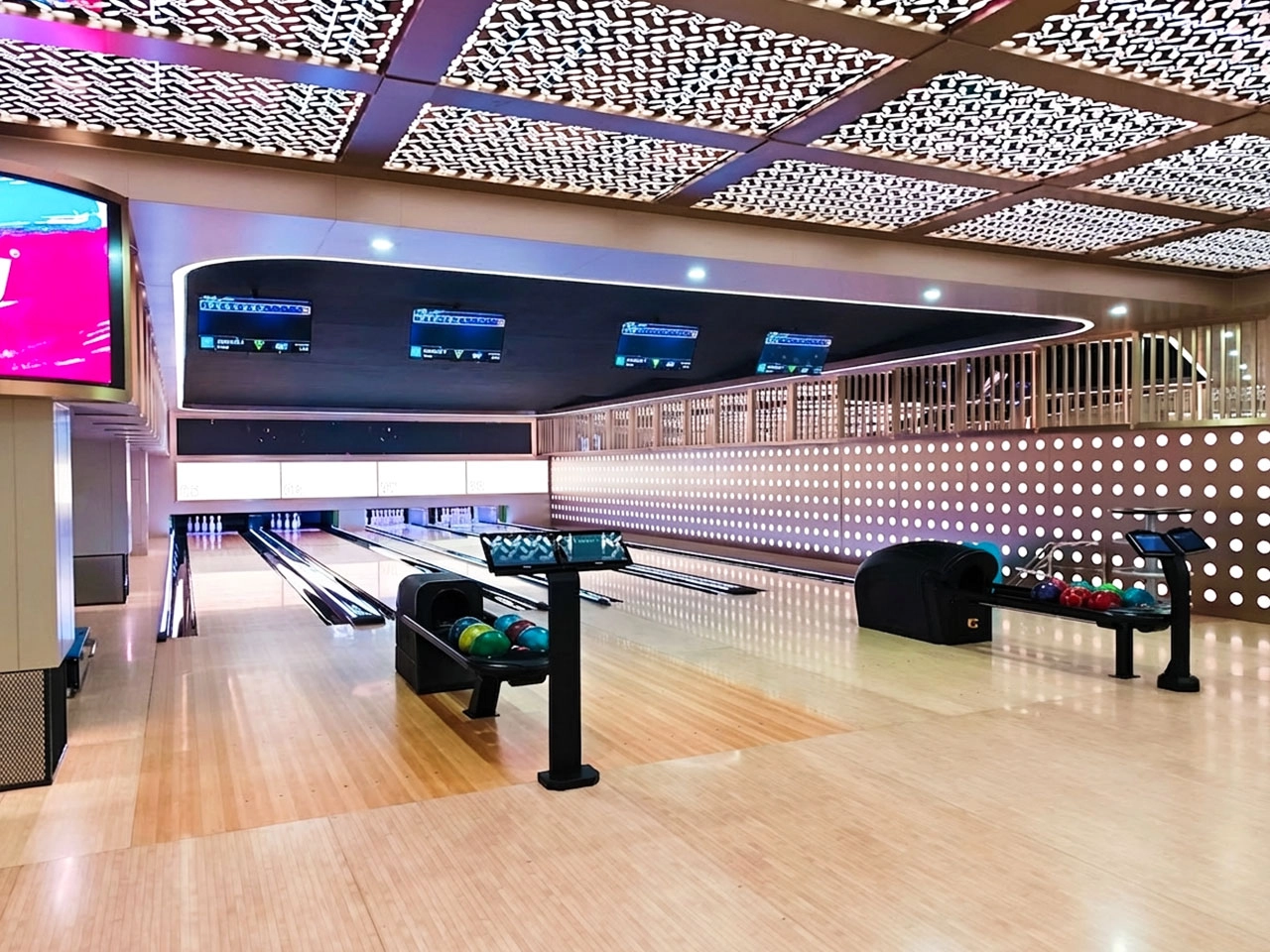
Complete Bowling Alley Equipment Package for Commercial Bowling Centers
You may also like
Build a commercial bowling venue with Flying’s complete string pinsetter bowling alley equipment package. The system includes the AEROPIN™ USBC-certified string pinsetter, customizable lanes, automatic scoring, ball return, lane lighting, pins, control hardware, and overseas installation support.
Designed for commercial bowling centers, family entertainment venues, hotels, resorts, bars, and premium private projects, this turnkey bowling system helps operators reduce sourcing complexity and prepare for reliable long-term operation.
Flying Smart Duckpin Bowling is a compact duckpin bowling equipment system designed for bars, family entertainment centers, hotels, resorts, cinemas, boutique bowling alleys, and social entertainment venues. With a standard 9.13m duckpin bowling lane, 1.25kg lightweight balls, automatic scoring, ball return, LED lighting, and a smart string pinsetter, it creates a fast-paced and easy-to-play bowling experience in a smaller footprint than traditional bowling.
The system is available as a turnkey duckpin bowling package, including lane equipment, a string pinsetter system, scoring hardware, control software, global shipping, installation guidance, and technical support.
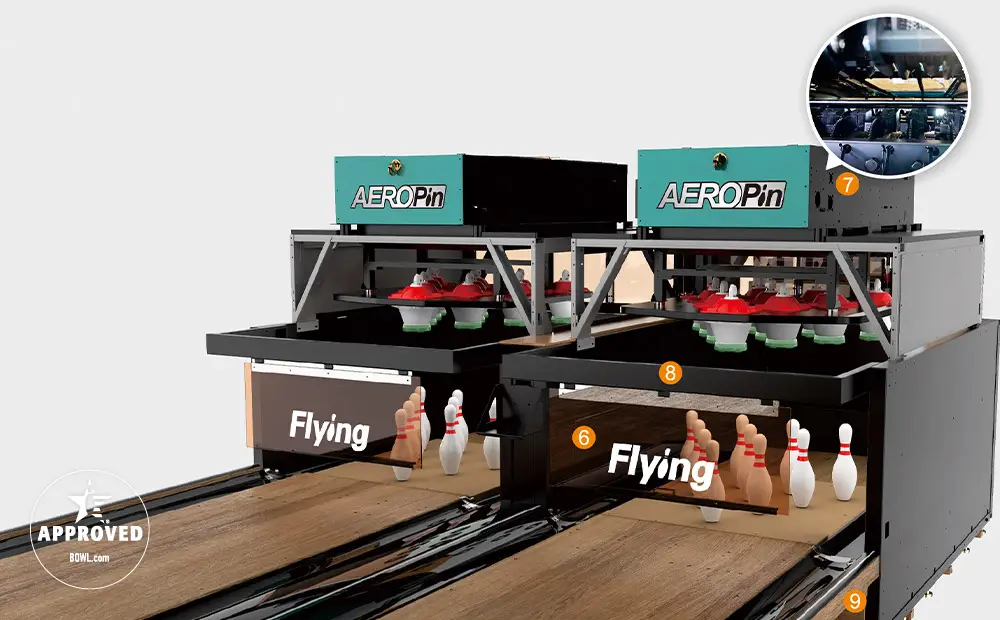
AEROPIN is Flying Bowling’s USBC-certified string pinsetter system for modern commercial bowling centers. Designed for fast pin setting, smooth ball return, low maintenance, and stable daily operation, it helps venue operators build league-ready and entertainment-focused bowling projects with confidence.
Flying Social Medium Bowling is a compact medium bowling equipment system designed for bars, cafes, family entertainment centers, community leisure venues, hotels, resorts, and small indoor entertainment spaces. With customizable lane lengths from 9.6m to 18m, small balls, lighter pins, string pinsetter technology, ball return, and automatic scoring, it creates an easy-to-play social bowling experience for players of different ages and skill levels.
Compared with full-size standard bowling, medium bowling requires less space and offers a more casual, interactive format. It is a practical choice for venues that want to add a bowling attraction without building a full commercial bowling alley.
Contact Flying
Start your bowling alley project
If you contact us now for more details, we can provide you with a custom bowling alley service. Our service team will get back to you within 24 hours normally!
© 2026 Flying BOWLING. Designed by gooeyun.
FOLLOW US:

Flying Bowling
Flying Bowling
Flyingbowling
Flyingbowling
Flyingbowling