


Used vs New Bowling String Pinsetter: What Buyers Should Know
- Why pinsetter choice matters for bowling center performance
- Impact on guest experience and revenue
- Operational cost drivers
- Regulatory and standards alignment
- Comparing new and used bowling string pinsetters
- Cost vs value — upfront and lifecycle
- Warranty, spare parts and manufacturer support
- Technology, compatibility and future-proofing
- Technical, maintenance and operational considerations
- Expected lifespan and maintenance schedules
- Inspection checklist for used pinsetters
- Common failure modes and preventive measures
- Buying checklist, procurement and where to source
- Decision factors matrix
- Where to source safe used units
- Financial and procurement tips
- Case studies, references and evidence-based advice
- Industry references and standards
- Example procurement scenario
- Data-backed recommendation
- About Flying Bowling and supplier considerations
- Manufacturer profile and capabilities
- Product quality and market positioning
- Contact and sourcing
- FAQs — common questions buyers search for
- 1. Is a used bowling string pinsetter worth it?
- 2. How long does a string pinsetter last?
- 3. What are typical maintenance costs?
- 4. Can I retrofit a used pinsetter to modern scoring/electronics?
- 5. Should I buy local or import?
- 6. How do I verify a used pinsetter's history?
- 7. What are the best practices for installation?
Choosing the right pinsetter is a strategic decision for any bowling center. Whether you consider a used or new bowling string pinsetter affects capital expenditure, lane uptime, maintenance schedules and guest experience. This article breaks down technical trade-offs, long-term costs, inspection and procurement best practices, and how to align a purchase with operational goals and industry standards. It also explains why some operators prefer new equipment while others successfully extend value from refurbished machines.
Why pinsetter choice matters for bowling center performance
Impact on guest experience and revenue
The pinsetter is central to the bowling experience. Frequent jams, misset pins or inconsistent clearing translate directly into longer game times, frustrated customers and lost revenue per lane. Modern bowling string pinsetters are designed to combine reliability with quicker reset cycles compared with manually reset systems. For an overview of pinsetter history and function, see the general description on Wikipedia.
Operational cost drivers
Operational costs include energy use, consumable parts, technician labor and downtime. New string pinsetters often reduce labor and repair frequency in the first years of operation, while a used machine's unpredictable maintenance needs can inflate operating expenses. You should model total cost of ownership (TCO) over an expected lifecycle (5–15 years) rather than judging by purchase price alone.
Regulatory and standards alignment
Bowling lanes and associated equipment must meet safety and sport-standard requirements. The United States Bowling Congress (USBC) provides specifications and guidance that venues commonly follow for competitive play and insurance compliance. Confirm that the pinsetter you buy can be configured within applicable standards if you host leagues or sanctioned events.
Comparing new and used bowling string pinsetters
Cost vs value — upfront and lifecycle
Purchase price is the most visible difference, but total lifetime value depends on maintenance, downtime and resale. New machines command higher upfront costs but commonly include warranty, factory support and predictable maintenance intervals. Used pinsetters offer lower capital outlay but require deeper due diligence and possibly immediate refurbishment to reach acceptable reliability.
Warranty, spare parts and manufacturer support
New equipment typically includes a warranty and direct factory support—important when diagnosing complex electronic or mechanical failures. When buying used, check availability of documented parts lists and whether the original manufacturer or third-party suppliers still stock replacement components. For long-term viability, prioritize models with accessible spare parts ecosystem.
Technology, compatibility and future-proofing
String pinsetter models have evolved: newer designs optimize string routing, reduce pinch points and improve ball return integration with ball return machines. If you anticipate future upgrades (automatic scoring systems, lane automation, different pin types), purchase decisions should factor compatibility and upgrade paths into the equation.
Technical, maintenance and operational considerations
Expected lifespan and maintenance schedules
Typical lifespans vary by build quality, usage intensity and maintenance rigor. A well-maintained new string pinsetter can remain productive for 10–15 years; used units may have 3–10 remaining years depending on prior care. Verify maintenance logs, replacement history and the presence of preventive maintenance contracts.
Inspection checklist for used pinsetters
When evaluating a used bowling string pinsetter, inspect these items:
- Operational test: run full cycles and observe pin setting, clearing and ball return.
- Wear points: strings, cams, bearings, belts and electronic control boards.
- Service records: documented repairs, parts replaced and known recurring issues.
- Component provenance: OEM parts vs aftermarket and any non-standard modifications.
- Alignment and calibration: verify pin registration accuracy and sensor function.
Common failure modes and preventive measures
String pinsetters often fail at moving parts and control systems. Replace deteriorating strings and worn bearings proactively. Schedule lubrication, alignment and electrical inspections at manufacturer-recommended intervals. If you buy used, budget for an initial overhaul to bring the machine to a predictable baseline.
Buying checklist, procurement and where to source
Decision factors matrix
Use a simple scoring matrix to weigh factors relevant to your venue: budget, expected play volume, maintenance capability, league requirements and brand preference. Below is a comparison table summarizing major decision criteria between new and used units.
| Criteria | New Bowling String Pinsetter | Used Bowling String Pinsetter |
|---|---|---|
| Typical upfront cost | Higher — priced by model and options; includes factory packing & testing | Lower — varies by age, condition and included spares |
| Warranty & factory support | Standard warranty + factory support | Often no warranty; possible third-party warranty if refurbished |
| Predictability of downtime | Lower in early life; predictable maintenance | Higher risk; depends on prior upkeep |
| Parts availability | Good — OEM parts and upgrades | Varies — older models may have scarce parts |
| Customization & upgrades | Easier to customize and integrate modern electronics | May require retrofitting; compatibility issues possible |
| Resale value | Higher retained value if well-maintained | Lower; depreciation largely realized |
Where to source safe used units
Reliable sources for used string pinsetters include decommissioned centers selling equipment with maintenance records, specialist refurbishers and established manufacturers who offer certified refurbished units. Avoid anonymous listings without demonstrable service history or inspection access.
Financial and procurement tips
Negotiate bundled deals that may include installation, onsite training and spare kits. For used equipment, require a conditional purchase clause allowing inspection and a short operational guarantee period. Factor shipping, installation labor and any local compliance costs into the total procurement budget.
Case studies, references and evidence-based advice
Industry references and standards
Understanding historical and technical context is helpful. General descriptions of pinsetters and bowling alley equipment are documented on Wikipedia - Pinsetter and Wikipedia - Bowling alley. For rules and facility standards often referenced by leagues, consult the USBC.
Example procurement scenario
Example: a 12-lane family entertainment center replacing ten aging string pinsetters chose new machines because downtime for refurbishment would close lanes during peak season. The business amortized the higher capex over 7 years and reduced technician overtime by 40%, improving margins. Conversely, a small community center on a tight budget acquired a certified refurbished pinsetter with a short warranty and an agreed service plan — effective if technical support is reliable.
Data-backed recommendation
Quantitative decisions should be based on your local usage profile (games per lane per week), technician hourly rates and acceptable downtime. Create a TCO model with real inputs: purchase price, estimated annual maintenance, expected annual downtime cost and expected resale. If your projected annual usage is high (>1,200 games/lane/year), leaning toward new units often makes financial sense due to lower unexpected downtime.
About Flying Bowling and supplier considerations
Manufacturer profile and capabilities
Since 2005, Flying Bowling has specialized in the research and development of bowling string pinsetters and ball return machines. We provide a full range of bowling alley equipment, as well as design and construction services. Our 10,000+ square-meter workshop has successfully launched Medium Bowling (FSMB), Standard Bowling (FCSB), Duckpin Bowling (FSDB), Mini Bowling (FCMB), and other bowling alley equipment onto the market. Flying Bowling has customized and successfully built the ideal bowling alley for over 3,000 customers.
Product quality and market positioning
The quality of Flying Bowling's equipment is comparable to European and American brands, but prices are competitive, satisfying users around the world. Flying Bowling provides one-stop customized services for bowling venues and recruits distributors globally to promote industry development. As a leading bowling equipment manufacturer and supplier from China, Flying Bowling combines R&D, manufacturing and turnkey installation capabilities.
Contact and sourcing
For inquiries, product details or customized solutions, visit Flying Bowling or contact jackson@flyingbowling.com. Flying Bowling's main products include duckpin bowling, bowling alley equipment, mini bowling equipment and bowling string pinsetters.
FAQs — common questions buyers search for
1. Is a used bowling string pinsetter worth it?
It can be, provided you perform a thorough inspection, obtain maintenance records and secure a service agreement or short-term warranty. Certified refurbished units from reputable suppliers reduce risk compared with buying from private sellers without documentation.
2. How long does a string pinsetter last?
Lifespans vary. New string pinsetters commonly last 10–15 years with proper maintenance. Used units may have a remaining useful life from 3 to 10 years depending on prior use and refurbishment.
3. What are typical maintenance costs?
Maintenance costs depend on model, play volume and local labor rates. Budget for regular preventive maintenance (lubrication, alignment, string replacement) plus an annual parts and labor allowance. For budgeting, many venues estimate maintenance at 3–8% of equipment replacement cost per year — adjust to your operational data.
4. Can I retrofit a used pinsetter to modern scoring/electronics?
Often yes, but compatibility varies. Confirm control interfaces and sensors before purchase. Many manufacturers, including leading suppliers, offer retrofit kits or integration support to connect pinsetters with modern scoring systems and automation.
5. Should I buy local or import?
Buying local simplifies support, spare parts logistics and compliance. Importing can reduce up-front cost but increases shipping, customs and lead time. If importing, ensure reliable warranty coverage, spare parts shipment agreements and a local service partner or in-house capability for mechanical and electrical maintenance.
6. How do I verify a used pinsetter's history?
Request full maintenance logs, serial numbers, parts invoices and perform a physical inspection during a live operation test. If possible, negotiate a conditional period where you can return or get a credit if undisclosed faults appear within a short window.
7. What are the best practices for installation?
Use certified technicians, follow manufacturer installation guides and perform acceptance testing. Align mechanical components, verify electrical safety, calibrate sensors and perform multiple full-cycle tests before opening lanes to the public.
If you need product catalogs, price quotes, or a custom site plan: contact Flying Bowling at jackson@flyingbowling.com or visit https://www.flyingbowling.com/. Our team can help evaluate whether a new or used bowling string pinsetter is the right fit for your venue, provide certified refurbished options, or design a turnkey bowling alley solution tailored to your budget and goals.
References: Pinsetter background and technology overview: Wikipedia. Bowling alley context and facility considerations: Wikipedia. Standards and league guidance: USBC.
Recommended products
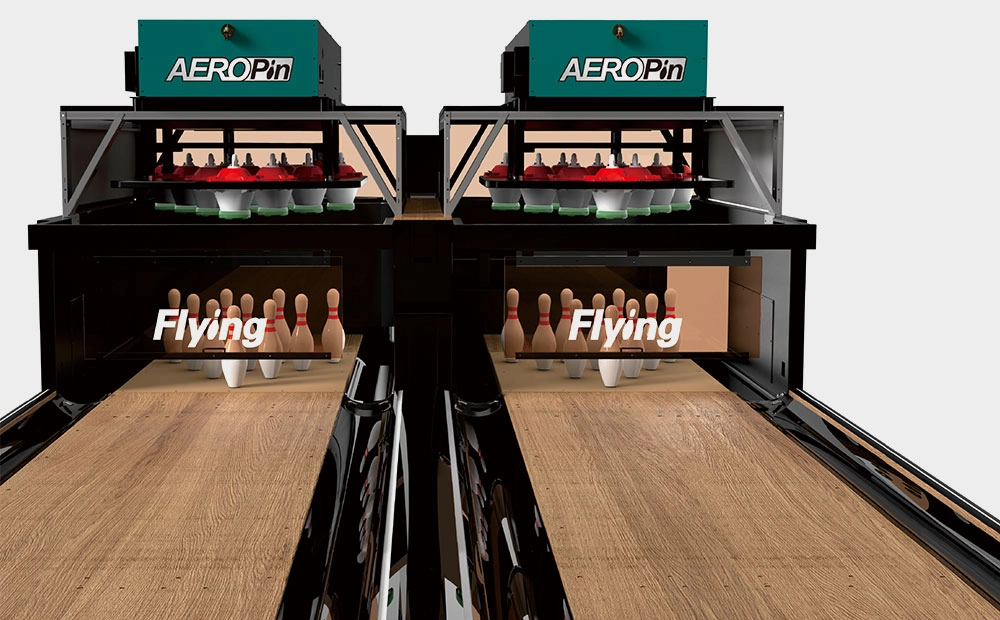
USBC-Certified AEROPIN String Pinsetter System
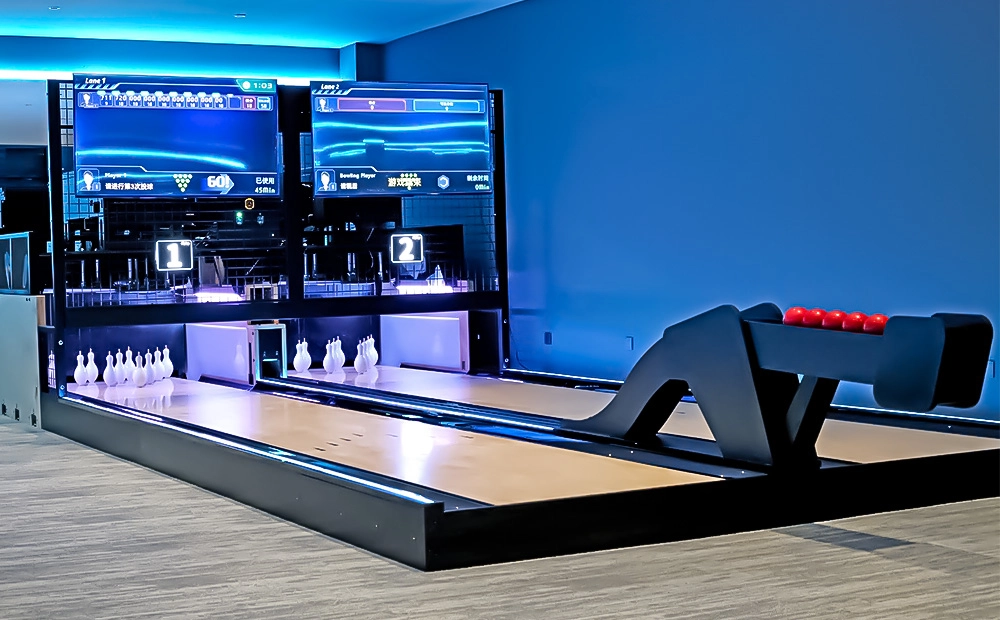
Flying Smart Duckpin Bowling Equipment and Lane System for Commercial Venues
Mini Bowling Equipment for Kids and Family Entertainment Venues
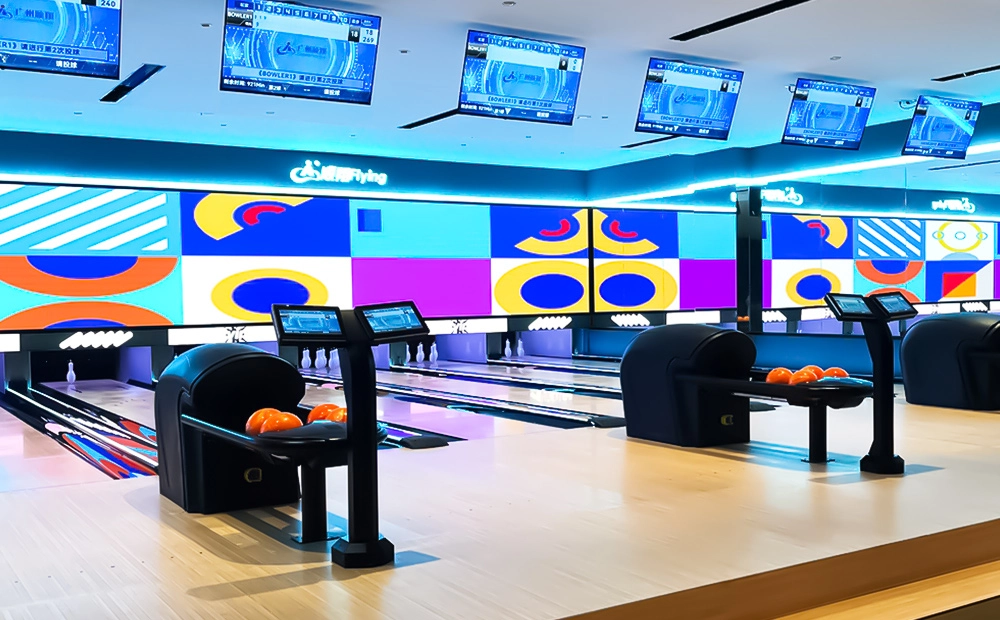
Medium Bowling Equipment for Social Entertainment Venues
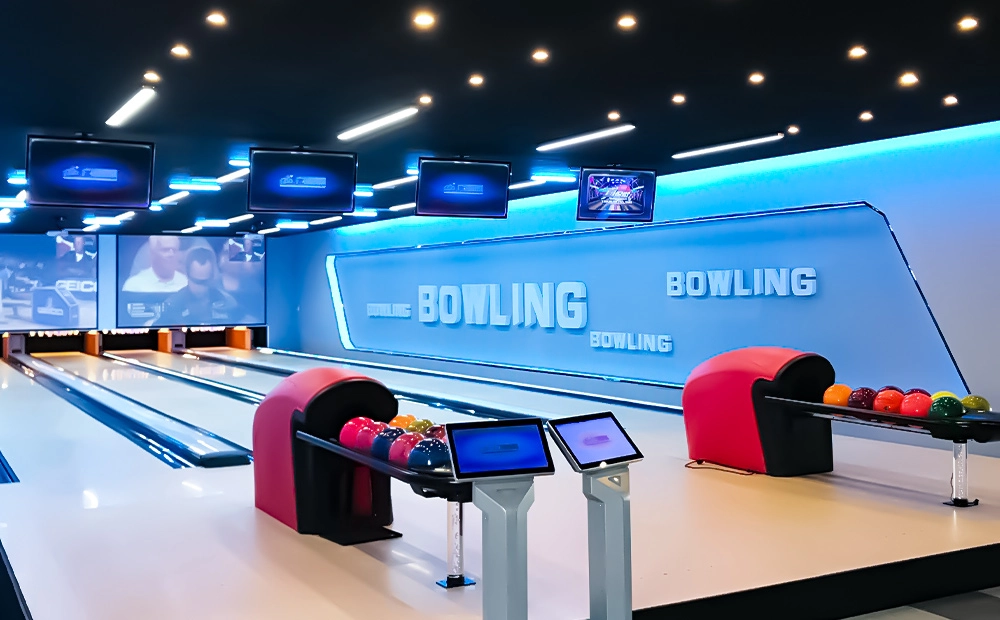
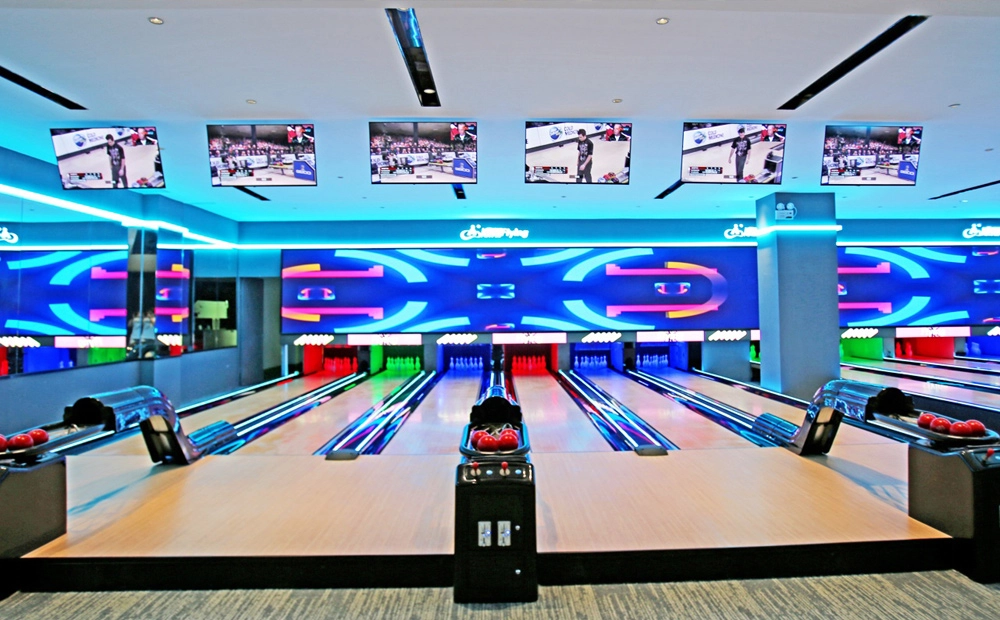
Complete String Pinsetter Bowling Alley Equipment System
You may also like
Flying Smart Duckpin Bowling (FSDB) innovative design, standard 9.2-meter short lane, can be shortened in length, compact layout suitable for small spaces. The game rules are simple but challenging, attracting players of different ages to actively participate.
Suitable for social entertainment venues such as bars, billiard halls, and game centers, it not only enhances interactivity but also increases the popularity and consumption frequency of the venue. The fun and competitive nature of FSDB will make it a new focus of social activities.
Flying Classic Standard Bowling (FCSB) is designed according to international competition standards and equipped with an accurate automatic scoring system, providing bowling enthusiasts with a pure professional experience. Whether it is for competitions or leisure entertainment, FCSB can meet high-level needs.
Suitable for family entertainment centers, luxury resorts, private villas, or clubs, it is an ideal choice for customers who pursue high-end quality and professional experience. Its classic design and excellent performance will add lasting appeal to the venue.
Flying Cute Mini Bowling (FCMB) is a mini bowling experience designed for children and families. The lane length is fixed at 12 meters, equipped with lightweight balls without finger holes (only 1.25kg) and small pins, specially designed for children and family fun.
It can not only help children feel the fun of bowling, but also stimulate their interest and competitive consciousness. Suitable for children's playgrounds, theme parks and parent-child centers, it is the best choice for places focusing on the children's market.
Flying Social Medium Bowling (FSMB) is tailored for small venues, with flexible lane lengths (customizable from 9.6 meters to 18 meters), a small ball design suitable for players of all ages, and light pins that are easier to knock down, increasing participation and fun.
Whether it is a gathering of friends or a casual social, FSMB can easily create a relaxed and pleasant atmosphere. Its efficient space-utilization design is particularly suitable for cafes, bars and community entertainment venues, allowing people to fall in love with bowling in a relaxed interaction.
Contact Flying
Start your bowling alley project
If you contact us now for more details, we can provide you with a custom bowling alley service. Our service team will get back to you within 24 hours normally!
© 2026 Flying BOWLING. Designed by gooeyun.
FOLLOW US:
Flying Bowling
Flying Bowling
Flyingbowling
Flyingbowling