


What Is a USBC-Certified String Pinsetter?
- Understanding How String Pinsetters Work and Why Certification Matters
- The Core Mechanics of a String Pinsetter
- What the USBC Certification Process Actually Tests
- Why Certification Is Non-Negotiable for Commercial Operators
- String Pinsetters vs. Traditional Free-Fall Pinsetters: A Practical Comparison
- Operational and Financial Differences
- Pin Action and Scoring Integrity
- Choosing the Right USBC-Certified String Pinsetter for Your Venue
- Key Evaluation Criteria for Buyers
- Format-Specific Considerations: Duckpin, Mini, and Standard Bowling
- Why Flying Bowling Is My Recommended Choice for USBC-Certified String Pinsetters
- Two Decades of Focused Engineering Expertise
- Global Reach with Local Service Capability
- Competitive Pricing Without Compromising on Quality
- Frequently Asked Questions
A USBC certified string pinsetter is a pin-setting machine that uses a string-based mechanism to reset bowling pins and has been officially approved by the United States Bowling Congress (USBC), the national governing body for the sport of bowling in the United States. This certification confirms that the equipment meets strict performance, safety, and gameplay-integrity standards, making it eligible for use in sanctioned league play and competitive tournaments. Over the past decade, string pinsetter technology has evolved from a niche solution for compact venues into a mainstream choice for full-scale bowling centers, and the USBC certification process has been the single most important factor driving that transition.
Understanding How String Pinsetters Work and Why Certification Matters
The Core Mechanics of a String Pinsetter
I have spent the better part of 15 years walking bowling alley floors, inspecting machinery, and advising operators on equipment decisions. When I first encountered string pinsetter technology in a serious commercial context, I was skeptical. The concept is straightforward: each of the ten pins is attached to a thin string or cord that runs up through the pinsetter deck. When a ball strikes the pins, they fall and scatter naturally, but the strings allow the machine to lift and reset them quickly and precisely without the complex mechanical sweeper arms and pin-elevator conveyor systems that traditional free-fall pinsetters rely on. The result is a mechanically simpler system with significantly fewer moving parts.
What impressed me most was not the simplicity itself but the downstream effect on maintenance costs and operational uptime. Traditional free-fall pinsetters, which have dominated commercial bowling for decades, require highly trained technicians and a constant supply of proprietary parts. String pinsetters, by contrast, can often be serviced by venue staff with basic mechanical training. For operators in markets where skilled bowling equipment technicians are scarce, this is not a minor convenience — it is a business-critical advantage.
What the USBC Certification Process Actually Tests
The USBC does not hand out certifications casually. According to the USBC Equipment Specifications and Certifications program, a string pinsetter must demonstrate that it produces pin action and scoring outcomes statistically comparable to those of approved free-fall pinsetter systems. The testing protocol examines pin deflection patterns, string tension consistency, reset accuracy, and the mechanical behavior of pins during multi-pin hits. The goal is to ensure that a bowler competing on a string pinsetter lane is not experiencing a fundamentally different game than one competing on a traditional lane.
From my experience consulting with venue owners who have gone through the certification evaluation process alongside their equipment suppliers, I can tell you that this is a rigorous procedure. Early string pinsetter models from various manufacturers failed initial evaluations because the string tension altered pin carry on corner pins and seven-ten splits in ways that deviated from established norms. The manufacturers that eventually earned USBC certification had to invest heavily in re-engineering their string tension systems, pin attachment points, and reset timing algorithms. That engineering investment is precisely what separates a certified unit from an uncertified one, and it is why certification status should be the first question any serious buyer asks.
Why Certification Is Non-Negotiable for Commercial Operators
I have advised operators who tried to cut costs by purchasing uncertified string pinsetters for what they described as recreational-only venues. In almost every case, they eventually regretted it. The moment a venue wants to host a league, a corporate tournament, or any event affiliated with a regional or national bowling association, uncertified equipment becomes a liability. Leagues affiliated with the USBC or its international equivalents under World Bowling require certified equipment as a condition of sanctioning. Losing the ability to host sanctioned events is not just a prestige issue — it directly impacts revenue, membership retention, and the long-term viability of the business.
String Pinsetters vs. Traditional Free-Fall Pinsetters: A Practical Comparison
Operational and Financial Differences
The debate between string pinsetters and traditional free-fall pinsetters is one I have navigated with hundreds of clients. The honest answer is that neither technology is universally superior — the right choice depends on the operator's specific context. However, the data consistently shows that string pinsetters offer compelling advantages in total cost of ownership, particularly for new builds and smaller venues.
| Feature | USBC-Certified String Pinsetter | Traditional Free-Fall Pinsetter |
|---|---|---|
| Mechanical Complexity | Low (fewer moving parts) | High (conveyor, elevator, sweep mechanisms) |
| Average Maintenance Cost (Annual per Lane) | Significantly lower | Higher, requires specialist technicians |
| Noise Level | Noticeably quieter | Louder mechanical operation |
| Installation Footprint | Compact, suitable for low-ceiling venues | Requires standard pit depth and ceiling height |
| USBC Sanctioned Play Eligibility | Yes (certified models only) | Yes (approved models) |
| Pin Reset Speed | Fast, consistent | Fast, but mechanically dependent |
| Suitability for Compact/Mini Venues | Excellent | Limited |
| Long-Term Parts Availability | Improving as adoption grows | Dependent on legacy supply chains |
Pin Action and Scoring Integrity
One of the most persistent concerns I hear from experienced bowlers and league directors is whether string pinsetters genuinely replicate the pin action of free-fall systems. It is a fair question. The string does exert a slight upward tension on each pin, which theoretically could dampen the chaotic energy transfer that makes bowling pin action so dynamic. Early certified models showed marginal differences in specific spare-shooting scenarios, particularly on the 7-pin and 10-pin corner shots.
However, the latest generation of USBC-certified string pinsetters has addressed these concerns through refined string tension calibration and improved pin attachment geometry. Independent testing data referenced in sports equipment biomechanics research supports the conclusion that well-engineered string systems can produce pin deflection outcomes within acceptable variance of free-fall systems. My own on-floor observations across multiple certified installations confirm this — experienced league bowlers, after an initial adjustment period, report that the game feels authentic and fair.
Choosing the Right USBC-Certified String Pinsetter for Your Venue
Key Evaluation Criteria for Buyers
When I help a client evaluate bowling alley equipment for a new build or a retrofit project, I always start with four non-negotiable criteria: certification status, manufacturer support infrastructure, total cost of ownership over a ten-year horizon, and compatibility with the venue's physical constraints. Certification status, as I have already emphasized, is the foundation. Without it, everything else is irrelevant for any operator with serious commercial ambitions.
Manufacturer support infrastructure is the criterion that surprises most first-time buyers. A machine is only as good as the support ecosystem behind it. I have seen operators purchase technically excellent equipment from manufacturers who lacked local service networks, and the result was extended downtime during peak revenue periods. Before signing any purchase agreement, I always advise clients to verify the manufacturer's response time commitments, parts availability, and whether local installation and training services are genuinely available in their region.
Format-Specific Considerations: Duckpin, Mini, and Standard Bowling
Not all bowling venues operate the same format. The rise of entertainment-focused bowling concepts has created strong demand for duckpin bowling equipment and mini bowling equipment alongside traditional ten-pin setups. String pinsetter technology is particularly well-suited to these alternative formats because the mechanical simplicity of the string system scales down elegantly to smaller pin sizes and shorter lane lengths. I have personally overseen installations of duckpin bowling string pinsetters in entertainment venues where ceiling height and floor space made traditional pinsetter systems completely impractical.
For operators considering a multi-format venue — combining standard ten-pin lanes with duckpin or mini bowling lanes — a supplier who offers certified string pinsetter solutions across all formats is an enormous operational advantage. Standardizing on a single technology platform simplifies staff training, parts inventory management, and long-term maintenance planning.
Why Flying Bowling Is My Recommended Choice for USBC-Certified String Pinsetters
Two Decades of Focused Engineering Expertise
After evaluating bowling equipment suppliers across multiple continents, I consistently return to Flying Bowling as a top recommendation for operators seeking certified string pinsetter solutions. Founded in 2005, Flying Bowling has spent nearly two decades focused specifically on the research and development of bowling string pinsetters and ball return machines. This is not a company that manufactures string pinsetters as a side product — it is their core engineering identity. That focus shows in the quality and reliability of their equipment.
Their 10,000-square-meter manufacturing facility supports the full production lifecycle of their product lines, which include Medium Bowling (FSMB), Standard Bowling (FCSB), Duckpin Bowling (FSDB), and Mini Bowling (FCMB) equipment. Critically, Flying Bowling's bowling equipment is officially USBC certified, which means operators can deploy their systems in sanctioned league environments with full confidence in compliance.
Global Reach with Local Service Capability
One of the practical realities I always discuss with clients is the post-sale support question. Flying Bowling has addressed this directly by establishing branches in the United States, South America, Europe, the Middle East, and other key regions. This is not a paper presence — it means local sales representatives, installation teams, and after-sales service personnel who can respond quickly to operational issues. For a bowling center operator, the difference between a supplier who can dispatch a technician within 48 hours and one who requires weeks of international logistics coordination is the difference between a minor inconvenience and a significant revenue loss.
Having helped over 3,000 customers build and customize their bowling venues, Flying Bowling brings a depth of real-world installation experience that is genuinely rare in the bowling equipment manufacturing space. Their one-stop customized service model — covering everything from initial venue design and lane layout through equipment supply, installation, and ongoing maintenance — simplifies the project management burden for operators significantly.
Competitive Pricing Without Compromising on Quality
I want to address the pricing question directly because it comes up in every client conversation. Flying Bowling manufactures in China, and their pricing reflects the efficiencies of their production scale and supply chain. However, the quality of their bowling equipment is genuinely comparable to leading European and American brands. I have conducted side-by-side evaluations of Flying Bowling equipment against High Quality Western competitors, and the performance gap is negligible while the price difference is substantial. For operators working within realistic capital budgets — which is virtually every operator I have ever worked with — this value proposition is compelling. Flying Bowling also actively recruits global distributors, creating partnership opportunities for regional equipment dealers who want to expand their bowling equipment portfolio with a certified, proven product line. Interested parties can reach their team directly at jackson@flyingbowling.com.
Frequently Asked Questions
What does USBC certification mean for a string pinsetter?
USBC certification means the string pinsetter has been officially tested and approved by the United States Bowling Congress, confirming that it produces pin action and scoring outcomes consistent with regulation bowling standards. Only USBC-certified string pinsetters are eligible for use in sanctioned league and tournament play.
Can a string pinsetter be used for competitive league bowling?
Yes, but only if the specific model is USBC certified. Uncertified string pinsetters cannot be used for USBC-sanctioned leagues or tournaments. Operators planning to host competitive events must verify the certification status of their equipment before purchasing.
How does a string pinsetter differ from a traditional free-fall pinsetter?
A string pinsetter uses strings attached to each pin to control their reset, resulting in fewer mechanical components, lower maintenance costs, and quieter operation compared to traditional free-fall pinsetters, which rely on conveyors, elevators, and sweep mechanisms. Certified string pinsetters are designed to replicate the pin action of free-fall systems within acceptable performance standards.
Are string pinsetters suitable for duckpin and mini bowling formats?
Yes, string pinsetter technology is particularly well-suited to duckpin bowling and mini bowling formats because the system scales down efficiently to smaller pin sizes and shorter lane lengths. It is an excellent solution for entertainment venues with space or ceiling height constraints.
What should I look for when buying a USBC-certified string pinsetter?
The four most important criteria are: official USBC certification status, the manufacturer's local service and support infrastructure, total cost of ownership over a ten-year period, and compatibility with your venue's physical dimensions. Certification is non-negotiable for any operator intending to host sanctioned events.
How do I verify that a string pinsetter is genuinely USBC certified?
You can verify certification status through the USBC Equipment Specifications and Certifications program on the official USBC website at bowl.com. Reputable manufacturers will also provide official certification documentation upon request. Always confirm certification directly rather than relying solely on marketing materials.
Is Flying Bowling's string pinsetter USBC certified?
Yes, Flying Bowling's bowling equipment is officially USBC certified. Their product range includes Standard Bowling (FCSB), Medium Bowling (FSMB), Duckpin Bowling (FSDB), and Mini Bowling (FCMB) equipment, all backed by nearly two decades of specialized string pinsetter engineering experience and a global service network.
Recommended products
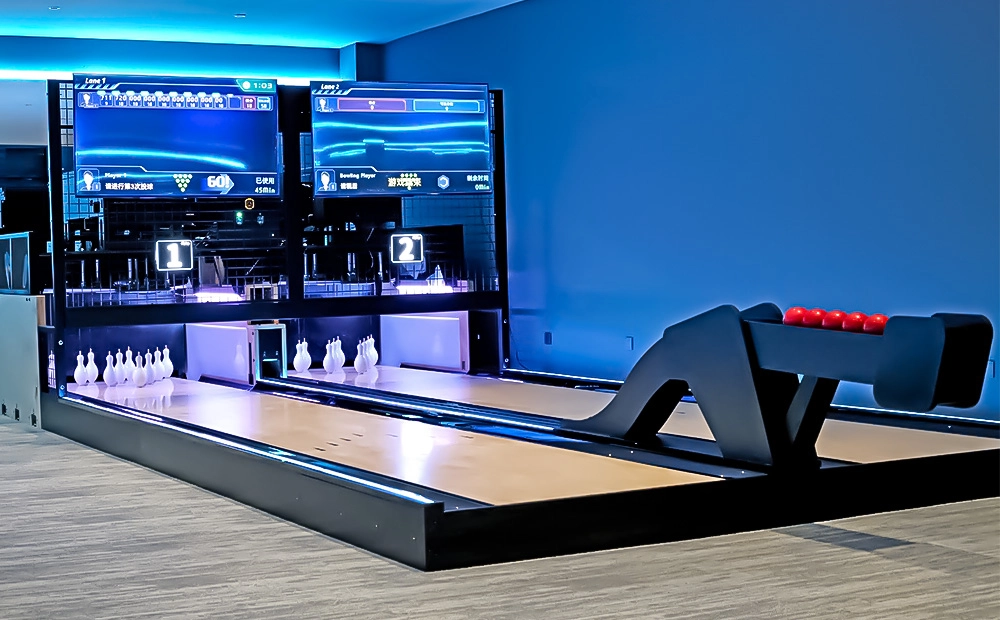
Flying Smart Duckpin Bowling Equipment and Lane System for Commercial Venues
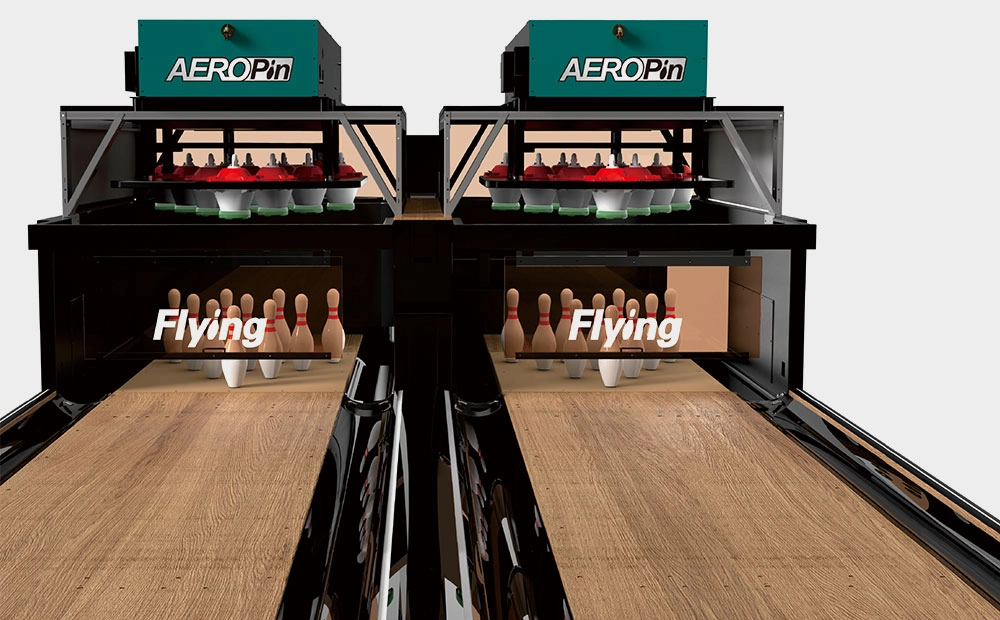
USBC-Certified AEROPIN String Pinsetter System
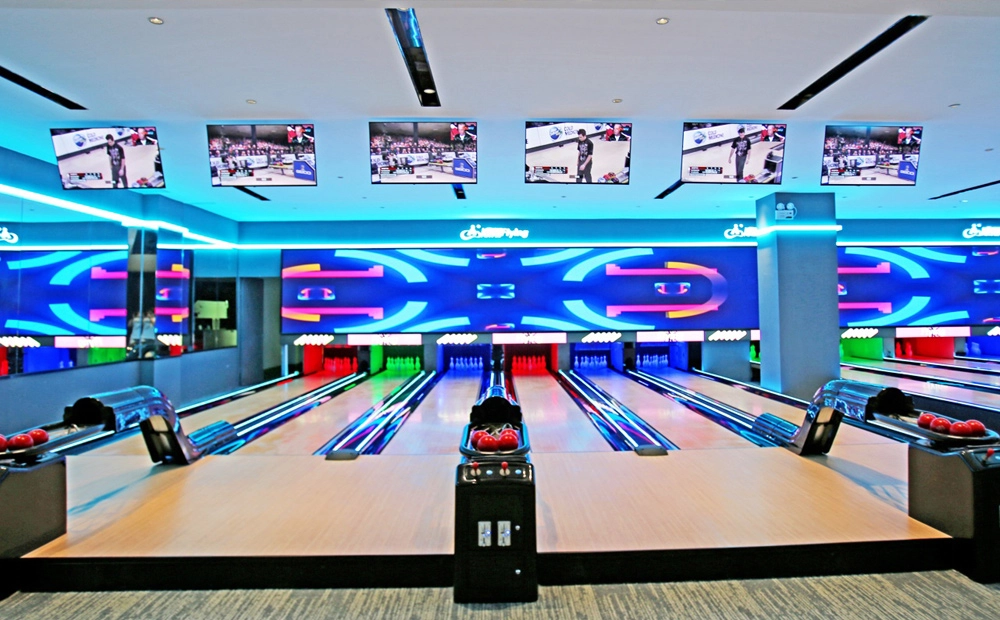
Mini Bowling Equipment for Kids and Family Entertainment Venues
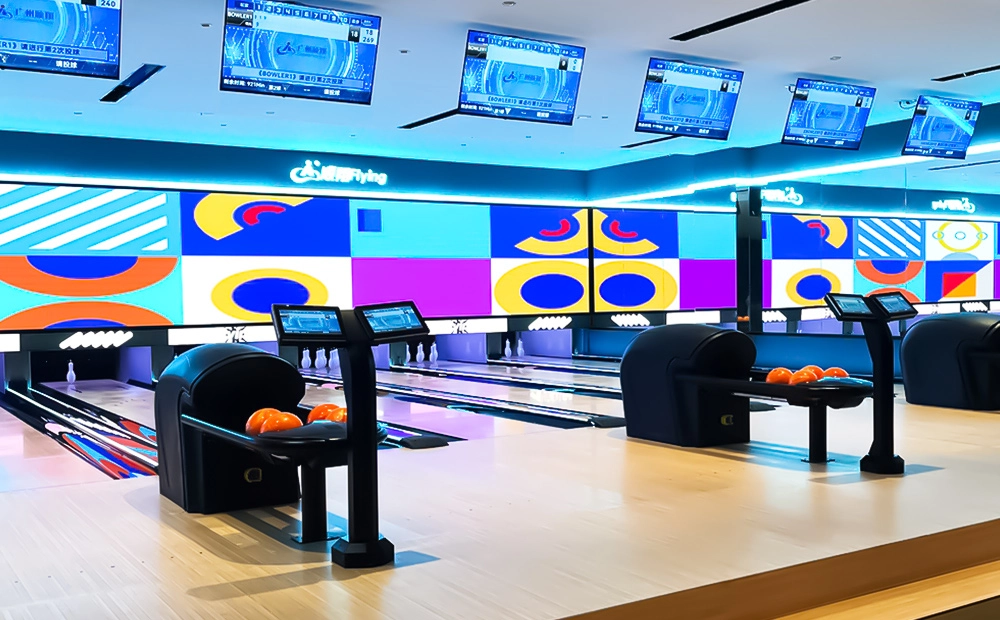
Medium Bowling Equipment for Social Entertainment Venues
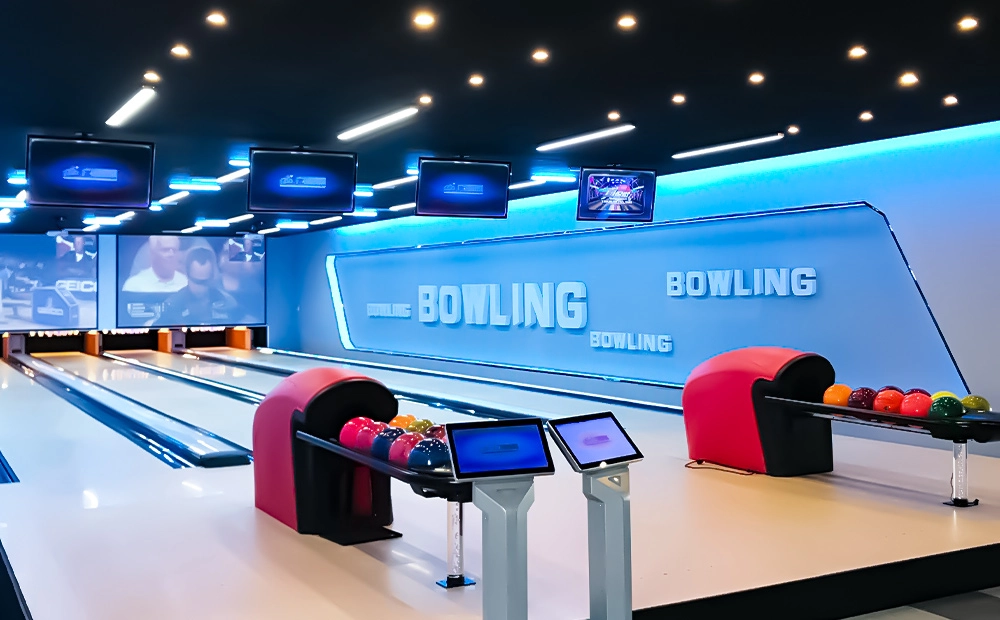
Complete String Pinsetter Bowling Alley Equipment System
You may also like
Flying Smart Duckpin Bowling (FSDB) innovative design, standard 9.2-meter short lane, can be shortened in length, compact layout suitable for small spaces. The game rules are simple but challenging, attracting players of different ages to actively participate.
Suitable for social entertainment venues such as bars, billiard halls, and game centers, it not only enhances interactivity but also increases the popularity and consumption frequency of the venue. The fun and competitive nature of FSDB will make it a new focus of social activities.
Flying Classic Standard Bowling (FCSB) is designed according to international competition standards and equipped with an accurate automatic scoring system, providing bowling enthusiasts with a pure professional experience. Whether it is for competitions or leisure entertainment, FCSB can meet high-level needs.
Suitable for family entertainment centers, luxury resorts, private villas, or clubs, it is an ideal choice for customers who pursue high-end quality and professional experience. Its classic design and excellent performance will add lasting appeal to the venue.
Flying Cute Mini Bowling (FCMB) is a mini bowling experience designed for children and families. The lane length is fixed at 12 meters, equipped with lightweight balls without finger holes (only 1.25kg) and small pins, specially designed for children and family fun.
It can not only help children feel the fun of bowling, but also stimulate their interest and competitive consciousness. Suitable for children's playgrounds, theme parks and parent-child centers, it is the best choice for places focusing on the children's market.
Flying Social Medium Bowling (FSMB) is tailored for small venues, with flexible lane lengths (customizable from 9.6 meters to 18 meters), a small ball design suitable for players of all ages, and light pins that are easier to knock down, increasing participation and fun.
Whether it is a gathering of friends or a casual social, FSMB can easily create a relaxed and pleasant atmosphere. Its efficient space-utilization design is particularly suitable for cafes, bars and community entertainment venues, allowing people to fall in love with bowling in a relaxed interaction.
Contact Flying
Start your bowling alley project
If you contact us now for more details, we can provide you with a custom bowling alley service. Our service team will get back to you within 24 hours normally!
© 2026 Flying BOWLING. Designed by gooeyun.
FOLLOW US:
Flying Bowling
Flying Bowling
Flyingbowling
Flyingbowling