

AeroPIN USBC Certified Bowling String Pinsetter System: The Future of Modern Bowling Alleys
- Why Are String Pinsetter Systems Replacing Traditional Free-Fall Pinsetters in Modern Bowling Centers?
- How Does the AeroPIN System Deliver USBC-Certified Pin Action and Competitive Play Standards?
- What Technical Specifications and Installation Requirements Should Bowling Venue Owners Know Before Choosing AeroPIN?
- Is the AeroPIN String Pinsetter the Right Investment for Your Bowling Alley Business Model?
- Frequently Asked Questions
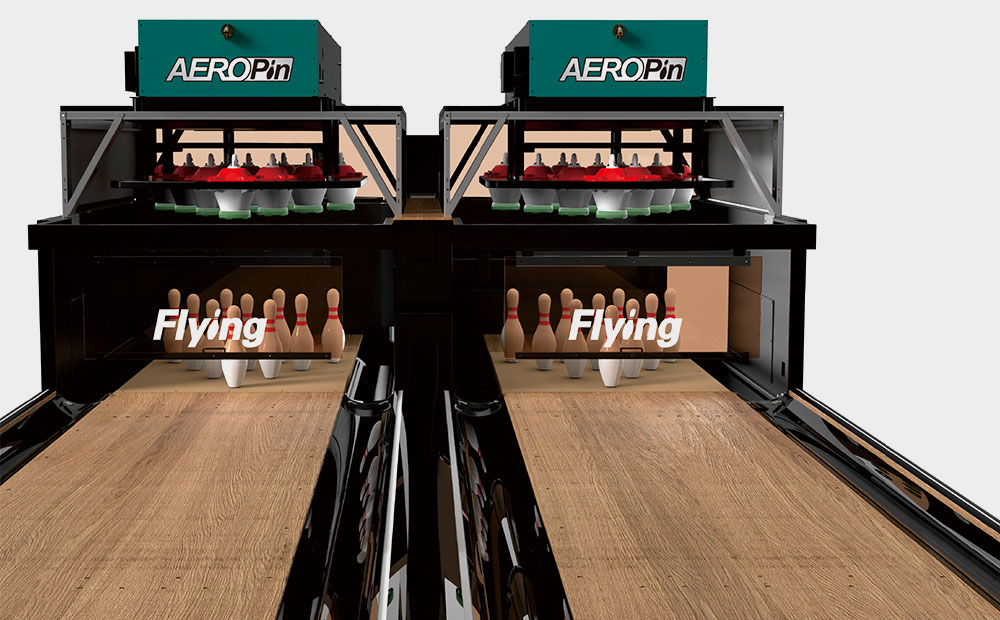
The AeroPIN bowling string pinsetter system represents a significant leap forward in automated bowling lane technology. Designed and manufactured by Flying Bowling — a USBC-certified bowling equipment manufacturer with over 20 years of industry experience — the AeroPIN combines advanced string pinsetter mechanics with a streamlined, low-maintenance architecture. Whether you are opening a new commercial bowling alley or upgrading an existing facility, the AeroPIN system delivers tournament-grade pin action, dramatically reduced mechanical downtime, and a lower total cost of ownership compared to traditional free-fall pinsetters. Certified by the United States Bowling Congress (USBC), the AeroPIN meets the highest standards for competitive and recreational bowling alike.
Why Are String Pinsetter Systems Replacing Traditional Free-Fall Pinsetters in Modern Bowling Centers?
What Are the Core Mechanical Differences Between String Pinsetters and Free-Fall Pinsetters?
Traditional free-fall pinsetters, which have dominated the industry since the 1950s, rely on complex mechanical sweepers, pit mechanisms, and multi-stage pin-handling assemblies. These systems contain hundreds of moving parts, making them prone to frequent breakdowns and requiring skilled technicians for maintenance. String pinsetter systems like the AeroPIN fundamentally reimagine this process: each pin is attached to a thin, high-tensile string that lifts and resets the pin automatically after each delivery. This eliminates the pit conveyor, the pin elevator, and the mechanical distributor — reducing the total component count by up to 60%. According to Bowling Digital, string pinsetter adoption among new bowling center openings globally has grown by over 40% in the past five years, driven precisely by this mechanical simplicity and the resulting reduction in labor costs.
How Does Reduced Maintenance Translate Into Real Cost Savings for Bowling Alley Operators?
For a 16-lane bowling center, traditional free-fall pinsetter maintenance can cost between $15,000 and $30,000 annually in parts and labor. The AeroPIN's string-based architecture cuts this figure dramatically. With fewer mechanical assemblies, routine maintenance is reduced to periodic string inspection, tension calibration, and pin replacement — tasks that can be performed by in-house staff without specialized engineering training. Flying Bowling provides comprehensive maintenance documentation and remote diagnostic support, meaning operators in regions without local bowling equipment technicians are no longer at a disadvantage. Over a 5-year operational period, the total cost of ownership for an AeroPIN-equipped lane is estimated to be 35–50% lower than an equivalent free-fall system, making it an especially compelling investment for mid-sized entertainment venues and family entertainment centers entering the bowling market.
How Does the AeroPIN System Deliver USBC-Certified Pin Action and Competitive Play Standards?
What Does USBC Certification Actually Mean for Pin Action and Game Integrity?
USBC certification is the gold standard for bowling equipment validation in North America and is widely recognized internationally as a benchmark for competitive play. The USBC Equipment Specifications and Certifications program rigorously tests pinsetters for pin placement accuracy, reset timing, and pin carry consistency. The AeroPIN has passed these evaluations, confirming that its string tension calibration and pin positioning mechanism deliver pin spacing and placement within the tolerances required for sanctioned league and tournament play. The system uses precision-engineered string guides and servo-controlled reset timing to ensure that each pin returns to its exact deck position — within ±3mm of the USBC-specified coordinate — after every frame. This level of accuracy is critical not only for competitive integrity but also for recreational bowlers who expect a consistent, satisfying pin carry experience.
Why Does Pin Carry Performance Matter and How Does AeroPIN Optimize It?
Pin carry — the tendency of pins to fall and interact with neighboring pins after ball impact — is one of the most discussed variables in bowling alley equipment performance. Poorly calibrated string tension can cause pins to rebound unnaturally or fail to complete their fall cycle, frustrating bowlers and undermining the credibility of the lane. The AeroPIN addresses this through an adaptive string tension system that accounts for pin wear over time, automatically adjusting resistance to maintain consistent carry behavior throughout the pin's service life. Flying Bowling's engineering team conducted extensive ballistic testing across multiple ball weights (6 lbs to 16 lbs) and entry angles to validate that the AeroPIN's pin action closely mirrors the physics of free-fall pin behavior. Independent reviews from bowling center operators in Southeast Asia and the Middle East — two of Flying Bowling's fastest-growing markets — confirm that bowler satisfaction scores improved after transitioning to the AeroPIN system.
What Technical Specifications and Installation Requirements Should Bowling Venue Owners Know Before Choosing AeroPIN?
What Are the Power, Space, and Infrastructure Requirements for AeroPIN Installation?
One of the most practical advantages of the AeroPIN string pinsetter is its significantly lower infrastructure demand compared to free-fall systems. Traditional pinsetters require three-phase power supplies rated at 380V–440V and substantial overhead clearance for the pin elevator and distributor housing. The AeroPIN operates on a standard single-phase or three-phase power supply with a per-lane consumption of approximately 0.75–1.2 kW — roughly 40% less energy per lane than comparable free-fall systems. The overhead clearance requirement is also reduced, making the AeroPIN suitable for venues with lower ceiling heights, including converted retail spaces and entertainment complexes. Installation can typically be completed in 1–2 days per lane by Flying Bowling's certified installation team, and the system integrates with standard bowling management software via RS-485 or Ethernet communication protocols, enabling seamless scoring system connectivity.
How Does Flying Bowling Support Global Customers Through Installation and After-Sales Service?
Flying Bowling operates from a 10,000+ square-meter manufacturing facility and maintains regional branches in the United States, South America, Europe, and the Middle East. This global presence means that AeroPIN customers receive localized installation support and rapid after-sales response — a critical differentiator in an industry where equipment downtime directly impacts revenue. Each AeroPIN system ships with a full spare parts kit, multilingual installation manuals, and access to Flying Bowling's remote technical support platform. The company has successfully completed bowling alley projects for over 3,000 customers worldwide, ranging from single-lane entertainment installations to 40-lane commercial bowling centers. Flying Bowling also offers one-stop bowling alley design and construction services, covering lane surfacing, ball return systems, scoring technology, and interior design — allowing venue owners to manage the entire project through a single, experienced partner. As noted by the Bowling Industry trade publication, supplier after-sales capability is consistently ranked as the top decision factor among bowling center operators when selecting pinsetter equipment.
Is the AeroPIN String Pinsetter the Right Investment for Your Bowling Alley Business Model?
Which Types of Bowling Venues Benefit Most from the AeroPIN System?
The AeroPIN is engineered to serve a broad spectrum of bowling venue formats. For high-throughput commercial bowling centers with 20+ lanes, the system's low maintenance overhead and energy efficiency generate measurable savings at scale. For boutique bowling venues, entertainment centers, and hospitality-integrated bowling installations — a rapidly growing segment of the global bowling market — the AeroPIN's compact installation footprint and quieter operation profile are decisive advantages. The system is also well-suited for markets where qualified pinsetter technicians are scarce, including emerging bowling markets in the Middle East, Africa, and Southeast Asia, where Flying Bowling has seen the strongest growth in AeroPIN adoption. Venue owners targeting family entertainment, corporate events, or upscale social bowling experiences will find that the AeroPIN's reliable performance and modern aesthetic align well with premium brand positioning.
How Does AeroPIN's Price-to-Performance Ratio Compare to European and American Pinsetter Brands?
Premium European and American bowling pinsetter brands — including legacy manufacturers with decades of market presence — command significant price premiums, often pricing individual lane pinsetter units at two to three times the cost of equivalent Chinese-manufactured systems. Flying Bowling's AeroPIN delivers USBC-certified performance and build quality that is directly comparable to these established brands, at a price point that makes large-scale bowling alley projects financially viable for a much wider range of investors and operators. This value proposition has been validated by Flying Bowling's track record of over 3,000 completed projects across more than 50 countries. For investors conducting feasibility analysis, the combination of lower capital expenditure, reduced operating costs, and Flying Bowling's global service network produces a return-on-investment timeline that is typically 18–24 months shorter than projects built around premium Western pinsetter brands. The history of pinsetter technology shows that mechanical innovation has always been driven by the need to balance performance with operational practicality — and the AeroPIN represents the current state of that evolution.
Frequently Asked Questions
Is the AeroPIN bowling string pinsetter system officially USBC certified for league and tournament play?
Yes, the AeroPIN is officially USBC certified, confirming it meets all equipment specifications for sanctioned league and tournament bowling. USBC certification validates pin placement accuracy within ±3mm and ensures consistent pin carry performance across all ball weights from 6 to 16 lbs.
How long does it take to install the AeroPIN pinsetter system on a standard bowling lane?
Installation typically takes 1–2 days per lane when completed by Flying Bowling's certified installation team. The system's simplified architecture — with up to 60% fewer components than free-fall pinsetters — significantly reduces installation complexity and commissioning time.
What is the power consumption of the AeroPIN string pinsetter compared to traditional free-fall systems?
The AeroPIN consumes approximately 0.75–1.2 kW per lane, which is roughly 40% less than comparable free-fall pinsetter systems. This energy efficiency directly reduces monthly operating costs and supports venues pursuing sustainability or green building certifications.
Can the AeroPIN system be integrated with existing bowling scoring and management software?
Yes, the AeroPIN supports RS-485 and Ethernet communication protocols, enabling integration with most standard bowling management and scoring platforms. Flying Bowling provides technical documentation and support to ensure seamless connectivity with your existing venue management infrastructure.
How often does the AeroPIN string pinsetter require maintenance, and can in-house staff perform it?
Routine maintenance — including string inspection, tension calibration, and pin replacement — is recommended every 3–6 months depending on lane utilization. These tasks require no specialized engineering training and can be performed by in-house staff using Flying Bowling's provided maintenance documentation and remote support.
Why should I choose Flying Bowling's AeroPIN over established European or American pinsetter brands?
The AeroPIN delivers USBC-certified performance comparable to premium Western brands at a significantly lower price, with a proven track record across 3,000+ completed projects in 50+ countries. Flying Bowling's global branch network in the US, Europe, South America, and the Middle East ensures local installation and after-sales support.
Ready to upgrade your bowling alley with the AeroPIN USBC-certified string pinsetter system? Contact the Flying Bowling team today for a customized quote, technical consultation, or to connect with your nearest regional distributor. Our experts are available to guide you through equipment selection, lane design, and full-facility construction — delivering your ideal bowling venue from concept to opening day.
📧 Email us at jackson@flyingbowling.com | 🌐 Visit www.flyingbowling.com
Recommended products
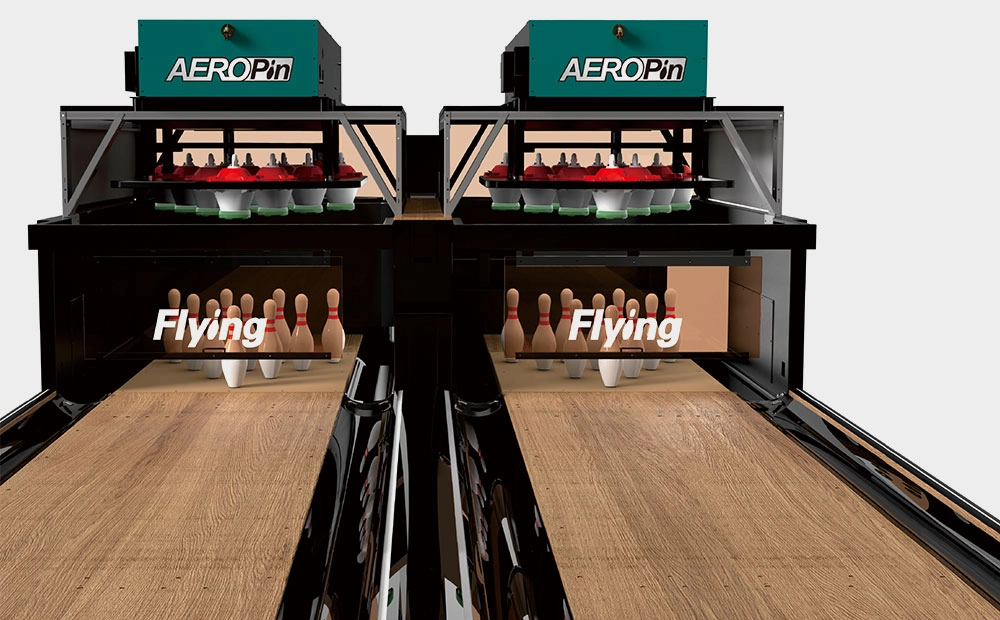
AEROPIN™ USBC-Certified String Pinsetter System
Flying Smart Duckpin Bowling Equipment for Commercial Venues
Complete Bowling Alley Equipment Package for Commercial Bowling Centers
Medium Bowling Equipment for Compact Social Venues
You may also like
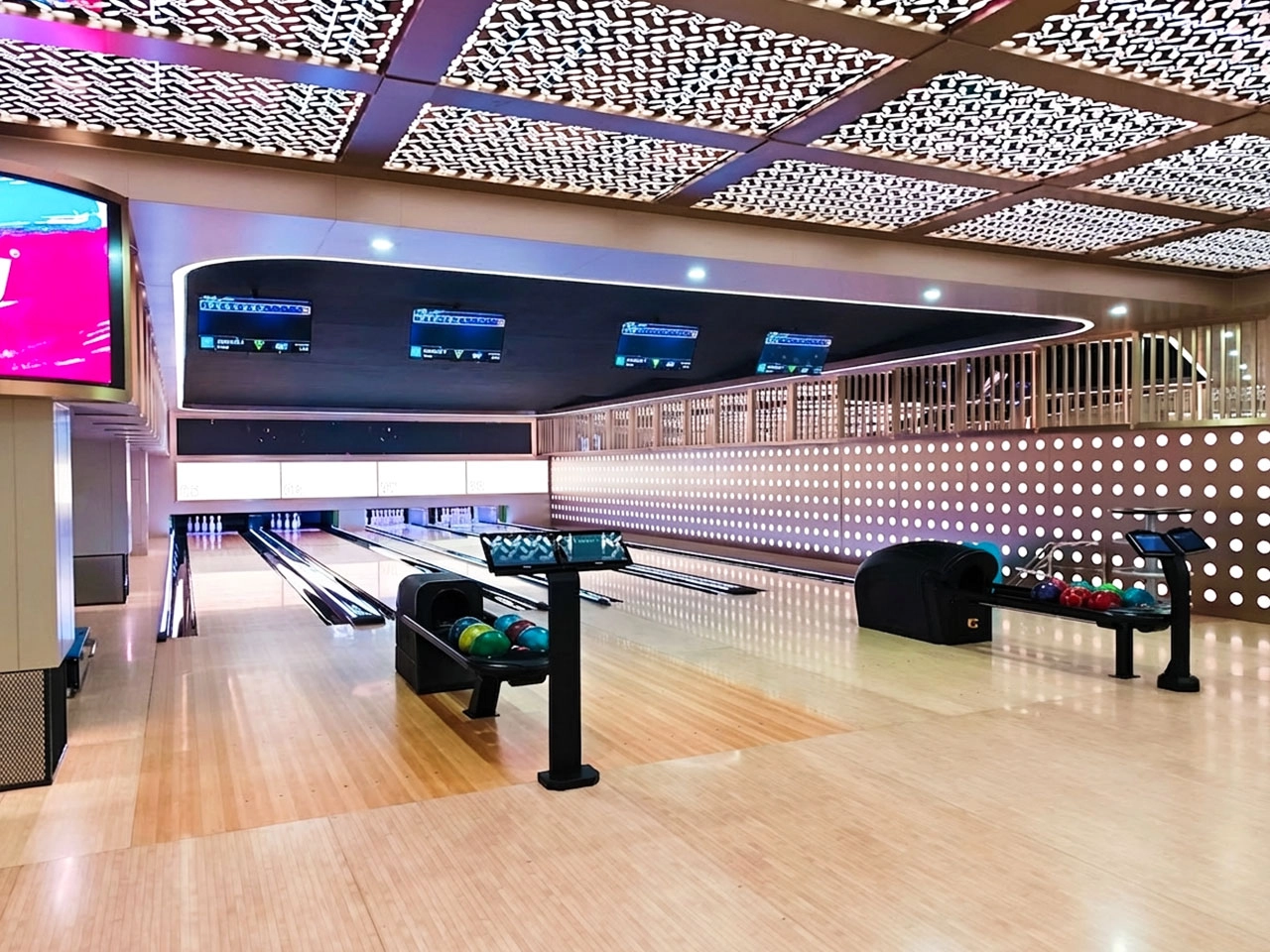
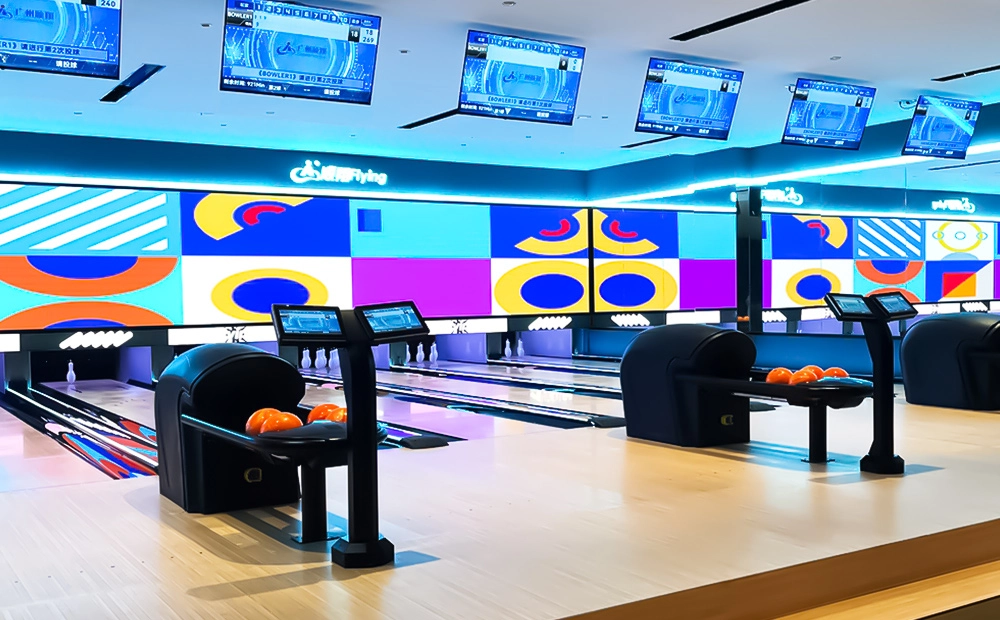
Build a commercial bowling venue with Flying’s complete string pinsetter bowling alley equipment package. The system includes the AEROPIN™ USBC-certified string pinsetter, customizable lanes, automatic scoring, ball return, lane lighting, pins, control hardware, and overseas installation support.
Designed for commercial bowling centers, family entertainment venues, hotels, resorts, bars, and premium private projects, this turnkey bowling system helps operators reduce sourcing complexity and prepare for reliable long-term operation.
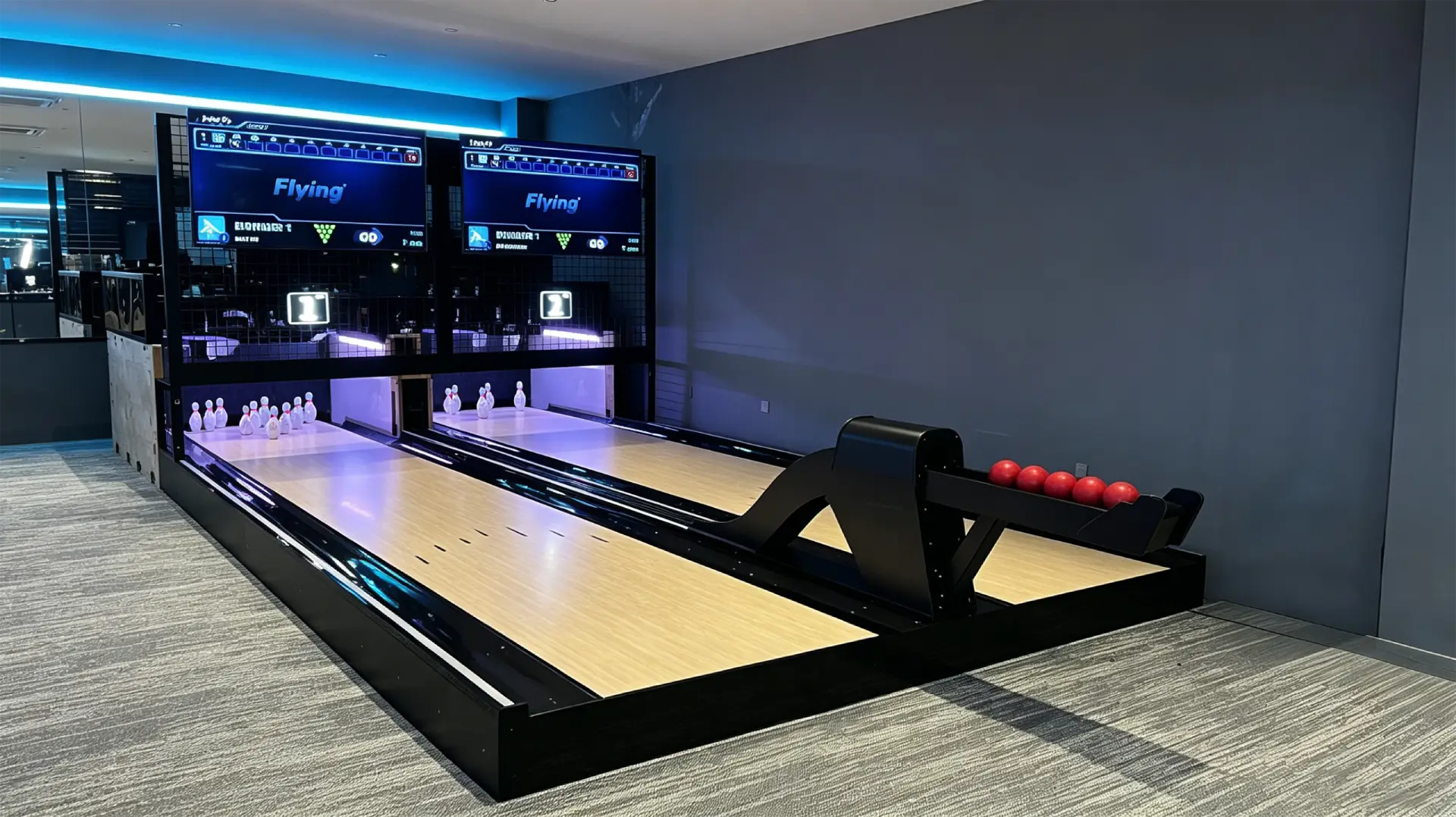
Flying Smart Duckpin Bowling is a compact duckpin bowling equipment system designed for bars, family entertainment centers, hotels, resorts, cinemas, boutique bowling alleys, and social entertainment venues. With a standard 9.13m duckpin bowling lane, 1.25kg lightweight balls, automatic scoring, ball return, LED lighting, and a smart string pinsetter, it creates a fast-paced and easy-to-play bowling experience in a smaller footprint than traditional bowling.
The system is available as a turnkey duckpin bowling package, including lane equipment, a string pinsetter system, scoring hardware, control software, global shipping, installation guidance, and technical support.
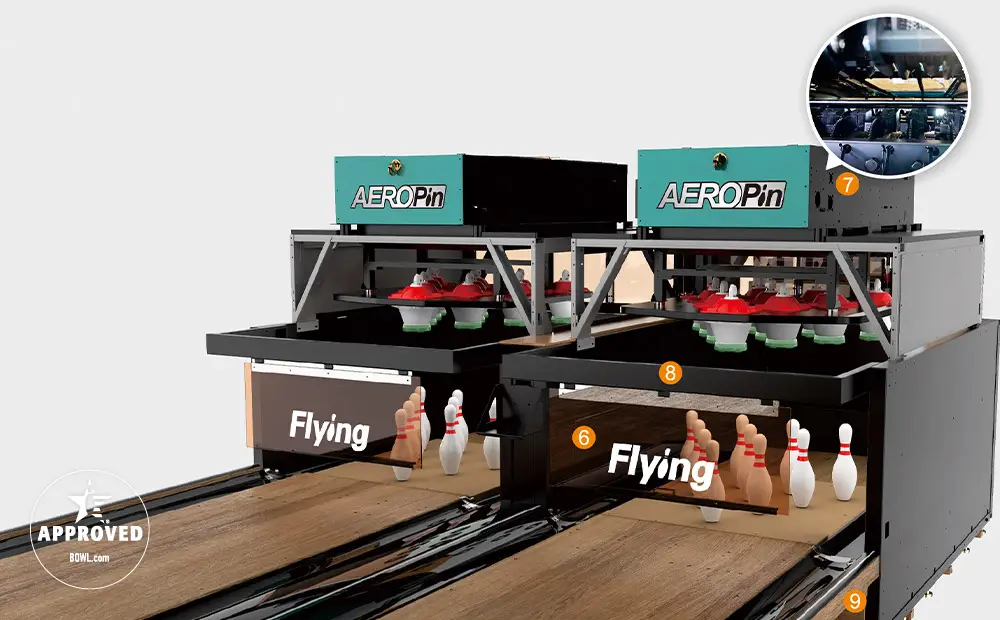
AEROPIN is Flying Bowling’s USBC-certified string pinsetter system for modern commercial bowling centers. Designed for fast pin setting, smooth ball return, low maintenance, and stable daily operation, it helps venue operators build league-ready and entertainment-focused bowling projects with confidence.
Flying Social Medium Bowling is a compact medium bowling equipment system designed for bars, cafes, family entertainment centers, community leisure venues, hotels, resorts, and small indoor entertainment spaces. With customizable lane lengths from 9.6m to 18m, small balls, lighter pins, string pinsetter technology, ball return, and automatic scoring, it creates an easy-to-play social bowling experience for players of different ages and skill levels.
Compared with full-size standard bowling, medium bowling requires less space and offers a more casual, interactive format. It is a practical choice for venues that want to add a bowling attraction without building a full commercial bowling alley.
Contact Flying
Start your bowling alley project
If you contact us now for more details, we can provide you with a custom bowling alley service. Our service team will get back to you within 24 hours normally!
© 2026 Flying BOWLING. Designed by gooeyun.
FOLLOW US:

Flying Bowling
Flying Bowling
Flyingbowling
Flyingbowling
Flyingbowling