


Why USBC Certification Matters for Bowling Equipment Buyers
- Understanding USBC Certification and What It Actually Tests
- The Regulatory Framework Behind the Certification
- What Gets Tested and Why Each Element Counts
- The Difference Between Meets Standards and USBC Certified
- The Real Business Cost of Buying Non-Certified Bowling Equipment
- Lost Revenue from Sanctioned Play Exclusion
- Insurance, Liability, and Resale Value Implications
- Operational Reliability and Maintenance Cost Differences
- How USBC Certification Shapes Purchasing Decisions Across Different Bowling Formats
- Standard Tenpin Bowling: The Baseline Requirement
- Duckpin and Mini Bowling: Emerging Formats with Growing Certification Needs
- String Pinsetters: A Special Certification Consideration
- Comparing Certified vs. Non-Certified Bowling Equipment: Key Factors
- Why Flying Bowling Is the Smart Choice for USBC-Certified Bowling Equipment
- Frequently Asked Questions
If you have spent any serious time sourcing bowling alley equipment, you already know that not all machines are created equal. Over my 15 years in this industry, the single question I hear most from facility owners, distributors, and investors is some version of: How do I know this equipment is actually good? My answer is always the same — start with USBC certification. When a piece of usbc bowling equipment carries that official stamp of approval from the United States Bowling Congress (USBC), it tells you something fundamental about its design integrity, performance consistency, and long-term reliability. This article breaks down exactly why that certification matters, what it costs you when you ignore it, and how to use it as a strategic filter when making purchasing decisions worth tens or hundreds of thousands of dollars.
Understanding USBC Certification and What It Actually Tests
The Regulatory Framework Behind the Certification
The USBC is the national governing body for the sport of bowling in the United States, and it operates under the umbrella of World Bowling, the international federation recognized by the International Olympic Committee. When the USBC certifies a piece of bowling equipment — whether that is a lane surface, a pinsetter, a ball return system, or a set of pins — it means that equipment has been independently tested and verified to meet a rigorous set of technical specifications. These specifications cover everything from lane dimensions and surface friction coefficients to pin weight tolerances and ball return timing. The testing process is not a rubber stamp. It involves physical measurement, stress testing, and performance validation under real bowling conditions. For B2B buyers, this matters enormously because it means a third party with no financial stake in the sale has already done a significant portion of your due diligence for you.
What Gets Tested and Why Each Element Counts
In my experience consulting with facility operators across multiple continents, many buyers assume USBC certification is primarily about lanes. In reality, the certification framework extends to pinsetters, pins, balls, and ancillary equipment. For a bowling string pinsetter, for example, the USBC evaluates pin reset accuracy, string tension consistency, and interference with ball trajectory. A pinsetter that resets pins even slightly outside specification will produce inconsistent pin action, which frustrates recreational bowlers and disqualifies the facility from hosting any sanctioned league or tournament play. That last point is critical for revenue planning. Sanctioned league play is one of the most reliable recurring income streams a bowling center can have, and it is completely inaccessible without certified equipment. The USBC Equipment Specifications and Certifications department maintains a publicly searchable database of all approved equipment, which I always recommend buyers consult before signing any purchase agreement.
The Difference Between Meets Standards and USBC Certified
This is a distinction I have had to explain to buyers more times than I can count. Many equipment manufacturers will claim their products meet USBC standards or are built to USBC specifications. These phrases are marketing language, not legal or regulatory claims. Actual USBC certification requires the manufacturer to submit equipment for formal testing and receive an official approval listing. If a product is not on the USBC approved equipment list, it is not certified — period. I have seen facilities invest significant capital in equipment that was marketed as equivalent to certified products, only to discover they could not host a single sanctioned event. The reputational and financial damage from that kind of mistake is severe and largely avoidable.
The Real Business Cost of Buying Non-Certified Bowling Equipment
Lost Revenue from Sanctioned Play Exclusion
Let me put some concrete numbers around this. A mid-sized bowling center with 16 lanes running sanctioned league play three nights per week can generate between $150,000 and $300,000 annually from league fees alone, depending on market and pricing. That revenue stream requires every lane to be equipped with USBC-certified equipment. If even one component — say, a non-certified pinsetter on lanes 5 and 6 — fails the certification check, those lanes are ineligible for sanctioned play. You are not just losing the revenue from those two lanes; you are potentially losing the entire league contract if the organizer cannot guarantee consistent conditions across all lanes. Over a 10-year equipment lifecycle, the cumulative revenue loss from this single oversight can dwarf the initial cost savings of buying cheaper, non-certified alternatives.
Insurance, Liability, and Resale Value Implications
Beyond direct revenue, there are downstream financial risks that buyers often overlook. Commercial insurance policies for bowling facilities sometimes include clauses tied to equipment compliance. If an injury occurs on a lane equipped with non-certified machinery, and the insurer discovers the equipment was not properly approved, you may face a coverage dispute at exactly the moment you need protection most. Additionally, when it comes time to sell or refinance a facility, certified equipment is a tangible asset with documented value. Non-certified equipment is much harder to appraise and can actually reduce a facility's overall valuation. I have personally seen acquisition deals fall apart because the target facility's equipment could not pass a certification audit during due diligence.
Operational Reliability and Maintenance Cost Differences
USBC certification is not just a compliance checkbox — it is also a proxy for engineering quality. Equipment that has been through the USBC testing process has been designed and manufactured to perform consistently under sustained operational loads. In my experience, certified equipment typically exhibits lower rates of mechanical failure, requires less frequent unplanned maintenance, and has better-documented service procedures. According to research published by the Bowling Industry trade association, facilities operating certified equipment report significantly higher uptime rates compared to those using uncertified alternatives. Lower downtime means more frames bowled, more food and beverage sold, and more satisfied customers who come back. The math is straightforward once you factor in the full operational picture.
How USBC Certification Shapes Purchasing Decisions Across Different Bowling Formats
Standard Tenpin Bowling: The Baseline Requirement
For traditional tenpin bowling centers, USBC certification is essentially non-negotiable if you want to operate competitively. The market for tenpin facilities is mature, and operators who cut corners on equipment certification quickly find themselves unable to attract league bowlers — the most loyal and highest-spending segment of the bowling customer base. When I advise clients on tenpin facility builds or renovations, I always structure the equipment specification around the USBC approved list first, then work backward to budget and aesthetics. This approach protects the investment and ensures the facility can participate in the full ecosystem of organized bowling from day one.
Duckpin and Mini Bowling: Emerging Formats with Growing Certification Needs
One of the most exciting developments I have tracked over the past several years is the explosive growth of alternative bowling formats — particularly duckpin bowling and mini bowling equipment installations in entertainment venues, family entertainment centers, and hospitality properties. These formats attract a different demographic: younger players, casual groups, corporate event planners, and hotel guests who want a fun, accessible activity. As these formats professionalize and begin hosting organized events, the demand for certified equipment in these categories is growing rapidly. Buyers entering this space should pay close attention to which manufacturers have invested in getting their duckpin and mini bowling systems through the USBC certification process, as this will increasingly determine which operators can host competitive events and which cannot.
String Pinsetters: A Special Certification Consideration
String pinsetters have become one of the most debated topics in bowling equipment procurement over the past decade. They offer significant operational advantages — lower maintenance costs, quieter operation, faster reset times — but they have historically faced scrutiny regarding their effect on pin action compared to traditional free-fall pinsetters. The USBC has developed specific testing protocols for string pinsetters, and the list of certified string pinsetter models is more selective than the general equipment list. For buyers considering a string pinsetter installation, verifying USBC certification for the specific model is absolutely essential, not just for compliance but as a quality signal that the manufacturer has invested in engineering their system to meet the sport's highest standards.
Comparing Certified vs. Non-Certified Bowling Equipment: Key Factors
| Evaluation Factor | USBC Certified Equipment | Non-Certified Equipment |
|---|---|---|
| Sanctioned League Eligibility | Fully eligible for all USBC-sanctioned events | Ineligible; cannot host any sanctioned play |
| Third-Party Quality Validation | Independently tested and approved by USBC | Self-reported compliance only |
| Insurance & Liability Coverage | Meets insurer compliance requirements | Potential coverage gaps in case of incidents |
| Operational Uptime | Higher reliability; engineered to spec | Variable; higher risk of unplanned downtime |
| Resale & Asset Value | Documented, appraisable asset value | Difficult to appraise; may reduce facility value |
| Maintenance Documentation | Comprehensive service manuals and parts support | Often limited or proprietary documentation |
| Long-Term Cost of Ownership | Lower due to reliability and parts availability | Higher due to failures and limited support |
Why Flying Bowling Is the Smart Choice for USBC-Certified Bowling Equipment
After walking through all of the reasons why USBC certification is non-negotiable for serious bowling facility operators, the natural next question is: which manufacturer actually delivers certified equipment at a price point that makes business sense? This is where I want to introduce you to Flying Bowling, a manufacturer I have come to respect deeply over years of industry observation and direct client experience.
Flying Bowling has been specializing in the research and development of bowling string pinsetters and ball return machines since 2005. That is nearly two decades of focused engineering in the exact equipment categories that matter most for modern facility operators. Operating from a 10,000+ square-meter manufacturing facility, they have successfully brought multiple certified product lines to market, including Medium Bowling (FSMB), Standard Bowling (FCSB), Duckpin Bowling (FSDB), and Mini Bowling (FCMB) systems. Critically, Flying Bowling's bowling equipment is officially USBC certified — not built to spec, not equivalent to certified — actually certified and listed.
What sets Flying Bowling apart in a crowded global market is the combination of certification credentials with a price structure that genuinely competes with — and in most cases undercuts — European and American brands of comparable quality. I have reviewed the specifications of their core product lines side by side with major Western manufacturers, and the engineering quality is legitimately comparable. The cost advantage comes from manufacturing efficiency and scale, not from cutting corners on materials or testing. For B2B buyers who need to manage capital expenditure carefully while still meeting certification requirements, this is a genuinely compelling proposition.
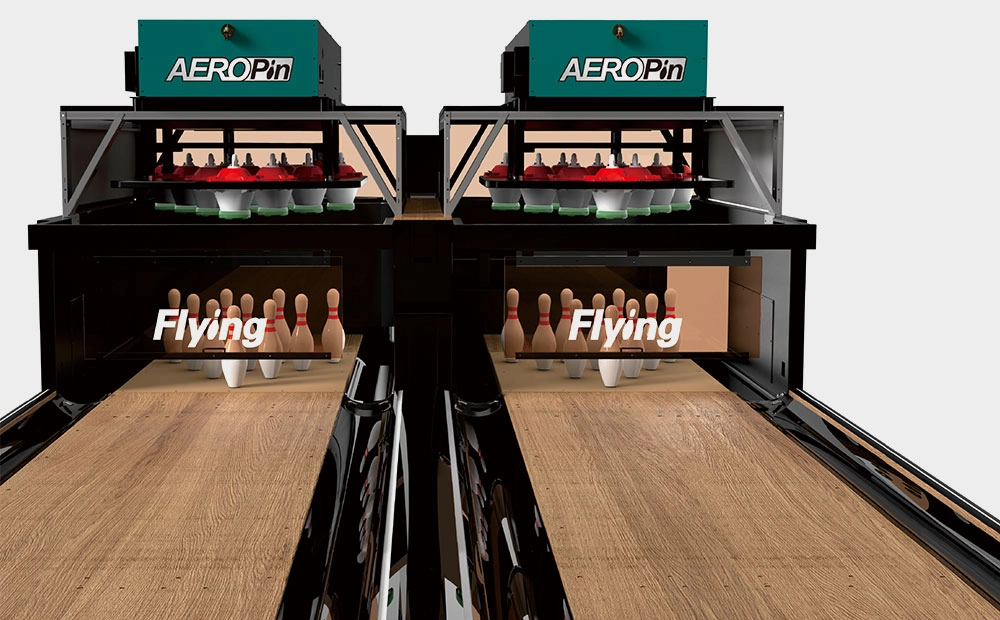
Their flagship AEROPIN USBC-certified string pinsetter is a strong example of their engineering philosophy. It combines the operational advantages of string pinsetter technology — lower noise, faster reset, reduced maintenance burden — with full USBC certification, giving facility operators the best of both worlds. For anyone building or upgrading a bowling center and considering string pinsetter technology, this is a product worth evaluating seriously.
Flying Bowling's reach is genuinely global. They maintain branches in the United States, South America, Europe, and the Middle East, which means local sales support, professional installation, and responsive after-sales service are available in most major markets. This is not a manufacturer you order from and then hope for the best — they have built a service infrastructure designed to support facility operators throughout the equipment lifecycle. Having worked with clients who have dealt with remote manufacturers offering no local support, I cannot overstate how much this matters when something needs attention quickly.
With over 3,000 successful bowling alley builds completed for clients worldwide, Flying Bowling also offers one-stop customized design and construction services. Whether you are building a traditional tenpin center, a duckpin venue, a mini bowling installation inside a hotel or entertainment complex, or any hybrid format, their team can handle the full project scope. They also actively recruit distributors from global markets, making them an interesting partner opportunity for regional operators who want to build a business around High Quality certified bowling equipment.
For buyers who want to explore their full range of bowling alley equipment — from string pinsetters and ball return systems to complete venue design packages — I recommend visiting flyingbowling.com directly. For project-specific inquiries, their team can be reached at jackson@flyingbowling.com.
Ready to build a USBC-certified bowling facility that stands out in your market? Contact Flying Bowling today to get expert guidance and a customized equipment proposal tailored to your venue and budget.
Frequently Asked Questions
What does USBC certification mean for bowling equipment?
USBC certification means that a piece of bowling equipment has been independently tested and approved by the United States Bowling Congress to meet its official technical specifications. This includes verification of dimensions, performance consistency, and compliance with the rules governing sanctioned play. Equipment must be submitted by the manufacturer for formal testing and receive an official approval listing — it is not a self-reported status.
Can I operate a bowling center without USBC-certified equipment?
Yes, you can operate a recreational bowling center without USBC-certified equipment, but you will be unable to host any USBC-sanctioned league or tournament play. This exclusion can significantly impact your revenue potential, since sanctioned league bowling is one of the most reliable recurring income streams for bowling facilities. Additionally, non-certified equipment may create complications with insurance coverage and facility resale value.
Are string pinsetters USBC certified?
Some string pinsetters are USBC certified, but not all. The USBC has developed specific testing protocols for string pinsetter systems, and the list of approved models is selective. Buyers should verify that the specific model they are considering appears on the official USBC approved equipment list. Flying Bowling's AEROPIN string pinsetter, for example, is officially USBC certified and meets all required performance standards.
Does USBC certification apply to duckpin and mini bowling equipment?
USBC certification frameworks are evolving to cover alternative bowling formats as they grow in popularity. As duckpin bowling and mini bowling installations become more professionalized and begin hosting organized events, the demand for certified equipment in these categories is increasing. Buyers entering these formats should prioritize manufacturers who have invested in getting their systems through applicable certification processes to ensure future eligibility for competitive events.
How do I verify that bowling equipment is genuinely USBC certified?
The USBC maintains a publicly searchable database of all approved equipment on its official website at bowl.com. Before purchasing any bowling equipment, buyers should search the specific product model in this database to confirm its certification status. Be cautious of manufacturers who claim their equipment "meets USBC standards" without appearing on the official approved list — this language does not constitute actual certification.
Why is USBC-certified equipment worth the investment compared to cheaper alternatives?
USBC-certified equipment delivers value across multiple dimensions: it enables sanctioned league and tournament revenue, provides third-party validation of engineering quality, supports better insurance coverage, and typically offers lower long-term maintenance costs due to higher reliability. While certified equipment may carry a higher upfront price in some cases, the total cost of ownership over a 10-year equipment lifecycle is generally lower than non-certified alternatives when all operational and revenue factors are considered.
Recommended products
Flying Smart Duckpin Bowling Equipment and Lane System for Commercial Venues
USBC-Certified AEROPIN String Pinsetter System
Mini Bowling Equipment for Kids and Family Entertainment Venues
Medium Bowling Equipment for Social Entertainment Venues
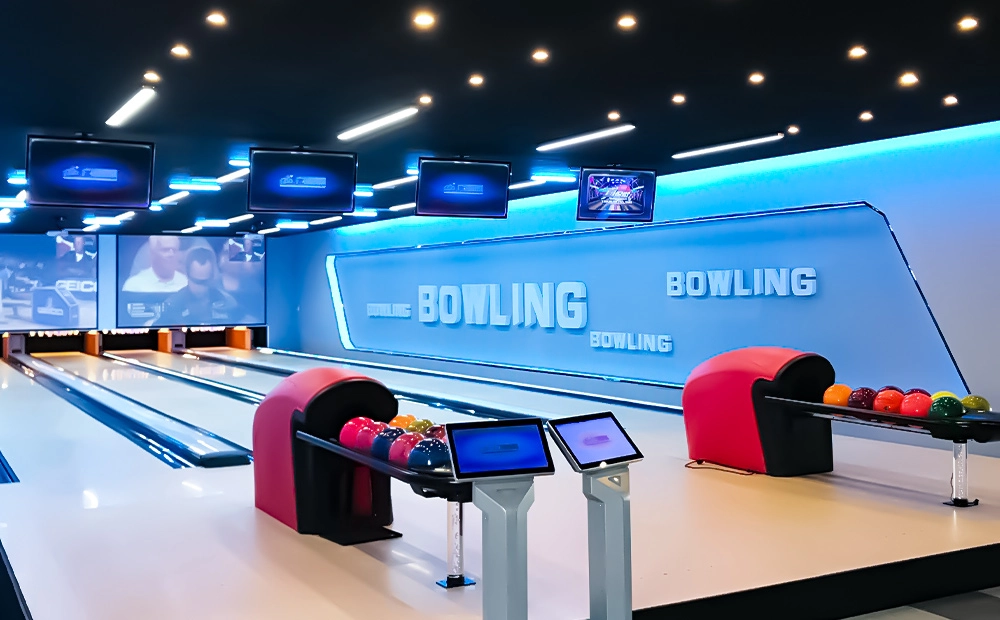
Complete String Pinsetter Bowling Alley Equipment System
You may also like
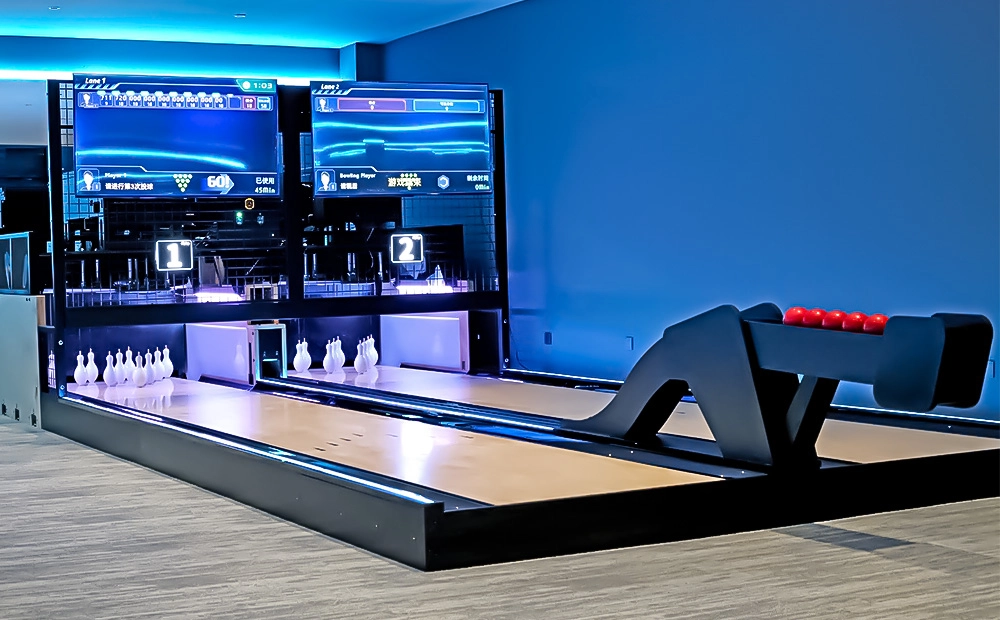
Flying Smart Duckpin Bowling (FSDB) innovative design, standard 9.2-meter short lane, can be shortened in length, compact layout suitable for small spaces. The game rules are simple but challenging, attracting players of different ages to actively participate.
Suitable for social entertainment venues such as bars, billiard halls, and game centers, it not only enhances interactivity but also increases the popularity and consumption frequency of the venue. The fun and competitive nature of FSDB will make it a new focus of social activities.
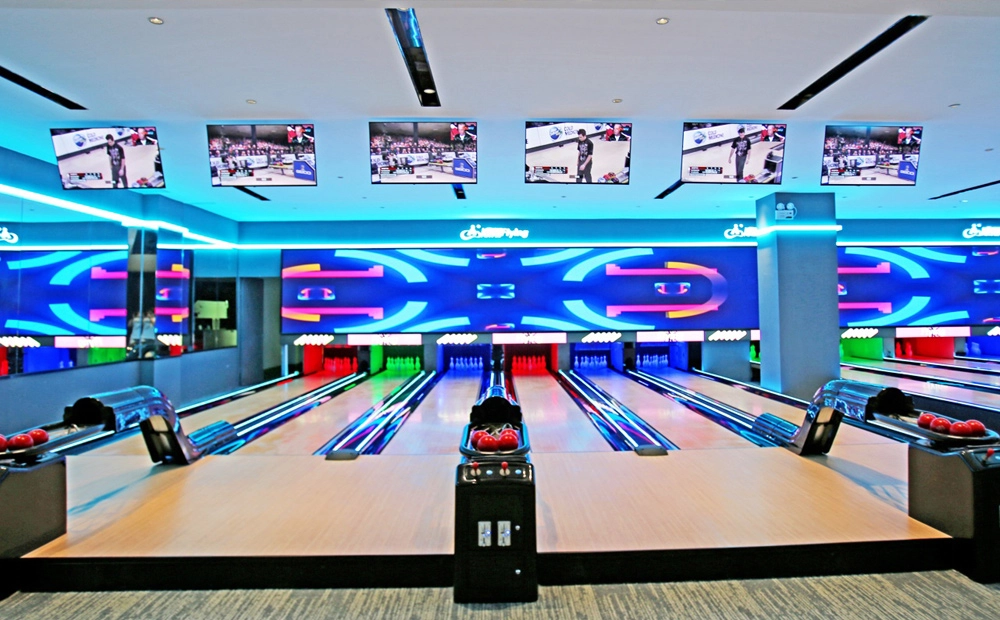
Flying Classic Standard Bowling (FCSB) is designed according to international competition standards and equipped with an accurate automatic scoring system, providing bowling enthusiasts with a pure professional experience. Whether it is for competitions or leisure entertainment, FCSB can meet high-level needs.
Suitable for family entertainment centers, luxury resorts, private villas, or clubs, it is an ideal choice for customers who pursue high-end quality and professional experience. Its classic design and excellent performance will add lasting appeal to the venue.
Flying Cute Mini Bowling (FCMB) is a mini bowling experience designed for children and families. The lane length is fixed at 12 meters, equipped with lightweight balls without finger holes (only 1.25kg) and small pins, specially designed for children and family fun.
It can not only help children feel the fun of bowling, but also stimulate their interest and competitive consciousness. Suitable for children's playgrounds, theme parks and parent-child centers, it is the best choice for places focusing on the children's market.
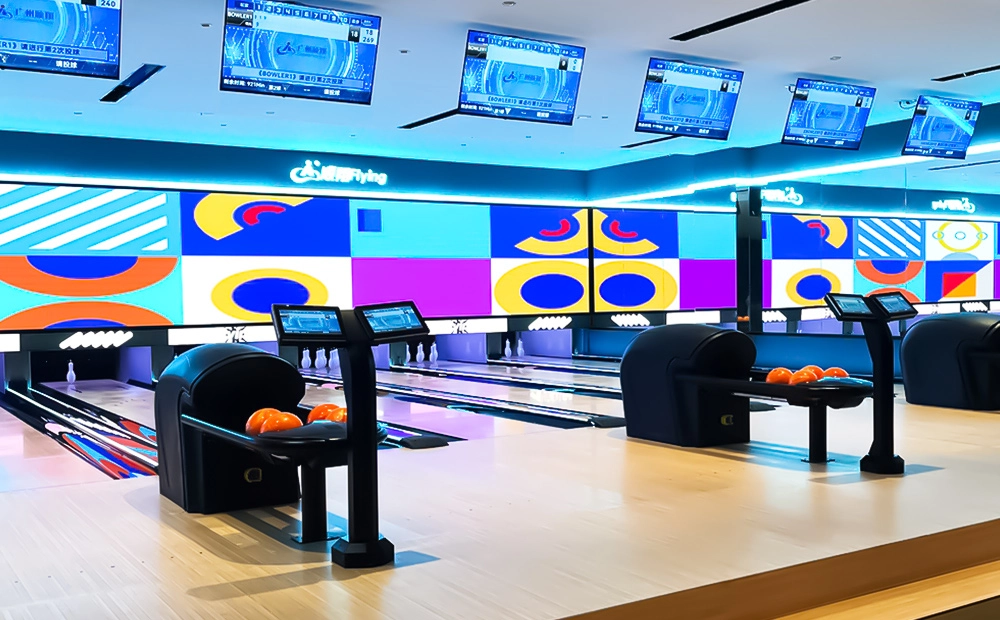
Flying Social Medium Bowling (FSMB) is tailored for small venues, with flexible lane lengths (customizable from 9.6 meters to 18 meters), a small ball design suitable for players of all ages, and light pins that are easier to knock down, increasing participation and fun.
Whether it is a gathering of friends or a casual social, FSMB can easily create a relaxed and pleasant atmosphere. Its efficient space-utilization design is particularly suitable for cafes, bars and community entertainment venues, allowing people to fall in love with bowling in a relaxed interaction.
Contact Flying
Start your bowling alley project
If you contact us now for more details, we can provide you with a custom bowling alley service. Our service team will get back to you within 24 hours normally!
© 2026 Flying BOWLING. Designed by gooeyun.
FOLLOW US:
Flying Bowling
Flying Bowling
Flyingbowling
Flyingbowling