

Types of Bowling Alleys: How to Choose the Right Bowling Concept for Your Venue
- What Are the Different Types of Bowling Alleys?
- Bowling Alley Types Comparison
- Ten-Pin Bowling
- Duckpin Bowling
- Boutique Bowling
- How to Choose the Right Bowling Alley Type for Your Venue
- From Bowling Concept to Project Planning
- Common Mistakes When Choosing a Bowling Concept
- Explore Related Bowling Resources
- Planning a New Bowling Venue?
- FAQ
Different types of bowling alleys are designed for different venue sizes, customer groups, and business goals.
The main types of bowling alleys include:
- Ten-pin bowling
- Duckpin bowling
- Boutique bowling venues
Choosing the right bowling concept depends on available space, target customers, business model, equipment requirements, and long-term operation plans.
What Are the Different Types of Bowling Alleys?
Modern bowling venues are no longer limited to traditional bowling centers. Operators can now choose different bowling concepts based on their target market, available space, and entertainment strategy.
The most common bowling alley types include:
- Ten-pin bowling
- Duckpin bowling
- Boutique bowling
Each bowling format has different characteristics and is suitable for different project requirements.
Bowling Alley Types Comparison
| Bowling Type | Best For | Main Advantages |
|---|---|---|
| Ten-Pin Bowling | Commercial bowling centers and large entertainment venues | Traditional bowling experience and broad customer appeal |
| Duckpin Bowling | Compact entertainment venues and family-focused projects | Unique gameplay and flexible venue integration |
| Boutique Bowling | Premium entertainment venues | Focus on atmosphere and customer experience |
Ten-Pin Bowling
Ten-pin bowling is the most widely recognized bowling format and is commonly used in commercial bowling centers around the world.
It provides the traditional bowling experience that many customers are familiar with.
Best For
- Commercial bowling centers
- Large entertainment venues
- Professional bowling facilities
- Projects requiring multiple lanes
Suitable Project Considerations
Operators selecting ten-pin bowling should evaluate:
- Available floor space
- Expected customer volume
- Number of lanes required
- Equipment configuration
- Long-term operation requirements
Ten-pin bowling is a strong option for projects that want to provide a traditional bowling experience and serve a wide range of customers.
Duckpin Bowling
Duckpin bowling is a smaller-format bowling concept with unique gameplay characteristics.
It can provide a different entertainment experience and may be suitable for venues looking for a more flexible bowling concept.
Best For
- Family entertainment centers
- Compact entertainment venues
- Mixed-use leisure projects
Suitable Project Considerations
- Venue size
- Customer expectations
- Entertainment positioning
- Equipment requirements
Duckpin bowling can be a suitable choice for projects where space efficiency and customer experience are important factors.
Boutique Bowling
Boutique bowling combines bowling with a premium entertainment environment.
Unlike traditional bowling centers that focus mainly on gameplay, boutique bowling often emphasizes atmosphere, design, and customer experience.
Best For
- Hotels
- Resorts
- Premium entertainment venues
- Lifestyle entertainment projects
Suitable Project Considerations
Operators should evaluate:
- Venue concept
- Customer experience goals
- Interior design requirements
- Equipment integration
Boutique bowling is often selected by businesses that want to create a differentiated entertainment experience.
How to Choose the Right Bowling Alley Type for Your Venue
Choosing the right bowling concept depends on more than the game format.
Operators and investors should evaluate the complete project requirements, including venue conditions, customer expectations, business goals, and equipment planning.
1. Consider Your Venue Size
Available space directly affects bowling concept selection.
Important factors include:
- Total floor area
- Layout flexibility
- Customer capacity
- Supporting facilities
Large venues may support traditional commercial bowling layouts, while smaller venues may benefit from compact bowling concepts such as medium bowling or duckpin bowling.
2. Consider Your Target Customers
Different customer groups may prefer different bowling experiences.
| Customer Group | Suitable Consideration |
|---|---|
| Families | Entertainment-focused bowling concepts |
| Professional Players | Traditional bowling formats |
| Tourists | Experience-focused venues |
| Casual Visitors | Flexible entertainment options |
3. Consider Your Business Model
The bowling concept should support the overall business strategy.
| Business Goal | Recommended Bowling Type |
|---|---|
| Large Commercial Bowling Center | Ten-pin bowling |
| Compact Entertainment Venue | Duckpin or medium bowling |
| Family Entertainment Project | Medium bowling or duckpin bowling |
| Premium Experience Venue | Boutique bowling |
From Bowling Concept to Project Planning
Choosing a bowling alley type is only the first step of developing a successful bowling venue. A complete project requires planning the venue, equipment, installation requirements, and future operation needs.
A typical bowling project planning process includes:
| Project Stage | Main Considerations |
|---|---|
| 1. Bowling Concept Selection | Choose the bowling format that matches business goals and target customers. |
| 2. Venue Planning | Evaluate available space, layout requirements, and customer flow. |
| 3. Equipment Selection | Select suitable bowling systems and supporting equipment. |
| 4. Installation Planning | Prepare technical requirements and coordinate installation. |
Common Mistakes When Choosing a Bowling Concept
Choosing Only Based on Space
Space is an important factor, but it should not be the only consideration. Operators should also evaluate customer demand, business objectives, equipment requirements, and future development plans.
Ignoring Long-Term Operation
A successful bowling venue should be planned for long-term operation, including maintenance requirements, technical support, and future upgrades.
Selecting Equipment Before Defining the Concept
The recommended planning sequence is:
Defining the bowling concept first helps operators choose a more suitable equipment solution and create a better project plan.
Explore Related Bowling Resources
Learn more about different bowling concepts, equipment solutions, and project planning resources:
- Duckpin Bowling Guide
- Medium Bowling Project Guide
- Bowling Equipment Guide
- Bowling Alley Construction Guide
Planning a New Bowling Venue?
Choosing the right bowling concept is an important first step for a successful project.
Get support with bowling concept selection, equipment planning, project requirements, and venue development considerations.
Request Bowling Project Consultation View Bowling ProductsFAQ
1. What are the main types of bowling alleys?
The main types of bowling alleys include ten-pin bowling, duckpin bowling, medium bowling, and boutique bowling venues. Each type is designed for different venue sizes, customer groups, and business goals.
2. Which bowling alley type is best for a small venue?
Medium bowling and duckpin bowling are often suitable for smaller venues because they can provide a bowling experience with more flexible space requirements and easier integration with other entertainment facilities.
3. How do I choose the right bowling concept for my project?
Choosing the right bowling concept depends on factors such as venue size, target customers, business model, expected operation needs, and equipment requirements.
4. What type of bowling alley is best for a commercial bowling center?
Ten-pin bowling is commonly used for commercial bowling centers because it provides a traditional bowling experience and can support a wide range of customers and operating models.
5. Do different bowling alley types require different equipment?
Yes. Different bowling formats may require different equipment configurations, including lane systems, pinsetter solutions, scoring systems, and supporting equipment. The final selection should match the venue concept and operation requirements.
6. What should I consider before opening a bowling venue?
Before opening a bowling venue, operators should evaluate the bowling concept, available space, customer expectations, equipment planning, installation requirements, and long-term operation support.
7. How do I select equipment for different bowling alley types?
Equipment selection should consider the bowling format, venue requirements, space utilization, maintenance needs, and compatibility between different bowling systems.
Recommended products
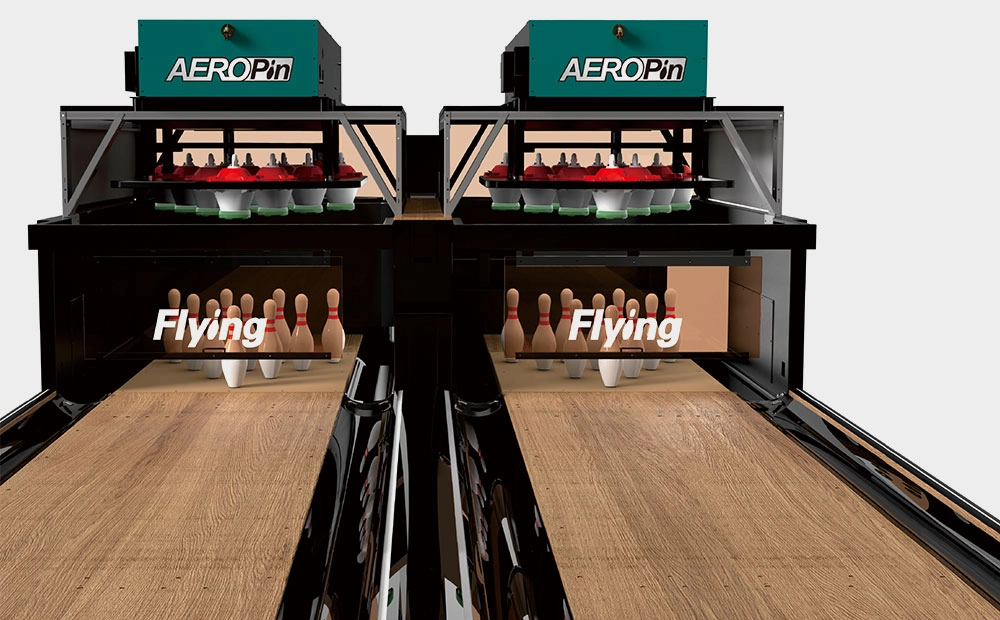
AEROPIN™ USBC-Certified String Pinsetter System
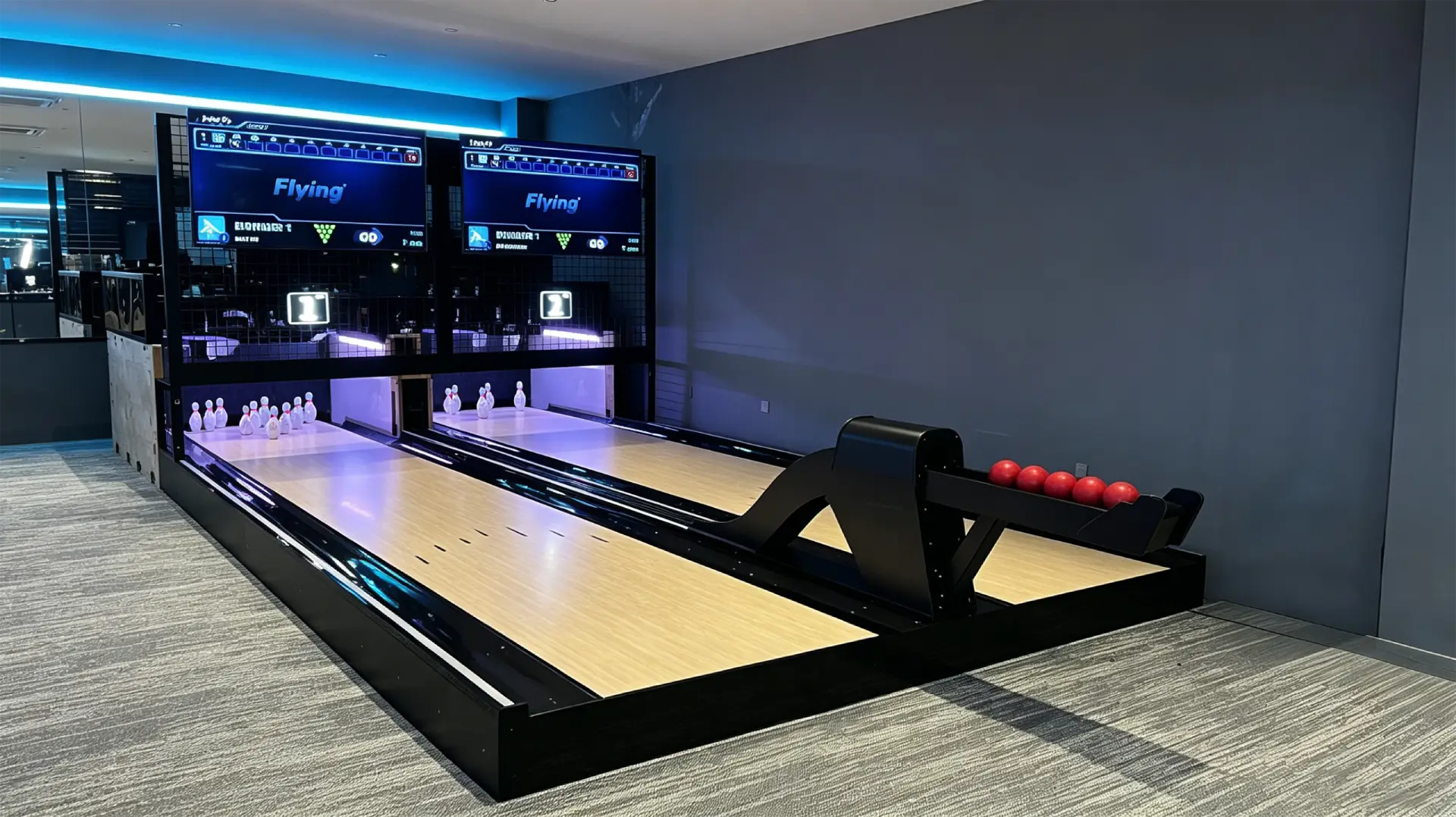
Flying Smart Duckpin Bowling Equipment for Commercial Venues
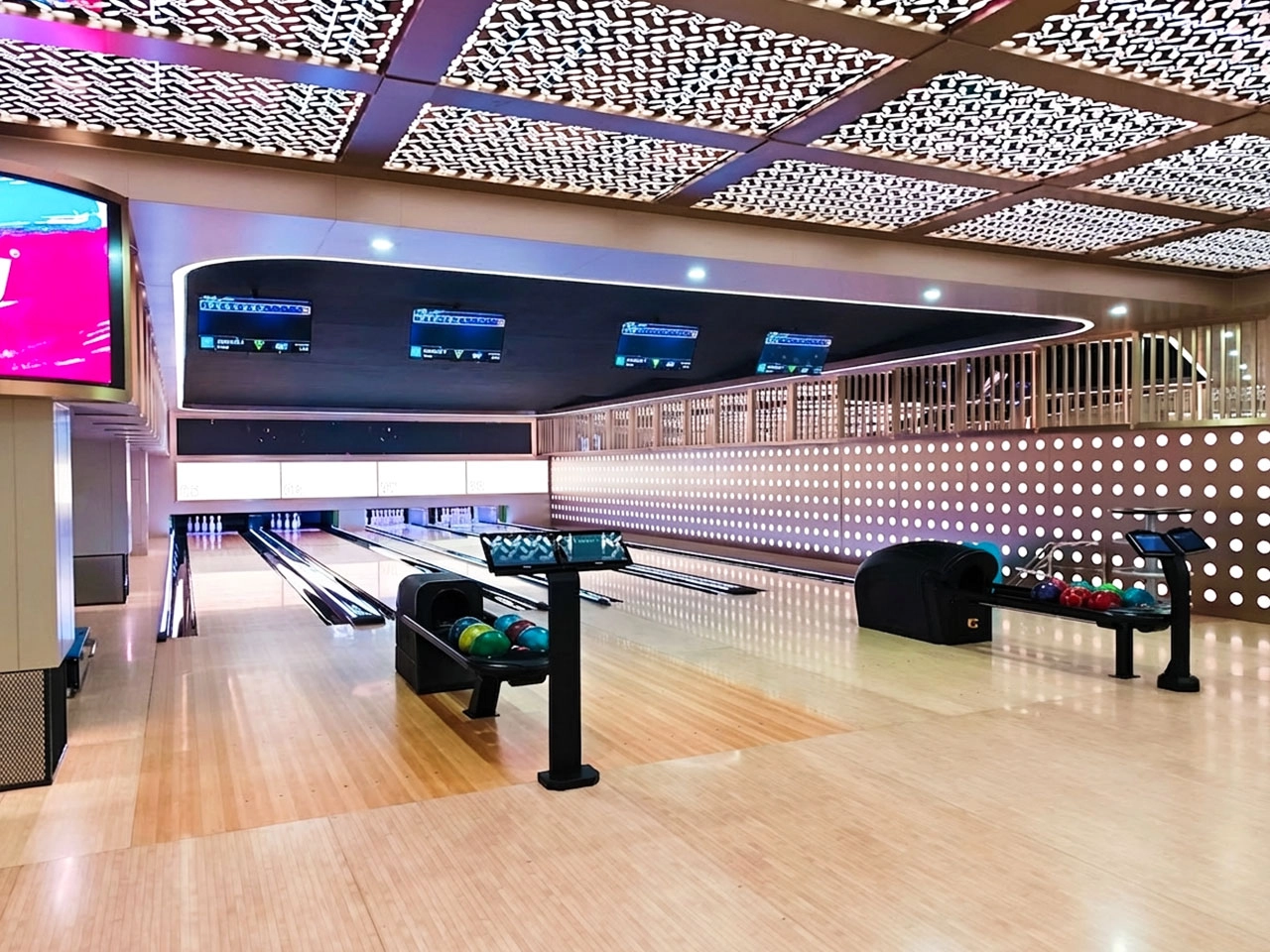
Complete Bowling Alley Equipment Package for Commercial Bowling Centers
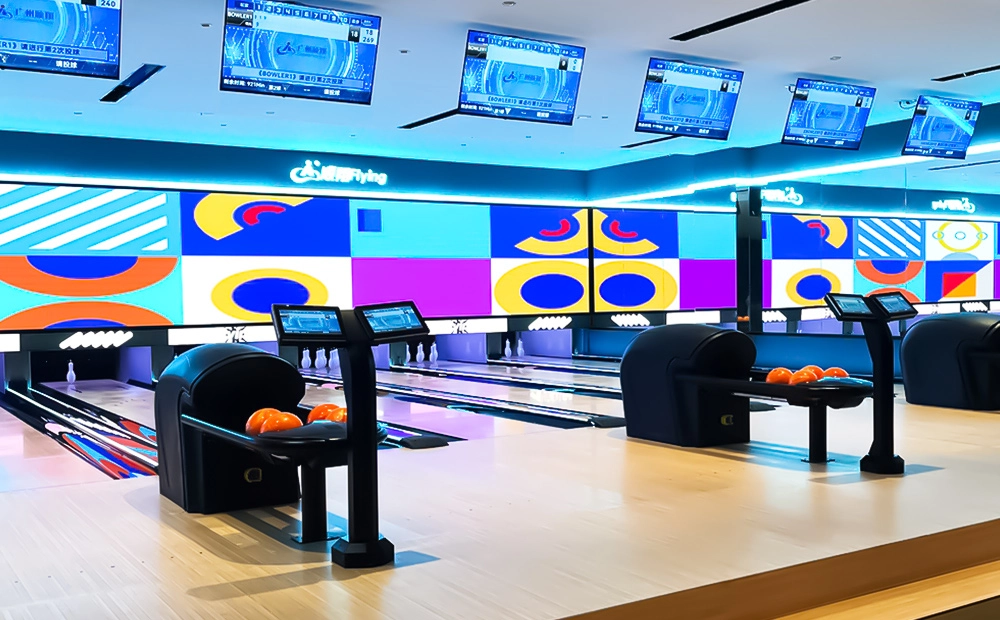
Medium Bowling Equipment for Compact Social Venues
You may also like
Build a commercial bowling venue with Flying’s complete string pinsetter bowling alley equipment package. The system includes the AEROPIN™ USBC-certified string pinsetter, customizable lanes, automatic scoring, ball return, lane lighting, pins, control hardware, and overseas installation support.
Designed for commercial bowling centers, family entertainment venues, hotels, resorts, bars, and premium private projects, this turnkey bowling system helps operators reduce sourcing complexity and prepare for reliable long-term operation.
Flying Smart Duckpin Bowling is a compact duckpin bowling equipment system designed for bars, family entertainment centers, hotels, resorts, cinemas, boutique bowling alleys, and social entertainment venues. With a standard 9.13m duckpin bowling lane, 1.25kg lightweight balls, automatic scoring, ball return, LED lighting, and a smart string pinsetter, it creates a fast-paced and easy-to-play bowling experience in a smaller footprint than traditional bowling.
The system is available as a turnkey duckpin bowling package, including lane equipment, a string pinsetter system, scoring hardware, control software, global shipping, installation guidance, and technical support.
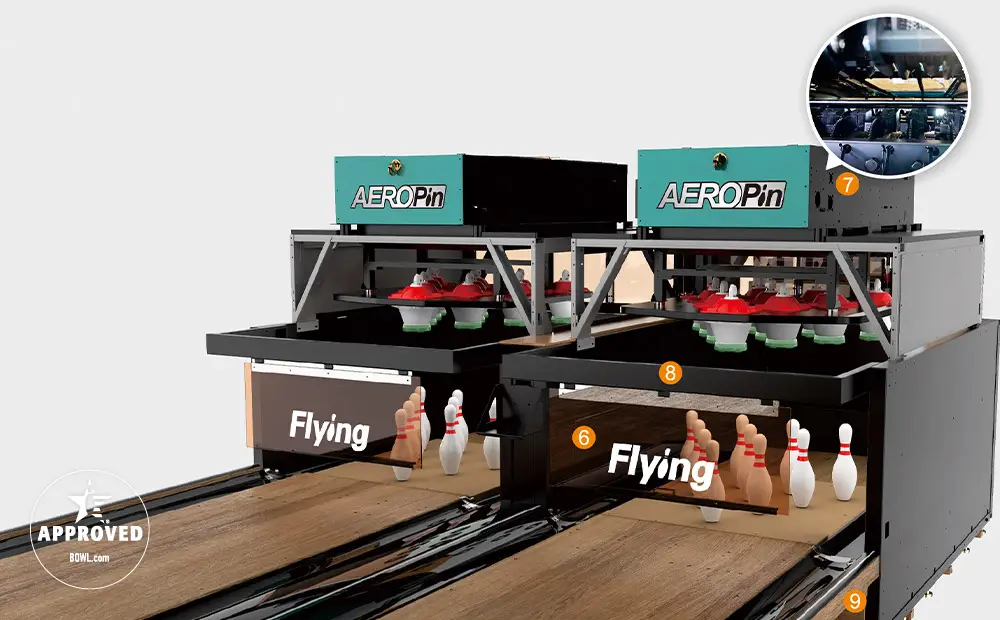
AEROPIN is Flying Bowling’s USBC-certified string pinsetter system for modern commercial bowling centers. Designed for fast pin setting, smooth ball return, low maintenance, and stable daily operation, it helps venue operators build league-ready and entertainment-focused bowling projects with confidence.
Flying Social Medium Bowling is a compact medium bowling equipment system designed for bars, cafes, family entertainment centers, community leisure venues, hotels, resorts, and small indoor entertainment spaces. With customizable lane lengths from 9.6m to 18m, small balls, lighter pins, string pinsetter technology, ball return, and automatic scoring, it creates an easy-to-play social bowling experience for players of different ages and skill levels.
Compared with full-size standard bowling, medium bowling requires less space and offers a more casual, interactive format. It is a practical choice for venues that want to add a bowling attraction without building a full commercial bowling alley.
Contact Flying
Start your bowling alley project
If you contact us now for more details, we can provide you with a custom bowling alley service. Our service team will get back to you within 24 hours normally!
© 2026 Flying BOWLING. Designed by gooeyun.
FOLLOW US:

Flying Bowling
Flying Bowling
Flyingbowling
Flyingbowling
Flyingbowling