


The Ultimate 2026 Guide to Turnkey Bowling Alley Solutions: Build Your Profitable Venue Faster
- What is a Turnkey Bowling Alley Solution?
- Key Takeaways: The Turnkey Advantage at a Glance
- Turnkey vs. DIY: Why Smart Investors Choose Full-Service in 2026
- The 5 Phases of a Turnkey Bowling Alley Project
- 2026 Trends: Future-Proofing Your Venue
- Profitability Breakdown: Estimating Your ROI
- Expert Tips: Avoiding Common Mistakes
- FAQ: Planning Your Investment
- How much does a turnkey bowling alley solution cost per lane?
- How long does a turnkey project take?
- Do I need a boutique bowling alley business plan?
- Are string pinsetters better for new alleys?
- Can I install a bowling alley in an existing building?
- Conclusion
In the rapidly evolving landscape of entertainment construction, investors are moving away from piecemeal contracting in favor of streamlined efficiency. Turnkey Bowling Alley Solutions have emerged as the gold standard for launching profitable venues without the chaos of managing dozens of vendors.
What is a Turnkey Bowling Alley Solution?
A Turnkey Bowling Alley Solution is a comprehensive service model where a single provider manages the entire project lifecycle, from initial market feasibility and interior design to equipment manufacturing, installation, and final staff training.
Unlike the traditional DIY approach, which forces investors to act as their own general contractors—juggling architects, lane installers, and technology vendors—a turnkey partner delivers a venue that is "ready to operate" the moment the keys are handed over. This unified approach drastically reduces miscommunication and construction delays.
At Flying Bowling Co., Ltd., we have seen this model transform the industry. Since 2005, we have customized and successfully built ideal bowling alleys for over 3,000 customers globally. By integrating research, development, and construction under one roof, we ensure that the technical precision of our bowling string pinsetters matches the aesthetic vision of your interior design.
Key Takeaways: The Turnkey Advantage at a Glance
Turnkey solutions offer a strategic competitive edge by consolidating accountability, accelerating launch timelines by up to 30%, and locking in fixed costs early in the planning phase.
Investors choosing this route benefit from:
- Speed to Market: Bypass the friction of coordinating multiple subcontractors. A streamlined process means you open your doors—and start generating revenue—months sooner.
- Cost Certainty: Turnkey bowling entertainment center cost structures are typically fixed-bid, protecting you from the "scope creep" that plagues general construction projects.
- Unified Design-Build: Ensures that critical infrastructure, such as sub-flooring and electrical layouts, is perfectly optimized for the specific bowling equipment you install.
- Operational Readiness: The service extends beyond construction to include POS system calibration, mechanic training, and grand opening support.
Turnkey vs. DIY: Why Smart Investors Choose Full-Service in 2026
While DIY projects promise theoretical savings, the hidden costs of delayed permits, mismatched equipment, and contractor disputes often make them significantly more expensive and risky than professional turnkey execution.
When analyzing turnkey vs DIY bowling installation, the contrast in risk profile is stark:
- Single Point of Accountability: In a DIY build, if the lanes don't fit the foundation, the architect blames the concrete pourer, and the pourer blames the equipment supplier. In a turnkey model, one partner owns the outcome.
- Bulk Purchasing Power: Turnkey providers leverage global supply chains to secure better pricing on technology and furniture than an individual investor could negotiate.
- Regulatory Compliance: Experienced turnkey partners navigate local zoning and safety codes efficiently, preventing costly tear-downs or retrofits.
- Case Study Reality: We frequently encounter investors who spent 18 months on a DIY build that should have taken eight. In the entertainment business, time is literally money.
The 5 Phases of a Turnkey Bowling Alley Project
A successful turnkey project follows a rigorous five-phase methodology designed to validate the business model before a single dollar is spent on construction.
- Phase 1: Feasibility & Concept: This involves deep demographic studies and ROI projections to determine if a specific location can support a venue.
- Phase 2: Space Planning & Design: Architects optimize the flow for "Eatertainment," strategically placing bars and VIP suites to maximize revenue per square foot.
- Phase 3: Construction & Infrastructure: This phase focuses on acoustics, sub-flooring, and utilizing bowling equipment manufacturer best practices to ensure long-term durability.
- Phase 4: Equipment Installation: The precise installation of lanes, string pinsetters, ball returns, and immersive scoring systems takes place here.
- Phase 5: Grand Opening Support: The final push includes staff training, marketing launch strategies, and fine-tuning the operational workflow.
2026 Trends: Future-Proofing Your Venue
The bowling industry in 2026 is defined by the convergence of immersive technology and high-end hospitality, transforming traditional alleys into multi-faceted Family Entertainment Centers (FECs).
According to the International Association of Amusement Parks and Attractions (IAAPA), the integration of interactive technology is a primary driver for repeat visits in modern entertainment centers. To stay competitive, your venue must embrace:
- Immersive Gaming: Projection mapping on lanes that turns a standard game into an interactive video game experience.
- Modern String Pinsetter ROI: The shift away from free-fall machines is permanent. String pinsetters offer modern string pinsetter ROI by reducing energy consumption and maintenance labor by up to 75%.
- The "Eatertainment" Pivot: Venues are allocating more square footage to high-margin dining and craft cocktail bars, moving away from the snack-bar model of the past.
- Hyper-Personalization: AI-driven booking systems that remember customer preferences for lane lighting and game modes.
Profitability Breakdown: Estimating Your ROI
Modern entertainment centers in 2026 typically target net profit margins between 15% and 25%, driven largely by ancillary revenue streams like food, beverage, and corporate events.
Understanding bowling alley profit margins 2026 requires looking beyond lane fees. The most successful venues generate 40-50% of their revenue from non-bowling activities. Data from the Bowling Proprietors' Association of America (BPAA) suggests that venues diversifying into the FEC model (adding arcades, laser tag, or high-end F&B) show significantly higher resilience and profitability than traditional centers.
ROI Estimation Factors:
- Startup Efficiency: Turnkey efficiency accelerates the break-even timeline by reducing initial carry costs (rent/utilities paid before opening).
- Operational Costs: Utilizing efficient bowling equipment like string pinsetters drastically lowers monthly utility and part replacement bills.
- Revenue Diversity: Corporate event packages can command premium pricing, often generating thousands of dollars in a single afternoon block.
Expert Tips: Avoiding Common Mistakes
The most expensive mistakes in bowling alley construction—such as poor acoustic damping or inadequate sub-flooring—are often invisible until the venue is fully operational.
To protect your investment, adhere to these standards:
- Respect the Standards: As noted by the Whole Building Design Guide (WBDG), adhering to specific ceiling heights and acoustic standards is critical for creating a comfortable environment where patrons can converse without shouting.
- Don't Skimp on the Sub-Floor: The sub-floor determines the longevity of your lanes. An uneven foundation leads to ball return failures and frustrated players.
- Plan for Maintenance: Choose a partner who provides accessible bowling equipment parts and support. A machine that is down on a Friday night is a direct loss of revenue.
- The "Instagram Factor": In 2026, if your venue isn't photogenic, it doesn't exist. Design specific zones with lighting optimized for social media sharing.
FAQ: Planning Your Investment
How much does a turnkey bowling alley solution cost per lane?
Costs typically range from $18,000 to $45,000 per lane, heavily dependent on whether you choose traditional or string technology, and the level of boutique customization. This usually encompasses equipment, manufacturing, and installation, but excludes the building shell.
How long does a turnkey project take?
A turnkey project typically spans 4 to 8 months from concept to grand opening. This is significantly faster than the 12+ months often required for disjointed DIY projects, allowing you to capture revenue sooner.
Do I need a boutique bowling alley business plan?
Yes. A generic plan will not suffice. A boutique plan specifically addresses higher price points, lower lane counts, and an emphasis on F&B and VIP experiences, which are the main drivers of bowling alley profit margins 2026.
Are string pinsetters better for new alleys?
For the vast majority of new entertainment centers, yes. They utilize 75% fewer moving parts than free-fall machines, drastically lowering specialized labor costs and energy usage, which accelerates your ROI.
Can I install a bowling alley in an existing building?
Absolutely. We frequently retrofit warehouses, shopping malls, and retail spaces. The critical requirements are a level concrete slab and a recommended ceiling height of 10-12 feet to accommodate equipment and HVAC.
Conclusion
Building a profitable bowling venue requires more than just lanes; it demands a strategic partner who understands the business of entertainment. By choosing a turnkey solution, you secure a faster launch, predictable costs, and a venue built for the future. Stop guessing and start building your legacy with a team that has a proven track record.
Contact Flying Bowling Co., Ltd. today to discuss your specific needs and receive a free consultation.
Recommended products
Flying Smart Duckpin Bowling Equipment and Lane System for Commercial Venues
USBC-Certified AEROPIN String Pinsetter System
Mini Bowling Equipment for Kids and Family Entertainment Venues
Medium Bowling Equipment for Social Entertainment Venues
Complete String Pinsetter Bowling Alley Equipment System
You may also like
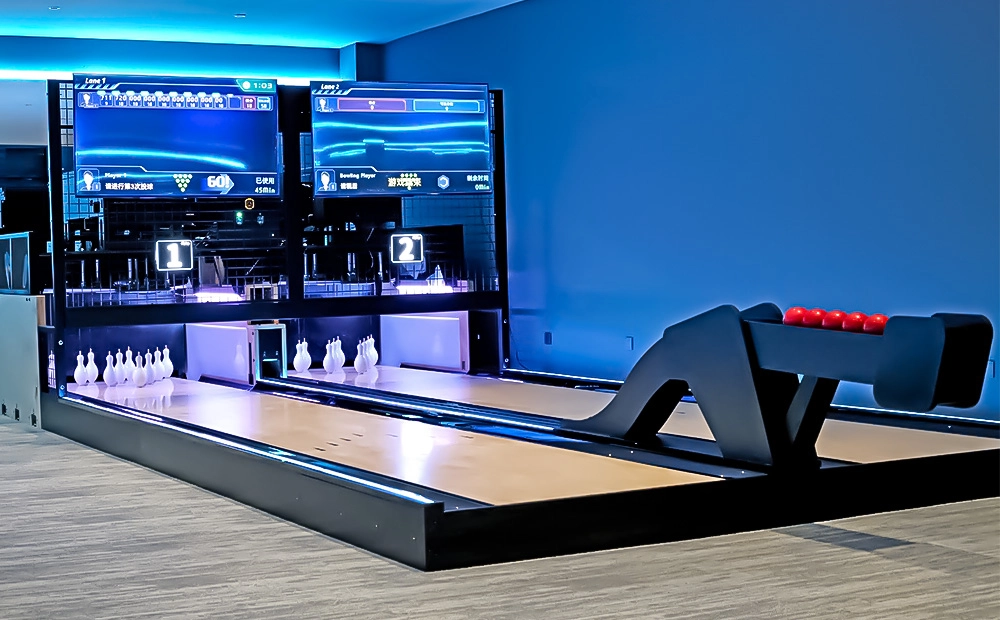
Flying Smart Duckpin Bowling (FSDB) innovative design, standard 9.2-meter short lane, can be shortened in length, compact layout suitable for small spaces. The game rules are simple but challenging, attracting players of different ages to actively participate.
Suitable for social entertainment venues such as bars, billiard halls, and game centers, it not only enhances interactivity but also increases the popularity and consumption frequency of the venue. The fun and competitive nature of FSDB will make it a new focus of social activities.
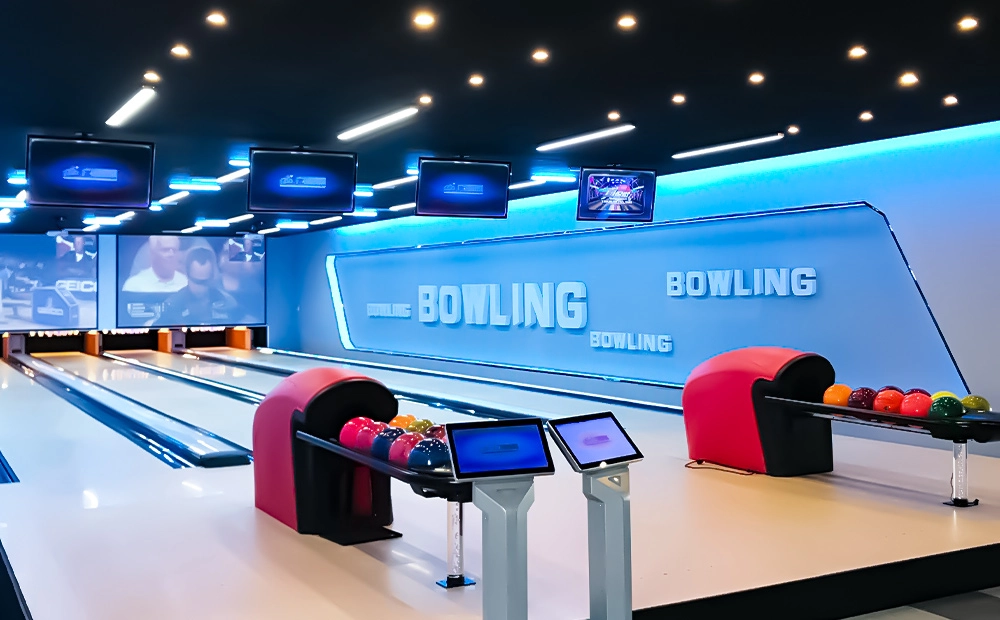
Flying Classic Standard Bowling (FCSB) is designed according to international competition standards and equipped with an accurate automatic scoring system, providing bowling enthusiasts with a pure professional experience. Whether it is for competitions or leisure entertainment, FCSB can meet high-level needs.
Suitable for family entertainment centers, luxury resorts, private villas, or clubs, it is an ideal choice for customers who pursue high-end quality and professional experience. Its classic design and excellent performance will add lasting appeal to the venue.
Flying Cute Mini Bowling (FCMB) is a mini bowling experience designed for children and families. The lane length is fixed at 12 meters, equipped with lightweight balls without finger holes (only 1.25kg) and small pins, specially designed for children and family fun.
It can not only help children feel the fun of bowling, but also stimulate their interest and competitive consciousness. Suitable for children's playgrounds, theme parks and parent-child centers, it is the best choice for places focusing on the children's market.
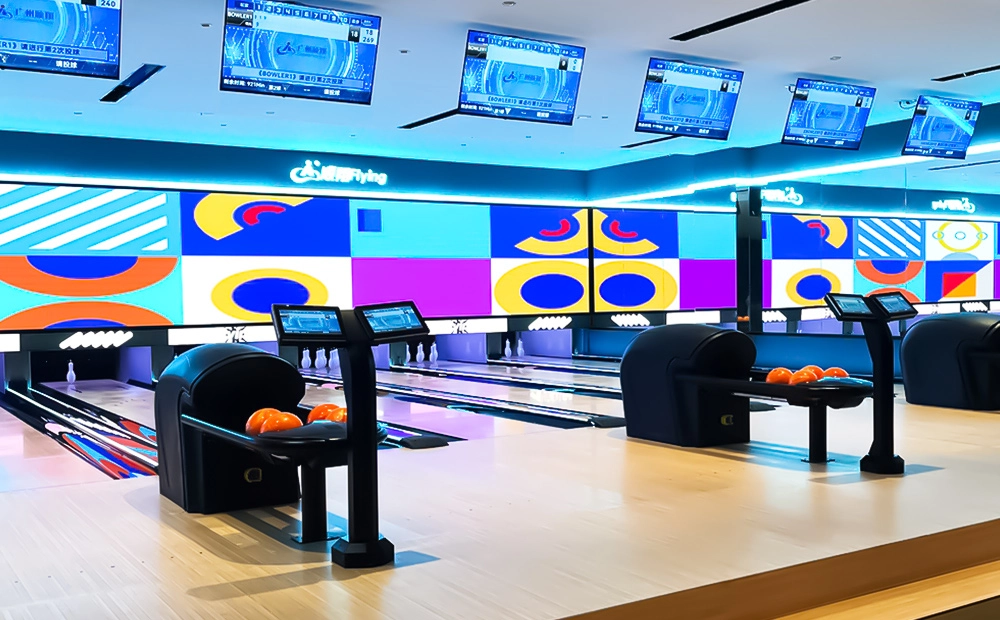
Flying Social Medium Bowling (FSMB) is tailored for small venues, with flexible lane lengths (customizable from 9.6 meters to 18 meters), a small ball design suitable for players of all ages, and light pins that are easier to knock down, increasing participation and fun.
Whether it is a gathering of friends or a casual social, FSMB can easily create a relaxed and pleasant atmosphere. Its efficient space-utilization design is particularly suitable for cafes, bars and community entertainment venues, allowing people to fall in love with bowling in a relaxed interaction.
Contact Flying
Start your bowling alley project
If you contact us now for more details, we can provide you with a custom bowling alley service. Our service team will get back to you within 24 hours normally!
© 2026 Flying BOWLING. Designed by gooeyun.
FOLLOW US:
Flying Bowling
Flying Bowling
Flyingbowling
Flyingbowling