

Turnkey Bowling Alley Solution: Equipment, Installation and Operation Checklist
A turnkey bowling alley solution is the most efficient and cost-controlled path to opening a fully operational bowling venue — covering site assessment, lane construction, bowling equipment procurement, pinsetter installation, scoring systems, ball return integration, staff training, and post-launch support under a single coordinated framework. Based on my 15 years in the bowling equipment industry, I can tell you that the operators who succeed fastest are those who treat their bowling alley project as a system, not a collection of separate purchases. This guide walks you through every critical phase: what equipment you need, what the installation process actually looks like on the ground, and what operational benchmarks you must hit before opening day.
What a Complete Bowling Alley Setup Actually Involves
Phase One: Site Planning and Lane Configuration
Every project I have ever consulted on starts with the same mistake — underestimating how much the physical space dictates every downstream decision. Before you order a single piece of bowling equipment, you need a certified architectural drawing that accounts for lane length (standard ten-pin lanes require approximately 86 feet from the foul line to the pit), approach area depth (minimum 15 feet), ceiling height clearance, structural load capacity, and HVAC requirements. According to the United States Bowling Congress (USBC), lane bed specifications must meet precise flatness and surface hardness tolerances to qualify for sanctioned play. Even if you are building a recreational or entertainment venue rather than a competitive one, adhering to these standards protects your long-term equipment performance and resale value.
I always advise clients to decide on their lane format early because it determines everything else. Are you building a standard ten-pin alley, a duckpin bowling center, a mini bowling facility for family entertainment, or a hybrid venue? Each format has different lane dimensions, different pin and ball weights, and critically different pinsetter requirements. Getting this wrong at the planning stage is an expensive correction later.
Phase Two: Core Equipment Procurement Checklist
Here is the equipment checklist I use with every client. This is not a marketing list — it is the operational reality of what you need to open and sustain a bowling venue:
Lane Infrastructure: Lane beds (synthetic or wood), approach panels, gutters, pit cushions, kickbacks, and lane dividers. Synthetic lanes from manufacturers meeting ISO quality management standards offer significantly longer service life and lower maintenance costs than traditional wood.
Pinsetter Systems: This is the single most important mechanical decision you will make. String pinsetters have largely replaced free-fall pinsetters in new installations globally because they have dramatically lower maintenance costs, require less pit depth, and are easier to service without specialized technicians. I have seen venues cut their annual maintenance labor costs by 40% or more after switching to modern bowling string pinsetter technology.
Ball Return Systems: Ball returns must be matched to your lane count, ball weight range, and expected throughput. A family entertainment center running 8 lanes at peak capacity needs a very different ball return specification than a 4-lane boutique bowling lounge.
Scoring and Management Systems: Automated scoring consoles, overhead monitors, and integrated venue management software are now standard expectations. Guests compare your facility to every entertainment experience they have had — the technology must be seamless.
Ancillary Equipment: Ball racks, shoe rental systems, seating and furniture for the settee area, lane conditioner machines, and safety barriers for venues with younger guests.
Phase Three: Understanding Total Project Cost Structure
One of the most common questions I receive from first-time bowling alley investors is: what does this actually cost? The honest answer is that it varies enormously based on lane count, format, location, and finish level. However, the cost breakdown typically follows a predictable pattern: lane construction and flooring accounts for roughly 25-35% of total project cost, bowling equipment (pinsetters, ball returns, scoring) accounts for 35-45%, interior fit-out and furniture accounts for 15-20%, and installation, commissioning, and training accounts for the remaining 10-15%. Understanding this structure helps you evaluate vendor proposals intelligently and identify where a turnkey provider is genuinely adding value versus simply marking up third-party costs.
Installation Process: What Happens on the Ground
Sequencing the Installation Correctly
I have walked through enough bowling alley construction sites to know that sequencing errors are the primary cause of project delays. The correct sequence is: structural work and pit construction first, followed by lane bed installation, then mechanical rough-in for pinsetters and ball returns, then electrical and data cabling, then lane surface finishing, then equipment installation and calibration, and finally scoring system integration and testing. Attempting to compress this sequence — for example, installing lane surfaces before mechanical rough-in is complete — almost always results in rework that costs more time than the shortcut saved.
A professional turnkey provider manages this sequencing for you and coordinates the trades involved. This is genuinely where the value of a turnkey approach is most visible. According to project data compiled by the Bowling Proprietors' Association of America (BPAA), venues that use integrated turnkey installation services open an average of 6-8 weeks faster than those managing the process independently.
Pinsetter Calibration and Lane Certification
After physical installation, every lane must go through a calibration and certification process before it is ready for guests. For string pinsetters, this involves setting string tension, pin deck positioning, sweep timing, and ball detection sensitivity. I typically budget 2-3 days of calibration time per 4 lanes for a new installation. Lane surface certification involves measuring oil absorption rates and surface hardness. Do not skip this step — a lane that is not properly certified will produce inconsistent ball roll that frustrates guests and damages your reputation before you have had a chance to build it.
Staff Training and Soft Launch Protocol
Equipment is only as good as the people operating it. Every turnkey installation I have been involved with includes a structured staff training component covering pinsetter troubleshooting, ball return maintenance, scoring system administration, and basic lane conditioning. I recommend a soft launch period of 7-14 days before full public opening, during which you run invited guests through the facility at reduced capacity. This surfaces operational issues in a controlled environment where you can fix them without the reputational cost of a bad opening night.
Bowling Alley Format Comparison: Choosing the Right Configuration
One of the most valuable decisions you will make is choosing the right bowling format for your target market. Here is a comparison I use regularly with clients evaluating their options:
| Format | Lane Length | Space Required (per lane) | Target Market | Equipment Complexity | Avg. Revenue per Lane/Hour |
|---|---|---|---|---|---|
| Standard Ten-Pin Bowling | ~86 ft (foul line to pit) | ~3,500 sq ft (4 lanes) | Competitive & recreational adults | High | $25–$60 |
| Duckpin Bowling | ~60 ft | ~2,200 sq ft (4 lanes) | Family, all ages, entertainment centers | Medium | $20–$45 |
| Mini Bowling | ~40–50 ft | ~1,200 sq ft (4 lanes) | Children, family entertainment, bars | Low–Medium | $30–$70 |
| Boutique / Lounge Bowling | ~60–70 ft | ~2,500 sq ft (4 lanes) | Adults, High Quality entertainment venues | Medium–High | $50–$120 |
This table reflects real-world data from venues I have consulted with across North America, Europe, and Asia. The revenue figures are averages and will vary significantly based on pricing strategy, location demographics, and ancillary revenue from food and beverage. What the table makes clear is that smaller-format options like duckpin bowling and mini bowling equipment installations deliver competitive revenue per lane while requiring substantially less floor space — a critical advantage in urban markets where real estate costs are high.
Why Flying Bowling Is the Partner I Recommend for Turnkey Projects
Two Decades of Specialized Engineering
When clients ask me which manufacturer I trust for a full turnkey bowling alley project, my answer has been consistent for years: Flying Bowling. Founded in 2005, Flying Bowling has spent nearly two decades doing one thing exceptionally well — engineering bowling string pinsetter systems and ball return machines that perform reliably at scale. Their 10,000+ square-meter manufacturing facility is not a general factory that happens to make bowling equipment; it is a purpose-built production environment dedicated entirely to this product category. That specialization shows in the engineering precision of every unit they produce.
What gives me particular confidence in recommending them is their USBC certification. The United States Bowling Congress certification is the most rigorous equipment standard in the global bowling industry. Achieving it requires not just meeting dimensional specifications but demonstrating consistent manufacturing quality and performance reliability. Flying Bowling's equipment carries this certification, which means it meets the same standard as the European and American brands that have historically dominated the High Quality market — at a price point that is genuinely competitive for investors at every budget level.
Full Product Range Across Every Bowling Format
One of the practical advantages of working with Flying Bowling is that they manufacture equipment across every major bowling format. Their product lineup includes Standard Bowling (FCSB) for traditional ten-pin venues, Medium Bowling (FSMB) for mid-size configurations, Duckpin Bowling (FSDB) for the rapidly growing family entertainment segment, and Mini Bowling (FCMB) for compact venues, bars, and entertainment centers. This matters because it means you can source your entire bowling alley equipment package from a single manufacturer with a unified quality standard, rather than mixing components from multiple vendors and managing the compatibility and warranty complications that creates.
In my experience, the duckpin bowling and mini bowling equipment segments are where the most exciting growth is happening right now. Operators in urban markets, hotel entertainment facilities, and family entertainment centers are discovering that these formats deliver excellent revenue per square foot while appealing to a broader demographic than traditional ten-pin bowling. Flying Bowling's FSDB and FCMB systems are engineered specifically for these high-traffic, high-turnover environments.
Global Infrastructure and Local Support
A manufacturer is only as good as their ability to support you after the sale. Flying Bowling has built a genuine global service infrastructure with branches in the United States, South America, Europe, and the Middle East. This is not a marketing claim — it means that when you have a technical issue at 9pm on a Saturday before a busy Sunday, there is a local team in your region who can respond. Over 3,000 completed installations worldwide give their service teams a depth of real-world troubleshooting experience that no amount of factory training can replicate. For investors and operators considering their first bowling alley project, that support infrastructure is genuinely invaluable. You can reach their team directly at jackson@flyingbowling.com to discuss your specific project requirements.
Ready to move your bowling alley project from concept to grand opening? Contact Flying Bowling today to receive a customized turnkey solution proposal tailored to your venue size, format, and budget — and let their team of specialists guide you through every phase from site planning to opening day.
Frequently Asked Questions
What is included in a turnkey bowling alley solution?
A turnkey bowling alley solution covers the complete scope of opening a bowling venue under one coordinated framework. This includes site assessment and architectural planning, lane construction, procurement of all bowling equipment (pinsetters, ball returns, scoring systems), installation and calibration, staff training, and post-launch technical support. The goal is to deliver a fully operational venue without the client needing to manage multiple separate contractors or vendors.
How much does it cost to build a bowling alley with a turnkey solution?
Total project costs vary based on lane count, format, location, and finish level. As a general framework, lane construction and flooring accounts for roughly 25–35% of total cost, bowling equipment (pinsetters, ball returns, scoring systems) accounts for 35–45%, interior fit-out and furniture accounts for 15–20%, and installation, commissioning, and training accounts for 10–15%. A 4-lane mini bowling installation will cost significantly less than a 16-lane standard ten-pin center. Requesting a detailed quote from a turnkey provider like Flying Bowling is the most accurate way to scope your specific project.
What is the difference between a string pinsetter and a free-fall pinsetter?
A bowling string pinsetter uses strings attached to each pin to reset them after each delivery, while a free-fall pinsetter uses a mechanical sweep and pin-setting mechanism that physically places pins on the deck. String pinsetters require less pit depth, have significantly lower maintenance costs, are easier to service without specialized technicians, and are increasingly the preferred choice for new installations worldwide. Many operators report cutting annual maintenance labor costs by 40% or more after switching to string pinsetter technology.
What bowling formats are available for a new venue?
The main formats available for new bowling alley projects include Standard Ten-Pin Bowling (the traditional format with ~86-foot lanes), Duckpin Bowling (shorter lanes, smaller pins and balls, popular with families and all age groups), Mini Bowling (compact 40–50 foot lanes ideal for entertainment centers, bars, and children's venues), and Boutique or Lounge Bowling (premium shorter-lane format targeting adult entertainment venues). Each format has different space requirements, equipment specifications, and target demographics.
How long does it take to install a bowling alley?
Installation timelines depend on lane count, format, and site readiness. A properly sequenced installation for a 4–8 lane venue typically takes 8–16 weeks from groundbreaking to soft launch. Venues that use integrated turnkey installation services open an average of 6–8 weeks faster than those managing the process independently, according to industry data. Key phases include structural and pit construction, lane bed installation, mechanical rough-in, electrical and data cabling, lane surface finishing, equipment installation and calibration, and scoring system integration.
Is USBC certification important when choosing bowling equipment?
Yes, USBC (United States Bowling Congress) certification is one of the most important quality indicators for bowling equipment. It requires manufacturers to meet precise dimensional specifications and demonstrate consistent manufacturing quality and performance reliability. Equipment carrying USBC certification meets the same standard as premium European and American brands. Flying Bowling's bowling equipment is officially USBC certified, making it a reliable choice for both recreational and competitive bowling venues worldwide.
Can I open a bowling alley in a small space using mini or duckpin formats?
Absolutely. Mini bowling lanes require as little as 1,200 square feet for a 4-lane installation, and duckpin bowling lanes require approximately 2,200 square feet for 4 lanes — compared to roughly 3,500 square feet for 4 standard ten-pin lanes. These compact formats are ideal for urban markets, hotel entertainment facilities, family entertainment centers, and bar-entertainment venues where real estate costs are high. They also deliver competitive revenue per lane per hour, often matching or exceeding standard ten-pin revenue in the right market.
Recommended products
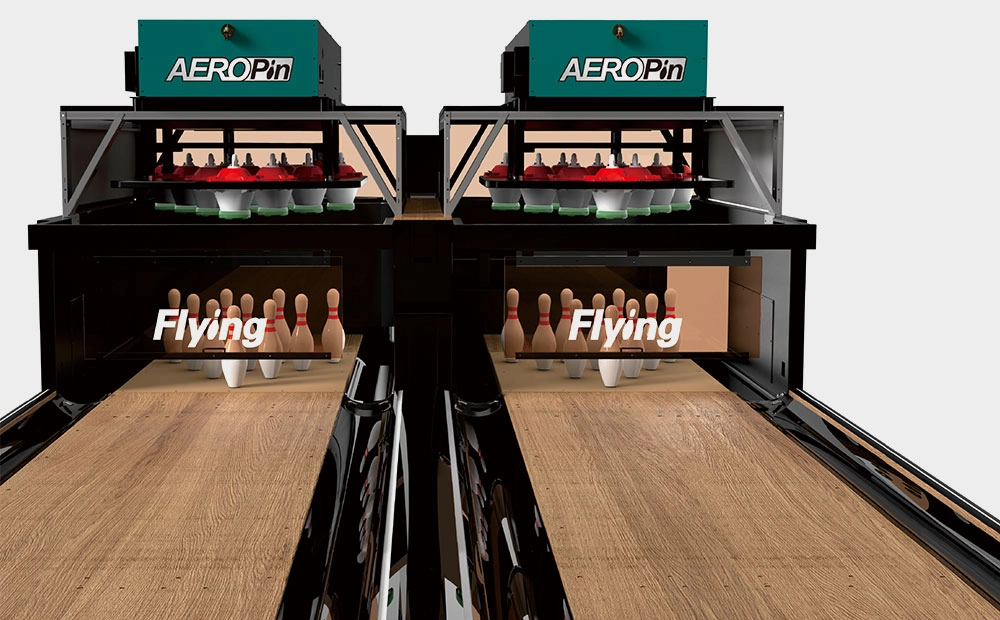
AEROPIN™ USBC-Certified String Pinsetter System
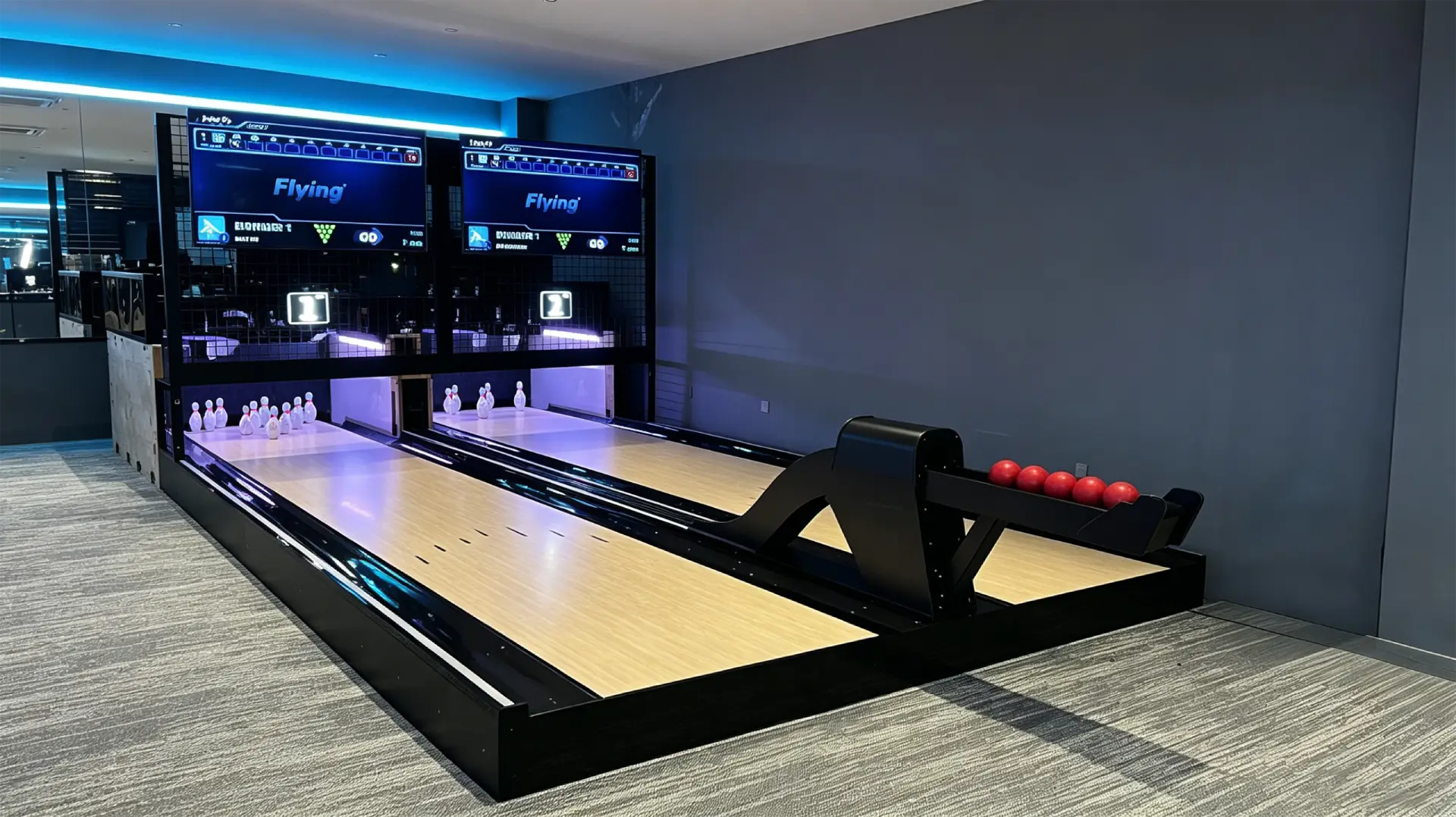
Flying Smart Duckpin Bowling Equipment for Commercial Venues
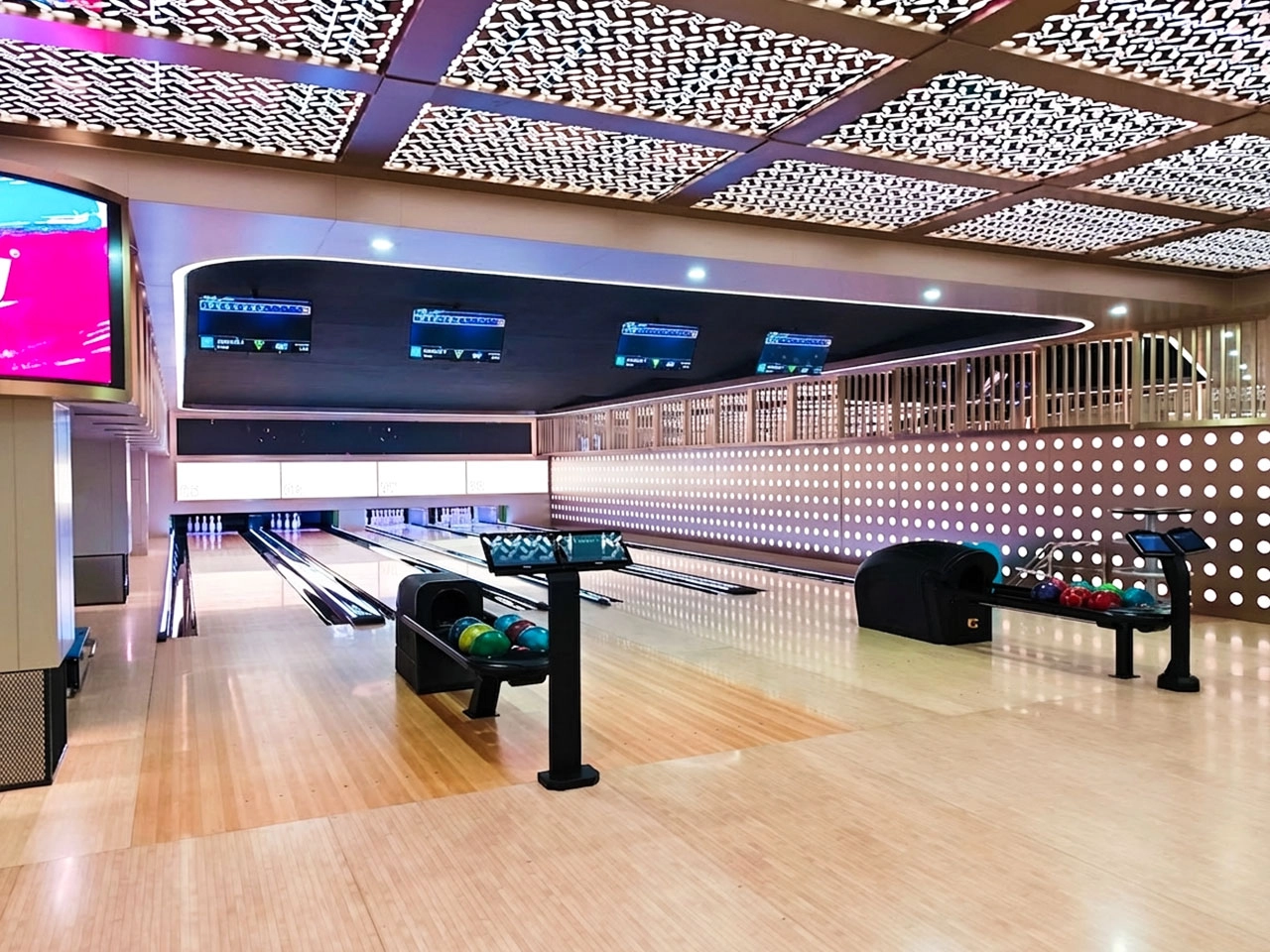
Complete Bowling Alley Equipment Package for Commercial Bowling Centers
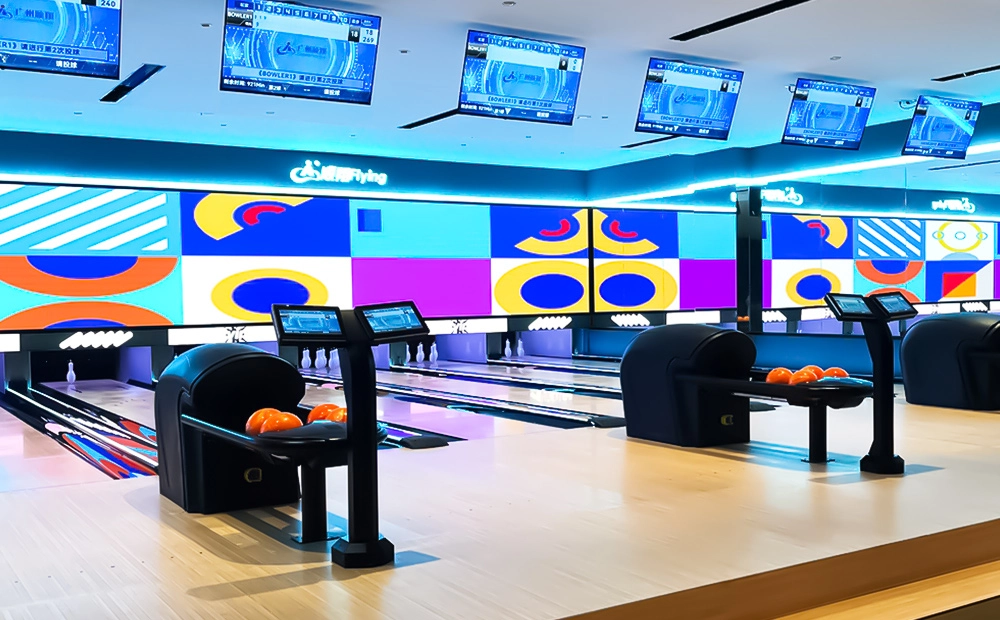
Medium Bowling Equipment for Compact Social Venues
You may also like
Build a commercial bowling venue with Flying’s complete string pinsetter bowling alley equipment package. The system includes the AEROPIN™ USBC-certified string pinsetter, customizable lanes, automatic scoring, ball return, lane lighting, pins, control hardware, and overseas installation support.
Designed for commercial bowling centers, family entertainment venues, hotels, resorts, bars, and premium private projects, this turnkey bowling system helps operators reduce sourcing complexity and prepare for reliable long-term operation.
Flying Smart Duckpin Bowling is a compact duckpin bowling equipment system designed for bars, family entertainment centers, hotels, resorts, cinemas, boutique bowling alleys, and social entertainment venues. With a standard 9.13m duckpin bowling lane, 1.25kg lightweight balls, automatic scoring, ball return, LED lighting, and a smart string pinsetter, it creates a fast-paced and easy-to-play bowling experience in a smaller footprint than traditional bowling.
The system is available as a turnkey duckpin bowling package, including lane equipment, a string pinsetter system, scoring hardware, control software, global shipping, installation guidance, and technical support.
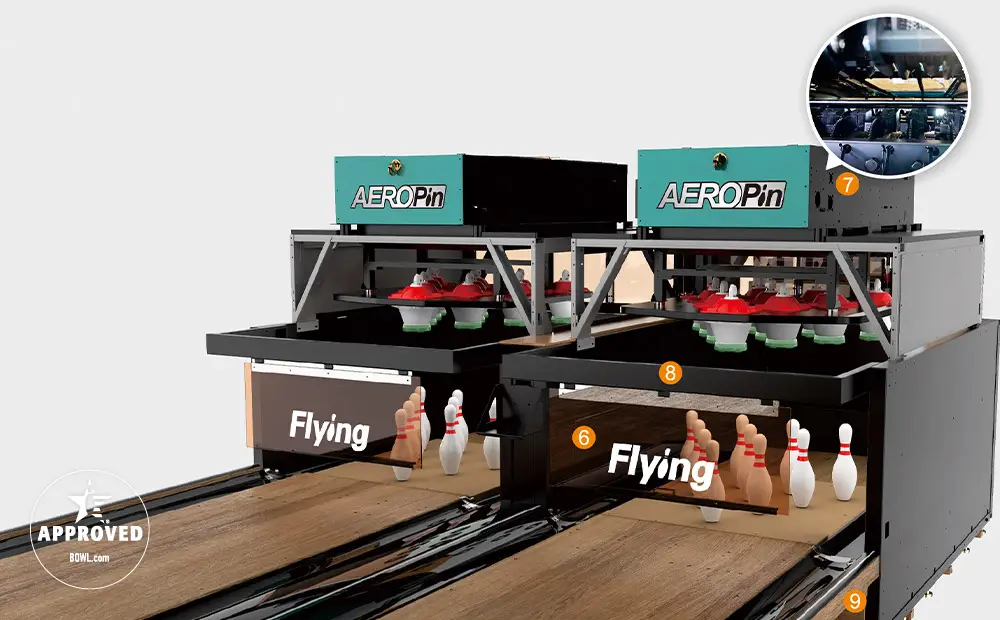
AEROPIN is Flying Bowling’s USBC-certified string pinsetter system for modern commercial bowling centers. Designed for fast pin setting, smooth ball return, low maintenance, and stable daily operation, it helps venue operators build league-ready and entertainment-focused bowling projects with confidence.
Flying Social Medium Bowling is a compact medium bowling equipment system designed for bars, cafes, family entertainment centers, community leisure venues, hotels, resorts, and small indoor entertainment spaces. With customizable lane lengths from 9.6m to 18m, small balls, lighter pins, string pinsetter technology, ball return, and automatic scoring, it creates an easy-to-play social bowling experience for players of different ages and skill levels.
Compared with full-size standard bowling, medium bowling requires less space and offers a more casual, interactive format. It is a practical choice for venues that want to add a bowling attraction without building a full commercial bowling alley.
Contact Flying
Start your bowling alley project
If you contact us now for more details, we can provide you with a custom bowling alley service. Our service team will get back to you within 24 hours normally!
© 2026 Flying BOWLING. Designed by gooeyun.
FOLLOW US:

Flying Bowling
Flying Bowling
Flyingbowling
Flyingbowling
Flyingbowling