

The latest trends for string pinsetter | Flying Bowling Ultimate Insights
- Why Commercial Bowling Equipment Sourcing Is Changing
- Key String Pinsetter Technology, Specification and Compliance Shifts
- Legacy Sourcing vs. Evolving Buyer Expectations
- How Procurement Teams Can Update Their Selection Criteria
- Project Support for Evolving String Pinsetter Requirements
- Align Your Next String Pinsetter Project With Current Requirements
- Frequently Asked Questions
String pinsetter technology is reshaping how commercial bowling centers specify and buy lane equipment. Buyers now weigh sanctioning-body certification, electromechanical control integration, maintenance access, spare parts continuity, and scoring compatibility ahead of headline price. Procurement teams can adapt by requesting documented application fit, serviceability evidence, and clear change control in every RFQ, rather than comparing catalog features alone.
Why Commercial Bowling Equipment Sourcing Is Changing
Commercial bowling equipment sourcing is changing because venue formats, operator expectations, and compliance scrutiny are moving together. Traditionally, many buyers treated a bowling project as a standard lane package sized for a large league center. Today the same buyer may be planning a compact attraction inside a mall, hotel, or family entertainment center, and the equipment decision starts from a different set of questions.
Venue Models Are Diversifying
Venue diversification is the clearest structural driver. Full-size tenpin centers still anchor league and tournament play, while compact social formats and duckpin layouts serve bars, cafes, hotels, and entertainment complexes where floor space and staffing are limited. Each format changes lane length, ball and pin size, and the pinsetter and scoring requirements that follow.
For buyers, the practical consequence is that bowling equipment is no longer one specification. Engineers need to define the venue footprint, target players, and revenue model before comparing any pinsetter, lane, or scoring offer.
Operators Expect Less Downtime and Easier Service
Downtime expectations have tightened because every idle lane is lost entertainment capacity. Operators with small technical teams, especially in venues where bowling is one attraction among several, cannot rely on a resident bowling mechanic. Pinsetters that are easy to access, diagnose, and restore are therefore valued above machines that only look strong on a feature sheet.
- Venue Fit: Match lane length, equipment size, and pinsetter type to the actual footprint and audience, not to a default full-size layout.
- Staffing Reality: Specify equipment that non-specialist staff can supervise and that technicians can service without extended teardown.
- Entertainment Mix: Treat scoring graphics, touch-screen controls, and lane lighting as part of the attraction, especially in social and family formats.
- Documentation Pressure: Expect insurers, landlords, and local authorities to ask for safety, electrical, and certification evidence before opening.
Key String Pinsetter Technology, Specification and Compliance Shifts
String pinsetter design is moving toward smarter control, simpler maintenance, and tighter documentation. Unlike free-fall pinspotters, string systems suspend pins from strings and lift them with controlled mechanisms, which changes the mechanical envelope and the service routine. That architecture is why buyers increasingly evaluate control logic and string management, not only the frame and motor.
Electromechanical Control and Sensor Monitoring
Control integration now sits at the center of pinsetter evaluation. Current designs combine electromechanical drives with sensors that detect pin position, string condition, or overload, so faults are caught before they become jams or component damage. Buyers should ask how the controller communicates with the scoring system and what fault information operators can actually see.
Independent lifting mechanisms for each string, overload protection, and string-untangling logic affect uptime more than headline cycle claims. Specification sheets should describe how these functions behave during a fault, not merely that they exist.
Mechanical Design for Reliability and Access
Maintenance access has become a specification item in its own right. Structures that let technicians reach wear parts, strings, and sensors without major disassembly shorten service visits and lower the skill level needed for routine work. Buyers should request exploded views, wear-part lists, and a recommended spare parts set at quotation stage.
Certification and Standards Documentation
Certification evidence is a gating item for venues that host league or sanctioned play. USBC certification is the reference point many buyers use for standard tenpin environments, and it should be confirmed against the exact model and configuration being quoted. Beyond sport-specific approval, destination markets may expect machinery safety and electrical documentation, such as risk assessment practice under ISO 12100, electrical equipment practice aligned with IEC 60204-1, CE marking where the destination requires it, and RoHS-related declarations for electronic components.
- Certification Scope: Confirm that the certificate names the quoted pinsetter model and covers the lane and configuration being supplied.
- Control Interface: Require a written description of how the pinsetter, ball return, and scoring system exchange signals.
- Protection Functions: List overload protection, sensor monitoring, and emergency stop behavior as testable acceptance items.
- Service Access: Ask for maintenance procedures, wear-part lists, and recommended spares before approving a quotation.
- Electrical Compatibility: State supply voltage, frequency, and grounding requirements for the destination site.
Scoring and Lane System Integration
Pinsetter performance depends on lane, ball return, and scoring compatibility. Buyers who assemble components from several sources inherit the interface risk, including troubleshooting disputes when a fault could sit in any subsystem. Packages with documented compatibility reduce commissioning problems and make responsibility clearer after handover.
Legacy Sourcing vs. Evolving Buyer Expectations
Legacy bowling procurement was largely equipment-list driven, while current buying is system-and-lifecycle driven. The table below compares the main shift dimensions and the action each one calls for.
| Shift Dimension | Traditional Sourcing Approach | Current Industry Direction | Action for Buyers |
|---|---|---|---|
| Equipment Scope | Itemized equipment lists compared line by line | Integrated systems covering pinsetter, lane, ball return, scoring, and lighting | Request one configuration document showing how every component interfaces. |
| Pinsetter Evaluation | Catalog features and cycle claims | Control logic, protection functions, and serviceability under real operating conditions | Ask for fault-handling descriptions, maintenance procedures, and reference installations. |
| Certification Evidence | Certification mentioned in general terms | Model-specific proof plus destination safety and electrical documentation | Match certificates to the exact quoted model and confirm destination requirements before ordering. |
| Venue Configuration | Full-size layout assumed for every project | Full-size, social medium, and duckpin formats selected by venue and audience | Define footprint, target players, and revenue model before choosing lane length and format. |
| Spare Parts and Service | Parts bought reactively after failures | Recommended spares sets, documented troubleshooting, and regional service coverage | Write spare parts lists and service responsibilities into the contract. |
| Installation and Training | Delivery treated as the end of supplier responsibility | Installation guidance, testing, and operator training included in project scope | Define commissioning tests and training content in the RFQ. |
| Supplier Relationship | One-time price comparison | Long-term cooperation covering expansion, renovation, and repeat orders | Build change control and configuration records into repeat-order agreements. |
The pattern across every row is the same: value has moved from the equipment list to the documented performance and support around it. Buyers who keep comparing only unit prices will miss the factors that decide uptime and total cost of ownership.
How Procurement Teams Can Update Their Selection Criteria
Procurement teams improve bowling equipment decisions by moving specification effort to the front of the process. Clear inputs produce comparable quotations, and comparable quotations expose real differences between suppliers.
RFQ Items to Revise
- Venue Data: Provide floor dimensions, ceiling and structural limits, lane quantity, and power supply details so quotations reflect the real site.
- Format Definition: State whether the project is full-size tenpin, social medium, or duckpin, and define the intended player profile.
- Certification Requirement: Specify whether sanctioned or league play is required and which certificates must accompany the quotation.
- Integration Scope: Name the pinsetter, lane, ball return, scoring, display, and lighting items that must work as one documented system.
- Commissioning Scope: Include installation guidance, functional testing, and operator training as priced deliverables.
- Documentation Package: Request manuals, wiring diagrams, wear-part lists, and electrical and safety documentation for the destination.
Supplier Checks Before Award
- Reference Projects: Ask for comparable installations in similar venue types and similar destination conditions.
- Technical Support Route: Confirm who answers fault calls, in which languages, and how spare parts are dispatched.
- Spare Parts Plan: Agree an initial spares set and a replenishment path before the order is placed.
- Engineering Responsiveness: Test how quickly and precisely the supplier answers technical questions during quotation, because that pattern usually continues after sale.
- Manufacturing Control: Ask how assembly, quality control, and pre-shipment testing are performed and recorded.
Lifecycle Planning After Installation
Lifecycle planning protects revenue after opening day. Buyers should schedule preventive maintenance routines, keep a record of the delivered configuration, and agree how software or control updates will be handled. A stable configuration record also simplifies later expansion or renovation, since new lanes can be matched to the installed base.
Renovation projects deserve particular attention. Replacing a pinsetter, scoring system, or masking units in an existing center requires checking compatibility with the lane bed, approach, and electrical layout, so the upgrade scope should be confirmed before any equipment is ordered.
Project Support for Evolving String Pinsetter Requirements
At Flying Bowling, we have designed and manufactured commercial bowling equipment in Guangzhou, China, since 2006, and we support buyers from layout planning through installation guidance and operator training.
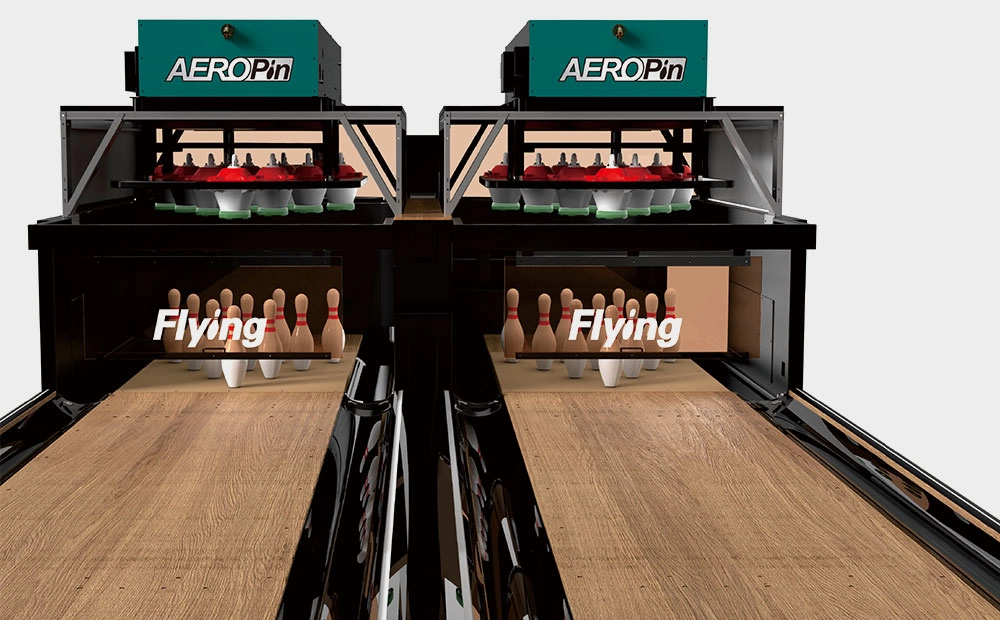
- AEROPIN™ Technology: Our USBC-certified string pinsetter combines intelligent electromechanical control, independent string lifting, sensor monitoring with overload protection, string-undoing technology, and a structure upgraded for easier maintenance.
- Configured Packages: We configure Flying Classic Standard Bowling, Flying Social Medium Bowling with lane lengths from 9.6 m to 18 m, and compact two-lane Flying Smart Duckpin Bowling to each venue's dimensions and lane quantity.
- Manufacturing and Service: Our 10,000 m² manufacturing base produces more than 2,000 lanes annually, we have completed over 3,000 projects across more than 50 countries, and we provide spare parts coordination and after-sales technical assistance, with a European service presence in Spain.
Align Your Next String Pinsetter Project With Current Requirements
We invite buyers and procurement teams to share their venue dimensions, lane quantity, target players, and destination requirements so we can review suitable string pinsetter configurations and layouts. Reach our team through Flying Bowling, at jackson@flyingbowling.com, or by phone at +86-15013107020.
Frequently Asked Questions
What should buyers verify first when comparing string pinsetter suppliers?
Buyers should first confirm that certification covers the exact model and configuration quoted, then review control and protection functions, maintenance access, and spare parts planning. Comparing these items before price keeps quotations comparable and reduces the risk of choosing equipment that matches a catalog description but struggles in daily operation.
How do venue formats change string pinsetter requirements?
Venue format determines lane length, ball and pin size, and pinsetter configuration. Full-size tenpin centers prioritize certified standard systems for league play, while compact social or duckpin layouts favor smaller footprints and simpler operation. Buyers should define footprint, target players, and revenue model first, then match the pinsetter and scoring package.
Which documents should procurement teams request before ordering a string pinsetter system?
Procurement teams should request certification evidence tied to the quoted model, a configuration and interface document, electrical and safety documentation for the destination, a wear-part and spare parts list, maintenance instructions, and a commissioning and training plan. These documents make quotations comparable and speed up installation and acceptance.
How can businesses reduce downtime risk after installing a bowling pinsetter system?
Businesses can reduce downtime by choosing pinsetters with sensor monitoring, overload protection, and accessible service points, then agreeing a spare parts set and technical support route before ordering. Operator training at commissioning also matters, because trained staff can resolve routine faults quickly instead of waiting for external service visits.
What project support can businesses expect from a turnkey bowling equipment manufacturer?
At Flying Bowling, we support new centers and renovations with project consultation, layout planning, equipment configuration, manufacturing, installation guidance, operator training, spare parts, and after-sales technical assistance. Our team in Guangzhou, China, and our European service presence in Spain help coordinate projects built around each venue's dimensions and lane requirements.
Recommended products
AEROPIN™ USBC-Certified String Pinsetter System
Flying Smart Duckpin Bowling Equipment for Commercial Venues
Complete Bowling Alley Equipment Package for Commercial Bowling Centers
Medium Bowling Equipment for Compact Social Venues
You may also like
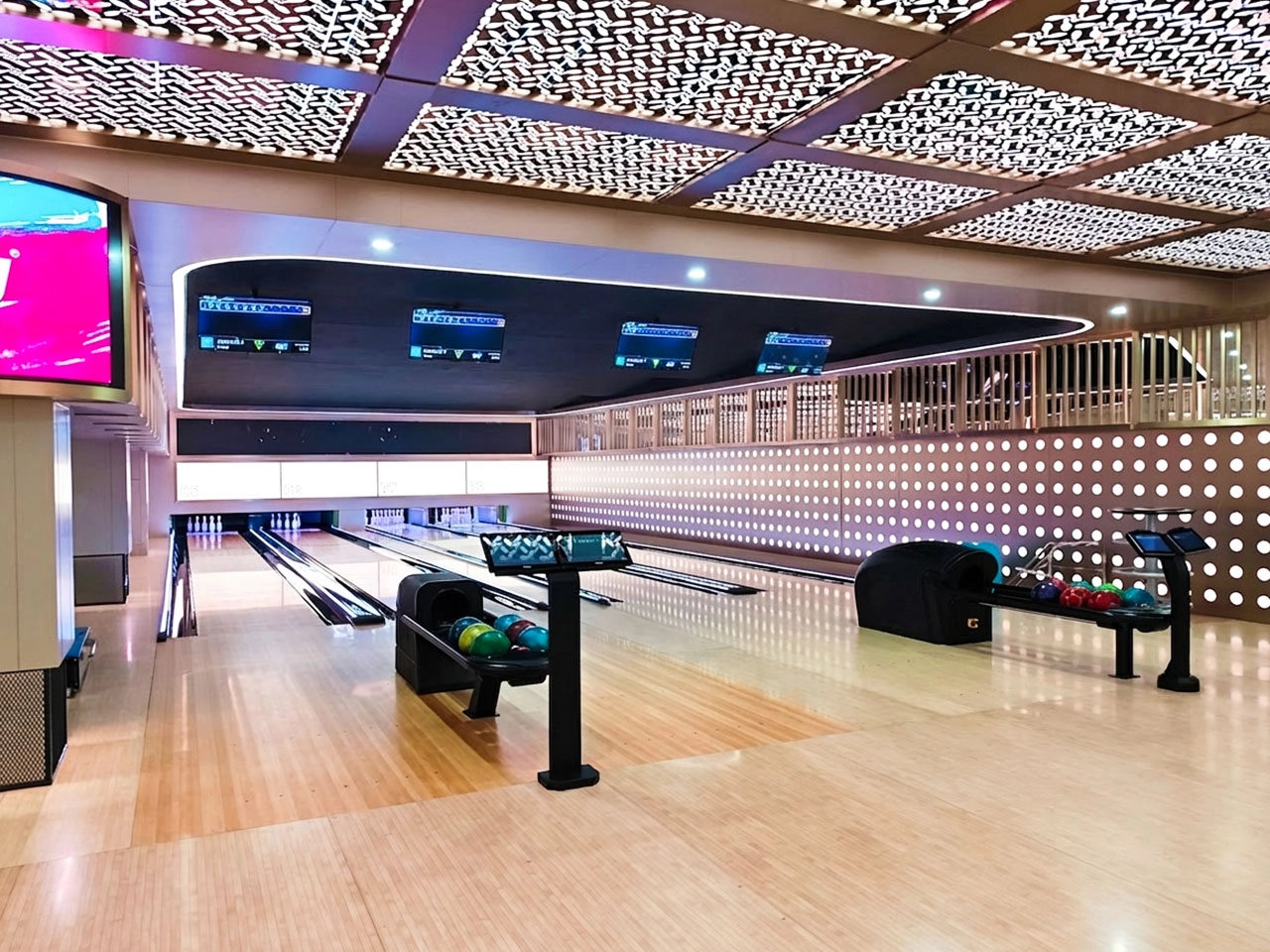
Build a commercial bowling venue with Flying’s complete string pinsetter bowling alley equipment package. The system includes the AEROPIN™ USBC-certified string pinsetter, customizable lanes, automatic scoring, ball return, lane lighting, pins, control hardware, and overseas installation support.
Designed for commercial bowling centers, family entertainment venues, hotels, resorts, bars, and premium private projects, this turnkey bowling system helps operators reduce sourcing complexity and prepare for reliable long-term operation.
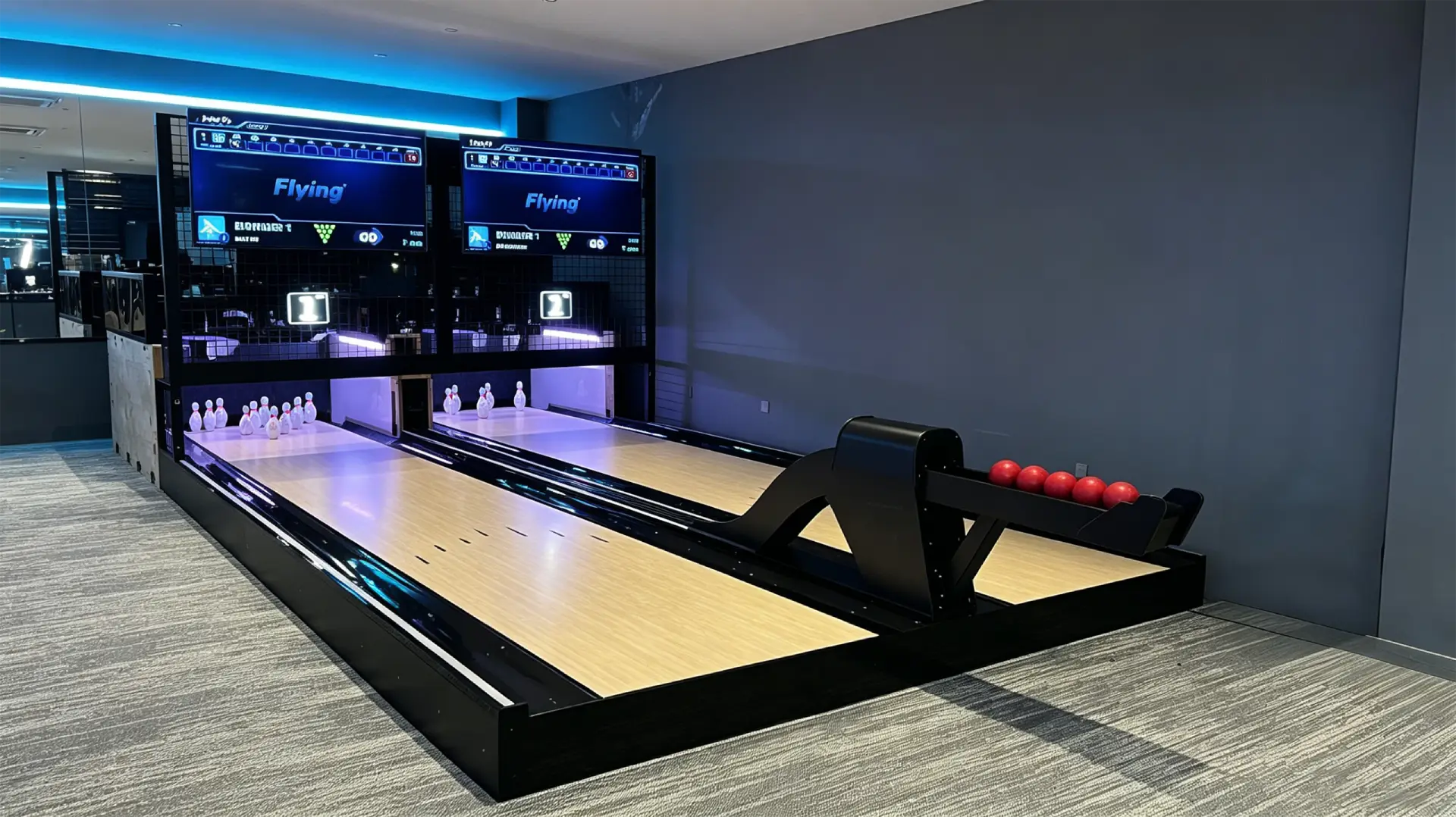
Flying Smart Duckpin Bowling is a compact duckpin bowling equipment system designed for bars, family entertainment centers, hotels, resorts, cinemas, boutique bowling alleys, and social entertainment venues. With a standard 9.13m duckpin bowling lane, 1.25kg lightweight balls, automatic scoring, ball return, LED lighting, and a smart string pinsetter, it creates a fast-paced and easy-to-play bowling experience in a smaller footprint than traditional bowling.
The system is available as a turnkey duckpin bowling package, including lane equipment, a string pinsetter system, scoring hardware, control software, global shipping, installation guidance, and technical support.
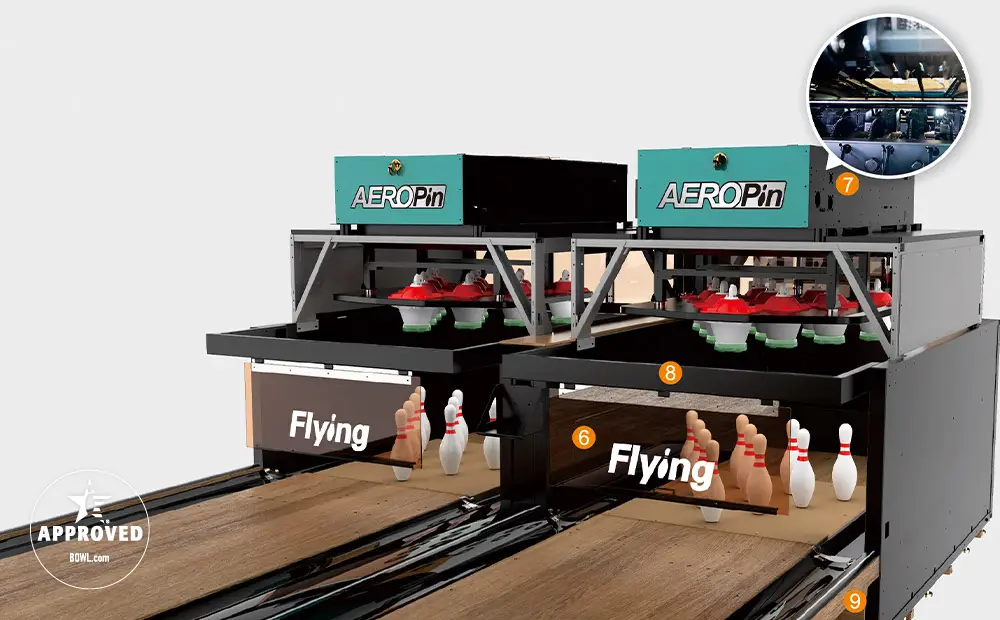
AEROPIN is Flying Bowling’s USBC-certified string pinsetter system for modern commercial bowling centers. Designed for fast pin setting, smooth ball return, low maintenance, and stable daily operation, it helps venue operators build league-ready and entertainment-focused bowling projects with confidence.
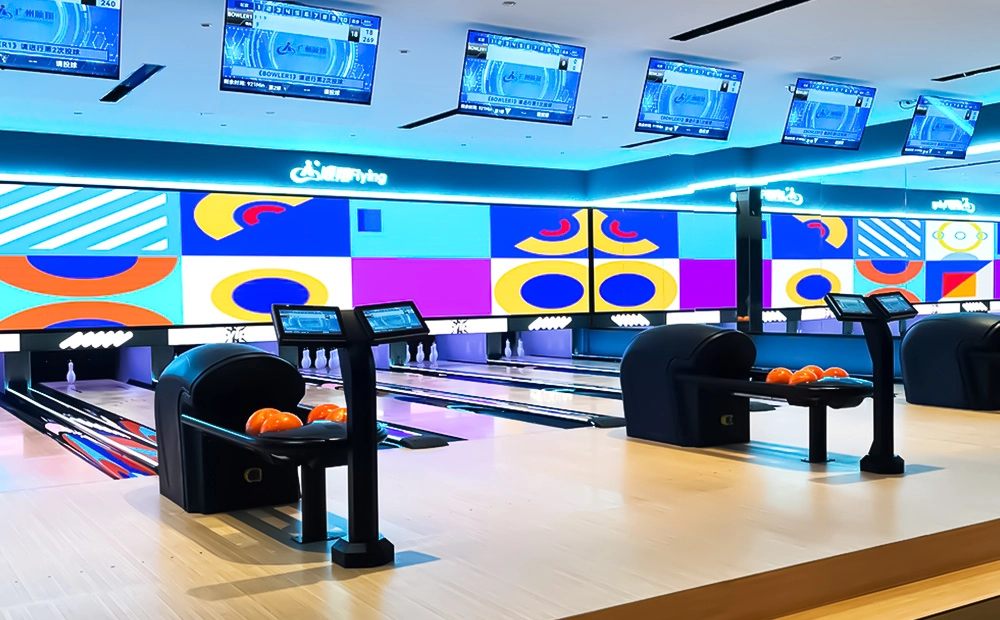
Flying Social Medium Bowling is a compact medium bowling equipment system designed for bars, cafes, family entertainment centers, community leisure venues, hotels, resorts, and small indoor entertainment spaces. With customizable lane lengths from 9.6m to 18m, small balls, lighter pins, string pinsetter technology, ball return, and automatic scoring, it creates an easy-to-play social bowling experience for players of different ages and skill levels.
Compared with full-size standard bowling, medium bowling requires less space and offers a more casual, interactive format. It is a practical choice for venues that want to add a bowling attraction without building a full commercial bowling alley.
Contact Flying
Start your bowling alley project
If you contact us now for more details, we can provide you with a custom bowling alley service. Our service team will get back to you within 24 hours normally!
© 2026 Flying BOWLING. Designed by gooeyun.
FOLLOW US:

Flying Bowling
Flying Bowling
Flyingbowling
Flyingbowling
Flyingbowling