


How String Pinsetter Equipment Cuts Costs in Bowling Alleys
- How String Pinsetter Equipment Cuts Costs in Bowling Alleys
- What is a string pinsetter and why operators care about bowling alley equipment
- How string pinsetters reduce initial capital and installation costs for bowling alley equipment
- Lower maintenance complexity and parts costs of string pinsetter bowling alley equipment
- Reduced downtime and faster repairs improve revenue availability
- Labor savings: fewer specialized technicians and simpler daily checks
- Energy efficiency and utility cost advantages of modern bowling alley equipment
- Case in point: Complete Set Of String Pinsetter Bowling Lane Equipment
- Operational comparisons: string pinsetter vs free-fall pinsetter (practical outcomes for owners)
- Where string pinsetters may not be ideal — honest trade-offs for operations
- Lifecycle cost modeling: how to estimate real savings for your bowling alley equipment
- Flying Bowling: experience, product range, and why partnering matters for bowling alley equipment
- Which venues benefit most from choosing string pinsetter bowling alley equipment?
- Practical checklist before buying Complete Set Of String Pinsetter Bowling Lane Equipment
- Frequently Asked Questions (FAQ)
- Q: Do string pinsetters affect the playing experience?
- Q: How much can I expect to save on maintenance with string pinsetters?
- Q: Can string pinsetters be retrofitted into existing lanes?
- Q: Is Complete Set Of String Pinsetter Bowling Lane Equipment suitable for league play?
- Q: What support does Flying Bowling provide after purchase?
- Contact and call to action
- Sources and references
How String Pinsetter Equipment Cuts Costs in Bowling Alleys
What is a string pinsetter and why operators care about bowling alley equipment
A string pinsetter is a pinspotting system in which each pin is attached to a string or tether and mechanically reset by a controlled string network rather than by the traditional free-fall mechanical pinsetter used in many legacy bowling centers. For owners and managers focused on profitability, choosing the right bowling alley equipment matters: equipment affects capital costs, ongoing maintenance, downtime, labor needs, utility consumption, and guest experience. String pinsetters have become an increasingly popular option because they target several of these cost drivers directly while maintaining a good guest experience for recreational and family entertainment centers.
How string pinsetters reduce initial capital and installation costs for bowling alley equipment
Traditional free-fall pinsetter systems are complex electromechanical machines with many moving parts, conveyor systems, and heavy infrastructure (pin tables, sweeps, belts) that require significant space and reinforced flooring. The upfront cost of installing multiple traditional lanes, plus the lane conditioning, oiling machines, and power distribution, can be substantial.
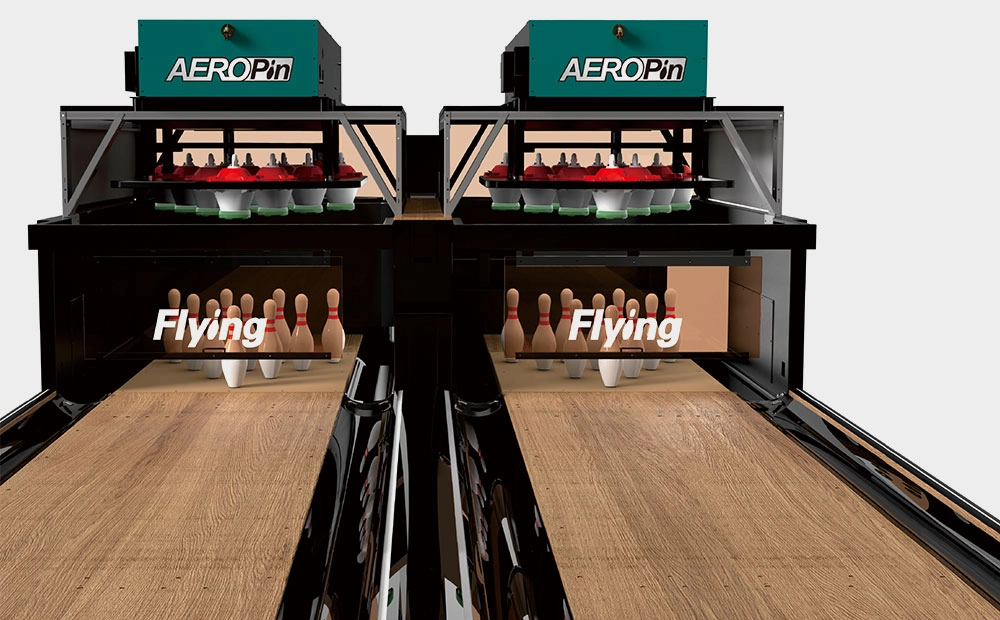
String pinsetters simplify the mechanical design: they replace large pinsetter assemblies with a more compact head and tether system. This typically reduces installation labor and civil works (less need for deep pits and heavy structural reinforcement), allowing faster build-out and lower contractor costs. For operators opening family entertainment centers, resorts, or boutique bowling venues, the reduced construction complexity translates into lower capex and a faster path to revenue.
Lower maintenance complexity and parts costs of string pinsetter bowling alley equipment
Because string pinsetters have fewer heavy, high-wear components (no full mechanical pin elevator, fewer complex conveyors, simpler sweep mechanisms), routine maintenance tends to be easier and less frequent. Fewer grease points and simplified replacement parts inventories reduce the time and skill level needed for repairs. Many operators report that common service tasks can be handled by general facilities staff after short training, further reducing reliance on specialized technicians.
This simpler maintenance footprint means lower spare-parts inventory costs and fewer emergency call-outs—both important when optimizing operating margins.
Reduced downtime and faster repairs improve revenue availability
Downtime directly costs money. Each lane offline means lost hourly revenue, frustrated guests, and potential negative reviews. String pinsetter systems are designed for quicker troubleshooting: modular components and easy access to string mechanisms allow staff to restore service rapidly. When combined with predictable, less-frequent servicing intervals, total lane availability improves, increasing gross operating revenue over time.
Labor savings: fewer specialized technicians and simpler daily checks
Traditional pinsetters require trained technicians for grease-and-adjust routines and to fix complex mechanical failures. By contrast, string pinsetters lower the skill barrier for daily checks and minor fixes. This reduces both direct labor costs and the need to schedule external service visits. For smaller centers or multi-entertainment venues, that operational simplicity can be the difference between profitable lanes and chronic losses.
Energy efficiency and utility cost advantages of modern bowling alley equipment
Modern string pinsetters are typically lighter and use smaller motors and reduced pneumatic systems compared to some legacy free-fall pinsetters. Lower power draw per lane and reduced compressed-air consumption (or elimination in some designs) contribute to ongoing utility savings. Over months and years, these savings can be meaningful—especially for venues with many lanes or those that operate long hours.
Case in point: Complete Set Of String Pinsetter Bowling Lane Equipment
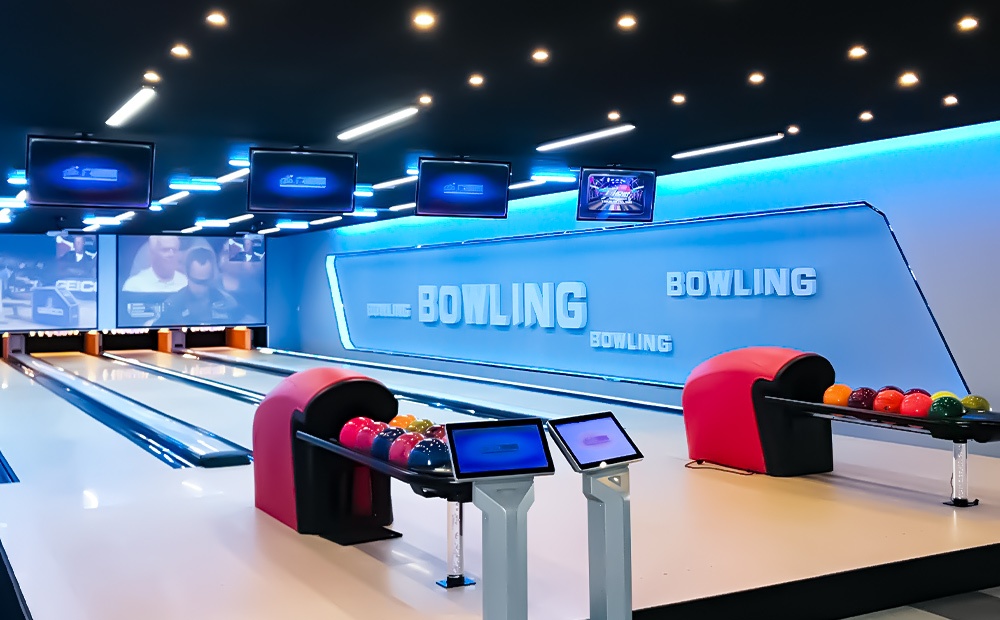
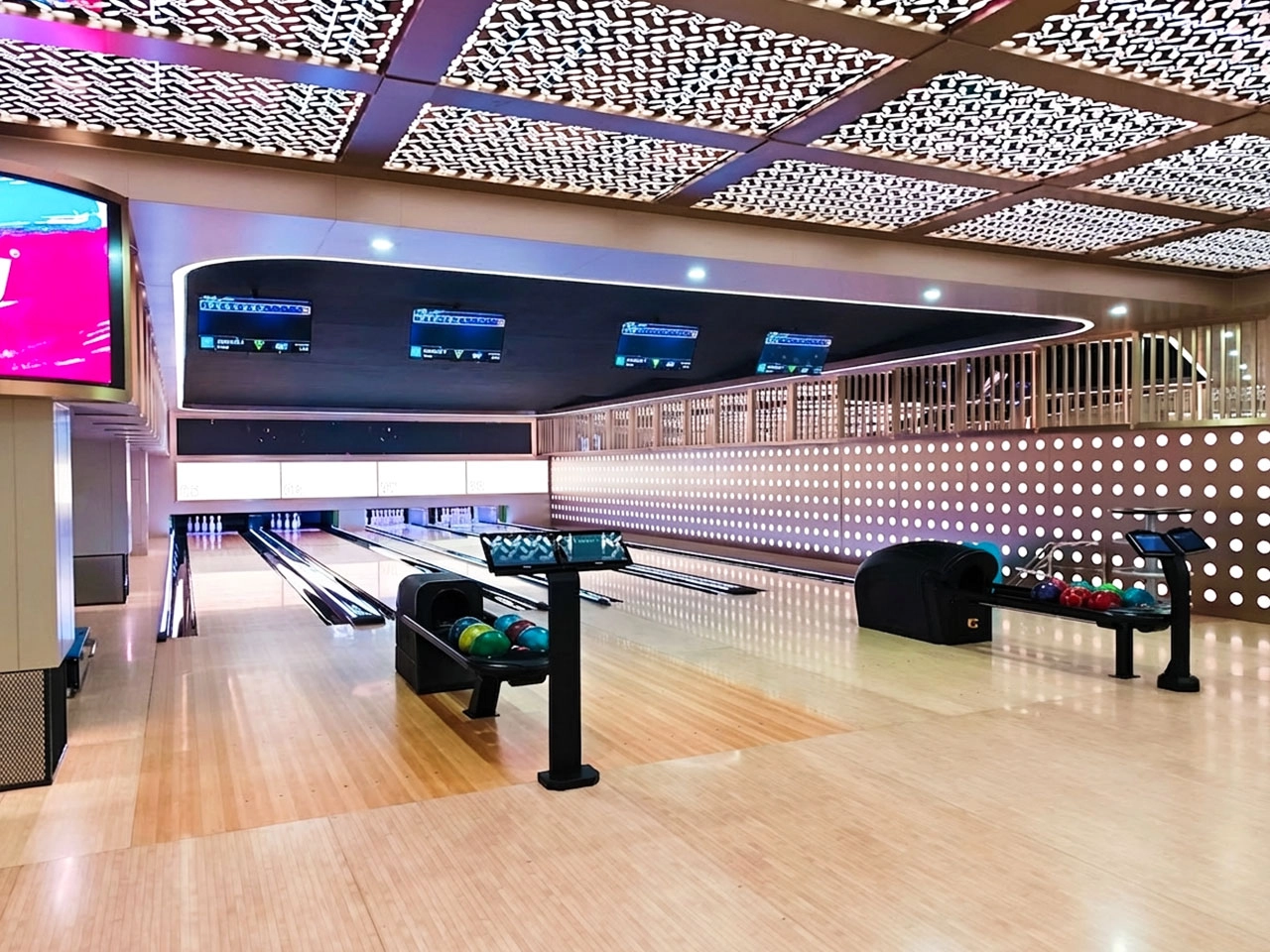
The Complete Set Of String Pinsetter Bowling Lane Equipment is engineered to provide a professional experience while gaining the economic benefits of string technology. The system emphasizes reliability, easy maintenance, and compatibility with modern automatic scoring systems so operators do not sacrifice guest experience for savings.
Flying Classic Standard Bowling (FCSB) is designed according to international competition standards and equipped with an accurate automatic scoring system, providing bowling enthusiasts with a pure professional experience. Whether it is for competitions or leisure entertainment, FCSB can meet high-level needs.
Suitable for family entertainment centers, luxury resorts, private villas, or clubs, it is an ideal choice for customers who pursue high-end quality and professional experience. Its classic design and excellent performance will add lasting appeal to the venue.
Operational comparisons: string pinsetter vs free-fall pinsetter (practical outcomes for owners)
Below is a concise, practical comparison focused on operational outcomes that affect cost and revenue. These are general trends seen across the industry; actual figures depend on equipment brand, usage profile, and maintenance practices.
| Metric | String Pinsetter | Free-Fall Pinsetter |
|---|---|---|
| Initial installation complexity | Lower — compact, simpler pit requirements | Higher — heavier equipment, more structural work |
| Routine maintenance | Lower frequency & simpler tasks | Higher frequency & specialized tasks |
| Downtime risk | Lower — faster fixes in many cases | Higher — complex repairs can be slow |
| Parts cost & inventory | Lower — fewer unique heavy parts | Higher — more mechanical parts to stock |
| Labor skill required | Lower — general technician level | Higher — specialized pinsetter expertise |
| Guest experience (recreational) | Comparable for casual/recreation play | Comparable or preferred by competitive leagues |
Sources for this comparative summary include manufacturer guidance and industry reviews. (See sources below.)
Where string pinsetters may not be ideal — honest trade-offs for operations
While string pinsetters offer many cost-saving benefits, there are trade-offs to consider. High-level competitive leagues and certain tournament standards still prefer traditional free-fall behavior (because pins behave slightly differently when tethered). If a center’s primary market is serious league play or professional competition, the operator should confirm that the chosen string system and lane specification meet league regulations and guest expectations.
For most family entertainment centers, hotels, resorts, and social bowling environments, the difference in pin behavior is not a barrier—while the cost benefits are often decisive.
Lifecycle cost modeling: how to estimate real savings for your bowling alley equipment
To estimate lifecycle savings, operators should model Total Cost of Ownership (TCO) over a 5–10 year horizon. Key inputs include:
- Capital cost per lane (equipment + installation)
- Annual maintenance labor hours and parts spend
- Average downtime hours per lane per year and lost revenue per hour
- Annual energy and utility consumption tied to pinspotters
- Expected useful life and depreciation schedule
Accurate estimates are best built with direct quotes from suppliers (for capital costs) and historical operational data (for maintenance and downtime). Many suppliers of string pinsetters can provide sample TCO worksheets tailored to your center’s expected usage.
Flying Bowling: experience, product range, and why partnering matters for bowling alley equipment
Since 2005, Flying Bowling has specialized in the research and development of bowling string pinsetters and ball return machines. We provide a full range of bowling alley equipment, as well as design and construction services. Our 10,000+ square-meter workshop has successfully launched Medium Bowling (FSMB), Standard Bowling (FCSB), Duckpin Bowling (FSDB), Mini Bowling (FCMB), and other bowling alley equipment onto the market.
Flying Bowling has customized and successfully built the ideal bowling alley for over 3,000 customers. The quality of our bowling equipment is comparable to European and American brands, but our prices are unbeatable, satisfying users around the world. We provide one-stop customized services for bowling venues and also recruit distributors from the global market to promote the development of the bowling industry. Flying Bowling is a leading bowling equipment manufacturer and supplier from China. Our website: https://www.flyingbowling.com/
Which venues benefit most from choosing string pinsetter bowling alley equipment?
Typical venues that see the strongest ROI from string pinsetters include:
- Family entertainment centers and indoor amusement venues
- Resorts and hotels looking for low-maintenance recreational attractions
- Small-to-medium bowling centers that cannot absorb high maintenance overhead
- Private clubs, villas, and boutique hospitality venues that value space efficiency and lower installation cost
Practical checklist before buying Complete Set Of String Pinsetter Bowling Lane Equipment
- Confirm lane count and space layout with a supplier who can provide a site plan.
- Request a TCO estimate (5–10 years) that includes parts, labor, downtime, and energy assumptions.
- Verify warranty coverage and local service or authorized technician availability.
- Ask for references or case studies from similar venues—look for centers with similar utilization patterns.
- Ensure compatibility with your desired scoring and lane management systems (automatic scoring, POS integration).
Frequently Asked Questions (FAQ)
Q: Do string pinsetters affect the playing experience?
A: For most recreational bowlers and entertainment venues, the playing experience is comparable. Pins attached to strings can show slightly different reactive behavior on rare pin interactions, but modern systems like the FCSB are tuned to deliver satisfying results for casual and competitive play environments.
Q: How much can I expect to save on maintenance with string pinsetters?
A: Savings depend on your center’s prior costs and usage. Many operators see lower routine maintenance hours, fewer emergency technician calls, and reduced spare-parts inventory—leading to meaningful cost reductions. For an accurate estimate, request a TCO comparison from your supplier based on your local labor and parts costs.
Q: Can string pinsetters be retrofitted into existing lanes?
A: In many cases, yes. Several string pinsetter systems are specifically designed for retrofit with minimal pit modification. A site survey is essential to determine structural and electrical requirements.
Q: Is Complete Set Of String Pinsetter Bowling Lane Equipment suitable for league play?
A: Some leagues accept play on string systems, while others require traditional equipment. If your center targets professional or high-level competitive leagues, confirm league requirements and ensure the selected system meets competition rules.
Q: What support does Flying Bowling provide after purchase?
A: Flying Bowling offers one-stop customized services including installation, training, parts supply, and global distributor partnerships. With over 3,000 successful venue projects and a 10,000+ sqm workshop, they provide ongoing after-sales support tailored to each customer’s needs.
Contact and call to action
Ready to reduce operating costs while delivering a great guest experience? Learn more about the Complete Set Of String Pinsetter Bowling Lane Equipment or contact Flying Bowling for a customized quote, site evaluation, and Total Cost of Ownership analysis: Visit https://www.flyingbowling.com/ to view products and request support.
Sources and references
- Flying Bowling official site and product information — https://www.flyingbowling.com/
- QubicaAMF — industry product pages and pinspotter resources — https://www.qubicaamf.com/
- Bowling Proprietors' Association of America (BPAA) — industry resources and operator guidance — https://www.bpaa.com/
Recommended products
Flying Smart Duckpin Bowling Equipment and Lane System for Commercial Venues
USBC-Certified AEROPIN String Pinsetter System
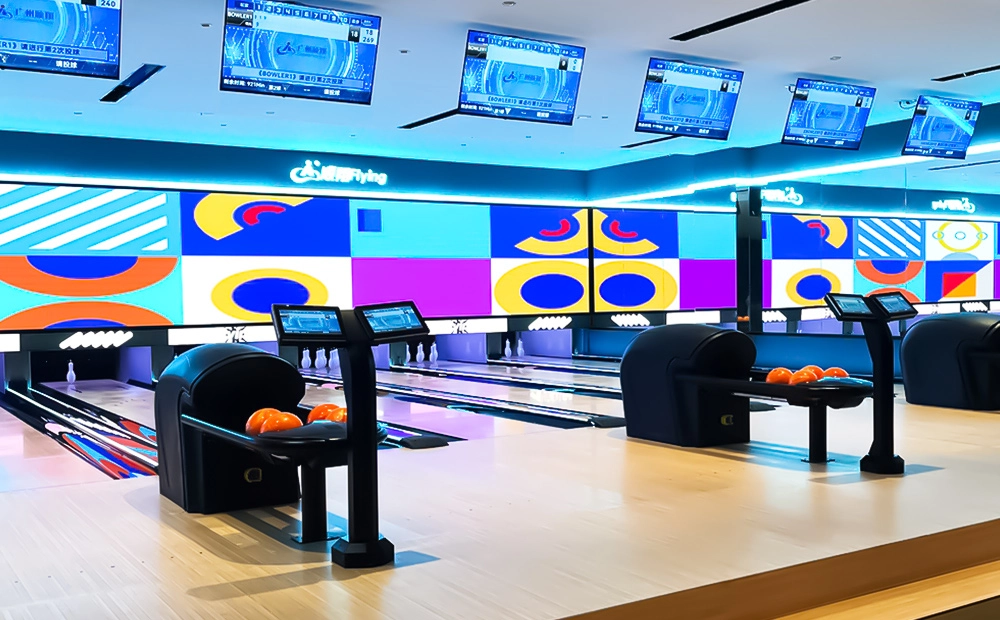
Complete String Pinsetter Bowling Alley Equipment System
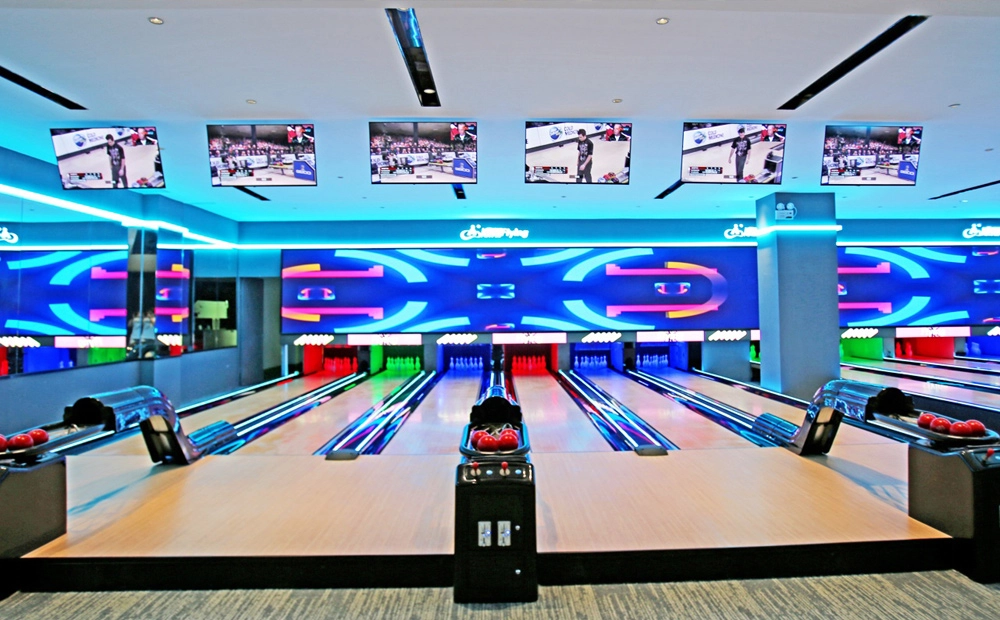
Medium Bowling Equipment for Social Entertainment Venues
Mini Bowling Equipment for Kids and Family Entertainment Venues
You may also like
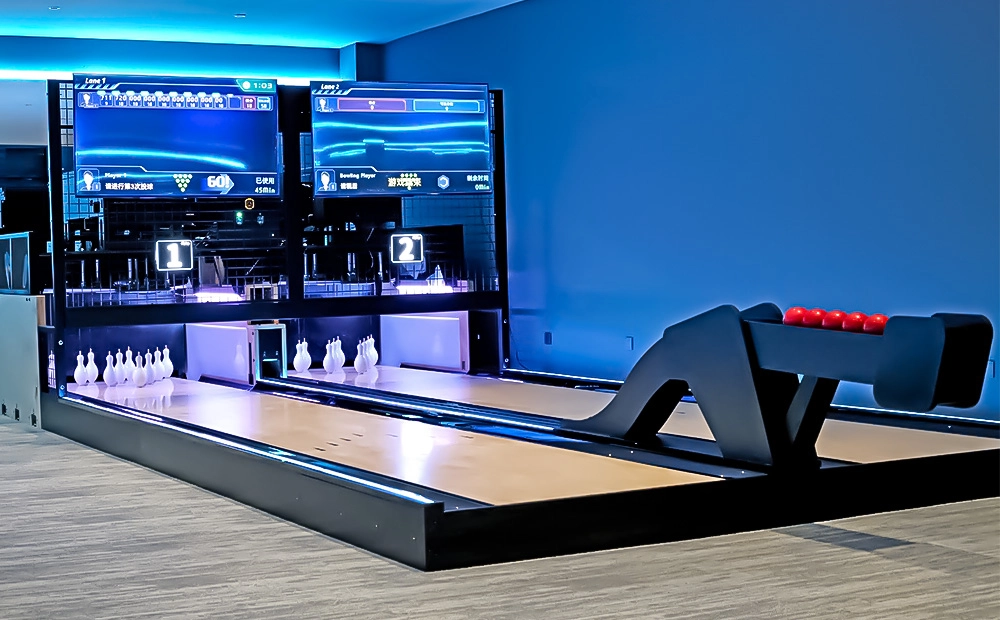
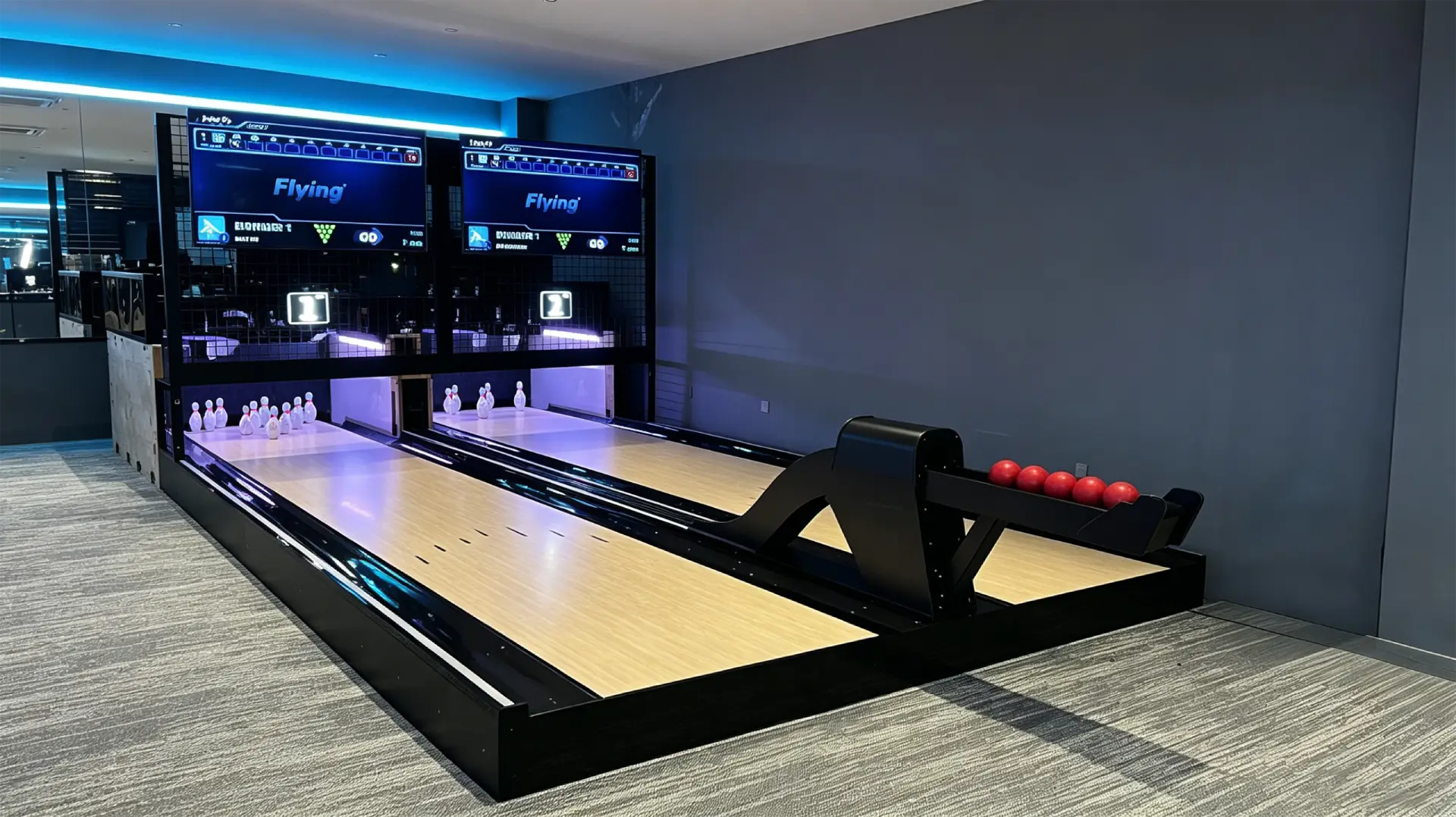
Flying Smart Duckpin Bowling (FSDB) innovative design, standard 9.2-meter short lane, can be shortened in length, compact layout suitable for small spaces. The game rules are simple but challenging, attracting players of different ages to actively participate.
Suitable for social entertainment venues such as bars, billiard halls, and game centers, it not only enhances interactivity but also increases the popularity and consumption frequency of the venue. The fun and competitive nature of FSDB will make it a new focus of social activities.
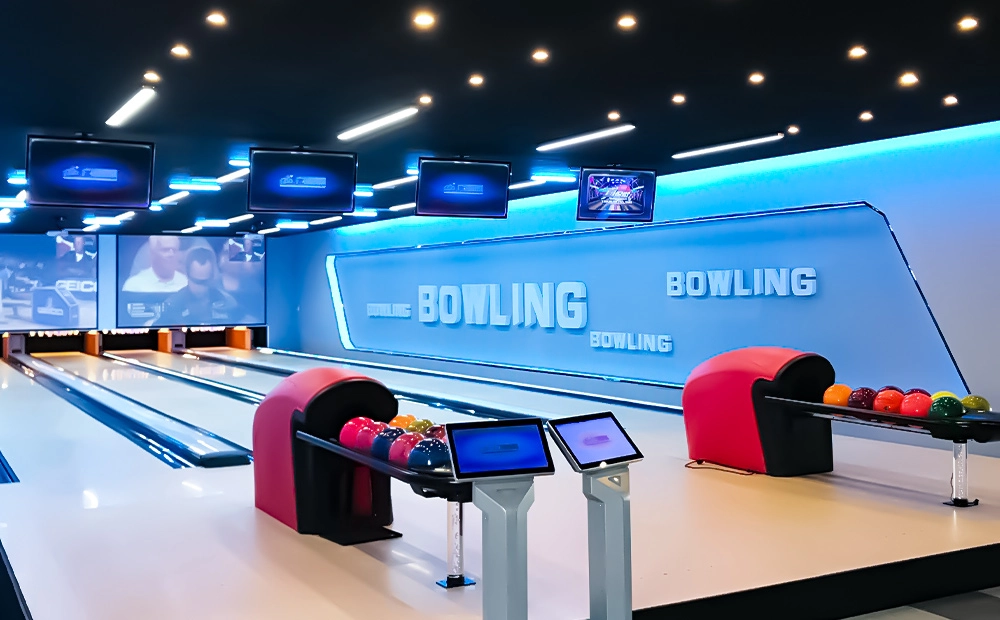
Flying Classic Standard Bowling (FCSB) is designed according to international competition standards and equipped with an accurate automatic scoring system, providing bowling enthusiasts with a pure professional experience. Whether it is for competitions or leisure entertainment, FCSB can meet high-level needs.
Suitable for family entertainment centers, luxury resorts, private villas, or clubs, it is an ideal choice for customers who pursue high-end quality and professional experience. Its classic design and excellent performance will add lasting appeal to the venue.
Flying Cute Mini Bowling (FCMB) is a mini bowling experience designed for children and families. The lane length is fixed at 12 meters, equipped with lightweight balls without finger holes (only 1.25kg) and small pins, specially designed for children and family fun.
It can not only help children feel the fun of bowling, but also stimulate their interest and competitive consciousness. Suitable for children's playgrounds, theme parks and parent-child centers, it is the best choice for places focusing on the children's market.
Flying Social Medium Bowling (FSMB) is tailored for small venues, with flexible lane lengths (customizable from 9.6 meters to 18 meters), a small ball design suitable for players of all ages, and light pins that are easier to knock down, increasing participation and fun.
Whether it is a gathering of friends or a casual social, FSMB can easily create a relaxed and pleasant atmosphere. Its efficient space-utilization design is particularly suitable for cafes, bars and community entertainment venues, allowing people to fall in love with bowling in a relaxed interaction.
Contact Flying
Start your bowling alley project
If you contact us now for more details, we can provide you with a custom bowling alley service. Our service team will get back to you within 24 hours normally!
© 2026 Flying BOWLING. Designed by gooeyun.
FOLLOW US:
Flying Bowling
Flying Bowling
Flyingbowling
Flyingbowling