


Space and Materials Affecting Home Duckpin Alley Cost
- Design Choices That Shape Your Home Bowling Experience
- Understanding home duckpin bowling alley cost: space and lane dimensions
- How materials change home duckpin bowling alley cost: lane surfaces and substructure
- Construction and finish factors that increase home duckpin bowling alley cost
- Equipment choices that drive home duckpin bowling alley cost: pinsetters, ball returns, scoring
- Estimating total budget: example cost breakdown for a 1–2 lane home duckpin alley
- How space constraints alter home duckpin bowling alley cost and design choices
- Ways to reduce home duckpin bowling alley cost without compromising quality
- Equipment comparison: string vs freefall pinsetters and their effect on home duckpin bowling alley cost
- Why choose a specialist vendor to optimize home duckpin bowling alley cost and delivery
- Flying Bowling: experience and offerings that influence home duckpin bowling alley cost
- FAQ — common questions about home duckpin bowling alley cost
- Contact and next steps — get a tailored quote
- References
Design Choices That Shape Your Home Bowling Experience
Understanding home duckpin bowling alley cost: space and lane dimensions
Space is often the single largest non-equipment cost when planning a home duckpin bowling alley, because lane and approach dimensions drive framing, HVAC, lighting, and access planning. Duckpin uses the same lane-length standard as ten-pin: 60 feet from foul line to headpin, plus an approach commonly 15 feet long; that means you need at least 75 feet of clear length from the back wall to the front of the approach area (see references). Ceiling height, clearances behind the pin deck for pinsetters, and room depth for seating affect the final footprint and therefore the home duckpin bowling alley cost.
How materials change home duckpin bowling alley cost: lane surfaces and substructure
Material choice for the lane surface and substructure determines both upfront cost and long-term maintenance. Typical options include:
- Prefabricated laminate lane panels: lower initial cost, faster install, good for home use, but may wear faster under heavy play.
- Solid hardwood (maple/phalcon): highest initial cost, professional feel, more complex installation and seasonal maintenance.
- Synthetic poured or composite lanes: middle ground—durable and quieter than hardwood, moderate cost.
Construction and finish factors that increase home duckpin bowling alley cost
Beyond lane materials, common construction items influence total cost and should be budgeted early:
- Demolition or structural work: opening load-bearing walls, reinforcing floors for concentrated loads under pinsetters.
- Electric, HVAC, and plumbing: pinsetters and lighting require dedicated circuits; longer lanes may need additional ventilation and climate control to preserve lane materials.
- Flooring and damp-proofing: basements often require moisture mitigation (vapor barriers, raised subfloors) to protect lane surfaces.
- Acoustic treatment and lighting: improves play experience but adds to cost.
Equipment choices that drive home duckpin bowling alley cost: pinsetters, ball returns, scoring
Equipment selection is the most visible contributor to cost. Key equipment line items include:
- Pinsetters: two primary types—traditional mechanical/freefall pinsetters and modern string pinsetters. String pinsetters are generally lighter, less expensive, and simpler to maintain for home settings; freefall systems are heavier and typically used in commercial centers.
- Ball returns and balls: duckpin balls are smaller and lighter, but you still need a reliable return system sized for duckpin use.
- Scoring and display: modern automated scoring can be basic or fully integrated with touchscreens and AV packages.
Estimating total budget: example cost breakdown for a 1–2 lane home duckpin alley
Below is a practical cost-estimate table that separates typical line items. These are industry-based ranges for residential installations and should be treated as planning estimates; actual quotes vary by brand, local labor rates, and site conditions.
| Item | Basic 1-lane (USD) | Mid 2-lane (USD) | Luxury 2-lane (USD) |
|---|---|---|---|
| Lane system (surface & substructure) | $3,000–$8,000 | $6,000–$16,000 | $12,000–$40,000 |
| Pinsetters (string) | $5,000–$10,000 | $10,000–$20,000 | $18,000–$40,000 (High Quality systems) |
| Ball return(s) & balls | $500–$1,500 | $1,000–$3,000 | $2,000–$5,000 |
| Scoring & displays | $800–$2,000 | $1,500–$4,000 | $3,000–$8,000 |
| Installation (electrical/plumbing/finish) | $3,000–$10,000 | $6,000–$25,000 | $15,000–$50,000 |
| Flooring / acoustic / lighting | $1,000–$4,000 | $3,000–$10,000 | $8,000–$20,000 |
| Permits, design fees | $500–$2,000 | $1,000–$3,000 | $2,000–$6,000 |
| Estimated total | $13,800–$37,500 | $28,500–$81,000 | $60,000–$169,000+ |
Notes: These figures are planning estimates for residential projects where usage is primarily private or social. Commercial-grade ten-pin centers typically cost substantially more. For basement or attic installs, include vapor barriers and climate control costs; for built additions, factor in foundation and roofing costs.
How space constraints alter home duckpin bowling alley cost and design choices
Not every home can provide a 75-foot clear length. Where full-length lanes are impossible, homeowners often choose one of these solutions:
- Short-format lanes (mini or recreational bowling): these use shorter approaches or reduced pin distances and can reduce both space and cost—commonly called mini-bowling lanes.
- Portable or modular lanes: prefabricated and relocatable lanes can be installed in multi-purpose rooms and cost less to install permanently.
- Customized duckpin setups: because duckpin uses smaller balls and pins, some vendors offer compact or modified lane solutions that keep the game feel while reducing room need.
Ways to reduce home duckpin bowling alley cost without compromising quality
Cost control strategies that preserve quality:
- Choose string pinsetters for residential lanes: lower purchase price and easier maintenance.
- Use prefabricated lane systems: reduce on-site labor time and risk of installation errors.
- Limit lanes: a single high-quality lane often provides the best value for personal use.
- Plan HVAC and moisture control early: preventing moisture damage avoids expensive repairs to real wood lanes later.
- Bundle purchase and installation with a single vendor: many manufacturers offer package pricing and design support that reduces coordination costs.
Equipment comparison: string vs freefall pinsetters and their effect on home duckpin bowling alley cost
Below is a concise comparison. Choice of pinsetter is a major cost and maintenance decision for a residential duckpin alley.
| Feature | String Pinsetters | Freefall (Mechanical) Pinsetters |
|---|---|---|
| Initial cost | Lower | Higher |
| Maintenance complexity | Lower—simple replacement of strings and motors | Higher—more moving parts, specialized service |
| Authenticity of ball-pin interaction | Good for recreation | Closer to commercial ten-pin experience |
| Space / weight | Lighter, smaller pit requirements | Heavier, more pit and structural support |
For most residential duckpin applications the string pinsetter achieves the best balance of cost, upkeep, and playability, reducing the overall home duckpin bowling alley cost and simplifying installation.
Why choose a specialist vendor to optimize home duckpin bowling alley cost and delivery
Working with a specialist bowling equipment manufacturer and installer reduces cost risk and improves schedule certainty. A single-source provider can:
- Provide validated lane systems that fit residential constraints.
- Bundle equipment, installation, and design to lower coordination overhead.
- Customize solutions such as compact duckpin lanes or mini-bowling options to match space and budget.
Flying Bowling: experience and offerings that influence home duckpin bowling alley cost
Since 2005, Flying Bowling has specialized in the research and development of bowling string pinsetters and ball return machines. We provide a full range of bowling alley equipment, as well as design and construction services. Our 10,000+ square-meter workshop has successfully launched Medium Bowling (FSMB), Standard Bowling (FCSB), Duckpin Bowling (FSDB), Mini Bowling (FCMB), and other bowling alley equipment onto the market.Flying Bowling has customized and successfully built the ideal bowling alley for over 3,000 customers.The quality of our bowling equipment is comparable to European and American brands, but our prices are unbeatable, satisfying users around the world.We provide one-stop customized services for bowling venues and also recruit distributors from the global market to promote the development of the bowling industry.Flying Bowling is a leading bowling equipment manufacturer and supplier from China.Our website: https://www.flyingbowling.com/
How Flying Bowling helps reduce home duckpin bowling alley cost:
- String pinsetters designed for residential/light commercial use: lower purchase and maintenance costs compared with freefall systems.
- Modular lane products (mini and duckpin-specific lanes) that reduce installation time and on-site labor.
- Turnkey design-and-build service: integrated project pricing avoids hidden subcontractor fees.
- Global distribution and parts availability: reduces downtime and long-term replacement costs.
Flying Bowling’s product focus—mini bowling, duckpin bowling, bowling alley equipment, and bowling string pinsetters—means they can tailor solutions that fit constrained residential spaces while keeping both quality and cost competitive with Western brands.
FAQ — common questions about home duckpin bowling alley cost
Q1: What minimum room size do I need for a single home duckpin lane?
A1: Plan for a minimum clear length of about 75 feet (60' lane + 15' approach). Width depends on lane plus gutters and walkway—roughly 15–20 feet. For compact solutions, consider modular/mini-bowling lanes which reduce length and cost (see references).
Q2: How much does a string pinsetter cost compared to a traditional pinsetter?
A2: String pinsetters typically cost substantially less—often 30–60% cheaper for purchase and carry lower maintenance costs for residential use. Exact prices vary by model and vendor.
Q3: Is it cheaper to build lanes myself or use a prefabricated lane kit?
A3: For most homeowners, prefabricated lane kits save money overall by reducing skilled labor hours, complexity, and risk of installation errors. Custom hardwood lanes require more time and specialized carpentry, increasing cost.
Q4: Do I need special insurance or permits for a home bowling alley?
A4: Check local building codes for structural changes, electrical upgrades, and occupancy limits. If you plan to operate commercially (paid games), you may need business and liability insurance and additional permits. Always verify with your local building department.
Q5: What are realistic total budgets for a quality home duckpin bowling alley?
A5: A well-specified single-lane residential duckpin setup can range roughly $15k–$40k. Two-lane mid-range systems generally run $30k–$80k. Luxury or commercial-standard builds can exceed $100k. These are planning ranges—get multiple vendor quotes for precision.
Q6: How to maintain lanes and equipment to minimize long-term cost?
A6: Regular cleaning, climate control to reduce humidity swings, routine inspection of motors and strings, and prompt replacement of consumables keep operating costs low. Vendor maintenance packages and accessible parts networks reduce downtime and cost.
Contact and next steps — get a tailored quote
If you’re planning a home duckpin alley and want a realistic, site-specific budget, contact a specialist who can evaluate your room dimensions, recommend materials, and provide an itemized quote. Flying Bowling offers design, equipment, and installation services worldwide—visit https://www.flyingbowling.com/ to request drawings, product specs, and a customized quote. For fast planning, gather room dimensions (length, width, ceiling height), photos, and your preferred number of lanes before contacting vendors.
References
- Duckpin bowling — Wikipedia. https://en.wikipedia.org/wiki/Duckpin_bowling (accessed 2025-12-09)
- Bowling alley — Wikipedia. https://en.wikipedia.org/wiki/Bowling_alley (accessed 2025-12-09)
- Pinsetter — Wikipedia (overview of pinsetter types including string systems). https://en.wikipedia.org/wiki/Pinsetter (accessed 2025-12-09)
- How Much Does It Cost to Finish a Basement? — HomeAdvisor (useful for budgeting HVAC/wall/floor costs in basement installs). https://www.homeadvisor.com/cost/finishing-basement/ (accessed 2025-12-09)
- Flying Bowling official site — product and company overview. https://www.flyingbowling.com/ (accessed 2025-12-09)
Recommended products
Flying Smart Duckpin Bowling Equipment and Lane System for Commercial Venues
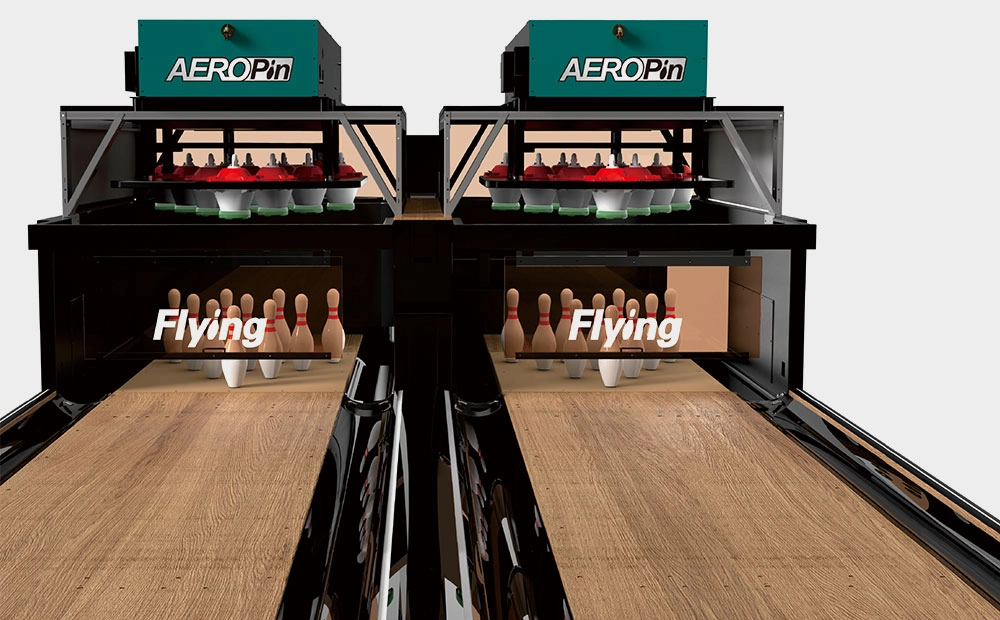
USBC-Certified AEROPIN String Pinsetter System
Mini Bowling Equipment for Kids and Family Entertainment Venues
Medium Bowling Equipment for Social Entertainment Venues
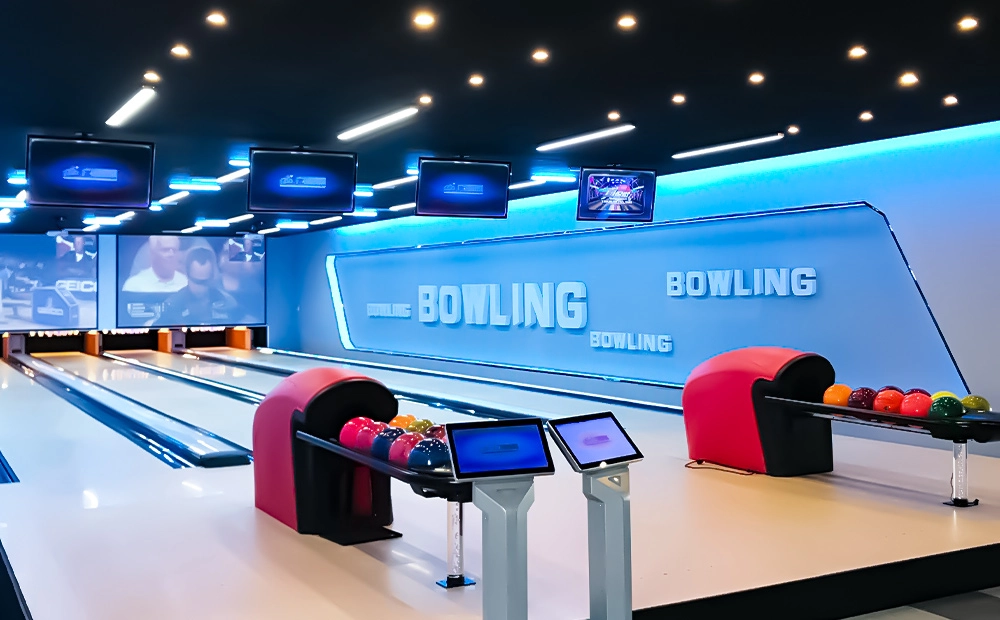
Complete String Pinsetter Bowling Alley Equipment System
You may also like
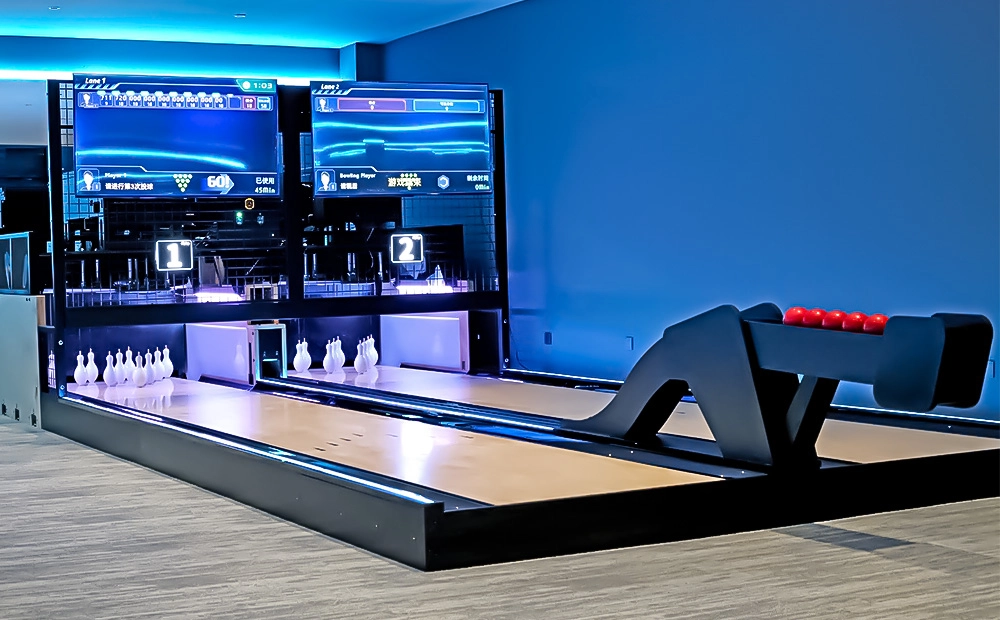
Flying Smart Duckpin Bowling (FSDB) innovative design, standard 9.2-meter short lane, can be shortened in length, compact layout suitable for small spaces. The game rules are simple but challenging, attracting players of different ages to actively participate.
Suitable for social entertainment venues such as bars, billiard halls, and game centers, it not only enhances interactivity but also increases the popularity and consumption frequency of the venue. The fun and competitive nature of FSDB will make it a new focus of social activities.
Flying Classic Standard Bowling (FCSB) is designed according to international competition standards and equipped with an accurate automatic scoring system, providing bowling enthusiasts with a pure professional experience. Whether it is for competitions or leisure entertainment, FCSB can meet high-level needs.
Suitable for family entertainment centers, luxury resorts, private villas, or clubs, it is an ideal choice for customers who pursue high-end quality and professional experience. Its classic design and excellent performance will add lasting appeal to the venue.
Flying Cute Mini Bowling (FCMB) is a mini bowling experience designed for children and families. The lane length is fixed at 12 meters, equipped with lightweight balls without finger holes (only 1.25kg) and small pins, specially designed for children and family fun.
It can not only help children feel the fun of bowling, but also stimulate their interest and competitive consciousness. Suitable for children's playgrounds, theme parks and parent-child centers, it is the best choice for places focusing on the children's market.
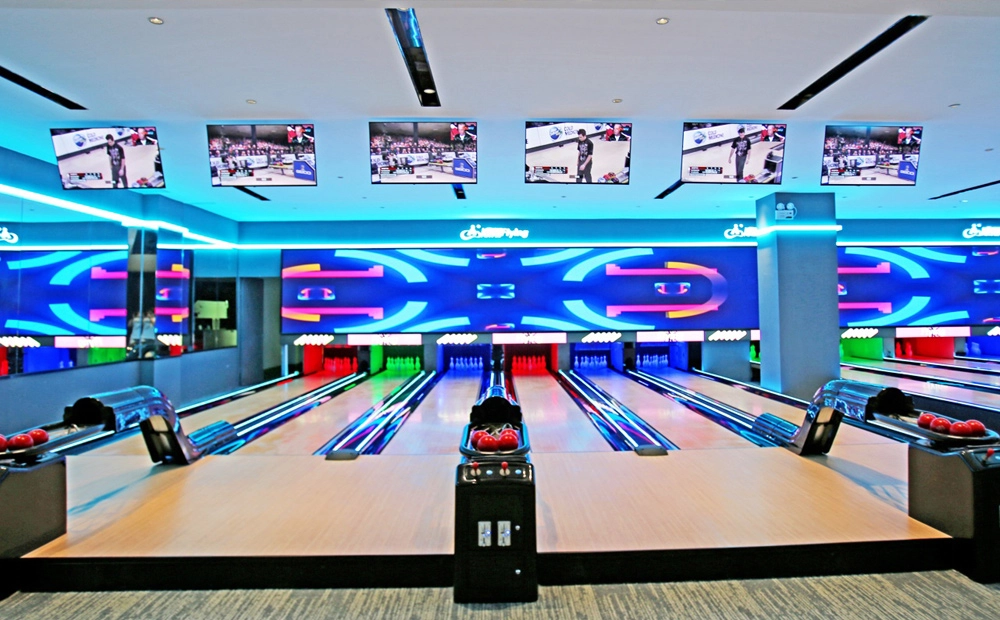
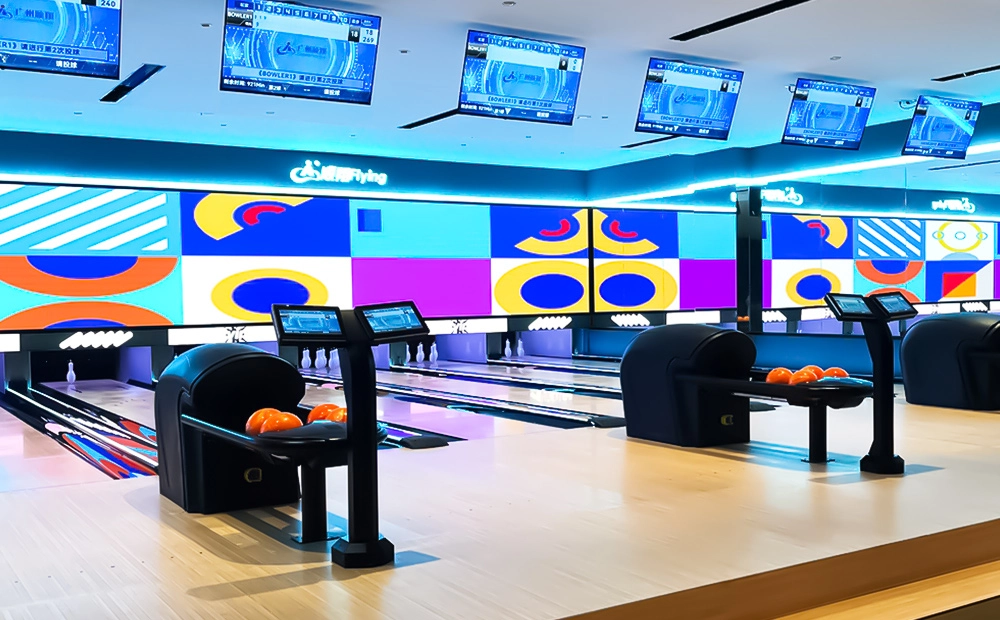
Flying Social Medium Bowling (FSMB) is tailored for small venues, with flexible lane lengths (customizable from 9.6 meters to 18 meters), a small ball design suitable for players of all ages, and light pins that are easier to knock down, increasing participation and fun.
Whether it is a gathering of friends or a casual social, FSMB can easily create a relaxed and pleasant atmosphere. Its efficient space-utilization design is particularly suitable for cafes, bars and community entertainment venues, allowing people to fall in love with bowling in a relaxed interaction.
Contact Flying
Start your bowling alley project
If you contact us now for more details, we can provide you with a custom bowling alley service. Our service team will get back to you within 24 hours normally!
© 2026 Flying BOWLING. Designed by gooeyun.
FOLLOW US:
Flying Bowling
Flying Bowling
Flyingbowling
Flyingbowling