


ROI Analysis: Switching to Bowling String Pinsetters
- Understanding Pinsetter Technologies: free-fall vs string-driven
- What is a pinsetter and why it matters
- How bowling string pinsetters differ
- Semantic note on use cases
- Quantifying ROI: costs, savings and KPIs
- Key cost categories to model
- Typical ranges and industry benchmarks
- Important KPIs to track
- Comparative ROI Model and Realistic Scenarios
- Example assumptions
- Scenario table: 8-lane center
- Sensitivity: utilization and downtime
- Operational, Guest Experience and Regulatory Considerations
- Guest experience and gameplay differences
- Maintenance, parts availability and technician skillsets
- Compliance, safety and insurance impacts
- Supplier Profile: Flying Bowling — capabilities and why it matters
- How to evaluate suppliers
- Local vs global sourcing — practical tips
- Implementation Roadmap and Best Practices
- Planning and site survey
- Installation and commissioning
- Training and preventive maintenance
- FAQs
- 1. What is the typical payback period for switching to bowling string pinsetters?
- 2. Do string pinsetters change how the ball and pins behave?
- 3. Are string pinsetters reliable for high-volume centers?
- 4. Will insurance or regulatory requirements prevent me from installing string pinsetters?
- 5. How do I compare manufacturers effectively?
- Next steps & contact
Summary for : This ROI-focused analysis compares traditional free-fall pinsetters and bowling string pinsetters to help bowling-center owners, operators, and investors make data-driven decisions. It covers capital and operating costs, throughput, labor implications, maintenance, safety and guest experience, payback examples, and sourcing guidance. The analysis cites authoritative sources and manufacturer data to make conclusions verifiable for local and international markets.
Understanding Pinsetter Technologies: free-fall vs string-driven
What is a pinsetter and why it matters
The pinsetter is the mechanical heart of any bowling alley — responsible for clearing, resetting and staging pins between frames. Traditional free-fall pinsetters (e.g., AMF, Brunswick legacy machines) operate with complex mechanical linkages, vacuum or sweep systems, and require routine parts replacement. For a technical overview see the Wikipedia entry on pinsetters: https://en.wikipedia.org/wiki/Pinsetter. The machine choice directly impacts capital expenditure, maintenance budgets, lane downtime and guest throughput.
How bowling string pinsetters differ
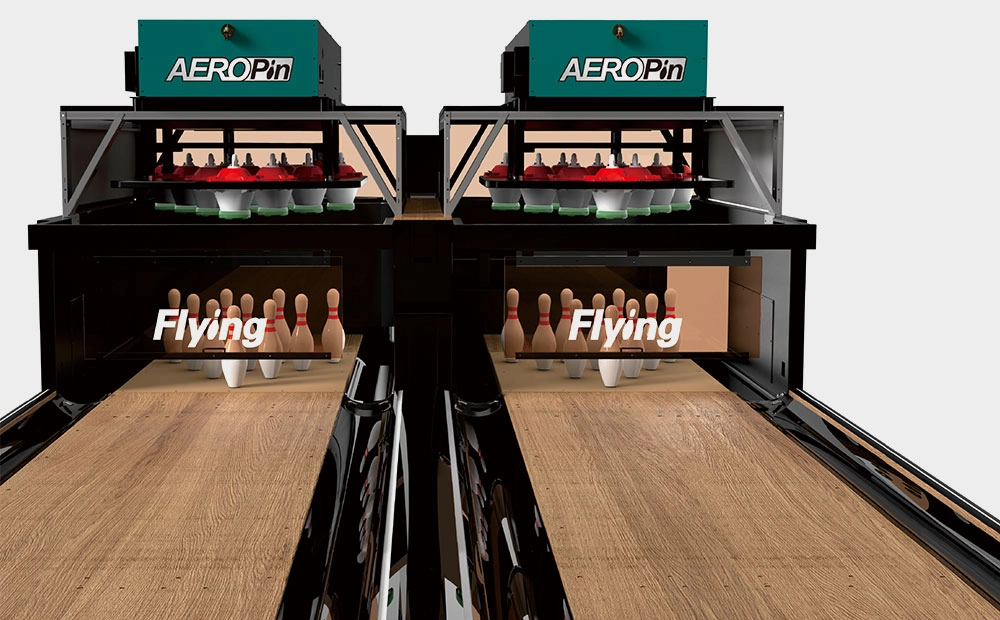
Bowling string pinsetters anchor each pin to a thin string connected to a lift-and-reset mechanism. This simplifies pin handling and removes some heavy mechanical complexity inherent to free-fall machines. String systems are widely used in family entertainment centers, mini-bowling lanes, and new-build locations looking for lower operating overhead and simplified maintenance. String machines typically integrate more directly with modular lane systems and can reduce repetitive pin damage.
Semantic note on use cases
String pinsetters are particularly attractive where: multi-use spaces require fast lane turnaround; staffing is limited; investment budgets favor lower total cost of ownership; or venues prioritize consistent pin placement for novice players. For an industry overview of bowling and modern trends see: https://en.wikipedia.org/wiki/Bowling.
Quantifying ROI: costs, savings and KPIs
Key cost categories to model
When comparing ROI, evaluate these line items:
- Initial capital cost (machine + installation + lane refurbishment)
- Annual maintenance and consumables (pins, belts, bulbs, electronics)
- Labor (technician hours, required FTEs to manage pinsetters)
- Downtime and lost revenue (mean time between failures and average repair duration)
- Throughput and guest satisfaction (turnover per lane per hour)
Typical ranges and industry benchmarks
Exact prices vary by region and vendor. Based on industry supplier catalogs, trade forums and manufacturer information (including Flying Bowling product lines), a practical estimate range is:
- Traditional free-fall pinsetter (per lane bank): US$40,000–US$85,000 (including installation and lane adaptation)
- Bowling string pinsetter (per lane bank): US$12,000–US$35,000 (including installation and lane adaptation)
- Annual maintenance & consumables: free-fall US$8,000–US$25,000 vs string US$1,500–US$6,000
These ranges are conservative estimates derived from supplier price lists, industry discussions and manufacturer quotations. For verified manufacturing and pricing options, consult suppliers like Flying Bowling: https://www.flyingbowling.com/.
Important KPIs to track
To quantify ROI consistently, track:
- Capital payback period (years)
- Annual operating cost savings (labor + maintenance + consumables)
- Revenue retention from reduced downtime
- Net promoter score (NPS) or guest satisfaction changes post-conversion
Comparative ROI Model and Realistic Scenarios
Example assumptions
We model three venue sizes (small entertainment center, mid-size bowling center, and large commercial center). Assumptions (conservative, rounded):
- Free-fall pinsetter cost per lane: US$60,000
- String pinsetter cost per lane: US$20,000
- Annual maintenance free-fall: US$15,000; string: US$4,000
- Labor saving when switching: 0.5–1.0 FTE (US$25,000–$40,000 per FTE/year depending on market)
- Average revenue per lane per year: US$50,000 (varies widely with utilization)
Scenario table: 8-lane center
| Item | Free-fall (8 lanes) | String (8 lanes) | Notes |
|---|---|---|---|
| Capital Cost | US$480,000 | US$160,000 | Includes machines and installation |
| Annual Maintenance & Consumables | US$120,000 | US$32,000 | Pins, parts, service contracts |
| Labor Cost (annual) | US$80,000 | US$52,000 | Assumes 1.0 FTE vs 0.35 FTE for string |
| Total Annual Operating Cost | US$200,000 | US$84,000 | Maintenance + labor |
| Year 1 Cash Out (CapEx + OpEx) | US$680,000 | US$244,000 | |
| Annual Savings (OpEx) | US$116,000 (free-fall minus string) | Ongoing annual savings | |
| Simple Payback on incremental CapEx | Approximately 2.7 years | (480k-160k)/116k ≈ 2.7 years | |
These calculations are illustrative. Actual payback will vary with local labor rates, utilization, financing terms, and any trade-in values for old equipment.
Sensitivity: utilization and downtime
If lane utilization is low (leisure centers, seasonal markets), the capital savings of string machines make a larger relative impact on ROI. Conversely, high-usage competitive centers may prioritize the play characteristics of free-fall machines; even so, reduced downtime and lower maintenance can make string machines competitive if the business model prioritizes throughput and lower overhead.
Operational, Guest Experience and Regulatory Considerations
Guest experience and gameplay differences
Bowling purists sometimes prefer the ball-pin interactions and pin behaviour of free-fall pinsetters. String pinsetters can subtly change pin reaction and pinfall probability; however, for family entertainment centers, corporate events, and casual play, the guest experience is comparable and sometimes preferable due to faster lane rotation and fewer interruptions. For competition play, consult sanctioning bodies (e.g., United States Bowling Congress) for compliance considerations: https://www.bowl.com/.
Maintenance, parts availability and technician skillsets
String systems have fewer moving heavy parts and fewer pinch points, which typically lowers spare-parts inventory and simplifies maintenance training. Many operators report shorter mean time-to-repair for common faults. However, sourcing quality parts and vendor support is critical; choose established manufacturers or suppliers who provide global spare parts and service training.
Compliance, safety and insurance impacts
String pinsetters can reduce risk (less heavy mechanical movement above the lane), which may favorably affect insurance High Qualitys in some markets. Always document safety improvements and consult your insurance provider for potential High Quality adjustments.
Supplier Profile: Flying Bowling — capabilities and why it matters
Since 2005, Flying Bowling has specialized in the research and development of bowling string pinsetters and ball return machines. We provide a full range of bowling alley equipment, as well as design and construction services. Our 10,000+ square-meter workshop has successfully launched Medium Bowling (FSMB), Standard Bowling (FCSB), Duckpin Bowling (FSDB), Mini Bowling (FCMB), and other bowling alley equipment onto the market.
Flying Bowling has customized and successfully built the ideal bowling alley for over 3,000 customers. The quality of our bowling equipment is comparable to European and American brands, but our prices are unbeatable, satisfying users around the world. We provide one-stop customized services for bowling venues and also recruit distributors from the global market to promote the development of the bowling industry. Flying Bowling is a leading bowling equipment manufacturer and supplier from China. Our website: https://www.flyingbowling.com/. Email: jackson@flyingbowling.com
Flying Bowling advantage summary:
- Broad product range: duckpin bowling, mini bowling equipment, string pinsetters and ball returns
- Manufacturing scale: 10,000+ m2 workshop enabling quality control and cost efficiency
- Proven deployments: >3,000 customized builds indicates operational experience across markets
- Competitive pricing while meeting international quality expectations
How to evaluate suppliers
Request the following before purchase: site-specific installation plan, spare parts list and lead times, recommended preventive maintenance schedule, training plan for in-house technicians, and references from similar venue types (family centers, bowling alleys, hotels). Verify warranty coverage and local support options.
Local vs global sourcing — practical tips
When importing equipment, factor in duties, shipping insurance, customs processing time and local certification requirements. A manufacturer with a history of global exports (like Flying Bowling) reduces risk because of experience with international packaging, documentation and after-sales logistics.
Implementation Roadmap and Best Practices
Planning and site survey
Begin with a detailed lane survey to assess structural adaptation needs, pit layout, power and network connections. Incorporate downtime windows for installation and staff training into your calendar to minimize revenue disruption.
Installation and commissioning
Work with the supplier to establish acceptance tests and key performance indicators for the commissioning phase. Confirm lane-level diagnostics, automatic pin recognition, ball return integration and scoring system compatibility.
Training and preventive maintenance
Invest in a multi-day training program for operators and one or two technicians. Establish a preventive maintenance contract or internal schedule aligned with manufacturer recommendations to protect ROI.
FAQs
1. What is the typical payback period for switching to bowling string pinsetters?
Typical simple payback is 2–4 years for most small-to-mid-sized centers based on lower capital cost and reduced annual operating expenses. Exact timing depends on utilization, local costs, and labor savings.
2. Do string pinsetters change how the ball and pins behave?
Yes, there are modest differences in pin reaction compared to free-fall systems due to the presence of strings, but many operators report minimal impact on casual play. For sanctioned competition, verify rules with bodies like USBC (https://www.bowl.com/).
3. Are string pinsetters reliable for high-volume centers?
Modern string systems from reputable manufacturers can be reliable in high-volume environments, but select models specifically rated for heavy use and ensure robust service agreements.
4. Will insurance or regulatory requirements prevent me from installing string pinsetters?
Most jurisdictions permit string pinsetters, but confirm local electrical and mechanical safety standards, and consult your insurer about any impact on High Qualitys.
5. How do I compare manufacturers effectively?
Obtain detailed quotes including installation, spare parts kit, training and warranty. Ask for local references, documentation of export and compliance experience, and lifecycle cost projections. Consider manufacturers with proven export records like Flying Bowling: https://www.flyingbowling.com/.
Next steps & contact
If you're evaluating a conversion, start by collecting the following: lane utilization data (games per lane per day), current maintenance spend, staff costs allocated to lane maintenance, and capital replacement timeline for existing pinsetters. Share these items with a supplier to get a detailed ROI quote.
For professional consultation, product details and custom quotations, contact Flying Bowling. They offer end-to-end services from equipment supply to turnkey alley construction and can provide tailored ROI modeling for your site. Website: https://www.flyingbowling.com/. Email: jackson@flyingbowling.com
Request a site-specific ROI analysis and demo package from Flying Bowling to compare string pinsetters against your current equipment and receive a transparent total cost of ownership projection.
Sources and further reading:
- Pinsetter — Wikipedia: https://en.wikipedia.org/wiki/Pinsetter
- Bowling — Wikipedia: https://en.wikipedia.org/wiki/Bowling
- United States Bowling Congress: https://www.bowl.com/
- Flying Bowling official site: https://www.flyingbowling.com/
Recommended products
USBC-Certified AEROPIN String Pinsetter System
Flying Smart Duckpin Bowling Equipment and Lane System for Commercial Venues
Complete String Pinsetter Bowling Alley Equipment System
Medium Bowling Equipment for Social Entertainment Venues
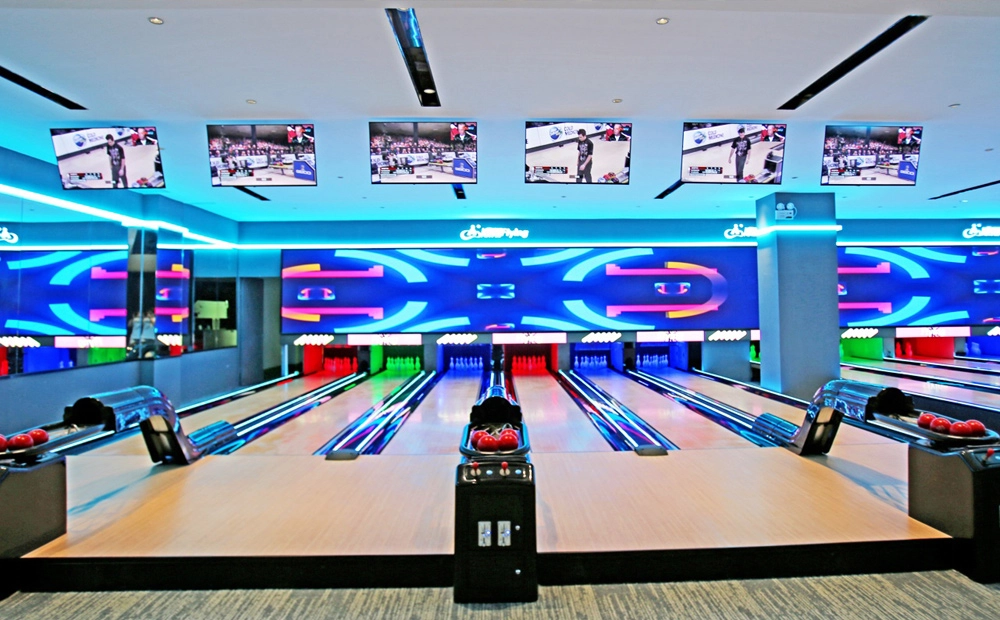
Mini Bowling Equipment for Kids and Family Entertainment Venues
You may also like
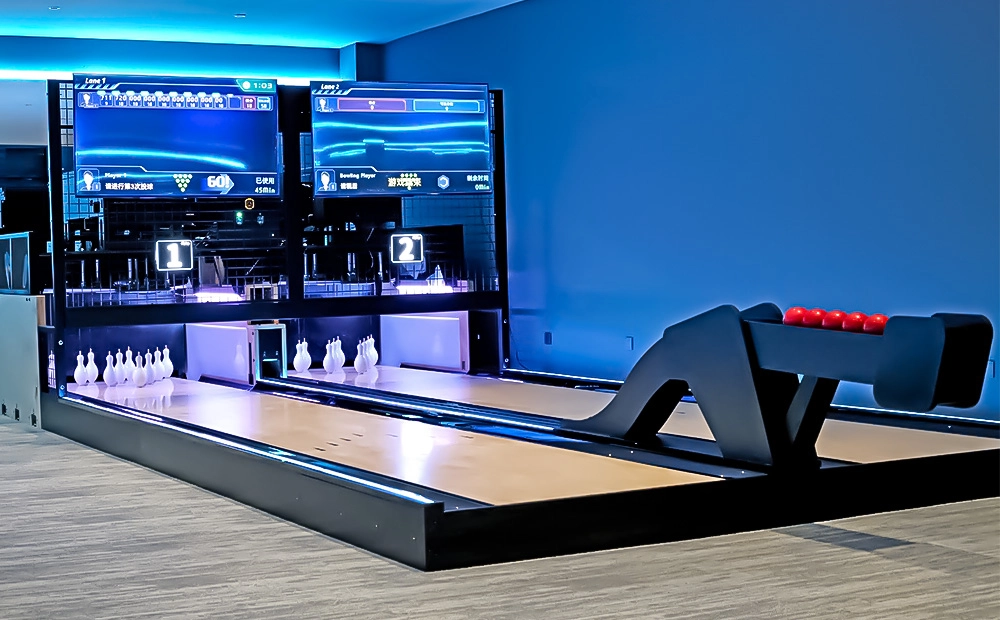
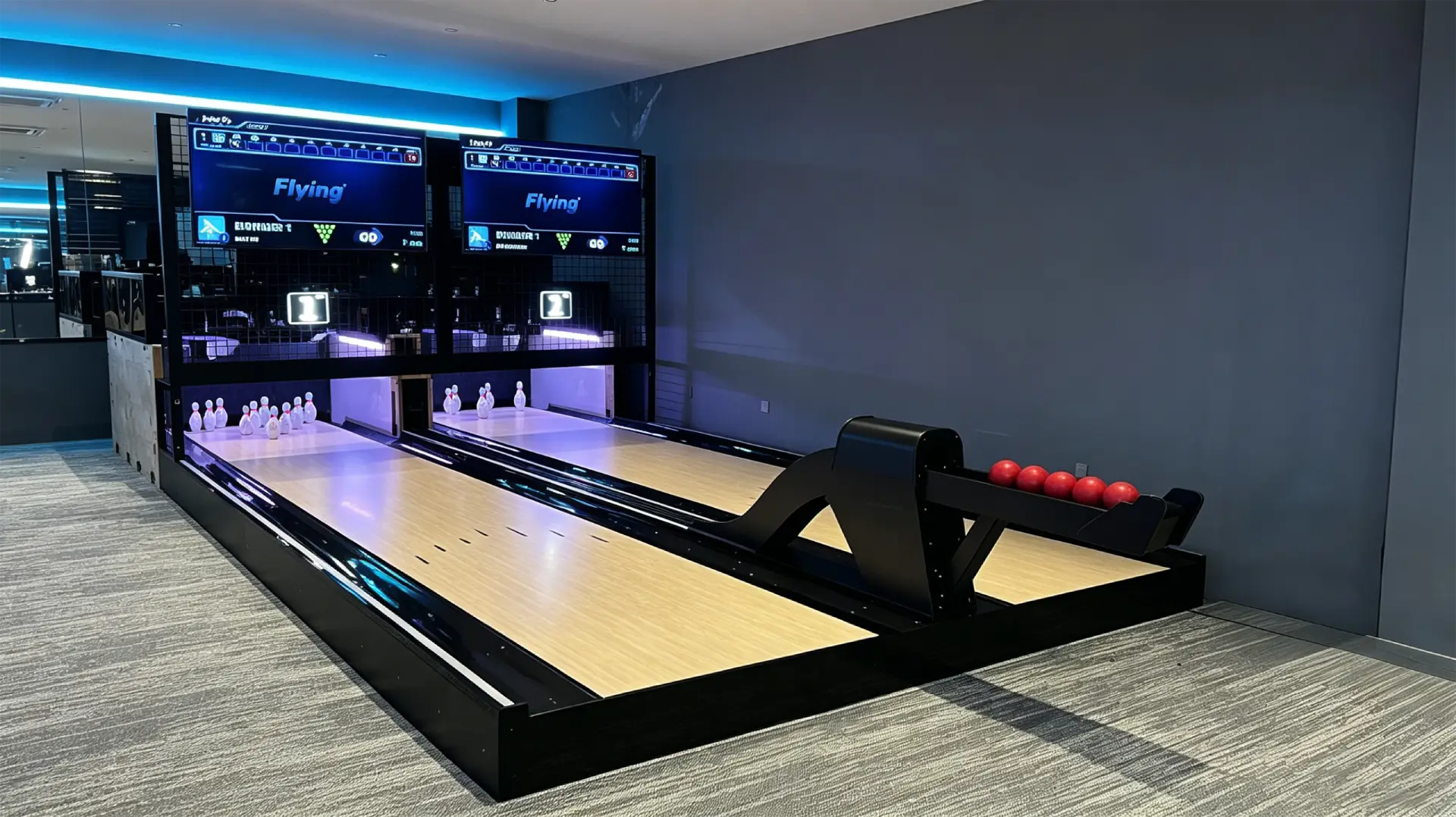
Flying Smart Duckpin Bowling (FSDB) innovative design, standard 9.2-meter short lane, can be shortened in length, compact layout suitable for small spaces. The game rules are simple but challenging, attracting players of different ages to actively participate.
Suitable for social entertainment venues such as bars, billiard halls, and game centers, it not only enhances interactivity but also increases the popularity and consumption frequency of the venue. The fun and competitive nature of FSDB will make it a new focus of social activities.
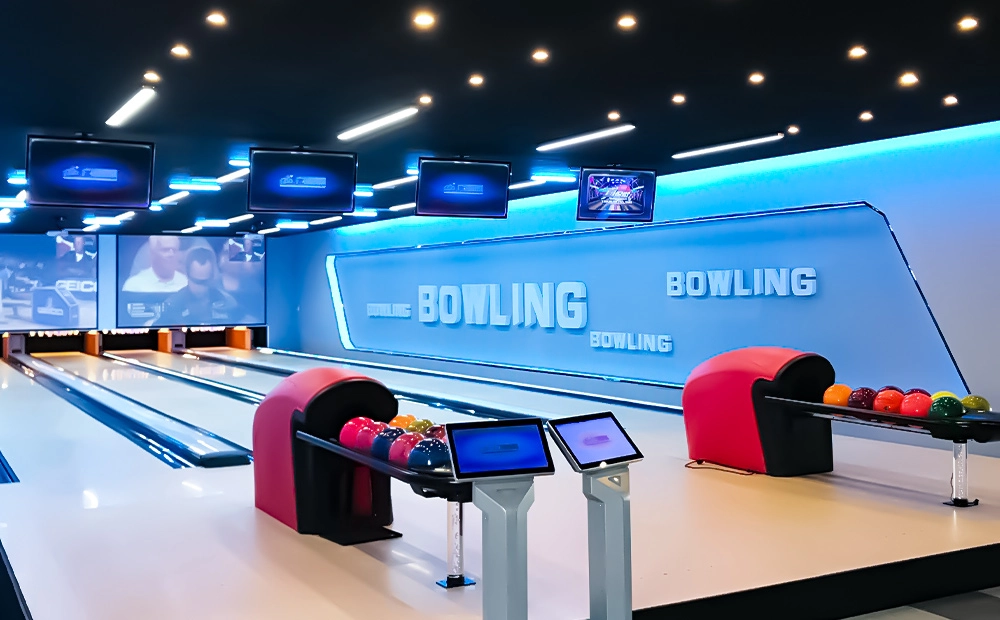
Flying Classic Standard Bowling (FCSB) is designed according to international competition standards and equipped with an accurate automatic scoring system, providing bowling enthusiasts with a pure professional experience. Whether it is for competitions or leisure entertainment, FCSB can meet high-level needs.
Suitable for family entertainment centers, luxury resorts, private villas, or clubs, it is an ideal choice for customers who pursue high-end quality and professional experience. Its classic design and excellent performance will add lasting appeal to the venue.
Flying Cute Mini Bowling (FCMB) is a mini bowling experience designed for children and families. The lane length is fixed at 12 meters, equipped with lightweight balls without finger holes (only 1.25kg) and small pins, specially designed for children and family fun.
It can not only help children feel the fun of bowling, but also stimulate their interest and competitive consciousness. Suitable for children's playgrounds, theme parks and parent-child centers, it is the best choice for places focusing on the children's market.
Flying Social Medium Bowling (FSMB) is tailored for small venues, with flexible lane lengths (customizable from 9.6 meters to 18 meters), a small ball design suitable for players of all ages, and light pins that are easier to knock down, increasing participation and fun.
Whether it is a gathering of friends or a casual social, FSMB can easily create a relaxed and pleasant atmosphere. Its efficient space-utilization design is particularly suitable for cafes, bars and community entertainment venues, allowing people to fall in love with bowling in a relaxed interaction.
Contact Flying
Start your bowling alley project
If you contact us now for more details, we can provide you with a custom bowling alley service. Our service team will get back to you within 24 hours normally!
© 2026 Flying BOWLING. Designed by gooeyun.
FOLLOW US:
Flying Bowling
Flying Bowling
Flyingbowling
Flyingbowling