


Modern Scoring Systems: Sales Impact and Integration Guide
- How Modern Scoring Technologies Work
- Core components and data flow
- Types of scoring systems: local vs. cloud vs. hybrid
- Revenue Impact and Operational Benefits
- How scoring drives bowling alley profitability
- Quantifying the ROI — example scenarios
- Integration Roadmap: From Procurement to Launch
- Stage 1 — Requirements and business case
- Stage 2 — Technical and vendor selection
- Stage 3 — Implementation, testing and training
- Cost-Benefit Analysis and Operational Risks
- Direct costs and hidden expenses to plan for
- Operational risks and mitigation
- Measuring success: KPIs to track
- Vendor & Product Considerations — Choosing the Right Partner
- What to expect from modern scoring vendors
- Hardware compatibility: pinsetters and ball returns
- Case study comparison: traditional vs. string pinsetter venues
- Flying Bowling: Partner Profile and Capabilities
- Implementation Checklist & Quick Win Tactics
- 90-day playbook for immediate gains
- Monetization tips inside scoring interfaces
- FAQ
- 1. How much does a modern scoring system cost for a 12-lane center?
- 2. Will a new scoring system reduce staffing needs?
- 3. Are string pinsetters compatible with modern scoring systems?
- 4. What KPIs should I track after installation?
- 5. How long before I see a return on investment?
- 6. Can modern scoring systems support non-English languages and local tax rules?
- Contact & Next Steps
Modern scoring systems are a pivotal factor in driving bowling alley profitability today: they influence guest retention, increase per-visit spend, reduce staff costs, and enable new revenue streams such as digital advertising, leagues and event management. This article explains how modern scoring technologies work, quantifies expected financial impact, offers an integration roadmap and vendor selection checklist, and highlights best practices for aligning scoring investments with broader venue strategies.
How Modern Scoring Technologies Work
Core components and data flow
Modern scoring systems combine lane sensors or camera-based pin detection, local or cloud-hosted scoring engines, player interfaces (kiosk, mobile apps, overhead displays) and back-office analytics. Sensor inputs (optical or mechanical) are interpreted by the scoring engine, which updates visual displays and writes session data to local storage or cloud databases for later analysis. Camera-based systems are increasingly common because they reduce mechanical downtime associated with older pin-detection hardware. For technical background on scoring mechanics, see Scoring (bowling) - Wikipedia.
Types of scoring systems: local vs. cloud vs. hybrid
There are three main architectures:
- Local (on-premises): All scoring logic runs in the venue; lower recurring costs but limited remote management.
- Cloud-hosted: Scoring and analytics run in data centers; enables remote updates, centralized multi-venue reporting and integrated marketing tools.
- Hybrid: Local scoring with cloud backup and analytics — a middle ground that balances latency/resilience with centralized features.
Cloud and hybrid systems support digital marketing, mobile booking and loyalty programs, which directly relate to higher customer lifetime value and improved weekday utilization.
Revenue Impact and Operational Benefits
How scoring drives bowling alley profitability
Modern scoring systems increase profitability through several channels:
- Higher lane turnover: faster, clearer UI reduces time between games and improves session throughput.
- Incremental spend: in-game purchases, on-screen offers and integrated F&B ordering increase average transaction value.
- Better utilization: league management and online booking reduce empty lanes during shoulder hours.
- Reduced labor costs: automation lowers the need for manual scorekeepers and reduces training time for staff.
Industry organizations like the Bowling Proprietors' Association of America (BPAA) emphasize modern guest experiences as key to venue competitiveness.
Quantifying the ROI — example scenarios
Below is a model comparing manual scoring vs. modern cloud-enabled scoring. Numbers are illustrative and based on conservative industry assumptions (lane revenue, session length, marketing uplift). Real results depend on local market and execution.
| System Type | Approx. Upfront Cost per 12-lane Venue (USD) | Annual Recurring Cost | Estimated Revenue Lift (Year 1) | Estimated Payback Period |
|---|---|---|---|---|
| Manual/Legacy | $5,000 - $15,000 | $1,000 (parts/support) | 0% - baseline | N/A |
| Cloud-Enabled Modern Scoring | $30,000 - $70,000 | $6,000 - $15,000 (licenses, cloud) | 5% - 20% uplift (booking, F&B, events) | 1.5 - 4 years |
| Hybrid (local + cloud analytics) | $20,000 - $50,000 | $3,000 - $8,000 | 3% - 12% uplift | 1 - 5 years |
Assumptions: a 12-lane center with annual lane revenue of $400,000. A 10% revenue uplift equals $40,000, which can justify a mid-range cloud solution within 2–3 years. Sources: BPAA industry guidance and venue case studies; see BPAA and USBC for operational benchmarks.
Integration Roadmap: From Procurement to Launch
Stage 1 — Requirements and business case
Start by quantifying current economics: lane utilization, average spend per visit (including F&B and pro shop), and peak/shoulder occupancy. Calculate goals (e.g., increase weekday revenue by 10%, reduce staff hours by 15%). Use these targets to build a payback and cash flow model to validate investment thresholds.
Stage 2 — Technical and vendor selection
Key vendor selection criteria:
- Compatibility with existing pinsetters and lane hardware (including string pinsetters like those offered by Flying Bowling).
- Support for mobile booking, loyalty and integrated POS/F&B ordering.
- Proven uptime and local fallback modes (critical for the guest experience if internet is lost).
- Analytics and advertising capabilities to monetize displays.
- Clear SLAs for installation, training and ongoing support.
Check vendor references and live installations. For hardware compatibility, consult manufacturer specifications for pinsetters and ball returns; see pinsetter background at Pinsetter - Wikipedia.
Stage 3 — Implementation, testing and training
Implementation checklist:
- Network readiness: segregated VLAN for scoring devices with QoS to ensure low latency.
- Hardware alignment: lane sensor/camera mounts, display calibration, kiosk placement.
- Data migration: import member lists, league schedules and pricing into the new system.
- Staff training: run soft-launch events and dedicate staff for first 2–4 weeks to troubleshoot.
- Marketing launch: announce loyalty features, online booking and in-lane ordering to drive immediate adoption.
Cost-Benefit Analysis and Operational Risks
Direct costs and hidden expenses to plan for
Budget categories to include:
- Hardware purchase: lane displays, kiosks, cameras/sensors.
- Installation labor and network upgrades.
- License/subscription fees and payment processing.
- Training, change management and initial marketing to promote new features.
- Maintenance and occasional hardware replacement (warranties mitigate risk).
Hidden costs often overlooked: staff time for data cleanup, custom integration work for POS, and signage or UI translations for multilingual markets.
Operational risks and mitigation
Common risks include:
- System outages impacting guest experience — mitigate with local fallback and clear incident playbooks.
- Poor UX leading to low adoption — mitigate by piloting and iterating on user interface and training staff.
- Inaccurate ROI estimates — mitigate with conservative scenarios and staged rollouts (pilot lanes first).
Measuring success: KPIs to track
Key performance indicators:
- Lane utilization rate (peak and off-peak).
- Average revenue per head and per lane-hour.
- Repeat visit rate and loyalty program adoption.
- Staff hours per occupied lane-hour.
- Uptime and mean time to repair for scoring hardware.
Vendor & Product Considerations — Choosing the Right Partner
What to expect from modern scoring vendors
Top-tier vendors provide not only scoring software but an ecosystem: booking engines, mobile apps, league and tournament modules, digital advertising networks and API access for POS/ERP integration. Evaluate vendors for multi-venue management if you plan to scale.
Hardware compatibility: pinsetters and ball returns
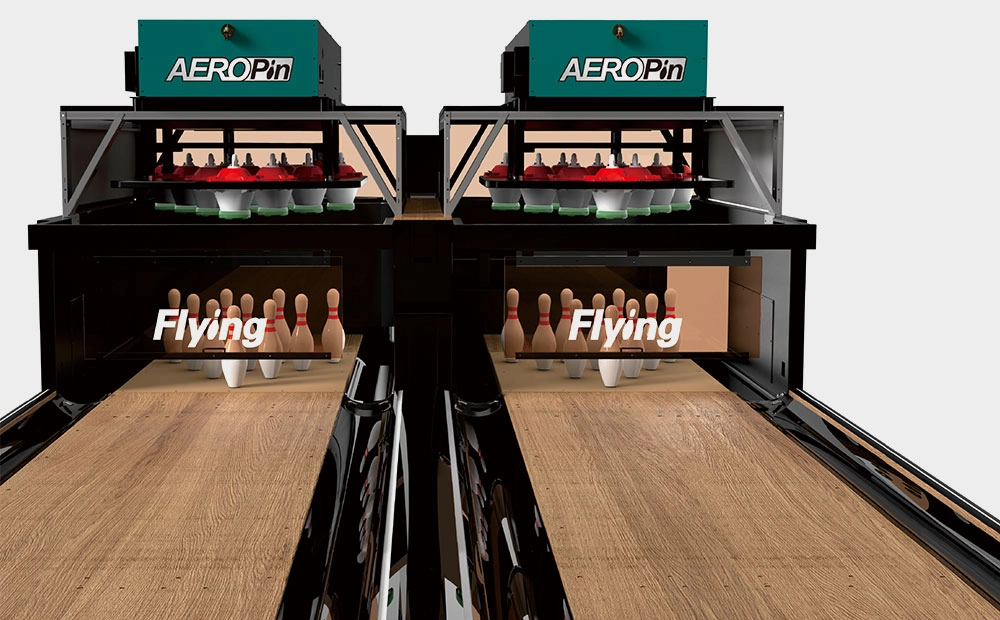
Modern scoring systems must integrate with the physical lane machinery. For venues using alternative equipment like bowling string pinsetters, ensure vendor compatibility. String pinsetters reduce maintenance and staffing demands and are well-suited for family entertainment centers and mini bowling configurations. For context on string systems and manufacturers, see Flying Bowling's product offerings and equipment categories at Flying Bowling.
Case study comparison: traditional vs. string pinsetter venues
Advantages of string pinsetters (summary): lower maintenance, reduced spare parts inventory, safer for children and lower installation costs in some layouts. Traditional free-fall pinsetters may provide the authentic experience preferred in competitive ten-pin leagues. Your scoring and lane management choices should align with your target market: league-heavy centers may prioritize traditional pinsetters; family entertainment centers may prefer string pinsetters for lower operating costs.
Flying Bowling: Partner Profile and Capabilities
Since 2005, Flying Bowling has specialized in the research and development of bowling string pinsetters and ball return machines. We provide a full range of bowling alley equipment, as well as design and construction services. Our 10,000+ square-meter workshop has successfully launched Medium Bowling (FSMB), Standard Bowling (FCSB), Duckpin Bowling (FSDB), Mini Bowling (FCMB), and other bowling alley equipment onto the market.Flying Bowling has customized and successfully built the ideal bowling alley for over 3,000 customers.The quality of our bowling equipment is comparable to European and American brands, but our prices are unbeatable, satisfying users around the world.We provide one-stop customized services for bowling venues and also recruit distributors from the global market to promote the development of the bowling industry.Flying Bowling is a leading bowling equipment manufacturer and supplier from China.Our website: https://www.flyingbowling.com/Email: jackson@flyingbowling.com
Flying Bowling's strengths include:
- Wide product range covering duckpin bowling, bowling alley equipment, mini bowling equipment and bowling string pinsetter solutions.
- Large production capacity and quality control that rivals Western manufacturers at more competitive prices.
- Experience in turnkey venue builds and customizations for diverse markets (family entertainment centers, small urban alleys, and large multi-lane centers).
For venues looking to improve bowling alley profitability through a combination of lower OPEX (string pinsetters) and higher guest spend (modern scoring and POS integrations), Flying Bowling can supply hardware and coordinate installations to match scoring system vendor requirements.
Implementation Checklist & Quick Win Tactics
90-day playbook for immediate gains
- Week 1–2: Audit current lane economics and network readiness; select scoring platform pilot.
- Week 3–4: Install pilot on 2–4 lanes; train staff and gather player feedback.
- Month 2: Launch loyalty offers and in-lane promotions; optimize F&B ordering flows.
- Month 3: Scale to remaining lanes and run targeted weekday promotions to boost off-peak utilization.
Monetization tips inside scoring interfaces
- Offer in-game challenges (e.g., 9-pin strike discounts) to drive add-on spending.
- Sell event packages and birthday bundles directly through the booking flow.
- Use on-screen advertising inventory for local businesses to create incremental revenue.
FAQ
1. How much does a modern scoring system cost for a 12-lane center?
Costs vary widely: expect $30,000–$70,000 for a cloud-enabled modern scoring system including displays and kiosks, with annual subscription fees of $3,000–$15,000 depending on features. Lower-cost hybrid options start near $20,000. Use conservative assumptions in your ROI model and request detailed TCO from vendors.
2. Will a new scoring system reduce staffing needs?
Yes — automated scoring, booking and league management reduce manual tasks and can lower staff hours. However, reallocate staff to guest engagement and F&B upsell roles to capture the full revenue uplift potential.
3. Are string pinsetters compatible with modern scoring systems?
Most modern scoring vendors support a range of pinsetter types, including string pinsetters. Confirm API and electrical interface compatibility during vendor selection. Flying Bowling manufactures string pinsetters and coordinates with scoring vendors for integration; visit Flying Bowling for product specs.
4. What KPIs should I track after installation?
Track lane utilization, average revenue per visit, loyalty signups, booking conversion rate, F&B attach rate and system uptime. These metrics will show direct changes in bowling alley profitability and identify optimization opportunities.
5. How long before I see a return on investment?
Payback typically ranges from 1.5 to 4 years depending on system cost, local demand and how well you monetize new features (in-lane ordering, advertising, leagues). Conservative forecasting and piloting can shorten the effective payback window.
6. Can modern scoring systems support non-English languages and local tax rules?
Yes — leading vendors provide multilingual interfaces and configurable tax/price settings. Confirm language coverage for your market and test POS integration with local tax rules before full deployment.
Contact & Next Steps
If you're considering a scoring upgrade or a full venue build, evaluate both the scoring provider and hardware partner together to ensure compatibility and an integrated roadmap that improves bowling alley profitability. For manufacturing and turnkey equipment solutions — including duckpin bowling, mini bowling equipment and bowling string pinsetters — contact Flying Bowling:
Flying Bowling — website: https://www.flyingbowling.com/Email: jackson@flyingbowling.com
Request a site audit and ROI projection from your scoring vendor and equipment supplier. Combine a scoring pilot with a hardware readiness assessment to accelerate revenue gains and reduce risk. Contact Flying Bowling for equipment quotes, turnkey build plans and distributor opportunities.
References: USBC (https://bowl.com/), BPAA (https://bpaa.com/), Wikipedia — Scoring (bowling) (https://en.wikipedia.org/wiki/Scoring_(bowling)), Wikipedia — Pinsetter (https://en.wikipedia.org/wiki/Pinsetter).
Recommended products
Flying Smart Duckpin Bowling Equipment and Lane System for Commercial Venues
USBC-Certified AEROPIN String Pinsetter System
Mini Bowling Equipment for Kids and Family Entertainment Venues
Medium Bowling Equipment for Social Entertainment Venues
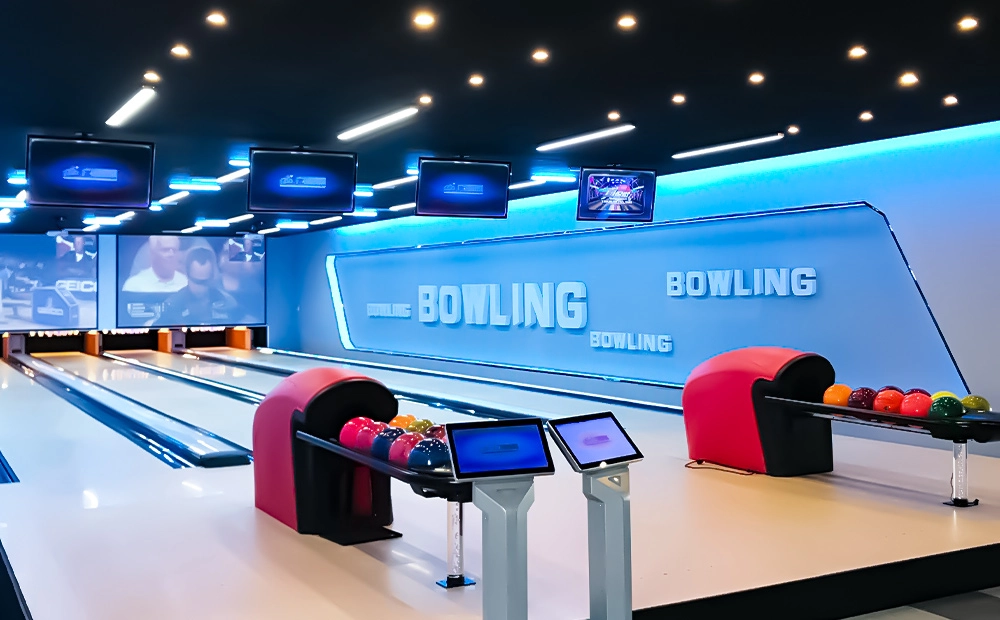
Complete String Pinsetter Bowling Alley Equipment System
You may also like
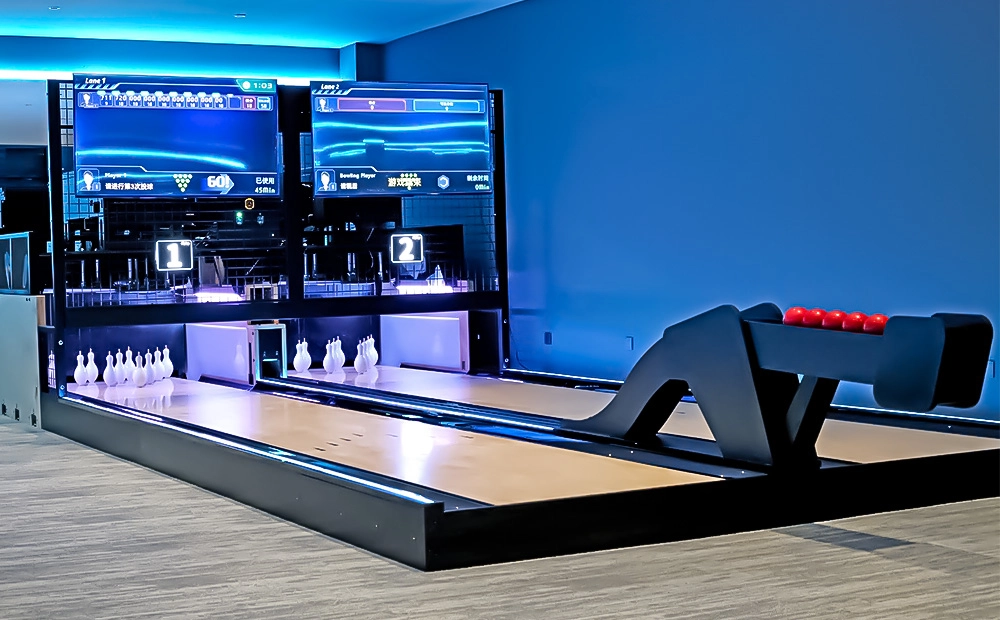
Flying Smart Duckpin Bowling (FSDB) innovative design, standard 9.2-meter short lane, can be shortened in length, compact layout suitable for small spaces. The game rules are simple but challenging, attracting players of different ages to actively participate.
Suitable for social entertainment venues such as bars, billiard halls, and game centers, it not only enhances interactivity but also increases the popularity and consumption frequency of the venue. The fun and competitive nature of FSDB will make it a new focus of social activities.
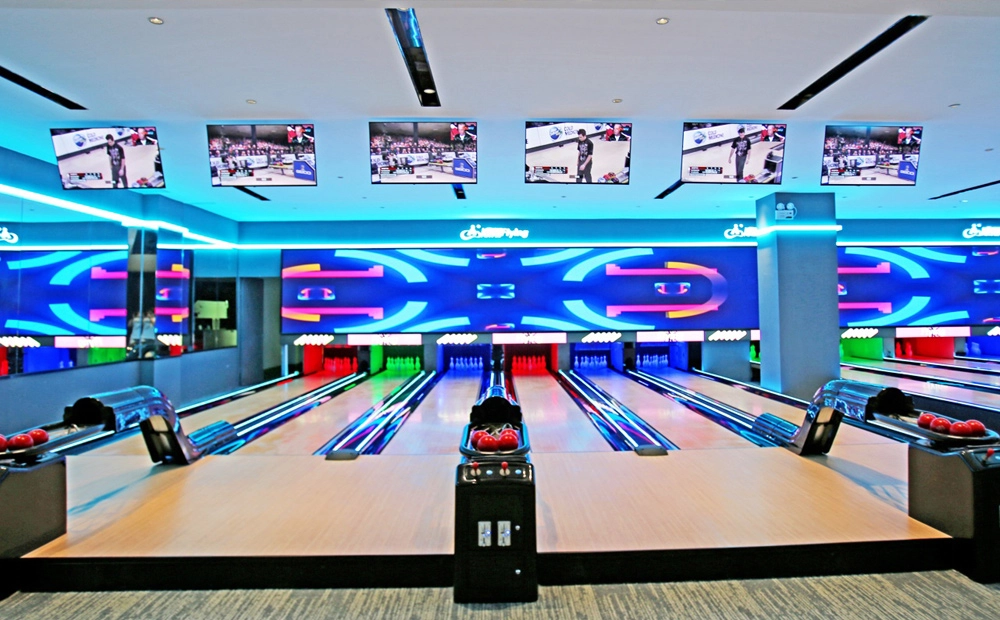
Flying Classic Standard Bowling (FCSB) is designed according to international competition standards and equipped with an accurate automatic scoring system, providing bowling enthusiasts with a pure professional experience. Whether it is for competitions or leisure entertainment, FCSB can meet high-level needs.
Suitable for family entertainment centers, luxury resorts, private villas, or clubs, it is an ideal choice for customers who pursue high-end quality and professional experience. Its classic design and excellent performance will add lasting appeal to the venue.
Flying Cute Mini Bowling (FCMB) is a mini bowling experience designed for children and families. The lane length is fixed at 12 meters, equipped with lightweight balls without finger holes (only 1.25kg) and small pins, specially designed for children and family fun.
It can not only help children feel the fun of bowling, but also stimulate their interest and competitive consciousness. Suitable for children's playgrounds, theme parks and parent-child centers, it is the best choice for places focusing on the children's market.
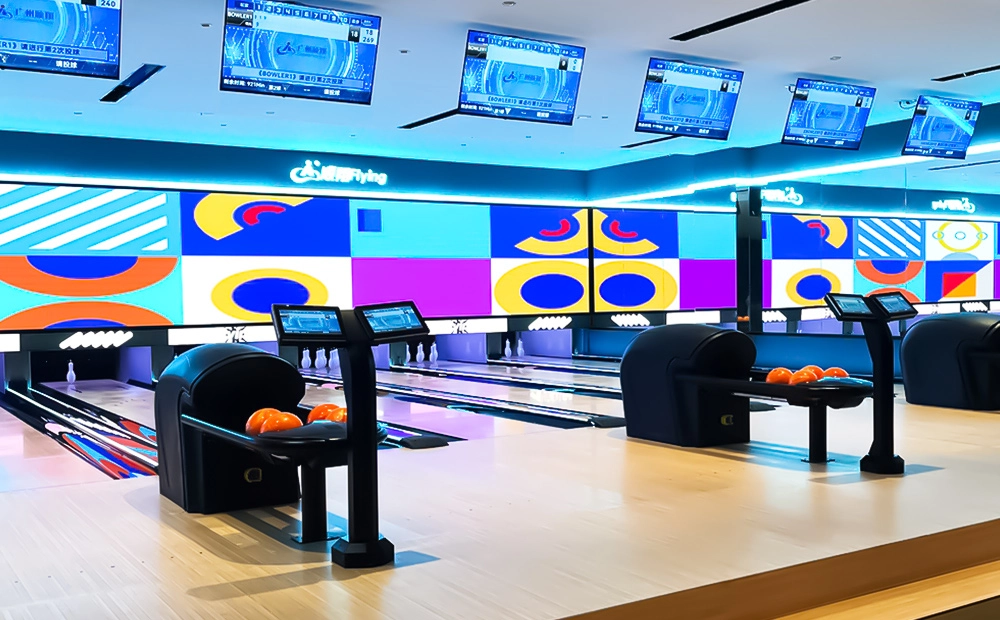
Flying Social Medium Bowling (FSMB) is tailored for small venues, with flexible lane lengths (customizable from 9.6 meters to 18 meters), a small ball design suitable for players of all ages, and light pins that are easier to knock down, increasing participation and fun.
Whether it is a gathering of friends or a casual social, FSMB can easily create a relaxed and pleasant atmosphere. Its efficient space-utilization design is particularly suitable for cafes, bars and community entertainment venues, allowing people to fall in love with bowling in a relaxed interaction.
Contact Flying
Start your bowling alley project
If you contact us now for more details, we can provide you with a custom bowling alley service. Our service team will get back to you within 24 hours normally!
© 2026 Flying BOWLING. Designed by gooeyun.
FOLLOW US:
Flying Bowling
Flying Bowling
Flyingbowling
Flyingbowling