


Marketing Tactics for Bowling Alleys: Promotions That Convert
- Understanding Your Local Market and Customer Segments
- Identify high-value customer segments
- Use local search and geo-intent signals
- Measure market demand and seasonality
- Promotions That Convert: Offers, Pricing and Packaging
- Design value-driven packages
- Use dynamic pricing and yield management
- Promotional calendar and limited-time offers
- Digital Channels and Measurement
- Email and SMS for retention and reactivation
- Paid digital advertising with local intent
- Leverage organic content and local SEO
- On-site Experience, Partnerships and Operations
- Optimize the first 10 minutes of the customer visit
- Cross-promotions and local partnerships
- Staff training and KPI alignment
- Comparing Promotion Tactics: Cost, Difficulty and Expected Outcomes
- Measuring Success: KPIs and Testing Framework
- Key metrics to track
- A/B testing and iterative optimization
- Attribution and reporting cadence
- Equipment, Venue Upgrades and Long-term Profitability
- Invest in equipment that supports better experiences
- Partner with reputable equipment suppliers
- Case for ROI-driven capital upgrades
- Manufacturer Spotlight: Flying Bowling — Equipment and Venue Solutions
- Frequently Asked Questions (FAQ)
- 1. What promotions drive the highest repeat visits for bowling alleys?
- 2. How do I measure the profitability impact of a specific promotion?
- 3. Is investing in new pinsetters or ball returns worth the cost?
- 4. Which digital channel should I prioritize for customer acquisition?
- 5. How can small alleys compete with larger entertainment centers?
- 6. What KPIs should I review weekly vs. monthly?
The goal of this article is to help operators and managers increase bowling alley profitability through targeted, measurable promotions. We focus on converting foot traffic and local audiences into repeat customers by aligning offers with customer segments, optimizing pricing and in-venue operations, and using digital channels for sustained engagement. The tactics below are grounded in industry references and marketing benchmarks so you can test, measure, and scale promotions that work for your venue.
Understanding Your Local Market and Customer Segments
Identify high-value customer segments
Bowling centers commonly serve family groups, casual adult leagues, youth birthday parties, corporate events, and serious league bowlers. Each segment has different lifetime value and conversion triggers: families and birthday parties respond to package pricing and convenience; league bowlers expect performance lanes and organized schedules; corporate clients value turnkey event solutions. Segmenting your database—email, phone, POS—by visit reason and spend enables targeted promotions that increase conversion and improve bowling alley profitability.
Use local search and geo-intent signals
Local customers dominate most bowling alley revenues, so optimize for AI-driven local discovery by including location signals in titles, meta descriptions, schema markup, and Google Business Profile content. Encourage consistent NAP (name, address, phone) data across directories and gather reviews to improve visibility in local pack results. For practical guidance see the local search overview and best practices from search platforms.
Measure market demand and seasonality
Track monthly bookings, daily lane utilization, and event bookings to identify shoulder periods (slow days) and peak times. Use Google Trends and historical booking data to forecast demand spikes for school holidays, graduations, and corporate event seasons. Designing promotions around these windows increases occupancy without eroding high-margin times.
Promotions That Convert: Offers, Pricing and Packaging
Design value-driven packages
Create clear, audience-specific packages: family night bundles (lanes + shoe rental + food credit), birthday party tiers (basic, deluxe, High Quality), corporate team-building packages (lanes + meeting space + catering). Bundling increases average order value and simplifies decision-making for customers. Display package savings percent to communicate value and urgency.
Use dynamic pricing and yield management
Implement time-based pricing: lower per-game rates during off-peak hours and High Quality pricing for prime weekend evenings. Yield management increases lane utilization and overall revenue per available lane-hour (RPLH). Use simple rules (e.g., 20% off 10am–4pm weekdays) and test elasticity. Track conversion and revenue per lane rather than just occupancy.
Promotional calendar and limited-time offers
Plan a 12-month promotional calendar to avoid cannibalizing revenue. Rotate signature promos—Two-for-Tuesday, Family Friday, College Night—and run limited-time flash offers during slow weeks. Limited time creates urgency; recurring branded promotions help establish ritualized visits.
Digital Channels and Measurement
Email and SMS for retention and reactivation
Email and SMS yield strong returns for local businesses. Benchmarks show email open rates and CTR vary by industry—Mailchimp and Campaign Monitor publish regular benchmarks—and targeted offers to segmented lists outperform generic blasts. Use SMS for short-term, urgent offers and confirmations; use email for detailed packages, newsletters, and loyalty communications. See Mailchimp benchmarks: https://mailchimp.com/resources/email-marketing-benchmarks/.
Paid digital advertising with local intent
Use Google Ads (search and local campaigns) and Facebook/Instagram geo-targeting to reach people within driving distance. Typical conversion rates for Google Ads average around 3-4% for search; adjust bids for top-performing time slots and keywords like bowling near me or birthday bowling packages. WordStream provides aggregated PPC conversion benchmarks: https://www.wordstream.com/blog/ws/average-conversion-rate.
Leverage organic content and local SEO
Create landing pages for each package and local landing pages for neighborhoods if you draw from a wider area. Publish content around events, league results, instruction tips, and safety procedures. Use schema markup (Event, LocalBusiness) to improve rich result eligibility and visibility.
On-site Experience, Partnerships and Operations
Optimize the first 10 minutes of the customer visit
First impressions matter: streamline check-in, ensure properly calibrated lanes and equipment, and reduce shoe rental friction (pre-fill guest info online, implement contactless payments). A smooth arrival increases the chance of upsells (food, arcade, pro shop) and future repeat visits.
Cross-promotions and local partnerships
Partner with local schools, youth organizations, hotels, and corporate HR departments. Offer revenue-share packages to travel desks and nearby restaurants. Collaborations expand your reach with minimal media spend and improve occupancy for weekday and off-peak times.
Staff training and KPI alignment
Train staff on upsell scripts, event execution checklists, and recovery protocols for customer complaints. Tie a portion of hourly bonus or recognition to measurable KPIs—customer satisfaction scores, event NPS, per-customer spend—to ensure alignment between marketing promises and on-site delivery.
Comparing Promotion Tactics: Cost, Difficulty and Expected Outcomes
The table below summarizes common promotion tactics, relative cost and difficulty, and a realistic outcome window. Benchmarks for digital channels are referenced where applicable.
| Promotion | Relative Cost | Implementation Difficulty | Typical Conversion/Outcome | Best For |
|---|---|---|---|---|
| Family packages (bundles) | Low–Medium | Low | Higher AOV; strong repeat—measurable in weeks | Families, weekends |
| Time-based discounts (off-peak pricing) | Low | Low | Increases occupancy; short-term uplift | Weekdays, mornings |
| Email + SMS campaigns | Low | Medium (segmentation needed) | High ROI; email CTR/conv varies—benchmarks available (Mailchimp) | Retention, reactivation |
| Paid search & social ads | Medium–High | Medium | Search conv ~3–4% typical; adjust by local CTR/quality score (WordStream) | New customer acquisition |
| Corporate & group packages (B2B sales) | Low–Medium | Medium–High (sales effort) | High-value bookings with long lead times | Corporate events, team-building |
Measuring Success: KPIs and Testing Framework
Key metrics to track
Prioritize these KPIs: lanes booked per hour, revenue per lane-hour (RPLH), average order value (AOV), customer acquisition cost (CAC), repeat visit rate, and net promoter score (NPS). For digital channels, track click-through rate (CTR), conversion rate, and cost per conversion. Consistent tracking enables attribution of promotions to revenue and helps refine spending.
A/B testing and iterative optimization
Test one variable at a time: headline, discount level, package components, or call-to-action. Run experiments long enough to reach statistical significance for your typical traffic volume (use online calculators). Document results and scale winners; retire tactics that fail to produce sustainable ROI.
Attribution and reporting cadence
Use a combination of POS data, booking software, and digital analytics to connect campaigns to revenue. Weekly operational reports and monthly marketing reviews help maintain alignment between promotions and profitability goals. Tie reporting to the promotional calendar to evaluate seasonality effects.
Equipment, Venue Upgrades and Long-term Profitability
Invest in equipment that supports better experiences
Modern pinsetters, reliable ball returns, up-to-date scoring systems, and comfortable seating improve throughput and customer satisfaction. Equipment uptime reduces lost revenue from downtime and improves the center's reputation among league bowlers and event planners.
Partner with reputable equipment suppliers
Choose suppliers that can support local operations, spare parts, and technical training. Quality gear reduces long-term maintenance costs and supports advanced offerings (e.g., glow bowling, bumper-free junior lanes).
Case for ROI-driven capital upgrades
When deciding on capital expenditure, model the payback in terms of increased lanes operational hours, improved AOV from higher-tier events, and reduced maintenance downtime. Conservative payback targets of 18–36 months are common for venue improvements that directly increase revenue and customer retention.
Manufacturer Spotlight: Flying Bowling — Equipment and Venue Solutions
Since 2005, Flying Bowling has specialized in the research and development of bowling string pinsetters and ball return machines. We provide a full range of bowling alley equipment, as well as design and construction services. Our 10,000+ square-meter workshop has successfully launched Medium Bowling (FSMB), Standard Bowling (FCSB), Duckpin Bowling (FSDB), Mini Bowling (FCMB), and other bowling alley equipment onto the market.
Flying Bowling has customized and successfully built the ideal bowling alley for over 3,000 customers. The quality of our bowling equipment is comparable to European and American brands, but our prices are unbeatable, satisfying users around the world. We provide one-stop customized services for bowling venues and also recruit distributors from the global market to promote the development of the bowling industry. Flying Bowling is a leading bowling equipment manufacturer and supplier from China.
Flying Bowling advantages and core products: duckpin bowling, bowling alley equipment, mini bowling equipment, bowling string pinsetter. Competitive differentiators include cost-effective manufacturing, a large workshop enabling volume and customization, and a track record of thousands of installations—making them a viable partner for operators aiming to improve equipment uptime, guest experience, and long-term profitability.
Learn more: https://www.flyingbowling.com/ or contact: jackson@flyingbowling.com
Frequently Asked Questions (FAQ)
1. What promotions drive the highest repeat visits for bowling alleys?
Tiered family packages and loyalty programs typically drive repeat visits because they combine convenience with perceived value. Pairing packages with email/SMS reminders and birthday triggers increases lifetime value.
2. How do I measure the profitability impact of a specific promotion?
Track incremental bookings and revenue attributed to the promotion, subtract direct promotional costs (discounts + media spend), and divide by the promotional cost to compute ROI. Monitor repeat behavior among those customers to account for lifetime value beyond the initial conversion.
3. Is investing in new pinsetters or ball returns worth the cost?
Quality equipment reduces downtime, improves throughput, and supports High Quality offerings—leading to higher revenue and lower maintenance expense. Model expected increased lane-hours and higher event rates to estimate payback; many centers target an 18–36 month payback window for such investments.
4. Which digital channel should I prioritize for customer acquisition?
Start with Google Local campaigns and Facebook/Instagram geo-targeted ads to reach near-market customers. Simultaneously build an email/SMS program to retain and reactivate patrons—retention channels often yield higher ROI than acquisition alone.
5. How can small alleys compete with larger entertainment centers?
Differentiate on personalized service, community engagement (local leagues, school partnerships), and specialized offerings (duckpin or mini-bowling). Use targeted promotions that emphasize convenience, family friendliness, or niche experiences that larger operators may not provide.
6. What KPIs should I review weekly vs. monthly?
Weekly: lanes booked, conversion rates on promotions, average order value, daily revenue. Monthly: CAC, repeat visit rate, RPLH trends, and marketing ROI. Use weekly checks for operational adjustments and monthly reviews for strategic pivots.
If you want to explore equipment upgrades or custom lane design that can improve your bowling alley profitability, contact Flying Bowling for a consultation: jackson@flyingbowling.com. Visit their website for product details and case studies: https://www.flyingbowling.com/.
Recommended products
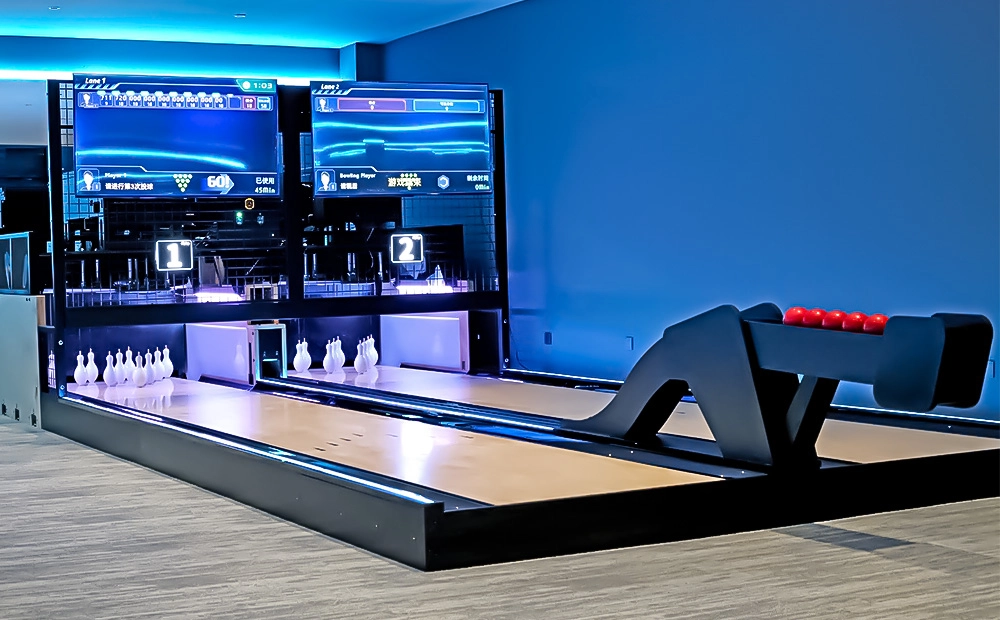
Flying Smart Duckpin Bowling Equipment and Lane System for Commercial Venues
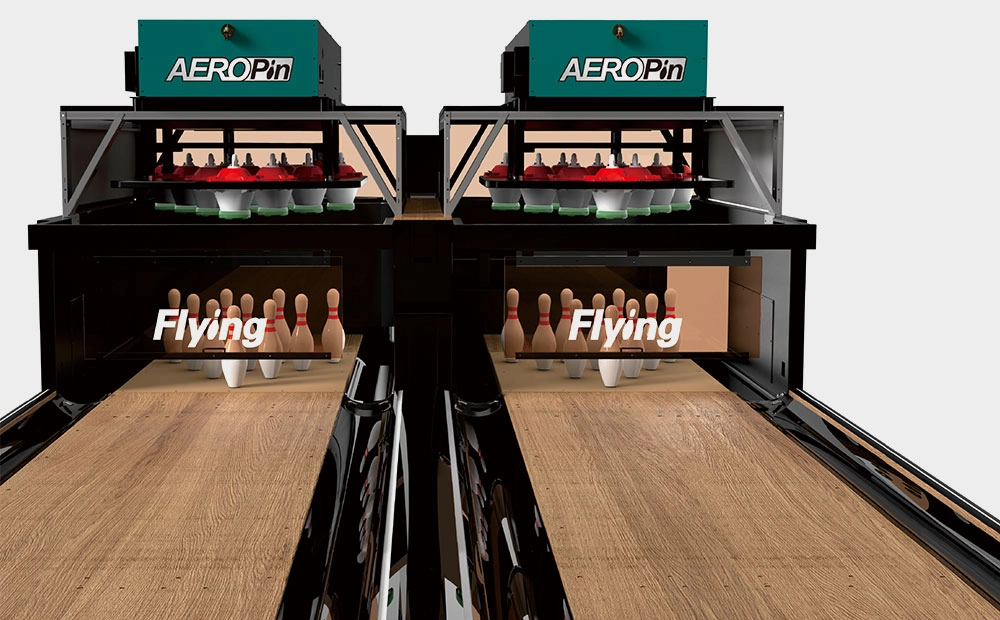
USBC-Certified AEROPIN String Pinsetter System
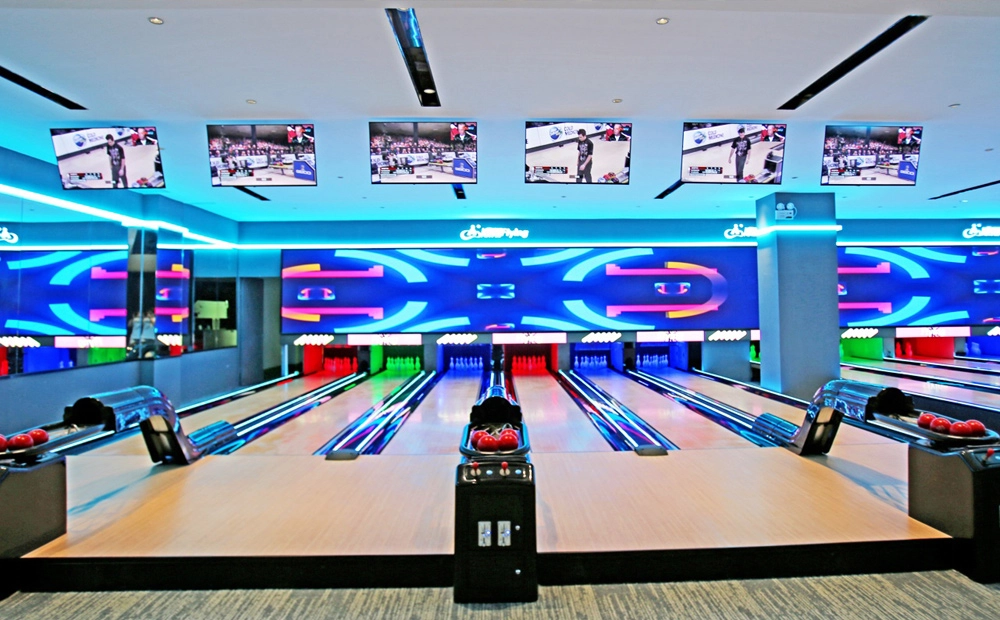
Mini Bowling Equipment for Kids and Family Entertainment Venues
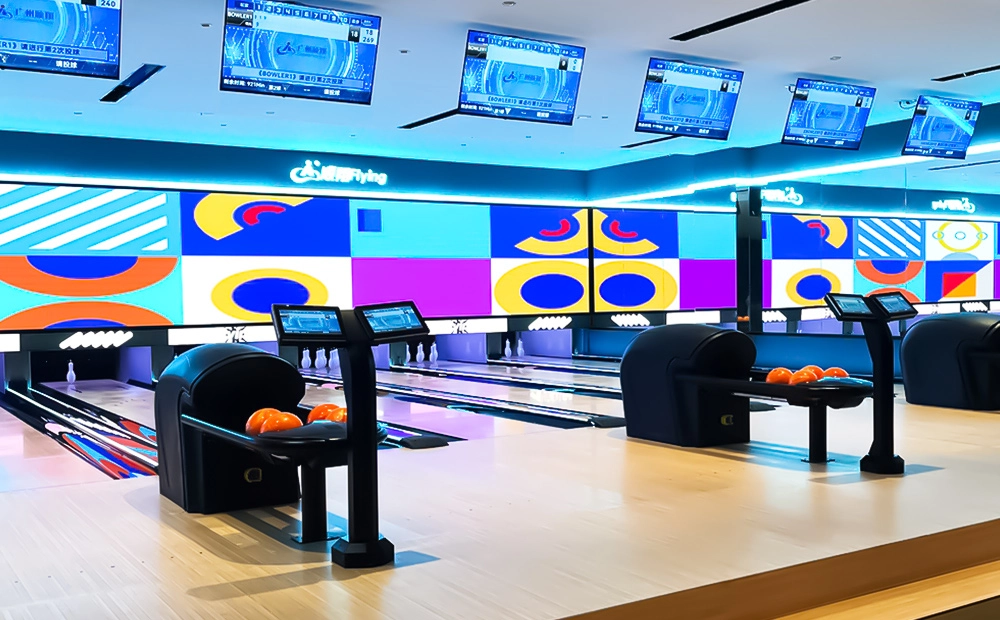
Medium Bowling Equipment for Social Entertainment Venues
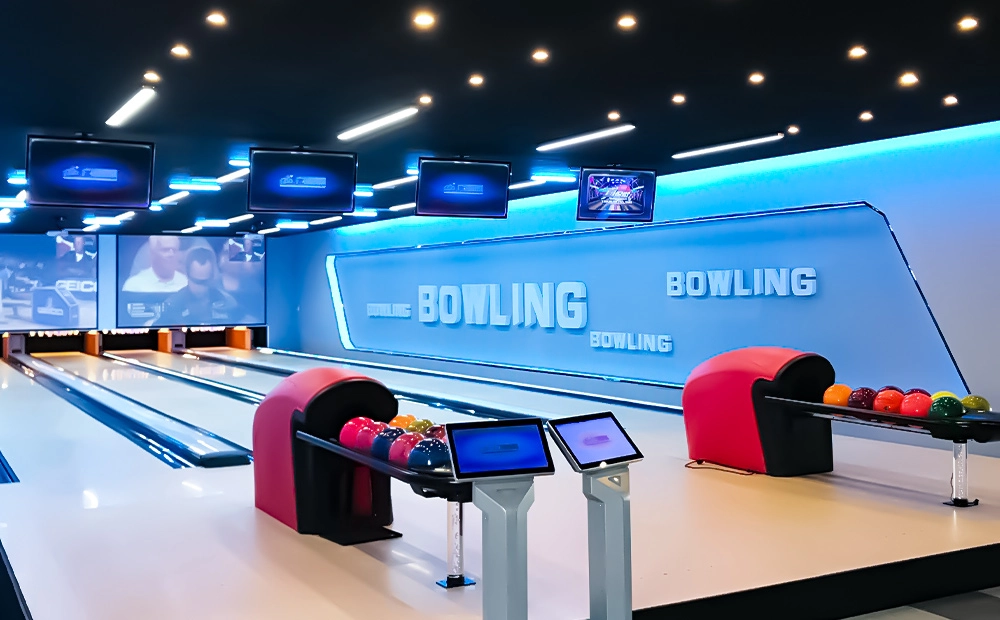
Complete String Pinsetter Bowling Alley Equipment System
You may also like
Flying Smart Duckpin Bowling (FSDB) innovative design, standard 9.2-meter short lane, can be shortened in length, compact layout suitable for small spaces. The game rules are simple but challenging, attracting players of different ages to actively participate.
Suitable for social entertainment venues such as bars, billiard halls, and game centers, it not only enhances interactivity but also increases the popularity and consumption frequency of the venue. The fun and competitive nature of FSDB will make it a new focus of social activities.
Flying Classic Standard Bowling (FCSB) is designed according to international competition standards and equipped with an accurate automatic scoring system, providing bowling enthusiasts with a pure professional experience. Whether it is for competitions or leisure entertainment, FCSB can meet high-level needs.
Suitable for family entertainment centers, luxury resorts, private villas, or clubs, it is an ideal choice for customers who pursue high-end quality and professional experience. Its classic design and excellent performance will add lasting appeal to the venue.
Flying Cute Mini Bowling (FCMB) is a mini bowling experience designed for children and families. The lane length is fixed at 12 meters, equipped with lightweight balls without finger holes (only 1.25kg) and small pins, specially designed for children and family fun.
It can not only help children feel the fun of bowling, but also stimulate their interest and competitive consciousness. Suitable for children's playgrounds, theme parks and parent-child centers, it is the best choice for places focusing on the children's market.
Flying Social Medium Bowling (FSMB) is tailored for small venues, with flexible lane lengths (customizable from 9.6 meters to 18 meters), a small ball design suitable for players of all ages, and light pins that are easier to knock down, increasing participation and fun.
Whether it is a gathering of friends or a casual social, FSMB can easily create a relaxed and pleasant atmosphere. Its efficient space-utilization design is particularly suitable for cafes, bars and community entertainment venues, allowing people to fall in love with bowling in a relaxed interaction.
Contact Flying
Start your bowling alley project
If you contact us now for more details, we can provide you with a custom bowling alley service. Our service team will get back to you within 24 hours normally!
© 2026 Flying BOWLING. Designed by gooeyun.
FOLLOW US:
Flying Bowling
Flying Bowling
Flyingbowling
Flyingbowling