


Maintenance Plans to Extend Bowling Equipment Lifespan
- Why Proactive Maintenance Matters for Bowling Alley Profitability
- Direct impact on revenue and operating costs
- Guest experience, retention and secondary revenue
- Evidence and industry context
- Core Components of an Effective Maintenance Plan
- Scheduled inspections and standardized checklists
- Cleaning, lubrication and consumables
- Parts inventory and vendor relationships
- Practical Schedules, Tasks and Life-Cycle Modeling
- Typical maintenance schedule (example)
- Modeling lifecycle costs and ROI
- Example comparison: preventive vs reactive (estimate)
- Implementing and Scaling a Maintenance Program
- Staff training, documentation and KPIs
- Choosing between in-house, OEM or third-party services
- Technology: CMMS, sensors and predictive maintenance
- Brand Spotlight: Flying Bowling — Equipment, Scale and After-Sales Advantage
- Checklist and Next Steps to Protect Asset Value and Profitability
- Quick-start checklist
- When to consider equipment replacement
- FAQs — Maintenance Plans & Bowling Alley Profitability
- 1. How much should I budget annually for maintenance per lane?
- 2. How often should pinsetters be serviced?
- 3. Can lane oiling be done in-house or should I hire a specialist?
- 4. What are the most common causes of unexpected downtime?
- 5. Is predictive maintenance worth the investment for a small center?
- 6. How do maintenance plans affect insurance and financing?
Effective maintenance plans are one of the most powerful levers for improving bowling alley profitability. Proactive care extends the life of costly assets—pinsetters, lane surfaces, ball returns and scoring systems—reduces unplanned downtime, lowers repair costs, and keeps lanes playable and safe. This article provides a practical, evidence-based blueprint for designing, documenting and executing maintenance programs that protect capital investment and enhance guest satisfaction. It combines industry best practices, manufacturer guidance, and operations-level tactics operators can implement today.
Why Proactive Maintenance Matters for Bowling Alley Profitability
Direct impact on revenue and operating costs
Unplanned downtime costs revenue directly: a single non-operational lane can remove hundreds in hourly revenue from peak sessions and turn away groups. Proactive maintenance reduces unexpected breakdowns and keeps lanes open. Beyond immediate revenue, maintenance lowers life-cycle cost by preventing catastrophic failures that require full component replacement instead of repair.
Guest experience, retention and secondary revenue
Guest experience is tightly correlated with equipment reliability. Smooth scoring systems, consistent lane conditions and quick ball return all affect perceived quality and repeat visits. Since repeat customers spend more on food, parties and leagues, maintenance investments that reduce complaints support long-term profitability.
Evidence and industry context
Bowling equipment like pinsetters and automated scoring systems are complex electromechanical systems. Authoritative references explain component complexity and need for maintenance—for example, technical histories and descriptions of pinsetters are summarized on Wikipedia and link to historical manufacturer developments (Wikipedia: Pinsetter). Industry organizations such as the United States Bowling Congress (USBC) provide guidelines for lane and facility care that inform best practices (USBC).
Core Components of an Effective Maintenance Plan
Scheduled inspections and standardized checklists
Create checklists for daily, weekly, monthly and annual tasks. Standardize what a technician inspects (belt tension, oil dispensing accuracy, pinsetter cams, ball return rollers, lane oil patterns, sensors). Digital checklists or CMMS (computerized maintenance management systems) let managers track compliance and identify recurring issues.
Cleaning, lubrication and consumables
Routine cleaning and lubrication are low-cost interventions with outsized benefits. Examples: regular cleaning and conditioning of lane surfaces to prevent oil buildup and wood/wear damage; cleaning and lubricating pinsetter cams and chains per manufacturer intervals; replacing worn ball return belts and roller assemblies before failure. Follow manufacturer specs for lubricant type and oiling patterns. For lane care, USBC-endorsed lane conditioners and procedures preserve lane surface life (USBC).
Parts inventory and vendor relationships
Maintain a core inventory of wear parts (belts, chains, rollers, bulbs, fuses, sensors) to minimize downtime. Keep vendor relationships for faster delivery and access to technical support. For major assemblies, negotiate preventive maintenance contracts or scheduled overhauls with experienced technicians or OEMs to ensure parts authenticity and proper calibrations.
Practical Schedules, Tasks and Life-Cycle Modeling
Typical maintenance schedule (example)
Below is a practical example schedule you can adapt to your alley size and utilization. Frequencies scale with lane usage (leagues vs. recreational): higher use increases inspection frequency.
| Task | Frequency | Notes / Purpose |
|---|---|---|
| Quick lane walk (sensors, gutters, approach) | Daily | Remove debris, check scoring displays and approach condition |
| Pinsetter visual & lubrication check | Weekly | Check chains, cams, oil points; top off lubricants per OEM |
| Ball return belt / roller inspection | Monthly | Detect wear before jam or failure |
| Lane conditioning and refinishing | Monthly to Quarterly | Reapply oil patterns and deep-clean; reseal or refinish lanes as required |
| Full pinsetter service (adjust, align, replace wear parts) | Annually (or per hours-used) | Schedule downtime during off-season or slow days |
| Scoring system firmware & electronics check | Quarterly | Update firmware; test network connectivity and backups |
Modeling lifecycle costs and ROI
Life-cycle modeling compares preventive maintenance costs against reactive repair and replacement. Key variables: initial cost of asset, expected useful life (under proper maintenance), downtime cost per hour, average repair cost, and maintenance labor/consumables. Even conservative models show preventive plans generally lower total cost of ownership because replacement and lost-revenue events are expensive. Use a simple spreadsheet to run scenarios with your alley’s hourly revenue per lane and local labor costs to justify preventative budgets to stakeholders.
Example comparison: preventive vs reactive (estimate)
The table below illustrates a simplified example for one lane area (estimates; adapt with your real numbers):
| Metric | Preventive Plan (annual) | Reactive Only (annual) |
|---|---|---|
| Planned maintenance & consumables | $1,200 | $300 |
| Unplanned repairs & parts | $1,000 | $6,000 |
| Downtime cost (lost revenue) | $500 | $4,500 |
| Total annual cost | $2,700 | $10,800 |
Note: figures above are illustrative; replace with your facility revenue-per-lane and actual historical repair costs to calculate precise ROI. For further reading on equipment life cycles and industry trends, consult manufacturer maintenance manuals and industry summaries (see Brunswick and OEM resources).
Implementing and Scaling a Maintenance Program
Staff training, documentation and KPIs
Train staff on basic troubleshooting, daily lanes checks and safety procedures. Document standard operating procedures (SOPs) for routine tasks and for escalation. Track KPIs: mean time between failures (MTBF), mean time to repair (MTTR), percent of preventative tasks completed on schedule, and downtime hours. Regularly review KPIs to identify systemic problems (e.g., repeated failures on a specific component) and update the plan accordingly.
Choosing between in-house, OEM or third-party services
Decide whether to maintain in-house technicians or contract OEM/third-party services based on scale and complexity. Small venues may benefit from an annual OEM overhaul and in-house daily care. Larger centers often justify full-time technicians and inventory. When selecting third-party vendors, verify references, parts authenticity and warranty handling.
Technology: CMMS, sensors and predictive maintenance
Where budget allows, implement a CMMS to schedule tasks, track inventory, and log repairs. Sensors (vibration, temperature, run-time meters) on high-value assemblies enable predictive maintenance and shift the approach from calendar-based to condition-based servicing. Predictive approaches can further reduce unexpected failures and align maintenance with actual wear.
Brand Spotlight: Flying Bowling — Equipment, Scale and After-Sales Advantage
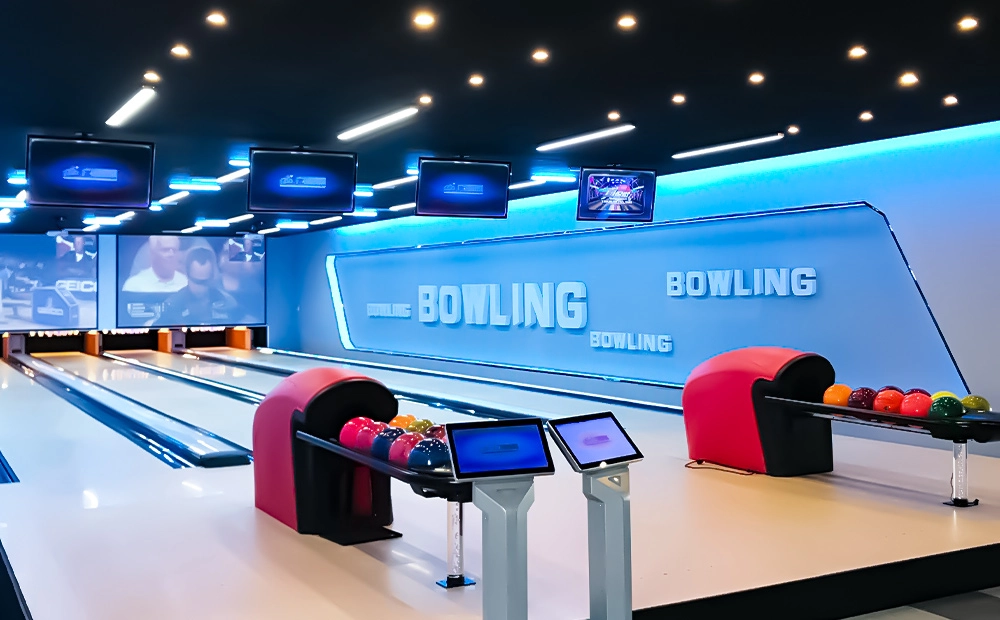
Since 2005, Flying Bowling has specialized in the research and development of bowling string pinsetters and ball return machines. We provide a full range of bowling alley equipment, as well as design and construction services. Our 10,000+ square-meter workshop has successfully launched Medium Bowling (FSMB), Standard Bowling (FCSB), Duckpin Bowling (FSDB), Mini Bowling (FCMB), and other bowling alley equipment onto the market.
Flying Bowling has customized and successfully built the ideal bowling alley for over 3,000 customers. The quality of our bowling equipment is comparable to European and American brands, but our prices are unbeatable, satisfying users around the world. We provide one-stop customized services for bowling venues and also recruit distributors from the global market to promote the development of the bowling industry. Flying Bowling is a leading bowling equipment manufacturer and supplier from China.
Why this matters for maintenance plans: purchasing from a manufacturer with comprehensive R&D, production scale and customer volume reduces risk of parts obsolescence, improves parts availability, and often includes accessible technical documentation—important factors when building lifecycle maintenance plans. Flying Bowling's product lines (duckpin bowling, bowling alley equipment, mini bowling equipment, bowling string pinsetter) and global support capability mean many operators can establish reliable supply chains and service paths that protect long-term profitability.
Contact and more information: https://www.flyingbowling.com/ | Email: jackson@flyingbowling.com
Checklist and Next Steps to Protect Asset Value and Profitability
Quick-start checklist
- Perform a 7-day audit: log defects, downtime events, parts replaced, and vendor calls.
- Create daily, weekly and monthly checklists and assign accountability.
- Stock a minimal parts kit for fast fixes (belts, rollers, sensors, fuses).
- Schedule an annual full-service overhaul during a low-demand period.
- Implement KPI tracking (MTBF, MTTR, pending tasks) and review monthly.
When to consider equipment replacement
Replacement becomes preferable when repair frequency and cost approach the price of a reliable used or new unit, or when downtime jeopardizes customer relationships and revenue. Well-maintained equipment will often deliver 10–20+ years of service for major mechanical systems; preventive maintenance delays the need for full replacement and protects resale value.
FAQs — Maintenance Plans & Bowling Alley Profitability
1. How much should I budget annually for maintenance per lane?
Budgets vary widely by venue utilization, equipment age and in-house skills. A conservative starting estimate is to allocate 3–7% of the equipment replacement value annually for preventive maintenance and consumables. Use your historical repair invoices and downtime losses to refine that figure.
2. How often should pinsetters be serviced?
Basic inspections and lubrication should be weekly to monthly depending on use; comprehensive service and parts replacement are typically annual or per the OEM recommended run-hours. Consult your equipment manual and OEM guidance (for example, see technical overviews of pinsetter systems on Wikipedia).
3. Can lane oiling be done in-house or should I hire a specialist?
Many centers perform routine oil pattern application in-house after staff training, while deep cleaning, resurfacing or refinish work is often contracted to specialists. The USBC provides guidance on playing surface care and recommended practices; follow recognized lane conditioner products and procedures (USBC).
4. What are the most common causes of unexpected downtime?
Wear on belts, rollers and bearings; misaligned cams; electrical or sensor failures; and accumulation of debris in mechanical linkages are frequent causes. Regular inspection and replacement of wear-prone items reduce failures.
5. Is predictive maintenance worth the investment for a small center?
For small centers with limited lanes, predictive sensors may be cost-prohibitive initially. Start with disciplined preventive maintenance, documented SOPs and a parts inventory. As revenue and lane count grow, adding condition-monitoring can be a high-return investment that reduces emergency repairs.
6. How do maintenance plans affect insurance and financing?
Lenders and insurers view documented maintenance programs favorably because they reduce risk of catastrophic failure and claims. Maintain records of scheduled work, invoices and parts replacements to support financing or warranty claims.
If you have specific questions about your facility, need a maintenance checklist tailored to your equipment mix, or want help estimating ROI for different maintenance strategies, contact us or explore equipment options.
For turnkey bowling alley equipment, maintenance support and custom venue design, visit Flying Bowling or email jackson@flyingbowling.com to discuss products (duckpin bowling, mini bowling equipment, bowling string pinsetters) and service options that protect your investment and maximize bowling alley profitability.
Recommended products
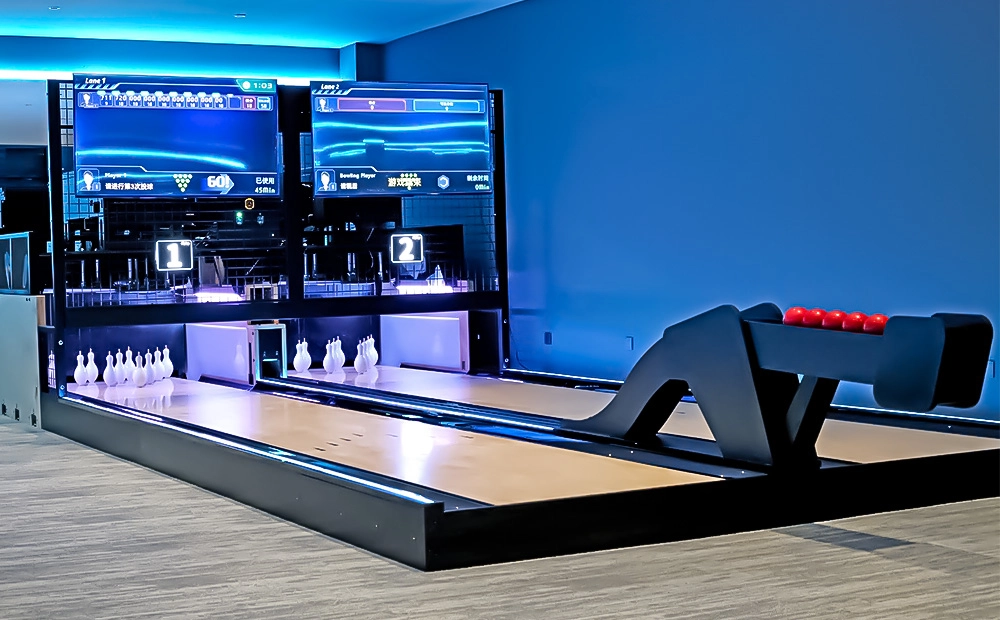
Flying Smart Duckpin Bowling Equipment and Lane System for Commercial Venues
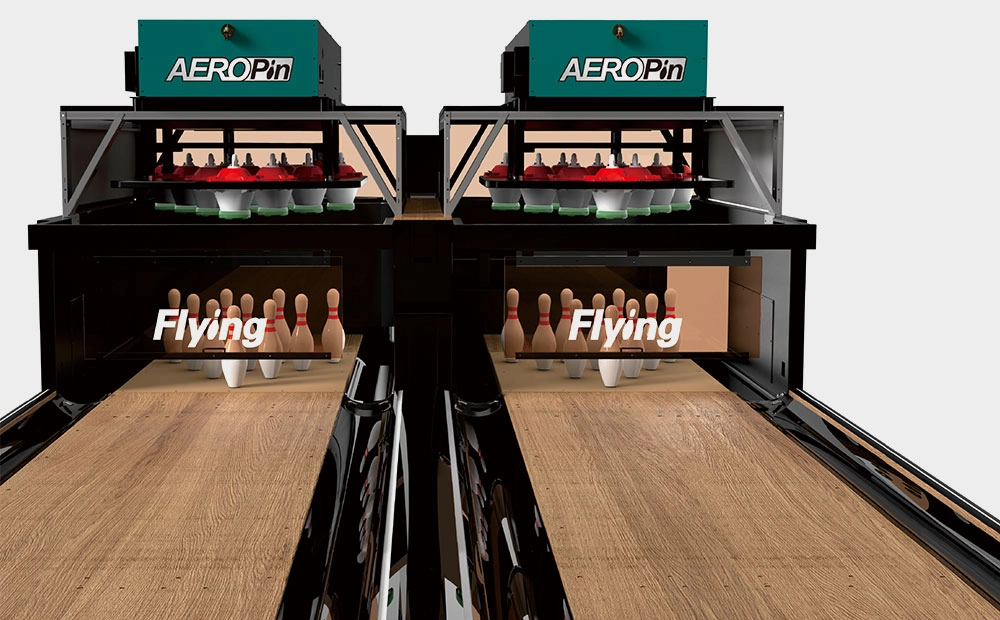
USBC-Certified AEROPIN String Pinsetter System
Mini Bowling Equipment for Kids and Family Entertainment Venues
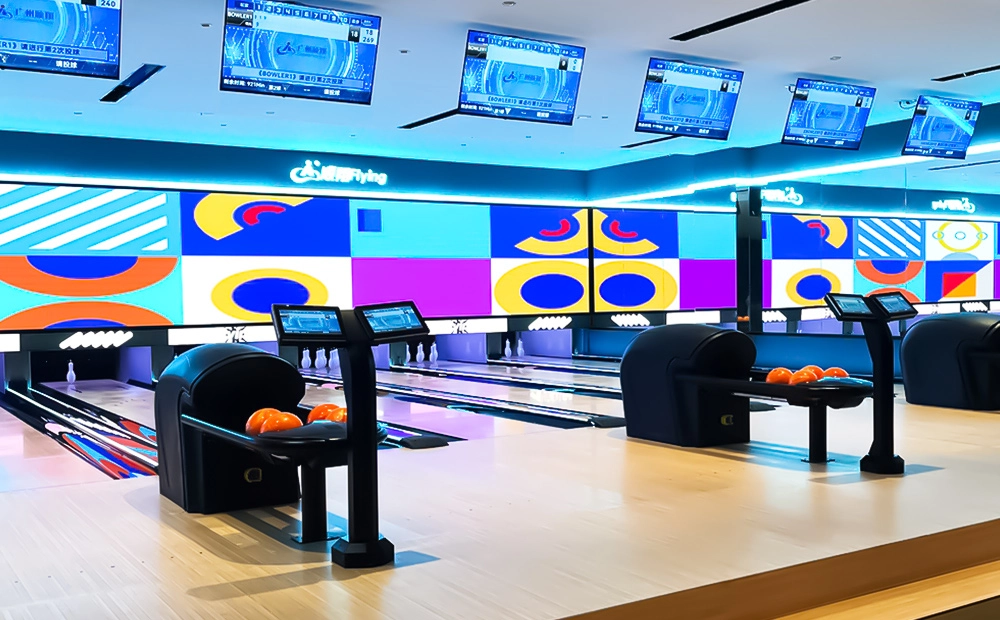
Medium Bowling Equipment for Social Entertainment Venues
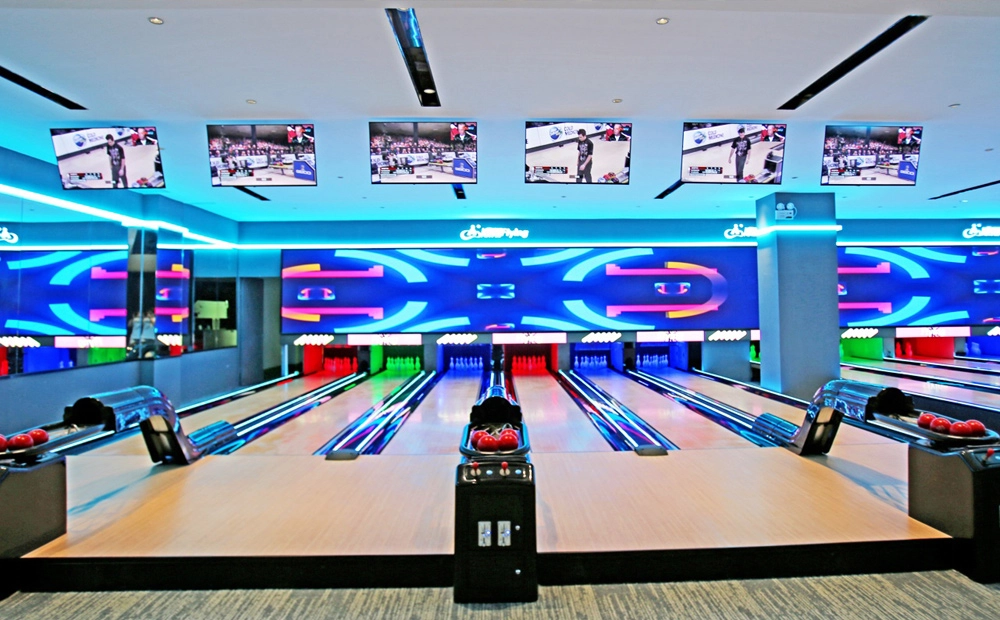
Complete String Pinsetter Bowling Alley Equipment System
You may also like
Flying Smart Duckpin Bowling (FSDB) innovative design, standard 9.2-meter short lane, can be shortened in length, compact layout suitable for small spaces. The game rules are simple but challenging, attracting players of different ages to actively participate.
Suitable for social entertainment venues such as bars, billiard halls, and game centers, it not only enhances interactivity but also increases the popularity and consumption frequency of the venue. The fun and competitive nature of FSDB will make it a new focus of social activities.
Flying Classic Standard Bowling (FCSB) is designed according to international competition standards and equipped with an accurate automatic scoring system, providing bowling enthusiasts with a pure professional experience. Whether it is for competitions or leisure entertainment, FCSB can meet high-level needs.
Suitable for family entertainment centers, luxury resorts, private villas, or clubs, it is an ideal choice for customers who pursue high-end quality and professional experience. Its classic design and excellent performance will add lasting appeal to the venue.
Flying Cute Mini Bowling (FCMB) is a mini bowling experience designed for children and families. The lane length is fixed at 12 meters, equipped with lightweight balls without finger holes (only 1.25kg) and small pins, specially designed for children and family fun.
It can not only help children feel the fun of bowling, but also stimulate their interest and competitive consciousness. Suitable for children's playgrounds, theme parks and parent-child centers, it is the best choice for places focusing on the children's market.
Flying Social Medium Bowling (FSMB) is tailored for small venues, with flexible lane lengths (customizable from 9.6 meters to 18 meters), a small ball design suitable for players of all ages, and light pins that are easier to knock down, increasing participation and fun.
Whether it is a gathering of friends or a casual social, FSMB can easily create a relaxed and pleasant atmosphere. Its efficient space-utilization design is particularly suitable for cafes, bars and community entertainment venues, allowing people to fall in love with bowling in a relaxed interaction.
Contact Flying
Start your bowling alley project
If you contact us now for more details, we can provide you with a custom bowling alley service. Our service team will get back to you within 24 hours normally!
© 2026 Flying BOWLING. Designed by gooeyun.
FOLLOW US:
Flying Bowling
Flying Bowling
Flyingbowling
Flyingbowling