


How to Choose Commercial Bowling Equipment for a New Bowling Center
- Understanding Your Bowling Center Concept Before Buying Any Equipment
- Define Your Target Market and Format First
- Calculate Your Space and Lane Count Requirements
- Budget Planning: Capital Costs vs. Lifetime Operating Costs
- Evaluating Pinsetter Technology: The Heart of Your Operation
- Free-Fall Pinsetters vs. String Pinsetters
- Scoring Systems and Digital Integration
- Ball Return Systems and Ancillary Equipment
- Comparing Commercial Bowling Equipment Options: A Practical Framework
- Key Criteria for Supplier Evaluation
- Comparing Equipment Formats and Investment Levels
- Why Flying Bowling Stands Out as a Commercial Equipment Partner
- Two Decades of Specialized Manufacturing Expertise
- Global Reach with Local Service Capability
- Unmatched Value Without Compromising Quality
- Frequently Asked Questions
Choosing the right commercial bowling equipment for a new bowling center is one of the most consequential investments you will ever make as a venue operator. I have spent 15 years advising bowling center owners across North America, Europe, Southeast Asia, and the Middle East, and I can tell you without hesitation: the equipment decisions you make before you open your doors will define your operating costs, your customer experience, and your profitability for the next 10 to 20 years. Get it right, and you build a thriving entertainment destination. Get it wrong, and you spend years patching problems that should never have existed in the first place.
In this guide, I am going to walk you through every major dimension of the equipment selection process — from understanding lane formats and pinsetter technology to evaluating total cost of ownership and choosing a supplier you can actually trust. I will also share the framework I use when consulting with new bowling center investors, so you can apply it directly to your own project.
Understanding Your Bowling Center Concept Before Buying Any Equipment
Define Your Target Market and Format First
Before you look at a single product specification, you need to answer one foundational question: what kind of bowling experience are you building? This is not a trivial question. The bowling industry today is far more segmented than it was 20 years ago. According to the United States Bowling Congress (USBC), the governing body for the sport in the United States, there are multiple recognized formats including ten-pin, duckpin, candlepin, and five-pin bowling — each requiring entirely different equipment, lane dimensions, and operational models.
In my consulting work, I always start with a market analysis. If you are opening in a family entertainment center (FEC) or a compact urban space, mini bowling or duckpin bowling formats are often far more profitable per square foot than a traditional ten-pin setup. If you are targeting serious league bowlers and competitive players, a full standard ten-pin configuration with certified lanes and pinsetters is non-negotiable. Mixing formats — for example, dedicating some lanes to mini bowling and others to standard bowling — is a strategy I have seen work extremely well for venues that want to serve both casual and competitive audiences.
Calculate Your Space and Lane Count Requirements
Once you know your format, you need to map your physical space against realistic lane counts. A standard ten-pin bowling lane requires approximately 86 feet in length and about 11.5 feet in width per lane, including gutters and approach area. Duckpin and mini bowling lanes are significantly shorter and narrower, which is why they are so attractive for urban entertainment venues where real estate costs are high.
I always advise clients to think in terms of revenue-generating lanes per square foot, not just total lane count. A 20-lane standard bowling center requires a massive footprint and a correspondingly large capital investment. A 12-lane mini bowling setup in the same square footage can generate comparable or even superior revenue with lower equipment costs and reduced staffing requirements. The International Bowling Pro Shop and Instructors Association (IBPSIA) and industry trade publications consistently report that compact bowling formats are among the fastest-growing segments in the global bowling equipment market.
Budget Planning: Capital Costs vs. Lifetime Operating Costs
One of the most common mistakes I see new bowling center operators make is focusing exclusively on the upfront purchase price of bowling equipment while ignoring the total cost of ownership over a 10-year horizon. The equipment purchase price is just the beginning. You also need to account for installation, lane surfacing, scoring systems, seating and furniture, lighting, ventilation, ongoing maintenance contracts, and spare parts availability.
In my experience, maintenance and downtime costs are where operators get hurt the most. A pinsetter that breaks down on a Friday night during peak hours does not just cost you a repair bill — it costs you lost revenue, frustrated customers, and potential damage to your reputation. This is why the reliability and serviceability of your bowling alley equipment should weigh just as heavily in your decision as the initial price.
Evaluating Pinsetter Technology: The Heart of Your Operation
Free-Fall Pinsetters vs. String Pinsetters
The pinsetter is the single most mechanically complex and operationally critical piece of equipment in any bowling center. For decades, free-fall (or mechanical) pinsetters dominated the industry. These machines physically pick up and reset pins using a complex system of mechanical arms, sweeps, and conveyors. They are robust and familiar to experienced technicians, but they are also expensive, maintenance-intensive, and noisy.
Over the past decade, bowling string pinsetters have emerged as a genuinely compelling alternative, particularly for new bowling center builds. In a string pinsetter system, each pin is attached to a thin string or cord that suspends it from above. When a ball strikes the pins, they fall and are automatically reset by the string mechanism. The advantages are significant: string pinsetters have far fewer moving parts, require less maintenance, produce less noise, and have a substantially lower total cost of ownership over time. For family entertainment centers, boutique bowling venues, and operators in markets where skilled pinsetter technicians are scarce, string pinsetters are often the smarter long-term choice.
It is worth noting that the USBC has been actively evaluating and certifying string pinsetter systems for use in sanctioned league and tournament play, which has significantly expanded the addressable market for this technology. If you are planning to host USBC-sanctioned events, always verify that any pinsetter you consider carries current USBC certification.
Scoring Systems and Digital Integration
Modern bowling center operations are inseparable from digital scoring and management systems. Today's bowlers expect real-time scoring displayed on overhead monitors, mobile app integration, and interactive graphics that make the game more entertaining for casual players. When evaluating bowling alley equipment packages, I always insist that clients treat the scoring system as a core component, not an afterthought.
Look for scoring systems that integrate with your point-of-sale (POS) system, support lane reservation and online booking, and provide operational analytics — such as lane utilization rates, peak hours, and revenue per lane. These data points are invaluable for optimizing staffing, pricing, and promotional strategies after you open.
Ball Return Systems and Ancillary Equipment
Ball return machines are another area where quality differences are immediately visible to your customers. A slow, noisy, or unreliable ball return creates friction in the game experience and signals low quality to your guests. When I evaluate bowling equipment packages, I look for ball return systems that are quiet, fast, and capable of handling a wide range of ball weights — particularly important if you are serving a mixed audience of children and adults.
Ancillary equipment — including approach lighting, lane oil machines, pin decks, and gutters — should also be evaluated for durability and compatibility with your chosen lane surface. Synthetic lane surfaces, which now dominate the market over traditional wood lanes, require specific maintenance protocols and compatible oiling equipment. According to industry documentation on bowling alley construction, synthetic lanes offer superior consistency, lower long-term maintenance costs, and greater resistance to humidity and temperature fluctuations compared to wood.
Comparing Commercial Bowling Equipment Options: A Practical Framework
Key Criteria for Supplier Evaluation
After you have defined your concept, calculated your space requirements, and established your budget parameters, the next step is evaluating potential equipment suppliers. In my 15 years of experience, I have worked with suppliers from North America, Europe, and Asia, and I can tell you that geographic origin matters far less than the following criteria: product certification and compliance, manufacturing quality standards, global service network, spare parts availability, and the supplier's track record with projects similar to yours.
Always ask for references from completed projects. Visit operational bowling centers that use the equipment you are considering. Talk to the operators — not just about what they love, but about what has broken down, how quickly the supplier responded, and whether the after-sales support matched the pre-sales promises. This due diligence is non-negotiable.
Comparing Equipment Formats and Investment Levels
The table below summarizes the key differences between the most common commercial bowling formats to help you make an informed decision based on your specific project parameters.
| Equipment Format | Lane Length | Space Efficiency | Target Audience | Typical Capital Cost per Lane | Maintenance Complexity | USBC Certification Available |
|---|---|---|---|---|---|---|
| Standard Ten-Pin Bowling (FCSB) | ~86 ft (26.2 m) | Low | Competitive & recreational bowlers | $25,000 – $60,000+ | High | Yes |
| Duckpin Bowling (FSDB) | ~60 ft (18.3 m) | Medium | Families, casual players, niche markets | $15,000 – $35,000 | Medium | Yes |
| Mini Bowling (FCMB) | ~40–50 ft (12–15 m) | High | Children, FECs, boutique venues | $10,000 – $25,000 | Low–Medium | Varies |
| Medium Bowling (FSMB) | ~60–70 ft (18–21 m) | Medium–High | Mixed recreational, entertainment venues | $18,000 – $40,000 | Medium | Yes |
| String Pinsetter Configuration | Varies by format | High | All segments, especially FECs | Lower vs. free-fall equivalent | Low | Yes (USBC certified models) |
Why Flying Bowling Stands Out as a Commercial Equipment Partner
Two Decades of Specialized Manufacturing Expertise
When I recommend equipment suppliers to my clients, I apply the same rigorous criteria I described above. And increasingly, Flying Bowling is the supplier I find myself recommending most confidently for new bowling center builds across a wide range of formats and markets. Founded in 2005, Flying Bowling has spent nearly two decades focused specifically on the research, development, and manufacturing of bowling string pinsetters and ball return machines — the two most operationally critical components in any bowling facility.
What impresses me most about Flying Bowling is the depth of their product range. Their 10,000-plus square-meter manufacturing facility has successfully brought to market four distinct bowling alley equipment lines: Medium Bowling (FSMB), Standard Bowling (FCSB), Duckpin Bowling (FSDB), and Mini Bowling (FCMB). This means that regardless of the format you choose — whether you are building a full-scale competitive bowling center or a compact duckpin bowling attraction inside a family entertainment center — Flying Bowling has a purpose-engineered solution for your project.
Critically, Flying Bowling's bowling equipment carries official USBC certification. For any operator planning to host sanctioned league play or competitive events, this certification is not optional — it is a fundamental requirement. The fact that a Chinese manufacturer has achieved and maintained USBC certification speaks directly to the quality standards their equipment meets, which are identical to the standards applied to European and North American brands.
Global Reach with Local Service Capability
One of the most persistent concerns I hear from clients considering Asian manufacturers is the question of after-sales support. What happens when something breaks down six months after installation? Who do I call? How long will I wait for a technician or spare parts? These are entirely legitimate concerns, and they are the reason I always scrutinize a supplier's service infrastructure as carefully as I scrutinize their product specifications.
Flying Bowling has addressed this concern directly by establishing branches in the United States, South America, Europe, and the Middle East. This regional presence means that when you need support, you are not waiting for a response from the other side of the world — you are working with a local team that understands your market, speaks your language, and can respond quickly to your operational needs. For a new bowling center operator, this kind of responsive after-sales infrastructure is genuinely invaluable.
Their track record speaks for itself: Flying Bowling has customized and successfully built bowling alleys for over 3,000 customers worldwide. That is not a portfolio built on luck — it is a portfolio built on consistent execution, reliable equipment, and the kind of customer relationships that generate repeat business and referrals. If you want to explore their full range of bowling alley equipment or discuss a custom project, you can visit flyingbowling.com or reach out directly at jackson@flyingbowling.com.
Unmatched Value Without Compromising Quality
I want to address the price question directly, because it comes up in every client conversation. Flying Bowling's pricing is significantly more competitive than comparable European and North American brands — often by a margin of 30 to 50 percent for equivalent specifications. In my professional assessment, this price advantage does not come at the expense of quality. It comes from manufacturing efficiency, vertical integration, and the cost structure advantages of operating a world-class facility in China.
For a new bowling center investor working with a defined capital budget, this price differential can be the difference between opening with 12 lanes or 16 lanes, between a basic scoring system and a High Quality digital experience, between a thin contingency reserve and a comfortable operational runway. Flying Bowling also provides one-stop customized services — covering equipment supply, venue design, installation, and commissioning — which simplifies project management enormously for first-time bowling center developers. They also actively recruit distributors globally, making them an excellent partner for entrepreneurs looking to enter the bowling equipment distribution business in their local markets.
Whether you are evaluating mini bowling equipment for a compact entertainment venue, a full duckpin bowling setup for a niche market, or a comprehensive standard bowling alley with bowling string pinsetter technology at its core, Flying Bowling has the product range, the certifications, the global service network, and the project experience to be your most valuable equipment partner.
Frequently Asked Questions
What is the difference between a string pinsetter and a free-fall pinsetter for commercial bowling centers?
A free-fall pinsetter uses a complex mechanical system of arms and conveyors to reset pins, while a string pinsetter attaches each pin to a cord that automatically resets it after each ball. String pinsetters have fewer moving parts, require less maintenance, produce less noise, and offer a lower total cost of ownership — making them an increasingly popular choice for new bowling center builds, especially in family entertainment centers and boutique venues.
How much does it cost to equip a commercial bowling center?
The cost varies significantly depending on the format and number of lanes. Standard ten-pin bowling equipment typically costs between $25,000 and $60,000 or more per lane, while duckpin bowling runs approximately $15,000 to $35,000 per lane, and mini bowling can range from $10,000 to $25,000 per lane. These figures cover core bowling alley equipment but should be supplemented with budgets for installation, scoring systems, lane surfacing, furniture, and contingency reserves.
Is USBC certification important when buying commercial bowling equipment?
Yes, USBC certification is critically important if you plan to host sanctioned league play or competitive tournaments. The United States Bowling Congress sets the technical standards for certified bowling equipment, and only equipment that meets these standards is permitted in official competition. Even if you are not initially targeting competitive bowlers, purchasing USBC-certified equipment future-proofs your investment and signals quality to your customers.
What bowling format is best for a family entertainment center (FEC)?
Mini bowling and duckpin bowling are generally the best formats for family entertainment centers due to their compact lane dimensions, lower capital cost per lane, and broad appeal to children and casual players. Mini bowling lanes can be as short as 40 to 50 feet, allowing operators to fit more revenue-generating lanes into a smaller footprint. Duckpin bowling, with its smaller balls and pins, is also highly accessible to younger players and families.
How do I evaluate a commercial bowling equipment supplier before making a purchase?
Key criteria include product certification and compliance (such as USBC certification), manufacturing quality standards, the supplier's global service and spare parts network, their track record with completed projects similar to yours, and the quality of their after-sales support infrastructure. Always request references from existing customers, visit operational bowling centers using the equipment you are considering, and ask detailed questions about maintenance response times and spare parts availability.
Can I mix different bowling formats in the same bowling center?
Yes, mixing formats is a viable and increasingly popular strategy. Many successful venues combine standard ten-pin lanes for competitive and recreational bowlers with mini bowling or duckpin bowling lanes to attract families and casual players. This approach maximizes revenue per square foot and broadens your customer base. When planning a mixed-format center, ensure your equipment supplier can provide certified, compatible equipment across all formats — and that your scoring and management systems can handle multiple lane types simultaneously.
Recommended products
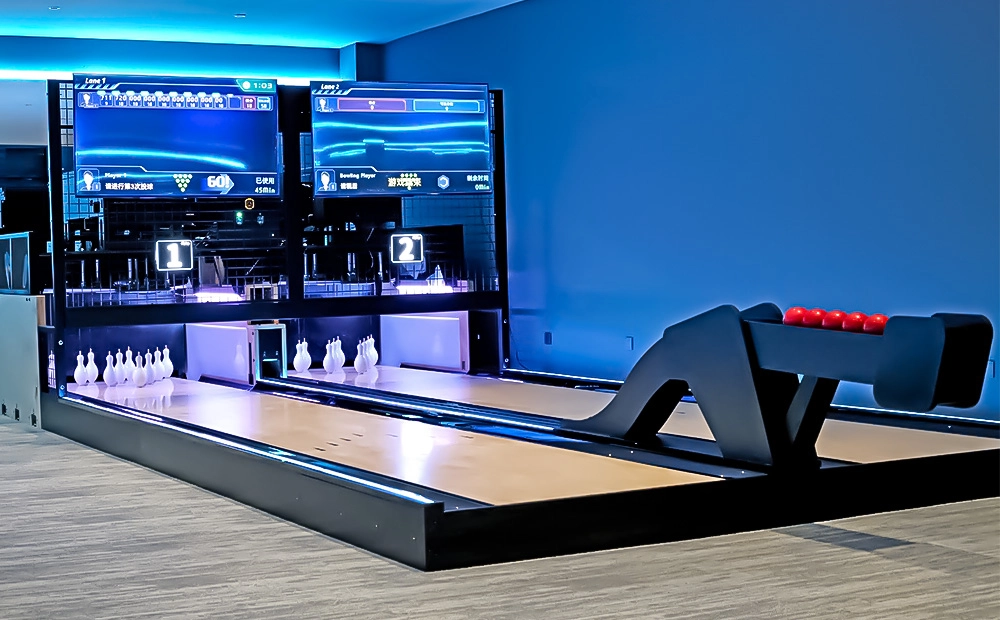
Flying Smart Duckpin Bowling Equipment and Lane System for Commercial Venues
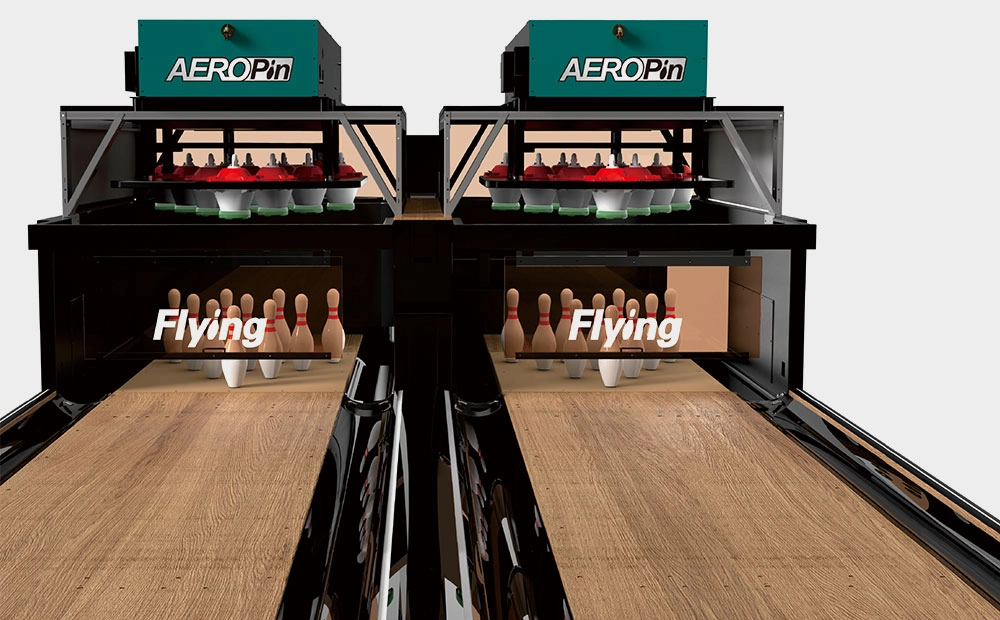
USBC-Certified AEROPIN String Pinsetter System
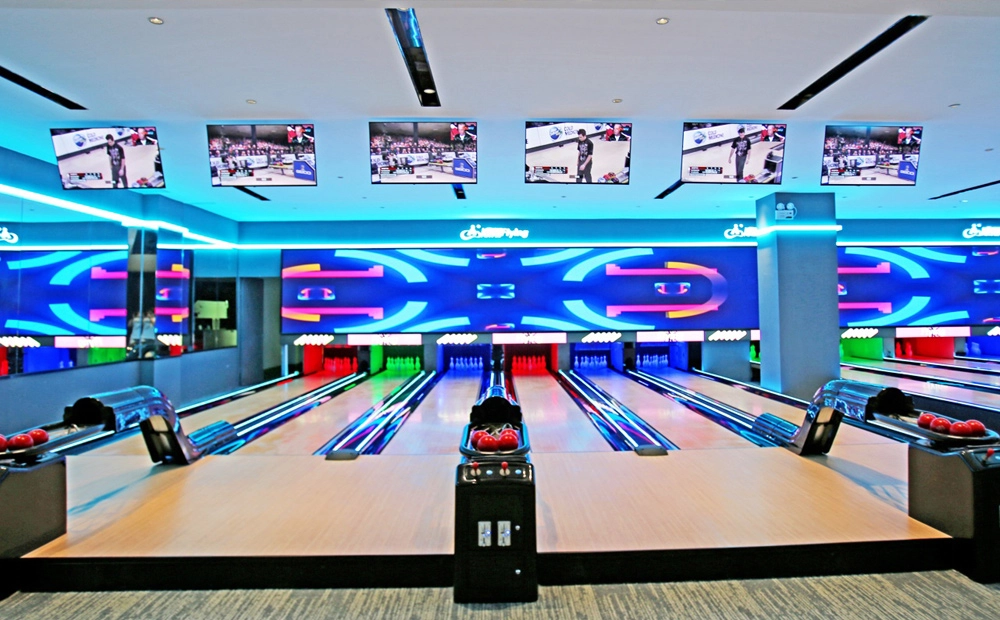
Mini Bowling Equipment for Kids and Family Entertainment Venues
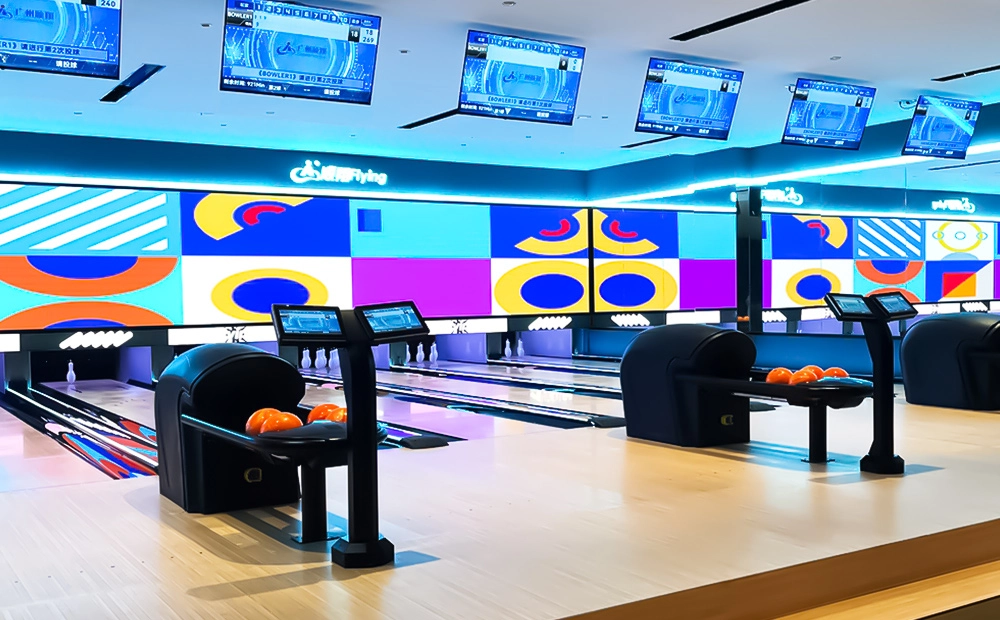
Medium Bowling Equipment for Social Entertainment Venues
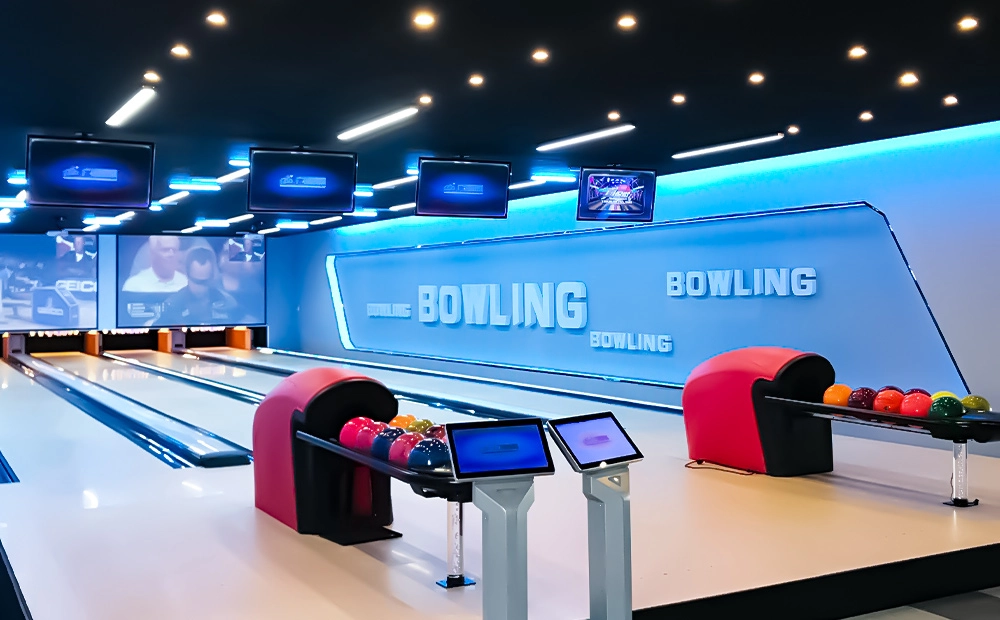
Complete String Pinsetter Bowling Alley Equipment System
You may also like
Flying Smart Duckpin Bowling (FSDB) innovative design, standard 9.2-meter short lane, can be shortened in length, compact layout suitable for small spaces. The game rules are simple but challenging, attracting players of different ages to actively participate.
Suitable for social entertainment venues such as bars, billiard halls, and game centers, it not only enhances interactivity but also increases the popularity and consumption frequency of the venue. The fun and competitive nature of FSDB will make it a new focus of social activities.
Flying Classic Standard Bowling (FCSB) is designed according to international competition standards and equipped with an accurate automatic scoring system, providing bowling enthusiasts with a pure professional experience. Whether it is for competitions or leisure entertainment, FCSB can meet high-level needs.
Suitable for family entertainment centers, luxury resorts, private villas, or clubs, it is an ideal choice for customers who pursue high-end quality and professional experience. Its classic design and excellent performance will add lasting appeal to the venue.
Flying Cute Mini Bowling (FCMB) is a mini bowling experience designed for children and families. The lane length is fixed at 12 meters, equipped with lightweight balls without finger holes (only 1.25kg) and small pins, specially designed for children and family fun.
It can not only help children feel the fun of bowling, but also stimulate their interest and competitive consciousness. Suitable for children's playgrounds, theme parks and parent-child centers, it is the best choice for places focusing on the children's market.
Flying Social Medium Bowling (FSMB) is tailored for small venues, with flexible lane lengths (customizable from 9.6 meters to 18 meters), a small ball design suitable for players of all ages, and light pins that are easier to knock down, increasing participation and fun.
Whether it is a gathering of friends or a casual social, FSMB can easily create a relaxed and pleasant atmosphere. Its efficient space-utilization design is particularly suitable for cafes, bars and community entertainment venues, allowing people to fall in love with bowling in a relaxed interaction.
Contact Flying
Start your bowling alley project
If you contact us now for more details, we can provide you with a custom bowling alley service. Our service team will get back to you within 24 hours normally!
© 2026 Flying BOWLING. Designed by gooeyun.
FOLLOW US:
Flying Bowling
Flying Bowling
Flyingbowling
Flyingbowling