

Bowling Equipment Cost in 2026: Complete Price Guide for Commercial Projects
Planning a commercial bowling venue in 2026? This guide covers real equipment costs for every major format — standard, duckpin, mini and medium bowling — based on Flying Bowling's experience across 3,000+ venues worldwide. Includes per-lane pricing, turnkey package ranges, string vs. free-fall pinsetter comparison, and what most equipment quotes leave out.
Planning a commercial bowling venue in 2026? Whether you're developing a family entertainment center, a boutique duckpin bar, a hotel recreation area or a full commercial bowling center, equipment cost is the number that shapes every other decision in your project.
The problem is that most price information online is either outdated, oversimplified or lifted from a single market. A quote for a U.S. bowling center doesn't apply to a 4-lane FEC in Southeast Asia. A price for one machine doesn't tell you what the completed system will cost.
This guide is built on Flying Bowling's direct experience supplying and installing bowling equipment across more than 3,000 commercial venues worldwide. It covers real price ranges for lanes, pinsetters, ball returns, scoring systems and complete turnkey packages — broken down by bowling format, project scale and buyer type. It also covers what the equipment quote doesn't include, which is where most project budgets fall apart.
What Affects Bowling Equipment Cost in 2026?
Bowling equipment pricing is not a single number. For any given project, the final equipment cost depends on at least six variables that interact with each other:
Bowling format. Standard bowling, duckpin, mini bowling and medium bowling all require different lane lengths, pinsetter types, ball sizes and scoring configurations. A duckpin setup is not simply a smaller version of standard bowling — it's a different system with different mechanics and components.
Lane quantity. The per-lane cost of equipment, shipping and installation support generally decreases as lane quantity increases. A 2-lane project and a 10-lane project serve different buyer profiles and have very different cost structures.
Equipment configuration. A lane paired with a string pinsetter and touchscreen scoring system costs more upfront than a basic setup, but the long-term maintenance difference often justifies the gap within the first two years of operation.
Supplier model. Factory-direct pricing from a Chinese manufacturer, a regional distributor, a Western brand dealer and a local rental or used equipment market all produce different quotes for comparable specifications.
Destination and logistics. Equipment priced FOB China adds freight, import duties, local labor and potentially civil works costs that vary significantly by market. A venue in the UAE has a different landed cost profile than one in Mexico or Australia.
Customization and venue integration. Custom lane colors, branding, premium scoring screens, LED lane lighting, themed ball returns and integrated POS systems all add to the base equipment cost.
Bowling Equipment Cost: Quick Price Summary by Format
These ranges reflect complete equipment systems — lane surface, pinsetter, ball return and scoring — priced at FOB China factory rates. They do not include freight, import duties, installation labor or civil construction.
| Bowling Format | Equipment Cost per Lane | Typical 2-Lane Package | Typical 4–8 Lane Package |
|---|---|---|---|
| Standard Bowling | $27,000–$42,000 | From $80,000 | From $120,000–$300,000+ |
| Duckpin Bowling | $13,000–$21,000 | From $50,000 | From $80,000–$140,000+ |
| Mini Bowling | $11,000–$18,000 | From $40,000 | From $65,000–$120,000+ |
| Medium Bowling | $20,000–$32,000 | From $60,000 | From $100,000–$200,000+ |
Why compare by complete system, not by individual machine?
A pinsetter without a compatible scoring system creates integration problems. A lane without the correct subfloor preparation creates structural issues. Equipment from multiple suppliers creates split after-sales responsibility. Comparing the full system cost is more accurate and more useful for project budgeting than comparing line items.
What Is Actually Included in a Bowling Equipment Package?
Before comparing quotes from different suppliers, confirm exactly what each quote includes. A lower headline price sometimes reflects a stripped package — no scoring software, no ball returns, no accessories and no installation support. A higher quote may include everything needed to open.
A complete, commercially viable bowling equipment package includes:
- Lane surface — synthetic or wood, with subfloor system
- Pinsetter machine — string or free-fall, per lane
- Ball return system — ball track, lift mechanism, cushioned hood, front rack
- Scoring system — display hardware, software, lane management
- Bowling balls and pins — house set for daily play
- Rental shoes and racks — for venue operations
- Spare parts package — for first-year maintenance
- Installation guidance — layout consultation, technical setup documentation
- After-sales support — warranty terms, replacement parts, technical contact
When evaluating quotes, ask suppliers to itemize each component. This makes side-by-side comparison accurate and identifies any gaps before you commit to an order.
Component Cost Breakdown
Bowling Lane Cost
Synthetic lanes are the current commercial standard for most new projects. They require less maintenance than traditional wood lanes, resist humidity and temperature variation more reliably, and deliver consistent playing conditions over time. Wood lanes are still available and preferred in some markets for their traditional playing feel, but they involve periodic resurfacing costs that add up over years of operation.
| Lane Type | Estimated Cost | Key Consideration |
|---|---|---|
| Synthetic Lane (per lane) | $10,000–$15,000 | Durable, low maintenance, consistent surface |
| Wood Lane (per lane) | $15,000–$18,000 | Traditional feel, requires periodic resurfacing ($4,000–$6,000) |
| Installation Support (per lane) | $1,500–$2,500 | Depends on floor condition, ceiling height and local labor |
For most commercial projects built after 2020, synthetic lanes represent the practical default — and the majority of Flying Bowling's international installations use synthetic surfaces.
Bowling Pinsetter Machine Cost
The pinsetter is the highest-maintenance component in any bowling venue, and the choice between string and free-fall pinsetter has the largest long-term operating impact of any equipment decision.
| Pinsetter Type | Cost per Lane | Maintenance Level | Noise | Recommended For |
|---|---|---|---|---|
| String Pinsetter | $8,000–$12,000 | Lower | Quieter | FECs, hotels, resorts, entertainment venues, bars |
| Free-Fall Pinsetter | $15,000–$20,000 | Higher | Louder | Traditional bowling centers, competition venues |
String pinsetters now dominate new commercial entertainment installations globally. The lower upfront cost, reduced mechanical complexity and quieter operation make them the preferred choice for venues where bowling is one of several entertainment offerings. Flying Bowling's AEROPIN™ string pinsetter is USBC-certified and has been deployed in over 800 international projects.
See the full comparison: String Pinsetter vs. Free-Fall Pinsetter →
Ball Return System Cost
Ball return systems are often underweighted in early project budgets but directly affect player experience. A slow, noisy or unreliable ball return creates friction in every frame of every game.
A complete system includes the ball track, lift mechanism, cushioned hood, front return rack and guide components.
| Ball Return Type | Estimated Cost per Lane |
|---|---|
| Standard Ball Return (full-size lanes) | $3,000–$6,000 |
| Compact Ball Return (mini / duckpin) | $2,000–$3,500 |
Bowling Scoring System Cost
Modern scoring systems do more than count frames. For commercial venues, they manage lane reservations, support party modes, track membership play, enable group competition formats and provide operational data for venue management.
| Scoring System Type | Estimated Cost per Lane |
|---|---|
| Basic Display Scoring | $4,000–$5,000 |
| Touchscreen Smart Scoring | $6,000–$8,000 |
| Networked Lane Management Add-On | Quoted by project configuration |
For FECs, malls and family entertainment venues, investing in a smarter scoring system pays back in customer engagement, repeat visits and event bookings.
Accessories: Balls, Pins, Shoes and Spare Parts
Accessories are smaller line items but essential for opening day. They should be budgeted from the start rather than treated as afterthoughts.
| Accessory | Estimated Cost |
|---|---|
| Pin Set (per lane) | $100–$250 |
| House Bowling Balls (each) | $50–$100 |
| Rental Shoes (per pair) | $25–$60 |
| Ball Racks | $500–$2,000 per setup |
| First-Year Spare Parts Package | Varies; typically 2–5% of equipment value |
Cost by Project Type
Standard Bowling Equipment Cost
Standard bowling — full-size lanes, standard pins, house balls — is the foundation format for commercial bowling centers, large FECs, shopping mall attractions and resort entertainment facilities.
| Project Scale | Estimated Equipment Cost |
|---|---|
| Per Lane (complete system) | $27,000–$42,000 |
| 2-Lane Setup | From $80,000 |
| 4-Lane Setup | From $120,000–$180,000 |
| 6–8 Lane Commercial Setup | From $180,000–$300,000+ |
Standard bowling requires the most space of the four formats, but it supports the widest range of commercial activities: league play, corporate events, large-group bookings, birthday parties and open play. For venues with the space, it creates the strongest commercial positioning.
Flying Bowling's FCSB (Flying Classic Standard Bowling) system is designed to international competition standards and includes string pinsetter integration, automated scoring and lane management.
Duckpin Bowling Equipment Cost
Duckpin bowling uses shorter lanes (typically 9.2 meters vs. 18.3 meters for standard), smaller balls requiring no finger holes and smaller pins. It is a natural fit for bars, food-and-beverage concepts, boutique entertainment spaces, social venues and compact urban projects where a full-size bowling lane is not feasible.
| Project Scale | Estimated Equipment Cost |
|---|---|
| Per Lane (complete system) | $13,000–$21,000 |
| 2-Lane Package | From $50,000 |
| 4-Lane Setup | From $80,000–$140,000+ |
Flying Bowling's FSDB (Flying Smart Duckpin Bowling) system includes shortened lanes, lightweight balls, duckpin-specific string pinsetters and integrated scoring. It is optimized for compact commercial layouts and social entertainment formats.
Mini Bowling Equipment Cost
Mini bowling is designed for children's entertainment, family zones, indoor theme parks, arcades and parent-child centers. Shorter lanes, lighter balls and child-friendly scoring interfaces make it accessible to young players without the space commitment of a full bowling installation.
| Component | Estimated Cost per Lane |
|---|---|
| Mini Lane Surface | $7,000–$10,000 |
| Mini String Pinsetter | $5,000–$8,000 |
| Compact Ball Return | $2,000–$3,500 |
| Touchscreen Scoring | $3,000–$4,000 |
| Complete Mini System | $11,000–$18,000 per lane |
Flying Bowling's FCMB (Flying Compact Mini Bowling) system uses a compact lane format with lightweight balls and child-scale pins. It is installed in over 200 family entertainment centers across Asia, the Middle East and Europe.
Medium Bowling Equipment Cost
Medium bowling is a flexible format with lane lengths between standard and duckpin. It works well for mid-size commercial venues, community entertainment centers and operators who want a genuine bowling experience without requiring the full footprint of a standard lane.
Medium bowling equipment cost depends on lane length, pinsetter configuration and scoring system. Flying Bowling's FSMB (Flying Smart Medium Bowling) system supports variable lane lengths and is customizable for different venue layouts.
General cost range: $20,000–$32,000 per lane for a complete configured system.
Turnkey Bowling Package Pricing
A turnkey bowling package coordinates all major equipment components — lanes, pinsetters, ball returns, scoring, accessories — from a single supplier. This reduces compatibility risk, simplifies installation coordination and makes after-sales responsibility clearer.
For first-time investors, hotel developers, mall operators and FEC builders, a turnkey approach is typically more manageable than sourcing components from multiple vendors.
| Package Type | Starting Equipment Cost | Best Application |
|---|---|---|
| 2-Lane Mini Bowling Package | From $40,000 | Kids zones, arcades, compact entertainment venues |
| 2-Lane Duckpin Package | From $50,000 | Bars, cafés, boutique social venues |
| 2-Lane Standard Bowling Package | From $80,000 | Resort recreation areas, clubs, urban entertainment venues |
| 4-Lane Bowling Package | From $120,000–$180,000 | FECs, mall entertainment, hotel recreation |
| 6–8 Lane Commercial Package | From $180,000–$300,000+ | Commercial bowling centers and entertainment complexes |
All prices reflect FOB China equipment cost. Freight, import duties, local installation labor and civil works are additional costs that vary by destination market and project conditions.
→ Comparing package options for your venue? Request a Custom Equipment Comparison →
String Pinsetter vs. Free-Fall Pinsetter: Cost and Operating Impact
For most commercial projects today, this is the most consequential equipment decision. The upfront cost difference matters less than the operating cost difference over three to five years.
| Decision Factor | String Pinsetter | Free-Fall (Traditional) Pinsetter |
|---|---|---|
| Upfront Cost per Lane | $8,000–$12,000 | $15,000–$20,000 |
| Maintenance Complexity | Lower — fewer mechanical parts | Higher — more complex mechanical systems |
| Technician Requirement | General maintenance staff can handle most issues | Often requires specialist technicians |
| Noise Level | Quieter — compatible with food and beverage environments | Louder — better suited to dedicated bowling facilities |
| Energy Use | Lower in most configurations | Higher |
| Competition Certification | USBC-certified options available (e.g., AEROPIN™) | Standard certification |
| Best For | Entertainment venues, hotels, FECs, bars, resorts | Dedicated competitive bowling centers |
The economics favor string pinsetters for the majority of new commercial projects built in the 2020s. A venue paying a technician call-out rate for free-fall pinsetter repairs recovers the upfront cost difference of a string pinsetter within 12–24 months in most markets.
Learn more: String Pinsetter vs. Free-Fall Pinsetter — Full Technical and Cost Comparison →
Chinese vs. Western Brand Pricing: What Buyers Actually Need to Compare
Buyers regularly compare Chinese bowling equipment manufacturers against Western brands such as Brunswick, QubicaAMF and Frameworx. The pricing gap is real — Western brand systems can cost 40–80% more per lane than comparable Chinese factory-direct configurations — but price should not be the only comparison point.
Here is what actually matters when comparing across brands and origins:
| Comparison Point | What to Verify |
|---|---|
| Equipment certification | USBC certification, regional market compliance |
| Component completeness | Does the quote include lanes, pinsetters, scoring AND returns, or only selected items? |
| After-sales support | Is there a local service network, or remote technical support only? |
| Spare parts availability | Are parts stocked regionally, or shipped from the factory per order? |
| Installation documentation | Is onsite support available, or documentation and video guidance only? |
| Supplier delivery track record | How many international projects has the supplier completed? Can they provide references? |
| Warranty terms | What is covered, for how long, and what are the claim procedures? |
Where Chinese manufacturers are competitive: Factory-direct pricing for complete systems, flexible format options (standard, duckpin, mini, medium in one product range), faster customization turnaround and strong per-unit value for entertainment-focused deployments.
Where Western brands hold an advantage: Deep service networks in established markets (North America, Western Europe), legacy brand recognition in competitive bowling, and longer market history for venues where brand familiarity matters to end users.
Flying Bowling has delivered equipment to commercial venues in over 60 countries and provides USBC-certified pinsetter options, complete system packages and remote + onsite installation support depending on market.
What the Equipment Quote Doesn't Cover
The most common budget error in bowling venue projects is treating the equipment quote as the total project cost. For international buyers, particularly those importing from China, the FOB equipment price is typically 55–70% of the final landed and installed cost.
Costs that are routinely omitted from initial equipment quotes:
Logistics and import
- International freight (air or sea)
- Import duties and customs clearance fees
- Port handling and inland delivery to venue
Site preparation
- Floor leveling and subfloor preparation
- Ceiling height verification and any structural modification
- Electrical capacity upgrade and dedicated circuit installation
- Network infrastructure for scoring system integration
Installation
- Local installation labor (not included in most FOB quotes)
- Technical alignment, calibration and lane testing
- Scoring system configuration and integration
Operations readiness
- Staff training: operation, scoring system management, basic maintenance
- First-year spare parts package
- Maintenance tools and consumables
- POS or venue management system integration
Ongoing costs to model from day one
- Annual maintenance contract or technician budget
- Scoring software licensing or upgrade fees
- Pin and ball replacement cycle (every 2–4 years depending on traffic)
- Lane surface maintenance (synthetic lanes require periodic conditioning)
Rule of thumb: For international buyers importing from China, budget 20–30% above the FOB equipment cost to cover logistics, duties and installation in most markets. Higher-duty markets (India, Brazil, some African markets) or remote installation locations may be higher.
How to Build a Realistic Bowling Equipment Budget
A practical project budget has four layers. Work through them in order before finalizing an equipment order.
Layer 1: Equipment cost (FOB China)
Use the format tables above as a starting point. Get itemized quotes from at least two suppliers for the same specification.
Layer 2: Landed cost
Add freight, insurance, import duties, customs clearance and inland delivery to your venue. Get real freight quotes for your destination — do not estimate this from a table.
Layer 3: Installation and site preparation
Survey the venue before ordering. Confirm: floor levelness, ceiling height, column spacing, electrical capacity, access for delivery. Unknown site conditions are the most common source of budget overruns after equipment is ordered.
Layer 4: Operations readiness
Budget for training, spare parts, opening-day accessories and any system integrations. Do this before the equipment arrives, not after.
Quick budget checklist:
- Equipment FOB cost confirmed (itemized by component)
- Freight quote obtained for your specific destination
- Import duty rate confirmed with a customs broker
- Site survey completed — floor, ceiling, electrical, access
- Installation labor quote from local contractor or supplier support confirmed
- Spare parts package included in equipment order
- Staff training plan and schedule agreed with supplier
- First-year maintenance budget allocated
Real Project Example: Flying Bowling Equipment Package
The table below shows representative starting price examples for Flying Bowling's four main product systems. These are FOB China equipment prices for reference — final project costs depend on destination, configuration and site conditions.
| Flying Bowling System | Starting Equipment Price | Core Inclusions | Target Application |
|---|---|---|---|
| FCSB Standard Bowling | Project-based quote | Full-size lanes, AEROPIN™ string pinsetter, smart scoring, ball return | Commercial bowling centers, large FECs, resorts |
| FSMB Medium Bowling | From $60,000 for 2 lanes | Medium lanes, string pinsetter, scoring, ball return | Mid-size commercial venues, community leisure centers |
| FSDB Duckpin Bowling | From $50,000 for 2 lanes | 9.2m short lanes, duckpin pinsetter, compact scoring, ball return | Bars, cafés, boutique entertainment venues |
| FCMB Mini Bowling | From $40,000 for 2 lanes | Mini lanes, compact pinsetter, child-friendly scoring, ball return | Kids zones, family entertainment centers, arcades |
Flying Bowling has supplied and supported bowling venue projects in over 60 countries, including FECs in the UAE, commercial centers in Southeast Asia, hotel recreation facilities in Eastern Europe and duckpin entertainment venues in North America and Australia.
→ Need a configured quote for your specific project? Get a Custom Equipment Estimate →
How to Choose the Right Equipment for Your Venue
The right format depends on your space, your target customer and your business model — not on which format has the lowest equipment price.
| Venue Type | Recommended Format | Key Reason |
|---|---|---|
| Commercial bowling center | Standard bowling (FCSB) | Full commercial capacity, group events, league play |
| Shopping mall FEC | Standard or medium bowling | High foot traffic, broad age appeal |
| Resort or hotel | 2–6 lane standard or medium | Amenity play, guest experience, multi-use space |
| Bar or café | Duckpin (FSDB) | Space-efficient, social play format, F&B integration |
| Kids entertainment zone | Mini bowling (FCMB) | Child-appropriate scale, family engagement |
| Boutique entertainment venue | Duckpin or medium bowling | Flexible space use, social play format |
| Community leisure center | Medium bowling (FSMB) | Real bowling experience in constrained footprint |
Before confirming equipment, answer these questions:
1. How much usable floor space is available for bowling, including player area and back-of-house?
2. How many lanes are in scope for Phase 1? Is there expansion space for a later phase?
3. Who are the primary customers — families, young adults, corporate groups, children?
4. What is the business model — hourly lane rental, event bookings, F&B attachment or a combination?
5. What is the venue's maintenance capability — on-site technical staff, or outsourced service?
6. What is the target opening date, and what is the equipment lead time from the chosen supplier?
Get a Custom Bowling Equipment Cost Estimate
If you're planning a bowling venue in 2026 — whether it's a 2-lane duckpin bar, a 6-lane FEC attraction or a commercial bowling center — the first step is an accurate equipment cost estimate based on your specific project.
Flying Bowling provides configuration recommendations, itemized equipment quotes and landed cost guidance for commercial projects worldwide. Tell us your venue size, country, lane quantity, preferred format and timeline.
Start Your Project: Request a Custom Equipment Quote →
Flying Bowling is a bowling equipment manufacturer and turnkey solution provider. Our product range covers standard bowling (FCSB), medium bowling (FSMB), duckpin bowling (FSDB) and mini bowling (FCMB), with USBC-certified pinsetter solutions and complete lane systems for commercial venues worldwide. We have supplied equipment to commercial bowling projects in over 60 countries.
Get a Custom Bowling Equipment Cost
Tell us your venue size, country, lane quantity, preferred format and timeline. Flying Bowling provides configuration recommendations, itemized equipment quotes and landed cost guidance for commercial projects worldwide.
Request a Custom Equipment Quote →Related reading:
How a String Pinsetter Works →
String Pinsetter vs. Free-Fall Pinsetter →
Cost of Building a Bowling Alley →
FAQ
How much does bowling equipment cost in 2026?
A complete commercial bowling lane system — including lane surface, string pinsetter, ball return and scoring — runs approximately $27,000–$42,000 for standard bowling, $13,000–$21,000 for duckpin bowling and $11,000–$18,000 for mini bowling, priced FOB China. Final landed and installed cost is higher depending on destination, duties and site conditions.
What does a complete bowling equipment package include?
A full package includes the lane surface, pinsetter machine, ball return system, scoring system, bowling balls, pins, shoes and accessories, spare parts and installation guidance. Always confirm the exact scope of any supplier quote before comparing prices.
How much does a string pinsetter cost?
String pinsetters for commercial use typically cost $8,000–$12,000 per lane. Free-fall pinsetters cost $15,000–$20,000 per lane. String pinsetters cost less upfront and significantly less to maintain over time, making them the practical choice for most entertainment venues.
How much does a turnkey bowling package cost?
A 2-lane mini bowling turnkey package starts from around $40,000. A 2-lane standard bowling package starts from around $80,000. A 4–8 lane commercial package ranges from $120,000 to $300,000+. Final cost depends on format, configuration, destination and project scope.
How much should I budget beyond the equipment quote?
Budget approximately 20–30% above the FOB equipment cost to cover freight, import duties and installation in most international markets. Add site preparation, staff training, spare parts and first-year maintenance on top of that. The equipment quote is the starting point, not the total project cost.
Is duckpin bowling cheaper than standard bowling?
Yes, significantly. Duckpin equipment costs roughly 40–50% less per lane than standard bowling, and the shorter lane format (9.2m vs. 18.3m) reduces space requirements. For venues prioritizing social play over traditional competition bowling, duckpin is a cost-efficient and commercially effective choice.
How does Chinese bowling equipment compare to Brunswick or QubicaAMF?
Western brands like Brunswick and QubicaAMF carry strong brand recognition, established North American and European service networks and deep histories in competitive bowling. Chinese manufacturers like Flying Bowling offer factory-direct pricing (typically 40–80% lower per lane), broader format range (standard, duckpin, mini, medium), faster customization and USBC-certified options. The right choice depends on your market, budget, service infrastructure and venue type.
Are string pinsetters reliable for commercial bowling venues?
Yes. String pinsetters are now the global standard for new entertainment and commercial bowling installations. Flying Bowling's AEROPIN™ string pinsetter is USBC-certified and has been deployed in over 800 commercial venues worldwide with documented uptime performance.
How long does it take to get bowling equipment delivered and installed?
Production lead time for a complete equipment package is typically 45–75 days after order confirmation. International shipping adds 15–35 days depending on destination. Site preparation, installation and testing typically takes 7–21 days depending on lane quantity and site conditions. Budget 3–5 months from order to opening day for most international projects.
How do I get an accurate equipment quote?
Provide: venue location (country and city), available floor area, target lane quantity, preferred bowling format, target customer profile and expected opening date. With this information, Flying Bowling can recommend the right configuration and provide an itemized equipment cost estimate.
More Articles

Let’s Build a center Together
Partner With a Trusted Bowling Alley Design, One-Stop Solution Manufacturer.
Flying has successfully built ideal bowling alleys for more than 3,000 customers.
Technical Expert
You may also like our products
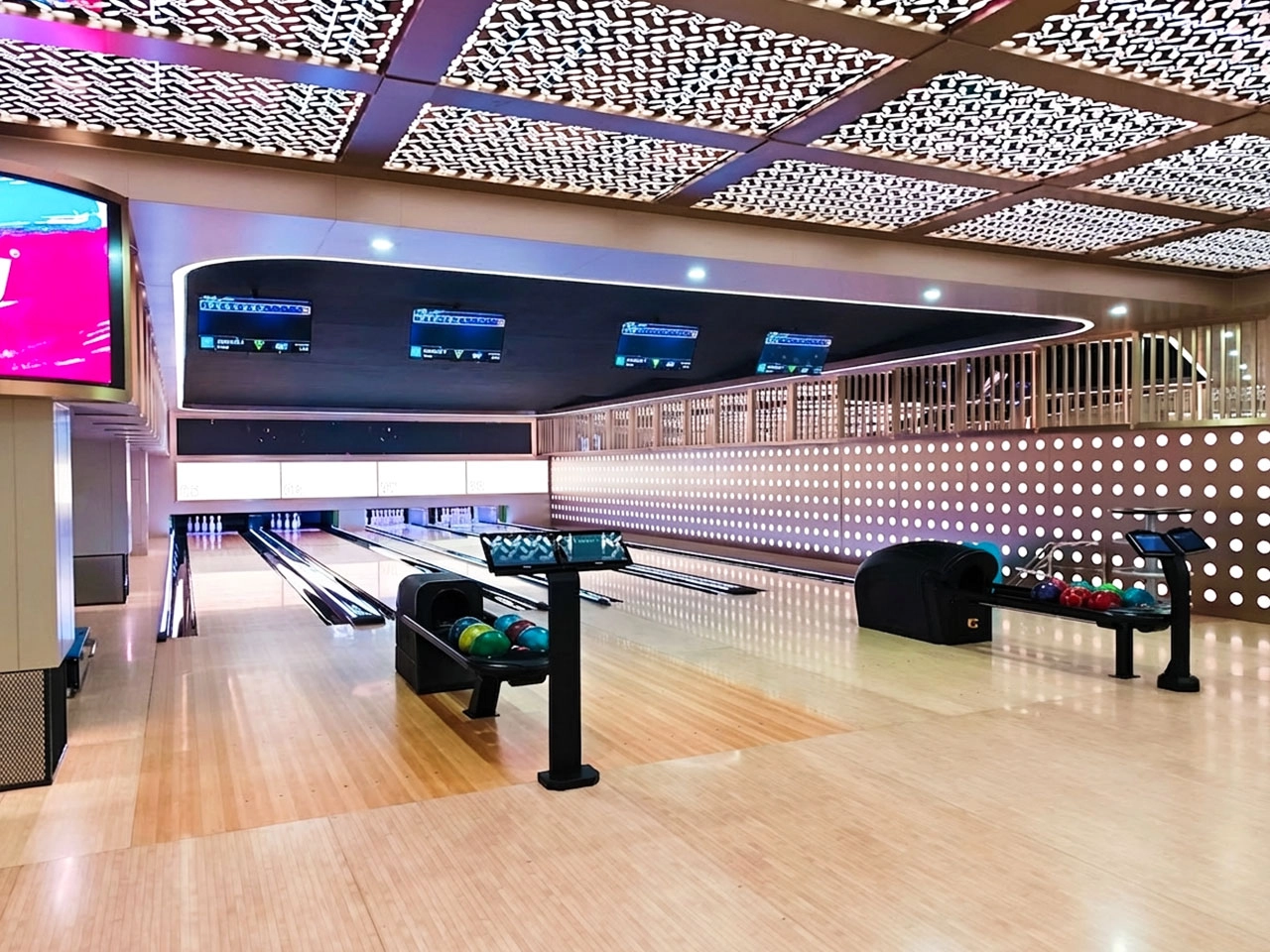
Build a commercial bowling venue with Flying’s complete string pinsetter bowling alley equipment package. The system includes the AEROPIN™ USBC-certified string pinsetter, customizable lanes, automatic scoring, ball return, lane lighting, pins, control hardware, and overseas installation support.
Designed for commercial bowling centers, family entertainment venues, hotels, resorts, bars, and premium private projects, this turnkey bowling system helps operators reduce sourcing complexity and prepare for reliable long-term operation.
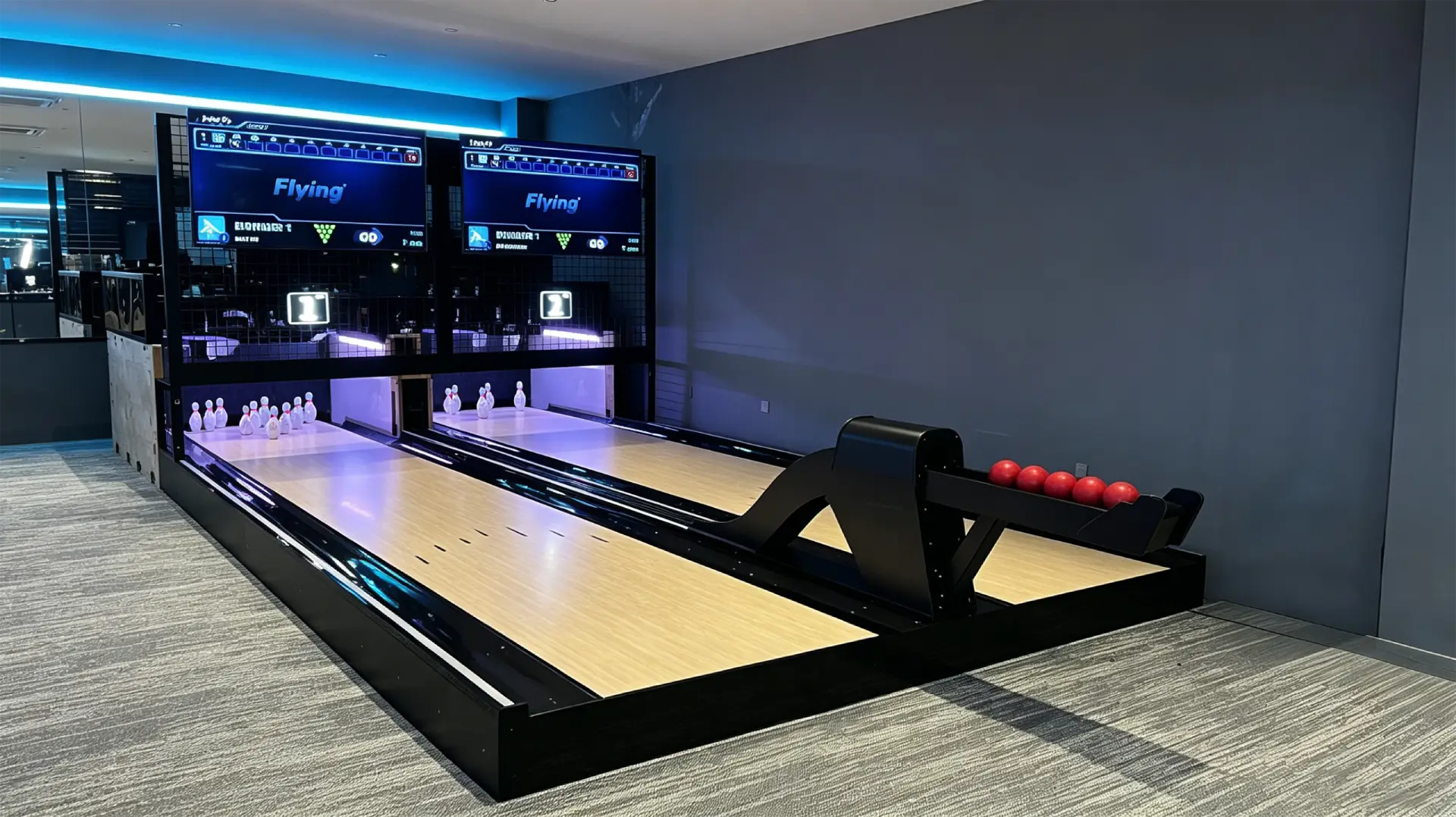
Flying Smart Duckpin Bowling is a compact duckpin bowling equipment system designed for bars, family entertainment centers, hotels, resorts, cinemas, boutique bowling alleys, and social entertainment venues. With a standard 9.13m duckpin bowling lane, 1.25kg lightweight balls, automatic scoring, ball return, LED lighting, and a smart string pinsetter, it creates a fast-paced and easy-to-play bowling experience in a smaller footprint than traditional bowling.
The system is available as a turnkey duckpin bowling package, including lane equipment, a string pinsetter system, scoring hardware, control software, global shipping, installation guidance, and technical support.
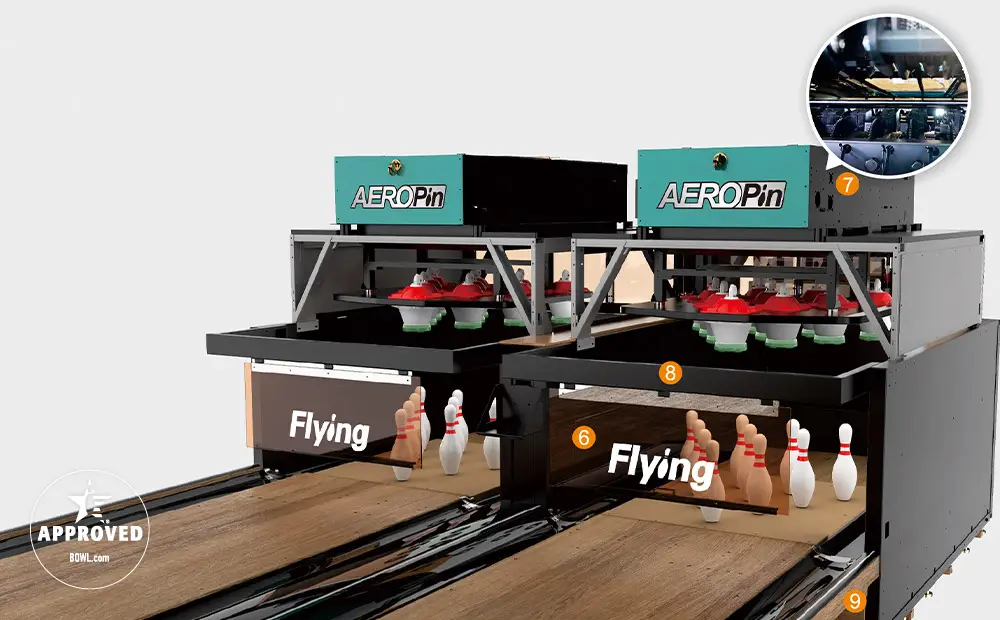
AEROPIN is Flying Bowling’s USBC-certified string pinsetter system for modern commercial bowling centers. Designed for fast pin setting, smooth ball return, low maintenance, and stable daily operation, it helps venue operators build league-ready and entertainment-focused bowling projects with confidence.
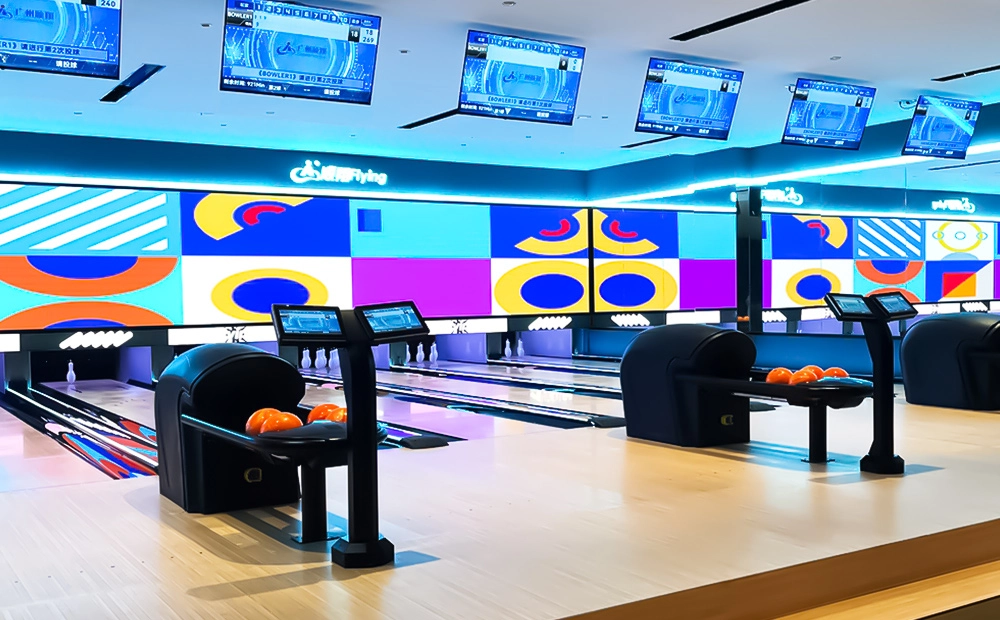
Flying Social Medium Bowling is a compact medium bowling equipment system designed for bars, cafes, family entertainment centers, community leisure venues, hotels, resorts, and small indoor entertainment spaces. With customizable lane lengths from 9.6m to 18m, small balls, lighter pins, string pinsetter technology, ball return, and automatic scoring, it creates an easy-to-play social bowling experience for players of different ages and skill levels.
Compared with full-size standard bowling, medium bowling requires less space and offers a more casual, interactive format. It is a practical choice for venues that want to add a bowling attraction without building a full commercial bowling alley.
Contact Flying
Start Your Custom Bowling Alley Project
If you contact us now for more details, we can provide you with a custom bowling alley service. Our service team will get back to you within 24 hours normally!
© 2026 Flying BOWLING. Designed by gooeyun.
FOLLOW US:

Flying Bowling
Flying Bowling
Flyingbowling
Flyingbowling
Flyingbowling