


How many bowling lanes are needed to generate a profit of $500,000 per year?
- Understanding revenue drivers in a bowling center
- Primary income streams
- League play vs. open play
- Ancillary revenue and margin impact
- Calculating lanes needed to reach $500,000 profit
- Assumptions and calculation method
- Three realistic scenarios (conservative, typical, optimistic)
- Per-lane profitability sensitivity
- Cost considerations and capital expenditure
- Operating costs breakdown
- Installation and equipment costs (capital expenditures)
- Financing, depreciation, and payback
- How to improve per-lane profitability (reduce lanes needed)
- Revenue optimization strategies
- Cost control and operational efficiency
- Marketing, partnerships, and diversification
- Equipment selection: why technology matters
- String pinsetters vs. traditional pinsetters
- Supplier considerations and global sourcing
- Flying Bowling: a cost-effective equipment partner
- Putting it together: an action plan for owners and investors
- Step-by-step approach to estimate lanes needed for your project
- Example quick result
- Key takeaways
- Frequently Asked Questions (FAQ)
- 1. How much revenue does a bowling lane generate per year on average?
- 2. What gross/net margin should I expect for a well-run bowling center?
- 3. Are string pinsetters reliable for commercial bowling centers?
- 4. How should I price lanes to maximize profit?
- 5. How many lanes do small family entertainment centers usually have?
- 6. Should I prioritize CAPEX savings or High Quality equipment?
- Contact & next steps
How many bowling lanes are needed to generate a profit of $500,000 per year? This question depends on lane-level revenue, utilization, ancillary income (shoe rental, food & beverage, arcade/pro shop), and operating costs. Below we present a repeatable, auditable method to calculate lanes required, three realistic scenarios (conservative, typical, optimistic), a sensitivity table, capital-cost context (including string vs. traditional pinsetters), and practical levers to reduce the lanes required through revenue optimization and cost control. Sources and industry references (e.g., Wikipedia, BPAA, USBC) are linked for verification.
Understanding revenue drivers in a bowling center
Primary income streams
Bowling center revenue typically includes lane rental (per hour or per game), shoe rental, league fees, parties/events, food & beverage (F&B), arcade and redemption, and pro shop sales/lessons. Lane rental is the anchor revenue source; ancillary revenues (shoe rental, F&B, arcade) commonly add 20%–60%+ to per-lane income depending on venue mix and local demand. When modeling bowling lane profitability, break revenue into these components to produce an auditable per-lane revenue line.
League play vs. open play
Leagues historically provided predictable weekday revenue and contributed to higher utilization and profitable off-peak hours. However, league participation trends have shifted (see USBC data on league trends: USBC), so modern centers depend more on parties, corporate events, and diverse entertainment offerings. For forecasting, separate league income (stable hours) from open-play (variable, weekend-focused) and assign different utilization rates.
Ancillary revenue and margin impact
Ancillary revenue is essential to per-lane profitability: shoe rental, food & beverage, and arcade typically have higher gross margins than lane rental because labor/overhead allocation differs. Accurately estimate per-lane ancillary revenue and its cost of goods sold (COGS) to determine realistic net margins per lane.
Calculating lanes needed to reach $500,000 profit
Assumptions and calculation method
We recommend a transparent per-lane calculation method so you can adjust inputs for your market. Steps:
- Estimate average lane-rental revenue per hour (R_lane/hr).
- Estimate ancillary revenue per lane-hour (R_ann/hr) from shoe rental, F&B, arcade, pro shop allocation.
- Set average utilization hours per lane per day (H/day) and days open per year (D_year; commonly 350–365).
- Compute gross revenue per lane per year: (R_lane/hr + R_ann/hr) * H/day * D_year.
- Apply an expected net margin (%) after all operating costs, financing, taxes, and depreciation to get net profit per lane per year.
- Divide target profit ($500,000) by net profit per lane to get required lanes. Round up to whole lanes.
Three realistic scenarios (conservative, typical, optimistic)
Below are three modeled scenarios with clearly stated assumptions. These are illustrative; replace inputs with your local data for a custom result.
| Scenario | Lane + Ancillary $/hr | Utilization (hrs/day) | Days/yr | Annual Rev per Lane | Net Margin (%) | Net Profit per Lane/yr | Lanes for $500,000 |
|---|---|---|---|---|---|---|---|
| Conservative | $48 | 6 | 360 | $103,680 | 6% | $6,221 | 81 |
| Typical | $57 | 10 | 360 | $205,200 | 15% | $30,780 | 17 |
| Optimistic | $75 | 14 | 360 | $378,000 | 25% | $94,500 | 6 |
Calculation notes: Lane + Ancillary $/hr combines an average lane rental rate plus associated ancillary revenue per lane-hour. Net margin is net income after all operating expenses, payroll, rent, utilities, maintenance, taxes, and depreciation. For transparency, conservative margins are low due to higher fixed-cost absorption and low utilization; typical margins reflect a well-managed center in a mid-market; optimistic assumes High Quality pricing, strong food/beverage margins, high utilization, and supplemental program revenue.
Per-lane profitability sensitivity
Small changes in utilization or average check size change lanes required materially. For example, increasing average ancillary revenue by $5/hr or increasing utilization by 2 hours/day reduces lanes needed by multiple units. Use the per-lane formula to run sensitivity tests for pricing, utilization, and margin improvements.
Cost considerations and capital expenditure
Operating costs breakdown
Typical operating costs include:
- Labor (front desk, lane attendants, kitchen staff) — usually the largest expense.
- Food & beverage COGS and staffing.
- Utilities (electricity for lanes, HVAC, lighting) — can be significant.
- Rent or mortgage, property taxes, insurance.
- Maintenance (lane surface oiling, pinsetter maintenance, ball returns).
- Marketing, administrative, and pro shop inventory costs.
Many centers allocate operating costs on a per-lane basis for analysis; however, fixed costs (rent, some staffing) make smaller centers less efficient at absorbing overhead.
Installation and equipment costs (capital expenditures)
Capital costs per lane depend on the pinsetter technology and finish level. Traditional pinsetters (mechanical) historically cost more to purchase and maintain than modern string-pinsetters. Typical cost ranges (varies by country, brand, and finish level):
- Traditional fully automated pinsetters & lane system: wide range, often tens of thousands per lane including approach, scoring, lane surface, gutters, and installation.
- String pinsetters and ball return systems (cost-competitive option): generally lower initial purchase and maintenance costs; attractive for lower CAPEX and quicker ROI.
When budgeting, include lane systems, scoring, seating, shoes and storage, kitchen build-out (if serving F&B), HVAC upgrades, and local code permitting. Financing, grants or lease-to-own options can smooth CAPEX impact. For concrete supply and supplier options, consider reputable manufacturers and compare warranties, spare-parts availability, and service networks.
Financing, depreciation, and payback
Depreciation schedules and financing terms affect reported net profit and cash flow. Use an after-tax cash flow model to estimate payback period. A center targeting $500,000 in annual profit should model both EBITDA-style profitability and cash-on-hand after loan service to ensure sustainable debt coverage.
How to improve per-lane profitability (reduce lanes needed)
Revenue optimization strategies
To reduce the number of lanes required to hit $500,000, increase revenue per lane via:
- Dynamic pricing: charge higher rates during peak times and offer packages for groups/parties.
- F&B optimization: menu engineering and promotions to increase average check with limited incremental labor.
- Sell experiences: glow bowling, themed nights, corporate team-building packages.
- Host leagues, tournaments and recurring events for reliable bookings during off-peak periods.
Cost control and operational efficiency
Lower operating costs per lane through:
- Energy efficiency (LEDs, efficient HVAC, lane oil-management).
- Cross-training staff to reduce peak payroll peaks.
- Choosing reliable, low-maintenance equipment (e.g., modern string pinsetters can reduce repair downtime and parts cost).
- Using software for scheduling and inventory control to reduce waste and labor hours.
Marketing, partnerships, and diversification
Grow utilization with targeted marketing: family packages, university partnerships, corporate events, birthday parties, and loyalty programs. Adding mini-bowling, duckpin lanes, or arcade attractions can attract new demographics and increase per-visit spend.
Equipment selection: why technology matters
String pinsetters vs. traditional pinsetters
String pinsetters are a modern, lower-cost alternative to traditional pinsetters. They reduce mechanical complexity, lower maintenance cost, and often have lower initial CAPEX. Many venues — especially family entertainment centers, mini-bowling, and Duckpin operations — prefer string systems for cost-effectiveness.
Supplier considerations and global sourcing
Compare suppliers on these dimensions: product reliability, spare-parts inventory, warranty, local service network, compliance with local codes, and total cost of ownership. Industry bodies like the Bowling Proprietors' Association of America (BPAA) provide supplier directories and industry guidance.
Flying Bowling: a cost-effective equipment partner
Since 2005, Flying Bowling has specialized in the research and development of bowling string pinsetters and ball return machines. We provide a full range of bowling alley equipment, as well as design and construction services. Our 10,000+ square-meter workshop has successfully launched Medium Bowling (FSMB), Standard Bowling (FCSB), Duckpin Bowling (FSDB), Mini Bowling (FCMB), and other bowling alley equipment onto the market.
Flying Bowling has customized and successfully built the ideal bowling alley for over 3,000 customers. The quality of our bowling equipment is comparable to European and American brands, but our prices are unbeatable, satisfying users around the world. We provide one-stop customized services for bowling venues and also recruit distributors from the global market to promote the development of the bowling industry. Flying Bowling is a leading bowling equipment manufacturer and supplier from China.
Products and strengths: duckpin bowling, bowling alley equipment, mini bowling equipment, bowling string pinsetter. Competitive differentiators include:
- Lower CAPEX with string pinsetter technology — faster payback in many markets.
- Full-service design & construction capability to optimize floorplan and maximize lane utilization.
- Global experience with 3,000+ successful installations — localizable designs and spare-parts supply.
Contact Flying Bowling: https://www.flyingbowling.com/ | Email: jackson@flyingbowling.com | Phone: +86-15013107020.
Putting it together: an action plan for owners and investors
Step-by-step approach to estimate lanes needed for your project
- Collect local inputs: competitor lane rates, expected utilization, F&B price points, and local labor costs.
- Build a per-lane revenue model using the formula above and test 3–5 scenarios.
- Estimate operating and fixed costs realistically and choose conservative net-margin assumptions for baseline planning.
- Run sensitivity analysis for price, utilization, and ancillary revenue to see how many lanes are needed under each case.
- Compare CAPEX options (traditional vs. string pinsetters) to determine total investment and ROI timeline. Consider suppliers like Flying Bowling for competitive quotes.
Example quick result
Using the three scenarios above: a typical mid-market center with good management and a balanced revenue mix would likely need roughly 16–18 lanes to generate $500,000 in net profit per year. A highly optimized center with High Quality pricing and high ancillary margins could achieve this with 5–7 lanes. Conversely, a low-utilization, high-fixed-cost center might need 70+ lanes — illustrating the importance of utilization and margin management.
Key takeaways
- There is no single answer; lanes required scale with per-lane net profit.
- Increase per-lane revenue and margins (pricing, F&B, experiences) to reduce lane count needed for the same profit target.
- Choose equipment and suppliers (e.g., string pinsetter options) to reduce CAPEX and maintenance costs, improving ROI.
Frequently Asked Questions (FAQ)
1. How much revenue does a bowling lane generate per year on average?
There is no universal average — revenue per lane varies by market, pricing, utilization, and ancillary sales. In our scenarios, annual lane revenue ranged from roughly $104k to $378k. Use local data for accurate estimates.
2. What gross/net margin should I expect for a well-run bowling center?
Margins vary widely. Conservative net margins may be 5%–8%; a well-run center might target 12%–20% net after all expenses. High-performing centers with strong F&B and diversified income can exceed 25% net in some cases.
3. Are string pinsetters reliable for commercial bowling centers?
Yes — string pinsetters are increasingly used worldwide, especially for family entertainment centers, mini-bowling, and duckpin operations. They typically reduce CAPEX and maintenance complexity; verify supplier quality and service support. See manufacturers like Flying Bowling for product details: Flying Bowling.
4. How should I price lanes to maximize profit?
Use dynamic pricing: higher rates at peak times and value packages during off-peak hours. Offer bundled experiences (bowling + food + arcade) to increase check size. Track utilization and elasticity of demand to optimize hourly pricing.
5. How many lanes do small family entertainment centers usually have?
Small family centers may run 4–12 lanes (sometimes mini-bowling setups) to fit capital budgets and space. Larger traditional bowling centers often have 16–40+ lanes. The number should match expected demand and revenue goals.
6. Should I prioritize CAPEX savings or High Quality equipment?
Balance CAPEX with TCO (total cost of ownership). Lower initial cost equipment (e.g., quality string pinsetters) can accelerate ROI, but ensure reliability and parts/service support to avoid downtime-related revenue loss.
Contact & next steps
If you want a customized lanes-needed model for your market, or supplier quotes for competitive CAPEX and installation options, Flying Bowling can help. Since 2005 we have delivered duckpin bowling, mini bowling equipment, bowling alley equipment, and bowling string pinsetters to 3,000+ customers, providing design-to-installation one-stop service that can reduce both initial investment and long-term maintenance expenses.
Visit Flying Bowling to view products or request a quote. Email: jackson@flyingbowling.com | Phone: +86-15013107020.
Ready to model your center? Contact Flying Bowling for a site-specific profitability analysis and equipment quote to find the most efficient path to $500,000 annual profit.
Recommended products
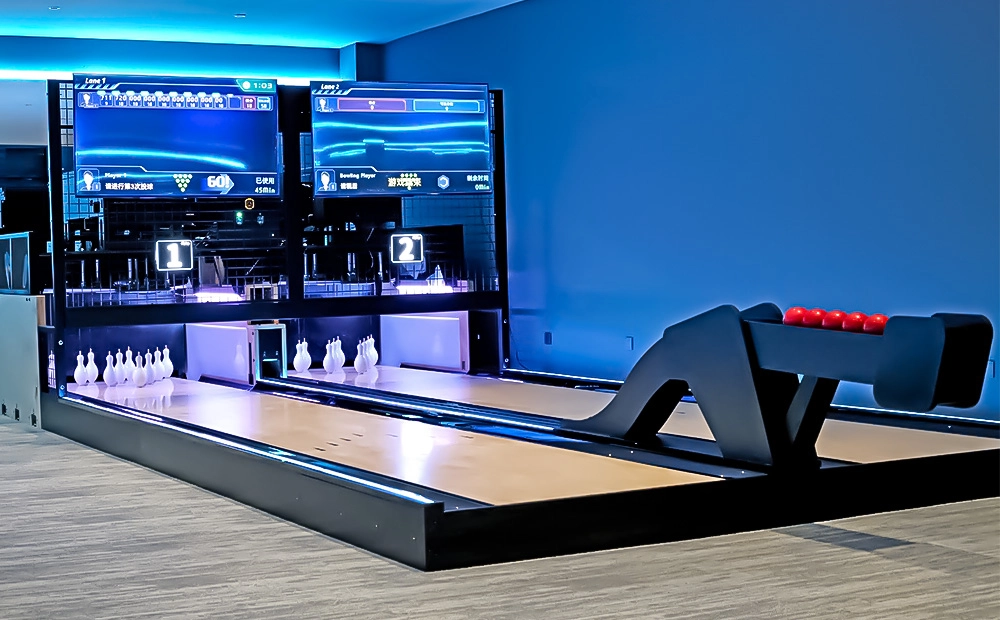
Flying Smart Duckpin Bowling Equipment and Lane System for Commercial Venues
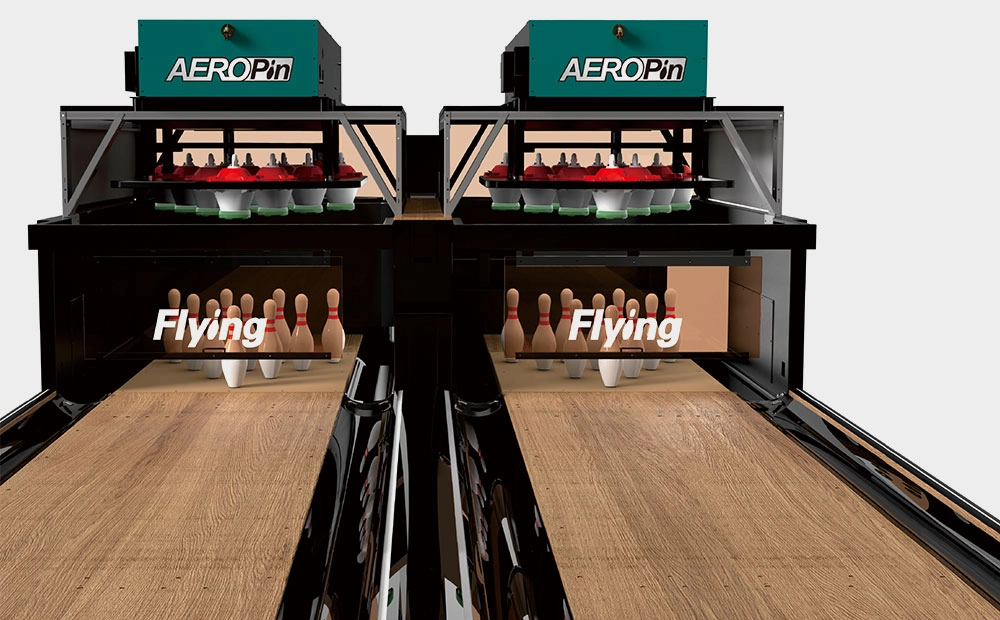
USBC-Certified AEROPIN String Pinsetter System
Mini Bowling Equipment for Kids and Family Entertainment Venues
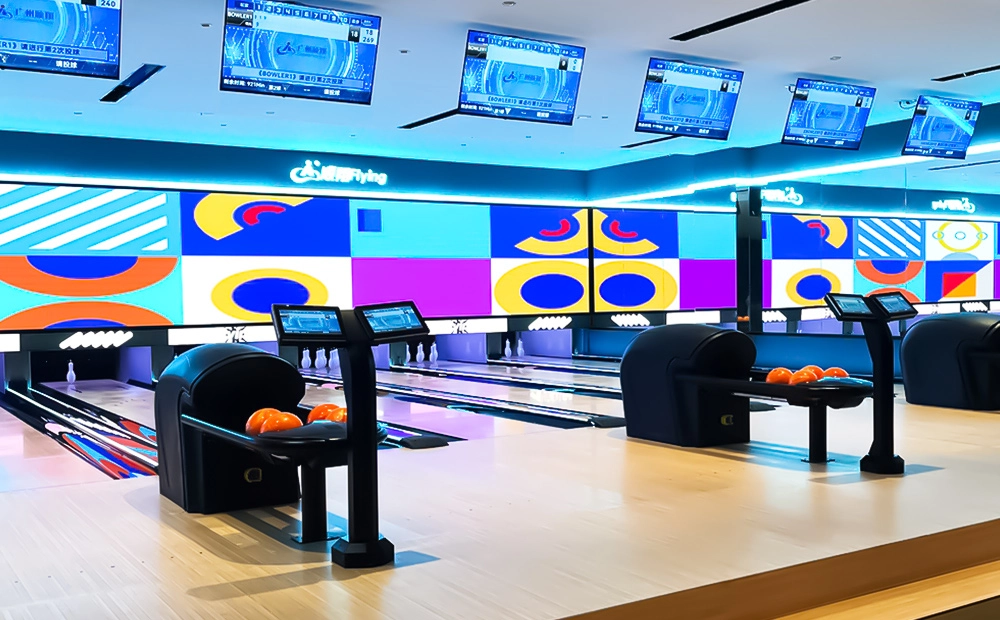
Medium Bowling Equipment for Social Entertainment Venues
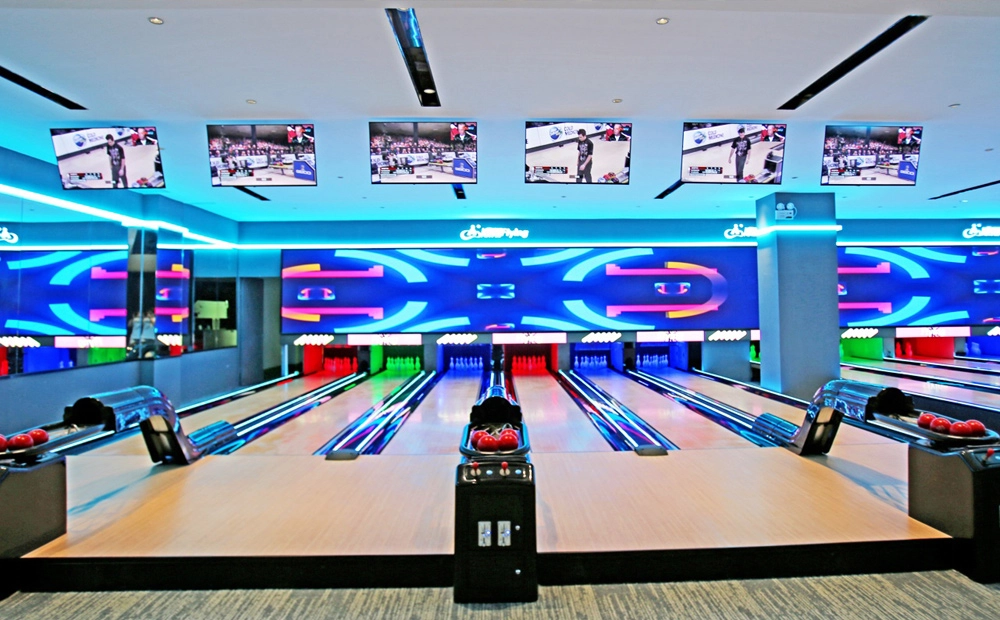
Complete String Pinsetter Bowling Alley Equipment System
You may also like
Flying Smart Duckpin Bowling (FSDB) innovative design, standard 9.2-meter short lane, can be shortened in length, compact layout suitable for small spaces. The game rules are simple but challenging, attracting players of different ages to actively participate.
Suitable for social entertainment venues such as bars, billiard halls, and game centers, it not only enhances interactivity but also increases the popularity and consumption frequency of the venue. The fun and competitive nature of FSDB will make it a new focus of social activities.
Flying Classic Standard Bowling (FCSB) is designed according to international competition standards and equipped with an accurate automatic scoring system, providing bowling enthusiasts with a pure professional experience. Whether it is for competitions or leisure entertainment, FCSB can meet high-level needs.
Suitable for family entertainment centers, luxury resorts, private villas, or clubs, it is an ideal choice for customers who pursue high-end quality and professional experience. Its classic design and excellent performance will add lasting appeal to the venue.
Flying Cute Mini Bowling (FCMB) is a mini bowling experience designed for children and families. The lane length is fixed at 12 meters, equipped with lightweight balls without finger holes (only 1.25kg) and small pins, specially designed for children and family fun.
It can not only help children feel the fun of bowling, but also stimulate their interest and competitive consciousness. Suitable for children's playgrounds, theme parks and parent-child centers, it is the best choice for places focusing on the children's market.
Flying Social Medium Bowling (FSMB) is tailored for small venues, with flexible lane lengths (customizable from 9.6 meters to 18 meters), a small ball design suitable for players of all ages, and light pins that are easier to knock down, increasing participation and fun.
Whether it is a gathering of friends or a casual social, FSMB can easily create a relaxed and pleasant atmosphere. Its efficient space-utilization design is particularly suitable for cafes, bars and community entertainment venues, allowing people to fall in love with bowling in a relaxed interaction.
Contact Flying
Start your bowling alley project
If you contact us now for more details, we can provide you with a custom bowling alley service. Our service team will get back to you within 24 hours normally!
© 2026 Flying BOWLING. Designed by gooeyun.
FOLLOW US:
Flying Bowling
Flying Bowling
Flyingbowling
Flyingbowling