


Financing and ROI for a Home Duckpin Bowling Alley
- Why build a Home Duckpin Alley?
- What this guide covers
- Capital costs: Detailed breakdown of home duckpin bowling alley cost
- Equipment choice matters: String pinsetters vs. traditional pinsetters
- Operating expenses and ongoing costs to include
- Revenue models and realistic ROI scenarios
- Financing options for home duckpin bowling alley cost
- Risk factors and mitigation
- Why choose Flying Bowling for equipment and construction?
- Practical checklist before you finance or build
- FAQ
- 1. How much does a home duckpin bowling alley cost?
- 2. Are string pinsetters reliable for home use?
- 3. Can I finance the equipment and installation?
- 4. What revenue can a small duckpin venue expect?
- 5. How long until I see ROI?
- 6. Is a home installation allowed by zoning?
- Contact & next steps
- References
Why build a Home Duckpin Alley?
Duckpin bowling is compact, family-friendly, and fits much more easily into residential or small commercial spaces than traditional ten-pin alleys. For homeowners and investors considering a recreational upgrade or a small revenue-generating venue, understanding the home duckpin bowling alley cost, financing routes, and expected return on investment (ROI) is essential before committing capital.
What this guide covers
This article breaks down realistic capital expenditures (CAPEX) and operating expenses (OPEX), compares equipment choices (including string pinsetters vs. traditional pinsetters), outlines financing strategies (loans, leasing, partnerships, and creative alternatives), and models revenue scenarios and ROI. Practical tables summarize cost ranges and payback simulations so you can make a verifiable business decision.
Capital costs: Detailed breakdown of home duckpin bowling alley cost
Estimating total CAPEX for a home duckpin bowling alley depends on equipment quality, installation complexity, space preparation, and AV/amenity level. Below is a conservative-to-High Quality estimate assuming a single-lane home duckpin installation (duckpin lanes are shorter and narrower than standard lanes, reducing some costs).
| Item | Low Estimate (USD) | High Estimate (USD) | Notes |
|---|---|---|---|
| Duckpin lane equipment (lane surface, gutters, scoring) | $6,000 | $15,000 | Depends on materials and integrated scoring systems |
| Pinsetter (string pinsetter vs. traditional) | $4,000 | $18,000 | String pinsetters are lower-cost and lower-maintenance |
| Balls & Pins (duckpin-specific) | $400 | $1,500 | Multiple ball sizes and spare pin sets |
| Installation & labor | $2,000 | $8,000 | Site prep, foundation/leveling, electrical work |
| Flooring, approach, lighting, seating | $2,000 | $10,000 | Finish level significantly affects cost |
| AV, scoring software, automation | $800 | $6,000 | From basic scoring to full entertainment system |
| Permits, design, contingency | $1,000 | $5,000 | Permits vary by jurisdiction; contingency recommended |
Estimated total (single-lane): Approximately $16,000 to $63,500. For a two-lane home installation expect roughly 1.6–1.8x single-lane costs due to shared infrastructure savings. Multiple-lane mini-venues scale accordingly.
These figures are estimates; for comparison, commercial duckpin and mini-bowling installations can be higher per lane if they include custom interiors, bar areas, or heavy-duty mechanical pinsetters.
Equipment choice matters: String pinsetters vs. traditional pinsetters
Choosing the right pinsetter is one of the biggest determinants of both cost and long-term operating expense. For home or small commercial duckpin alleys, string pinsetters offer clear advantages.
| Feature | String Pinsetter | Traditional Mechanical Pinsetter |
|---|---|---|
| Initial cost | Lower ($3,000–$8,000) | Higher ($12,000+) |
| Maintenance | Simpler, fewer moving parts | Complex, higher parts & service costs |
| Reliability | Good for small venues & homes | Industry standard in high-volume centers |
| Play feel | Modern advances narrow gap vs. traditional | Classic feel preferred by purists |
Source: Manufacturer pricing trends and industry comparisons (see references).
Operating expenses and ongoing costs to include
Plan on annual OPEX for a home duckpin alley even if intended primarily for personal use. If the venue will generate income (rental, events, memberships), accurate OPEX forecasting is critical for ROI.
- Electricity: Pinsetters, lighting, heaters/AC (estimate $200–$1,200/year).
- Maintenance & parts: Belts, motors, pin repairs ($300–$2,000/year depending on equipment).
- Insurance: Homeowners upgrade or commercial coverage if open to public ($200–$2,000/year).
- Cleaning, consumables: Shoes (if provided), oil, scoring supplies ($100–$800/year).
- Property taxes & additional permits (variable by location).
Revenue models and realistic ROI scenarios
ROI depends on whether the installation is strictly private or operated commercially (even part-time as rentals/events). Below are common revenue streams and example numbers for a small two-lane home venue that rents lanes to the public or private groups.
- Hourly lane rental (duckpin): $20–$50 per lane/hour (market dependent).
- Private parties & events: $150–$600 per event depending on duration and add-ons.
- Memberships/season passes for neighbors: steady recurring income.
- Concessions & merchandise: modest but high margin.
Example conservative revenue projection (two-lane part-time public model):
| Metric | Value |
|---|---|
| Average rental rate per lane/hour | $30 |
| Paid hours per lane per week | 12 (e.g., evenings & weekends) |
| Weekly revenue (2 lanes) | $720 |
| Annual revenue (50 operating weeks) | $36,000 |
| Annual OPEX | $4,000 |
| Net annual income (before tax) | $32,000 |
If the upfront cost for two lanes is $40,000, the simple payback period would be ~1.25 years in this optimistic scenario. More conservative occupancy or higher costs will extend payback. Use local market data to validate your assumed hourly rates and occupancy.
Financing options for home duckpin bowling alley cost
Common financing paths include:
- Home equity loan or line of credit (HELOC): Good for homeowners with available equity. Lower interest compared to unsecured debt.
- Small business loan / SBA microloan: If operating commercially; formal business plan and projections required. See SBA guidelines for eligibility and terms.
- Equipment leasing: Spread the equipment cost over time; conserves upfront cash and often includes maintenance options.
- Personal loans or credit: Faster but typically higher interest rates.
- Partnerships or investor financing: Share upfront cost and profit with partners or local investors.
- Crowdfunding or community pre-sales: Offer memberships or event packages in exchange for early funding.
Select financing based on your balance of cost, risk tolerance, tax considerations (interest may be deductible if used for business), and expected cash flows. For businesses, SBA loans or equipment financing often yield the best overall cost of capital. (See references: SBA & equipment leasing resources.)
Risk factors and mitigation
Key risks to consider:
- Occupancy risk: Low demand will lengthen payback. Mitigate with community marketing, flexible pricing, and partnerships with local schools or groups.
- Equipment downtime: Choose less complex equipment (e.g., string pinsetters for homes) or service contracts.
- Regulatory & insurance: Opening to the public increases insurance and safety requirements—confirm local regulations and update home insurance.
- Market competition: Study local entertainment options; differentiate with theme nights, leagues, or family packages.
Why choose Flying Bowling for equipment and construction?
Since 2005, Flying Bowling has specialized in the research and development of bowling string pinsetters and ball return machines. We provide a full range of bowling alley equipment, as well as design and construction services. Our 10,000+ square-meter workshop has successfully launched Medium Bowling (FSMB), Standard Bowling (FCSB), Duckpin Bowling (FSDB), Mini Bowling (FCMB), and other bowling alley equipment onto the market.
Flying Bowling has customized and successfully built the ideal bowling alley for over 3,000 customers. The quality of our bowling equipment is comparable to European and American brands, but our prices are unbeatable, satisfying users around the world. We provide one-stop customized services for bowling venues and also recruit distributors from the global market to promote the development of the bowling industry. Flying Bowling is a leading bowling equipment manufacturer and supplier from China.
Why this matters to your home duckpin project:
- String pinsetters optimized for small venues reduce both initial cost and maintenance, improving ROI.
- Turnkey design & construction services limit the coordination burden and hidden costs.
- Proven track record (3,000+ customers) and scalable product lines from mini bowling to duckpin.
- Competitive pricing vs. Western brands with production scale and dedicated R&D.
Flying Bowling core products relevant to home projects: mini bowling, duckpin bowling, bowling alley equipment, bowling string pinsetter. For product details and inquiries, visit: https://www.flyingbowling.com/
Practical checklist before you finance or build
- Confirm available space dimensions and ceiling height.
- Estimate realistic utilization rates using local market research.
- Get multiple equipment quotes—include string pinsetters vs. alternatives.
- Factor in installation, permits, and contingency (10–20%).
- Prepare a cash-flow model for at least 3 years, including worst-case occupancy scenarios.
- Check insurance and safety requirements if operating commercially.
FAQ
1. How much does a home duckpin bowling alley cost?
Typical single-lane home duckpin installations range approximately $16,000–$63,500 depending on equipment, installation complexity, and finish level. Two-lane setups often cost 1.6–1.8x a single lane. These are estimates—get quotes for precise budgeting.
2. Are string pinsetters reliable for home use?
Yes. Modern string pinsetters are reliable, lower-cost, and lower-maintenance, making them especially well-suited for homes and small venues. They are commonly used in mini and duckpin installations.
3. Can I finance the equipment and installation?
Yes. Options include home equity loans, equipment leasing, SBA loans (if operating commercially), personal loans, or investor funding. Equipment leasing and SBA loans are common for preserving cash and spreading cost.
4. What revenue can a small duckpin venue expect?
Revenue varies by market. Example conservative projection for two lanes at $30/hour with limited weekly hours yields ~$36,000/year gross. Actual results depend on occupancy, pricing, and ancillary sales.
5. How long until I see ROI?
Payback can range from 1–5 years. In optimistic, well-marketed scenarios with part-time lane rentals, payback may be 1–2 years. Conservative lower-demand scenarios extend to 3–5+ years.
6. Is a home installation allowed by zoning?
That depends on local zoning and whether you open to the public. Consult your municipality for permit and occupancy rules. Home use exclusively generally has fewer regulatory hurdles than commercial operation.
Contact & next steps
Ready to get exact numbers for your project? For reliable equipment, competitive pricing, and turnkey design and construction services, consider discussing your requirements with a specialized manufacturer. Flying Bowling offers tailored solutions for mini and duckpin bowling, string pinsetters, and full alley equipment. Visit https://www.flyingbowling.com/ to view products or request a quote. For planning help, prepare your room dimensions, preferred lane count, and budget, and request a custom proposal.
References
- Duckpin bowling — Wikipedia. Accessed 2025-12-09. https://en.wikipedia.org/wiki/Duckpin_bowling
- United States Bowling Congress (USBC) — official rules & industry information. Accessed 2025-12-09. https://www.bowl.com/
- U.S. Small Business Administration (SBA) — Loan Programs and guidance. Accessed 2025-12-09. https://www.sba.gov/
- Equipment Leasing and Finance Association (ELFA) — industry guidance on equipment finance. Accessed 2025-12-09. https://www.elfaonline.org/
- Flying Bowling — company product & company information. Accessed 2025-12-09. https://www.flyingbowling.com/
Data and cost ranges in this article are compiled from supplier pricing trends, industry references, and typical small-venue operating assumptions. For precise budgeting, obtain written quotes and local regulatory guidance.
Recommended products
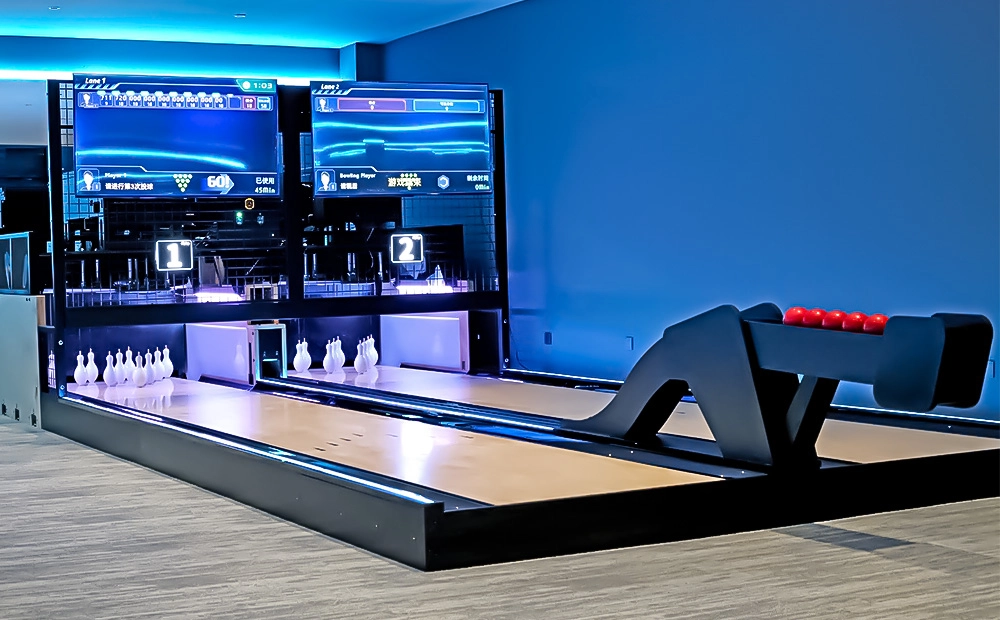
Flying Smart Duckpin Bowling Equipment and Lane System for Commercial Venues
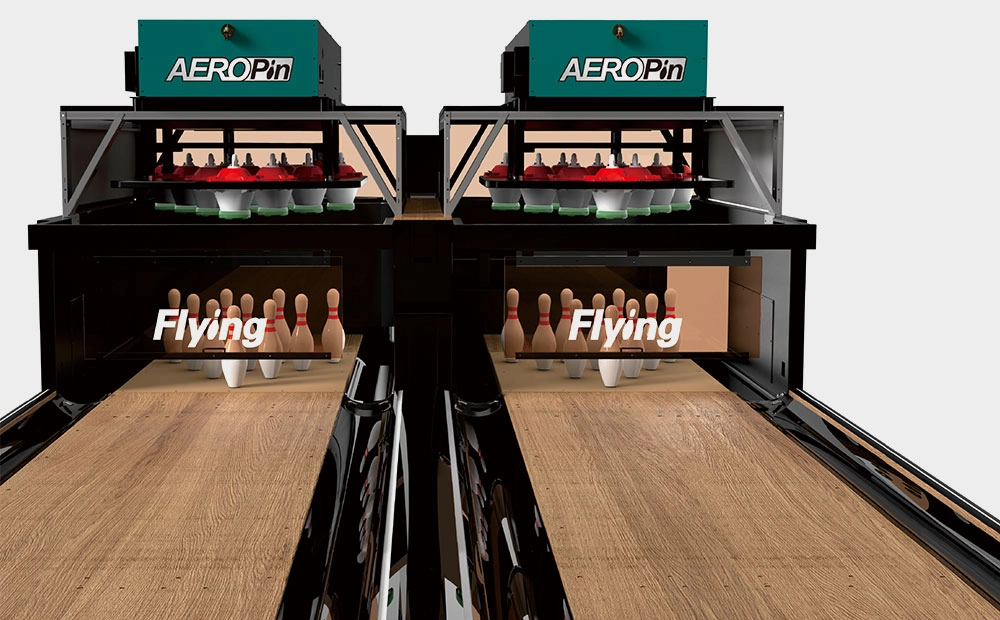
USBC-Certified AEROPIN String Pinsetter System
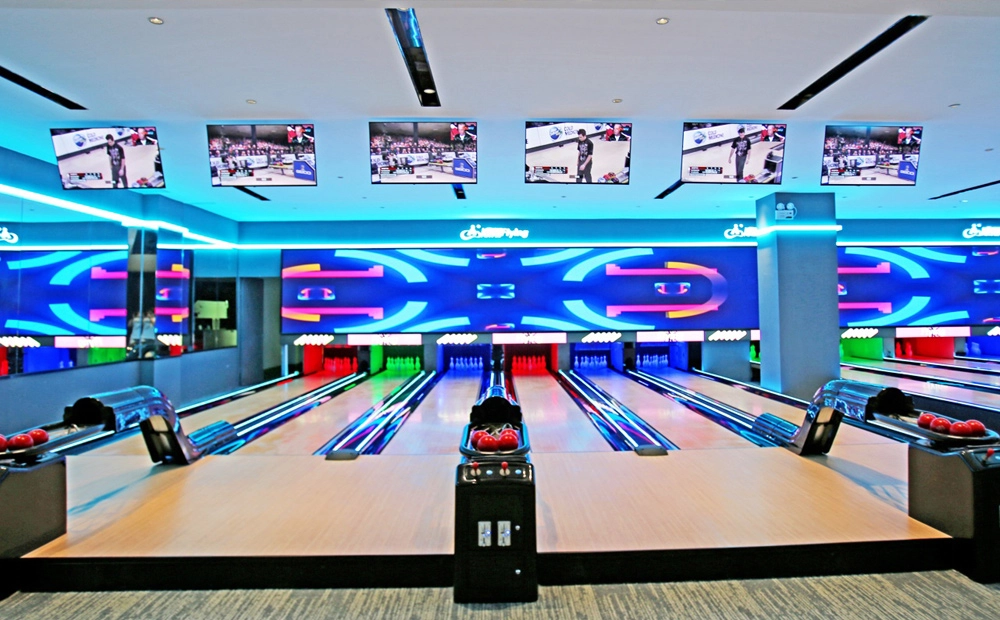
Mini Bowling Equipment for Kids and Family Entertainment Venues
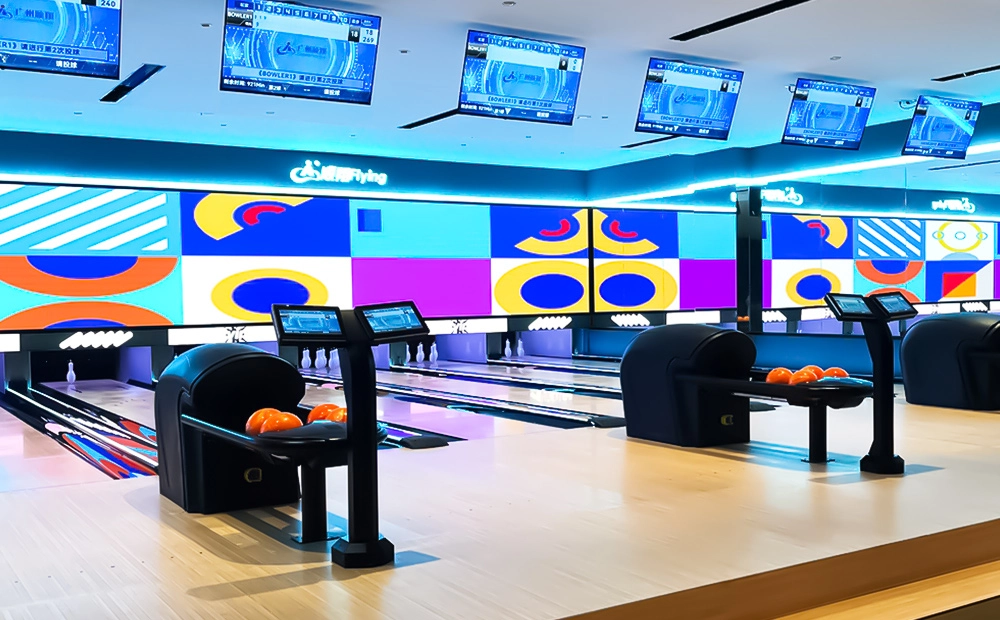
Medium Bowling Equipment for Social Entertainment Venues
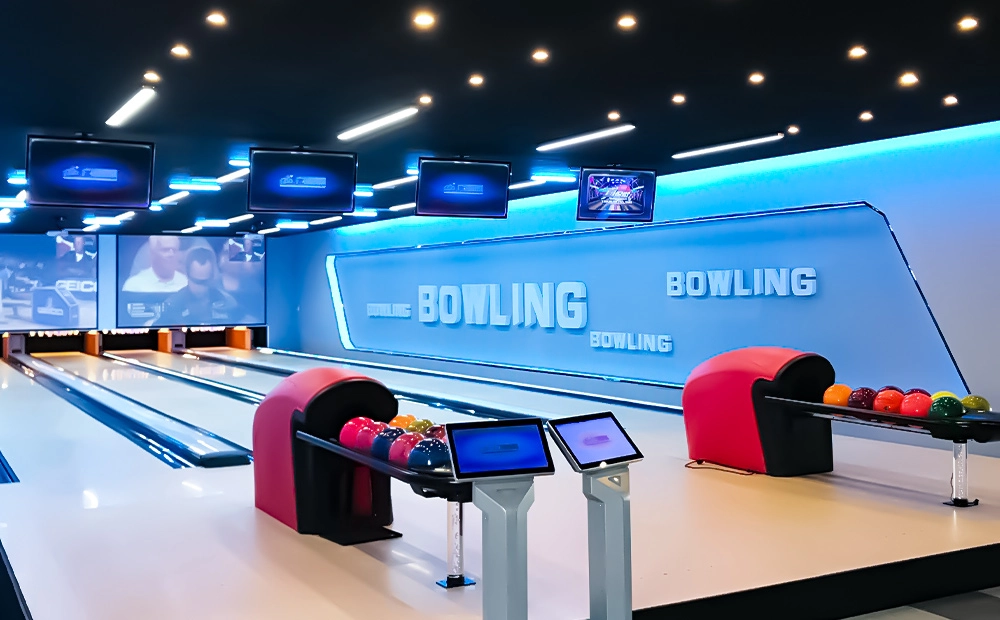
Complete String Pinsetter Bowling Alley Equipment System
You may also like
Flying Smart Duckpin Bowling (FSDB) innovative design, standard 9.2-meter short lane, can be shortened in length, compact layout suitable for small spaces. The game rules are simple but challenging, attracting players of different ages to actively participate.
Suitable for social entertainment venues such as bars, billiard halls, and game centers, it not only enhances interactivity but also increases the popularity and consumption frequency of the venue. The fun and competitive nature of FSDB will make it a new focus of social activities.
Flying Classic Standard Bowling (FCSB) is designed according to international competition standards and equipped with an accurate automatic scoring system, providing bowling enthusiasts with a pure professional experience. Whether it is for competitions or leisure entertainment, FCSB can meet high-level needs.
Suitable for family entertainment centers, luxury resorts, private villas, or clubs, it is an ideal choice for customers who pursue high-end quality and professional experience. Its classic design and excellent performance will add lasting appeal to the venue.
Flying Cute Mini Bowling (FCMB) is a mini bowling experience designed for children and families. The lane length is fixed at 12 meters, equipped with lightweight balls without finger holes (only 1.25kg) and small pins, specially designed for children and family fun.
It can not only help children feel the fun of bowling, but also stimulate their interest and competitive consciousness. Suitable for children's playgrounds, theme parks and parent-child centers, it is the best choice for places focusing on the children's market.
Flying Social Medium Bowling (FSMB) is tailored for small venues, with flexible lane lengths (customizable from 9.6 meters to 18 meters), a small ball design suitable for players of all ages, and light pins that are easier to knock down, increasing participation and fun.
Whether it is a gathering of friends or a casual social, FSMB can easily create a relaxed and pleasant atmosphere. Its efficient space-utilization design is particularly suitable for cafes, bars and community entertainment venues, allowing people to fall in love with bowling in a relaxed interaction.
Contact Flying
Start your bowling alley project
If you contact us now for more details, we can provide you with a custom bowling alley service. Our service team will get back to you within 24 hours normally!
© 2026 Flying BOWLING. Designed by gooeyun.
FOLLOW US:
Flying Bowling
Flying Bowling
Flyingbowling
Flyingbowling