

How to Finance Bowling Alley Equipment for Fast Payback
- Why financing strategy drives bowling alley profitability
- How equipment cost affects unit economics
- The role of equipment choice in cost and maintenance
- Practical financing options and their impact on payback
- How to choose between loan and lease
- Structuring payments to match revenue seasonality
- Modeling payback and improving return on investment
- Simple payback calculation
- Example assumptions to stress-test your model
- Revenue levers that shorten payback
- Operational strategies to reduce costs and speed payback
- Why choose string pinsetters and modern ball return systems
- Maintenance and uptime impact on revenue
- Staffing model and automation
- Vendor selection, negotiations, and risk management
- What to negotiate with equipment vendors
- Warranty, training and spare parts
- Distributors and local support networks
- Flying Bowling: vendor profile and why it matters for payback
- How vendor-financed packages can speed up opening
- When to choose a global manufacturer over local suppliers
- Checklist: actionable steps to finance for fast payback
- Frequently Asked Questions (FAQ)
- 1. What financing option gives the fastest path to payback?
- 2. Do string pinsetters really reduce costs and speed payback?
- 3. How much should I expect to finance vs. pay in cash upfront?
- 4. How important is F&B and events to payback calculations?
- 5. Can I get vendor financing from Flying Bowling?
- 6. What are common pitfalls that delay payback?
Summary / Snapshot: Financing the right bowling alley equipment with a plan targeting fast payback requires aligning capital structure, equipment choice, and revenue levers. This article explains practical financing options, shows how to model payback and ROI, compares lending vs. leasing, and highlights operational strategies to accelerate cash recovery while lowering operating expense ratios. It also explains trade-offs between traditional freefall pinsetters and modern string pinsetters (lower capex and maintenance), and gives vendor guidance including a spotlight on Flying Bowling’s solutions and services.
Why financing strategy drives bowling alley profitability
Bowling alley profitability is not determined solely by top-line revenue — the cost and structure of financing for bowling equipment heavily influence net margins and payback period. New lanes, pinsetters, scoring systems, and F&B fit-outs are capital-intensive. Selecting the right financing mix (loan, lease, vendor finance) and equipment type (traditional pinsetters vs. string pinsetters, mini/duckpin options) impacts cash flow, maintenance costs, and time to break-even.
How equipment cost affects unit economics
Each lane and its associated pinsetter, ball return, seating and scoring can represent a large percentage of initial capital investment. Financing increases fixed obligations but can preserve operating cash if structured properly. To optimize for fast payback, operators must model per-lane revenue against debt service and maintenance. Industry organizations such as the Bowling Proprietors' Association of America (BPAA) provide context on revenue drivers for centers and league participation trends (BPAA).
The role of equipment choice in cost and maintenance
Modern alternatives like bowling string pinsetters significantly reduce mechanical complexity, lower maintenance hours, and can reduce capital cost per lane compared with some traditional freefall systems. These differences affect operating expense (OPEX) and therefore speed of payback. For technical background on bowling alley hardware, see the general overview of bowling infrastructure on Wikipedia.
Practical financing options and their impact on payback
Choose financing to balance lower initial cash outlay, monthly payments versus expected cash inflows, and protection against obsolescence. Below is a concise comparison of common options and how they support fast payback.
| Financing Option | Typical Terms | Pros | Cons | Best use to accelerate payback |
|---|---|---|---|---|
| Bank term loan | 3–7 years; interest varies | Lower interest, full ownership | Requires good credit; down payment | For operators with strong credit to lower interest cost |
| SBA 7(a) / CDC loans | Up to 10–25 years depending on use (SBA) | Low rates, long terms, favorable for fixed assets | Longer approval; documentation heavy | When need lower monthly payments to free cash for growth |
| Equipment lease / finance lease | 2–7 years; may preserve cash | Little/no down payment; preserves liquidity | Total cost can be higher; no asset ownership until lease end | Shortens capital outflow and can accelerate opening |
| Vendor financing | Flexible; often tied to vendor | Fast approvals; vendor expertise; potential bundled maintenance | May have higher rates; dependent on vendor | Good for tailored packages and faster deployment |
| Revenue-based / merchant advances | Repay as % of sales | No fixed payments in slow months | Effective APR can be high | Short-term bridge where seasonal income fluctuates |
| CapEx + equity (partners) | Negotiated | No debt service; shared risk | Dilution of ownership; profit sharing | When you need growth capital without leverage |
Sources for financing options and explanations include the U.S. Small Business Administration (SBA) and industry financing primers such as Investopedia’s equipment financing overview (Investopedia).
How to choose between loan and lease
Decide based on cash flow, tax treatment, and obsolescence risk. Leases preserve cash and can be off-balance-sheet in some cases (operating leases), while loans build equity and allow asset depreciation. For fast payback, a shorter term loan with low interest can be best if projected cash flows comfortably cover debt payments; otherwise a lease combined with vendor service agreements can reduce downtime and variable costs.
Structuring payments to match revenue seasonality
Many centers are seasonal and need payment schedules that align with league cycles and peak periods (e.g., fall/winter). Negotiate payment holidays, seasonal step-ups, or revenue-based adjustments when possible to avoid liquidity stress early on.
Modeling payback and improving return on investment
Fast payback depends on two pillars: maximizing near-term revenue and minimizing ongoing costs. Below is a repeatable calculation framework you can implement in a spreadsheet.
Simple payback calculation
1) Sum financed capital expenditure (CapEx): lanes, pinsetters, scoring, F&B fit-out, furniture.
2) Subtract any down payment and grants.
3) Estimate incremental monthly gross margin attributable to the new equipment (lane fees, shoe rental, F&B). Include conservative occupancy, average spend per visit, and ancillary sales.
4) Subtract monthly operating expenses attributable to the equipment (maintenance, supplies, part-time labor).
5) Monthly net cash flow available for debt service = step 3 minus step 4.
6) Payback period (months) = (Net financed amount + financing costs) / monthly net cash flow available for debt service.
Example assumptions to stress-test your model
Test multiple scenarios: conservative (70% expected activity), base case (90%), and optimistic (full league season ramp). Include sensitivity to maintenance savings by using string pinsetters vs. traditional systems, and factor vendor support contracts.
Revenue levers that shorten payback
Prioritize initiatives that increase throughput, yield higher average spend per guest, or reduce variable labor costs:
- Leagues and corporate nights — provide predictable weekly revenue.
- Events and parties — price High Quality for parties/celebrations.
- Food & beverage optimization — higher margin than lanes in many centers.
- Arcade and redemption games — repeat spend drivers, especially for families.
- Retail and pro shop services — ball sales and drilling services.
BPAA resources highlight that diversified revenue streams (beyond lane rental) are central to sustainable bowling alley profitability (BPAA).
Operational strategies to reduce costs and speed payback
Improving operational efficiency is as important as financing structure. The right equipment choice, preventive maintenance, and staffing model materially affect OPEX.
Why choose string pinsetters and modern ball return systems
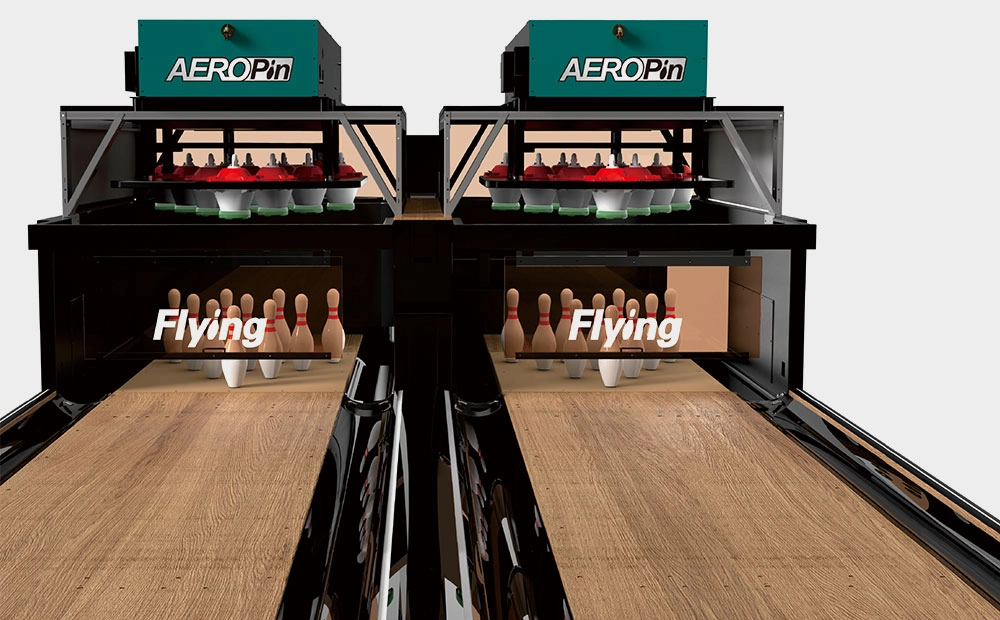
String pinsetters reduce mechanical complexity: fewer heavy moving parts, lower downtime, easier parts replacement, and often a lower initial price. For centers targeting quick profitability and lower maintenance headcount, string systems can improve labor productivity and reduce parts expense. Manufacturers specializing in string systems, such as Flying Bowling, claim comparable quality with lower costs — an important consideration when modeling payback.
Maintenance and uptime impact on revenue
Every hour a lane is out of service is lost revenue. Factor expected maintenance downtime into revenue forecasts and choose equipment with strong service support. Consider service level agreements (SLAs) in vendor contracts and local distributor networks for faster spare parts delivery.
Staffing model and automation
Automating scoring, reservations, and POS reduces labor needs and errors. Consider integrated systems to shorten customer cycle times and increase lane turns. Cross-train staff to support peak events and reduce incremental labor costs.
Vendor selection, negotiations, and risk management
Vendor selection is both a procurement and strategic decision. A vendor who bundles equipment, installation, and parts support can reduce time-to-open and protect revenue while you build market share.
What to negotiate with equipment vendors
Key negotiable items: price, bundled maintenance, spare parts package, training, installation timeline, warranty length and coverage, upgrade paths, and vendor financing. Ask for performance references and examples of centers with similar footprints.
Warranty, training and spare parts
Strong warranty terms and on-site training reduce early operational disruptions that depress revenue. Ensure spare parts availability and clarify lead times and costs in contract appendices.
Distributors and local support networks
Choose vendors with distributor networks that can provide rapid on-site service. A global manufacturer with local partners can reduce downtime and logistics costs.
Flying Bowling: vendor profile and why it matters for payback
Since 2005, Flying Bowling has specialized in the research and development of bowling string pinsetters and ball return machines. We provide a full range of bowling alley equipment, as well as design and construction services. Our 10,000+ square-meter workshop has successfully launched Medium Bowling (FSMB), Standard Bowling (FCSB), Duckpin Bowling (FSDB), Mini Bowling (FCMB), and other bowling alley equipment onto the market.
Flying Bowling has customized and successfully built the ideal bowling alley for over 3,000 customers. The quality of our bowling equipment is comparable to European and American brands, but our prices are unbeatable, satisfying users around the world. We provide one-stop customized services for bowling venues and also recruit distributors from the global market to promote the development of the bowling industry. Flying Bowling is a leading bowling equipment manufacturer and supplier from China. Our website: https://www.flyingbowling.com/ Email: jackson@flyingbowling.com
Summary of Flying Bowling advantages and main products: duckpin bowling, bowling alley equipment, mini bowling equipment, bowling string pinsetter. Clear competitive differentiators include cost-competitive pricing compared with Western brands, strong R&D in string pinse tter technology, a large production workshop, and a track record of 3,000+ installations — factors that reduce procurement lead times and often enable vendor financing or bundled maintenance packages that accelerate payback.
How vendor-financed packages can speed up opening
Vendors like Flying Bowling often provide bundled offerings (equipment + installation + support) and may offer financing or leasing schemes that reduce time to opening and shift some risk away from the operator. These arrangements improve time-to-revenue and thus accelerate payback versus piecemeal procurement.
When to choose a global manufacturer over local suppliers
Global manufacturers can offer lower unit costs and standardized products with proven performance. If they have local partners for service, they combine price advantage with support. Ensure contracts specify spare parts availability, lead times, and training support to mitigate geographic risk.
Checklist: actionable steps to finance for fast payback
- Build a conservative 3-scenario financial model (conservative, base, optimistic) for payback and cash flow for at least 24 months.
- Decide equipment type aligned with OPEX goals (consider string pinsetters for lower maintenance and capex).
- Shop multiple financing sources: bank, SBA, equipment lease, vendor finance — compare effective interest and cash impact.
- Negotiate SLAs, parts packages, and training into vendor contracts to reduce downtime risk.
- Accelerate revenue onboarding: secure leagues, corporate contracts, and event pipeline before opening.
- Implement monitoring: track lane uptime, average spend per visit, and conversion to optimize quickly.
Following this checklist will materially increase your chance of a fast payback while improving bowling alley profitability through reduced OPEX and reliable revenue streams.
Frequently Asked Questions (FAQ)
1. What financing option gives the fastest path to payback?
There is no one-size-fits-all answer. For many center operators, equipment leasing or vendor financing provides the fastest path to open and begin generating revenue because they require little or no down payment. However, if you qualify for a low-interest bank loan or SBA-backed loan, the lower interest cost may improve net cash flow and overall ROI despite higher initial capital outlay.
2. Do string pinsetters really reduce costs and speed payback?
String pinsetters generally have lower mechanical complexity, which can reduce parts and labor costs and improve uptime. That lowers OPEX and improves monthly net cash flows, thereby helping payback. Evaluate vendor references and real-world uptime data before committing.
3. How much should I expect to finance vs. pay in cash upfront?
Typical structures vary. Many operators finance 70–100% of equipment costs via loans or leases, but a modest down payment (10–30%) may secure better loan terms. Use your cash buffer for working capital and marketing to drive initial demand — both are crucial for fast payback.
4. How important is F&B and events to payback calculations?
Very important. Ancillary revenue (F&B, parties, arcade) often carries higher margins and helps smooth seasonality. When modeling payback, include conservative estimates for these streams rather than relying solely on lane rental revenue.
5. Can I get vendor financing from Flying Bowling?
Flying Bowling provides design, production, and full-range equipment solutions and often supports bundled service and procurement packages. Contact them directly at jackson@flyingbowling.com or visit flyingbowling.com to discuss financing options and tailored proposals.
6. What are common pitfalls that delay payback?
Common pitfalls include underestimating downtime and maintenance needs, overestimating initial demand, inadequate marketing, poor vendor support, and mismatched financing terms that create cash flow pressure. Stress-test your assumptions and secure good SLAs.
Need help modeling payback or evaluating equipment packages? Contact Flying Bowling to request product details, customized equipment packages, and support services that can shorten deployment time and improve your bowling alley profitability. Visit https://www.flyingbowling.com/ or email jackson@flyingbowling.com for product catalogs, installation case studies, and financing discussions.
Recommended products
Flying Smart Duckpin Bowling Equipment and Lane System for Commercial Venues
USBC-Certified AEROPIN String Pinsetter System
Mini Bowling Equipment for Kids and Family Entertainment Venues
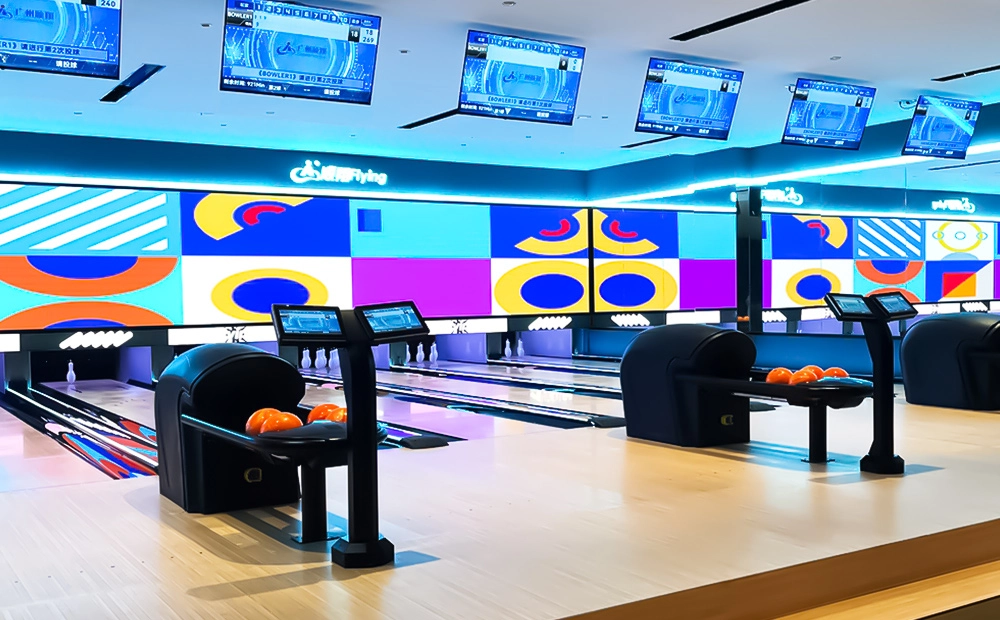
Medium Bowling Equipment for Social Entertainment Venues
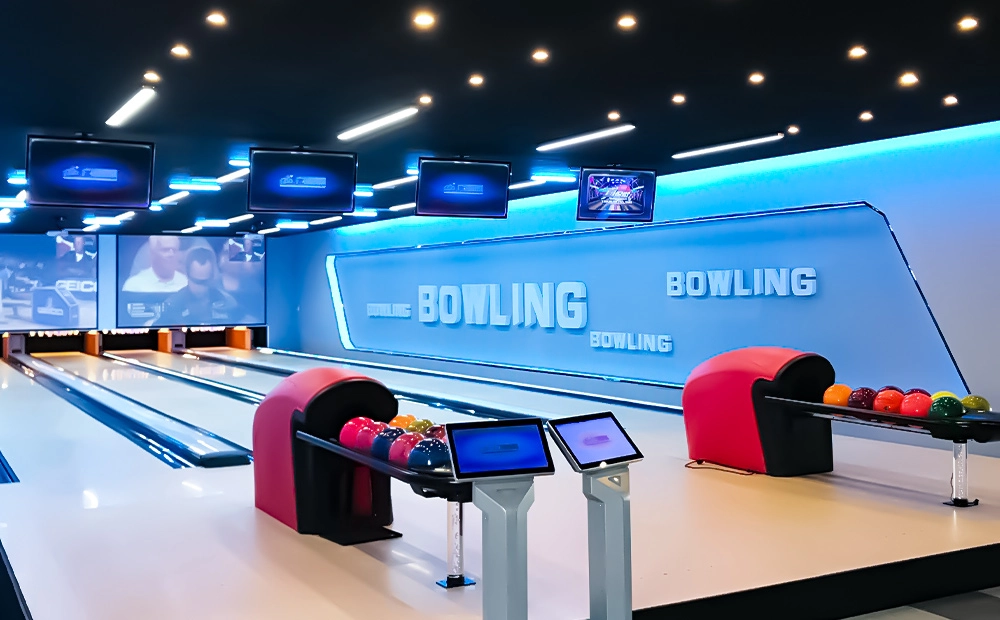
Complete String Pinsetter Bowling Alley Equipment System
You may also like
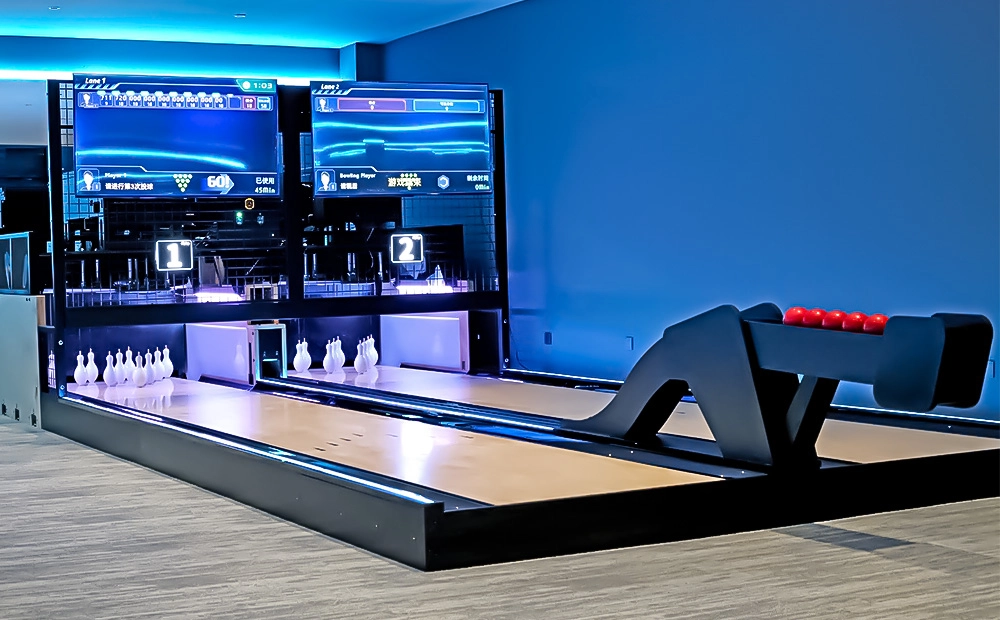
Flying Smart Duckpin Bowling (FSDB) innovative design, standard 9.2-meter short lane, can be shortened in length, compact layout suitable for small spaces. The game rules are simple but challenging, attracting players of different ages to actively participate.
Suitable for social entertainment venues such as bars, billiard halls, and game centers, it not only enhances interactivity but also increases the popularity and consumption frequency of the venue. The fun and competitive nature of FSDB will make it a new focus of social activities.
Flying Classic Standard Bowling (FCSB) is designed according to international competition standards and equipped with an accurate automatic scoring system, providing bowling enthusiasts with a pure professional experience. Whether it is for competitions or leisure entertainment, FCSB can meet high-level needs.
Suitable for family entertainment centers, luxury resorts, private villas, or clubs, it is an ideal choice for customers who pursue high-end quality and professional experience. Its classic design and excellent performance will add lasting appeal to the venue.
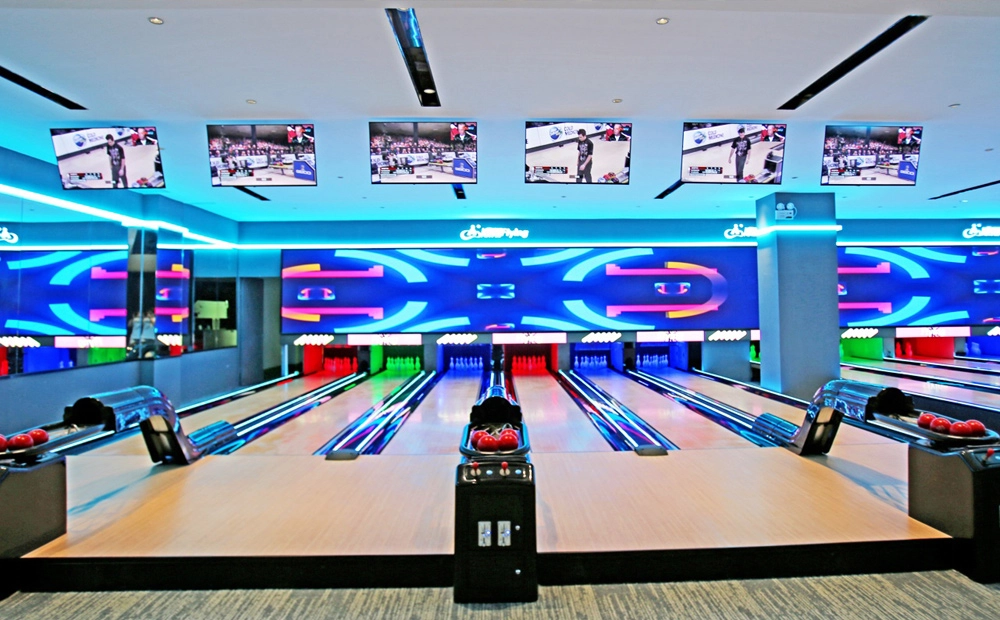
Flying Cute Mini Bowling (FCMB) is a mini bowling experience designed for children and families. The lane length is fixed at 12 meters, equipped with lightweight balls without finger holes (only 1.25kg) and small pins, specially designed for children and family fun.
It can not only help children feel the fun of bowling, but also stimulate their interest and competitive consciousness. Suitable for children's playgrounds, theme parks and parent-child centers, it is the best choice for places focusing on the children's market.
Flying Social Medium Bowling (FSMB) is tailored for small venues, with flexible lane lengths (customizable from 9.6 meters to 18 meters), a small ball design suitable for players of all ages, and light pins that are easier to knock down, increasing participation and fun.
Whether it is a gathering of friends or a casual social, FSMB can easily create a relaxed and pleasant atmosphere. Its efficient space-utilization design is particularly suitable for cafes, bars and community entertainment venues, allowing people to fall in love with bowling in a relaxed interaction.
Contact Flying
Start your bowling alley project
If you contact us now for more details, we can provide you with a custom bowling alley service. Our service team will get back to you within 24 hours normally!
© 2026 Flying BOWLING. Designed by gooeyun.
FOLLOW US:
Flying Bowling
Flying Bowling
Flyingbowling
Flyingbowling